114 Ann Dermatol Letter to the Editor
Received May 11, 2012, Revised May 17, 2012, Accepted for publication May 21, 2012
Corresponding author: Kyu Han Kim, Department of Dermatology, Seoul National University College of Medicine, 101 Daehak-ro, Jongno-gu, Seoul, 110-744, Korea. Tel: 82-2-2072-2410, Fax: 82-2-747-0611, E-mail: [email protected]
This is an Open Access article distributed under the terms of the Creative Commons Attribution Non-Commercial License (http://
creativecommons.org/licenses/by-nc/3.0) which permits unrestricted non-commercial use, distribution, and reproduction in any medium, provided the original work is properly cited.
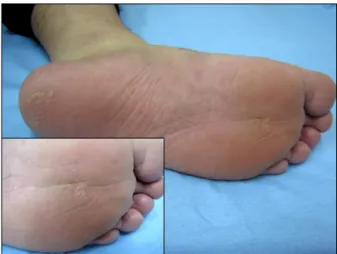
Fig. 2. Six weeks later following biopsy, the wart had completely disappeared (inset: close-up view).
large plantar wart regression, following a small biopsy. In conclusion, wart regression can be achieved if the HPV-specific immunity can be stimulated. Therefore, inducing and boosting such a response is critical for the treatment of warts. I report here on a case of a rapidly regressed large plantar wart, following a biopsy without any additional treatment.
ACKNOWLEDGMENT
This work was supported in part by the Soon Chun Hyang University Research Fund.
REFERENCES
1. Jin SP, Jeon YK, Cho KH, Chung JH. A rapidly regressing wart following biopsy. Ann Dermatol 2011;23:123-124.
2. Elliot J, Androphy DRL. Wart. In: Wolff K, Goldsmith LA, Katz SI, Gilchrest BA, Paller AS, Leffell DJ, editors.
Fitzpatrick’s dermatology in general medicine. 7th ed. New York: McGraw-Hill, 2008:1914-1922.
3. Sterling JC, Handfield-Jones S, Hudson PM; British Associ- ation of Dermatologists. Guidelines for the management of cutaneous warts. Br J Dermatol 2001;144:4-11.
4. Iwatsuki K, Tagami H, Takigawa M, Yamada M. Plane warts under spontaneous regression. Immunopathologic study on cellular constituents leading to the inflammatory reaction.
Arch Dermatol 1986;122:655-659.
5. Coleman N, Birley HD, Renton AM, Hanna NF, Ryait BK, Byrne M, et al. Immunological events in regressing genital warts. Am J Clin Pathol 1994;102:768-774.
http://dx.doi.org/10.5021/ad.2013.25.1.114
Refractory Atopic Dermatitis in Childhood:
Improvement with Methotrexate?
Young Woon Park
1, Kkot Bora Yeom
1, Kyu Han Kim
1,2,31Department of Dermatology, Seoul National University College of Medicine, 2Laboratory of Cutaneous Aging and Hair Research, Biomedical Research Institute, Seoul National University Hospital, 3Institute of Human-Environment Interface Biology, Medical Research Center, Seoul National University, Seoul, Korea
Dear Editor:
A 5-year-old boy had suffered from generalized severe atopic dermatitis (AD) for 3 years, and his symptoms were
not controlled by first-line therapeutics, that is, topical corticosteroids, topical calcineurin inhibitors, and oral antihistamines. Initially, we tried cyclosporine (5 mg/kg/d)
Vol. 25, No. 1, 2013 115
Letter to the Editor
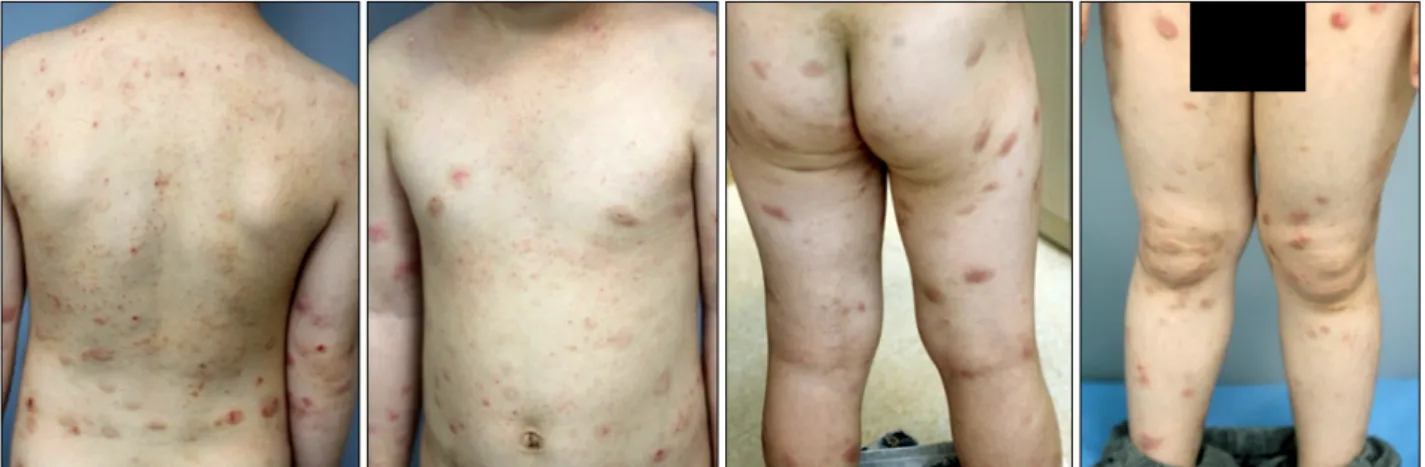
Fig. 1. Generalized multiple, intensely pruritic, excoriated erythematous scaling papules, and plaques, refractory to treatment with first-line treatment modalities and ciclosporin.
Fig. 2. Seven weeks after initiation of treatment with methotrexate, substantial improvement of the patient's atopic eczema was noted.
for 3 months, but his condition proved recalcitrant (Fig. 1), and he complained of hypertrichosis of the eyebrows.
Accordingly, cyclosporine was discontinued, and metho- trexate (MTX) (7.5 mg/wk p.o. as 2.5 mg every 12 hours over 24 hours) started. In addition, folic acid (1 mg) was administered daily to reduce the risk of adverse reaction to MTX, and the disease severity was monitored using the severity scoring for atopic dermatitis (SCORAD) scoring system. After 7 weeks, the skin lesions markedly improved (Fig. 2), and this was reflected by his SCORAD score, which was reduced by more than 50% (from 61 to 28).
We then reduced MTX to 7.5 mg biweekly and dis- continued MTX after 10 additional weeks. Rebound phenomenon was not observed, and the clinical improve- ment steadily continued for 3 months. No adverse clinical events occurred and no laboratory abnormalities were noted.
AD is a common, chronic inflammatory skin disease, characterized by intense pruritus and dry skin indicative of a defective skin barrier. Patients with moderate-to-severe
disease, refractory to treatment with the first-line treatment modalities, such as topical corticosteroids or topical calcineurin inhibitors, require second-line treatment, such as phototherapy or systemic immunosuppressant admini- stration1. However, a proportion of patients has a contraindication for these treatments or discontinues treatment because of ineffectiveness or side effects. It is therefore important to search for alternative, safe second- line treatments and expand the armamentarium of therapeutic options available for the treatment of patients with moderate-to-severe AD2.
MTX is a highly effective treatment for chronic inflamma- tory conditions, such as psoriasis and rheumatoid arthritis2, and many studies have concluded that MTX is as effective as cyclosporine for the treatment of psoriasis3. For the treatment of AD, an international consensus committee for the management of AD recommended MTX for third-line use in recalcitrant disease4. However, although MTX has been reported to be of value in the treatment of recalcitrant adult AD2, peer reviewed evi-
116 Ann Dermatol Letter to the Editor
Received April 6, 2012, Revised May 14, 2012, Accepted for publication May 21, 2012
Corresponding author: Min-Geol Lee, Department of Dermatology, Cutaneous Biology Research Institute, Yonsei University College of Medicine, 50 Yonsei-ro, Seodaemun-gu, Seoul 120-752, Korea. Tel: 82-2-2228-2080, Fax: 82-2-393-9157, E-mail: [email protected]
This is an Open Access article distributed under the terms of the Creative Commons Attribution Non-Commercial License (http://
creativecommons.org/licenses/by-nc/3.0) which permits unrestricted non-commercial use, distribution, and reproduction in any medium, provided the original work is properly cited.
dence is insufficient. In particular, there is no performed study or reported case on the use of MTX to treat AD in childhood, and thus, this case report is the first to describe the successful use of MTX in childhood AD. MTX has been served as a good treatment modality for more than 40 years in the pediatric dermatologic field and is con- sidered the systemic treatment of choice for childhood psoriasis5. MTX has a track record of safe and effective long-term use in childhood psoriasis and juvenile idio- pathic arthritis5. Given these facts, we believe that MTX offers an effective, safe, tolerable, and preferred thera- peutic option for childhood AD as well as for childhood psoriasis despite a lack of peer reviewed evidence.
Further well-designed studies are needed to confirm the efficacy, doses, dosing schedules, safety, and side effects on short-term and long-term use of MTX in childhood AD.
REFERENCES
1. Brown S, Reynolds NJ. Atopic and non-atopic eczema. BMJ 2006;332:584-588.
2. Weatherhead SC, Wahie S, Reynolds NJ, Meggitt SJ. An open-label, dose-ranging study of methotrexate for moderate- to-severe adult atopic eczema. Br J Dermatol 2007;156:
346-351.
3. Heydendael VM, Spuls PI, Opmeer BC, de Borgie CA, Reitsma JB, Goldschmidt WF, et al. Methotrexate versus cyclosporine in moderate-to-severe chronic plaque psoriasis.
N Engl J Med 2003;349:658-665.
4. Ellis C, Luger T, Abeck D, Allen R, Graham-Brown RA, De Prost Y, et al; ICCAD II Faculty. International Consensus Conference on Atopic Dermatitis II (ICCAD II): clinical update and current treatment strategies. Br J Dermatol 2003;148 Suppl 63:3-10.
5. de Jager ME, de Jong EM, van de Kerkhof PC, Seyger MM.
Efficacy and safety of treatments for childhood psoriasis: a systematic literature review. J Am Acad Dermatol 2010;62:
1013-1030.
http://dx.doi.org/10.5021/ad.2013.25.1.116
Eruptive Penile Syringomas Spreading to the Pubic Area and Lower Abdomen
Jin-Ok Baek, Hyun-Joong Jee
1, Tae-Kyun Kim
1, Min-Geol Lee
1Department of Dermatology, Gachon University of Medicine and Science, Incheon,
1Department of Dermatology, Cutaneous Biology Research Institute, Yonsei University College of Medicine, Seoul, Korea
Dear Editor:
Syringomas are common benign neoplasms of eccrine differentiation. They often occur at the eyelids, upper cheeks, neck, axilla, abdomen and vulva. Penile syringo- mas are rare, with only 12 reported cases in the English literature to date. All of the reported cases were confined to the penis, and this is the first case of penile syringoma spreading to the pubic area and lower abdomen.
A 33-year-old Korean male was presented to our clinic with asymptomatic papules on the pubic area, lower ab-
domen (Fig. 1A), as well as dorsal and lateral aspects of the penile shaft (Fig. 1B). The scrotum and glans were spared. The lesion occurred eruptively about 3 years ago.
Physical examination found soft purplish papules mea- suring 1∼3 mm in diameter on the penile shaft, pubic area and lower abdomen. He had no family history of similar lesions. Histologic examination of punch biopsies from the pubic area and penis revealed multiple comma or tadpole-shaped ductal structures and few milia-like structures within the superficial dermis (Fig. 2). The ductal