• 검색 결과가 없습니다.

Sodium-glucose Co-transporter 2 Inhibitors: a New Path for Heart Failure Treatment

N/A
N/A
Protected

Academic year: 2022

Share "Sodium-glucose Co-transporter 2 Inhibitors: a New Path for Heart Failure Treatment"

Copied!
10
0
0

로드 중.... (전체 텍스트 보기)

전체 글

(1)

AUTHOR'S SUMMARY

Sodium-glucose co-transporter 2 inhibitors (SGLT2i) have been emerged as a powerful therapeutic option to reduce the risk of heart failure and hospitalization for heart failure (HFH) in patients with type II diabetes mellitus (T2DM), and to reduce cardiovascular mortality and HFH in heart failure with reduced ejection fraction (HFrEF) patients with or without T2DM. Ongoing study to evaluate the clinical effect of SGLTi for heat failure with preserved ejection fraction (HFpEF) may further widen the clinical implication of these novel cardiorenal protective drugs beyond their metabolic effects. In this review, we summarized the updated clinical evidences on SGLT2i (rather than basic and translational evidence) for reduction of HF risk in T2DM patients and favorable clinical outcomes in both HFrEF and HFpEF patients.

ABSTRACT

Results from cardiovascular outcome trials (CVOT) with 5 different sodium-glucose co- transporter 2 inhibitors (SGLT2i; empagliflozin, canagliflozin, dapagliflozin, ertugliflozin, sotagliflozin), initially developed for their glucose-lowering effect by blocking tubular glucose reabsorption in kidney, have been shown to decrease the risk of heart failure hospitalization (HFH) across a range of patients with and without atherosclerotic cardiovascular disease in patients with type 2 diabetes mellitus (T2DM). Following these CVOT results, SGLT2i (dapagliflozin, empagliflozin, sotagliflozin) also were reported to reduce HFH and cardiovascular death in patients with heart failure with reduced ejection fraction (HFrEF), regardless of existence or absence of T2DM. Ongoing studies have been conducted to evaluate the clinical benefit of SGLT2i (empagliflozin, dapagliflozin) in patients with heart failure with preserved ejection fraction (HFpEF). Although SGLT2i brought us to the entrance of a new era for prevention of HF incidence and worsening of HF, the search for pivotal mechanism of SGLT2i to improve our pharmacological armamentarium should continue in order to protect every HF patient from fatal progression of HF disease. In this review, we summarized the updated clinical evidences on SGLT2i (rather than basic and translational evidence) for reduction of HF risk in T2DM patients and favorable clinical outcomes in both HFrEF and HFpEF patients.

Keywords: Sodium-glucose cotransporter; Heart failure; Type 2 diabetes

State of the Art Review

Received: Feb 22, 2021 Accepted: Mar 10, 2021 Correspondence to Seok-Min Kang, MD, PhD

Division of Cardiology, Department of Internal Medicine, Severance Cardiovascular Hospital, Cardiovascular Research Institute, Yonsei University College of Medicine, 50-1, Yonsei-ro, Seodaemun-gu, Seoul 03722, Korea.

E-mail: [email protected]

Copyright © 2021. The Korean Society of Cardiology

This is an Open Access article distributed under the terms of the Creative Commons Attribution Non-Commercial License (https://

creativecommons.org/licenses/by-nc/4.0) which permits unrestricted noncommercial use, distribution, and reproduction in any medium, provided the original work is properly cited.

ORCID iDs Jaewon Oh

https://orcid.org/0000-0002-4585-1488 Seok-Min Kang

https://orcid.org/0000-0001-9856-9227 Funding

This work was partly supported by the Basic Science Research Program through the National Research Foundation of Korea (NRF) funded by the Ministry of Education (NRF- 2020R1I1A1A01074368) and partly supported by a grant from the Korea Food Research Institute funded by the Ministry of Science, ICT

& Future Planning (E0210400).

Conflict of Interest

The authors have no financial conflicts of interest.

Jaewon Oh , MD, PhD

1

, Seung-Hyun Lee, MD, PhD

1,2

, Chan Joo Lee, MD, PhD

1

, and Seok-Min Kang , MD, PhD

1

1

Division of Cardiology, Department of Internal Medicine, Severance Cardiovascular Hospital, Cardiovascular Research Institute, Yonsei University College of Medicine, Seoul, Korea

2

Department of Biochemistry and Molecular Biology, Yonsei University College of Medicine, Seoul, Korea

Sodium-glucose Co-transporter 2

Inhibitors: a New Path for Heart

Failure Treatment

(2)

Data Sharing Statement

The data generated in this study is available from the corresponding author(s) upon reasonable request.

Author Contributions

Conceptualization: Oh J, Lee SH, Lee CJ, Kang SM; Formal analysis: Oh J; Investigation:

Oh J, Lee SH, Lee CJ, Kang SM; Project administration: Oh J; Supervision: Oh J;

Writing - original draft: Oh J, Kang SM; Writing - review & editing: Oh J, Kang SM.

INTRODUCTION

Sodium-glucose co-transporter (SGLT) is a membrane protein that supplies sodium ions (Na

+

) and glucose like as glucose transporter. In human, there are 6 types of SGLT and, among which SGLT1 and SGLT2 are known to be involved in glucose resorption in the intestinal mucosa (mainly for SGLT1) or proximal tubule of the renal nephron (mainly for SGLT2).

1)

SGLT1 is mainly located in the small intestine and plays an important role in the absorption of galactose, in addition to glucose. SGLT2 is primarily distributed in the kidney and is responsible for 90% of renal glucose resorption.

2)

Under physiological conditions, 180 g of glucose are filtered and completely reabsorbed by the renal tubules. In diabetic patients, glucose can be found in the urine when hyperglycemia.

3)

Whereas SGLT1 transports 2 Na

+

per one molecule of glucose and SGLT2 transports 1 Na

+

, SGLT2 can co-localize with the renal Na

+

/hydrogen exchanger (NHE3), responsible for Na

+

reabsorption in the proximal tubule.

4)

SGLT2 inhibitors (SGLT2i) may cross-react with this NHE3 so inhibit Na

+

reabsorption and increase natriuresis.

In general, the glucose-lowering ability of SGLT2i through urinary glucose excretion can decrease hemoglobin A1c modestly (from 0.5% to 1.0%) in patients with diabetes. The glucosuric effect of SGLT2i depends on the blood glucose concentration. So hypoglycemia risk following SGLT2i use is low compared to other glucose-lowering drugs.

Patients with type 2 diabetes mellitus (T2DM) are at high risk of heart failure (HF), about 20–

30% found in diabetes clinical practice and had higher rates of heart failure hospitalization (HFH) with higher mortality.

5)

SGLT2i exert consistent favorable effects on the HFH across all trials.

6)

However, these drugs have inconsistent results on mortality. Depending on the trial, empagliflozin reduced the risk of cardiovascular (CV) death by 38% but by only 2% in the trial with dapagliflozin in T2DM.

7)8)

Not only are patients with T2DM at higher risk for HF, patients with HF are also at high risk for recurrent HFH, high CV mortality, and worsening of renal function with poor quality of life. The combined risk of HFH or CV death in patients with heart failure with reduced ejection fraction (HFrEF), was reduced by 25% with dapagliflozin or empagliflozin, mainly driven by a reduction of HFH.

9)10)

These benefits of SGLT2i relatively on short-term follow-up cannot be explained by their glucose–lowering effects. Therefore, it is important to find out the crucial mechanism of SGLT2i by carrying out large-scale trials in patients with various phenotype of T2DM and well- characterized HF who are on guideline-directed medical therapy including the device therapy.

BENEFITS ON HEART FAILURE EVENTS IN PATIENTS WITH TYPE 2 DIABETES MELLITUS

SGLT2i have demonstrated unanticipated cardiorenal benefits in several large randomized clinical trials of patients who have T2DM and either established atherosclerotic

cardiovascular disease (ASCVD) or multiple CV risk factors. The effect of SGLT2i on non-

fatal HF events or CV death is summarized in 5 cardiovascular outcome trials (CVOT) with 5

different agents in T2DM, respectively (Table 1).

(3)

The first SGLT2i with the COVT result was empagliflozin through the EMPA-REG OUTCOME trial.

7)

The study enrolled 7,020 T2DM patients with established ASCVD such as coronary and peripheral artery disease, and followed up for 3.1 years. This trial showed a significant 14% reduction in the primary composite outcome (major adverse cardiac events) including CV death, nonfatal myocardial infarction (MI), and nonfatal stroke (hazard ratio [HR], 0.86; 95% confidence interval [CI], 0.74–0.99, p=0.04 for superiority). This clinical benefit was primarily driven by a 38% reduction of CV death (HR, 0.62; 95% CI, 0.49–0.77). The clinical effect of empagliflozin on nonfatal MI or stroke was neutral, so the CV mortality reduction by empagliflozin seems to be largely related to the HFH reduction (HR, 0.65;

95% CI, 0.50–0.85). Interestingly, these benefits on CV mortality and HFH was found early after empagliflozin treatment initiation (within 12 weeks after randomization).

11)

Following this unanticipated finding, many researchers have paid attention to the direct myocardial protective effect of SGLT2i. More detailed explanation for mechanism of cardiorenal effects of SGLT2i was reviewed well in recent publication.

3)12)

After empagliflozin became the first drug to show beneficial effects in T2DM patients with high CV risk, the CVOT of additional SGLT2i followed and confirmed the benefit of SGLT2i.

The CANVAS program using canagliflozin enrolled 10,142 diabetic patients with and without established ASCVD (positive for multiple risk factors), and followed up for 3.6 years.

13)

This trial demonstrated a significant 14% reduction in the primary composite outcome including CV death, nonfatal MI, and nonfatal stroke (HR, 0.86; 95% CI, 0.75–0.97, p=0.02 for superiority). The clinical effect of canagliflozin on each separate primary outcome was all neutral, and only HFH was significantly reduced by canagliflozin (HR, 0.67; 95% CI, 0.52–

0.87). In addition, canagliflozin reduced the composite of HFH or CV death by 22% (HR, 0.78; 95% CI, 0.67–0.91).

Table 1. Key characteristics of cardiovascular outcome trials for SGLT2i in type 2 diabetes mellitus

Trials EMPA-REG OUTCOME CANVAS PROGRAM DECLARE-TIMI 58 VERTIS-CV SCORED

SGLTi Empagliflozin 10/25 mg Canagliflozin 100/300 mg Dapagliflozin 10 mg Ertugliflozin 5/15 mg Sotagliflozin 200/400 mg

Population 7,020 10,142 17,160 8,246 10,584

Enrolled period Sep 2010 to Apr 2013 Dec 2009 to May 2015 Apr 2013 to Jun 2015 Dec 2013 to Apr 2017 Dec 2017 to Jan 2020

Publication year 2015 2017 2018 2020 2020

Established ASCVD (%) 99 66 41 100 89

Follow-up (years) 3.1 3.6 4.2 3.5 1.3

eGFR for enrollment (mL/min/1.73 m

2

) ≥30 ≥30 ≥60 ≥30 25–60

eGFR <60 (%) 26 20 7 22 100

Heart failure history (%) 10 14 10 24 31

Primary outcomes MACE MACE MACE MACE CV death + HFH

HR (95% CI) 0.86 (0.74–0.99) 0.86 (0.75–0.97) 0.93 (0.84–1.03) 0.97 (0.85–1.11) 0.74 (0.63–0.88)

Rate/1,000 patient-year (SGLT2i vs.

placebo) 37.4 vs. 43.9 26.9 vs. 31.5 22.6 vs. 24.2 39 vs. 40 56 vs. 75

CV death 0.62 (0.49–0.77) 0.87 (0.72–1.06) 0.98 (0.82–1.17) 0.92 (0.77–1.11) 0.90 (0.73–1.12)

All-cause mortality 0.68 (0.57–0.82) 0.87 (0.74–1.01) 0.93 (0.82–1.04) 0.93 (0.80–1.08) 0.99 (0.83–1.18)

Nonfatal MI 0.87 (0.70–1.09) 0.85 (0.69–1.05) 0.89 (0.77–1.01) 1.04 (0.86–1.27) 0.68 (0.52–0.89)

Nonfatal stroke 1.18 (0.89–1.56) 0.90 (0.71–1.15) 1.01 (0.84–1.21) 1.00 (0.76–1.32) 0.66 (0.48–0.91) *

HFH 0.65 (0.50–0.85) 0.67 (0.52–0.87) 0.73 (0.61–0.88) 0.70 (0.54–0.90) 0.67 (0.55–0.82)

CV death/HFH 0.66 (0.55–0.79) * 0.78 (0.67–0.91) 0.83 (0.73–0.95) 0.88 (0.75–1.03) 0.74 (0.63–0.88)

Renal endpoints 0.54 (0.40–0.75) 0.60 (0.47–0.77) 0.53 (0.43–0.66) 0.81 (0.63–1.04) 0.71 (0.46–1.08)

ASCVD = atherosclerotic cardiovascular disease; CI = confidence interval; CV = cardiovascular; eGFR = estimated glomerular filtration rate; HFH = heart failure hospitalization; HR = hazard ratio; MACE = major adverse cardiac events; MI = myocardial infarction; SGLT = sodium-glucose co-transporter; SGLTi = sodium- glucose co-transporter inhibitors; SGLT2i = sodium-glucose co-transporter 2 inhibitors.

* Excluding fatal stroke.

Total fatal or nonfatal MI/stroke.

(4)

The DECLARE-TIMI 58 trial using dapagliflozin enrolled 17,160 diabetic patients with and without established ASCVD, and followed up for 4.2 years.

8)

This trial failed to show a significant reduction in the primary composite outcome including CV death, nonfatal MI, and nonfatal stroke (HR, 0.93; 95% CI, 0.84–1.03; p=0.17). The clinical effect of canagliflozin on each separate primary outcome was all neutral, and only HFH was significantly reduced by dapagliflozin (HR, 0.73; 95% CI, 0.61–0.88). Like canagliflozin, dapagliflozin also reduced the composite of HFH or CV death by 17% (HR, 0.83; 95% CI, 0.75–0.95). However, in comparison with 38% reduction of CV death in the CVOT using empagliflozin, but only 2%

was noted in the trial with dapagliflozin.

The VERTIS CV trial using ertugliflozin enrolled 8,246 diabetic patients with established ASCVD, and followed up for 3.5 years.

14)

The trial also failed to show a significant reduction in the primary composite outcome including CV death, nonfatal MI, and nonfatal stroke (HR, 0.97; 95% CI, 0.85–1.11). The clinical effect of ertugliflozin on each separate primary outcome was all neutral, and only HFH event was significantly reduced by ertugliflozin (HR, 0.70; 95% CI, 0.54–0.90). However, the benefit on the composite of HFH or CV death was not nominally significant with ertugliflozin (HR, 0.88; 95% CI, 0.75–1.03).

The latest SGLT2i to report CVOT is sotagliflozin in the SCORED trial.

15)

The study enrolled 10,584 type 2 diabetes, chronic kidney disease patients with and without established ASCVD, and followed up for 1.3 years because of early termination owing to loss of funding. The primary end point was changed to the composite of the total number of CV death, HFH, and urgent visits for HF during the trial. This trial demonstrated a significant 26% reduction in the primary composite (HR, 0.74; 95% CI, 0.63–0.88). This clinical benefit of ertugliflozin was primarily driven by a 33% reduction of total number of HFH and urgent visits for HF (HR, 0.67; 95% CI, 0.55–0.82) but the CV mortality reduction by sotagliflozin was neutral (HR, 0.90; 95% CI, 0.73–1.12).

Although these CVOTs seem to be similar, we could find some discrepancies in the baseline

characteristics among these trials. Firstly, regarding the inclusion criteria, the trials using

empagliflozin, ertugliflozin enrolled 100% established ASCVD, focusing on only the

secondary prevention. Whereas, the CVOT using canagliflozin, dapagliflozin enrolled

diabetic patients with and without ASCVD, focusing on both the primary and secondary

prevention. We could expect higher chance for statistical significance in secondary

prevention trial rather than in primary prevention trial considering higher event rates in

secondary prevention trials. This hypothesis may explain the neutral clinical benefit of

dapagliflozin on primary composite outcome. Secondly, there were 2 phases of enrollment

period such as early 2010s (for empagliflozin, canagliflozin) vs. mid 2010s (for dapagliflozin,

ertugliflozin). In general, the clinical trials which conducted in relatively late phase, could

have lower chance for statistical significance than those in early phase. The limited clinical

benefit of ertugliflozin could be resulted from these discrepancies among CVOTs or structure

difference among SGLT2i.

16)

However, all SGLT2i including sotagliflozin, were proved to

significantly reduce the risk of HFH in T2DM patients, which confirmed by meta-analysis.

17)

In these trials with T2DM patients, lack of information regarding the phenotype of HF or use of

concomitant guideline directed medical treatment of HF give us a skeptical interpretation about

the significant reduction of risk in HFH. Because the results of these CVOT could be affected

by the use of inhibitors of renin-angiotensin system and beta-blockers, mineralocorticoid

receptor antagonists or angiotensin receptor-neprilysin inhibitor (ARNI) which showing the

(5)

survival benefit in HFrEF patients. From the data of EMPA-REG OUTCOME, concomitant use of spironolactone and eplerenone may attenuate the effect of SGLT2i to reduce HF events.

18)

In addition, it is not clear whether SGLT2i might interact with ARNI.

However, based on these lines of evidences, 2019 European Society of Cardiology guidelines on diabetes, pre-diabetes, and CV diseases recommended SGLT2i (empagliflozin,

canagliflozin, and dapagliflozin) to lower the risk of HFH in patients with T2DM as class I recommendation with level of evidence A.

19)

BENEFITS ON HEART FAILURE EVENTS IN PATIENTS WITH HEART FAILURE WITH REDUCED EJECTION FRACTION

The reduction of the risk of HFH with SGLT2i in patients with T2DM have been demonstrated in all CVOT. This reduction for HFH risk was observed in both patients with and without a previous HF history. However, patients with HF history comprised only small proportions of the COVT populations, especially without documentation for left ventricular ejection fraction (LVEF) or natriuretic peptide levels. These effects of SGLT2i on CV outcomes may not be directly related to glycemic control, suggesting that these clinical benefits may extend to non-diabetic patients, especially HF. In addition, the DECLARE-TIMI 58 trial showed that the benefit of CV death or HFH was greater in patients with HFrEF than with HFpEF. Especially, the benefit was remarkable in those with LVEF ≤30%.

20)

Therefore, the effect of SGLT2i in patients with HF, especially HFrEF was explored in large-scale trials.

The DAPA-HF trial was the first outcome trial to assess the effect of SGLT2i (using

dapagliflozin) in HFrEF patients with or without diabetes.

9)

The definition of HFrEF was LVEF

<40% and elevated N-terminal-pro B-type natriuretic peptide (NT-proBNP) level. The trial enrolled 4,744 patients including 2,607 non-DM patients and followed up for 18.2 months.

The primary end point was the composite outcome of CV death, HF, and urgent HF-related hospital visits. This trial demonstrated a significant 26% reduction in the primary composite outcome (HR, 0.74; 95% CI, 0.65–0.85). This clinical benefit of dapagliflozin was primarily driven by a 30% reduction of HFH and urgent visits for HF (HR, 0.70; 95% CI, 0.58–0.85) but surprisingly, the CV mortality was also significantly reduced with dapagliflozin (HR, 0.82; 95% CI, 0.69–0.98). Although this trial was conducted in non-diabetic patients with HFrEF, the frequency of adverse events such as volume depletion, renal dysfunction, and hypoglycemia did not differ between dapagliflozin and placebo group.

The EMPEROR-Reduced trial was the following outcome trial to assess the effect of another

SGLT2i, empagliflozin in HFrEF patients with or without diabetes.

10)

The trial enrolled 3,730

patients including 1,856 non-DM patients and followed up for 16 months. The primary end

point was the composite outcome of CV death and HFH. This trial demonstrated a significant

25% reduction in the primary composite outcome (HR, 0.75; 95% CI, 0.65–0.86). This

clinical benefit of empagliflozin was primarily driven by a 30% reduction of HFH and urgent

visits for HF (HR, 0.69; 95% CI, 0.59–0.81) but the CV mortality reduction by empagliflozin

was neutral (HR, 0.92; 95% CI, 0.75–1.12). In comparison with DAPA-HF trial, EMPEROR-

Reduced trial enrolled patients with higher CV risk factors, for example, lower ejection

fraction (27% vs. 31%), high level of NT-proBNP (1,900 vs. 1,437 pg/mL) and lower estimated

glomerular filtration rates (eGFRs) (62 vs. 66 mL/min/m

2

).

21)

Interestingly, the annual rate

of decline in eGFR was significantly slower in the empagliflozin group than placebo (−0.55

(6)

vs. −2.28 mL/min/1.73 m

2

/year).

10)

In addition, exploratory composite renal endpoint defined as chronic dialysis, renal transplantation, or the onset of a sustained and profound decrease in renal function was significantly reduced by 50% with empagliflozin (HR, 0.50; 95% CI, 0.32–0.77). However, in DAPA-HF trial, a composite of renal events was reduced by 29%, which is not nominally significant (HR, 0.71; 95% CI, 0.44–1.26). In contrast, DAPA-HF trial reported a lower risk of CV death with a 18% risk reduction, which is nominally significant and a 8% risk reduction in the EMPEROR-Reduced trial, which is not. This discrepancy might be difficult in the interpretation and conclusion due to heterogeneity of patients’ clinical characteristics and short-term follow up duration, and so on.

The SOLOIST-WHF was the latest outcome trial to assess the effect of SGLT2i, sotagliflozin in HFrEF patients with diabetes who were recently hospitalized for worsening HF.

22)

The trial enrolled 1,222 patients and followed up for just 9 months because the trial ended early owing to loss of funding from the sponsor. The primary end point was the composite outcome of CV death, HFH and urgent visits for HF. This trial demonstrated a significant 33% reduction in the primary composite outcome (HR, 0.67; 95% CI, 0.52–0.85). This clinical benefit of sotagliflozin was also driven by a 30% reduction of HFH and urgent visits for HF (HR, 0.64;

95% CI, 0.49–0.83) but the CV mortality reduction by sotagliflozin was neutral, too (HR, 0.84; 95% CI, 0.58–1.22). However, due to the smaller-sized sample enrolled and shorter follow-up period (only 9 months) than planned, the SOLOIST-WHF trial did not have enough to provide a statistically robust assessment for the effect of sotagliflozin on CV mortality.

Regarding adverse events, severe hypoglycemia (1.5% vs. 0.3%) and diarrhea (6.1% vs. 3.4%) were more common with sotagliflozin group than placebo. Especially, a difference in diarrhea event was not reported in the DAPA-HF or EMPEROR-Reduced trial so we could assume that it is related to SGLT1 inhibition in the intestines considering higher affinity for inhibiting SGLT1 by sotagliflozin than dapagliflozin and empagliflozin.

21)

Unanticipated success in the SOLOIST-WHF trial may open more questions than answer regarding the role of SGLT1 inhibition in HF. Is a sotagliflozin better for HF than other SGLT2i?

Is the big success of sotagliflozin mediated by higher SGLT1 inhibition than dapagliflozin and empagliflozin? Is there any therapeutic role of SGLT1 inhibition in intestines in HF, reflected by increased diarrhea in sotagliflozin group? Any role for helping decongestion of third space or lymphatics? When we consider the SGLT1 expression in heart is the second highest after small intestine and SGLT1 is highly expressed in human cardiomyocytes, we can guess whether there is any other role of SGLT1 in heart just than glucose transport. Further translational research should be warranted to answer these questions.

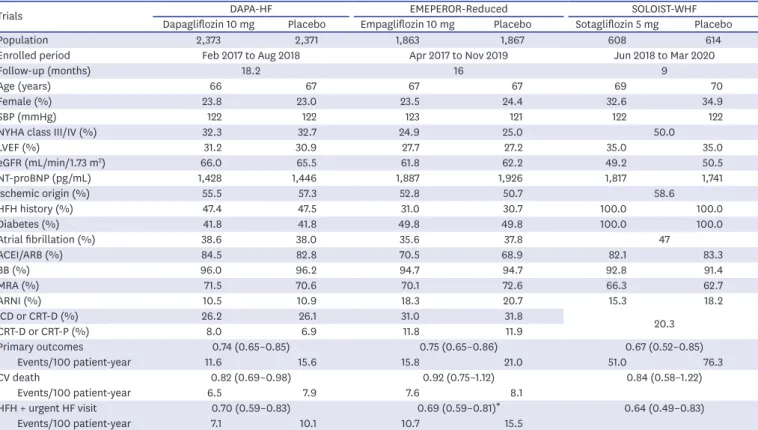
Comparing the baseline characteristics of 3 trials of SGLT2i in patients with HFrEF (Table 2), the DAPA-HF populations had higher eGFR, lower NT-proBNP level and lower use for ARNI, implantable cardioverter defibrillation, cardiac resynchronization therapy than those from EMPEROR-Reduced and SOLOIST-WHF. The discrepancy in these baseline risk factors may be related to lower event rates, especially HFH events in DAPA-HF trial.

Combining these 3 HFrEF trials together, recently published meta-analysis showed that

SGLT2i could reduce CV death or first HFH (HR, 0.74; 95% CI, 0.68–0.81), CV death and total

HFH (HR, 0.74; 95% CI, 0.67–0.82), CV death (HR, 0.86; 95% CI, 0.76–0.97) and all-cause

mortality (HR, 0.86; 95% CI, 0.77–0.96) in HFrEF patients.

21)

Following these lines of clinical

evidences, we can expect future HF guidelines may strongly recommend SGLT2i for HFrEF

patients with or without diabetes.

6)

It seems to be time for triple therapy to evolve to quadruple

(7)

therapy including beta-blockers, ARNI, mineralocorticoid receptor antagonists, and SGLT2i in HFrEF.

23)24)

Recent comparative analysis of 3 randomized controlled trials including EMPHASIS- HF (eplerenone), PARADIGM-HF (sacubitril-valsartan, ARNI) and DAPA-HF (dapagliflozin), supported this quadruple therapy as a new standard for HFrEF treatment.

25)

EFFECTS ON HEAT FAILURE EVENTS IN PATIENTS WITH HEAT FAILURE WITH PRESERVED EJECTION FRACTION

Since 2010, there has not been a drug that can reduce clinical events in patients with HFpEF.

26)27)

In January 2021, the US Food and Drug Administration (FDA) expanded indication to sacubitril-valsartan (ARNI) that would allow for use of the therapy in at least some patients with HFpEF, based on the results from the PARAGON-HF trial.

28)

The new FDA label includes the following note: “Benefits are most clearly evident in patients with LVEF below normal.”, which supported by further analysis of PARAGON-HF.

29)30)

Following the first drug for HFpEF, more attention have been paid to SGLT2i, a next nominee for HFpEF drug. An important uncovered question is whether the observed clinical benefits of SGLT2i is present in HFpEF patients like in T2DM or HFrEF patients. Until now, there have been limited data for SGLT2i in HFpEF. In each of the CVOT, approximately 10–15% of patients had a HF history,

31)

but the definition for HFrEF or HFpEF and documentation for LVEF were poor in CVOT and real-world evidence.

32-34)

Table 2. Key characteristics of trials for SGLT2i in heart failure with reduced ejection fraction

Trials DAPA-HF EMEPEROR-Reduced SOLOIST-WHF

Dapagliflozin 10 mg Placebo Empagliflozin 10 mg Placebo Sotagliflozin 5 mg Placebo

Population 2,373 2,371 1,863 1,867 608 614

Enrolled period Feb 2017 to Aug 2018 Apr 2017 to Nov 2019 Jun 2018 to Mar 2020

Follow-up (months) 18.2 16 9

Age (years) 66 67 67 67 69 70

Female (%) 23.8 23.0 23.5 24.4 32.6 34.9

SBP (mmHg) 122 122 123 121 122 122

NYHA class III/IV (%) 32.3 32.7 24.9 25.0 50.0

LVEF (%) 31.2 30.9 27.7 27.2 35.0 35.0

eGFR (mL/min/1.73 m

2

) 66.0 65.5 61.8 62.2 49.2 50.5

NT-proBNP (pg/mL) 1,428 1,446 1,887 1,926 1,817 1,741

Ischemic origin (%) 55.5 57.3 52.8 50.7 58.6

HFH history (%) 47.4 47.5 31.0 30.7 100.0 100.0

Diabetes (%) 41.8 41.8 49.8 49.8 100.0 100.0

Atrial fibrillation (%) 38.6 38.0 35.6 37.8 47

ACEI/ARB (%) 84.5 82.8 70.5 68.9 82.1 83.3

BB (%) 96.0 96.2 94.7 94.7 92.8 91.4

MRA (%) 71.5 70.6 70.1 72.6 66.3 62.7

ARNI (%) 10.5 10.9 18.3 20.7 15.3 18.2

ICD or CRT-D (%) 26.2 26.1 31.0 31.8 20.3

CRT-D or CRT-P (%) 8.0 6.9 11.8 11.9

Primary outcomes 0.74 (0.65–0.85) 0.75 (0.65–0.86) 0.67 (0.52–0.85)

Events/100 patient-year 11.6 15.6 15.8 21.0 51.0 76.3

CV death 0.82 (0.69–0.98) 0.92 (0.75–1.12) 0.84 (0.58–1.22)

Events/100 patient-year 6.5 7.9 7.6 8.1

HFH + urgent HF visit 0.70 (0.59–0.83) 0.69 (0.59–0.81) * 0.64 (0.49–0.83)

Events/100 patient-year 7.1 10.1 10.7 15.5

ACEI/ARB = angiotensin converting enzyme inhibitor/angiotensin receptor blocker; ARNI = angiotensin receptor-neprilysin inhibitor; BB = beta-blocker; CRT

= cardiac resynchronization therapy; eGFR = estimated glomerular filtration rate; HF = heart failure; HFH = heart failure hospitalization; ICD = implantable cardioverter defibrillation; LVEF = left ventricular ejection fraction; MRA = mineral-corticoid receptor antagonist; NT-proBNP = N-terminal-pro B-type natriuretic peptide; NYHA = New York Heart Association; SBP = systolic blood pressure; SGLT2i = sodium-glucose co-transporter 2 inhibitors.

* Excluding urgent HF visit.

(8)

In a post hoc analysis of SOLOIST-WHF, the key subgroup of interest was LVEF <50% vs.

≥50%, which showed a consistent clinical benefit with that in the main results of the trial.

Sotagliflozin therapy reduced primary composite outcome in both LVEF <50% (HR, 0.72; 95%

CI, 0.56–0.94) and LVEF ≥50% (HR, 0.48; 95% CI, 0.27–0.86) groups.

22)

This result could hint at efficacy of SGLT2i in HFpEF similar to that in HFrEF, even though the number of patients with a LVEF ≥50% (n=256) was modest. In a further subgroup analysis regarding LVEF, the HR for the primary composite outcome was 0.69 (95% CI, 0.51–0.92) in patients with a LVEF <40%

(n=725) and 0.68 (95% CI, 0.45–1.03) in patients with a LVEF ≥40% (n=494).

21)

There are 2 ongoing trials which designed to investigate the clinical effect of SGLT2i in HFpEF patients. The EMPEROR-Preserved trial enrolled 4,126 HFpEF patients to

empagliflozin or placebo (NCT03057951),

35)36)

and the DELIVER trial enrolled 4,700 patients to dapagliflozin or placebo (NCT01297257); both clinical trials are expected to be completed and reported in 2021–2022.

CONCLUSION

SGLT2i have been emerged as a powerful therapeutic option to reduce the risk of HF and HFH in patients with T2DM, and to reduce CV mortality and HFH in HFrEF patients with or without T2DM. These favorable benefits of SGLT2i could be attained by taking once daily without up-titration like renin-angiotensin system blockers or beta-blockers. In addition, the risk of hypotension, hyperkalemia, or worsening of renal function, which concerns that often accompany the use of HF medication is relatively low with low risk of other safety issues such as bone fracture, low extremity limb ischemia, and diarrhea. Ongoing study to evaluate the clinical effect of SGLTi for HFpEF may further widen the clinical implication of these novel cardiorenal protective drugs beyond their metabolic effects. Further translational or reverse translational studies should be warranted to elucidate the pharmacological mechanisms of SGLT2i on protection for heart, kidney and human being.

REFERENCES

1. Wright EM, Loo DD, Hirayama BA. Biology of human sodium glucose transporters. Physiol Rev 2011;91:733-94.

PUBMED | CROSSREF

2. DeFronzo RA, Reeves WB, Awad AS. Pathophysiology of diabetic kidney disease: impact of SGLT2 inhibitors. Nat Rev Nephrol 2021 [Epub ahead of print].

PUBMED | CROSSREF

3. Zelniker TA, Braunwald E. Mechanisms of cardiorenal effects of sodium-glucose cotransporter 2 inhibitors: JACC state-of-the-art review. J Am Coll Cardiol 2020;75:422-34.

PUBMED | CROSSREF

4. Alicic RZ, Neumiller JJ, Johnson EJ, Dieter B, Tuttle KR. Sodium-glucose cotransporter 2 inhibition and diabetic kidney disease. Diabetes 2019;68:248-57.

PUBMED | CROSSREF

5. Gilbert RE, Krum H. Heart failure in diabetes: effects of anti-hyperglycaemic drug therapy. Lancet 2015;385:2107-17.

PUBMED | CROSSREF

6. Zannad F, Ferreira JP, Pocock SJ, et al. SGLT2 inhibitors in patients with heart failure with reduced ejection fraction: a meta-analysis of the EMPEROR-Reduced and DAPA-HF trials. Lancet 2020;396:819-29.

PUBMED | CROSSREF

(9)

7. Zinman B, Wanner C, Lachin JM, et al. Empagliflozin, cardiovascular outcomes, and mortality in type 2 diabetes. N Engl J Med 2015;373:2117-28.

PUBMED | CROSSREF

8. Wiviott SD, Raz I, Bonaca MP, et al. Dapagliflozin and cardiovascular outcomes in type 2 diabetes. N Engl J Med 2019;380:347-57.

PUBMED | CROSSREF

9. McMurray JJ, Solomon SD, Inzucchi SE, et al. Dapagliflozin in patients with heart failure and reduced ejection fraction. N Engl J Med 2019;381:1995-2008.

PUBMED | CROSSREF

10. Packer M, Anker SD, Butler J, et al. Cardiovascular and renal outcomes with empagliflozin in heart failure.

N Engl J Med 2020;383:1413-24.

PUBMED | CROSSREF

11. Pellicori P, Ofstad AP, Fitchett D, et al. Early benefits of empagliflozin in patients with or without heart failure: findings from EMPA-REG OUTCOME. ESC Heart Fail 2020;7:3401-7.

PUBMED | CROSSREF

12. Verma S, McMurray JJ. SGLT2 inhibitors and mechanisms of cardiovascular benefit: a state-of-the-art review. Diabetologia 2018;61:2108-17.

PUBMED | CROSSREF

13. Neal B, Perkovic V, Matthews DR. Canagliflozin and cardiovascular and renal events in type 2 diabetes. N Engl J Med 2017;377:2099.

PUBMED | CROSSREF

14. Cannon CP, Pratley R, Dagogo-Jack S, et al. Cardiovascular outcomes with ertugliflozin in type 2 diabetes.

N Engl J Med 2020;383:1425-35.

PUBMED | CROSSREF

15. Bhatt DL, Szarek M, Pitt B, et al. Sotagliflozin in patients with diabetes and chronic kidney disease. N Engl J Med 2021;384:129-39.

PUBMED | CROSSREF

16. Zannad F, Cowie MR. VERTIS-CV: more evidence that sodium glucose cotransporter 2 inhibition brings rapid and sustained heart failure benefit. Circulation 2020;142:2216-8.

PUBMED | CROSSREF

17. Kramer CK, Ye C, Campbell S, Retnakaran R. Comparison of new glucose-lowering drugs on risk of heart failure in type 2 diabetes: a network meta-analysis. JACC Heart Fail 2018;6:823-30.

PUBMED | CROSSREF

18. Fitchett D, Zinman B, Wanner C, et al. Heart failure outcomes with empagliflozin in patients with type 2 diabetes at high cardiovascular risk: results of the EMPA-REG OUTCOME

®

trial. Eur Heart J 2016;37:1526-34.

PUBMED | CROSSREF

19. Grant PJ, Cosentino F. The 2019 ESC guidelines on diabetes, pre-diabetes, and cardiovascular diseases developed in collaboration with the EASD: New features and the ‘Ten Commandments’ of the 2019 guidelines are discussed by Professor Peter J. Grant and Professor Francesco Cosentino, the Task Force chairmen. Eur Heart J 2019;40:3215-7.

PUBMED | CROSSREF

20. Kato ET, Silverman MG, Mosenzon O, et al. Effect of dapagliflozin on heart failure and mortality in type 2 diabetes mellitus. Circulation 2019;139:2528-36.

PUBMED | CROSSREF

21. Docherty KF, McMurray JJ. SOLOIST-WHF and updated meta-analysis: sodium-glucose co-transporter 2 inhibitors should be initiated in patients hospitalized with worsening heart failure. Eur J Heart Fail 2021;23:27-30.

PUBMED | CROSSREF

22. Bhatt DL, Szarek M, Steg PG, et al. Sotagliflozin in patients with diabetes and recent worsening heart failure. N Engl J Med 2021;384:117-28.

PUBMED | CROSSREF

23. Felker GM. Building the foundation for a new era of quadruple therapy in heart failure. Circulation 2020;141:112-4.

PUBMED | CROSSREF

24. Berliner D, Bauersachs J. Current drug therapy in chronic heart failure: the new guidelines of the European Society of Cardiology (ESC). Korean Circ J 2017;47:543-54.

PUBMED | CROSSREF

25. Vaduganathan M, Claggett BL, Jhund PS, et al. Estimating lifetime benefits of comprehensive disease- modifying pharmacological therapies in patients with heart failure with reduced ejection fraction: a comparative analysis of three randomised controlled trials. Lancet 2020;396:121-8.

PUBMED | CROSSREF

(10)

26. Shim CY. Heart failure with preserved ejection fraction: the major unmet need in cardiology. Korean Circ J 2020;50:1051-61.

PUBMED | CROSSREF

27. Kim MS, Lee JH, Kim EJ, et al. Korean guidelines for diagnosis and management of chronic heart failure.

Korean Circ J 2017;47:555-643.

PUBMED | CROSSREF

28. Solomon SD, McMurray JJ, Anand IS, et al. Angiotensin-neprilysin inhibition in heart failure with preserved ejection fraction. N Engl J Med 2019;381:1609-20.

PUBMED | CROSSREF

29. Solomon SD, Vaduganathan M, L Claggett B, et al. Sacubitril/valsartan across the spectrum of ejection fraction in heart failure. Circulation 2020;141:352-61.

PUBMED | CROSSREF

30. Vaduganathan M, Jhund PS, Claggett BL, et al. A putative placebo analysis of the effects of sacubitril/

valsartan in heart failure across the full range of ejection fraction. Eur Heart J 2020;41:2356-62.

PUBMED | CROSSREF

31. Zelniker TA, Braunwald E. Clinical benefit of cardiorenal effects of sodium-glucose cotransporter 2 inhibitors: JACC state-of-the-art review. J Am Coll Cardiol 2020;75:435-47.

PUBMED | CROSSREF

32. Butler J, Packer M, Greene SJ, et al. Heart failure end points in cardiovascular outcome trials of sodium glucose cotransporter 2 inhibitors in patients with type 2 diabetes mellitus: a critical evaluation of clinical and regulatory issues. Circulation 2019;140:2108-18.

PUBMED | CROSSREF

33. Patorno E, Pawar A, Franklin JM, et al. Empagliflozin and the risk of heart failure hospitalization in routine clinical care. Circulation 2019;139:2822-30.

PUBMED | CROSSREF

34. Scheen AJ. Cardiovascular effects of new oral glucose-lowering agents: DPP-4 and SGLT-2 inhibitors. Circ Res 2018;122:1439-59.

PUBMED | CROSSREF

35. Anker SD, Butler J, Filippatos G, et al. Baseline characteristics of patients with heart failure with preserved ejection fraction in the EMPEROR-Preserved trial. Eur J Heart Fail 2020;22:2383-92.

PUBMED | CROSSREF

36. Packer M, Butler J, Filippatos G, et al. Design of a prospective patient-level pooled analysis of two parallel trials of empagliflozin in patients with established heart failure. Eur J Heart Fail 2020;22:2393-8.

PUBMED | CROSSREF

수치

Table 1. Key characteristics of cardiovascular outcome trials for SGLT2i in type 2 diabetes mellitus
Table 2. Key characteristics of trials for SGLT2i in heart failure with reduced ejection fraction

참조

관련 문서

따라서 버림, 반올림하여 백의 자리까지 나타낸 수가 같은 것은 ㉢입니다... 또한, 각각의 대응점에서 대칭의

사슴의 수는 조금씩 줄어들고 비버의 수는 늘어날 것이라고 쓰거나 오랜 시간에 걸쳐 생태계는 평형을 되찾아 늑대와 사 슴의 수는 적절하게 유지되고 강가의 풀과 나무도 잘

Determined parameters was used for the implementation of side-processed POF with the CO 2 laser, and measured experimental results of the illumination proved

In this study, the performance characteristics of a two-stage CO 2 system with two-different evaporator temperature have been analyzed according to outdoor

2. 모든 군중 TY 군과 TY-2 군 및 CO 군과 CO-2 군의 법랑질과 복합레진 계면의 접 착관계를 대표적인 현미경소견으로 Figure 2와 Figure 3에 나타내었다.. 인산을

In this study, hydrogen peroxide(H 2 O 2 ) was used for producing low molecular weight sodium alginates(LMWSAs) under e-beam irradiation or controlled

버섯의 재배 단계에서 발생된 고농도의 CO 2 를 상추 재배에 활용할 경우 상추의 광합성능력이 커지면서 생장이 촉진될 것이다.. 또한 버섯의 재배 단계에서 CO 2

ochraceus PF-2 (initial about 5 log spore/mL) with Lb. plantarum HD1 co-culture.. 항균물질 생성균주의 배양 상징액과 식중독/부패 미생물의 공동배양.. 가. plantarum