LNG 공사의 건설사업관리 의사결정지원모델 개발
- 시공단계 중심 -
박환표*․한재구1․진경호11)
1한국건설기술연구원 건설관리경제연구실
Development of a Decision Making Model for Construction Management in LNG Plant Construction
- Focused on Construction Stage -
Park, Hwan Pyo*, Han, Jae Goo1, Chin, Kyung Ho1
1Construction Management & Economy Research Division, Korea Institute of Construction Technology
Abstract : LNG plant projects tend to be implemented in overseas owing to its characteristics, so their project management scheme is somewhat different from those of general projects. Value chain in a LNG plant project includes exploration/production of gases, physical liquefaction/chemical conversion processes, transportation and storage. Key factors in the chain include liquefaction process (including ultra-low temperature liquefaction) to convert natural gas into liquid materials or fuel, and Front End Engineering Design (FEED) package, as well as Engineering, Procurement and Construction (EPC) technology comprising control, operation and construction. Success of a complex LNG plant project implemented in overseas depends on decision-making process in project management. Accordingly, to develop a decision-making model in of plant construction, the study extracted none factors in project management by EPC stage and assessed importance of each factor. The result showed that items in both project management and project risk management are important. Especially, the study developed a decision-making model in the construction stage of a LNG plant project based on the project management factors and importance assessment. The developed decision-making model would lay groundwork in building a decision-making system in construction stage of project management.
Keyword : LNG Plant, EPC, Project Management, Decision-making model, Evaluation of Importance Factor
1. 서 론
1.1 연구의 배경 및 목적
최근 세계경제는 경기둔화가 지속되는 가운데, IMF는 2013년 세계 경제성장률을 2.9%로 하향 조정하였다. 이러한 원인은 미국 정부부채한도 증액논쟁 및 신흥국가에서의 추 가 자본유출 발생 가능성 등의 영향이기 때문이다(이홍일 2013).
그러나 천연가스에 대한 수요증가에 힘입어 전 세계적으 로 LNG 지출 회복 강세가 지속적으로 증가 중에 있다. 특 히 세계 LNG 수요는 아시아를 중심으로 성장해 2020년대 중반 아태지역은 현재보다 70% 증가하여 신규계약 소요물 량이 연간 1억~2억 500만 톤 규모로 증가할 전망이고, 유 럽도 20% 증가할 것으로 예측하고 있다(한원희 2013).
* Corresponding author: Park, Hwan Pyo, Construction Management
& Economy Research Division, Korea Institute of Construction Technology, Gyeonggi-Do, 411-712, Korea
E-mail: [email protected]
Received December 26, 2013: revised March 5, 2014 accepted March 20, 2014
Douglas-Westwood(DW)사가 발표한 세계 LNG 시장전망 보고서에 의하면, 2013년부터 2017년까지 전 세계 자본지출 (Capex)는 총 2,280억 달러에 달할 것이라고 예측하고 있다.
이러한 급증하는 자본지출에는 온쇼어(onshore)와 오프쇼어 (offshore)에 고정된 수출터미널과 LNG 액화기지설비, LNG 운송선박, LGN 재기화 설비에 대한 투자가 포함되어 있다.
최근 국가경제 규모가 높아지고, 산업이 발전하면서 에너지 의 활용이 증가하고 있다. 특히 국내에서도 청정에너지의 사용량이 증가하여, 충남 서산의 9개 지역에서 가스를 정제 또는 비축기지를 구축하고 있다. 국내 가스 플랜트는 해외 산유국에서 생산된 자원을 해상으로 운반하여 저장 및 정 제시설에 비축한 후 최종 에너지 사용지로 보급하고 있다.
그러나 LNG 플랜트사업은 그 특성상 해외에서 사업을 추진하기 때문에 사업관리도 일반적인 사업관리방식과는 차이점이 있다고 볼 수 있다. 즉, LNG 플랜트 사업 프로세 스는 가스탐사 및 생산, 물리적인 액화 및 화학적인 전환공 정, 수송, 저장 등의 가치사슬로 구성되며, 주로 천연가스를 액체원료나 연료로 전환하는 장치를 중심으로 액화공정(초 저온 액화) 및 FEED 패키지, 제어․운영, 건설수행 등 EPC
기술을 대상으로 하고 있다.
따라서 본 연구는 LNG 플랜트공사의 사업관리 니즈분석 을 통한 사업관리항목을 도출하고 중요도를 평가하여, 스테 이지 게이트 모델 방법론을 활용한, LNG 플랜트공사의 시 공단계의 건설사업관리를 위한 의사결정모델을 구축하는데 그 목적이 있다.
1.2 연구의 방법 및 범위
본 연구는 LNG 플랜트사업의 사업관리모델을 구축하기 위하여 우선 기존 연구 및 논문을 조사·분석하였다. 그리고 LNG 플랜트 사업관리의 니즈를 조사하고, 이를 통한 사업 관리 항목을 도출하였다. LNG 플랜트사업에 맞는 사업관 리항목을 전문가의 중요도 평가를 통한 우선적으로 추진해 야 할 항목을 도출하였다. 이를 기반으로 LNG 플랜트 공 사의 시공단계 사업관리 의사결정지원모델을 구축하였다.
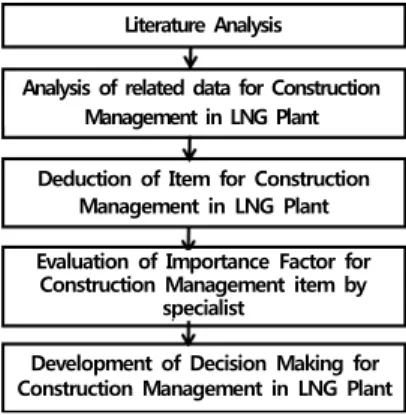
본 연구는 다음과 같은 방법으로 수행되었다(Fig. 1). 첫 째, 국내외 LNG공사 플랜트의 사업관리관련 연구동향을 조사·분석하였다. 둘째, 국내외 플랜트 사업관리 관련 자료 를 조사, 분석하여 LNG 사업 특성에 적합한 사업관리항목 을 도출하였다. 셋째, LNG 플랜트 EPC 단계별 사업관리항 목을 대상으로 관련분야 전문가들을 대상으로 각 항목별 중요도를 평가하여 중요항목을 도출하였다. 넷째, 이를 기 반으로 LNG 플랜트공사의 시공단계 사업관리 의사결정지 원 모델을 구축하였다.
Literature Analysis Analysis of related data for Construction
Management in LNG Plant Deduction of Item for Construction
Management in LNG Plant Evaluation of Importance Factor for
Construction Management item by specialist
Development of Decision Making for Construction Management in LNG Plant
Fig. 1. Flow diagram of Research
2. 연구동향 고찰
2.1 국내 관련연구 고찰
본 연구는 건설공사의 의사결정지원관련 논문을 조사·분 석하였다. 그 결과 건설관련 의사결정지원시스템과 플랜트 분야로 한정하여 연구한 결과들이 대부분 이었다. 건설공사 관련 지원시스템 연구동향을 보면, 첫째 전재열(2003)은 건 축설계단계에서 합리적인 건축설계대안 생성을 위한 협력 설계 의사결정 지원시스템 구축방법의 개념을 제시하는 기
초연구를 수행하였다. 또한 이종국(2004)은 건설업계의 의 사결정지원기술에 대한 인식제고와 건설조직에서 활용하고 있는 정보시스템의 활용방안을 마련하였다. 그리고 이종국 (2004)은 건설 프로젝트 관리의 틀로서 선행 연구에서 제시 된 CM BOK Framework을 이용하여 각 관리요소간의 상 호작용을 분석하고, 이들 상호작용 현상의 중심에 있는 12 가지의 핵심관리요소를 추출하여 제시하였다. 또한, 이들 핵심관리요소에 대한 실제 건설 프로젝트 관리현장의 사례 를 통하여 핵심관리요소로서의 활용 타당성을 검증하였다.
둘째, 해외 LNG 플랜트관련 연구는 플랜트 리스크 요인 분석과 사업관리 업무절차 개선 등의 연구가 수행되었다.
장우식(2011)은 해외 LNG 플랜트사업의 수익률 안정을 위 해 설계단계의 리스크를 규명하고, 이를 보다 합리적으로 평가하기 위한 방법을 제시하였다. 박범진(2008)은 사업관 리 효율증대를 위한 표준화된 업무절차 정립을 목적으로
‘EPC 수행단계별 업무절차 BPM 모델’의 시스템 개발모델 을 제안하였다.
이상과 같이 관련 연구 등을 분석한 결과, 건설 및 플랜 트의 사업관리 업무절차와 리스크 요인 등의 연구는 추진 되었지만, 각 건설사업 프로세스 단계별 의사결정을 지원해 주는 시스템에 대한 연구는 거의 없었다. 따라서 본 연구는 LNG 플랜트공사의 의사결정지원 모델을 구축하여 EPC업 체가 사업관리를 수행할 때, 지원받을 수 있는 시스템 구축 방향 등을 제시하고자 한다.
2.2 스테이지 게이트 모델 방법론 고찰
Robert G. Cooper의 스테이지 게이트 모델은 제품개발 프로세스를 더욱 효과적으로 하는데 사용할 수 있는 접근 방법이다(Robert G. Cooper 2005). 이 모델은 신제품 개발 을 관리하기 위한 기법으로 아이디어에서부터 제품 출시까 지 사전에 정의된 여러 단계로 구분하여 의사결정을 한다.
각 단계의 게이트들은 프로세스를 통제하고 품질관리, 확인 사항의 점검, 준비 및 확인업무를 수행하고, 다음 단계의 실행계획을 위한 준비업무를 수행한다.
¡
스테이지 게이트 모델의 프로세스는 발견단계로부터 시작 한다. 발견단계는 원래 5단계인 모델에서 후에 추가된 것이 다. 이 단계는 새로운 아이디어를 생성하기 위하여 디자인 된 사전작업을 포함한다. 각각의 단계는 아래와 같이 수행 한다.
첫째, 범위 지정(Scoping)은 각 프로젝트에 대한 신속하고 예비적인 조사로 프로젝트의 수를 좁히게 하는 내부조사를 통해 저렴한 정보를 제공하는 단계이다. 둘째, 비즈니스 사 례구축(Build Business Case)는 주요한 마케팅 및 기술적 조사를 통한 더욱 세부적인 조사를 하고, 비즈니스 사례에 는 제품정의, 제품 필요성 및 프로젝트 계획이 포함되어야 한다. 셋째, 개발(Development)은 간단한 제품 테스트와 함 께 신제품의 세부 설계 및 개발, 생산계획 및 시장 출시계 획을 수립하는 단계를 말한다. 넷째, 시험 및 검증(Testing and Validation)단계는 시장, 실험실, 공장에서의 광범위한 제품 테스트를 포함한다. 다섯째, 제품출시(Launch)단계는 전면적인 생산, 마케팅, 판매의 시작, 시장출시 및 생산, 운 영, 유통, 품질보증, 제품출시 후 평가실행 등의 업무를 수 행한다.
이러한 스테이지 게이트 모델 방법론은 제품개발을 성공 적으로 추진하기 위하여 각 단계 게이트의 의사결정이 매 우 중요하고, 이러한 의사결정 방법론을 LNG 플랜트공사 의 사업관리에 활용할 필요가 있다.
3. 국내외 건설사업관리 동향 분석 3.1 국내 플랜트 건설사업관리 동향조사
본 연구는 국내 플랜트 건설산업의 사업관리 요소를 파악 하기 위하여 국내 대형 건설업체의 업무절차서 수집 및 업 무절차서 관련 연구동향을 조사하였다. 특히 수행된 플랜트 프로젝트 표준화 기술개발의 연구결과를 통하여 국내 플랜 트 건설산업의 사업관리 요소를 파악하는데 기초자료로써 활용하였다.
조사결과 국내 건설사들의 경우 표준화, 국제화된 사업관 리 업무절차서로서 부족함이 있는 것으로 나타났다. 특히 전체 업무간 연계성 및 중점관리요소의 파악이 어려우며, 일부의 경우 양이 매우 방대하여 현장적용성이 떨어지는 것으로 조사되었다.
한편, 관련 연구동향에서 조사된 일반 산업플랜트의 EPC 수행단계별 사업관리 업무절차의 경우 사업관리, 사업비관 리, 공정관리, 품질관리, 계약 및 클레임관리, 안전관리, 환 경관리 등 7개의 주요 사업관리 요소로 정의하고 있으며 각 사업관리 요소는 EPC 수행 단계별로 각각의 상세 업무 를 정의하였다. 특징은 설계관리, 리스크관리 등에 관해서 는 별도로 정의하고 있지 않으며 사업관리분야에 일부 포 함하고 있는 것으로 분석되었다. 그러나 일반적인 산업플랜 트의 EPC 수행단계별 업무절차에 관한 정리로써 본 연구 의 대상인 LNG 플랜트의 특성에 맞는 사업관리 업무절차 서로 활용하기에는 미흡한 것으로 나타났다.
3.2 국외 사업관리요소 조사·분석
미국의 경우 프로젝트의 효율적인 관리를 위하여 많은 연
구가 진행 중에 있으며, 특히 PMI에서 제정한 PMBOK (Project Management Body Of Knowledge)과 CMAA (Construction Management Association of America)의 건 설사업관리 서비스 표준은 합리적이고 효율적인 프로젝트 관리를 위한 기반으로 평가받고 있다.
우선 PMBOK의 기본 구성은 프로젝트의 관리를 이해하 는데 있어 기본 구조를 제공하는 프로젝트 관리 프레임워 크(project management framework)와 프로젝트 관리지식과 실무를 프로세스 측면에서 9개의 지식영역으로 구분하여 기술하는 프로젝트 관리지식 영역(knowledge area) 등 크 게 두개의 부분으로 구성되어 있다. 특히 프로젝트 관리지 식 영역의 경우 각 프로세스의 수행에 필요한 정보(input) 와 최종 결과물(output), 각종 관리기법을 소개하고 있다 (PMI 2013).
최근 PMI에서는 건설산업분야의 특수성을 반영하여 상기 의 9가지 사업관리요소 이외에 4가지 요소(안전관리, 환경 관리, 재무관리, 클레임 관리)를 추가하여 건설분야 사업관 리요소를 별도로 제시하였다.
또한, 미국 건설사업관리협회(CMAA)가 제정한 건설사업 관리서비스 표준은 건설사업관리 업무범위를 건설공사의 생애주기를 기준으로 공사계획단계, 설계단계, 구매조달단 계, 시공단계, 완공 후 단계 등 5단계로 구분하고 있으며, 이를 대상으로 사업관리요소를 프로젝트관리, 원가관리, 공 정관리, 품질관리, 프로젝트 행정 및 계약관리, 안전관리 등 6개로 구분하고 있는 것으로 조사되었다.
4. LNG 플랜트 사업관리요소 도출 및 중요도 평가
4.1 LNG 플랜트공사의 사업관리 요소 도출
본 연구는 EPC 단계별 LNG 플랜트 사업관리 요소를 도 출하기 위하여 산업플랜트 EPC 수행단계별 사업관리 업무 절차(2007), PMBOK, CMAA 등 국내외 사례를 조사하였다.
그 결과 산업플랜트 EPC 수행단계별 사업관리 업무절차 (2007)에서는 7개, PMBOK는 9개, CMAA는 6개의 주요 항 목으로 사업관리요소를 구분하고 있었으며, 본 연구에서는 이들을 바탕으로 9개 항목의 기본적인 LNG 플랜트 사업관 리 주요항목을 도출하였다. 이렇게 도출된 LNG 플랜트 사 업관리항목(안)에 대하여 7개의 대형건설사와 엔지니어링회 사의 LNG 플랜트 경험있는 관련분야 전문가 11명을 대상 으로 자문과 검토과정을 실시하여 EPC 수행단계에 따라 총 9개의 LNG 플랜트의 건설사업관리 요소와 관리항목을 선정하였다.
선정된 항목은 사업관리, 설계관리, 사업비관리, 공정관리, 품질관리, 계약 및 클레임관리, 안전관리, 환경관리, 리스크 관리로 구분된다.
Item Contract & Design Purchase & Procurement Construction & Test Run Project
Management①Organize project organization
②Manage project contracts
③Establish document management system
④Establish record management system
⑤Manage project goal
⑥Establish project data exchange system
⑦Establish/execute licensing plan
①Establish purchase / procurement procedure
②Establish materials purchase plans
③Appoint materials manager
④Monitor materials handling
⑤Establish materials testing / delivery plan
⑥Establish spare part supply plan
⑦Establish special tool supply plan
①Open the on-site office and start works
②Hold construction-related meetings
③Manage on-site implementation targets
④Operate information system for construction
⑤Project evaluation
⑥Manage documents / materials related to construction
⑦Prepare reports in construction stage &
record-keeping
⑧Test run and education
⑨Establish completion plan
⑩Conduct completion inspection
⑪Conduct ex-post evaluation
⑫Prepare technical reviews
⑬Hand over facilities
⑭Hand over documents related to the construction
⑮Establish policy / plan for maintenance
Prepare guideline on maintenance
Report project completion Design
Management① Hold meeting on inter-disciplinary design review
② Establish design plan
③ Prepare design standards
④ Design work flow
⑤ Prepare design reports
⑥ Prepare/revise design drawings
⑦ Design review
⑧ Review constructability of design
⑨ Evaluate performance of subcontractors
① Prepare design purchase statement
② Prepare materials specifications for purchase
③ Prepare design drawings / statements
④ Select materials suppliers
⑤ Manage unused / surplus materials
① Prepare specifications
② Review detail drawings for construction
③ Review constructability
④ Prepare / manage documents on design change
⑤ Prepare / manage documents on project completion
Project Cost
Management① Cost management
② Manage cost and estimations
③ Establish/manage interim payment plan
④ Prepare budget for operating / construction
⑤ Prepare preliminary budgetcost
⑥ Prepare main budget
⑦ Estimate construction cost and prepare budget
⑧ Project estimation
⑨ Establish project implementation plan
① Manage materials cost and budget
② Manage payment for materials ① Analyze construction cost trend
② Inspect the completed construction parts
③ Analyze alternative construction cost
④ Manage execution establishment
⑤ Manage interim / final payment
⑥ Settle account in completion
⑦ Manage cost for on-site quality control
⑧ Manage cost for on-site safety management
⑨ Manage result of on-site environmental management
⑩ Manage on-site expenditure
⑪ Prepare reports on construction cost Process
Management① Establish / management criteria for project schedule
② Prepare / manage project process schedule
③ Review project process plan
④ Manage design schedule
① Establish purchase / procurement schedule
② Manage purchase / contracting schedule of materials
③ Manage manufacturing process of materials
④ Manage payment process of materials
⑤ Review detailed schedule for key long lead items
① Review detailed process schedule by work type
② Operate detailed process schedule by work type
③ Establish construction plan by work type
④ Conduct construction process management and progress inspection
⑤ Prepare process schedule for each field of construction
⑥ Construction management by work type
⑦ Establish/execute process recovery plan
⑧ Inspect work progress
⑨ Lengthen project period
⑩ Hold process meetings Project
Quality Management
① Establish plan and procedure for project quality management
② Set goal / scope of project quality management
③ Prepare / manage project quality specification
① materials Project quality management plan
② Authorize suppliers of materials
③ Materials inspection and warehouse management
④ Manage materials by resident engineers
⑤ Manage delivery of equipment & materials
⑥ Authorize manufacturing of machinery
⑦ Manage non-compliant materials
⑧ Manage measuring / inspection apparatus for materials
⑨ Assess performance / quality of suppliers
⑩ Manage materials supplied on site
⑪ Inspect / manage materials for construction
① Hold quality coordination meetings
② Qualify/manage quality inspector
③ Provide on-site quality education and training
④ Review guideline on construction quality management
⑤ Measurement and testing
⑥ Manage equipment & materials on site
⑦ Analyze / manage trend of quality
⑧ Rectify / prevent non-compliance
⑨ Troubleshooting & technical cooperation
Contract/Clai m Management
① Determine contracting method
② Establish bidding and contract procedure
③ Announce bidding & and on-site presentation
④ Manage contracts
⑤ Change contract
⑥ Select construction designer
⑦ Design service contract
⑧ Manage design service
① Purchase contract
② Manage purchase contracts ex post
③ Manage insolvency of suppliers and follow-up measures
④ Purchase materials (purchase in small quantity)
⑤ Purchase materials (via private contract)
⑥ Purchase materials (via bidding)
① Order to stop construction
② Response to delays in contract implementation
③ Countermeasure for claim
④ Claim management (general)
⑤ Claim management (Construction cost)
⑥ Subcontracting related to construction
⑦ Adjust contract price based on price fluctuation
⑧ Adjust contract price according to design change
⑨ Review / manage design changes in construction stage
Safety
Management① Establish plan / rules for safety management
② Prepare requirement and guidelines on safety
③ Review potential risk factor
④ Set safety management cost
① Set safety management cost for purchase / procurement
② Prepare requirements / guidelines for safety of purchase / procurement
① Review on-site safety system
② On-site safety inspection
③ Promote accident-free campaign
④ Implement/supervise safety management
⑤ Hold safety coordination meetings
⑥ Provide education and training on safety
⑦ Manage documents concerning safety management
⑧ Appoint a safety manager
⑨ Hold safety/health meetings
⑩ Protective equipment / facility management
⑪ Safety diagnosis / periodic inspection
⑫ Safety activity / monitoring
⑬ Safety audit Table 1. Management Factors in LNG Plant Project
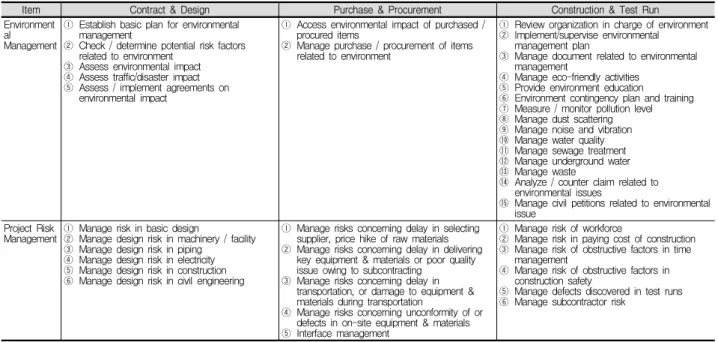
Item Contract & Design Purchase & Procurement Construction & Test Run Environment
al Management
① Establish basic plan for environmental management
② Check / determine potential risk factors related to environment
③ Assess environmental impact
④ Assess traffic/disaster impact
⑤ Assess / implement agreements on environmental impact
① Access environmental impact of purchased / procured items
② Manage purchase / procurement of items related to environment
① Review organization in charge of environment
② Implement/supervise environmental management plan
③ Manage document related to environmental management
④ Manage eco-friendly activities
⑤ Provide environment education
⑥ Environment contingency plan and training
⑦ Measure / monitor pollution level
⑧ Manage dust scattering
⑨ Manage noise and vibration
⑩ Manage water quality
⑪ Manage sewage treatment
⑫ Manage underground water
⑬ Manage waste
⑭ Analyze / counter claim related to environmental issues
⑮ Manage civil petitions related to environmental issue
Project Risk
Management① Manage risk in basic design
② Manage design risk in machinery / facility
③ Manage design risk in piping
④ Manage design risk in electricity
⑤ Manage design risk in construction
⑥ Manage design risk in civil engineering
① Manage risks concerning delay in selecting supplier, price hike of raw materials
② Manage risks concerning delay in delivering key equipment & materials or poor quality issue owing to subcontracting
③ Manage risks concerning delay in transportation, or damage to equipment &
materials during transportation
④ Manage risks concerning unconformity of or defects in on-site equipment & materials
⑤ Interface management
① Manage risk of workforce
② Manage risk in paying cost of construction
③ Manage risk of obstructive factors in time management
④ Manage risk of obstructive factors in construction safety
⑤ Manage defects discovered in test runs
⑥ Manage subcontractor risk Table 1. Management Factors in LNG Plant Project (continued)
본 연구에서는 사업생애주기를 기반으로 하되, 계약이후 의 단계를 전제로 계약 및 설계단계, 구매 및 조달단계, 시 공 및 시운전단계로 구분하여 각각의 단계별로 사업관리 요소의 세부항목을 선정하였다. 선정된 각 단계별 사업관리 요소는 Fig. 1과 같다.
4.2 LNG 플랜트공사의 사업관리요소 중요도 평가결과 LNG 플랜트 사업관리에 대한 의사결정 지원체계를 갖추 기 위해서는 전절에서 선정한 LNG 플랜트 사업관리업무 항목에 대한 중요도 평가를 통하여 의사결정을 하는데 있 어서 우선 고려해야할 사업관리 항목을 도출하는 것이 필 요하다. 따라서 본 연구는 EPC 단계별의 세부 사업관리항 목도 각 사업관리항목 내에서 1∼5점 척도로 중요도를 평 가하여, 이러한 중요도1과 중요도 2의 결과를 곱함으로써 사업관리요소별 세부항목별 비교가 가능한 중요도를 도출 하였다. 이러한 중요도 평가과정은 LNG 플랜트 설계와 경 험이 있는 전문가 11인을 대상으로 3단계에 걸쳐 의사결정 과정에서 중요하다고 하는 것을 평가하였고, 그 절차는 아 래와 같다.
첫째, 앞서 선정된 EPC 단계별 9개의 LNG 플랜트 사업 관리 항목에 대하여 공정, 품질, 안전, 사업비, 리스크 측면 에서 1~5점 척도로 중요도를 평가하였다(중요도1). 둘째, EPC 단계별 9개의 LNG 플랜트 사업관리 항목에 대한 세 부항목을 대상으로 각 사업관리 항목내에서 1~5점 척도로 중요도를 평가하였다(중요도2). 셋째, 상기에서 평가한 사업 관리 항목별 중요도1을 가중치로 활용하여 세부항목별 중 요도2와 곱함으로써 각기 다른 사업관리요소별 세부항목간 의 비교가 가능하도록 하였다(중요도3).
이는 향후 LNG 플랜트의 프로젝트 성격에 따라서 지배 적으로 작용하는 영향요인이 발생 할 경우 이를 우선 고려 함으로써 사업단계별 의사결정에 활용하고자 하는 것이다.
조사결과 상기 생애주기별 사업관리업무 중 중요도가 높게 나타난 사업관리업무를 중심으로 각각의 세부업무에 대한 중요도 평가 결과는 Table 2와 같다.
Item
Contract / Design
Stage
Purchase / Procurement
Stage
Construction / Test Run
Stage
Project Management 3.60 3.4 3.87
Design Management 3.53 3.31 3.53
Project Cost Management 3.44 3.31 3.71
Process Management 3.47 3.29 3.80
Project Quality Management 3.24 3.16 3.42
Contract and Claim Management 3.36 3.40 3.69
Safety Management 3.11 3.00 3.36
Environmental Management 2.82 2.60 2.93
Project Risk Management 3.56 3.36 3.78
Table 2. Assessment of Importance Factor in Project Management by Project Stage
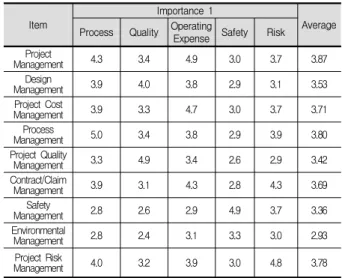
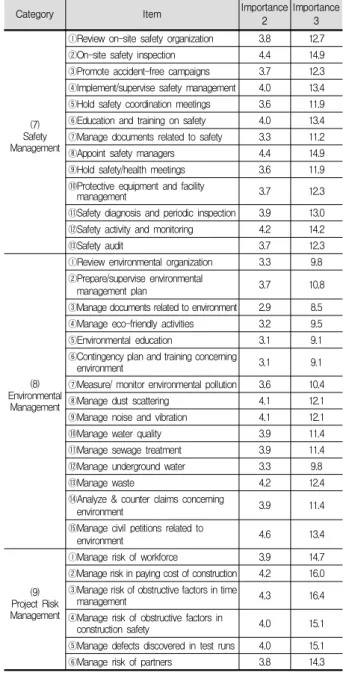
LNG 플랜트공사의 시공 및 시운전단계 사업관리의 정의 를 통하여 사업관리항목을 Table 3과 Table 4와 같이 도출 하였고, 이를 기반으로 각 9개의 사업관리항목과 세부항목 에 대한 중요도를 Table 4와 Table 5와 같이 분석하였다.
분석결과를 보면, 사업관리, 공정관리, 리스크관리가 LNG 플랜트공사의 시공단계에서 다른 분야보다도 중요하는 것 을 알 수 있었다. 따라서 본 연구는 이를 고려한 시공단계 의 의사결정모델 구축시 기초자료로 활용하였다.
Fig 4. Process Flow by Stage in the Plant Project Fig. 3. Importance of Project Management Factors by Project
Stage
Item Definition
Project (1) Management
Operations and work flow required to implement the project without a hitch from starting through project completion to maintenance stage according to construction procedure and contracting required for efficient construction and test run
Design (2) Management
Operations and work flow required to prepare specifications, review detail drawings, and make / manage construction drawings Project Cost (3)
Management
Operations and work flow required to estimate construction cost for efficient construction / maintenance operations, and spend / change operating expenses in construction/test run stage Process (4)
Management
Operations and work flow required to make / change plans for work schedule and work type for efficient construction and test run, and to manage schedules and processes required in construction / maintenance stage
(5) Project Quality
Management
Operations and work flow required to set quality policy, goals, and responsibilities to meet the requirements in construction / test run stage, as well as to provide quality assurance and quality control
(6) Contract/Claim Management
Operations and work flow required to select contracting method / procedure, as well as to handle operations related to contracting / dispute settlement
(7) Safety Management
Operations and work flow related to safety management activities in construction/test run stage
(8) Environmental
Management
Operations and work flow related to implement, identify, analyze, respond, monitor or control environmental management in construction stage
(9) Project Risk Management
Operations and work flow related to make a list of risks by identifying, analyzing, evaluating, and managing threats & opportunities in construction stage, as well as to designate staff in charge of handling each risk, to prepare / manage contingency plans
Table 3. Result of Surveying Importance Factor by Management Item: Construction/Test Run Stage
Item
Importance 1
Average Process Quality Operating
Expense Safety Risk Project
Management 4.3 3.4 4.9 3.0 3.7 3.87
Design
Management 3.9 4.0 3.8 2.9 3.1 3.53
Project Cost
Management 3.9 3.3 4.7 3.0 3.7 3.71
Process
Management 5.0 3.4 3.8 2.9 3.9 3.80
Project Quality
Management 3.3 4.9 3.4 2.6 2.9 3.42
Contract/Claim
Management 3.9 3.1 4.3 2.8 4.3 3.69
Safety
Management 2.8 2.6 2.9 4.9 3.7 3.36
Environmental
Management 2.8 2.4 3.1 3.3 3.0 2.93
Project Risk
Management 4.0 3.2 3.9 3.0 4.8 3.78
Table 4. Importance of Factors in Project Management: Construction/
Test Run Stage
Category Item Importance
2
Importance 3
Project (1) Management
①Open the on-site office and start work 3.4 13.3
②Hold meetings related to construction 3.2 12.5
③Manage on-site target 4.0 15.5
④Operate information system for
construction management 3.7 14.2
⑤Project evaluation 3.1 12.0
⑥Manage documents and materials related
to construction 3.6 13.7
⑦Prepare reports in construction stage and
record-keeping 3.2 12.5
⑧Test run and education 4.0 15.5
⑨Establish completion plan 3.7 14.2
⑩Completion inspection 3.4 13.3
⑪Ex post evaluation 3.1 12.0
⑫Prepare technical review reports 3.6 13.7
⑬Hand over the facility 3.6 13.7
⑭Hand over documents concerning the
construction project 3.2 12.5
⑮Establish policy/plan for maintenance 3.3 12.9
Prepare guideline on maintenance 3.3 12.9
Report project completion 3.3 12.9 Table 5. Importance of Factors in Project Management in Detail:
Construction/Test Run Stage
Category Item Importance 2
Importance 3
(2) Design Management
①Prepare specifications 3.7 13.0
②Review detail drawings for construction 3.8 13.3
③Review constructability 3.9 13.7
④Prepare / manage documents on design
change 4.0 14.1
⑤Prepare / manage documents on project
completion 3.8 13.3
(3) Operating
Expense Management
①Analyze construction cost trend 3.6 13.2
②Inspect the completed construction parts 3.6 13.2
③Analyze alternative construction cost 3.7 13.6
④Manage execution establishment 4.3 16.1
⑤Manage interim / final payment 4.2 15.7
⑥Settle account in completion 4.2 15.7
⑦Manage cost for on-site quality control 3.2 12.0
⑧Manage cost for on-site safety
management 3.2 12.0
⑨Manage result of on-site environmental
management 3.0 11.1
⑩Manage on-site expenditure 3.1 11.5
⑪Prepare reports on construction cost 4.0 14.8
(4) Process Management
①Review detailed process schedule by work
type 4.1 15.6
②Operate detailed process schedule by
work type 4.2 16.0
③Establish construction plan by work type 4.2 16.0
④Conduct construction process
management and progress inspection 4.2 16.0
⑤Prepare process schedule for each field of
construction 3.9 14.8
⑥Construction management by work type 3.6 13.5
⑦Establish/execute process recovery plan 4.1 15.6
⑧Inspect work progress 3.8 14.4
⑨Lengthen project period 3.4 13.1
⑩Hold process meetings 3.0 11.4
(5) Project Quality
Management
①Hold quality coordination meetings 3.4 11.8
②Qualify/manage quality inspector 3.2 11.0
③Provide on-site quality education and
training 3.4 11.8
④Review guideline on construction quality
management 3.7 12.5
⑤Measurement and testing 3.7 12.5
⑥Manage equipment & materials on site 3.4 11.8
⑦Analyze / manage trend of quality 3.3 11.4
⑧Rectify / prevent non-compliance 4.1 14.1
⑨Troubleshooting & technical cooperation 3.9 13.3
(6) Contract/Claim
Management
①Order to stop construction 3.6 13.1
②Response to delays in contract
implementation 3.6 13.1
③Countermeasure for claim 4.1 15.2
④Claim management (general) 3.7 13.5
⑤Claim management (Construction cost) 4.2 15.6
⑥Subcontracting related to construction 3.7 13.5
⑦Adjust contract price based on price
fluctuation 4.0 14.8
⑧Adjust contract price according to design
change 4.2 15.6
⑨Review / manage design changes in
construction stage 4.0 14.8
Table 5. Importance of Factors in Project Management in Detail:
Construction/Test Run Stage (continued) Category Item
Importance 2
Importance 3
(7) Safety Management
①Review on-site safety organization 3.8 12.7
②On-site safety inspection 4.4 14.9
③Promote accident-free campaigns 3.7 12.3
④Implement/supervise safety management 4.0 13.4
⑤Hold safety coordination meetings 3.6 11.9
⑥Education and training on safety 4.0 13.4
⑦Manage documents related to safety 3.3 11.2
⑧Appoint safety managers 4.4 14.9
⑨Hold safety/health meetings 3.6 11.9
⑩Protective equipment and facility
management 3.7 12.3
⑪Safety diagnosis and periodic inspection 3.9 13.0
⑫Safety activity and monitoring 4.2 14.2
⑬Safety audit 3.7 12.3
(8) Environmental
Management
①Review environmental organization 3.3 9.8
②Prepare/supervise environmental
management plan 3.7 10.8
③Manage documents related to environment 2.9 8.5
④Manage eco-friendly activities 3.2 9.5
⑤Environmental education 3.1 9.1
⑥Contingency plan and training concerning
environment 3.1 9.1
⑦Measure/ monitor environmental pollution 3.6 10.4
⑧Manage dust scattering 4.1 12.1
⑨Manage noise and vibration 4.1 12.1
⑩Manage water quality 3.9 11.4
⑪Manage sewage treatment 3.9 11.4
⑫Manage underground water 3.3 9.8
⑬Manage waste 4.2 12.4
⑭Analyze & counter claims concerning
environment 3.9 11.4
⑮Manage civil petitions related to
environment 4.6 13.4
(9) Project Risk Management
①Manage risk of workforce 3.9 14.7
②Manage risk in paying cost of construction 4.2 16.0
③Manage risk of obstructive factors in time
management 4.3 16.4
④Manage risk of obstructive factors in
construction safety 4.0 15.1
⑤Manage defects discovered in test runs 4.0 15.1
⑥Manage risk of partners 3.8 14.3
5. 사업관리 의사결정 지원체계 구축
의사결정지원체계는 경영자가 자료와 분석모델을 사용하 여 비정형적인 문제해결을 할 수 있도록 컴퓨터를 사용하 여 만든 체계로 경영정보체계처럼 미리 규정된 원칙에 따 라 작동하는 것이 아니라 의사결정자와의 상호작용을 통해 만족스러운 해결방안을 찾을 수 있도록 정보를 제공하는 것을 목표로 하고 있다. 의사결정에 유용한 정보를 제공하 기 위해서는 보다 분석적이고 다양한 정보가 제공되어야 한다(김락상 2002). MIS(Management Information System) 나 KMS(Knowledge Management System) 등 각종 전산화 시스템이 개발되면서 많은 기업들이 다량의 데이터를 축적 할 수 있게 되었지만, 이러한 데이터들이 시스템 내에서 사 용되는 것 외에 특별한 부가가치를 창출해내지 못하는 것 으로 평가받고 있고, 이에 데이터를 효과적으로 사용하여
Fig. 6. Designing Stage-Gate Model in Construction Stage
의사결정에 유용하게 활용할 수 있는 방안이 모색되어 의 사결정지원기술이 필요하게 되었다(이종국 2004).
특히, LNG 플랜트공사는 현장이 해외에 있고, 토목 및 건축공사와 LNG 플랜트공사가 복합적으로 수행되기 때문 에 사업관리를 수행하는데 많은 어려움이 있고, 특히 사업 을 성공적으로 수행하기 위해서는 각 단계별 및 사업관리 업무별 리스크 등의 발생으로 인한 의사결정을 수행해야할 사항 등이 많이 발생하기 때문에, 무엇보다도 LNG 플랜트 공사의 사업관리 의사결정지원체계 구축이 필요하다.
플랜트공사의 경우, 원칙적으로 설계, 구매 및 하청계약, 시공, 시운전, 공사인계의 순서로 업무가 진행되고 있으며, 각 활동은 Fig. 4와 같은 세부 활동으로 구성된다. 그러나 Fast Track 공사에서는 설계, 구매, 시공이 중첩되어 시공 되기도 한다.
따라서 본 연구는 LNG 플랜트공사의 사업관리 의사결정 지원체계를 구축하기 위하여, LNG 플랜트공사의 사업관리 요소를 파악하였고, 이러한 사업관리 요소는 LNG 플랜트 공사의 설계 및 구매조달 및 시공단계에서 경험있는 설계 및 시공 전문가 11인을 대상으로 검증하였다.
LNG 플랜트공사의 의사결정은 사업관리자가 EPC 단계 (계약 및 설계단계, 구매 및 조달단계, 시공단계)의 성과물 이 각 관리기준에 맞게 수행되었는지를 확인하는 것으로 본 연구에서는 EPC 단계별 Stage 게이트를 설정하여 각 게이트별 사업을 성공적으로 수행하기 위하여 관리항목별 로 의사결정을 할 수 있는 것을 말한다.
Fig. 5의 LNG 플랜트공사의 의사결정 프로세스는 설계, 구매, 시공단계에서 사업관리의 주요 관리항목을 체계화하 여 Fig. 7과 같은 스테이지 게이트별 의사결정을 할 수 있 도록 지원해 주는 것을 말한다.
Fig. 5. Decision-Making Process in LNG Plant Project
특히 스테이지 게이트 모델방법론에 의하여 시공단계의 스테이지 게이트를 구성하여 각 게이트별 의사결정을 할 수 있는 사업관리 항목과 기준을 설정하여 사업관리자가 사업을 수행할 때 의사결정을 할 수 있도록 구성한 것을 의미한다.
LNG 플랜트공사는 일반 토목 및 건축공사에 비하여 구매 조달단계의 비중이 크고, 리스크 요인이 높은 것이 특징이 기 때문에, 사업관리의 의사결정을 지원하는 체계가 필요하 다. LNG 플랜트공사의 사업관리 의사결정을 추진하기 위하 여 의사결정의 고려항목을 공통사항과 각 단계의 사업관리 업무의 항목으로 구분하여 결정하는 구조를 제안하였다.
특히, 공통적인 의사결정을 위한 고려항목은 LNG 플랜 트공사의 사업을 성공적으로 수행하기 위하여 공사기간(공 정), 고품질의 성과물 확보(품질관리), 적정 사업비 확보(비 용), 사업의 안전(안전관리), 사업의 리스크 최소화(리스크) 등으로 구분하여 운영이 필요하다. 또한 사업관리자가 각 사업단계별로 사업관리업무 내의 의사결정을 하는데, 주요 인자를 고려한 의사결정지원을 하는데 도움을 주는 체계 구축이 무엇보다도 중요하다. 이러한 LNG 플랜트 공사의 사업관리 의사결정지원체계를 기반으로 각 사업단계별 의
Fig. 7. Stage-Gate Model in Construction Stage
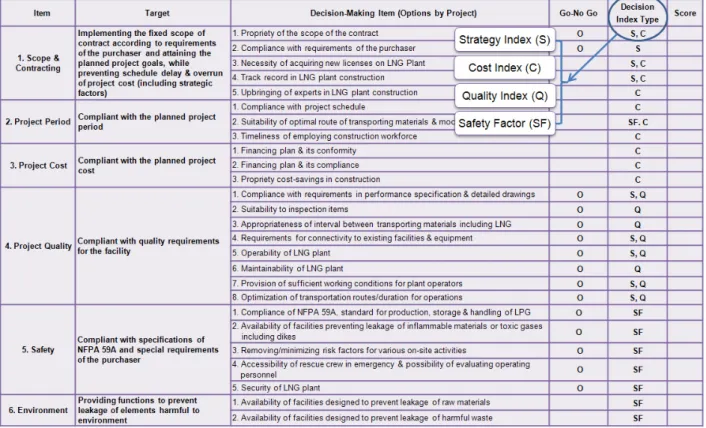
Fig. 8. Decision-making Criteria of Construction Gate in Construction Stage
사결정지원모듈을 구축하여 통합적으로 운영할 수 있는 의 사결정지원체계를 구축하는 것이 필요하다.
6. 시공단계의 사업관리 의사결정모델 구축
LNG 플랜트사업의 의사결정지원시스템 구현을 위한 의 사결정 로직은 핵심적인 의사결정 평가항목인 전략적 목표 와의 부합성, 투자수익목표 부합성, 안전기준 및 품질기준 에 대한 부합성을 토대로 Gate Review Factor를 구성하고,
Go-No Go Sub Gate와 위험도와 관리수준 점수에 의한 Scored Subgate로 구분하여 의사결정을 수행하도록 구성하 였다.
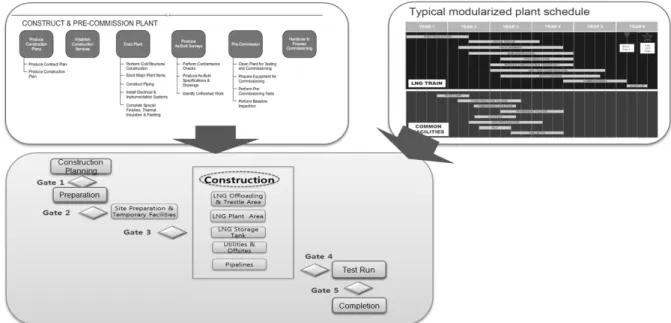
LNG 플랜트의 시공단계 업무 파악을 위해서 문헌조사와 실제 공정계획 수립 사례에 대한 조사를 통해 시공단계 Stage–gate 모델을 Fig. 7과 같이 제시하였다. 시공단계의 경우 시공계획 수립 및 착공 준비 후 사업관리자는 시공 또는 설치(Installation) 단계에서는 수립된 공정계획에 따라
Area를 중간 사업관리자가 관리 가능한 범위로 분할하고 장기간(4~5년)에 걸친 시공과정을 전략, 비용, 품질, 안전의 관점에서 지속적으로 관리해 나가는 모델을 제시하였다.
시공단계 의사결정항목 도출과 사업관리 매뉴얼 작성을 위한 성과 도출 과정을 보면, 일반적인 공정플랜트 시공 및 사업관리 관련 문헌을 고찰하고, 해외 LNG 사업인 오스트 레일리아 Pacific LNG 등의 추진현황, 환경영향평가 보고 서 등에 포함되어 있는 시공단계 공정표, 업무 등을 파악하 여 일반적인 공정계획을 도출하였다(Fig. 6).
안전 및 품질관련 성과지수 도출을 위하여 국내 전문가 들과 NFPA 59A 등의 안전기준 등을 토대로 LNG 플랜트 를 구성하는 각 시설물별 검측사항을 도출하고 각 게이트 별로 의사결정지원을 위한 검토 템플릿을 도출하여 최종적 으로 시공단계에 활용할 사업관리 의사결정 지원모델을 개 발하였다.
Fig. 7은 LNG플랜트 시공단계 단계의 Stage-Gate 프로세 스에서 의사결정방법을 표현한 것이다. Gate 1, Gate 2, Gate 3는 기존의 의사결정모델을 활용하고 있다. 시공단계 에서는 공기, 공사비, 품질 및 안전 등 사업관리 관점에서 정보를 제공하기 위해 공정계획과 수행결과 등 정보를 제 공하는 기능을 제공하고자 하였다. Gate4의 경우에는 계약 관리 및 안전, 품질에 대한 기술적 요구사항을 Go-No Go 의 의사결정 체크리스트 형태로 제시하였다.
Fig. 8은 시공단계의 Construction gate에 대한 Go-No Go의 평가기준과 의사결정항목을 표현한 것이다. Go-No Go 기준은 계약관리, 품질과 안전에 관한 의사결정항목만 반영되도록 하였다.
7. 결론
본 연구는 스테이지 게이트 모델 방법론을 활용한 LNG 플랜트공사의 건설사업관리를 위한 의사결정지원 모델을 구축하는데 그 목적이 있다. 따라서 LNG 플랜트공사의 EPC 단계 사업관리요소를 도출하고, 도출된 사업관리요소 에 대한 중요도를 전문가를 통하여 평가하였다. 이를 기반 으로 본 연구는 LNG 플랜트공사의 시공단계 사업관리 의 사결정지원 모델을 구축하기 위하여 EPC 단계별로 9개의 사업관리요소 항목을 도출하고, 각 항목별 중요도를 평가하 였다. 중요도 평가결과, EPC 단계별로 사업관리와 리스크 관리 항목이 공통적으로 중요한 것으로 도출되었다.
또한 사업관리 요소항목과 중요도 평가결과를 기반으로 LNG 플랜트공사의 시공단계의 의사결정지원모델을 개발하 였다. 본 연구는 스테이지 게이트 모델 방법론을 활용하여 LNG 플랜트공사의 게이트를 구성하고 각 게이트별 관리항 목을 도출하였다. 이를 토대로 특히 본 연구에서 제안한 LNG 플랜트공사의 의사결정지원체계는 EPC 단계의 사업
관리 추진시 사업관리자의 의사결정을 할 수 있는 지원해 주는 체계와 지식체계로 LNG 플랜트 사업의 실무에 활용 될 것으로 기대된다. 또한 의사결정지원모델은 향후 시공단 계의 사업관리 의사결정지원 시스템 구축의 기반이 될 것 으로 예상된다.
본 연구는 LNG 플랜트공사의 EPC단계에서 의사결정할 수 있는 체계를 개발한 것으로 기획단계와 유지관리단계는 제외되어 있다. 따라서 향후에는 LNG 플랜트공사의 기획 단계와 유지관리단계까지의 의사결정을 할 수 있는 Stage Gate 모델을 구축하고, 또한 다른 분야의 플랜트공사 의사 결정지원체계를 구축하는 연구가 필요할 것이다.
감사의 글
본 연구는 국토교통부 플랜트연구사업(LNG 플랜트사업 단, 08 가스플랜트 B05) 결과의 일부임.
References
Lee, Y. N. (2007). “Management Research in Plant Construction”, Ministry of Construction and Transportation.
Lee, H. I. (2013). “2014 Construction Business View”, Construction Economy Research Institute of Korea, p.11 Han, J. K., Jin, K. H., and Park, H. P. (2010). “Elicitation
Project Management Factors and Evaluation of its Weight to Ensure LNG Plant Success”, Journal of the Korea Institute of Building Construction, Proceedings of JKIBC Annual Conference, JKIBC, 10(1), pp. 85-86.
Chun, J. Y., and Oh, S. J. (2003). “Constitutional Directions of Decision Support System for Cooperative Design in Architectural Design Phase”, Korean journal of Construction Engineering and Management, KICEM, 4(2), pp. 91-92.
Lee, J. K. (2004). “Proposal of an Application Characteristic Model of Information System for Construction Decision-making Support”, Proceedings of KICEM Annual Conference, KICEM, pp. 153-154.
Lee, J. K., and Lee, H. S. (2004). “Extraction of Pivotal Entities of Construction Project Management using the CMBOK Framework”, Korean journal of Construction Engineering and Management, KICEM, 5(1), pp. 140-141.
Jang, W. S., Hong, H. W., and Han, S. H. (2011).
“Identification and Priority method for Overseas LNG Plant Projects - Focusing on Design Phase-”, Korean journal of Construction Engineering and Management, KICEM, 12(5), pp. 146-147.
요약: LNG 플랜트사업은 그 특성상 해외에서 사업을 추진하기 때문에 사업관리도 일반적인 사업관리방식과는 차이점이 있다. LNG 플랜트 사업 프로세스는 가스탐사 및 생산, 물리적인 액화 및 화학적인 전환공정, 수송, 저장 등의 가치사슬로 구성되며, 주로 천연 가스를 액체원료나 연료로 전환하는 장치를 중심으로 액화공정(초저온 액화) 및 FEED 패키지, 제어․운영, 건설수행 등 EPC 기술 을 대상으로 하고 있다. 이러한 해외에서 수행되고 복잡한 LNG 플랜트공사의 성공은 사업관리 의사결정에 따른 사업의 성패가 달 라질 수 있다. 따라서 본 연구는 LNG 플랜트공사의 시공단계 사업관리 의사결정지원 모델을 구축하기 위하여 EPC 단계별로 9개 의 사업관리요소 항목을 도출하고, 각 항목별 중요도를 평가하였다. 중요도 평가결과, EPC 단계별로 사업관리와 리스크관리 항목 이 공통적으로 중요한 것으로 도출되었다. 특히 본 연구는 사업관리 요소항목과 중요도 평가결과를 기반으로 LNG 플랜트공사의 시공단계의 의사결정지원모델을 개발하였다. 개발된 의사결정지원모델은 향후 시공단계의 사업관리 의사결정지원 시스템 구축의 기반이 될 것이다.
키워드 : LNG 플랜트, EPC, 사업관리, 의사결정 모델, 중요도 평가 Park, B. J., Lee, M. J., and Lee, T. S. (2005), “Development
of EPC Business Process Management Model for Improving Plant Project Management”, Korean journal of Construction Engineering and Management, KICEM, 9(5), pp. 149-150.
Robert, G. C. (2005). Product leadership : pathways to profitable innovation.
Han, W. H. (2003). “Global prospect of International LNG Market”.
PMI (2003).“ A Guide to the Project Management Body of Knowledge (Pmbok Guide)”, - 5th Edition.