Introduction
Hypercholesterolemia is a major cause of cardiovascular disease (CVD), such as atherosclerosis and coronary heart disease (Chobanian, 1991; Son et al., 2015). CVD is the most common cause of mortality and morbidity worldwide (Yokozawa et al., 2003). Although several factors, such as cigarette smoking, high-fat diet, high blood pressure, physical inactivity, age, and heredity have significant roles in causing CVD, high blood cholesterol is mainly responsible for the onset of CVD (Farias et al., 1996; Yokozawa et al., 2003). Recently, there has been a gradual increase in mortality due to coronary heart diseases (CHDs). Factors such as hypercholesterolemia, cigarette
smoking, diabetes mellitus, and sedentary lifestyle are key contributors to the development of hyperlipidemia (HL) and atherosclerotic cardiovascular disease. Apart from these factors, there are evidences that suggest certain chemicals can also cause HL and may eventually lead to CHDs. Poloxamer 407 (P-407) is one such example (Jeyabalan and Palayan, 2009;
Mishra et al., 2011).
HL is an increase in one or more of the plasma lipids, including triglycerides, cholesterol, cholesterol esters, phos- pholipids and or plasma lipoproteins including very low- density lipoprotein and low-density lipoprotein, and reduced high-density lipoprotein levels (Mishra et al., 2011).
Botanical medicines have been applied for the treatment of various human diseases with thousands of years of history in Asia and are sharing a large market in the form of drugs, dietary supplements, and foods. In the west, botanical medicines
Effects of the Jinan Red Ginseng Extract Treatment on Poloxamer 407-induced Hyperlipidemia in Rabbits
Kyung-Min Choi
1, Jeong Ho Lee
2, Gareeballah Osman Adam
3,4, Shang-Jin Kim
3, Hyung-Sub Kang
3, Yeong-Seok Yang
5and Gi-Beum Kim
6*
1
Nakdonggang Institute of Biological Resources, 137 Donam 2-gil, Sangu-si 37242, Korea
2
Sunchang Research Institute of Health and Longevity, Sunchang-gun 56015, Korea
3
Department of Pharmacology, College of Veterinary Medicine, Chonbuk National University, Iksan Campus, Iksan-si 54596, Korea
4
Department of Pharmacology, College of Vet. Medicine, Sudan University of Science and Technology, Khartoum-north, Post-code11331, Sudan
5
Division of Pharmaceutical Engineering, Woosuk University, Samnye-eup 55338, Korea
6
Korea Pickle Co., LTD., Sunchang-eup 56048, Korea
Abstract - Hyperlipidemia is an increase in one or more of the plasma lipids, including triglycerides, cholesterol. Ginseng has been used as a valuable tonic and for the treatment of various diseases. The objective of this study was to evaluate the effects of Jinan red ginseng (JRG) water extract on the blood and serum in rabbits with hyperlipidemia induced by poloxamer 407 when supplied in drinking water. JRG treatment was performed for 20 weeks. We evaluated the effects of the JRG treatment on diabetes through hematological and biochemical analysis before and after JRG treatment were performed.
Our results indicate that LDL, total cholesterol, and triglycerides were significantly decreased compared prior JRG supply.
CRE, BUN, CK and UA levels indicating renal functions are significantly reduced when compared to those prior to the JRG supply. In addition, AST, ALT, ALP, and LDH were significantly reduced indicating hepatoprotective effect. Blood electrolytes deteriorated in HL rabbits were improved when JRG supplied. In conclusion, Biochemical and hematological analysis demonstrate that the JRG is effective to alleviate the hyperlipidemia signs.
Key words - High-density lipoprotein, Hyperlipidemia, Red Ginseng
*Corresponding author. E-mail : [email protected] Tel. +82-63-652-1907
ⓒ 2017 by The Plant Resources Society of Korea
Original Research Article
are categorized as complementary/alternative medicines, dietary supplements, or foods. Ginseng, referred to as the root of Panax ginseng C.A. Meyer (Araliaceae), is one of the most valuable medicinal plants, particularly in Korea, China, and Japan (Wasan et al., 2003). Ginseng has been used as a valuable tonic and for the treatment of various diseases (Park et al., 2005; Yun, 2001). The pharmacological properties of ginseng are mainly attributed to ginseng saponins, commonly called ginsenosides, the major and bioactive constituents (Choi, 2008; Ernst, 2010). With the development of modern chromatography, there are more 40 ginsenoisdes such as ginsenoisdes Rb1, Rb2, Rg1, Rd, and Re identified from ginseng up to date (Johnston, 2004; Qi et al., 2011).
A chemically-induced animal model of HL involves the chronic administration of a block copolymer called poloxamer 407 (P-407) (Johnston, 2004). The purpose of present study is to investigate the effects multi-dose P-407- induced HL in rabbits and subsequent effects of Jinan Red Ginseng (JRG) on multi-doses P-407- induced HL using not only biochemical measures but also an advanced method of blood analysis of pH, blood gas and electrolytes.
Materials and Methods
Experimental animals
Adult male eight New Zealand white rabbits of body weighing 2 - 2.5 ㎏ were used in the study. All the rabbits were kept individually in cages with wide square mesh at the bottom to avoid coprophagy and maintained under controlled conditions of humidity, temperature (22±2°C) and 12-hour light and dark cycle. Food and water were provided ad libitum. The experimental protocols were approved by the Institutional Animal Ethics Committee. All experimental protocols (CBU2013-0010) were approved by the Committee on the Care of Laboratory Animal Resources, Chonbuk National University and were conducted in accordance with the Guide for the Care and Use of Laboratory (Institute of Laboratory Animal Resources, 1996).
Induction of experimental hyperlipidemia - Procedure for injecting poloxamer 407
P-407 (Sigma) was prepared at a concentration of 30%
(w/w) in sterile distilled water. Since lower concentrations of P-407 are less viscous and thus, easier to handle (Desai and Blanchard, 1998)] the 30% concentration was employed in the present study. This formulation has been previously reported to exhibit thermal gelation (Stratton et al., 1999).
The solution was stored at 4°C overnight for dissolution of the polymer. The 8 rabbits weighing between 2 to 2.5 ㎏ were made hyperlipidemic by injecting 137.5 ㎎/kg (0.7 ㎖/㎏) subcutaneously after shaving the dorsal surface of injection, dose repeated weekly, Furthermore, a subcutaneous route of administration was selected as this route is commonly employed in animal models and is a likely route proposed for humans in the testing of P-407 as a drug delivery agent (Joan et al., 1999).
Red Ginseng treatment
Jinan red ginseng (JRG) water extract was obtained from Jinan institute, Jinan, Republic of Korea. In this study, the red ginseng extract is prepared into 9ℓ distilled water at 80°C for 8 hours by 1st extraction, and this extract is done into 6 ℓ distilled water at 80°C for 8 hours by 2nd extraction.
Treated rabbits were given 0.66 ㎎/㎖ in drinking water;
the red ginseng in drinking water was changed every day and was prepared just before the water change. Water was available ad libitum. During the study duration, the health conditions of rabbits were monitored every day, and the body weights were measured every week. We did not observe any sign of toxicity and loss of body weight.
HPLC Analysis of Red Ginseng extract
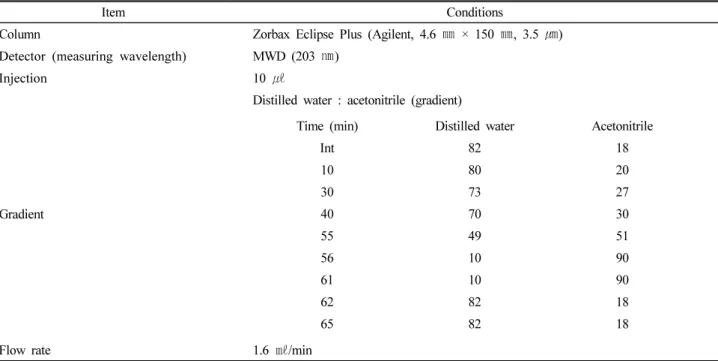
The standard solution was prepared by dissolving the gin- senoside standard in 50% methanol, and a calibration curve was prepared based on the concentration of the standard solution and the area of the peak. The red ginseng sample was filtered with a 0.45 ㎛ filter and injected into HPLC (Agilent 1260, USA) to measure the content of ginsenosides such as Rb1, Rg1, and Rg3 in the test solution. Conditions for using HPLC are shown in the following Table 1.
Biochemical analysis
Blood was collected from the ear marginal vein. A Nova
Stat Profile® pHOx® Ultraanalyzer (NOVA Biomedical
Corp., Waltham, MA, USA) was used to measure blood gas, electrolytes, and anion gap. After clotting, blood serum was separated by centrifugation at 3000 rpm for 20 min. The levels of glucose (Glu), enzymes, lipids, and proteins were analyzed using a Model 7020 auto analyzer (Hitachi, Tokyo, Japan). The measurement items are total cholesterol (T-CHO), high-density lipoprotein (HDL), low-density lipoprotein (LDL), triglyceride (TG), total protein (PRO-T), Albumin (Alb) levels, serum aspartate aminotransferase (AST), alanine amino- transaminase (ALT), lactate dehydrogenase (LDH), alkaline phosphatase (ALP), serum creatinine (CRE), blood urea nitrogen (BUN) and uric acid (UA).
Statistical analysis
Data are expressed as means ± standard errors of the mean (SEMs). Differences between groups were evaluated by analysis of variance (ANOVA) with the Bonferroni post hoc test or by calculation of Spearman’s rank correlation coefficient, as appropriate, using Prism 5.03 (GraphPad Software Inc., San Diego, CA, USA). Statistical significance was set at p < 0.05.
Results
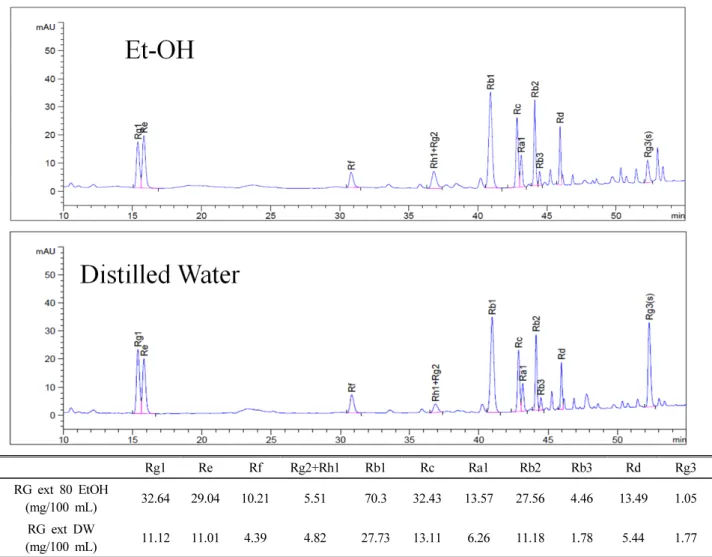
Fig. 1 shows the content of ginsenosides according to the
extraction method. The extraction of red ginseng samples by water extraction and 80% (w/v) extraction of alcohol extracts revealed 12 ginsenosides, which were 2.5 times higher than the total extraction yield of 98.6 ㎎ Rg1+Rb1 + Rg3 content was 2.4 times higher.
Fig. 2 shows time-dependent changes in body weight hyper- lipidemic rabbits before and after the JRG supply. The body weight (㎏) initially in normal control rabbit, hyperlipidemic rabbit, and after JRG supplied every two weeks until week 17, and in week 20. As the result, the body weight was initially, 2.3 ㎏. Finally, in the 20th week, the levels were 4.8 ㎏ the body weight steadily increased over the period of the experi- ment.
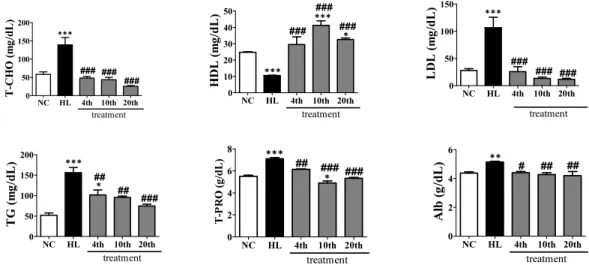
Fig. 3 shows T-CHO, HDL, LDL, TG, PRO-T and Alb levels in the serum to examine the efficacy of JRG treatment on the hyperlipidemic rabbit model. Initially in NC, prior to the JRG supply, T-CHO, LDL, TG, T-PRO and Alb levels were 58.00 ± 7.04, 27.77 ± 3.29, 52.00 ± 5.55, 5.5 ± 0.11 and 4.37 ± 0.08 ㎎/㎗, respectively. However, in the hyperlipidemic rabbit model at the first week, T-CHO, LDL, TG, T-PRO and Alb levels were 139.0 ± 20.21, 106.40 ± 19.29, 156 ± 12.79, 7.10 ± 0.115 and 5.15 ± 0.05 ㎎/㎗, respectively. On the other side in hyperlipidemic rabbits undergoing JRG treatment, in the 4th week, T-CHO, LDL, TG, T-PRO and Alb levels were Table 1. HPLC operation condition
Item Conditions
Column Zorbax Eclipse Plus (Agilent, 4.6 ㎜ × 150 ㎜, 3.5 ㎛)
Detector (measuring wavelength) MWD (203 ㎚)
Injection 10 ㎕
Gradient
Distilled water : acetonitrile (gradient)
Time (min) Distilled water Acetonitrile
Int 82 18
10 80 20
30 73 27
40 70 30
55 49 51
56 10 90
61 10 90
62 82 18
65 82 18
Flow rate 1.6 ㎖/min
48.00 ± 4.66, 25.67 ± 9.18, 101.70 ± 12.19, 6.15 ± 0.02 and 4.40 ± 09 ㎎/㎗, respectively. Where as in the 10th week, T-CHO, LDL, TG, T-PRO and Alb levels were 43.75 ± 6.25, 13.13 ± 2.70, 95.50 ± 3.175, 4.90 ± 0.19 and 4.27 ± 0.12 ㎎/
㎗, respectively. Finally, in the 20th week, T-CHO, LDL, TG, T-PRO and Alb levels were 25.67 ± 1.85, 11.50 ± 1.78, 74.50
± 4.66, 5.33 ± 0.07 and 4.20 ± 0.29 ㎎/㎗, respectively.
Although these values significantly increased in HL-induced rabbits, they were shown significant reduction through the period of the treatment. As for HDL initially in NC, the level was 24.75 ± 0.45. However, in hyperlipidemic rabbits prior JRG treatment was 10.50 ± 0.28 ㎎/㎗. On the other hand, after treatments the JRG extract supply, HDL, levels were 29.50 ± 4.71, 41.33 ± 2.72 and 32.67 ± 0.84 ㎎/㎗, in 4th, 10th and the 20th week respectively. JRG significantly
Rg1 Re Rf Rg2+Rh1 Rb1 Rc Ra1 Rb2 Rb3 Rd Rg3
RG ext 80 EtOH
(mg/100 mL) 32.64 29.04 10.21 5.51 70.3 32.43 13.57 27.56 4.46 13.49 1.05
RG ext DW
(mg/100 mL) 11.12 11.01 4.39 4.82 27.73 13.11 6.26 11.18 1.78 5.44 1.77
Fig. 1. The content of ginsenoside according to extraction method.
NC HL 1st 3rd 5th 7th 9th 11th13th15th17th20th
0
2 4 6 8
treatment
Body weight (kg)
Fig. 2. Effects of the JRG water extract treatments on the body
weight in poloxamer 407-induced hyperlipidemia rabbits. The
body NC; normal control, HL; Hyperlipidemia, then treatment
over 20, data shown in the figure every two weeks until week
17, and in the week 20. Data were represented as mean ± SEM.
enhanced the status of hyperlipidemic rats; the values are higher than initial data which seems due to duration of treatment.
Fig. 4 shows results of liver function tests such as AST, ALT, LDH and ALP to examine the efficacy of the JRG in a hyperlipidemic rabbit model. Initially in NC, prior HL induced
and JRG extract supplied, AST, ALT, LDH and ALP levels were 29.33 ± 4.40, 26.80 ± 4.40, 163.4 ± 22.0 and 220.0 ± 44.07 IU/ ℓ, respectively. In the 1st week HL rabbit model;
after HL-induced but prior JRG supplied, AST, ALT, LDH and ALP levels were 60.50 ± 0.86, 46.25 ± 5.88, 566.0 ± 137.9 and 412.0 ± 26.23 IU/ℓ, respectively. In the 4th week
NC HL 4th 10th 20th 0
2 4 6
8 ∗∗∗
∗ ###
## ###
treatment
T-PRO (g/dL)
NC HL 4th 10th 20th 0
2 4 6
##
∗∗ #
##
treatment
Al b ( g /d L )
NC HL 4th 10th 20th 0
50 100 150 200
###
∗∗∗
### ###
treatment
T-CHO (mg/dL)
NC HL 4th 10th 20th 0
10 20 30 40 50
###
∗∗∗
∗∗∗
∗
###
###
treatment
HDL (mg/dL)
NC HL 4th 10th 20th 0
50 100
150 ∗∗∗
### ### ###
treatment
LDL (mg/dL)
NC HL 4th 10th 20th 0
50 100 150
200 ∗∗∗
##∗
## ###
treatment
TG (mg/dL)
Fig. 3. Effects of the red ginseng water extract treatments on serum lipid and protein profiles in poloxamer 407-induced HL in rabbits.
T-CHO, total cholesterol; HDL, high-density-lipoprotein; LDL, low-density lipoprotein; TG, triglyceride; T-PRO, total protein; Alb, Albumin. NC; normal control, HL; hyperlipidemic rabbits. 4th, 10th, and 20th; treatment with JRG in week 4, 10, and 20 respectively. Data are reported as means± SEMs ( n = 10). *: p < 0.05; **: p < 0.01; and ***: p < 0.001, Bonferroni post hoc test following one-way ANOVA versus the NC; normal control prior hyperlipidemia was induced and before JRG treatment: p < 0.05;
##: p < 0.01; and ###: p < 0.001, Bonferroni post hoc test following one-way ANOVA versus HL; Hyperlipidemia.
NC HL 4th 10th 20th 0
20 40 60 80
∗∗∗
##∗
###
##
treatment
AST (GOT) (IU/L)
NC HL 4th 10th 20th 0
20 40
60 ∗
###
∗
treatment
ALT (GPT) (IU/L)
NC HL 4th 10th 20th 0
200 400 600
800 ∗∗∗
### ### ###
treatment
LD H (I U /L)
NC HL 4th 10th 20th 0
200 400 600 800
treatment
AL P ( IU /L )
Fig. 4. Effect of the JRG water extract treatments on the liver function by serum metabolic enzymes analysis in poloxamer 407-induced HL rabbits. AST, aspartate aminotransferase; ALT, alanine aminotransaminase; LDH, lactate dehydrogenase; ALP, alkaline phosphatase. NC; normal control, HL; hyperlipidemic rabbits. 4th, 10th, and 20th; treatment with JRG in week 4, 10, and 20 respectively. Data are reported as means± SEMs ( n = 10). *: p < 0.05; **: p < 0.01; and ***: p < 0.001, Bonferroni post hoc test following one-way ANOVA versus the NC; normal control prior hyperlipidemia was induced and before JRG treatment: p < 0.05;
##: p < 0.01; and ###: p < 0.001, Bonferroni post hoc test following one-way ANOVA versus HL; Hyperlipidemia.
HL rabbit model; after JRG treatments, AST, ALT, LDH and ALP levels were 43.33 ± 0.66, 42.67 ± 0.91, 123.3 ± 6.613 and 477.0 ± 108.5 IU/ ℓ, respectively. In the 10th week HL rabbit model; after JRG treatments, AST, ALT, LDH and ALP levels were 21.50 ± 1.11, 45.00 ± 1.8, 119.3 ± 9.569 and 360.0 ± 118.9 IU/ℓ, respectively. Finally, in the 20th week HL rabbit model, AST, ALT, LDH and ALP levels were 22.0 ± 0.53, 22.00 ± 0.5, 112.0 ± 12.50 and 304.7 ± 92.51 IU/ ℓ, respectively. The levels were fairly or significantly reduced in treated rabbits compared to the untreated rabbits in the first week.
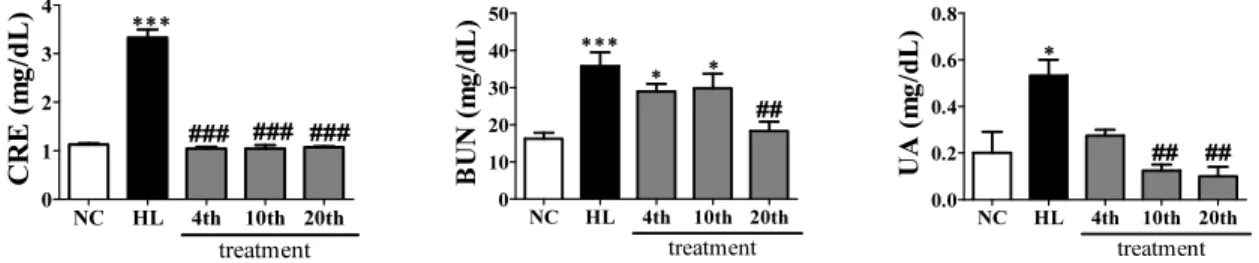
Fig. 5 shows results of renal function tests such as serum CRE, BUN and UA to examine the efficacy of JRG water extract on the hyperlipidemic rabbit model. Initially in NC, prior HL induced and JRG extract was supplied, CRE, BUN, and UA levels were 1.125 ± 0.031, 16.23 ± 1.628 and 0.20 ± 0.09 ㎎/㎗, respectively. However, in the 1st week HL rabbit model; after HL was induced but prior JRG supplied CRE, BUN and UA levels were 3.33 ± 0.16, 35.80 ± 3.78 and 0.53
± 0.06 ㎎/㎗ in the hyperlipidemic rabbit model respectively.
In the 4th week HL rabbit model; in rabbits undergoing JRG 4 weeks treatments, CRE, BUN and UA levels were 1.05 ± 1.14, 29.03 ± 1.99 and 0.27 ± 0.02 ㎎/㎗, respectively. In the 10th week HL rabbit model; in rabbits undergoing JRG 10 weeks treatments, CRE, BUN and UA levels were 1.05 ± 1.25, 29.83 ± 3.90 and 0.125 ± 0.02 ㎎/㎗, respectively. In the 20th week, HL rabbit model; in rabbits undergoing JRG 20 weeks treatments, CRE, BUN and UA levels were 1.06 ± 0.02, 18.33 ± 2.534 and 0.10 ± 0.04 ㎎/㎗, respectively. The
levels were significantly increased in the first week after HL induction and prior JRG treatment started. However, these values significantly reduced when compared to those before JRG was supplied. Results may be presented in tables or figures, but many simple findings can be set forth directly in the text with no need for tables or figures.
Discussion
P-407-induced hypertriglyceridemia is a well-known phe- nomenon that is a due to of high triglyceride levels as the result of the inhibition of lipoprotein lipase (Johnston et al., 1993). Our result showed the P-407 significantly induced HL which agreed with a study by Johnston et al. showed that one intramuscular or intraperitoneal injection of P-407 caused a dose-dependent HL in rats, elevating plasma triglyceride (TG) significantly. The data indicate that a significant increase in T-CHO, TG, LDL, T-pro, and Alb. HDL level significantly reduced. Johnston et al. suggested that the progression of atherosclerotic lesion formation in C57BL/6 mice treated with P-407 is predominantly due to increased LDL-C and triglycerides. HL is characterized by increased TC, TG, and LDL levels and by decreased HDL levels, and is considered to be one of the major risk factors for liver cirrhosis and liver failure (Gong et al., 2012).
In this study data revealed that Creatine, BUN, and UA significantly increased in hyperlipidemic rabbits. Development of dyslipidemia several observational studies have shown that total and LDL-cholesterol values are two of the most
NC HL 4th 10th 20th 0
1 2 3
4
∗∗∗
### ### ###
treatment
CRE (m g /d L )
NC HL 4th 10th 20th 0
10 20 30 40 50
∗∗∗
##
∗ ∗
treatment
BU N ( m g /d L )
NC HL 4th 10th 20th 0.0
0.2 0.4 0.6 0.8
∗
##
##
treatment
UA (m g /d L )
Fig. 5. Effects of the red ginseng water extract treatments on the renal function by serum analysis in poloxamer 407-induced HLin rabbits. CRE, creatinine; BUN, blood urea nitrogen; UA, uric acid. NC; normal control, HL; hyperlipidemic rabbits. 4th, 10th, and 20th; treatment with JRG in week 4, 10, and 20 respectively. Data are reported as means± SEMs ( n = 10). *: p < 0.05; **: p < 0.01;
and ***: p < 0.001, Bonferroni post hoc test following one-way ANOVA versus the NC; normal control prior hyperlipidemia was
induced and before JRG treatment: p < 0.05; ##: p < 0.01; and ###: p < 0.001, Bonferroni post hoc test following one-way ANOVA
versus HL; Hyperlipidemia.
important independent predictors of cardiovascular morbidity and mortality (Lewington et al., 2007). Also, it is well known that patients with impaired renal function exhibit significant alterations in lipoprotein metabolism, which in their most advanced form may result in the development of severe dyslipidemia. Abnormalities involve all lipoprotein classes and show variations depending on the degree of renal impair- ment, the etiology of primary disease, the presence of nephrotic syndrome. The predominant mechanism responsible for increased concentration of triglyceride-rich (Tsimihodimos et al., 2011) lipoproteins in predialysis patients is one of delayed catabolism (Prinsen et al., 2003). The reduced catabolic rate is likely due to diminished lipoprotein lipase activity as a consequence of the down regulation of the enzyme gene (Vaziri and Liang, 1996) and the presence of lipase inhibitors (Cheung et al., 1999). Apolipoprotein C-III is a potent inhibitor of lipoprotein lipase whereas apolipoprotein CII is an activator of the same enzyme. A decrease in apolipoprotein C-II/C-III ratio due to a disproportionate increase in plasma apolipoprotein C-III is a possible cause of lipoprotein lipase inactivation in uremia (Bagdade et al., 1976; Cheung et al., 1996; Chan et al., 2009;
Hirano et al., 2003; Moberly et al., 1999; Prinsen et al., 2003;
Vaziri and Liang, 1996).
For many decades physicians have proposed that the dyslipidemias, which are almost always, present in patients with kidney disease, may cause kidney injury and contribute to a progressive decline in kidney function. Recent studies in animal models have corroborated earlier studies suggesting that dyslipidemias cause kidney damage, and have further suggested mechanisms that may be important. For instance, Vazquez-Perez et al. (2011) reported that atorvastatin, a 3- hydroxy-3-methylglutaryl coenzyme A (HMG-CoA) reductase inhibitor, reduced glomerulosclerosis in a rabbit model of diet-induced hypercholesterolemia which justifies our result of kidney function in hyperlipidemic rabbits prior JRG treat- ment, where Creatine, BUN, and UA were significantly elevated.
The enzymes ALT and AST are markers of hepatopathy in the blood. The high level of serum ALT and AST is interpreted as an indication of hepatocellular damage. In the present study, levels of serum ALT and AST in the hyper- lipidemic rabbit were higher than in the initial data. However,
JRG treatment resulted in a notable decrease in ALT and AST levels compared with those after JRG treatment, indicating that JRG exhibits hepatoprotective effects in hyperlipidemic rats. An increased level of circulating serum lipoproteins and their uptake by the liver was followed by lipidosis as a result of intracellular lipid storage (Trent et al., 2014) in this investigation we observed an elevated level of some liver enzymes namely, AST, ALT, LDH, and ALP which seems due to lipid overload in liver. Also, it could be due to autophagy as mentioned by (Klionsky et al, 2008) who stated that it should be mentioned that the changes in hepatocytes lysosomal membranes of P-407-treated mice may potentially reflect an increase in autophagy (autophagocytosis) of liver cells.
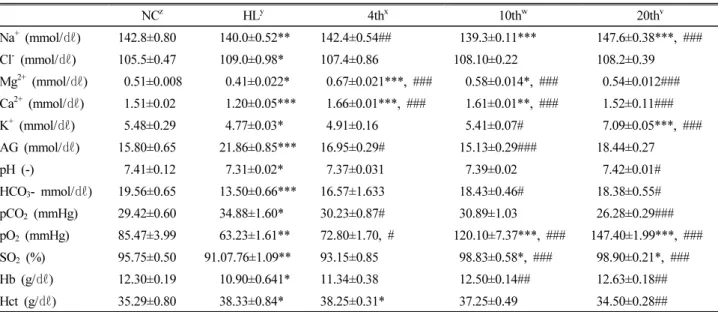
The results showed that electrolytes imbalance; Na
+, K
+, Mg
2+, and Ca
2+levels significantly reduced in hyperlipidemic rabbits prior JRG supply. However, Cl
-significantly reduced.
These data partly agreed with (Dimeski et al., 2006), who concluded that the effect of HL (cholesterol plus triglycerides) on measurements of sodium, potassium, and chloride and the ability of published formulas to correct for the decrease in measured Na
+, K
+, and Cl
-. The mean levels of serum Na
+(118.2 ± 3.13 meq/ℓ) were significantly lower in the sera of hyperlipedimia syndrome in comparison to the control subjects (140.09 ± 2.33 meq/ ℓ), the mean level of K
+(4.41 ± 0.74 meq/ ℓ) show non significance change in this HL group, while serum Cl
-(89.26 ± 0.54 meq/ℓ) decreased significantly in the sera of hyperlipidemic patients in comparison to that of control subjects (95.08 ± 0.08 meq/ ℓ) (Namama, 2015).
Magnesium serves as a co-factor for enzymes involved in a
variety of physiological processes including lipid metabolism
(Burtis and Ashwood, 1994), Dietary magnesium has the
ability to decrease the activity of lipogenic liver enzymes,
improve insulin action or increase lipoprotein lipase activity
(Paolisso et al., 1989; Rayssiguer et al., 1991). Clinical studies
on patients with metabolic syndrome have shown that indi-
viduals with low levels of magnesium have lower levels of
HDL-cholesterol but higher levels of triglycerides (Corica et
al., 2006; Park and Cho, 2008) and total cholesterol (Guerrero-
Romero and Rodriguez-Moran, 2000; Song et al., 2005; Song
et al., 2007). Few short studies examining serum Mg levels
have shown a positive correlation with triglycerides (Nerbrand
et al., 2003) and total cholesterol (Robles et al., 1998).
Magnesium is required for secretion as well as function of PTH; therefore, hypomagnesemia causes hypocalcemia refractory to correction unless magnesium is normalized. Hypocalcemia is defined as iCa < 1.12 m㏖/L. There is a discrepancy in the cutoff for severe hypocalcemia (Riggs, 2002). This agrees with our result where hyperlipidemic rabbits showed low levels of Mg
2+and Ca
2+.
The result demonstrated that acidic condition where pH, HCO
3, pO
2, SO
2, and Hbc significantly decreased, but and pCO
2increased. This result agreed with a case reported by (Larkin and Zimmanck, 2015) a 78-year-old woman suspected having a rectovaginal fistula in addition well-controlled diabetes, hypertension, hyperlipidemia, emphysema, protein- calorie malnutrition, history of malignant neoplasm of the thyroid for which she takes daily levothyroxine, and history of neoplasm of the uterus and cervix. However, this acidosis could be a sequel of above-mentioned conditions collectively not HL alone. One the other side our result is in contrary with (Michael and Dermot, 1997) who found effects due to HL were not observed in blood gases.
Our data indicate Hemoglobin level was decreased sig- nificantly which justifies the lower level of saturated oxygen
(SO
2) in Table 2 in hyperlipidemic rabbits prior JRG treatment.
This result come in agreement with (Spurzem et al., 1984) who concluded that methemoglobin concentration is reduced in hypertriglycermic patient when measured with a spectro- photometric method.
One of the major pharmacological activity of ginseng species effects such as anti-diabetic, anti-cancer, anti-inflammatory, anti-hyperlipidemic, and anti-atherosclerosis activities (Choi, 2008; Lee and Jeong, 2008; Min et al., 2008; Park et al., 2008;
Park and Cho, 2008). To investigate the antihyperyperlipidemic effects of JRG on rabbits serum lipoprotein profiles were measured which resulted in a significant reduction in T-CHO, TG, LDL, T-PRO, Alb and a marked increment of HDL.
These data show time-dependent effect viz long course of treatment results in highly significant enhancements in lipo- protein profile. Rg3 component of KRG and their constituents involved in decreasing of TG and T-CHO as shown by (Min et al., 2008) LPL is a key enzyme to catabolize triglyceride- rich lipoproteins and to supply fatty acids to peripheral tissues.
The importance of LPL to Animals Male New Zealand white rabbits to maintain lipid homeostasis in body were studied using transgenic mice over expressing LPL Panax ginseng was found to be a causal crude drug to enhance LPL activity
Table 2. Effects of JRG treatments on the blood parameters in poloxamer 407-induced hyperlipidemic rabbits
NC
zHL
y4th
x10th
w20th
vNa
+(mmol/ ㎗) 142.8±0.80 140.0±0.52** 142.4±0.54## 139.3±0.11*** 147.6±0.38***, ###
Cl
-(mmol/ ㎗) 105.5±0.47 109.0±0.98* 107.4±0.86 108.10±0.22 108.2±0.39 Mg
2+(mmol/ ㎗) 0.51±0.008 0.41±0.022* 0.67±0.021***, ### 0.58±0.014*, ### 0.54±0.012###
Ca
2+(mmol/ ㎗) 1.51±0.02 1.20±0.05*** 1.66±0.01***, ### 1.61±0.01**, ### 1.52±0.11###
K
+(mmol/ ㎗) 5.48±0.29 4.77±0.03* 4.91±0.16 5.41±0.07# 7.09±0.05***, ###
AG (mmol/ ㎗) 15.80±0.65 21.86±0.85*** 16.95±0.29# 15.13±0.29### 18.44±0.27
pH (-) 7.41±0.12 7.31±0.02* 7.37±0.031 7.39±0.02 7.42±0.01#
HCO
3- mmol/ ㎗) 19.56±0.65 13.50±0.66*** 16.57±1.633 18.43±0.46# 18.38±0.55#
pCO
2(mmHg) 29.42±0.60 34.88±1.60* 30.23±0.87# 30.89±1.03 26.28±0.29###
pO
2(mmHg) 85.47±3.99 63.23±1.61** 72.80±1.70, # 120.10±7.37***, ### 147.40±1.99***, ###
SO
2(%) 95.75±0.50 91.07.76±1.09** 93.15±0.85 98.83±0.58*, ### 98.90±0.21*, ###
Hb (g/ ㎗) 12.30±0.19 10.90±0.641* 11.34±0.38 12.50±0.14## 12.63±0.18##
Hct (g/ ㎗) 35.29±0.80 38.33±0.84* 38.25±0.31* 37.25±0.49 34.50±0.28##
z