Stent-Assisted Coil Embolization Using Only a Glycoprotein IIb/IIIa Inhibitor (Tirofiban) for Ruptured Wide-Necked Aneurysm Repair
Sang Hyub Lee1, In Sung Park1, Ja Myoung Lee1, Kwangho Lee1, Hyun Park2, Chul Hee Lee1
1Department of Neurosurgery, Gyeongsang National University Hospital, Gyeongsang National University School of Medicine, Jinju, Korea,
2Department of Neurosurgery, Gyeongsang National University Changwon Hospital, Gyeongsang National University School of Medicine, Changwon, Korea
Objective : The aim of this study was to evaluate the safety and efficacy of stent-assisted coil embolization using only a glycoprotein IIb/IIIa inhibitor (tirofiban).
Materials and Methods : We retrospectively reviewed patients with a sub- arachnoid hemorrhage due to ruptured wide-necked intracranial aneur- ysms who were treated by stent-assisted coil embolization. In all patients, the glycoprotein IIb/IIIa inhibitor tirofiban was administered just before stent deployment. Electronic medical records for these patients were re- viewed for peri-procedural complications and extra-ventricular drainage catheter related hemorrhage, as well as Glasgow outcome scale (GOS) at discharge, 3 months, and 6 months follow-up were recorded.
Results : Fifty-one aneurysms in 50 patients were treated. The mean pa- tient age was 64.9 years. Eighteen patients (36%) received a World Federation of Neurosurgical Societies grade of 4 or 5. The mean aneur- ysm size was 9.48 mm and mean dome-to-neck ratio was 1.06. No intra- operative aneurysm ruptures occurred, although five (10%) episodes of asymptomatic stent thrombosis did occur. Three patients experienced a delayed thrombo-embolic event and two a delayed hemorrhagic event.
Immediate radiologic assessment indicated a complete occlusion in 29 pa- tients, a residual neck in 19, and a residual sac in 3. Four patients (8%) died. Sixteen patients (32%) experienced a poor GOS (< 4). Two aneur- ysms were recanalized during the follow-up period (mean, 19 months for clinical and 18 months for angiographic follow-up).
Conclusion : Treatment of ruptured wide-necked intracranial aneurysms via stent-assisted coil embolization with a glycoprotein IIb/IIIa inhibitor alone was found to be relatively safe and efficient.
J Cerebrovasc Endovasc Neurosurg.
2018 March;20(1):14-23 Received : 16 January 2018 Revised : 6 March 2018 Accepted : 15 March 2018 Correspondence to In Sung Park
Department of Neurosurgery, Gyeongsang National University Hospital, Gyeongsang National University School of Medicine, 79 Gangnam-ro, Jinju 52727, Korea
Tel : 82-55-750-8112 Fax : 82-55-750-8737 E-mail : [email protected]
ORCID : https://orcid.org/0000-0003-1773-4687
This is an Open Access article distributed under the terms of the Creative Commons Attribution Non- Commercial License (http://creativecommons.org/li- censes/by-nc/3.0) which permits unrestricted non- commercial use, distribution, and reproduction in any medium, provided the original work is properly cited.
Keywords Aneurysm, Subarachnoid hemorrhage, Endovascular procedures, Platelet Aggregation Inhibitors, Tirofiban, Stents
INTRODUCTION
Endovascular treatment for aneurysm repair has be-
come a widely used method since the publication of results from the International Subarachnoid Aneurysm Trial (ISAT).23) The ISAT demonstrated the safety and
efficacy of this technique for the treatment of aneurysms. In wide-necked aneurysms and those with a smaller dome to neck ratio, endovascular coil embo- lization has some limitations and obstacles to overcome. These include an unstable coil loop and/or coil herniation from the aneurysm to a parent artery or distal arterial branch. Various attempts at over- coming this problem have included, for example, bal- loon-assisted coil embolization,1)21)22)24)25) the double catheter technique,17) and stent-assisted coil emboliza- tion (SAC).2-5)12)18)20)27)28) Among them, use of an intra- cranial stent to treat ruptured intracranial aneurysms is controversial. Complications resulting from the use of an intracranial stent in the setting of acutely rup- tured aneurysm repair include transient or permanent thromboembolic event provocation. To prevent these thromboembolic events, peri- procedural antiplatelet, heparin, or glycoprotein IIb/IIIa inhibitors are typi- cally administered. Antiplatelet/anticoagulant admin- istration in the setting of an acutely hemorrhagic state may lead to additional hemorrhagic complications in- cluding aneurysm re-bleeding, extra-ventricular drain- age (EVD)-related hemorrhage. Currently, there are no publicly-available guidelines for the use of peri-procedural antiplatelet/anticoagulant medi- cations, nor have any randomized controlled trials evaluated the proper administration of these medi- cations in this context. Many studies2-5)12)14)18)20)27)28)
have examined the use of aspirin, clopidogrel, hep- arin, or glycoprotein IIb/IIIa inhibitors as peri-proce- dural medications. However, to the best of our knowledge, there are no studies of glycoprotein IIb/IIIa inhibitor administration alone as a prophy- lactic for thromboembolic events following the SAC of ruptured aneurysm (in the three known studies12)19)28) where a glycoprotein IIb/IIIa inhibitor has been used, heparin was also used). There are, however, several randomized controlled trials10)11)13)26)30) that have eval- uated glycoprotein IIb/IIIa inhibitor use in ischemic disease (e.g., cerebral infarction and myocardial in- farction). There are currently no studies examining whether glycoprotein IIb/IIIa inhibitor use is suitable
in the SAC of ruptured aneurysms. In this study, a glycoprotein IIb/IIIa inhibitor, tirofiban, was used alone to prevent thromboembolic events. Tirofiban is a nonpeptide tyrosine derivative that acts as a platelet glycoprotein IIb/IIIa receptor antagonist.9) Our aim here was to evaluate the safety and efficacy of SAC of ruptured wide-necked intracranial aneurysms using only a glycoprotein IIb/IIIa inhibitor.
MATERIALS AND METHODS
Patients
We retrospectively reviewed all patients with a sub- arachnoid hemorrhage due to a ruptured wide-necked intracranial aneurysm, treated by SAC from April 2012 to March 2016 at our institution. We defined wide- necked aneurysms as those with a as neck size > 4 mm or with a dome-to-neck (D/N) ratio > 1.4. Fifty patients with a collective total of 51 aneurysms were enrolled. Ruptured dissecting aneurysm cases were excluded. Subarachnoid hemorrhage was measured according to Hunt and Hess (H-H) grade, the Fisher scale, and World Federation of Neurosurgical Societies (WFNS) grade. Aneurysms characteristics included lo- cation, sub-location, maximal diameter, neck size, and D/N ratio. After appropriate consultation, neuro- surgeons and neuro-interventionists decided on either coil placement or surgical repair. Endovascular treat- ment (EVT), rather than clip placement, was preferred when the aneurysm affected posterior circulation or when the patient’s medical condition was poor.
Procedure
EVT was performed by two experienced neuro-in- terventionists upon patient diagnosis with sub- arachnoid hemorrhage due to ruptured aneurysm. A unilateral or bilateral transfemoral approach was used. All EVTs were performed under general anesthesia. Neither pre-procedural nor intra-proce- dural antiplatelet, systemic heparinization agents were administered. Coil packing technique was de- termined based on the location and shape of the
aneurysm, size of dome, size of neck, and D/N ratio, although EVT was primarily performed via the dou- ble catheter technique.17) A 7-F or 6-F guiding catheter was placed in a parent artery (internal carotid artery or vertebral artery) with continuous flushing with 5,000 U heparin per liter normal saline solution.
Procedures were generally performed as follows. The most appropriate microcatheter and microwire were chosen for each individual case. When an initial frame was formed by first inserting a coil into the aneurysm sac, an additional microcatheter was placed in the aneurysm sac. Following this, the aneurysm sac was packed with the coil via the double catheter technique. In cases where this technique posed a chal- lenge, however, the aneurysm was packed via the tri- ple catheter technique. If there remained a high prob- ability of coil herniation or migration to a parent ar- tery or distal branch after coil packing, a stent was deployed through the aneurysm to adequately cover the aneurysmal neck. At the time of stent placement, the rupture point of the aneurysm was secured. After deployment of the stent, any remaining remnant aneurysmal sac area was packed with additional coil via the semi-jailing technique. Stents (Enterprise, LVIS Jr., LVIS, Solitare) were selected by neuro-inter- ventionists on a case-by-case basis.
Peri-procedural glycoprotein IIb/IIIa inhibitor medication Tirofiban was administered just before stent deploy- ment in all cases. A loading dose (0.4 μg/kg/min) was maintained for 30 minutes. A maintenance dose (25 μg/kg) was then maintained for 23.5 hours for a total tirofiban administration time of 24 hours. Six hours prior to tirofiban administration cessation, as- pirin (100 mg) and clopidogrel (75 mg) were ad- ministered via nasogastric tube or orally. Daily aspir- in (100 mg) and clopidogrel (75 mg) were then main- tained in all patients.
EVD
EVD catheters were placed prior to endovascular treatment, immediately upon detection of hydro- cephalus via initial brain computed tomography (CT)
and relatedly impaired consciousness. Following SAC, post-operative CTs were taken for all patients. In pa- tients who did not initially undergo EVD catheter in- sertion, evidence of progressive hydrocephalus upon post-operative CT indicated EVD catheter insertion.
EVD catheter insertion was also performed without cessation of tirofiban. No hemostatic agents such as tranexamic acid or vitamin K were used.
Outcomes and follow-up
Peri-procedural complications and EVD-related hemorrhage were retrospectively detected by elec- tronic medical record (EMR) review. Clinical outcome was assessed via patients’ EMR-reported Glasgow out- come scale (GOS) scores at discharge and 3 and 6 months post-discharge. Radiologic follow-up was con- ducted at 6 months, 1 year, and 2 years post-discharge.
Follow-up imaging studies were retrospectively re- viewed via a picture archiving and communication system. Follow-up imaging modalities included mag- netic resonance angiography or transfemoral cerebral angiography. We evaluated the recurrence of aneur- ysm (major or minor) using the Raymond scale.
RESULTS
Patients demographics
Fifty-one aneurysms in 50 patients were treated be- tween April 2012 and March 2016. Among them, nine patients were male (18%) and 41 were female (82%) (Table 1). Mean patient age was 64.9 years (range, 16-89). Four patients (8%) presented with a Hunt-Hess grade I, 23 (46%) with a grade II, four (8%) with a grade III, 11 (22%) with a grade IV, and eight (16%) with a grade V. Four patients (8%) presented with a Fisher grade I, seven (14%) with a grade II, 11 (22%) with a grade III, and 28 (56%) with a grade IV.
Twenty-three patients (46%) presented with a WFNS grade I, eight (16%) with a grade II, one (2%) with a grade III, four (8%) with a grade IV, and 14 (28%) with a grade V (Table 2). Twenty-four patients (48%) had a history of hypertension, two (4%) a history of
I II III IV V
H-H grade 4 (8) 23 (46) 4 (8) 11 (22) 8 (16)
Fisher scale 4 (8) 7 (14) 11 (22) 28 (56)
WFNS grade 23 (46) 8 (16) 1 (2) 4 (8) 14 (28)
Values are presented as number (%).
SAH = subarachnoid hemorrhage; H-H grade = Hune-Hess grade; WFNS grade = World Federation of Neurosurgical Societies grade.
Table 2. SAH grade on admission at emergency room
Characteristic Value
Age (years) 64.9 (16-89)
Sex (M/F) 9:41
Comorbidity
HTN 24 (48)
DM 2 (4)
Dyslipidemia 10 (20)
Smoking 6 (12)
Alcohol 7 (14)
Values are presented as mean (range) or number (%).
M = male; F = female; HTN = hypertension; DM = diabetes mellitus.
Table 1. Patients demographics
diabetes, and 10 (20%) a history of dyslipidemia. Six patients (12%) reported smoking while seven (14%) reported drinking (Table 1).
Aneurysm characteristics
Diameter, neck size, and D/N ratio of aneurysms were measured. The mean maximal diameter of the aneurysms was 9.48 mm (range, 3-23). Mean aneur- ysm neck size was 5.43 mm (range, 3-10). The mean D/N ratio was 1.06 (range, 0.42-3.82) and the most common aneurysm location was in the anterior circu- lation (anterior circulation 82%, posterior circulation 18%) (Table 3).
Complications
We divided reported complications between two groups: procedure-related and delayed. We defined procedure-related complications as an aneurysm rup- ture during SAC, hemorrhagic events, or thromboem- bolic events. When a thromboembolic event occurred during the procedure, intra-arterial glycoprotein IIb/IIIa inhibitor injection or observation were per- formed on a case-by-case basis. No intra-procedural
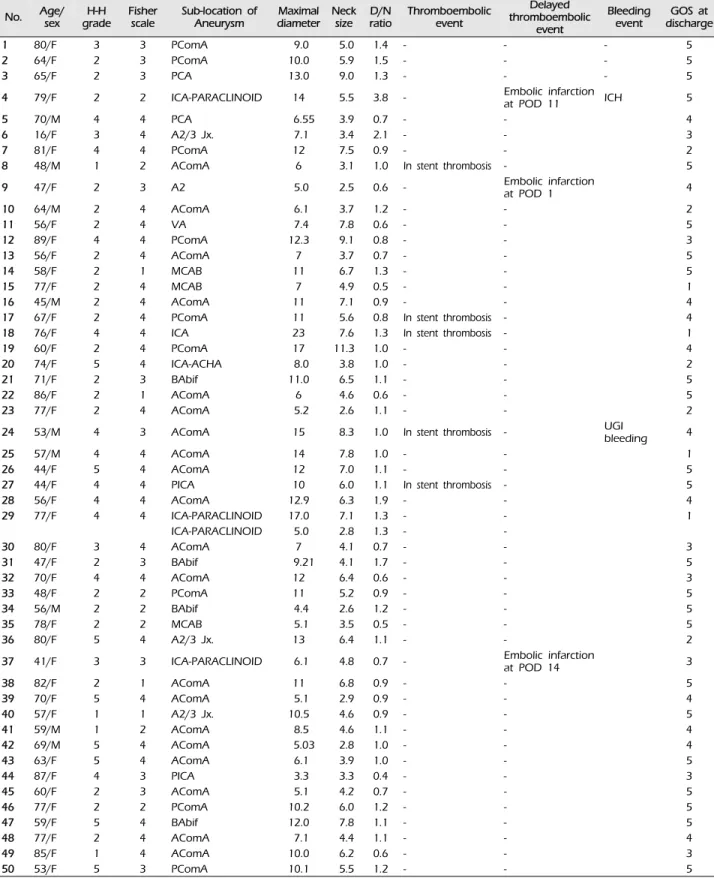
aneurysm ruptures or hemorrhagic events were reported. However, 5 asymptomatic in-stent thrombo- sis events (10%) were reported. Delayed complications were defined as hemorrhagic and thromboembolic events following the procedure. Five patients suffered from delayed complications (Table 3). These included 2 hemorrhagic events and 3 thromboembolic events.
EVD-related hemorrhage
Seventeen cases involved EVD catheter insertion.
EVD catheters were inserted in 11 cases prior to SAC and in 6 after SAC. Four (23.5%) EVD-related hemor- rhagic events occurred, though all were asymptomatic and none resulted in neurologic deficits. Two of the 4 EVD-related hemorrhage cases underwent EVD in- sertion before SAC and the other 2 underwent EVD insertion after SAC (Table 4).
A complicated case
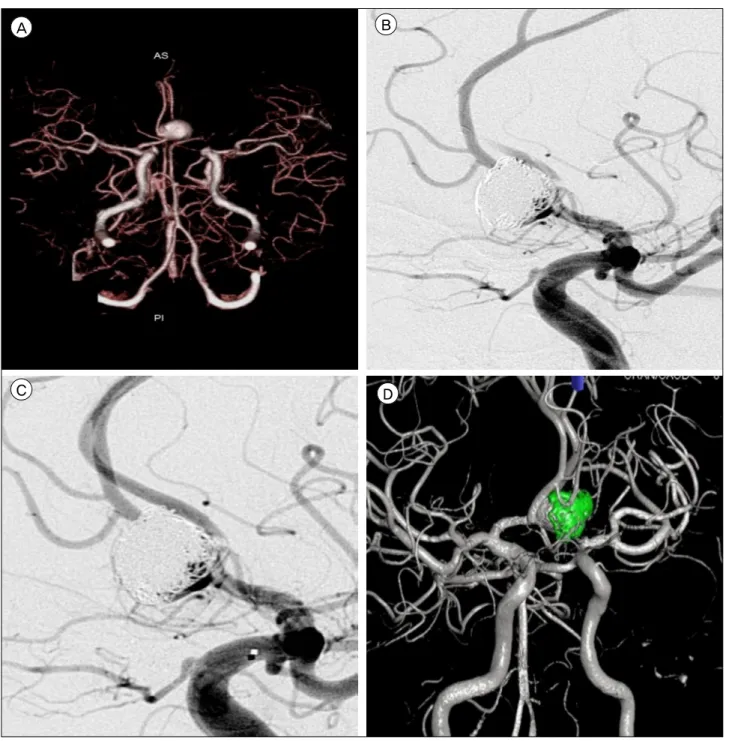
Among all the cases studied here, one was partic- ularly complex and deserves specific attention. A 53-year-old man was admitted for treatment of sub- arachnoid hemorrhage. He was initially reported to have a mental state indicative of coma (WFNS grade V). CT angiography revealed a 15 mm anterior com- municating artery aneurysm with bleb. After SAC was performed, thrombosis formation in Enterprise stent and delayed filling of left A2 segment were detected. Intra-arterial tirofiban was administered and vessel patency restored. Ten days post-operation, the patient experienced upper gastro-intestinal bleeding.
Follow-up angiography 6 months later showed major recanalization of the previously coiled aneurysm.
Retreatment of the recanalized aneurysm was per- formed (Fig. 1).
No. Age/
sex H-H
grade Fisher
scale Sub-location of
Aneurysm Maximal diameter Neck
size D/N
ratio Thromboembolic event
Delayed thromboembolic
event
Bleeding
event GOS at discharge
1 80/F 3 3 PComA 9.0 5.0 1.4 - - - 5
2 64/F 2 3 PComA 10.0 5.9 1.5 - - - 5
3 65/F 2 3 PCA 13.0 9.0 1.3 - - - 5
4 79/F 2 2 ICA-PARACLINOID 14 5.5 3.8 - Embolic infarction
at POD 11 ICH 5
5 70/M 4 4 PCA 6.55 3.9 0.7 - - 4
6 16/F 3 4 A2/3 Jx. 7.1 3.4 2.1 - - 3
7 81/F 4 4 PComA 12 7.5 0.9 - - 2
8 48/M 1 2 AComA 6 3.1 1.0 In stent thrombosis - 5
9 47/F 2 3 A2 5.0 2.5 0.6 - Embolic infarction
at POD 1 4
10 64/M 2 4 AComA 6.1 3.7 1.2 - - 2
11 56/F 2 4 VA 7.4 7.8 0.6 - - 5
12 89/F 4 4 PComA 12.3 9.1 0.8 - - 3
13 56/F 2 4 AComA 7 3.7 0.7 - - 5
14 58/F 2 1 MCAB 11 6.7 1.3 - - 5
15 77/F 2 4 MCAB 7 4.9 0.5 - - 1
16 45/M 2 4 AComA 11 7.1 0.9 - - 4
17 67/F 2 4 PComA 11 5.6 0.8 In stent thrombosis - 4
18 76/F 4 4 ICA 23 7.6 1.3 In stent thrombosis - 1
19 60/F 2 4 PComA 17 11.3 1.0 - - 4
20 74/F 5 4 ICA-ACHA 8.0 3.8 1.0 - - 2
21 71/F 2 3 BAbif 11.0 6.5 1.1 - - 5
22 86/F 2 1 AComA 6 4.6 0.6 - - 5
23 77/F 2 4 AComA 5.2 2.6 1.1 - - 2
24 53/M 4 3 AComA 15 8.3 1.0 In stent thrombosis - UGI
bleeding 4
25 57/M 4 4 AComA 14 7.8 1.0 - - 1
26 44/F 5 4 AComA 12 7.0 1.1 - - 5
27 44/F 4 4 PICA 10 6.0 1.1 In stent thrombosis - 5
28 56/F 4 4 AComA 12.9 6.3 1.9 - - 4
29 77/F 4 4 ICA-PARACLINOID 17.0 7.1 1.3 - - 1
ICA-PARACLINOID 5.0 2.8 1.3 - -
30 80/F 3 4 AComA 7 4.1 0.7 - - 3
31 47/F 2 3 BAbif 9.21 4.1 1.7 - - 5
32 70/F 4 4 AComA 12 6.4 0.6 - - 3
33 48/F 2 2 PComA 11 5.2 0.9 - - 5
34 56/M 2 2 BAbif 4.4 2.6 1.2 - - 5
35 78/F 2 2 MCAB 5.1 3.5 0.5 - - 5
36 80/F 5 4 A2/3 Jx. 13 6.4 1.1 - - 2
37 41/F 3 3 ICA-PARACLINOID 6.1 4.8 0.7 - Embolic infarction
at POD 14 3
38 82/F 2 1 AComA 11 6.8 0.9 - - 5
39 70/F 5 4 AComA 5.1 2.9 0.9 - - 4
40 57/F 1 1 A2/3 Jx. 10.5 4.6 0.9 - - 5
41 59/M 1 2 AComA 8.5 4.6 1.1 - - 4
42 69/M 5 4 AComA 5.03 2.8 1.0 - - 4
43 63/F 5 4 AComA 6.1 3.9 1.0 - - 5
44 87/F 4 3 PICA 3.3 3.3 0.4 - - 3
45 60/F 2 3 AComA 5.1 4.2 0.7 - - 5
46 77/F 2 2 PComA 10.2 6.0 1.2 - - 5
47 59/F 5 4 BAbif 12.0 7.8 1.1 - - 5
48 77/F 2 4 AComA 7.1 4.4 1.1 - - 4
49 85/F 1 4 AComA 10.0 6.2 0.6 - - 3
50 53/F 5 3 PComA 10.1 5.5 1.2 - - 5
H-H grade = Hunt-Hess grade; D/N ratio = dome to neck ratio; GOS = Glasgow outcome scale; F = female; PComA = posterior communicating artery; PCA = posterior cerebral artery; ICA = internal carotid artery; POD = post-operative day; ICH = intracerebral hemorrhage; M = male; Jx. = junction; AComA = anterior communicating artery; VA = vertebral artery; MCAB = middle cerebral artery bifurcation; ACHA = anterior choroidal artery; BAbif = basilar artery bifurcation; UGI bleedin = upper gastr-intestinal bleeding; PICA = posterior inferior cerebellar artery.
Table 3. Clinical characteristics and complication of patients and aneurysms
No. of EVD cath.
insertion EVD cath. insertion
before SAC Hemorrhage in EVD cath.
insertion before SAC EVD cath. insertion
after SAC Hemorrhage in EVD cath.
insertion after SAC
17 11 2 6 2
EVD = extra-ventricular drainage; cath. = catheter; SAC = stent-assisted coil embolization.
Table 4. EVD related hemorrhage
A B
C D
Fig. 1. 53-year-old man was admitted with subarachnoid hemorrhage. His initial mentality was coma (WFNS Gr V). (A) CTA showed 15mm sized AcomA aneurysm with bleb. (B) After SAC was performed, thrombosis formation in Enterprise stent and delayed filling left A2 was detected. (C) IA Tirofiban was administered and patency of the vessel was restored. At postoperative 10 days, He suf- fered UGI bleeding. (D) Follow-up angiography 6 months later showed major recanalization of previous coiled aneurysm. Retreatment of recanalized aneurysm was done. WFNS Gr = World Federation of Neurosurgical Societies grade; CTA = computed tomography an- giography; AComA = anterior communicating artery; SAC = stent-assisted coil embolization; IA = intra-arterial; UGI bleeding = upper gastro-intestinal bleeding.
No. GOS at
discharge GOS at 3
months GOS at 6
months Raymond grade
1 5 5 5 N
2 5 5 5 N
3 5 5 5 C
4 5 5 5 C
5 4 5 5 C
6 3 Follow-up loss Follow-up loss C 7 2 Follow-up loss Follow-up loss C
8 5 5 5 C
9 4 5 5 C
10 2 2 2 C
11 5 5 5 C
12 3 3 3 C
13 5 5 5 S
14 5 5 5 C
15 1 1 1 C
16 4 5 5 C
17 4 5 5 N
18 1 1 1 C
19 4 5 5 N
20 2 Follow-up loss Follow-up loss C
21 5 5 5 C
22 5 5 5 S
23 2 Follow-up loss Follow-up loss C
24 4 5 5 N
25 1 1 1 C
26 5 5 5 N
27 5 5 5 N
28 4 4 4 N
29 1 1 1 N
C 30 3 Follow-up loss Follow-up loss N
31 5 5 5 N
32 3 Follow-up loss Follow-up loss N
33 5 5 5 N
34 5 5 5 C
35 5 5 5 N
36 2 Follow-up loss Follow-up loss N
37 3 4 4 C
38 5 5 5 C
39 4 4 4 C
40 5 5 5 N
41 4 5 5 N
42 4 4 4 N
43 5 5 5 C
44 3 Follow-up loss Follow-up loss C
45 5 5 5 C
46 5 5 5 C
47 5 5 5 S
48 4 5 5 C
49 3 Follow-up
loss Follow-up loss C
50 5 5 5 N
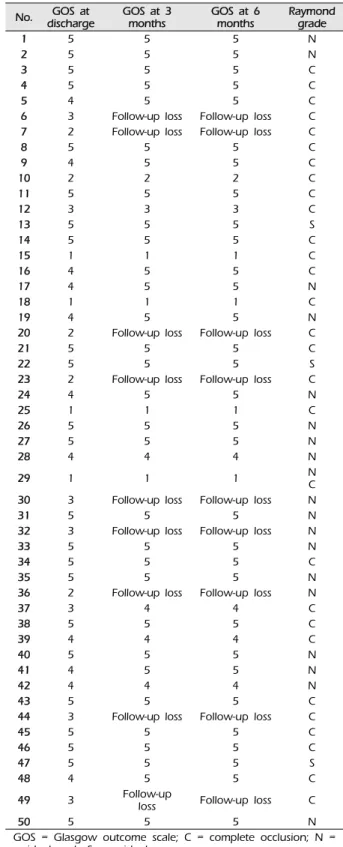
GOS = Glasgow outcome scale; C = complete occlusion; N = residual neck; S = residual sac.
Table 5. Clinical and radiologic outcome
Immediate angiographic results and clinical outcomes The Raymond scale was used to evaluate angio- graphic results. Twenty-nine patients received a Raymond scale I (complete occlusion) rating, 19 a Raymond scale II (residual neck), and 3 a Raymond scale III (residual sac). The mortality rate was 8%
(four patients). Three patients died due to malignant brain swelling and one patient due to pneumonia.
Sixteen (32%) patients had a poor GOS (<4) (Table 5).
Follow-up
The mean duration to final clinical follow-up was 19 months (41 patients). The other nine patients were lost to follow-up due to death or transfer to another hospital. During the follow-up period, eight patients experienced improved GOS (Table 5). The mean dura- tion to angiographic follow-up was 18 months (31 pa- tients). Recanalization of coiled aneurysms was re- quired for two patients upon follow-up. One of these was a minor recanalization while the other was more significant. Retreatment was performed for this major recanalization case.
DISCUSSION
The publication of the randomized controlled ISAT23) established EVT as a safe and effective ther- apeutic option. Therefore, treatment of aneurysms by EVT experienced increased popularity. However, when performing EVT, the catheter may act as a con- tact activator of the coagulation cascade, leading to thromboembolic events and significant thromboem- bolic risk.8) The same is true of cases of subarachnoid hemorrhage due to a ruptured aneurysm. In the acute phase of subarachnoid hemorrhage, a hypercoagulable state occurs.27) Unlike in EVT of unruptured aneur- ysms, pre-procedure antiplatelet medications are not administered to these patients, leading to an elevated risk of thromboembolic events. The use of stents in the treatment of wide-necked aneurysms increases the likelihood of thromboembolic events, such as in-stent thrombosis formation. Multiple studies2-5)7)12)18)20)27)28) of
the peri-procedural administration of aspirin, clopi- dogrel, heparin, or a glycoprotein IIb/IIIa inhibitor
during EVT to prevent the occurrence of a throm- boembolic event have been conducted, but there are no established guidelines for the use of these drugs in this surgical context. In most studies, systemic hep- arinization was performed with pre and/or in- tra-procedural aspirin and clopidogrel for the pre- vention of thromboembolic events. Glycoprotein IIb/IIIa inhibitors have also been used systemically to prevent thromboembolic events.12)19)28) Bruening et al.5) describe intravenous or intra-arterial injection of gly- coprotein IIb/IIIa inhibitors upon the occurrence of thromboembolic events such as in-stent thrombosis or defective parent artery filling. However, as far as are aware, the present study was the first to examine tir- ofiban administration in SAC without pre- or in- tra-procedural aspirin, clopidogrel, or systemic heparinization. Although Liang et al.19) reported on the safety and efficacy of tirofiban administration in coil embolization of ruptured aneurysms, they in- cluded single coiling without stent deployment. The present study examines only coil embolization with stent deployment. Furthermore, in the present study there was no pre- or intra-procedural aspirin or clopi- dogrel administration. Tirofiban was loaded just be- fore stent deployment and its administration was maintained for 24 hours. Tirofiban loading and proce- dures such as stent deployment, additional coil pack- ing were simultaneously performed. Since onset time of tirofiban is rapid, it seems to be enough to prevent the thromboembolic event with tirofiban. While in- tra-procedural administration of tirofiban may reduce thromboembolic events, it seems likely to increase the likelihood of intra-procedural rupture. However, in the present study, there were no intra-procedural aneurysm ruptures reported. When bleeding occurs due to an aneurysm rupture, platelets aggregate and form a thrombus at the aneurysm rupture site which can stop bleeding. A platelet-rich thrombus might dis- solve upon tirofiban administration when the aneur- ysm is not secured as tirofiban acts to break the dihy- drogen sulfate bonds between platelets.29) This even- tually contributes to an increased risk for aneurysm
re-bleeding. To avoid this potentially catastrophic out- come, in the present study, tirofiban was loaded just prior to stent deployment but after the coil was packed in the rupture site to ensure against re-bleeding. As such, we concluded that no in- tra-procedural ruptures of aneurysms occurred in our cohort of patients because of tirofiban inhibitor load- ing prior to securing of aneurysms. If tirofiban had been administered prior to this, aneurysm re-bleeding would have occurred. On the other hand, if tirofiban was administered late, thromboembolic event would have occurred. Tirofiban has some practical advan- tages over other preventive medications. When used as pre-procedural medications, antiplatelet agents (aspirin and clopidogrel) have to be administered enterally. Alert, conscious patients can take an anti- platelet agent orally, though this requires con- sumption of a small amount of water. Consumption of any foods or liquids prior to receiving general an- esthesia, which can lead to vomiting during in- tubation or extubation, is associated with an increased risk of aspiration pneumonia. However, if the proce- dure is delayed to allow for sufficient fasting time be- fore general anesthesia administration, aneurysm re-bleeding risk increases. Additionally, to achieve in- tra-procedural administration of these drugs, an addi- tional, troublesome nasogastric tube must be inserted.
In unconscious patients, nasogastric tube insertion pri- or to the procedure is necessary for administration of an antiplatelet agent. Nasogastric tube insertion in- duces the gag reflex and consequently increases blood pressure and intracranial pressure. This also leads to an increased risk of aneurysm re-bleeding. Unlike the difficulties faced in administering these drugs, tir- ofiban can be simply and conveniently administered intravenously. The short, 1.5-hour half-life of tir- ofiban9)16) provides an additional practical advantage over other, longer-lived antiplatelet and anticoagulant agents. Should hemorrhagic complications occur dur- ing or after the procedure, this shorter half-life allows for decreased exacerbation of hemorrhagic complications.
When thromboembolic complications do occur, there
is an advantage in applying the same substance pre- viously infused intravenously via intra-arterial in- jection to treat thromboembolisms. Alurkar et al.2) previously reported two cases with intra-procedural, in-stent thrombosis treated by intra-arterial injection of glycoprotein IIb/IIIa inhibitor without any re- sultant neurologic deficits. Cho et al.6) and Kim et al.15) have also reported on the safety and efficacy of intra-arterial tirofiban injection to treat thromboem- bolic events during EVT of ruptured aneurysms.
Likewise, when intra-procedural thromboembolic events occurred in the present study cohort, we also obtained good results from the use of intra-arterial tir- ofiban injection―only five cases of intra-procedure thromboembolic events despite tirofiban use were identified. All of these events comprised in-stent thrombosis, where intra-arterial glycoprotein IIb/IIIa inhibitor injection was done on a case-by-case basis.
When delayed contrast filling occurred due to throm- bosis formation in one patient, vessel patency was re- stored with intra-arterial injection of tirofiban.
Although just one case, this evidences the safety and efficacy of intra-arterial injection of tirofiban.
While there were no cases of intra-procedural aneurysm rupture reported here, it is critical to note that hemorrhagic complications beyond aneurysm re-bleeding may occur with anticoagulant use.
Extra-cranial hemorrhagic complication such as com- plicated hematoma or gastro-intestinal bleeding may occur. In the present study, there were no cases of complicated hematoma, though one case of upper gastro-intestinal bleeding and one case of delayed in- tracerebral hemorrhage which was not related to aneurysm were reported. Despite the concern that tir- ofiban use in the acute phase of SAH may lead to in- tra-procedural rupture of aneurysms, tirofiban proved to be a relatively safe and efficacious medication for the prevention of thromboembolic complications.
This study has several limitations. First, it uses a retrospective design and is therefore subject to se- lection bias. Second, it results from data collected at a single center study with a relatively small patient
population which does not provide the power to en- sure the broader safety and efficacy of tirofiban.
Finally, this study faces the limitation that it contains no true control group as all patients were prescribed tirofiban, as is dictated by best clinical practice guide- lines at our institution. While other medical centers may use a glycoprotein IIb/IIIa inhibitor, centers can- not universally treat patients identically as various procedural and clinical factors (e.g., endovascular pro- cedure technique used, neuro-interventionist com- petence and experience, etc.) will differ.
CONCLUSION
There is concern about the exclusive use of tirofiban to prevent thromboembolic events in stent-assisted coil embolization. However, in the present study, we report the outcomes of ruptured wide-necked intra- cranial aneurysms treated with SAC with tirofiban alone and conclude that its use is both relatively safe and therapeutically efficient.
Disclosure
The authors report no conflict of interest concerning the materials or methods used in this study or the findings specified in this paper.
REFERENCES
1. Aletich VA, Debrun GM, Misra M, Charbel F, Ausman JI. The remodeling technique of balloon-assisted Guglielmi detachable coil placement in wide-necked aneurysms: experience at the University of Illinois at Chicago. J Neurosurg. 2000 Sep;93(3):388-96.
2. Alurkar A, Karanam LS, Nayak S, Oak S. Stent-assisted coiling in ruptured wide-necked aneurysms: a sin- gle-center analysis. Surg Neurol Int. 2012 Oct;3:131.
3. Amenta PS, Dalyai RT, Kung D, Toporowski A, Chandela S, Hasan D, et al. Stent-assisted coiling of wide-necked aneurysms in the setting of acute sub- arachnoid hemorrhage: experience in 65 patients.
Neurosurgery. 2012 Jun;70(6):1415-29; discussion 1429.
4. Bodily KD, Cloft HJ, Lanzino G, Fiorella DJ, White PM, Kallmes DF. Stent-assisted coiling in acutely ruptured intracranial aneurysms: a qualitative, systematic review of the literature. AJNR Am J Neuroradiol. 2011 Aug;
32(7):1232-6.
5. Bruening R, Mueller-Schunk S, Morhard D, Seelos KC, Brueckmann H, Schmid-Elsaesser R, et al.
Intraprocedural thrombus formation during coil place- ment in ruptured intracranial aneurysms: treatment with systemic application of the glycoprotein IIb/IIIa antago- nist tirofiban. AJNR Am J Neuroradiol. 2006 Jun-Jul;
27(6):1326-31.
6. Cho YD, Lee JY, Seo JH, Kang HS, Kim JE, Jung KH, et al. Intra-arterial tirofiban infusion for thromboembolic complication during coil embolization of ruptured intra- cranial aneurysms. Eur J Radiol. 2012 Oct;81(10):2833-8.
7. Chung J, Lim YC, Suh SH, Shim YS, Kim YB, Joo JY, et al. Stent-assisted coil embolization of ruptured wide-necked aneurysms in the acute period: incidence of and risk factors for periprocedural complications. J Neurosurg. 2014 Jul;121(1):4-11.
8. Dawson P, Strickland NH. Thromboembolic phenomena in clinical angiography: role of materials and technique.
J Vasc Interv Radiol. 1991 Feb;2(1):125-32.
9. Eikelboom JW, Hirsh J, Spencer FA, Baglin TP, Weitz JI.
Antiplatelet drugs: Antithrombotic Therapy and Prevention of Thrombosis, 9th ed: American College of Chest Physicians Evidence-Based Clinical Practice Guidelines. Chest. 2012 Feb;141(2 Suppl):e89S-119S.
10. EPIC Investigators. Use of a monoclonal antibody di- rected against the platelet glycoprotein IIb/IIIa receptor in high-risk coronary angioplasty. N Engl J Med. 1994 Apr 7;330(14):956-61.
11. EPILOG Investigators. Platelet glycoprotein IIb/IIIa re- ceptor blockade and low-dose heparin during percuta- neous coronary revascularization. N Engl J Med. 1997 Jun 12;336(24):1689-96.
12. Jankowitz B, Thomas AJ, Vora N, Gupta R, Levy E, Yamamoto J, et al. Risk of hemorrhage in combined neuroform stenting and coil embolization of acutely rup- tured intracranial aneurysms. Interv Neuroradiol. 2008 Dec 29;14(4):385-96.
13. Januzzi JL Jr, Snapinn SM, DiBattiste PM, Jang IK, Theroux P. Benefits and safety of tirofiban among acute coronary syndrome patients with mild to moderate renal insufficiency: results from the Platelet Receptor Inhibition in Ischemic Syndrome Management in Patients Limited by Unstable Signs and Symptoms (PRISM- PLUS) trial. Circulation. 2002 May 21;105(20):2361-6.
14. Kim KS, Fraser JF, Grupke S, Cook AM. Management of antiplatelet therapy in patients undergoing neuro- endovascular procedures. J Neurosurg. 2017 Dec. [Epub of ahead print]
15. Kim SH, Kim TG, Kong MH. Intra-arterial and Intravenous Tirofiban infusion for thromboembolism during endovas- cular coil embolization of cerebral aneurysm. J Korean Neurosurg Soc. 2017 Sep;60(5):518-26.
16. Kondo K, Umemura K. Clinical pharmacokinetics of tir- ofiban, a nonpeptide glycoprotein IIb/IIIa receptor an- tagonist: comparison with the monoclonal antibody abciximab. Clin Pharmacokinet. 2002;41(3):187-95.
17. Kwon OK, Kim SH, Kwon BJ, Kang HS, Kim JH, Oh CW, et al. Endovascular treatment of wide-necked aneurysms by using two microcatheters: techniques and outcomes in 25 patients. AJNR Am J Neuroradiol. 2005 Apr;26(4):894-900.
18. Lee YJ, Kim DJ, Suh SH, Lee SK, Kim J, Kim DI.
Stent-assisted coil embolization of intracranial wide- necked aneurysms. Neuroradiology. 2005 Sep;47(9):680-9.
19. Liang XD, Wang ZL, Li TX, He YK, Bai WX, Wang YY, et al. Safety and efficacy of a new prophylactic tirofiban protocol without oral intraoperative antiplatelet therapy for endovascular treatment of ruptured intracranial aneurysms. J Neurointerv Surg. 2016 Nov;8(11):1148-53.
20. Lodi YM, Latorre JG, El-Zammar Z, Swarnkar A, Deshaies E, Fessler RD. Stent assisted coiling of the rup- tured wide necked intracranial aneurysm. J Neurointerv Surg. 2012 Jul;4(4):281-6.
21. Lubicz B, Leclerc X, Gauvrit JY, Lejeune JP, Pruvo JP.
HyperForm remodeling-balloon for endovascular treat- ment of wide-neck intracranial aneurysms. AJNR Am J Neuroradiol. 2004 Sep;25(8):1381-3.
22. Malek AM, Halbach VV, Phatouros CC, Lempert TE, Meyers PM, Dowd CF, et al. Balloon-assist technique for endovascular coil embolization of geometrically difficult intracranial aneurysms. Neurosurgery. 2000 Jun;46(6):1397- 406; discussion 1406-7.
23. Molyneux AJ, Kerr RSC, Yu LM, Clarke M, Sneade M, Yarnold JA, et al. International subarachnoid aneurysm trial (ISAT) of neurosurgical clipping versus endovas- cular coiling in 2143 patients with ruptured intracranial aneurysms: a randomised comparison of effects on sur- vival, dependency, seizures, rebleeding, subgroups, and aneurysm occlusion. Lancet. 2005 Sep;366(9488):809-17.
24. Moret J, Cognard C, Weill A, Castaings L, Rey A.
Reconstruction technic in the treatment of wide-neck in- tracranial aneurysms. Long-term angiographic and clin- ical results. Apropos of 56 cases. J Neuroradiol. 1997 Jun;24(1):30-44.
25. Nelson PK, Levy DI. Balloon-assisted coil embolization of wide-necked aneurysms of the internal carotid artery:
medium-term angiographic and clinical follow-up in 22 patients. AJNR Am J Neuroradiol. 2001 Jan;22(1):19-26.
26. Platelet Receptor Inhibition in Ischemic Syndrome Management (PRISM) Study Investigators. A comparison of aspirin plus tirofiban with aspirin plus heparin for unstable angina. N Engl J Med. 1998 May 21;338(21):
1498-505.
27. Tahtinen OI, Vanninen RL, Manninen HI, Rautio R, Haapanen A, Niskakangas T, et al. Wide-necked intra- cranial aneurysms: treatment with stent-assisted coil em- bolization during acute (<72 hours) subarachnoid hemor- rhage--experience in 61 consecutive patients. Radiology.
2009 Oct;253(1):199-208.
28. Taylor RA, Callison RC, Martin CO, Hayakawa M, Chaloupka JC. Acutely ruptured intracranial saccular aneurysms treated with stent assisted coiling: complica- tions and outcomes in 42 consecutive patients. J Neurointerv Surg. 2010 Mar;2(1):23-30.
29. Yahia AM, Gordon V, Whapham J, Malek A, Steel J, Fessler RD. Complications of Neuroform stent in endo- vascular treatment of intracranial aneurysms. Neurocrit Care. 2008;8(1):19-30.
30. Randomised placebo-controlled trial of abciximab before and during coronary intervention in refractory unstable angina: the CAPTURE Study. Lancet. 1997 May 17;349 (9063):1429-35.