ABSTRACT
Since the first case of coronavirus disease19 (COVID-19) was reported in Wuhan, China, as of March 2, 2020, the total number of confirmed cases of COVID-19 was 89,069 cases in 67 countries and regions. As of 0 AM, March 2, 2020, the Republic of Korea had the second-largest number of confirmed cases (n = 4,212) after China (n = 80,026). This report summarizes the epidemiologic features and the snapshots of the outbreak in the Republic of Korea from January 19 and March 2, 2020.
Keywords: Coronavirus; SARS-CoV-2; COVID-19; Korea; Epidemiology
TIMELINE OF COVID-19 OUTBREAK IN KOREA
Fig. 1A shows the timeline of significant events in Korea since January 19, 2020, when the first confirmed case with Chinese nationality entered Korea from Wuhan, China.
1,2Since the first case, the sources of infection could be traced by contact investigation until the patient 29. The patient 29 was the first patient identified in Seoul and did not have an epidemiological link or travel history to China. From this patient, the possibility of community transmission was raised. The first pediatric case (patient 32) was diagnosed on February 18, 2020.
3The first fatal case occurred on February 20, 2020. As the numbers of confirmed cases were rapidly increasing, the Korean government raised the alert level from orange to red on February 23 and the Ministry of Education delayed the new school year opening by one week on February 23, 2020 and currently ordered all school closures. As of February 29, 76 countries banned Koreans from entering their countries.
4Laboratory test for COVID-19 was initially performed at the Korea Centers for Disease Control and Prevention (KCDC) and the test became available at 17 regional laboratories (Public Health and Environment Research Institute) on January 24 throughout the nation.
5Since February 7, the test facilities were expanded to 46 laboratories including tertiary hospitals
6and more test centers were added later.
J Korean Med Sci. 2020 Mar 16;35(10):e112 https://doi.org/10.3346/jkms.2020.35.e112 eISSN 1598-6357·pISSN 1011-8934
Brief Communication
Received: Mar 5, 2020 Accepted: Mar 6, 2020 Address for Correspondence:
Korean Society of Infectious Diseases 23 Seocho-daero 74-gil, Seocho-gu, Seoul 06621, Korea.
E-mail: [email protected]
© 2020 The Korean Academy of Medical Sciences.
This is an Open Access article distributed under the terms of the Creative Commons Attribution Non-Commercial License (https://
creativecommons.org/licenses/by-nc/4.0/) which permits unrestricted non-commercial use, distribution, and reproduction in any medium, provided the original work is properly cited.
Disclosure
The authors have no potential conflicts of interest to disclose.
Korean Society of Infectious Diseases, Korean Society of Pediatric Infectious Diseases, Korean Society of Epidemiology, Korean Society for Antimicrobial Therapy, Korean Society for Healthcare-associated Infection Control and Prevention, and Korea Centers for Disease Control and Prevention
Report on the Epidemiological Features of Coronavirus Disease 2019 (COVID-19) Outbreak in the Republic of Korea from January 19 to March 2, 2020
Infectious Diseases,
Microbiology & Parasitology
Fig. 1B shows the timeline of the events related to a religious group called Shincheonji that contributed to the explosive outbreak in the city of Daegu and Gyeongsangbuk-do (North Gyeongsang Province). On January 27, 2020, a brother of the leader of this religious group was hospitalized in Daenam Hospital in Cheongdo, a town which is 27 km from Daegu.
His brother died on January 31, and they had a funeral ceremony for two nights and three days from January 31 to February 2 in a hospital funeral home located in Daenam Hospital.
Because this was the funeral service of the leader's family, many members (about 170) of the religious group visited the hospital funeral home for 3 days. A 61-year-old woman from this religious group who visited the funeral was later confirmed with COVID-9 on February 23.
Of note, she lived in Daegu and occasionally commuted to Seoul. Tracing her movements,
2/11 https://jkms.org https://doi.org/10.3346/jkms.2020.35.e112A
B
C
Fig. 1. Timeline of COVID-19. (A) Whole country of Republic of Korea. (B) Religious group in Daegu and Gyeongsangbuk-do. (C) Hospital exposure in Eunpyeong St. Mary's Hospital and the Korea University Anam Hospital emergency room in Seoul.
Patient 31 was the first case related to the religious group. Daenam Hospital has a mental ward where many casualties occurred.
ROK = Republic of Korea, Pt = patient, COVID-19 = Coronavirus disease-19, KCDC = Korea Centers for Disease Control and Prevention, WHO = World Health Organization, PHEIC = Public Health Emergency of International Concern, PCR = polymerase chain reaction, ER = emergency room, sx = symptom.
KCDC found that she attended two worship services at the Shincheonji Church in Daegu with at least 1,000 other members of her religious group.
Fig. 1C shows the timeline of the confirmed case in a patient transporter who worked at the Eunpyeong St. Mary's Hospital with over 800 beds located in northern Seoul. A 35-year-old man developed symptoms of COVID-19 on February 2 and transported several patients from February 2 to February 17 before he quit his job at the hospital. A total of 302 were identified as his contacts and out of 262 patients he transported, 187 patients have already discharged from the hospital and 75 patients were still in the hospital.
7As a result, the hospital has been closed and 14 additional patients were confirmed from this hospital as of March 2, 2020.
EPIDEMIOLOGICAL CHARACTERISTICS OF COVID-19 OUTBREAK IN THE REPUBLIC OF KOREA
Numbers of confirmed cases and tests in major cities and provinces
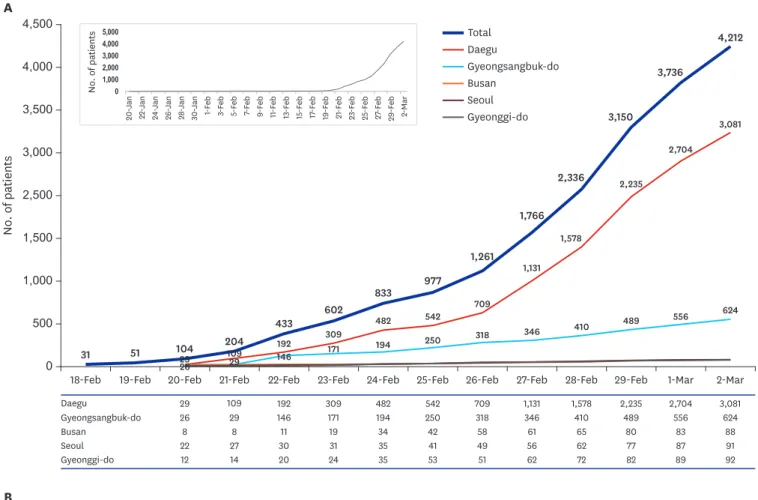
Fig. 2A shows the cumulative confirmed cases with COVID-19 (total, three major cities, and two major provinces). The cumulative number has increased dramatically since February 18, 2020, after the identification of patient 31. Fig. 2B shows the national distribution of the confirmed cases in Korea.
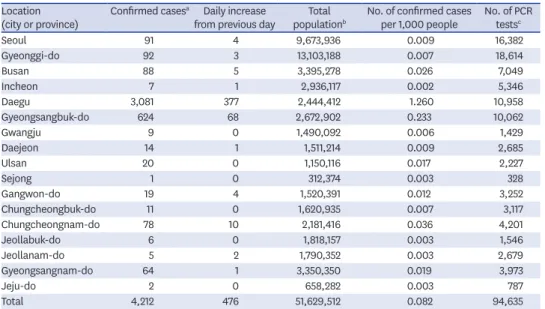
Table 1 shows the total number of cases in major cities and provinces. It also shows the positive cases per 1,000 persons, and the number of laboratory tests performed to diagnose the reported cases. Daegu has the highest number, with 1.26 cases per 1,000 persons as of March 2, 2020. The number of tests performed were highest in two major cities (16,382 tests in Seoul with a positive rate of 0.6% and 10,958 tests in Daegu with a positive rate of 28.1%) and two major provinces (18,614 tests in Gyeonggi-do with a positive rate of 0.5% and 10.062 tests in Gyeonsangbuk-do with a positive rate of 6.2%).
8Epidemiology of COVID-19 in Korea from January 19 to March 2, 2020
Table 1. The number of confirmed cases and laboratory tests in major cities and provinces (-do) in the Republic of Korea
Location
(city or province) Confirmed casesa Daily increase
from previous day Total
populationb No. of confirmed cases
per 1,000 people No. of PCR testsc
Seoul 91 4 9,673,936 0.009 16,382
Gyeonggi-do 92 3 13,103,188 0.007 18,614
Busan 88 5 3,395,278 0.026 7,049
Incheon 7 1 2,936,117 0.002 5,346
Daegu 3,081 377 2,444,412 1.260 10,958
Gyeongsangbuk-do 624 68 2,672,902 0.233 10,062
Gwangju 9 0 1,490,092 0.006 1,429
Daejeon 14 1 1,511,214 0.009 2,685
Ulsan 20 0 1,150,116 0.017 2,227
Sejong 1 0 312,374 0.003 328
Gangwon-do 19 4 1,520,391 0.012 3,252
Chungcheongbuk-do 11 0 1,620,935 0.007 3,117
Chungcheongnam-do 78 10 2,181,416 0.036 4,201
Jeollabuk-do 6 0 1,818,157 0.003 1,546
Jeollanam-do 5 2 1,790,352 0.003 2,679
Gyeongsangnam-do 64 1 3,350,350 0.019 3,973
Jeju-do 2 0 658,282 0.003 787
Total 4,212 476 51,629,512 0.082 94,635
KCDC = Korea Centers for Disease Control and Prevention, KOSIS = Korean Statistical Information Service, -do = a unit of the province.
aReported by the KCDC, March 2, 20208; b2018 Population census updated by the KOSIS, August 29, 201912;
cReported by the KCDC, March 1, 2020.9
4/11 https://jkms.org https://doi.org/10.3346/jkms.2020.35.e112
0 1,000 2,000 3,000 4,000 5,000
A
171 194 250 318 346 410 489 556 624
192 309
482 542 709
1,131 1,578
2,235
2,704 3,081 Seoul
Gyeonggi-do Gyeongsangbuk-do Daegu
Total
Busan
B
Seoul Incheon Gyeonggi-do Chungcheongnam-do
Sejong Daejeon Jeollabuk-do
Gwangju
Gangwon-do Chungcheongbuk-do
Gyeongsangbuk-do Daegu Ulsan Busan
19
11 624 3,081
20 88
Jeollanam-doJeju-do
91 7 92 78 1 14
6 9 5
2
Gyeongsangnam-do
64
E
1 1 1
2 2
3
1 1
2 1
6 11
9 7
8 14
9 10
2 1 1
2
1 1 1 1 1 1 1
2
1 3
2 5
6 10
7
4 7
8 7
6
2
1 1
16
0
20-Jan 21-Jan 22-Jan 23-Jan 24-Jan 25-Jan 28-Jan
27-Jan26-Jan 29-Jan 30-Jan 31-Jan 1-Feb 2-Feb 3-Feb 4-Feb 5-Feb 6-Feb 7-Feb 8-Feb 9-Feb 10-Feb 11-Feb 12-Feb 13-Feb 14-Feb 15-Feb 16-Feb 17-Feb 18-Feb 19-Feb 20-Feb 21-Feb 22-Feb 23-Feb 24-Feb 25-Feb 26-Feb 27-Feb 28-Feb 29-Feb 1-Mar 2-Mar
No. of cases
14 12 10 8 6 4 2
No. of cases by date of diagnosis No. of cases by date of first symptom
D
Nationwide total(1,591, 38%)Male Female
(2,621, 62%)
Gyeonggi-do
(55, 60%)Male Female
(37, 40%)
C
1,4000 0–9 10–19 20–29 30–39 40–49 50–59 60–69 70–79 +80 0–9 10–19 20–29 30–39 40–49 50–59 60–69 70–79 +80
No. of patients
Age, yr
32 169
1,235
506 633
834
530
192
81 1 3
17 26
16 13
9 6
1
Age, yr 1,200
1,000 800 600 400 200
30
0
No. of patients
25 20 15 10 5
Nationwide total Gyeonggi-do
4,500
0
No. of patients No. of patients
51 104
31 204
433 602
833 977
1,261 1,766
2,336 3,150
3,736
4,212 4,000
3,500
3,000
2,500
1,500
1,000
500
20-Jan
18-Feb 19-Feb 20-Feb 21-Feb 22-Feb 23-Feb 24-Feb 25-Feb 26-Feb 27-Feb 28-Feb 29-Feb 1-Mar 2-Mar
22-Jan 24-Jan 26-Jan 28-Jan 30-Jan 1-Feb 3-Feb 5-Feb 7-Feb 9-Feb 11-Feb 13-Feb 15-Feb 17-Feb 19-Feb 21-Feb 23-Feb 25-Feb 27-Feb 29-Feb 2-Mar
2629 10929 146
192 309 482 542 709 1,131 1,578 2,235 2,704 3,081
29 109
Daegu
171 194 250 318 346 410 489 556 624
26 29 146
Gyeongsangbuk-do
Seoul 22 27 30 31 35 41 49 56 62 77 87 91
Gyeonggi-do 12 14 20 24 35 53 51 62 72 82 89 92
Busan 8 8 11 19 34 42 58 61 65 80 83 88
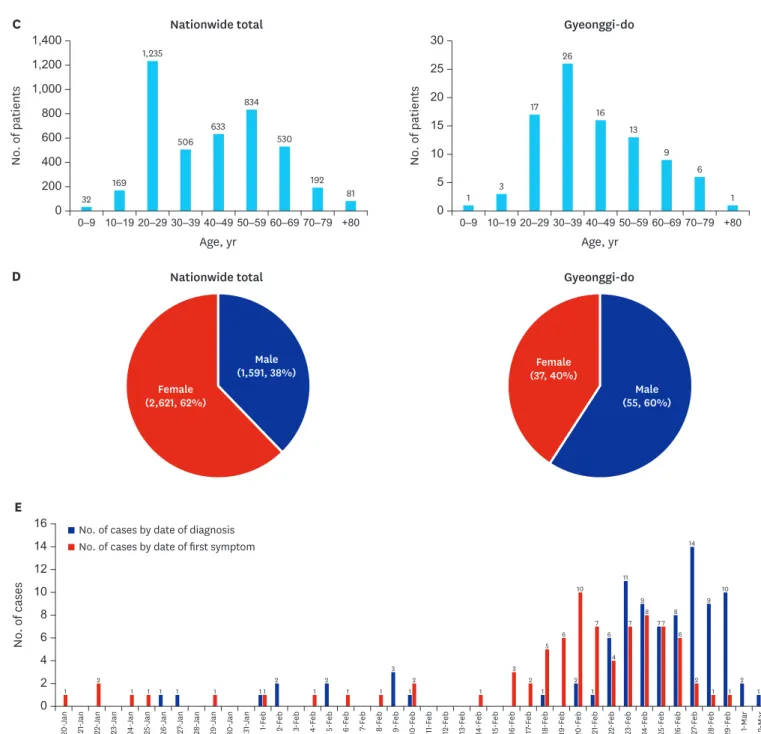
Fig. 2. Number of confirmed patients with COVID-19 by March 2, 2020. (A) Cumulative frequency curve in the Republic of Korea and selected cities and provinces. (B) Number of confirmed cases with COVID by locations in ROK. (C) Age distribution in whole ROK (left) and in Gyeonggi-do (right) (D) Sex distribution of confirmed cases in the nation (left) and Gyeonggi-do (right) (number, %). (E) Epidemic curves of COVID-19 patients in Gyeonggi-do, Korea.
Province and city-specific numbers of patients have been reported since February 20, 2020.
The numbers in the table at the bottom of the figure represent the number of cases in each specific location on each date from February 20 to March 2, 2020.
ROK = republic of Korea, COVID-19 = Coronavirus disease-19. (continued to the next page)
Epidemiology of COVID-19 in Korea from January 19 to March 2, 2020
0 1,000 2,000 3,000 4,000 5,000
A
171 194 250 318 346 410 489 556 624
192 309
482 542 709
1,131 1,578
2,235
2,704 3,081 Seoul
Gyeonggi-do Gyeongsangbuk-do Daegu
Total
Busan
B
Seoul Incheon Gyeonggi-do Chungcheongnam-do
Sejong Daejeon Jeollabuk-do
Gwangju
Gangwon-do Chungcheongbuk-do
Gyeongsangbuk-do Daegu Ulsan Busan
19
11 624 3,081
20 88
Jeollanam-doJeju-do
91 7 92 78 1 14
6 9 5
2
Gyeongsangnam-do
64
E
1 1 1
2 2
3
1 1
2 1
6 11
9 7
8 14
9 10
2 1 1
2
1 1 1 1 1 1 1
2
1 3
2 5
6 10
7
4 7
8 7
6
2
1 1
16
0
20-Jan 21-Jan 22-Jan 23-Jan 24-Jan 25-Jan 28-Jan
27-Jan26-Jan 29-Jan 30-Jan 31-Jan 1-Feb 2-Feb 3-Feb 4-Feb 5-Feb 6-Feb 7-Feb 8-Feb 9-Feb 10-Feb 11-Feb 12-Feb 13-Feb 14-Feb 15-Feb 16-Feb 17-Feb 18-Feb 19-Feb 20-Feb 21-Feb 22-Feb 23-Feb 24-Feb 25-Feb 26-Feb 27-Feb 28-Feb 29-Feb 1-Mar 2-Mar
No. of cases
14 12 10 8 6 4 2
No. of cases by date of diagnosis No. of cases by date of first symptom
D
Nationwide total(1,591, 38%)Male Female
(2,621, 62%)
Gyeonggi-do
(55, 60%)Male Female
(37, 40%)
C
1,400
0 0–9 10–19 20–29 30–39 40–49 50–59 60–69 70–79 +80 0–9 10–19 20–29 30–39 40–49 50–59 60–69 70–79 +80
No. of patients
Age, yr
32 169
1,235
506 633
834
530
192
81 1 3
17 26
16 13
9 6
1
Age, yr 1,200
1,000 800 600 400 200
30
0
No. of patients
25 20 15 10 5
Nationwide total Gyeonggi-do
4,500
0
No. of patients No. of patients
51 104
31 204
433 602
833 977
1,261 1,766
2,336 3,150
3,736
4,212 4,000
3,500
3,000
2,500
1,500
1,000
500
20-Jan
18-Feb 19-Feb 20-Feb 21-Feb 22-Feb 23-Feb 24-Feb 25-Feb 26-Feb 27-Feb 28-Feb 29-Feb 1-Mar 2-Mar
22-Jan 24-Jan 26-Jan 28-Jan 30-Jan 1-Feb 3-Feb 5-Feb 7-Feb 9-Feb 11-Feb 13-Feb 15-Feb 17-Feb 19-Feb 21-Feb 23-Feb 25-Feb 27-Feb 29-Feb 2-Mar
2629 10929 146
192 309 482 542 709 1,131 1,578 2,235 2,704 3,081
29 109
Daegu
171 194 250 318 346 410 489 556 624
26 29 146
Gyeongsangbuk-do
Seoul 22 27 30 31 35 41 49 56 62 77 87 91
Gyeonggi-do 12 14 20 24 35 53 51 62 72 82 89 92
Busan 8 8 11 19 34 42 58 61 65 80 83 88
Fig. 2. (Continued) Number of confirmed patients with COVID-19 by March 2, 2020. (A) Cumulative frequency curve in the Republic of Korea and selected cities and provinces. (B) Number of confirmed cases with COVID by locations in ROK. (C) Age distribution in whole ROK (left) and in Gyeonggi-do (right) (D) Sex distribution of confirmed cases in the nation (left) and Gyeonggi-do (right) (number, %). (E) Epidemic curves of COVID-19 patients in Gyeonggi-do, Korea.
Province and city-specific numbers of patients have been reported since February 20, 2020.
The numbers in the table at the bottom of the figure represent the number of cases in each specific location on each date from February 20 to March 2, 2020.
ROK = republic of Korea, COVID-19 = Coronavirus disease-19.
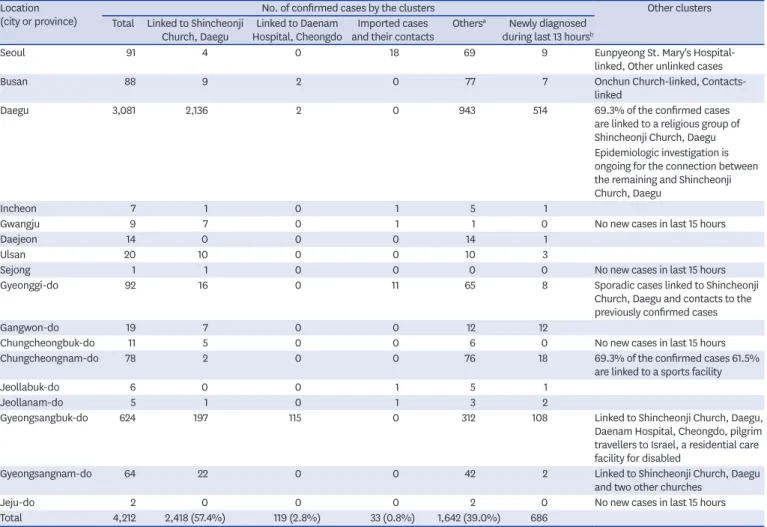
Number of confirmed cases linked to major clusters by the cities and provinces Since there were several major clusters for potential spread, confirmed cases were classified according to the exposure source when possible. Table 2 shows the total number of confirmed cases in major cities and provinces and the clusters in those locations.
9The largest cluster was the Shincheonji religious group related cluster in Daegu and Gyeonsangbuk-do area. In Daegu, almost 70% of the cases were related to this religious group. The second-largest cluster was the Daenam Hospital in Gyeonsangbuk-do where many patients in the closed psychiatric wards were infected.
Age and sex distribution
Fig. 2C and D show the age and sex distribution. In total confirmed cases, the age
distribution showed M shape with two peaks in the age group of the 20s and 50s. Among the confirmed cases in Gyeonggi-do where the third-highest number of patients was observed, the peak age group was the 30s with a bell-shaped distribution. Of note, Chinese data showed that most patients were in their 30–60s.
106/11 https://jkms.org https://doi.org/10.3346/jkms.2020.35.e112
Table 2. The total number of confirmed cases and cases linked to major clusters by the cities and provinces in the Republic of Korea Location
(city or province) No. of confirmed cases by the clusters Other clusters
Total Linked to Shincheonji
Church, Daegu Linked to Daenam
Hospital, Cheongdo Imported cases
and their contacts Othersa Newly diagnosed during last 13 hoursb
Seoul 91 4 0 18 69 9 Eunpyeong St. Mary's Hospital-
linked, Other unlinked cases
Busan 88 9 2 0 77 7 Onchun Church-linked, Contacts-
linked
Daegu 3,081 2,136 2 0 943 514 69.3% of the confirmed cases
are linked to a religious group of Shincheonji Church, Daegu Epidemiologic investigation is ongoing for the connection between the remaining and Shincheonji Church, Daegu
Incheon 7 1 0 1 5 1
Gwangju 9 7 0 1 1 0 No new cases in last 15 hours
Daejeon 14 0 0 0 14 1
Ulsan 20 10 0 0 10 3
Sejong 1 1 0 0 0 0 No new cases in last 15 hours
Gyeonggi-do 92 16 0 11 65 8 Sporadic cases linked to Shincheonji
Church, Daegu and contacts to the previously confirmed cases
Gangwon-do 19 7 0 0 12 12
Chungcheongbuk-do 11 5 0 0 6 0 No new cases in last 15 hours
Chungcheongnam-do 78 2 0 0 76 18 69.3% of the confirmed cases 61.5%
are linked to a sports facility
Jeollabuk-do 6 0 0 1 5 1
Jeollanam-do 5 1 0 1 3 2
Gyeongsangbuk-do 624 197 115 0 312 108 Linked to Shincheonji Church, Daegu,
Daenam Hospital, Cheongdo, pilgrim travellers to Israel, a residential care facility for disabled
Gyeongsangnam-do 64 22 0 0 42 2 Linked to Shincheonji Church, Daegu
and two other churches
Jeju-do 2 0 0 0 2 0 No new cases in last 15 hours
Total 4,212 2,418 (57.4%) 119 (2.8%) 33 (0.8%) 1,642 (39.0%) 686
Based on the report and the data assigned with the control number from the Korea Centers for Disease Control and Prevention. Thus, it may be different from those collected from the local governments. It can also be changed according to the results from the epidemiological investigations.
aIndividual sporadic cases or cases under investigation; bBased on the reported cases to the Korea Centers for Disease Control and Prevention between 9 am March 1 and 0 am March 2.
The data may differ from previously published due to changes in jurisdictions between announcement times.
For the sex ratio, only 37.7% were male in total confirmed cases. However, among the confirmed cases in Gyeonggi-do, 59.1% were male. In Chinese data, 51% were male.
11Therefore, there may not be any increased susceptibility for COVID-19 among certain age groups or sex. The distribution may reflect the movement and the social activities of individuals in different societies. In the Korean situation, predominance by the age group of the 20s and females may have caused by the outbreak related to a religious group in Daegu.
Epidemic curve (Symptom-onset-date-based vs. diagnosis-date-based) Fig. 2E shows that the symptom-onset-date-based epidemic curve was followed by the diagnosis-date-based epidemic curve in Gyeonggi-do. From the peak of the symptom-onset- based epidemic curve (around February 20) to the peak of the diagnosis-based epidemic curve (February 27) was about 7 days. In the Chinese report, from the peak of the symptom- onset-based epidemic curve (around January 24) to the peak of the diagnosis-based epidemic curve (February 4) was about 10 days.
11PEDIATRIC POPULATION
The proportion of children (≤ 19 years) is 18% of the total population of Korea.
12Therefore, COVID-19 in this age group also needs attention.
Since the diagnosis of the first pediatric case on February 19, 2020,
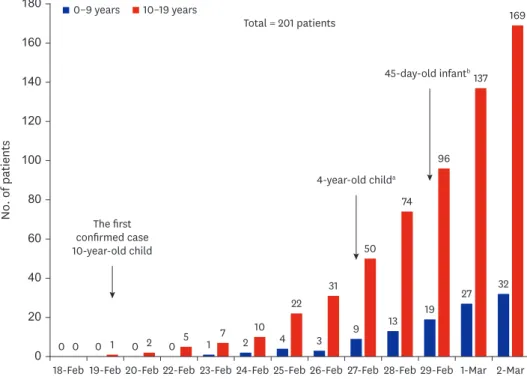
3the number of pediatric cases (≤ 19 years) gradually increased and 201 children were confirmed with COVID-19 as of March 2, 2020. The first pediatric case in Korea was a 10-year old girl who was exposed sequentially to the confirmed family members (a relative and her mother). Fig. 3 shows the cumulative pediatric cases from February 10 to March 2, 2020. The proportion of pediatric
Epidemiology of COVID-19 in Korea from January 19 to March 2, 20200 20 40 60 80 100 120 140 160 180
No. of patients
0–9 years 10–19 years
18-Feb 19-Feb 20-Feb 22-Feb 23-Feb 24-Feb 25-Feb 26-Feb 27-Feb 28-Feb 29-Feb 1-Mar 2-Mar
0 0 0 1 0 2 0 5 1 7
2 10 4
22
3 31
9 50
13 74
19 96
27 137
32 Total = 201 patients 169
The first confirmed case 10-year-old child
4-year-old childa
45-day-old infantb
Fig. 3. Cumulative pediatric cases in the Republic of Korea as of March 2, 2020.
aThe child was presumed to have been infected by a familial exposure. He attended the daycare center one day before the symptom onset; bThe youngest pediatric case as of March 2, 2020.
cases (≤ 19 years) was 4.8% of total confirmed cases (32 children in 0–9 years old age group, 169 children in 10–19 years old age group).
8Among all pediatric cases (≤ 19 years), the proportion of younger children (0–9 years old) was 15.9%. Of note, there was a 4-year old boy who attended the daycare center before the confirmation. Identifying the transmission pattern in young children requires more data.
13As of March 2, the youngest pediatric case with COVID-19 in Korea was a 45-day old male baby who was infected by his father, a member of the religious group. Most pediatric patients are in mild clinical conditions.
More detailed data are required on the clinical manifestation of the children and the roles of infected children on the epidemiology of COVID-19 in the community.
MORTALITY
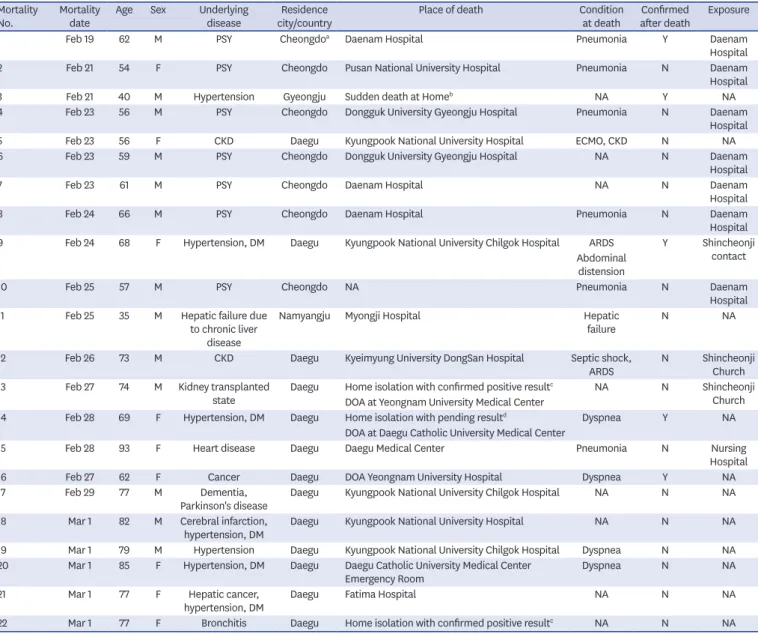
On March 2, of 4,212 confirmed cases, 22 patients have died (0.5%) and 13 patients were male (59.1%). Table 3 shows a detailed description of deceased patients.
8Out of 22 patients, 20 patients (20/22, 90.9%) were 50 or older (Fig. 4). The case fatality rate increased with older age. The case fatality rate of persons 50 years or older was higher than that of persons younger than 50 years (1.2% vs. 0.2%, P = 0.0017, Fishers exact test).
All of fatal patients had underlying conditions. Among them, seven patients (7/22, 31.8%) were from the psychiatric ward of Daenam Hospital, where they had been hospitalized for several years in poor general conditions. The youngest patient was a 35-year old Mongolian patient. He was already in a serious condition from chronic hepatic failure with cirrhosis and esophageal variceal bleeding. A 40-year old male with hypertension died suddenly, was found the next morning by a coworker, diagnosed with COVID-19 later. Including this patient, the diagnosis was made after death in five patients (5/22, 22.7%). One patient (mortality number 3) died at home suddenly, the rest of the three patients died during hospitalization (mortality numbers 1, 9, and 16), and one patient (mortality number 14) died at home while waiting for the pending test result. Of note, two patients (mortality numbers 13 and 22) were at home isolation with positive results waiting for the hospitalization, but their condition aggravated rapidly and they died. Three patients (mortality numbers 13,
8/11 https://jkms.org https://doi.org/10.3346/jkms.2020.35.e112
No. of confirmed cases 506 633 834 530 192 81
No. of mortality cases 1 1 5 6 6 3
Case fatality rate, % 0.2 0.2 0.6 1.1 3.1 3.7
7
0 30–39 40–49 50–59 ≥ 80
No. of patients
60–69 70–79 Age, yr
6 5 4 3 2 1
No. of mortality cases Case fatality rate, %
Fig. 4. Mortality cases with Coronavirus disease-19 in the Republic of Korea as of March 2, 2020.
14, and 16) died on arrival at the hospital.
14,15Therefore, even though most of COVID-19 patients may have mild clinical courses, individuals with old age and/or underlying medical conditions should be carefully monitored.
CONCLUSION
COVID-19 is a novel threatening viral infection to human society. An exponential increase in numbers of COVID-19 patients in Korea appeared to be mainly caused by exposure among the members of a religious group with the additional community- and hospital-transmission.
Epidemiology of COVID-19 in Korea from January 19 to March 2, 2020
Table 3. Mortality in Korean patients with Coronavirus disease-19 as of 0 am, March 2, 2020 Mortality
No. Mortality
date Age Sex Underlying
disease Residence
city/country Place of death Condition
at death Confirmed
after death Exposure
1 Feb 19 62 M PSY Cheongdoa Daenam Hospital Pneumonia Y Daenam
Hospital
2 Feb 21 54 F PSY Cheongdo Pusan National University Hospital Pneumonia N Daenam
Hospital
3 Feb 21 40 M Hypertension Gyeongju Sudden death at Homeb NA Y NA
4 Feb 23 56 M PSY Cheongdo Dongguk University Gyeongju Hospital Pneumonia N Daenam
Hospital
5 Feb 23 56 F CKD Daegu Kyungpook National University Hospital ECMO, CKD N NA
6 Feb 23 59 M PSY Cheongdo Dongguk University Gyeongju Hospital NA N Daenam
Hospital
7 Feb 23 61 M PSY Cheongdo Daenam Hospital NA N Daenam
Hospital
8 Feb 24 66 M PSY Cheongdo Daenam Hospital Pneumonia N Daenam
Hospital 9 Feb 24 68 F Hypertension, DM Daegu Kyungpook National University Chilgok Hospital ARDS Y Shincheonji
contact Abdominal
distension
10 Feb 25 57 M PSY Cheongdo NA Pneumonia N Daenam
Hospital
11 Feb 25 35 M Hepatic failure due
to chronic liver disease
Namyangju Myongji Hospital Hepatic
failure N NA
12 Feb 26 73 M CKD Daegu Kyeimyung University DongSan Hospital Septic shock,
ARDS N Shincheonji
Church
13 Feb 27 74 M Kidney transplanted
state Daegu Home isolation with confirmed positive resultc NA N Shincheonji Church DOA at Yeongnam University Medical Center
14 Feb 28 69 F Hypertension, DM Daegu Home isolation with pending resultd Dyspnea Y NA
DOA at Daegu Catholic University Medical Center
15 Feb 28 93 F Heart disease Daegu Daegu Medical Center Pneumonia N Nursing
Hospital
16 Feb 27 62 F Cancer Daegu DOA Yeongnam University Hospital Dyspnea Y NA
17 Feb 29 77 M Dementia,
Parkinson's disease Daegu Kyungpook National University Chilgok Hospital NA N NA
18 Mar 1 82 M Cerebral infarction,
hypertension, DM Daegu Kyungpook National University Hospital NA N NA
19 Mar 1 79 M Hypertension Daegu Kyungpook National University Chilgok Hospital Dyspnea N NA
20 Mar 1 85 F Hypertension, DM Daegu Daegu Catholic University Medical Center
Emergency Room Dyspnea N NA
21 Mar 1 77 F Hepatic cancer,
hypertension, DM Daegu Fatima Hospital NA N NA
22 Mar 1 77 F Bronchitis Daegu Home isolation with confirmed positive resultc NA N NA
Age distribution: 30–39 years (1/22, 4.5%), 40–49 years (1/22, 4.5%), 50–59 years (5/22, 22.7%), 60–69 years (6/22, 27.3%), 70–79 years (6/22, 27.3%), over 80 years (3/22, 13.6%).
NA = not available, PSY = psychiatric disorder, CKD = chronic kidney disease, ECMO = extracorporeal membrane oxygenation, DM = diabetes mellitus, ARDS = acute respiratory distress syndrome, DOA= dead on arrival.
aCheongdo is a county, 27 km from Daegu in Gyeongsangbuk-do (North Gyeongsang Province); bHe died at home suddenly; cThey died while waiting for admission with the confirmed result; dShe died while waiting for the pending result.
The transmission exploded mainly in Daegu and neighboring areas. With this sudden and massive increase in confirmed cases, there is an urgent need and preparation for treatment strategies for serious or critical patients. Also, plans and actions for mild cases should properly proceed.
Furthermore, increasing cases without epidemiologic links in the parts of the nation may herald the risks for additional cluster outbreaks in the coming weeks. Monitoring for such potential clusters of the outbreak are needed, and countermeasures should be urgently prepared.
Koreans should remain calm and vigilant and continue to be socially responsible. The government, the health authority, experts in the field, and all Koreans should cooperate to overcome this challenging outbreak with a prompt and dynamic response.
ACKNOWLEDGMENTS
We express our sincere consolation for the patients and their families who had COVID-19 in the Republic of Korea. We greatly appreciate the efforts of all the hospital employees and their families who are working tirelessly during this outbreak. We thank all the members of the Korean Society of Infectious Diseases, Korean Society of Pediatric Infectious Diseases, Korean Society of Epidemiology, Korean Society for Antimicrobial Therapy, Korean Society for Healthcare-associated Infection Control and Prevention, and Korea Centers for Disease Control and Prevention. We also appreciate the collaborative partnership at all levels of individuals in the public and private sectors of the nation.
REFERENCES
1. Kim JY, Choe PG, Oh Y, Oh KJ, Kim J, Park SJ, et al. The first case of 2019 novel coronavirus pneumonia imported into Korea from Wuhan, China: implication for infection prevention and control measures. J Korean Med Sci 2020;35(5):e61.
PUBMED | CROSSREF
2. Yoo JH. The fight against the 2019-nCoV outbreak: an arduous march has just begun. J Korean Med Sci 2020;35(4):e56.
PUBMED | CROSSREF
3. Korea Centers for Disease Control and Prevention. The update of COVID-19 in Korea as of 19 February.
http://ncov.mohw.go.kr/tcmBoardView.do?brdId=&brdGubun=&dataGubun=&ncvContSeq=352991&con- tSeq=352991&board_id=&gubun=ALL. Updated 2020. Accessed March 2, 2020.
4. Ministry of Foreign Affairs. http://overseas.mofa.go.kr/viewer/skin/doc.html?fn=2020022902071300&rs=/
viewer/result/202003. Updated 2020. Accessed March 2, 2020.
5. Korea Centers for Disease Control and Prevention. The update of COVID-19 in Korea as of 30 January http://www.mohw.go.kr/react/al/sal0301vw.jsp?PAR_MENU_ID=04&MENU_ID=0403&page=1&CONT_
SEQ=352572&SEARCHKEY=TITLE&SEARCH. Updated 2020. Accessed March 2, 2020.
6. Korea Centers for Disease Control and Prevention. Press release reported February 2, 2020. http://
ncov.mohw.go.kr/tcmBoardView.do?brdId=&brdGubun=&dataGubun=&ncvContSeq=352735&contSe- q=352735&board_id=140&gubun=BDJ. Updated 2020. Accessed March 2, 2020.
7. Korea Centers for Disease Control and Prevention. The update of COVID-19 in Korea as of February 23.
https://www.cdc.go.kr/board/board.es?mid=a20501000000&bid=0015&list_no=366304&act=view. Up- dated 2020. Accessed March 2, 2020.
8. Korea Centers for Disease Control and Prevention. The update of COVID-19 in Korea as of March 2. http://
ncov.mohw.go.kr/tcmBoardView.do?brdId=&brdGubun=&dataGubun=&ncvContSeq=353272&cont- Seq=353277. Updated 2020. Accessed March 2, 2020.
10/11 https://jkms.org https://doi.org/10.3346/jkms.2020.35.e112
9. Korea Centers for Disease Control and Prevention. Press release about trends by city and province updat- ed March 1, 2020. http://ncov.mohw.go.kr/bdBoardList_Real.do?brdId=1&brdGubun=13&ncvContSeq=&- contSeq=&board_id=&gubun=. Updated 2020. Accessed March 2, 2020.
10. Novel Coronavirus Pneumonia Emergency Response Epidemiology Team. The epidemiological characteristics of an outbreak of 2019 novel coronavirus diseases (COVID-19) in China. Zhonghua Liu Xing Bing Xue Za Zhi 2020;41(2):145-51.
PUBMED | CROSSREF
11. Wu Z, McGoogan JM. Characteristics of and important lessons from the Coronavirus Disease 2019 (COVID-19) outbreak in China: summary of a report of 72 314 cases from the Chinese Center for Disease Control and Prevention. JAMA Forthcoming 2020.
PUBMED | CROSSREF
12. Korean Statistical Information Service. 2018 population census updated by the KOSIS, August 29, 2019. http://kosis.kr/statisticsList/statisticsListIndex.do?menuId=M_01_01&vwcd=MT_ZTITLE&parm- TabId=M_01_01#SelectStatsBoxDiv. Updated 2020. Accessed March 2, 2020.
13. Gyeongsangnamdo. The updates of COVID-19 in Gyeongnam updated March 2, 2020. http://www.gyeo- ngnam.go.kr/corona.html. Updated 2020. Accessed March 2, 2020.
14. Daegu Metropolitan City. Press release of COVID-19 in Daegu as of February 29, 2020. http://www.
daegu.go.kr/health/index.do?menu_id=00936550&menu_link=/icms/bbs/selectoardArticle.do&bb- sId=BBS_02098. Updated 2020. Accessed March 2, 2020.
15. Daegu Metropolitan City. Press release of COVID-19 in Daegu as of March 2, 2020. http://www.dae- gu.go.kr/health/index.do?menu_id=00936550&menu_link=/icms/bbs/selectBoardArticle.do&bb- sId=BBS_02098. Updated 2020. Accessed March 2, 2020.
Epidemiology of COVID-19 in Korea from January 19 to March 2, 2020