1. Introduction
The transition to digital technology means that the cinema of the old days dies out and a new era of cinema emerges. The radical switch to digital cinema not only marks a historical turning point of cinema
technology but leads to changes in methods of cinematic language and aesthetics. It eventually advances to declare the advent of a new cinematic language or new ‘cine-love.’ Susan Sontag, in 1996, the centenary year of the birth of cinema, declared the decline of the cinematic and deplored a flood of floridly
A Study on Relation between Indexicality of Digital Cinema and Evolution of Cinematic Language
Jeong, Minah
Department of Theatre & Cinema, Sungkyul University
디지털 시네마의 지표성과 영화언어의 진화와의 관계에 관한 연구
정민아
성결대학교 연극영화학부
Abstract The digital technologies brought a structural transformation to cinema, have lead a change in the way of existence of an assembly of images called cinema, and have shared expression methods with new-media. To look into how in terms of cinema style of the film era and the digital era are different, this article will focus on the matter of ‘indexicality.’ From the point of view of perceptive realism the discourses on digital image deconstruct the dichotomy between illusionism and classical realism. Therefore the actuality of an image does not depend on only indexicality but has much to do with how the viewers fundamentally perceive the image. In this age of digital cinema it does not matter to distinct a composite-image from a reality-image. This article inquires the relation of indexicality, the world and digital images in digital cinema on the level of reception, and reconsider in terms of image production.
Key Words : Convergence, digital cinema, cinema technology, indexicality, realism, cinematic language
요 약 프레임에서 픽셀로의 전환은 영화가 기술적 차원에서 거대한 전환을 이룬 것뿐만 아니라 영화언어 차원에서 근본 적인 변화를 보여준다. 필름시대와 디지털 시대를 정의하며, 필름 시대의 영화와 디지털 시대의 영화가 스타일 차원에서 어떻게 구분되는가를 살펴보기 위해 본고는 지표성의 문제에 초점을 맞춘다. 지각적 사실주의 입장에서 보자면, 디지털 이미지에 대한 담론은 환영주의와 고전적 사실주의의 이분법적 구분을 해체한다. 이에 따라 이미지의 현실성은 지표적 차 원에만 의존하지 않으며, 보다 근본적으로 관객이 어떻게 지각하느냐 하는 수용의 관점에서 고려되어야 한다는 결론이 도 출된다. 디지털 시네마 시대에는 효과로서의 수용성이라는 차원에서 디지털 시네마의 지표성과 세계, 그리고 디지털 이미 지 간의 관계에 대해 검토하는 작업을 해야 하며, 또한 이미지 생산의 관점에서 재고찰해야 할 것이다.
주제어 : 디지털 시네마, 영화 테크놀로지, 지표성, 사실주의, 영화언어
*Corresponding Author : Jeong, Minah([email protected]) Received May 23, 2018
Accepted July 20, 2018
Revised July 12, 2018 Published July 28, 2018
edited frivolous films, means of watching films outside theaters, degeneration of films into mere consumer goods due to the advent of blockbuster cinema, and the death of cinephiles[1]. However, it was at this very point that cinema was reborn. The cinema of a specific era died out and a new cinematic era emerged, the cinematic language being renewed and the history of cinema making a new turning point.
The films of the old days were slipping away in the 21th century when cinema based itself on digital technologies. Due to digital visual technologies such as digital cameras, digital projectors, computer-based nonlinear editing, CGI, and satellite communication, the cinema industry, institution and culture have taken a totally different aspect. Just as the early day the viewers still watch a film in a dark theater, but the cinematic devices are different from those of the old analogue era. The mechanic whirring in the projection room is not heard anymore, and the intermittent movement of film between lens and light source is not seen anymore. Nowadays what creates images is the transition of digital signals into pixel images and the flow of pixels projected onto the screen. The reproduction of images by digital visual technologies is a presentation of soundless abstract numbers.
Steven Shaviro, in his book Post-cinematic Affect, suggests a structure of new cinematic images.
Proposing a new coinage of ‘post-cinema,’ he says,
“These changes (of digital technologies) are so new and unfamiliar that we scarcely have the vocabulary to describe them, and yet have become so common, and so ubiquitous, that we tend not even to notice them any longer.”[2].
David Norman Rodowick claims that films and digital cinema after the film era are essentially incomparable, but without clearly recognizing the essential differences between them we are in-between from a certain past to a new stage[3]. He says, “We stand between the questions ‘what was cinema?’ and
‘what will digital cinema become?’” As Shaviro and Rodowick claim, digital cinema is under new
technological conditions while the differences of film images and digital images are not clarified. It is why we should renew and understand the concepts of digital cinema and begin to rewrite the history of cinema.
Cinema, with the transition from the film era to the digital era, works in different ways from the old days.
What is it that essentially separates the digital era from the film era? What identifies the digitalized cinema? To look into how in terms of cinema style of the film era and the digital era are different, this article will focus on the matter of ‘indexicality’
1). We have arrived at the times when we need to understand the cinema based on digital technologies not in the framework of old cinema but through a new concept of cinema. Stephen Prince asks “The rapid nature of these changes is creating problems for film theory. …… We are the implications of computer-generated imagery for representation in cinema particularly for concepts of photographically base realism? How might theory adapt to an era of digital imaging?”[3]
The transition from frame to pixel not only marks a huge change in cinematic technology but also shows a radical change in cinematic language. This article would like to look into the transition from the film era to the digital era, redefining the indexicality of digital images. This article focuses on the convergence between the department of Film Arts and the department of Digital Technology.
2. Materials and Methods
The cinema scholars focusing on perceptive realism have raised questions against what the film scholars of the era of Andre Bazín, Stanley Cavell, Siegfried
1) ‘Index’ refers to a symbol that reminds an object by
showing that it is closely related to the object. The smoke
of the chimney can be an index that someone is lighting
fire in the fireplace, the wind direction can be the direction
of the wind, the height of the mercury can be the elevation
of the temperature, and the knocking on the door can be an
index that the visitor has come. Photograph and film are
language based on indexicality.
Kracauer claimed; a referent determine cinematic reality. The advent of digital cinema has provided an important opportunity to question the classical realism and reconsider the theories of realist cinema.
Extensive uses of digital visual effects in cinema helped the screen images look more realistic and empowered the theorists embracing perceptive realism.
Perceptive realism disregards cinema’s indexical capacities and its movements on topographic level. In other words, it emphasizes on movements in cinema but focuses not on their creation process but on their effects. As long as their description is realistic, perceptive realism theorists claim, the existence or non-existence of the object in front of the camera does not matter. Film and digital cinema do not make much difference in its effect. According to them, the viewers do not concern themselves with what are behind the screen, and what make realistic presentation possible in digital cinema are abstract and arithmetized conditions.
Stephen Prince says that computer-generated images’
ability to tell a lie problematizes traditional assumptions regarding cinema rooted in realism and cinema theories[4]. In cinemas like Jurassic Park(1993) and Forrest Gump(1994) neatly composed images of live-action filming and CGI, though produced respectively in different times and spaces in different methods, in their final effect are perceived as a photographically integrated space-time. We are able to see running dinosaurs or a leg amputee as real in three-dimensional space. The viewers have photographic confidence in digitally generated images.
Referentially the dinosaurs in the cinema are fictional and do not agree with common notion of cinematic realism based on indexicality. The advent of digital technologies, nevertheless, tears down the barrier between the real and the unreal. The reason why the viewers feel digitally generated images as real is because they remind them of visual and social experiences of the real world that they live in. The filmmakers of digital cinema have designed the images in the way that the viewers respond to them
realistically, so the viewers relate themselves to experiences in cinema and take the images as reality.
Perspective realism, unlike the cinematic realism based on indexicality, is based on the relation between cinema or image and the viewers, and embraces both unrealistic images and indexically real images. The viewers, perceiving digital visual effects as real, immerse themselves in the images but would not misunderstand them as live-action images. Living dinosaurs do not have indexicality but have acquired photographic reality. Tom Gunning, a theorist of early cinema, claims that we should separate realism and indexicality theoretically[5]. Realism is based on causal relation between the world and the images. Indexicality is not the only element that makes cinema realistic.
From the viewpoint of perceptive realism, discourses on the digital images deconstruct the dichotomy of illusionism and classical realism. I would like to redefine the indexicality of digital images and look into the relation between cinematic realism and indexicality in the current environment of fully digitalized cinema system.
2.1 Indexicality of Digital Image
Digital technologies posit problems regarding indexicality of photographic images. Digital images, compared with film images, have several characteristics.
First of all, digital images are abstract. Digital images are an assembly of numbers 0 and 1 generated through computer algorithms, and are to be interpreted through interfaces such as monitors or digital projectors. Timothy Binkley explains that numbers of digital image have no shape, weight, color, intensity, electromagnetic frequency, or any other characteristic physiognomy[6]. According to him “The number that constitute a digital image are immaterial concepts that transcend the evolving cultural conventions that define media”[6].
Secondly, a digital image can be infinitely
reproduced and also can be infinitely transformed by an
algorithm rearranging the numbers. Jack in Fight Club(1999), copying documents, says “everything is the copy of the copy of the copy,” which grasps the capability of a digital image to be reproduced repetitively. In the same vein, Nicholas Rombes says the digital leaves no obvious traces or clues about how far removes it is from the original[7].
Thirdly, a digital image is a virtual and controllable image. Because the abstract factors that shape a digital image are directly entered data, it is possible for us to create a realistic image without a referent. The way of creating a digital image through assembling numbers does not need any specific physical substance. The technologies that produce a digital image, transforming the given image data or mixing different images or creating new ones, produce not only an image without a referent but also one that we can hardly tell its originating moment or production time. Timothy Druckrey explains that the objects in digital image production are not recorded but rendered[8]. The reason why we call a digitally generated image virtual reality is because we choose and manipulate the abstract sign of numbers in the process of image production.
The fact that a digital image, characteristics of which are abstraction, transformation, liquidity and self-production, is controlled not in reality but in a created virtual reality separates it from a photographic image. A digital image does not ‘exists’ but works in
‘virtuality.’ A digital image cannot have physical actuality of indexicality that a photographic image has, and inherently virtual. So the indexicality of a digital image is abstract and works in multiple dimensions.
2.2 Indexicality of Digital Cinema
Through digital compositing of an image a CG-image is combined with ‘real-image’ with a referent and through digital intermediate a real-image is transformed into a digital image and recreated as realistic images through various CGI technologies.
Encounter with digital technologies gives cinema
chances to combine itself with various other media and culture products, and to become a quintessential art form of the age. The digital technologies that have evolved for the last 30 years have brought a structural transformation to cinema, have lead a change in the way of existence of an assembly of images called cinema, and have shared expression methods with new-media. These changes are also shown in the way how indexicality, a condition of an image, works.
On the one hand images caught on camera are transformed and recreated as refined image through digital image compositing or digital visual effects, on the other, they are treated just as the original to be transformed. In this age of digital technologies, a raw image yet to be transformed through a computer algorithm is usually considered a misfit. We have come to the age when a reality-image should be transformed into digital data and recreated through visual effects technology.
T-1000 in Terminator2(1991), destructive T-Rex in Jurassic Park, a stealth fighter in Broken Arrow(1995), digitally generated crowd in Titanic(1997), sand mummies in The Mummy(1999), all of those products of CGI method are digitally generated virtual beings.
Those virtual beings were perfectly produced with digital image compositing that does not leave any trace of combination, which the celluloid-based image technology cannot compete with. A digital image solidifies cinema’s narrative. As Andrew Darley and Jan Johnson-Smith assert, a digital image have become a new cinematic language that more plausibly fills up fictional gaps[9,10].
Berys Gaut expresses concern over digital cinema as
followings; digital cinema has greater powers to
achieve realistic-looking images than does traditional
film, but when viewers come to know of these powers,
they have every reason to be suspicious about whether
what they seem to have evidence for happening really
did happen[11]. It is true that a CG-image might arouse
suspicion over authenticity and reliability of the objects
in cinema. Digital technologies have made us to
reconsider the value of cinema from scratch. Let’s take a virtual actor completed with a digital image, for instance. Even though it looks visually realistic, its digital image lacking indexicality makes it hard for viewers to identify it with themselves and form a sense of fellowship with it. Regarding the matter, Paul Willemen says that weakening of indexicality of a digital image can be a prelude to the loss of authenticity of an image, that is, the loss of power to resist reality that an image’s power to claim truth against an existing power[12]. However, does anxiety caused by the fact that a digital image becomes estranged from indexicality really matter in the current cinema culture where digital technologies prevail?
As Stephen Prince points out, the actuality of an image does not depend on indexicality but has much to do with how the viewers fundamentally perceive the image[13]. Have the way to describe background and space in narrative cinema really changed by digital
technologies? A space composed of
computer-synthesized images clearly throws the viewers into diegesis and generates identification with the hero, and then it has the power of indexicality, not existing but being realistic. Realistic effects of elaborate movement in digital cinema create realistic perception. Indexicality in digital cinema combined with computer generated images creates vividness and reality and provide the viewers with more reliable images. Completeness of an image and its similarity with the referent compensate the indexicality. Braxton Soderman claims that indexicality of a digital image is given not by an object in front of a camera but an algorithm that produces a digital image. In other words, indexicality of a digital image is an algorithm.
3. Discussion
Today’s cinemas, not just Hollywood’s blockbuster cinemas but mainstream cinemas produced in Korea and the rest of the world, do not confine themselves to
record real objects but use digital technologies to create new images. Murder on the Orient Express (2017) combines reality-image of a set of train’s inner space and a CG-image of outside with background of Istanbul.
Fig. 1. A still excerpted from Murder on the Orient Express (2017)
‘Fig. 1’ presents an image of an actual human being standing in the background of Istanbul and exploding trains in between, both of which are generated through computer technology, that is, it creates a non-existing new tableau of compositing image of a reality-image and a CG-image.
In this composite-image, the indexicality of reality is mixed with CG-image and challenges the distinction between reality and virtuality. Unlike the film of the gone-by days that was combination of different dimensions, Os and 1s are recreated in the new structure. The surface of reality disappears and the newly created composite-image assumes the power of reality. In this age of digital cinema it does not matter to distinct a composite-image from a reality-image.
In digital cinema indexicality works in a way
different from the past. We need to look into how the
physicality that is given as a source of an image is
transformed into information in the programming
process that filmmakers go through to boost the sense
of reality. A digitally generated image uses concrete
and physical reality to obtain a sense of reality.
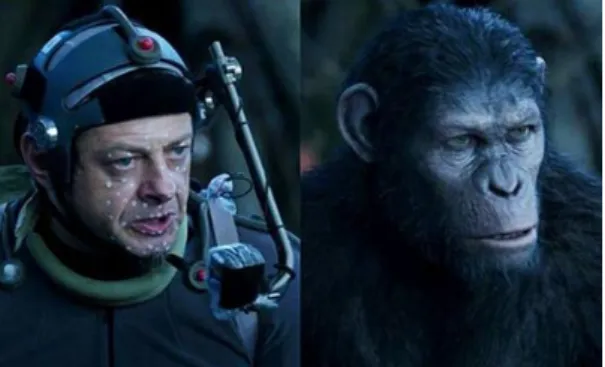
Fig. 2. A still excerpted from War for the Planet of the Apes (2017)
For example, as the ‘Fig. 2’ shows, creating a virtual actor’s image takes the process of capturing a real actor’s facial expressions and body movements repeatedly and modeling and sampling. Variously captured facial expressions and body movements are analyzed in detail, and then composited and transformed in a way that shows the most appropriate and plausible movements. However, the very physically demanding process does not leave any trace and the world and body are standardized.
Modern blockbuster films, like in War for the Planet of the Apes (2017), have created a new concept of ' a character without its source[14].' The actor, Andy Serkis, who plays the main character Caesar, disappears from the finished movie. The character is engraved with the technique called Weta Digital instead of the actor. Digital technology, without claiming its status, erases the traces of itself. So we encounter ‘the new face of the digital technology era’.
It is a reality that precedes the evolution of digital images.
But this phenomenon is not new. Modern Digital Cinema is returning to a discussion about ‘the cinema attraction’ of Tom Gunning who studied early film, 'the movie that is faithful to the power of image'[15]. The film has always absorbed new technology, but the technology of viewing pleasure can only succeed if it is settled in the narrative. The image of the ape in War for the Planet of the Apes is not flourished in the exhibition. It is a narratively synchronized image.
Modern digital blockbuster like War for the Planet of the Apes shows how digital image revives the original power of attractions.
Where and for whom the information and body are controlled? A change in perception-machine extends senses of human body on the one hand, and produces knowledge and information through senses on the other. We need to turn our focus on the fact that indexicality in digital cinema posits a problematic of body as a condition of producing physical laws and knowledge. The body in which realism shapes becomes a negotiating space between the world and the self.
4. Conclusion
Today’s digital image technologies have changed the whole process of cinema’s production to reception. The technological transition does not stop at replacing the old film. Cinema is to be redefined. This article has reconsidered the identity of cinema, asking whether the end of film era means the end of cinema and how we should embrace the matter of indexicality in the age of digital cinema. In times when the digitalization of cinema is getting more elaborate and explosive, cinema will always be cinema totally different from the previous one. The digital technology’s intrinsic attribute of converging with other media propels the changes in cinematic form. This study has tried to redefine the indexicality of digital cinema, and relating it with perceptive realism; this study has come to a conclusion that the dichotomy of classical realism and illusionism is being deconstructed in this age of digital cinema.
REFERENCES
[1] S. Sontag. (1996. 2. 25). “The Decay of Cinema” New
York Times. https://archive.nytimes.com[2] S. Shaviro. (2010). Post-Cinematic Affect, Winchester,
UK: Zero-Books.
[3] D. N. Rodowick. (2007). The Virtual Life of Film, Cambridge, MA: Harvard University Press.
[4] S. Prince. (1996). Thru Lies: Perceptual Realism, Digital Images, and Film Theory, Film Quarterly, 49(3), 27-37.
[5] T. Gunning. (2007). Moving away from the Index:
Cinema and the Impression of Reality, Differences,
18(1), 29-52.[6] T. Binkley. (1990). The Quickening of Galatea: Virtual Creation without Tools or Media, Art Journal, 49(3), 233-240.
[7] N. Rombes. (2009). Cinema in the Digital Age, New York: Wallflower Press.
[8] T. Druckrey. (1994). From Dada to Digital: Montage in the Twentieth Century, Aperture, 136, 4-7.
[9] A. Darley. (2000). Visual Digital Culture: Surface Play
and Spectacle in New Media Genre, London and NewYork: Rutledge.
[10] J. Johnson-Smith. (2005). American Science Fiction TV:
Star Trek, Stargate and Beyond, London: I. B. Tauris.