• 검색 결과가 없습니다.

Lack of Association between the Klotho Gene and COPD

N/A
N/A
Protected

Academic year: 2021

Share "Lack of Association between the Klotho Gene and COPD"

Copied!
5
0
0

로드 중.... (전체 텍스트 보기)

전체 글

(1)

Tuberc Respir Dis 2011;71:254-258

CopyrightⒸ2011. The Korean Academy of Tuberculosis and Respiratory Diseases. All rights reserved.

Lack of Association between the Klotho Gene and COPD

Woo Jin Kim, M.D.

1

, Yeon-Mok Oh, M.D.

2

, Tae-Hyung Kim, M.D.

3

, Ji-Hyun Lee, M.D.

4

, Eun-Kyung Kim, M.D.

4

, Jin Hwa Lee, M.D.

5

, Sang-Min Lee, M.D.

6

, Tae Rim Shin, M.D.

7

, Ho Il Yoon, M.D.

8

, Seong-Yong Lim, M.D.

9

, Sang Do Lee, M.D.

2

1

Department of Internal Medicine, Kangwon National University, Chuncheon,

2

Department of Pulmonary and Critical Care Medicine, and Clinical Research Center for Chronic Obstructive Airway Diseases, Asan Medical Center, University of Ulsan College of Medicine, Seoul,

3

Division of Pulmonology, Department of Internal Medicine, Hanyang University Guri Hospital, Hanyang University College of Medicine, Guri,

4

Division of Pulmonary and Critical Care Medicine, Department of Internal Medicine, CHA Bundang Medical Center, CHA University School of Medicine, Seongnam,

5

Department of Internal Medicine, Ewha Womans University Mokdong Hospital, Ewha Womans University College of Medicine, Seoul,

6

Division of Pulmonary and Critical Care Medicine, Department of Internal Medicine, Clinical Research Institute, Seoul National University Hospital, Lung Institute, Medical Research Center, Seoul National University College of Medicine, Seoul,

7

Department of Internal Medicine, Kangnam Sacred Heart Hospital, Hanllym University College of Medicine, Seoul,

8

Respiratory Center, Seoul National University Bundang Hospital, Department of Internal Medicine, Seoul National University College of Medicine, Seongnam,

9

Division of Pulmonary and Critical Care Medicine, Department of Medicine, Kangbuk Samsung Hospital, Sungkyunkwan University School of Medicine, Seoul, Korea Background: Although the aging process and features of chronic obstructive pulmonary disease (COPD) have several similarities, the relationship between aging and COPD pathogenesis remains incompletely understood. The klotho gene was found to be related to premature aging and emphysematous changes in an animal model. We investigated whether klotho gene polymorphisms are related to COPD susceptibility and emphysema severity.

Methods: A total of 219 COPD subjects from the Korean Obstructive Lung Disease Cohort and 305 control subjects were genotyped for two single nucleotide polymorphisms (SNPs) of the klotho gene associated with coronary artery disease. Logistic regression was performed to determine the association of these SNPs with COPD susceptibility and linear regression was performed to investigate their association with emphysema severity in COPD subjects.

Results: The mean age of the COPD subjects was 66 years and their mean FEV1 was 1.46 L. There were no associations between either SNP or COPD susceptibility (p=0.6 and 0.2, respectively) and there were no associations with emphysema severity.

Conclusion: Genetic polymorphisms of the klotho gene were not associated with COPD in a Korean population.

Key Words: Pulmonary Disease, Chronic Obstructive; Polymorphism, Genetic

Address for correspondence: Seong-Yong Lim, M.D.

Division of Pulmonary and Critical Care Medicine, Depart- ment of Medicine, Kangbuk Samsung Hospital, Pyeong- dong, Jongno-gu, Seoul 110-746, Korea

Phone: 82-2-2001-2114, Fax: 82-2-2001-2117 E-mail: [email protected]

Co-correspondence: Sang Do Lee, M.D.

Department of Pulmonary and Critical Care Medicine, and Clinical Research Center for Chronic Obstructive Airway Diseases, Asan Medical Center, University of Ulsan College of Medicine, 388-1, Pungnap 2-dong, Songpa-gu, Seoul 138-736, Korea

Phone: 82-2-3010-3140, Fax: 82-2-3010-6968 E-mail: [email protected]

Received: Jul. 13, 2011 Accepted: Aug. 31, 2011

Introduction

The age-dependent increase in the prevalence of

chronic obstructive pulmonary disease (COPD) has sug-

gested a relationship between the aging process and

COPD development

1,2

. Although this interrelationship

remains incompletely understood, aging and COPD

share several similarities, including cardiovascular mor-

tality, obstructive pulmonary physiology, and enlarge-

ment of airspaces

3

. In addition, inflammation associated

with aging and COPD have several similarities, includ-

ing neutrophil accumulation, NF-κB activation, and in-

creased expression of markers of oxidative stress

4

.

(2)

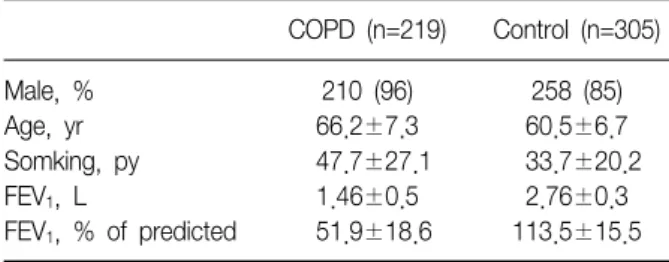
Table 1. Demographic characteristics of analyzed subjects of the KOLD cohort and the control subjects

COPD (n=219) Control (n=305)

Male, % 210 (96) 258 (85)

Age, yr 66.2±7.3 60.5±6.7

Somking, py 47.7±27.1 33.7±20.2

FEV

1

, L 1.46±0.5 2.76±0.3

FEV

1

, % of predicted 51.9±18.6 113.5±15.5 Data are presented as mean±SD unless otherwise indicated.

COPD: chronic obstructive pulmonary disease; KOLD: Korean obstructive lung disease; PY: pack-year; SD: standard deviat- ion.

Furthermore, the expression of antiaging molecules, such as sirtuins (SIRT), histone deacetylase (HDAC), senescence marker protein-30 (SMP30), and klotho , are reduced in COPD

4

. Among these, the klotho gene was incidentally discovered during the development of a hy- pertensive transgenic murine model

5

. The klotho pro- tein has several functions, including the regulation of several growth factor signaling pathways, including those associated with fibroblast growth factor-23, in- sulin/insulin-like growth factor and Wnt, its activity in multiple ion channels, and its suppression of oxidative stress

6

. Homozygous mutant klotho (KL−/−) mice are regarded as a good animal model of human aging, since these mice have a short life span and exhibit multiple disorders resembling human premature-aging synd- rome. Moreover, they exhibit emphysematous changes, characterized by the enlargement of air spaces distal to the terminal bronchioles, accompanied by the destruc- tion of normal architecture

5,6

.

To our knowledge, the association between klotho gene polymorphisms and COPD has not been determin- ed. We therefore performed genotype analyses of 2 klo- tho gene SNPs, G-395A in the promoter region and C1818T in exon 4, in Korean COPD patients and control subjects.

Materials and Methods 1. Subjects

Individuals with COPD were recruited, beginning in June 2005, from those in the "The Korean Obstructive Lung Disease cohort", a longitudinal prospective study of COPD in patients from the pulmonary clinics of 11 hospitals in Korea

7

. All COPD subjects included in this study had post-bronchodilator forced expiratory volume in one second [FEV

1

]/forced vital capacity [FVC] values of <0.7 and had more than 10 pack-years of smoking history. Complete CT scanning data, blood and other clinical information were obtained from all patients. All pulmonary function tests were performed as recom- mended by the American Thoracic Society/European Respiratory Society. Emphysema severity was measured

quantitatively by determining the volume fraction of the lung below −950 Hounsfield units. Control subjects consisted of 305 smokers or ex-smokers with normal lung function registered in the Korean Genome Epidem- iology Study (KoGES)

8

.

2. Genotyping

Genomic DNA was prepared from blood of all pa- tients, and SNPs (rs1207568 and rs564481) were geno- typed by the TaqMan method using ABI Prism 7300 (Applied Biosystems, Foster City, CA, USA).

3. Statistics

The association between COPD susceptibility and SNP genotype was tested using logistic regression, ad- justing for age, gender, and smoking pack-years, assum- ing an additive genetic model. The associations be- tween emphysema severity and SNP genotypes were tested using linear regression, after adjusting for age, gender, and smoking pack-years, assuming an additive genetic model in Korean obstructive lung disease (KOLD) subjects. All statistical analyses were performed using SAS (SAS Institute, Cary, NC).

Results

1. Demographics characteristics of KOLD subjects

We assessed 219 subjects with COPD (mean age, 66.5

years) and 305 control subjects (mean age, 60.5 years)

(3)

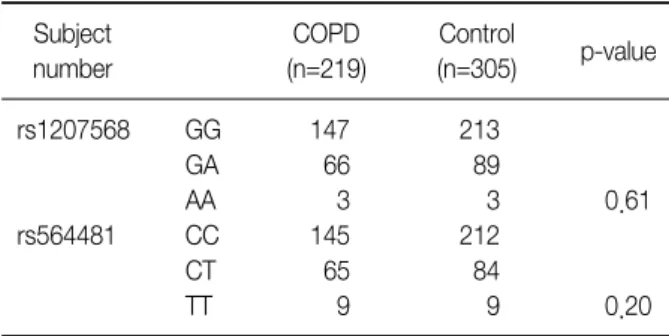
Table 2. Genetic association between the klotho gene and COPD. Covariates in the regression models included age, sex, and pack-years of smoking

Subject number

COPD (n=219)

Control

(n=305) p-value

rs1207568 GG 147 213

GA 66 89

AA 3 3 0.61

rs564481 CC 145 212

CT 65 84

TT 9 9 0.20

COPD: chronic obstructive pulmonary disease.

registered in the KOLD study. The mean FEV1 of the COPD subjects was 1.46 L (Table 1).

2. Genetic association with COPD susceptibility in the KOLD study

There were no genetic associations between either SNP and COPD susceptibility (p=0.61 and 0.20) (Table 2).

3. Genetic association with emphysema in the KOLD study

CT measurements were available for 210 COPD sub- jects. Their mean emphysema index (%) was 21.7±

15.7. SNPs in the klotho gene were not associated with emphysema severity (β=−1.03; p=0.63 and β=−1.48;

p=0.43).

Discussion

We observed no associations between klotho gene polymorphisms and COPD susceptibility in subjects with COPD and controls. In addition, we found no associa- tion between klotho gene polymorphisms and emphy- sema severity in COPD subjects.

Accelerated aging of the lungs has recently been sug- gested as a pathogenic mechanism in COPD. Aging and emphysematous lungs have many similarities, including structural changes, with premature aging enhancing sus- ceptibility to develop emphysema. However, differ- ences in the extent of alveolar destruction have been observed in aging and emphysematous lungs

9,10

. To elu-

cidate the mechanisms of aging and emphysema, sen- escence-accelerated mice, which possess mutant klotho genes and the senescence marker protein-30, have been utilized as an animal model. The klotho gene has been related to premature aging, a shorter life span, arterio- sclerosis and osteoporosis, and has shown effects on air space enlargement. However, the association between the klotho gene and alveolar destruction is unclear

11-13

. The klotho gene maps to chromosome 13q12 and several studies have assessed the relationships between klotho gene polymorphisms and the aging process. For example, the KL-VS allele of the klotho gene, contain- ing a functional variant, has been found in Bohemian Czechs, Caucasians and African-Americans, and has shown an association with age-related phenotypes, in- cluding coronary artery disease, and blood pressure

14-16

. In an Italian population, the klotho KL-VS allele was not associated with longevity, although another Italian group reported that the klotho gene was associated with longevity, but only during a specific time period

17,18

. To date, the KL-VS variant has not been observed in Asian subjects

19

. Rather, the polymorphisms G-395A and C1818T were associated with coronary artery disease

20

, stroke in women

21,22

, and hypertension

23,24

. Because these SNPs may be related to aging in Asian subjects, we investigated the association between COPD and these polymorphisms. In contrast to findings in car- diovascular diseases, we found no association between these SNPs and COPD. Since aging of the lungs involves a process similar to that of emphysema, we evaluated the relationship between emphysema severity and klo- tho genetic polymorphisms in the KOLD cohort, for which emphysema severity had been assessed using CT.

However, we found no association between emphyse- ma severity and klotho genetic polymorphisms.

This study had several limitations. First, both COPD

cohorts consisted of mostly males. The genetic associa-

tion of the klotho gene with cardiovascular risk in

Koreans was observed only in females

21,22

, suggesting

that the klotho gene may interact with gender. Because

our cohort included mostly male subjects, any associa-

tion in female subjects may not have been detected.

(4)

Given that there is evidence of gender differences in emphysema

25

, the association of the klotho gene and emphysema should be studied separately in women.

A second limitation was that the numbers of subjects were relatively small. A third limitation is that we ana- lyzed only two SNPs and we did not genotype the KL-VS variant. However, other studies in Asians have failed to detect the KL-VS variant, and the two geno- typed SNPs have been associated with aging pheno- types in other studies. Lastly, our COPD subjects were recruited from multiple centers with different CT scan- ners that may influence the association. However, ad- justing for center effect did not alter the results of asso- ciation analysis.

In conclusion, the klotho gene was not associated with COPD susceptibility or emphysema severity in Korean subjects with COPD.

Acknowledgement

This study was supported by a grant from the Korean Health 21 R&D Project, Ministry of Health and Welfare, Republic of Korea (A040153) and Basic research Pro- gram through the National Research Foundation of Korea (NRF) funded by the Ministry of Education, Science and Technology (2010-0021410). The DNA sam- ples were generously provided by the Kangwon Natio- nal Univeristy Hospital Biobank, a member of the Natio- nal Biobank of Korea supported by the Ministry of Health and Welfare, Republic of Korea.

References

1. Halbert RJ, Natoli JL, Gano A, Badamgarav E, Buist AS, Mannino DM. Global burden of COPD: systematic re- view and meta-analysis. Eur Respir J 2006;28:523-32.

2. Buist AS, McBurnie MA, Vollmer WM, Gillespie S, Burney P, Mannino DM, et al. International variation in the prevalence of COPD (the BOLD Study): a pop- ulation-based prevalence study. Lancet 2007;370:741- 50.

3. Tuder RM. Aging and cigarette smoke: fueling the fire.

Am J Respir Crit Care Med 2006;174:490-1.

4. Ito K, Barnes PJ. COPD as a disease of accelerated lung aging. Chest 2009;135:173-80.

5. Kuro-o M, Matsumura Y, Aizawa H, Kawaguchi H, Suga T, Utsugi T, et al. Mutation of the mouse klotho gene leads to a syndrome resembling ageing. Nature 1997;390:45-51.

6. Kuro-o M. Klotho as a regulator of oxidative stress and senescence. Biol Chem 2008;389:233-41.

7. Kim WJ, Oh YM, Sung J, Lee YK, Seo JB, Kim N, et al. CT scanning-based phenotypes vary with ADRB2 polymorphisms in chronic obstructive pulmonary disease. Respir Med 2009;103:98-103.

8. Cho YS, Go MJ, Kim YJ, Heo JY, Oh JH, Ban HJ, et al. A large-scale genome-wide association study of Asian populations uncovers genetic factors influencing eight quantitative traits. Nat Genet 2009;41:527-34.

9. Shapiro SD. Animal models for chronic obstructive pul- monary disease: age of klotho and marlboro mice. Am J Respir Cell Mol Biol 2000;22:4-7.

10. Fukuchi Y. The aging lung and chronic obstructive pul- monary disease: similarity and difference. Proc Am Thorac Soc 2009;6:570-2.

11. Sato A, Hirai T, Imura A, Kita N, Iwano A, Muro S, et al. Morphological mechanism of the development of pulmonary emphysema in klotho mice. Proc Natl Acad Sci USA 2007;104:2361-5.

12. Suga T, Kurabayashi M, Sando Y, Ohyama Y, Maeno T, Maeno Y, et al. Disruption of the klotho gene causes pulmonary emphysema in mice. Defect in maintenance of pulmonary integrity during postnatal life. Am J Respir Cell Mol Biol 2000;22:26-33.

13. Ishii M, Yamaguchi Y, Yamamoto H, Hanaoka Y, Ouchi Y. Airspace enlargement with airway cell apop- tosis in klotho mice: a model of aging lung. J Gerontol A Biol Sci Med Sci 2008;63:1289-98.

14. Arking DE, Krebsova A, Macek M Sr, Macek M Jr, Arking A, Mian IS, et al. Association of human aging with a functional variant of klotho. Proc Natl Acad Sci USA 2002;99:856-61.

15. Arking DE, Becker DM, Yanek LR, Fallin D, Judge DP, Moy TF, et al. KLOTHO allele status and the risk of early-onset occult coronary artery disease. Am J Hum Genet 2003;72:1154-61.

16. Arking DE, Atzmon G, Arking A, Barzilai N, Dietz HC.

Association between a functional variant of the KLOTHO gene and high-density lipoprotein cholesterol, blood pressure, stroke, and longevity. Circ Res 2005;96:412-8.

17. Novelli V, Viviani Anselmi C, Roncarati R, Guffanti G,

(5)

Malovini A, Piluso G, et al. Lack of replication of genet- ic associations with human longevity. Biogerontology 2008;9:85-92.

18. Invidia L, Salvioli S, Altilia S, Pierini M, Panourgia MP, Monti D, et al. The frequency of Klotho KL-VS poly- morphism in a large Italian population, from young subjects to centenarians, suggests the presence of spe- cific time windows for its effect. Biogerontology 2010;

11:67-73.

19. Rhee EJ, Oh KW, Lee WY, Kim SY, Jung CH, Kim BJ, et al. The differential effects of age on the association of KLOTHO gene polymorphisms with coronary artery disease. Metabolism 2006;55:1344-51.

20. Jo SH, Kim SG, Choi YJ, Joo NR, Cho GY, Choi SR, et al. KLOTHO gene polymorphism is associated with coronary artery stenosis but not with coronary calcifica- tion in a Korean population. Int Heart J 2009;50:23-32.

21. Kim Y, Kim JH, Nam YJ, Kong M, Kim YJ, Yu KH, et al. Klotho is a genetic risk factor for ischemic stroke caused by cardioembolism in Korean females. Neurosci

Lett 2006;407:189-94.

22. Rhee EJ, Oh KW, Yun EJ, Jung CH, Lee WY, Kim SW, et al. Relationship between polymorphisms G395A in promoter and C1818T in exon 4 of the KLOTHO gene with glucose metabolism and cardiovascular risk factors in Korean women. J Endocrinol Invest 2006;29:613-8.

23. Wang HL, Xu Q, Wang Z, Zhang YH, Si LY, Li XJ, et al. A potential regulatory single nucleotide polymor- phism in the promoter of the Klotho gene may be asso- ciated with essential hypertension in the Chinese Han population. Clin Chim Acta 2010;411:386-90.

24. Shimoyama Y, Nishio K, Hamajima N, Niwa T.

KLOTHO gene polymorphisms G-395A and C1818T are associated with lipid and glucose metabolism, bone mineral density and systolic blood pressure in Japanese healthy subjects. Clin Chim Acta 2009;406:134-8.

25. Martinez FJ, Curtis JL, Sciurba F, Mumford J, Giardino ND, Weinmann G, et al. Sex differences in severe pul- monary emphysema. Am J Respir Crit Care Med 2007;

176:243-52.

수치

Table 1. Demographic characteristics of analyzed subjects of  the  KOLD  cohort  and  the  control  subjects
Table 2. Genetic association between the klotho gene and COPD. Covariates in the regression models included age, sex,  and  pack-years  of  smoking

참조

관련 문서

Department of Naval Architecture and Ocean Engineering, Seoul National University of College

Department of Naval Architecture and Ocean Engineering, Seoul National University of College

Department of Naval Architecture and Ocean Engineering, Seoul National University... 2009

*1st Author, Department of International Trade and Business, Kangwon National University, South Korea. ** Coauthor, Department of International Trade and Business,

Department of Naval Architecture and Ocean Engineering, Seoul National University of College

Department of Naval Architecture and Ocean Engineering, Seoul National University of College of

Department of Nuclear Engineering

Department of Mechanical and Aerospace Engineering Seoul National