알코올 내성 젖산균 Pediococcus acidilactici K3와 S1의 분리 및 생리적 특성
장단비1, 박슬기1, 이현주1, 표상은1, 이한승1,2*
1신라대학교의생명과학대학바이오식품소재학과
2신라대학교막걸리세계화연구소
Received: August 8, 2013 / Revised: September 25, 2013 / Accepted: October 25, 2013
서 론
젖산균
(lactic acid bacteria, LAB)
은탄수화물을혐기적으 로대사하여젖산을생성하는세균으로서장내유해세균의 증식을억제하고면역력을강화하며배변을편하게해주는 등프로바이오틱스(probiotics)
역할을한다[8, 14].
젖산균을 함유한식품으로는발효유제품,
김치로대표되는침채류,
그 리고다양한젓갈류등이알려져왔으나최근에는발효주인 막걸리에도다량으로존재한다는보고[18, 19]
가잇따르면서 막걸리를통한젖산균의섭취에관심이높아지고있다.
막걸 리는한국의전통발효주로서다른주류와는달리발효미생물을제거하지않고그대로섭취하기때문에상당량의단 백질과식이섬유및당질이함유되어있고소량의비타민과 유기산및생리활성물질이포함되어있어영양과기능면에 서가치가높다
[20].
전통적인막걸리발효는곰팡이
,
효모,
세균등을자연적 으로생육시킨누룩을사용하여당화와알코올발효를함께 진행하는병행복발효과정이기때문에발효에관여하는미 생물들의정확한계수와특정이어렵고동일한품질을얻기 가쉽지않다.
와인과마찬가지로[17]
막걸리속의젖산균은정장작용등
probiotics
로서는유익하지만발효안정성에는악영향을주는양면성을갖고있다
.
막걸리발효시젖산균 의생육이지나치면산도가높아지고신맛을부여하게되므 로막걸리발효에서지나친젖산균의증식은막걸리의품질에악영향을주는주요요인중하나로추정된다
[16].
막걸리발효후
,
희석하기전발효원주의최종알코올농Isolation of the Alcohol-Tolerant Lactic Acid Bacteria Pediococcus acidilactici K3 and S1 and their Physiological Characterization. Jang, Danbie
1, Seulki Park
1, Hyunjoo Lee
1, Sangeun Pyo
1, and Han-Seung Lee
1,2*.
1Department of Bio-Food Materials, College of Medical and Life Sciences, Silla University, Busan 617-736, Korea,
2Makgeolli Globalization Research Center, Silla University, Busan 617-736, Korea
Lactic acid bacteria (LAB) are a representative group of probiotics and used in many fermented foods and beverages. Several recent studies have shown that LAB are present in makgeolli which is a traditional Korean alcoholic beverage. However, most LAB are intolerant of more than 6% (v/v) alcohol concentrations. For this reason, alcohol-tolerant LAB are isolated from kimchi, makgeolli and nuruk using alcohol containing selective media. After being cultured in MRS broth containing 13% (v/v) alcohol, the two strains which showed the highest increasing O.D values, were finally selected. As results of 16S rRNA gene sequenc- ing and biochemical characterization using an API kit, the two species were identified as Pediococcus acidilactici K3 and S1. In addition, the identified two strains produced bacteriocins against Staphylococcus aureus. When compared with the P. acidilactici type strain, the two selected strains possessed two to three time higher growth on 12-13% (v/v) alcohol containing MRS broth.
The viability of P. acidilactici K3 and S1 when inoculated in makgeolli and stored at 10
oC did not decrease through a period of one month indicating that the selected strains can be used for LAB containing makgeolli.
Keywords: Alcohol-tolerant, lactic acid bacteria, Pediococcus acidilactici, makgeolli
*Corresponding author
Tel: +82-51-999-6308, Fax: +82-51-999-5458 E-mail: [email protected]
© 2013, The Korean Society for Microbiology and Biotechnology
도는
12%(
이하모두v/v)
이상이다.
그런데일반적인젖산균 들은알코올농도5%
이상에서생육하기어렵기때문에전 통누룩을사용하여막걸리를담그는경우에발효가진행되 면서알코올농도가10%
를넘어서면젖산균이빠르게감소하게된다
[3, 18].
게다가시판되는대부분의막걸리는누룩대신고두밥에백국균을접종하여당화하는입국방식을사
용하고있다
[13].
입국을통해당화용곰팡이와효모만을이용해서발효하는방법은발효공정을제어하고부발효나이 상발효가일어나지않도록조절하는데는용이하지만
,
막걸 리속의젖산균수는상대적으로적으며젖산균에의한정 장작용및다른효과를기대하기어렵다.
따라서젖산균이풍부히함유된막걸리를개발하기위해 서는알코올에내성을가진젖산균주를탐색
,
분리하여누룩 에첨가하여발효하는방식(
선첨가)
과일부효모첨가맥주 와같은방식으로막걸리발효후에젖산균을첨가하는방 식(
후첨가)
을고려해볼수있는데이를위해서는알코올에 내성을가진젖산균을필요로한다.
따라서본연구에서는 막걸리원주발효농도이상에서알코올내성을가진젖산 균을분리,
동정한후그생리적특성을살펴보았다.
재료 및 방법
알코올 내성 젖산균주의 1차 스크리닝
알코올내성젖산균을탐색하기위하여현재판매중인생 막걸리
,
누룩,
김치,
및젖산균발효유등에서젖산균의분리 를실시하였다.
젖산균의분리및확인은식품공전상의젖산 균분리배지인bromocresol purple (BCP)
배지를사용하였 으며,
각샘플을연속희석법으로희석하여도말한후이틀 간배양하여황색을띄는젖산균을분리하였다.
알코올 함유 배지에서의 생장 실험
분리해낸젖산균주를알코올
(
에탄올)
이0%, 10%, 15%
가함유된
MRS
액체배지에접종하여배양하였다. MRS
배지는알코올농도에따라들어가는알코올부피를제외한만 큼만들어가압멸균후냉각하고알코올을첨가하여혼합한 후제조하였다
.
이렇게제조한알코올을포함한MRS
배지10 ml
에seed culture
를1%
접종하여배양하였다.
배양조건 은37
oC
에서150 rpm
으로24
시간진탕배양한후OD
600 값 이증가하는균주를탐색하였다. O.D
600값은24
시간배양 한후spectrophotometer
를이용하여600 nm
파장에서흡 광도를측정하였다.
선별 균주의 분자생물학 및 생화학적 동정
10%
와15%
알코올이함유된배지에서O.D
600값이증가 한균주5
종을선별하여MRS broth
에다시접종하여배양한 후
RBC Genomic DNA Extraction Kit (RBC Bioscience Co., Taiwan)
을이용하여Genomic DNA
를추출한후이를template
로균주동정을위한PCR
을수행하였다. PCR
은세 균의27F primer
와1492R primer
를이용하여16S rRNA
유전자를증폭하였고증폭된DNA
의염기서열은㈜코스모진텍
(Daejeon, Korea)
에 의뢰하며 수행하였고 그 결과를BLAST
프로그램을이용하여분석하였다.
또한선별된균주의생화학적 동정을 위하여젖산균 동정용
Kit
인API 50
CHL Medium (bioMerieux, France)
을사용하여탄수화물 의발효여부및대사를비교분석하였다.
알코올 내성 비교
최종선별한알코올내성젖산균
2
종의알코올내성정도 를표준균주인Pediococcus acidilactici DSM 20284
균주 와비교실험을진행하였다.
에탄올이0%, 6%, 12%
함유된MRS
액체배지에서각각의균주를일주일간배양하며24
시간에한번씩시료채취한후
,
연속희석법으로희석하고도말 하여균주수를측정하였다.
Bacteriocin Assay
Bacteriocin
생산능력을 확인 하기 위해well diffusion assay
를수행하였다. Nutrient agar
배지에식중독균의하 나인Staphylococcus aureus
를1%
접종하여굳힌다음,
멸 균한tip
으로구멍을낸후본실험을통해선별한알코올내 성젖산균2
종과Pediococcus acidilactici DSM 20284
배양 상등액을주입하고,
대조군으로는MRS
배지를주입한후 상온에서2
시간정도방치하여상등액이확산되게한후배 양하여저해환의크기를측정하였다.
막걸리의 저장 기간 중 젖산균의 안정성
시중에서 구입한 살균막걸리에 선별된 젖산균주
P.
acidilactici K3
와S1
을정균작용이가능한수준인5
×10
6CFU/ml
로접종한후에냉장고저장온도(4
oC),
법적냉장유 통온도(10
oC),
그리고상온(25
oC)
에30
일간보존하면서샘플링을한후연속희석후
BCP
배지에서황색콜로니를나타내는젖산균수를측정하였다
.
결과 및 고찰
알코올 내성 젖산균주의 스크리닝 및 선별
다양한종류의김치
,
시판중인누룩4
종과생막걸리5
종으로부터젖산균선택배지인
BCP
배지를이용하여황색콜로니를생성하는총
56
종의젖산균을순수분리하였다.
순 수분리한총56
종의젖산균을10%
와15%
알코올이함유된
MRS
배지에접종한후생육시킨결과,
대부분의젖산균은
600 nm
에서흡광도(OD
600)
가증가하지않았으나OD
600가가장 많이증가한
5
종(N3-2-2, S1, SN3, K3, K5)
을1
차 로선별하였다. 1
차선별된5
균주를10%
알코올이함유된MRS
배지와일반적막걸리제성전발효원주의최종알코올농도인
13%
알코올이함유된MRS
배지에서48
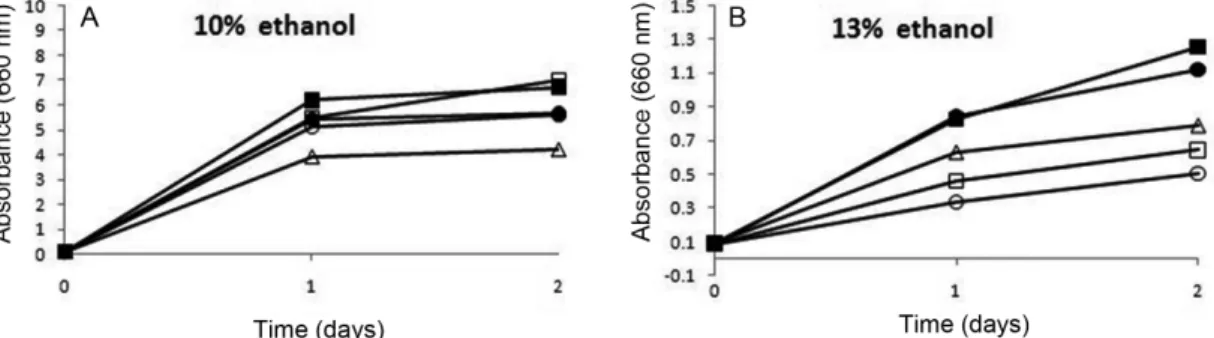
시간동 안생육시키면서생육정도를측정한결과, K3
와S1
균주가 가장높은알코올내성을가진것으로확인하였다(Fig. 1).
선별 균주의 분자생물학 및 생화학적 동정
1
차선별된젖산균주5
종중알코올내성이가장뛰어난두균주
(K3
와S1)
의16S rRNA
유전자를PCR
로증폭하여 염기서열을분석한결과모두Pediococcus acidilactici
종과99% identity
를나타내었고(Fig. 2)
다른3
종(N3-2-2, SN3, K3)
도Pediococcus
속세균과가장유사한것으로확인되었 다.
본실험에서1
차선별된5
종의알코올내성젖산균주들Fig. 1. Growth of selected five lactic acid bacteria on MRS broth containing 10% (A) and 13% ethanol (B).
Five strains were designated as followings: N3-2-2, open square
□; S1, closed circle
●; SN3, open circle
○; K3, closed square
■; K5, open triangle
△.
Fig. 2. Multiple alignment of partial 16S rRNA gene sequences of Pediococcus acidilactici DSM 20284 (Pac20284), K3, S1, and Pediococcus pentosaceus DSM 20336 (Ppe20336).
Open ovals designated the differences from P. acidilactici and P. pentosaceus.
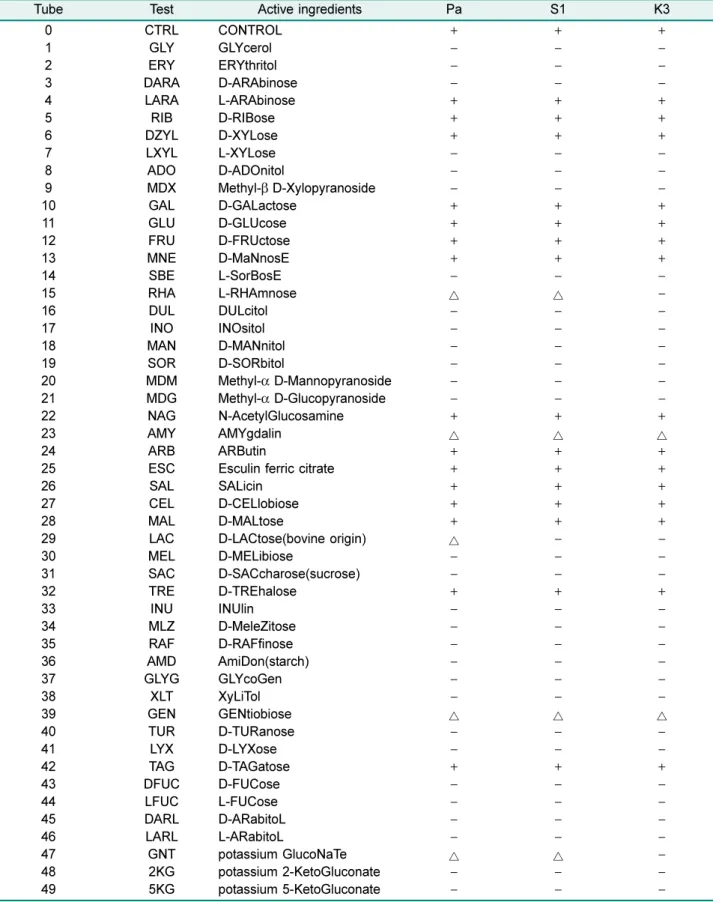
Table 1. Biochemical properties of Pediococcus acidilactici DSM 20284 (Pa), S1, and K3.
Tube Test Active ingredients Pa S1 K3
0 CTRL CONTROL + + +
1 GLY GLYcerol − − −
2 ERY ERYthritol − − −
3 DARA D-ARAbinose − − −
4 LARA L-ARAbinose + + +
5 RIB D-RIBose + + +
6 DZYL D-XYLose + + +
7 LXYL L-XYLose − − −
8 ADO D-ADOnitol − − −
9 MDX Methyl- β D-Xylopyranoside − − −
10 GAL D-GALactose + + +
11 GLU D-GLUcose + + +
12 FRU D-FRUctose + + +
13 MNE D-MaNnosE + + +
14 SBE L-SorBosE − − −
15 RHA L-RHAmnose △ △ −
16 DUL DULcitol − − −
17 INO INOsitol − − −
18 MAN D-MANnitol − − −
19 SOR D-SORbitol − − −
20 MDM Methyl-α D-Mannopyranoside − − −
21 MDG Methyl- α D-Glucopyranoside − − −
22 NAG N-AcetylGlucosamine + + +
23 AMY AMYgdalin △ △ △
24 ARB ARButin + + +
25 ESC Esculin ferric citrate + + +
26 SAL SALicin + + +
27 CEL D-CELlobiose + + +
28 MAL D-MALtose + + +
29 LAC D-LACtose(bovine origin) △ − −
30 MEL D-MELibiose − − −
31 SAC D-SACcharose(sucrose) − − −
32 TRE D-TREhalose + + +
33 INU INUlin − − −
34 MLZ D-MeleZitose − − −
35 RAF D-RAFfinose − − −
36 AMD AmiDon(starch) − − −
37 GLYG GLYcoGen − − −
38 XLT XyLiTol − − −
39 GEN GENtiobiose △ △ △
40 TUR D-TURanose − − −
41 LYX D-LYXose − − −
42 TAG D-TAGatose + + +
43 DFUC D-FUCose − − −
44 LFUC L-FUCose − − −
45 DARL D-ARabitoL − − −
46 LARL L-ARabitoL − − −
47 GNT potassium GlucoNaTe △ △ −
48 2KG potassium 2-KetoGluconate − − −
49 5KG potassium 5-KetoGluconate − − −
Each symbol designated in the following meaning: +, fully growth; −, not growth; △ , slightly growth.
은모두생막걸리와시판누룩에서분리되었는데
,
기존에막 걸리로부터분리된대부분의젖산균은Lactobacillus
속에 속하는젖산균이었으나[7, 9]
최근권등[11, 12]
이DGGE
분석을통해보고한바에따르면
Pediococcus
속의젖산균도누룩과막걸리에상당수함유되어있는것으로알려지기시 작했으며
,
최근누룩과막걸리에서도Pediococcus
속세균들이보고되고있으나
[6, 21, 22]
알코올내성에대한연구는전혀없는실정이다
.
13%
알코올농도에서최고의생육을보인두균주(K3
와S1)
와P. acidilactici DSM 20284
표준 균주를API 50
CHL Medium kit
를이용하여생화학적동정을수행한결과(Table 1),
세균주모두Pediococcus pentosaceus
와가장유사한결과
(99%)
를나타내었다.
일반적으로균주의탄소원이용가능성을보는생화학적테스트는정확한동정에한계가 있으며변종의경우에는차이를보일수있고
P. pentosaceus
와P. acidilactici
는계통적으로가까운균이므로[10]
선별 한 두 균주(K3
와S1)
의16S rRNA
유전자 염기서열을P.
acidilactici DSM 20284
와P. pentosaceus DSM 20336
표준균주의
16S rRNA
유전자염기서열과비교하였다.
그결과
(Fig. 2),
선별한두균주의서열이모두P. acidilactici
에 더 가까운 것을 확인되었고 선별한 두 균주를 각각P.
acidilactici K3
와P. acidilactici S1
으로명명하였다.
기존 균주와 선별 균주의 알코올 내성 비교본연구를통해선발한
P. acidilactici K3
와S1
이기존의 표준 균주P. acidilactici DSM 20284 (KCTC 13734)
보다알코올내성이뛰어난지확인하기위하여서로다른
4
가지 알코올농도 농도(0%, 6%, 12%, 13%)
의알코올이함유된MRS
배지에접종하여1
주일동안생육정도를비교하였다.
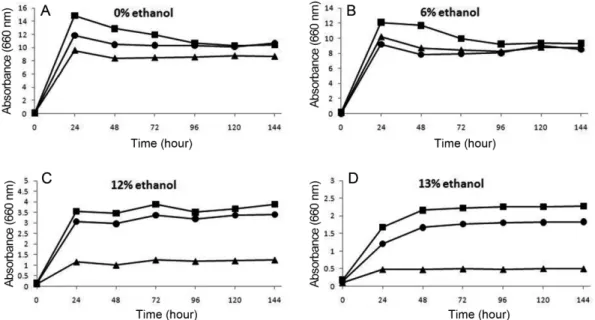
그결과
(Fig. 3),
저농도알코올에서는생육에큰차이를보이지않았으나본연구를통해선별된두균주모두초기생 육속도가뛰어났으며알코올농도가높아질수록선별된두 균주가표준균주보다더잘생육하였다
.
특히13%
알코올이포함된
MRS
배지에서는K3
균주가표준균주보다최대3
배 이상의 생육을 보임으로서 본 연구에서 선별된P.
acidilactici K3
의알코올내성이가장뛰어남을확인하였다.
현 재까지젖산균의알코올내성에대한연구는거의없으나젖 산균중에서알코올내성이가장뛰어난것으로알려진균 주는Oenococcus oeni
인데역시13%
알코올농도에서생존 이가능하며malolactic acid
발효를통해와인의품질에영향을주는것으로알려져있다
[5].
선별한 알코올 내성 균주의 Bacteriocin 생산 여부 확인
P. acidilactici
는장에서집락형성(colonization)
이가능한probiotics
로 알려져 있으며[4, 23]
박테리오신의 일종인pediocin
을생성한다는보고가있다[1, 2]. Pediococcus
속젖산균이생산하는
bacteriocin
은천연보존료등여러분야에서주목을받고있고
[15]
발효시잡균번식을억제하는등의유익한역할을기대하고있기때문에
,
본실험에서선별한알코올내성균주들도
bacteriocin
을생산하는지확인하였다
.
대표적인식중독균인S. aureus
를대상으로bacteriocin assay
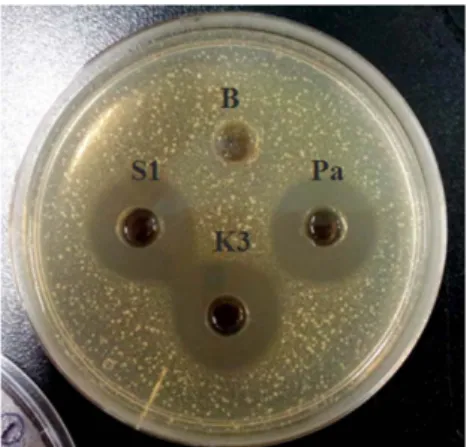
를수행한결과, K3
와S1
두균주모두bacteriocin
을Fig. 3. Comparison of alcohol-tolerance of Pediococcus acidilactici DSM 20284 (
▲), K3 (
■), and S1 (
●) according to various
ethanol concentration (A, 0%; B, 6%; C, 12%; D, 13% v/v).
생성하여
S. aureus
의생육을저해하였음을확인하였다(Fig.
4).
따라서두균주모두probiotics
로서의기능성뿐만아니 라발효식품에응용할때유해균저해효과도기대할수있 을것으로사료된다.
젖산균을 첨가한 막걸리의 저장 기간 중 젖산균의 안정성 알코올내성젖산균이막걸리에서안정하게유지되는지확 인하기 위하여 저온 살균 막걸리에 선별된 젖산균주
P.
acidilactici K3
와S1
를접종한후냉장고저장온도(4
oC),
법 적냉장유통온도(10
oC),
그리고상온(25
oC)
에한달간보존 하면서젖산균수를측정한결과, 4
oC
와10
oC
에서는30
일까지초기접종한균수를일정하게유지하였고막걸리변패 온도인상온에서는젖산균이초기에급격히생육하다가후
기에감소하는패턴을보였다
(Fig. 5).
이결과는본연구를통해선별된젖산균을후첨가하여막걸리를제조하는것이 가능함을시사하며
,
향후이러한젖산균후첨가가막걸리의 품질에어떠한영향을주는지에대한연구가필요하다.
요 약
김치
,
막걸리및시판되는누룩으로부터젖산균을분리한후다양한농도의알코올을함유한
MRS
배지에서배양하여생육여부를조사하였다
.
알코올이13%(v/v)
포함된MRS
배 지에서OD
600값이가장높이증가한젖산균2
종을최종선별하였고이두균주의
16S rRNA
유전자염기서열분석및API kit
를이용한생화학적동정을실시한결과두종모두P. acidilactici
에가까운종인것을확인하여P. acidilactici K3
와P. acidilactici S1
으로명명하였다.
선별한P. acidilactici K3
와S1
의bacteriocin
생성여부를확인한결과식중독균 인S. aureus
의생육저해를일으키는bacteriocin
생성능력 이 있음을 확인하였다.
선별한 두 균주와 표준 균주(P.
acidilactici DSM 20284)
의알코올내성을비교한결과6%
이하의저농도알코올이포함된배지에서는균주생육에큰
차이가없었으나
12%
이상의알코올이포함된배지에서는표준균주보다최대
3
배이상알코올내성이뛰어남을확인 하였다.
알코올내성균주P. acidilactici K3
와S1
을살균막 걸리에첨가한후냉장온도(4
oC
와10
oC)
에서저장하며생 균수를측정한결과사멸하지않고한달간생균수가유지Fig. 4. Bacteriocin production by well diffusion assay with
Staphylococcus aureus. B stands for MRS Broth as a nega- tive control and each well contains culture broth of K3, S1, and DSM 20284 (Pa).
Fig. 5. Cell viability of Pediococcus acidilactici K3 (
■) and S1 (
●) for 30 days on different temperatures (A, 4
oC; B, 10
oC; C, 25
oC)
after adding to pasteurized makgeolli.
됨을확인하였다
.
Acknowledgments
This work (Grant # 00041254) was supported by Business for Cooperative R&D between Industry, Academy, and Research Insti- tute funded Korea Small and Medium Business Administration in 2010.
References