Comparison of the Duration of Hamstring Flexibility Improvement Following Termination of Modified Dynamic Stretching,
Hold-Relax, and Static Stretching
A-young Moon1, BHSc, PT, Hee-jin Jang2, BHSc, PT, Hyun-jeong Jang3, MSc, PT, Suhn-yeop Kim4, PhD, PT
1Dept. of Physical Therapy, Dongguk University Medical Center
2Dept. of Physical Therapy, College of Health and Sport Science, Daejeon University
3Dept. of Physical Therapy, College of Natural Science, The Graduate School, Daejeon University
4Dept. of Physical Therapy, College of Natural Science, Daejeon University
Abstract
1)The aim of this study was to compare the duration of hamstring flexibility improvement after 3 stretching interventions in people with limited hamstring flexibility. Twenty-two subjects (12 men, 10 women) with limited hamstring flexibility of the dominant leg received 3 stretching interventions—
modified dynamic stretching (MDS), hold-relax (HR), and static stretching (SS)—in a random order. All the subjects received all 3 interventions at intervals of at least 24 hours to minimize any carry-over effect. Modified dynamic stretching was applied as a closed kinetic chain exercise in the supine position by using the sling suspension system (Redcord Trainer®). The SS and HR interventions were individually performed in the straight leg raising (SLR) position, and all 3 interventions were performed for 3 minutes. Outcome measures included passive knee extension (PKE) measurements. Five post-test measurements were recorded for all subjects at 3, 6, 9, 15, and 30 minutes after the interventions. MDS was associated with a significant increase in knee extension range of motion even at 30 minutes post-treatment. In contrast, the HR and SS stretching methods showed increased hamstring flexibility for only 6 minutes post-treatment. Improvements in the range of motion of knee extension (indicating enhancement in hamstring flexibility) with MDS were maintained longer than those with the HR and SS interventions. Therefore, MDS may be more effective than the other interventions for maintaining hamstring flexibility.
Key Words: Duration; Dynamic stretching; Hamstring flexibility; Hold-relax; Static stretching.
Introduction
Flexibility can be defined as the ability of a mus- cle to lengthen and allow the related joint to move through its range of motion (ROM) (Chandler et al, 1990). Appropriate flexibility is necessary to optimize human activity (Henderson et al, 1995). Lack of flex- ibility has been suggested to cause a decline in the ability of the muscle to deform and may limit the body from moving appropriately, potentially facilitat- ing musculoskeletal injury (Jonhagen et al, 1994;
Liemohn, 1978).
The hamstring muscles are an example of a mus- cle group with a propensity to shorten (Barash et al, 1970). Hamstring stiffness is a known compensatory mechanism for controlling undue lumbar lordosis caused by particular patterns of muscle impairments, known as “pelvic cross syndrome” (Massoud Arab et al, 2011), which may contribute to low-back dys- function (Biering-Sørensen, 1984) and lumbar spine disorders (Barash et al, 1970). Poor flexibility of the hamstring reduces the patient’s functional perform- Corresponding author: Suhn-yeop Kim [email protected]
Mean±SDa
Age (yr) 22.3±1.6
Height (㎝) 170.5±8.6
Weight (㎏) 66.2±13.6
BMIb (㎏/㎡) 22.8±8.5
amean±standard deviation, bbody mass index.
Table 1. General characteristics of subjects (N=22) ance in various daily living activities (Jonhagen et al,
1994; Liemohn, 1978). Hamstring tightness also in- creases the possibility of knee flexion contracture.
Knee flexion contracture can severely hinder an in- dividual’s ability to perform weight-bearing exercises and may facilitate the development of osteoporosis (Henderson et al, 1995).
Achieving flexibility has been considered to be one of the integral goals in the recovery of functional activity (Nelson, 2006; Spernoga et al, 2001).
Previous stretching interventions for increasing ham- string flexibility included static stretching (SS), neu- romobilization, ballistic stretching, and proprioceptive neuromuscular facilitation (PNF) (Bandy et al, 1997;
Bandy and Irion, 1994; Katayama et al, 2004;
Nelson and Bandy, 2004; Puentedura et al, 2011). A better option for improving flexibility, according to recent studies, would be an action that is more dy- namic by nature (Murphy, 1991). Stretching with dy- namic contraction has also been shown to enhance activity (Yamaguchi and Ishii, 2005). It is believed that the benefits associated with dynamic stretching are related to increased metabolic processes and post-activation potentiation. Increased muscle fiber metabolism and potentiation leads to increased mus- cle fiber temperature. Increased muscle temperature, in turn, reduces the viscoelasticity of the mus- cle-tendon unit and allows for a controlled con- traction (Bishop, 2003; Sale, 2002). This warmed muscle is more extendable and more accommodating to the forces positioned on the muscle, causing en- hanced flexibility gains (McMillian et al, 2006;
Yamaguchi and Ishii, 2005). However, to date, the benefits of SS, PNF, and modified dynamic stretch- ing (MDS) have not been compared.
Many field and clinical tests have been used to assess hamstring flexibility, such as the straight leg raise test, sit-and-reach tests, hip joint angle test, and the knee extension angle test (Ayala et al, 2011).
The passive knee extension (PKE) test is probably the most simple and reliable method for hamstring flexibility measurement. This method also offers the
benefit of minimal associated pelvic movement (Fredriksen et al, 1997).
Many studies have demonstrated the acute effects of various stretching protocols, although limited study with the specific aim of comparing duration of immediate ROM changes after stretching has been reported. These studies has shown that stretching improves flexibility and one’s range of motion, re- gardless of stretching technique, such as ballistic, dynamic, static, or proprioceptive neuromuscular facil- itation (Bandy et al, 1997; Bandy and Irion, 1994;
Decoster et al, 2004; Feland et al, 2001; Puentedura et al, 2011; Yamaguchi and Ishii, 2005). However, dura- tion of flexibility and one’s range of motion gains after one-time stretching has established limited study. It would be useful to know that how long stretching can maintain muscle flexibility. No study has examined the duration of maintained hamstring flexibility following termination of modified dynamic stretching, hold-relax (HR), and static stretching.
This study investigated whether limited hamstring flexibility improved after a one-time MDS session and compared the duration of increased hamstring flexibility following MDS, HR, and SS.
Methods
Subjects
Twenty-two subjects participated in this study (Table 1). All subjects had been injury-free in the knee, thigh, hip, or the lower back region for at least 6 months prior to the study, as any injuries might have affected hamstring length or their ability to
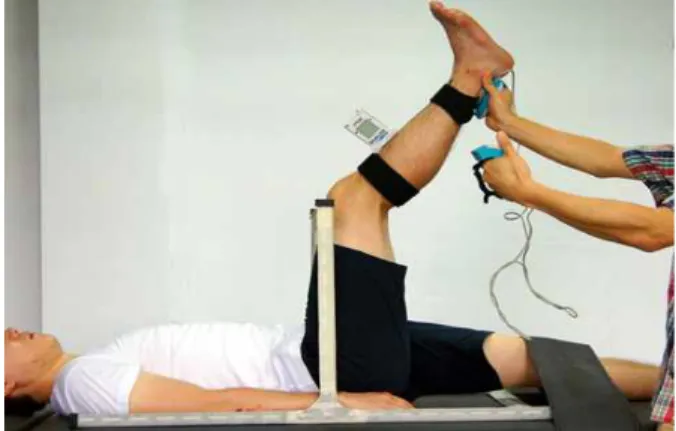
Figure 1. Measurement of hamstring flexibility.
perform the exercises. The dominant side in all sub- jects exhibited hamstring tightness, defined as a loss of 30° or more from full extension with the hip at 90°, as delineated by Bandy and Irion (Bandy and Irion, 1994; Bandy et al, 1997; Bandy et al, 1998). All subjects read the study guidelines and gave informed consent prior to participation.
Procedures
The subjects wore shorts to allow easier palpation of the greater trochanter. Hamstring flexibility, as determined by PKE ROM, was measured in their dominant leg. The dominant leg was identified by having each subject kick a small football. Subjects were positioned supine, and a towel was placed be- tween the lumbar spine and the examination table to help maintain lumbar curvature and minimize the in- fluence of lumbar movements on the results. The non-dominant leg was secured to the examination table by using 10-㎝-wide straps placed across the middle of the thigh. Subjects stabilized flexion of the dominant hip at 90° and knee flexion at 90° by using an experimental frame positioned at the posterior of the knee. The frame maintained 90° hip flexion throughout PKE measurements. The available range of PKE was measured using an electronic in- clinometer (PowerTrack II Commander, JTECH med- ical, Salt lake, USA), and a hand-held dynamometer (Dualer IQ the smarter inclinometer, JTECH medical, Salt lake, USA) was applied to maintain constant re-
sistance (Figure 1). Electronic inclinometer and hand-held dynamometer are reliable measurements.
Electronic inclinometer have intrarater reliability for intraclass correlation coefficients [ICC (3,k)] were
≥.95 (Morey, 2012), also dynamometer have reli- ability coefficients for test and retest measurements were .99 (Kim, 1999).
Stretching methods
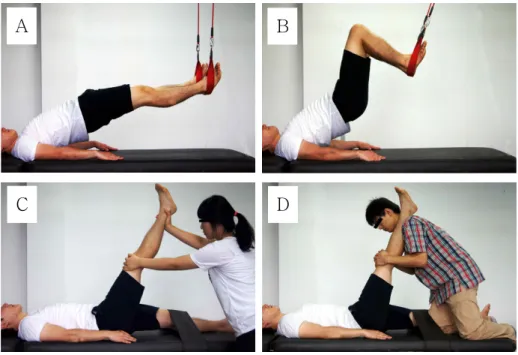
The participants were asked to complete 3 ex- ercises in random order: MDS, HR, and SS. To min- imize the carry-over effect between each treatment, the subjects performed each exercise after rest inter- vals of at least 24 hours. Each stretch intervention was performed for a total of 3 minutes (Figure 2).
Modified dynamic stretching
The MDS was executed as a closed kinetic chain exercise in a bridge position by using a sling train- ing system (Redcord trainer, Redcord AS, Arendal, Norway). Heels were suspended by the sling training system to help the subjects maintain a bridge posi- tion with legs straight. The sling straps were main- tained at ankle height with the hip and knee at 90°.
From the straight bridge position, each subject slow- ly performed active knee extension and flexion ex- ercises with a fixed anterior superior iliac spine (ASIS) height in the bridge. The subject maintained that position for an 11 seconds period with a 25 seconds rest between each repetition. The time of modified dynamic stretching intervention was applied arbitrary in order to be same with other two stretching which were applied 3 minutes totally.
Hold-relax
The HR procedure consisted of 3 stages. In the first stage, subjects lay supine with the knee fully extended. The examiner passively stretched the sub- ject’s hamstring muscles until the subject first expe- rienced mild discomfort, and held that position for 7 seconds. In the second stage, the subject actively and isometrically contracted the muscle for 7 seconds
Screening test to identify subjects (N=22) Application of 3 treatments in random order
Pre-stretch measurement
MDS HR SS
Follow-up measurements at 3, 6, 9, 15, and 30 minutes post-stretch
Figure 3. Flowchart illustrating the study protocol (MDS: modified dynamic stretching, HR: hold-relax, SS: static stretching).
A B
C D
Figure 2. Three intervention interventions for improving hamstring flexibility [A: starting position of modified dynamic stretching (MDS), B:
ending position of MDS, C: hold-relax, D: static stretching].
against the resistance of the investigator. In the third stage, the subject relaxed for 5 seconds. The exam- iner implemented an additional passive stretch to the point of discomfort for 7 seconds. For the dominant lower extremity, a set of these stretches was re- peated 5 times with a 10 seconds rest interval be- tween each trial (Boyd, 2012; Spernoga et al, 2001).
Static stretching
The subjects performed an SS-based passive SLR test. Subjects were placed supine, with their non-dominant foot planted on the floor and their knee fully extended. A researcher passively moved the dominant leg to the terminal position of knee ex- tension, defined as the point at which the subject complained of a feeling of discomfort. The subjects held the maximally contracted hamstring in that po- sition for a 30 seconds period, with a 15 seconds rest interval. The test was repeated over 4 cycles (Decoster et al, 2004).
Study design
A cross-over randomized design was used. Each
subject performed all 3 stretching interventions in a random order. Hamstring flexibility was measured using the PKE test. Hamstring flexibility measure- ments were performed pre-treatment and at 3, 6, 9, 15, and 30 minutes following treatment (Figure 3).
Statistical analysis
SPSS ver. 18.0 software (SPSS Inc., Chicago, IL, USA) was used for statistical analysis. The 3 stretching interventions within time was analyzed by one-way repeated ANOVA to determine whether
Time
(minute) MDSa Increment
(%) HRb Increment
(%) SSc Increment
(%) F
Baseline 58.85±6.15d 59.88±5.97 59.44±6.93 .15
Post 64.52±6.05* 9.6 5.58±6.04* 9.5 65.88±7.57* 10.8 .26
3 64.70±6.13* 9.9 4.79±6.67* 8.2 4.14±7.52* 7.9 .06
6 65.17±6.16* 10.7 63.24±6.68* 5.6 61.92±7.57* 4.2 1.25
9 64.58±6.21* 9.7 61.65±6.59 3.0 60.61±7.40 2.0 2.04
15 64.39±6.37* 9.4 60.42±6.23 .9 59.70±7.19 .4 3.22
30 63.24±6.59* 7.5 59.61±5.65 -.5 59.14±6.90 -.5 2.71
F 2.71† 3.24† 2.76†
amodified dynamic stretching,bhold-relax, cstatic stretching, dmean±standard deviation, *significantly different from pre-stretch (p<.05),†significantly different across groups (p<.05).
Table 2. Passive knee extension range of motion in degrees after MDS, HR, and SS (N=22)
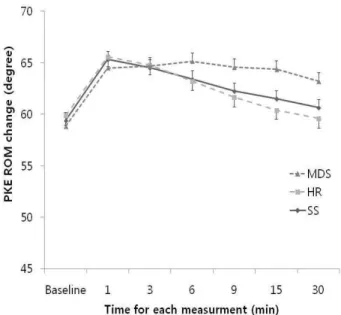
Figure 4. Passive knee extension range of motion after the 3 interventions (MDS: modified dynamic stretching, HR: hold-relax, SS: static stretching, *p>.05, ⊤: standard error).
there were significant differences in knee-extension angle. The interaction between the 3 stretching in- terventions with time was analyzed by two-way re- peated ANOVA. Tukey’s honestly significant differ- ence (HSD) post-hoc analysis was performed to de- termine significant differences. The level of sig- nificance was set at α=.05.
Results
Our study showed that PKE ROM was sig- nificantly different after MDS, HR, and SS across the 6 time intervals (p<.05). In the MDS group, a significant improvement in hamstring flexibility was maintained for 30 minutes after the stretching proto- col (p<.05). However, the improvement in hamstring flexibility in the HR and SS groups lasted for only 6 minutes (p<.05) (Table 2). Moreover, a significant intervention-by-time interaction was noted after 6 minutes by statistical analysis (p<.05) (Figure 4).
Discussion
This study was conducted to examine the duration of improved hamstring flexibility following the termi- nation of 3 stretching interventions in subjects with limited hamstring flexibility. The results of this rela-
tively small study indicate that MDS alone sig- nificantly increased hamstring flexibility for up to 30 minutes post-treatment. In contrast, while SS and HR also significantly increased hamstring flexibility, their effects reduced after just 6 minutes. The im- mediate effect of SS on hamstring flexibility was greater than that of the other interventions, but the difference was not statistically significant.
Previous studies reported that a 6 weeks program of dynamic stretching is helpful in increasing both
active and passive flexibility (Nelson, 2006;
O’Sullivan et al, 2009). Similarly, Nelson (2006) ob- served that dynamic stretching of hamstring muscles for 30 seconds (6 exercises of 1 × 5 seconds) was more effective than SS, and our findings corroborate this. However, Ford et al (2007) reported no differ- ence in the duration of hamstring flexibility improve- ment following the termination of the 3 interventions.
The discrepancy between the results of their study and our study may be explained by the following methodological differences.
Firstly, we indicated hamstring flexibility by PKE ROM values, while they used active knee extension (AKE) ROM. The reliability coefficients for test-re- test measurements of the PKE and AKE tests are .99 in the right extremity and .99 for the left ex- tremity (Fredriksen et al, 1997; Gajdosik and Lusin, 1983). Previous studies have described that ham- string flexibility values measured using AKE and PKE vary by almost 12°. This could be because PKE only measures “maximal hamstring length”
whereas AKE measures “initial hamstring length”
(Gajdosik and Lusin, 1983).
Secondly, our study applied dynamic stretching as closed kinetic chain in a bridge position, whereas the previous study used dynamic stretching as an open kinetic chain in a sitting position (Ford and McChesney, 2007). Dynamic stretching is achieved by inducing the antagonist muscle to concentrically contract in a smooth, controlled manner and thereby allow natural elongation of the agonist muscle through its full ROM (Murphy, 1991). Dynamic stretching in a closed kinetic chain improves not on- ly flexibility but also power production. It improves post-activation potentiation, ROM, and muscle tem- perature (Sale, 2002). As a result, patients who re- ceive training in dynamic contraction can achieve improvements in strength and ROM at the same time. Therefore, dynamic stretching as a closed ki- netic chain is a more functional technique for im- proving flexibility (Murphy, 1991; Nelson, 2006;
Snyder-Mackler, 1996). All the interventions em-
ployed in our study were applied in the supine posi- tion in order to minimize the influence of other factors. Previous studies have used open kinetic chain in dynamic stretching (Ford and McChesney, 2007), whereas our research applied dynamic stretch- ing in a bridge to create a closed kinetic chain. Lynn and Costigan (2009) reported that no difference was found in the ratio of medial-lateral hamstring mus- cular activation changes between hamstring bridge exercise and hamstring curl exercise. It is known that the bridge exercise is suitable for hamstring stretching.
Many studies suggested that the time and fre- quency of stretching protocols may have influenced the duration of the hamstring flexibility improvement (Depino et al, 2000; Feland et al, 2001; Spernoga et al, 2001). Our findings indicated that only MDS sig- nificantly improved hamstring flexibility, for up to 30 minutes, while the effects of HR and SS lasted for only 6 minutes. Our results differ from those ob- tained by Depino et al (2000), who found that the improvement in flexibility declined significantly after 3 minutes. Differences in how the SS was performed may explain this. Depino et al (2000) used a stand- ing position during stretching, while we employed stretching in a supine position based on SLR tests.
In addition, when Ford and McChesney (2007) com- pared the duration of hamstring flexibility improve- ment following the 3 interventions, they obtained re- sults different from ours. Our subjects performed the exercises 5 times with active contraction for a period of 11 seconds and a rest period of 25 seconds, whereas the subjects in their study performed ten 10 seconds dynamic stretching exercises separated by rest periods of 10 seconds. These factors may have caused the differences between the results.
Our study was limited to the effects of MDS, HR, and SS on the flexibility of the hamstring muscles.
Our sample size was small, so the results should be treated with caution and followed up in a larger study. Moreover, the group of participants observed in our study consisted of young and asymptomatic
participants, and this finding may not be general- izable to other populations. Finally, since we meas- ured the effect on hamstring flexibility after 3, 6, 9, 15, and 30 minutes, the results do not elucidate any long-term effects that may persist after 30 minutes.
Conclusion
This study compared the duration of hamstring flexibility improvement after 3 different stretching interventions (MDS, HR, and SS). Twenty-two sub- jects (12 men, 10 women) with limited hamstring flexibility of the dominant leg received 3 stretching interventions. We found that MDS, HR, and SS were all effective in increasing the flexibility of the hamstring. However, the effects of MDS lasted up to 30 minutes after the final stretch while the effects of HR and SS lasted for only 6 minutes. Therefore, our finding supports the use of MDS for maintaining hamstring flexibility and provides a framework for future studies.
References
Ayala F, Sainz de Baranda P, De Ste Croix M, et al.
Criterion-related validity of four clinical tests used to measure hamstring flexibility in pro- fessional futsal players. Phys Ther Sport.
2011;12(4):175-181.
Bandy WD, Irion JM. The effect of time on static stretch on the flexibility of the hamstring muscles. Phys Ther. 1994;74(9):845-852.
Bandy WD, Irion JM, Briggler M. The effect of time and frequency of static stretching on flexibility of the hamstring muscles. Phys Ther. 1997;77 (10):1090-1096.
Bandy WD, Irion JM, Briggler M. The effect of stat- ic stretch and dynamic range of motion training on the flexibility of the hamstring muscles. J Orthop Sports Phys Ther. 1998;27(4):295-300.
Barash HL, Galante JO, Lambert CN, et al.
Spondylolisthesis and tight hamstrings. J Bone Joint Surg Am. 1970;52(7):1319-1328.
Biering-Sørensen F. Physical measurements as risk indicators for low-back trouble over a one-year period. Spine. 1984;9(2):106-119.
Bishop D. Warm up II: Performance changes follow- ing active warm up and how to structure the warm up. Sports Med. 2003;33(7):483-498.
Boyd BS. Measurement properties of a hand-held in- clinometer during straight leg raise neuro- dynamic testing. Physiotherapy. 2012;98(2):174- 179.
Chandler TJ, Kibler WB, Uhl TL, et al. Flexibility comparisons of junior elite tennis players to other athletes. Am J Sports Med. 1990;18(2):
134-136.
Decoster LC, Scanlon RL, Horn KD, et al. Standing and supine hamstring stretching are equally effective. J Athl Train. 2004;39(4):330-334.
Depino GM, Webright WG, Arnold BL. Duration of maintained hamstring flexibility after cessation of an acute static stretching protocol. J Athl Train. 2000;35(1):56-59.
Feland JB, Myrer JW, Schulthies SS, et al. The ef- fect of duration of stretching of the hamstring muscle group for increasing range of motion in people aged 65 years or older. Phys Ther.
2001;81(5):1110-1117.
Ford P, McChesney J. Duration of maintained ham- string rom following termination of three stretching protocols. J Sport Rehabil. 2007;16(1):
18-27.
Fredriksen H, Dagfinrud H, Jacobsen V, et al.
Passive knee extension test to measure ham- string muscle tightness. Scand J Med Sci Sports. 1997;7(5):279-282.
Gajdosik R, Lusin G. Hamstring muscle tightness.
Reliability of an active-knee-extension test.
Phys Ther. 1983;63(7):1085-1090.
Henderson RC, Lin PP, Greene WB. Bone-mineral density in children and adolescents who have
This article was received October 17, 2013, was reviewed October 17, 2013, and was accepted December 3, 2013.
spastic cerebral palsy. J Bone Joint Surg Am.
1995;77(11):1671-1681.
Jonhagen S, Nemeth G, Eriksson E. Hamstring in- juries in sprinters. The role of concentric and eccentric hamstring muscle strength and flexibility. Am J Sports Med. 1994;22(2):262-266.
Katayama M, Higuchi H, Kimura M, et al.
Proprioception and performance after anterior cruciate ligament rupture. Int Orthop. 2004;28(5):
278-281.
Kim JW, Lee KM. Evaluation of isometric shoulder strength in Korean adults using a hang-held dynamometer. J Korean Acad Rehabil Med.
1996;20(1):186-193.
Liemohn W. Factors related to hamstring strains. J Sports Med Phys Fitness. 1978;18(1):71-76.
Lynn SK, Costigan PA. Changes in the medial-later- al hamstring activation ratio with foot rotation during lower limb exercise. J Electromyogr Kinesiol. 2009;19(3):197-205.
Massoud Arab A, Reza Nourbakhsh M, Mohammadifar A. The relationship between hamstring length and gluteal muscle strength in individuals with sacroiliac joint dysfunction. J Man Manip Ther.
2011;19(1):5-10.
McMillian DJ, Moore JH, Hatler BS, et al. Dynamic vs. static-stretching warm up: The effect on power and agility performance. J Strenth Cond Res. 2006;20(3):492-499.
Morey JK, William JH. The reliability and concurrent validity of shoulder mobility measurements using a digital inclinometer and goniometer. Int J Sports Phys Ther. 2012;7(3):306-313.
Murphy DR. A critical look at static stretching: Are we doing our patient harm? Chirop Sports Med.
1991;5(3):67-70.
Nelson RT. A comparison of the immediate effects of eccentric training vs static stretch on hamstring flexibility in high school and college athletes. N Am J Sports Phys Ther. 2006;1(2):56-61.
Nelson RT, Bandy WD. Eccentric training and static stretching improve hamstring flexibility of high school males. J Athl Train. 2004;39(3):254-258.
O’Sullivan K, Murray E, Sainsbury D. The effect of warm-up, static stretching and dynamic stretch- ing on hamstring flexibility in previously injured subjects. BMC Musculoskelet Disord. 2009;10:37.
Puentedura EJ, Huijbregts PA, Celeste S, et al.
Immediate effects of quantified hamstring stretching: Hold-relax proprioceptive neuro- muscular facilitation versus static stretching.
Phys Ther Sport. 2011;12(3):122-126.
Sale DG. Postactivation potentiation: Role in human performance. Exerc Sport Sci Rev. 2002;30(3):
138-143.
Snyder-Mackler L. Scientific rationale and physio- logical basis for the use of closed kinetic chain exercise in the lower extremity. J Sport Rehabil.
1996;5(1):2-12.
Spernoga SG, Uhl TL, Arnold BL, et al. Duration of maintained hamstring flexibility after a one-time, modified hold-relax stretching protocol. J Athl Train. 2001;36(1):44-48.
Yamaguchi T, Ishii K. Effects of static stretching for 30 seconds and dynamic stretching on leg ex- tension power. J Strenghth Cond Res. 2005;19 (3):677-683.