ORIGINAL ARTICLE
만성 C형 간염 환자를 대상으로 한 Direct Acting Antiviral 병합 요법의 효과와 안정성: 단일기관 연구
박성준, 김아란, 최원혁, 김정한, 유병철, 권소영
건국대학교병원 소화기내과
The Efficacy and Safety of Direct-acting Antiviral Treatment for Chronic Hepatitis C Patients:
A Single Center Study
Seong Jun Park, Ah Ran Kim, Won Hyeok Choe, Jeong Han Kim, Byung Chul Yoo and So Young Kwon Division of Gastroenterology, Department of Internal Medicine, Konkuk University Medical Center, Seoul, Korea
Background/Aims: Direct-acting antiviral (DAA) therapy has been shown to achieve a high rate of sustained virologic response (SVR) and favorable outcomes in chronic hepatitis C (CHC) patients. We investigated the virologic response and its clinical impact in CHC patients.
Methods: CHC patients with compensated liver function treated with DAAs between 2016 and 2017 were included for retrospective analysis. We analyzed baseline characteristics and virologic and biochemical responses at on-treatment 4 weeks, end of treatment, and post-treatment 12 weeks. Fibrosis was measured as liver stiffness measurement by transient elastography (FibroScan). Adverse events were monitored during the treatment period.
Results: A total of 135 patients (61.5% with genotype [GT] 1b and 38.5% with GT 2a) were enrolled 47.4% were male, 79.3% were treatment naive, and 30.4% had cirrhosis. SVR 12 was observed in 97.6% (81/83) in the GT 1b and 98.1% (51/52) in the GT 2a; treat- ment with daclatasvir+asunaprevir was the most commonly used in GT 1b (55/83), and sofosbuvir+ribavirin was the most commonly used in GT 2a (49/52). The median change of liver stiffness measurement at two time points using the signed rank test was -3.2 kPa in patients who underwent transient elastography before treatment and at SVR 12 (n=25). The most common adverse events were anemia, dyspepsia, and insomnia. One GT 2a patient treated with sofosbuvir+ribavirin stopped the treatment at 8 weeks due to symptomatic bradyarrhythmia; however, he recovered spontaneously and achieved SVR 12.
Conclusions: DAA treatment of chronic hepatitis C genotype 1b and 2a resulted in a high rate of sustained virologic response and improvement of liver fibrosis score. (Korean J Gastroenterol 2018;72:197-204)
Key Words: Hepatitis C, chronic; Antiviral agents; Sustained virologic response
Received July 14, 2018. Revised September 3, 2018. Accepted September 19, 2018.
CC This is an open access article distributed under the terms of the Creative Commons Attribution Non-Commercial License (http://creativecommons.org/licenses/
by-nc/4.0) which permits unrestricted non-commercial use, distribution, and reproduction in any medium, provided the original work is properly cited.
Copyright © 2018. Korean Society of Gastroenterology.
교신저자: 권소영, 05030, 서울시 광진구 능동로 120-1, 건국대학교병원 소화기내과
Correspondence to: So Young Kwon, Division of Gastroenterology, Department of Internal Medicine, Konkuk University Medical Center, 120-1 Neungdong-ro, Gwangjin-gu, Seoul 05030, Korea. Tel: +82-2-2030-7508, Fax: +82-2-2030-5029, E-mail: [email protected], ORCID: https://orcid.org/0000-0003-4290-1950 Financial support: None. Conflict of interest: None.
INTRODUCTION
Chronic hepatitis C virus (CHC) infection is a serious health problem affecting more than 180 million people worldwide.1,2 It became the leading cause of death from liver disease and
liver transplantation in South Korea.
In the past several decades, the standard approach for patients with CHC was a combination of pegylated interferon and ribavirin therapy, and this regimen cured hepatic C virus (HCV) infection in approximately 50% of treated patients.3,4
However, due to a low therapeutic success rate with relatively frequent side effects in patients with chronic kidney disease, its use was limited.5
Since 2014, a new therapy has been developed using Interferon (IFN)-free direct-acting antiviral (DAA) agents, di- rectly targeting HCV replication. Compared to the conventional IFN-therapy, DAA treatment resulted in sustained virologic re- sponse (SVR) rates of more than 90% with minimal side ef- fects in many patient populations.6-15
In 2015, the DAA treatment – after obtaining approval to be used with daclatasvir and asunaprevir – was widely adopted in South Korea and began to be regarded as the standard treatment for CHC infection.16 However, to the best of our knowledge, there are limited studies on the treatment outcomes in Koreans. Hence, the purpose of this study was to evaluate the sustained virologic response (SVR 12) and safety of DAAs in Korean patients with CHC.
SUBJECTS AND METHODS
1. Study design
This was a single-center, retrospective cohort study evaluat- ing the treatment regimens and outcomes of using DAA in Korean patients with CHC. This retrospective study was ap- proved by the Institutional Review Board of Konkuk University Medical Center (KUH1010946). The requirement for informed consent was waived due to the retrospective nature.
2. Study patients
One hundred thirty-five consecutive patients who were treat- ed with DAA for CHC at Konkuk University Medical Center in Korea between January 2016 and December 2017 were evaluated. All data were obtained from individual patient records.
We initially recorded the following results for all patients:
previous history of hepatitis C treatment, presence of liver cirrhosis when diagnosed, laboratory tests (hemoglobin, plate- lets, INR, albumin, AST, ALT, AFP) and history of comorbidities.
We evaluated the improvement of liver fibrosis by measuring the liver stiffness in patients who underwent transient elastog- raphy (FibroScan) before and after treatment. Post-treatment laboratory results, management of anemia during follow-up, and treatment-related adverse effects were also recorded.
DAA treatment regimens were chosen according to the current
recommendations from the Korean Association for the Study of the Liver, which revised the guidelines based on the system- atic approach that reflects evidence-based medicine and ex- pert opinions. All patients were evaluated for their interactions with the medications currently in use before treatment. Some patients were taking medications that required particular at- tention (statins [10/135], amlodipine [5/135], carvedilol [2/135], amitriptylline [1/135]); however, no patients were tak- ing medications that would be contraindicated. Patients diag- nosed with genotype 1b were further tested for resistance associated substitutions (L31, Y93) prior to treatment.
We excluded patients who failed to completely comply with the follow-up routine throughout the treatment period as well as those who declared discontinuation of treatment prior to the official end of therapy and those who had decompensated liver cirrhosis, hepatocellular carcinoma (HCC), human im- munodeficiency virus, or significant cardiac disease, and those with prior history of organ transplant.
3. Efficacy assessment
The viral load, HCV-RNA (PCR), was determined using a quantitative assay (COBAS® AmpliPrep/COBAS® TaqMan®;
Roche Molecular Diagnostics, Pleasanton, CA, USA) and ex- pressed in IU/mL (lower limit of quantification of 15 IU/mL).
All patients treated with DAA were evaluated for the results of HCV RNA at 4 weeks, end of treatment (12 weeks or 24 weeks), and post-treatment 12 weeks to assess whether pa- tients had achieved rapid virologic response (undetectable HCV RNA by PCR at 4 week) and sustained SVR 12 (undetectable HCV RNA by PCR at 12 weeks after completion of the treatment).
Success of treatment was defined as acquisition of SVR 12. However, failure of treatment was defined as recurrence of positive HCV DNA during antiviral therapy (breakthrough) or at the end of treatment (relapse). Based on this, we calcu- lated the success rate of therapeutic agent for each genotype.
4. Statistical analysis
All statistical analyses were performed by using SAS version 9.4 (SAS Institute Inc., Cary, NC, USA). The data were expressed as the mean±standard deviation for continuous variables and frequencies with percentages for categorical variables. We used the signed-rank test to assess significant change in the liver stiffness measurement (LSM) score and serum ALT of the
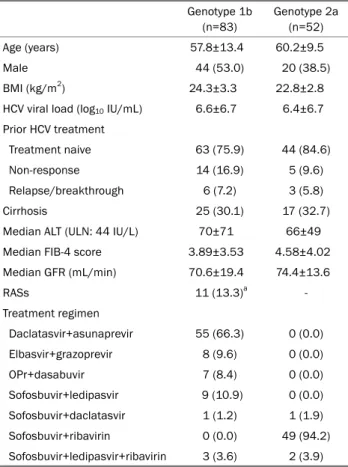
Table 1. Baseline Clinical Characteristics of Patients Genotype 1b
(n=83)
Genotype 2a (n=52)
Age (years) 57.8±13.4 60.2±9.5
Male 44 (53.0) 20 (38.5)
BMI (kg/m2) 24.3±3.3 22.8±2.8
HCV viral load (log10 IU/mL) 6.6±6.7 6.4±6.7 Prior HCV treatment
Treatment naive 63 (75.9) 44 (84.6)
Non-response 14 (16.9) 5 (9.6)
Relapse/breakthrough 6 (7.2) 3 (5.8)
Cirrhosis 25 (30.1) 17 (32.7)
Median ALT (ULN: 44 IU/L) 70±71 66±49
Median FIB-4 score 3.89±3.53 4.58±4.02
Median GFR (mL/min) 70.6±19.4 74.4±13.6
RASs 11 (13.3)a -
Treatment regimen
Daclatasvir+asunaprevir 55 (66.3) 0 (0.0)
Elbasvir+grazoprevir 8 (9.6) 0 (0.0)
OPr+dasabuvir 7 (8.4) 0 (0.0)
Sofosbuvir+ledipasvir 9 (10.9) 0 (0.0) Sofosbuvir+daclatasvir 1 (1.2) 1 (1.9)
Sofosbuvir+ribavirin 0 (0.0) 49 (94.2)
Sofosbuvir+ledipasvir+ribavirin 3 (3.6) 2 (3.9) Values are presented as mean±standard deviation or n (%).
BMI, body mass index; HCV, hepatitis C virus; ALT, alanine transaminase;
UNL, upper normal limit; FIB-4, fibrosis-4; GFR, glomerular filtration rate;
RASs, resistance associated substitutions; OPr, ombitasvir/paritaprevir/
ritonavir; DCV, daclatasvir; ASV, asunaprevir.
aRASs were not detected in all 55 patients who used DCV+ASV as the treatment. Of the 28 patients who selected other drugs, 12 patients did not undergo RASs test and among 5 patients, the RASs test was negative.
two time points, with significance set at the p<0.05.
RESULTS
1. Patient’s characteristics
From January 2016 to December 2017, a total of 135 pa- tients (61.5% with GT 1b and 38.5% with GT 2a) were enrolled and treated; 47.4% were male, 79.3% were treatment naive, and 30.4% had cirrhosis. The mean baseline HCV RNA levels were similar between the two genotypes, and the pre-treat- ment median ALT levels were elevated above the upper nor- mal limit in both genotypes. All patients were followed-up for 12 weeks after DAA treatment. The baseline characteristics of the cohort are summarized in Table 1.
2. Virological response
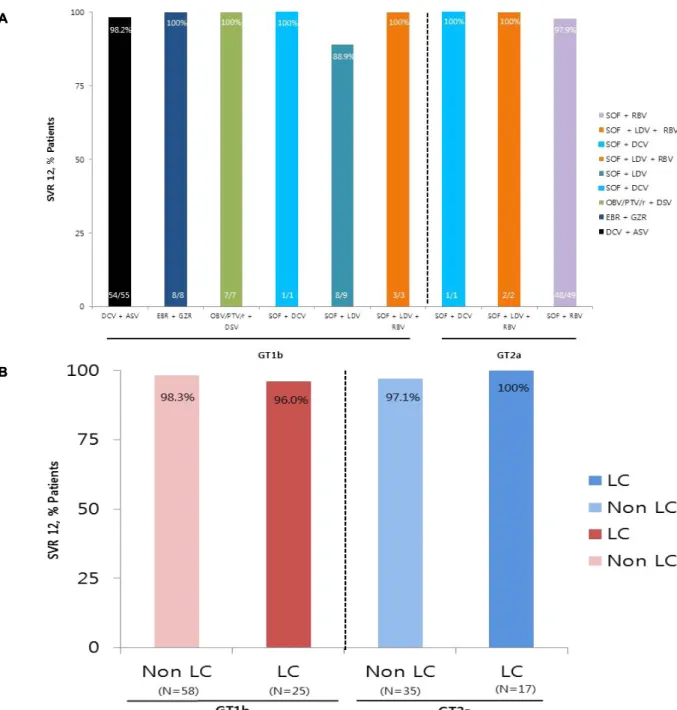
The overall SVR 12 rate of patients with HCV genotype 1b (n=83) was 97.6% (81 out of 83). Most of these patients had a combination treatment of daclatasvir with asunaprevir (55 out of 83, 66%). Eight patients had a combination treatment of elbasvir plus grazoprevir (8 out of 83, 10%), Seven patients received ombitasvir/paritaprevir/ritonavir and dasabuvir (7 out of 83, 8%), and 14 patients were treated with sofosbu- vir-containing regimens. There was one relapse among the 55 patients treated with daclatasvir plus asunaprevir after 12 weeks of treatment (1 out of 55, 1.8%), and one relapse was seen among those receiving a combination of sofosbu- vir-ledipasvir (1 out of 9, 11%). These two relapsed patients were treatment naive; and one of them was a pre-treatment compensated cirrhosis patient. Patients with HCV genotype 2a (n=52) had an overall SVR 12 rate of 98.1% (51 out of 52). Treatment with sofosbuvir+ribavirin was the most com- monly used in GT 2a (49 out of 52, 94%). Two patients were treated with sofosbuvir plus ledipasvir with ribavirin (2 out of 52, 4%), and one patients received sofosbuvir plus dacla- tasvir (1 out of 52, 2%). Relapse was observed in one patient treated with sofosbuvir and ribavirin combination therapy (1 out of 49, 2%). This patient was treatment naive without cir- rhosis prior to treatment (Fig. 1A, Table 2). Moreover, the SVR 12 rate, which was obtained by dividing the patient group into liver cirrhosis (LC) and non-LC, showed similar results in both genotypes (Fig. 1B).
3. Biochemical response
Regardless of the treatment regimen, the serum ALT levels were significantly decreased in both genotypes 1b and 2a at 4 weeks and 12 weeks after treatment (SVR 12) compared with before treatment. The median ALT levels were changed from 70.4±71.2 IU/L (GT 1b) and 66.5±48.9 IU/L (GT 2a) at baseline to 27.1±35.3 IU/L (GT 1b) and 21.1±12.1 IU/L (GT 2a) at SVR 12. The Fibrosis-4 (FIB-4) score, which is calcu- lated by biochemical values (platelets, ALT, AST) and age, was also significantly decreased in both genotypes 1b and 2a at the end of treatment and at the time of SVR 12 compared with before treatment (Fig. 2).
4. LSM score
Among the 135 patients treated with DAA, 25 patients un- derwent both FibroScan before treatment and at 12 weeks
Fig. 1. Virological response. (A) SVR 12 according to DAAs in each genotype. The result of DAA treatment for 1b and 2a showed high SVR 12 results without any significant difference in the treatment regimens. (B) SVR 12 according to the presence of cirrhosis in each genotype. SVR 12 rate showed similar results in both genotypes regardless of LC and non-LC. SVR, sustained virologic response; DCV, daclatasvir; ASV, asunaprevir; EBR, elbasvir; GZR, grazoprevir; OBV, ombitasvir; PTV, paritaprevir; r, ritonavir; DSV, dasabuvir; SOF, sofosbuvir; LDV, ledipasvir;
RBV, ribavirin; GT, genotype; LC, liver cirrhosis; DAAs, direct-acting antivirals.
after treatment (SVR 12). The median change in the LSM score using the signed rank test between the two-time points was -3.2 kPa (from median fibroscan score was 10.3 kPa at baseline to 7.1 kPa at post treatment [SVR 12]), indicating a significant improvement in LSM score after successful DAA treatment (Fig. 3). By analyzing only for patients who under-
went fibroscan, FIB-4 scores decreased from 3.66±1.79 at baseline to 2.02±1.15 at SVR 12. The proportion of patients with severe fibrosis Metavir >F3 (>9.5 kPa) also decreased from 60.0% (15 out of 25) before treatment to 28.0% (7 out of 25) after 12 weeks of treatment (SVR 12).
AA
B B
Table 2. Treatment Response according to Genotype Genotype 1b
(n=83)
Genotype 2a (n=52) HCV RNA <15 IU/mL, n/n (%)
On treatment
4 week 82/83 (98.8) 50/52 (96.2)
12 weeka 28/28 (100) 52/52 (100)
24 week 55/55 (100) -
Post treatment
12 week (SVR) 81/83 (97.6) 51/52 (98.1) Virological failure
On treatment 0 0
Relapse 2b 1c
HCV, hepatitis C virus; RNA, ribonucleic acid; SVR, sustained virologic response; LC, liver cirrhosis; SOF, sofosbuvir; DCV, daclatasvir; ASV, asunaprevir; LDV, ledipasvir; RASs, resistance associated substitutions;
RBV, ribavirin.
aOne patient was LC-compensated treated with SOF+DCV for 16 weeks with non-responsive to previous DCV+ASV treatment; bOne relapse patient was treated with DCV+ASV and the other was seen in patient receiving a SOF+LDV. Resistance associated substitutions (RASs) (L31, Y93) were not detected in both patients; cOne patient was treated with SOF+RBV. The patient was treatment naive without cirrhosis.
Fig. 2. FIB-4 scores pre- and post-treatment with DAA in all patients (n=135). The median FIB-4 scores decreased from 4.15±3.72 at baseline to 2.84±2.78 at SVR 12 (p<0.001). FIB-4, fibrosis-4; Pre-Tx, pretreatment; SVR, sustained virologic response; DAA, direct-acting antiviral.
5. The occurrence of hepatocellular carcinoma
Two out of the three relapsed patients (one with genotype 1b and one with genotype 2a) showed new occurrence of HCC after treatment with DAAs. The first patient was a
71-year-old man with genotype 1b, who was treated with so- fosbuvir+ledipasvir. He was treatment naive with compen- sated cirrhosis. Three small hypervascular HCCs were de- tected in the liver MRI scan at 3 months after the end of treatment; to date, transarterial chemoembolization has been performed once.
The second patient was a 63-year-old man with genotype 2a, who was treatment naive without cirrhosis. This patient was treated with sofosbuvir+ribavirin; after 3 months from the end of treatment, two small HCCs were detected in the liver MRI scan. The patient was showing poor compliance dur- ing the treatment period, including continued alcohol drinking.
Finally, he failed to follow-up.
6. Adverse events
Table 3 shows the adverse events of the treatment regimen of genotype 1b and 2a. Out of the patients with genotype 1b (n=83), 17 had an adverse event (20.5%). The most common adverse events were dyspepsia (n=6, 7.2%), insomnia (n=3, 3.6%), and fatigue (n=3, 3.6%); however, there were no serious side effects that resulted in discontinuation of treatment. In the case of genotype 2a patients (n=52), most of the adverse events were anemia (defined as hemoglobin <10 g/dL or de- creased hemoglobin >2 g/dL from baseline) due to ribavirin (31 out of 51, 60.8%). Although there was no discontinuation
Fig. 3. LSM score (n=25). Significant improvement in the LSM score was observed after successful DAA treatment. LSM, liver stiffness measurement; kPa, kilopascal; Pre-Tx, pretreatment; SVR, sustained virologic response; DAA, direct-acting antiviral.
Table 3. Adverse Events
Genotype 1b (n=83)
Genotype 2a (n=52) Pts. with adverse events 17 (20.5) 34 (65.4)
Discontinuation of DAAs 0 0
Dyspepsia 6 (7.2) -
Insomnia 3 (3.6) 1 (1.9)
Fatigue 3 (3.6) -
Other minoritya 5 (6.0) -
Anemiab - 31 (59.6)
Symptomatic bradycardiac - 1 (1.9)
Cough - 1 (1.9)
Values are presented as n (%).
Pts, patients; DAAs, direct-acting antivirals; Hb, hemoglobin; SOF, sofosbuvir; RBV, ribavirin; SVR, sustained virologic response.
aNausea (1), headache (1), skin rash (1), xeroderma (1), edema (1);
bDefined as Hb <10 g/dL or decreased Hb >2 g/dL from baseline.
Fourteen patients required dose reduction and 2 of them received blood transfusion; cOne patient treated with SOF+RBV stopped treatment at 8 weeks due to symptomatic bradyarrhythmia. However, the patient recovered spontaneously and was found to have achieved SVR 12 during follow up.
of treatment due to anemia, 14 patients required dose reduc- tion; two of them received blood transfusion.
One GT 2a patient treated with sofosbuvir+ribavirin stopped treatment at 8 weeks due to symptomatic bradyarrhythmia.
However, the patient recovered spontaneously and was found to have achieved SVR 12 during the follow-up period.
DISCUSSION
This study showed that DAA may be safe and effective for treatment of patients with HCV genotypes 1b and 2a. In geno- type 1b patients, the overall SVR 12 was 97.6% (81/83), includ- ing those who are interferon treatment experienced (20/83) and those with cirrhosis (25/83). Daclatasvir+asunaprevir was basically selected as a therapeutic agent, and other treatment agents were selected in patients with confirmed mutation in resistance associated substitutions test prior to treatment.
However, all resulted in a high rate of SVR 12 regardless of treatment type. Conversely, most patients with genotype 2a selected sofosbuvir+ribavirin as a therapeutic agent (49/52), also showing a high rate of SVR 12 results (98.1%, 51/52), including those with interferon treatment experience (8/52) and those with cirrhosis (16/52).
According to the biochemical test, serum ALT and AFP levels were considered as moderately accurate tests for indicating liver inflammation and fibrosis.17,18 In this study, platelet count, total bilirubin, prothrombin time, and albumin were unchanged. However, ALT, AFP, and FIB-4 values significantly decreased after treatment (SVR 12) in patients with geno- types 1b and 2a. These results demonstrate that liver fibrosis can be improved after successful DAA therapy for CHC. This can also be expected through the median changes of LSM
score (-3.2 kPa) using FibroScan before and after treatment (SVR 12), which was performed in some patients (25/135).
IFN-based treatment for CHC has multiple adverse events, such as flu-like symptoms, bone marrow suppression, neuro- psychiatric symptoms, autoimmune disease, interstitial pneu- monia, and etc.19-22 Conversely, DAA therapy is known to have little or no serious side effects when compared with IFN-based therapies. In this study, adverse events, such as dyspepsia and insomnia, were reported in some genotype 1b patients;
however, there were no serious adverse events that resulted in discontinued treatment. In genotype 2a patients, a high incidence of anemia during treatment was reported due to the use of ribavirin; however, there was no case of treatment discontinuation as a result of measures like adequate dose reduction and blood transfusion were taken as necessary.
After the end of DAA treatment, anemia was naturally im- proved without blood transfusion or iron pill administration.
In this study, during the follow-up period, two patients were reported to have new HCC (1b [n=1], 2a [n=1]) after failure of DAA treatment (non-SVR 12).
There are some limitations to consider. First, our findings resulted from a single center study with a small study population. Therefore, the effect of statistical significance may be low. However, our results were comparable to previous large cohort studies. Second, our study was performed in a Korean population. Therefore, the findings here may not be applicable to other ethnic groups. Finally, the mean follow-up period after SVR 12 was not consistent depending on the patient's compliance because patients were referred to the outpatient clinic. Therefore, it is possible that the incidence of HCC during the follow-up period may have been underestimated. In conclusion, as the most common CHC gen- otype in Korea, the results of DAA treatment for 1b and 2a showed high SVR 12 rates and improved liver fibrosis score without any significant difference in the treatment regimens.
REFERENCES
1. Abad S, Vega A, Rincón D, et al. Effectiveness of direct-acting anti- virals in hepatitis C virus infection in haemodialysis patients.
Nefrologia 2017;37:158-163.
2. Ghany MG, Strader DB, Thomas DL, Seeff LB, American Association for the Study of Liver Diseases. Diagnosis, manage- ment, and treatment of hepatitis C: an update. Hepatology 2009;49:1335-1374.
3. Douhara A, Ogawa H, Nakatani S, et al. Efficacy and HCC develop-
ment after DAA therapy for patients with chronic hepatitis C: a sin- gle center retrospective cohort study. Hepatoma Res 2017;3:
215-220.
4. Fried MW, Shiffman ML, Reddy KR, et al. Peginterferon alfa-2a plus ribavirin for chronic hepatitis C virus infection. N Engl J Med 2002;347:975-982.
5. Russo MW, Goldsweig CD, Jacobson IM, Brown RS Jr. Interferon monotherapy for dialysis patients with chronic hepatitis C: an analysis of the literature on efficacy and safety. Am J Gastroenterol 2003;98:1610-1615.
6. Manns M, Pol S, Jacobson IM, et al. All-oral daclatasvir plus asu- naprevir for hepatitis C virus genotype 1b: a multinational, phase 3, multicohort study. Lancet 2014;384:1597-1605.
7. Reddy KR, Bourlière M, Sulkowski M, et al. Ledipasvir and so- fosbuvir in patients with genotype 1 hepatitis C virus infection and compensated cirrhosis: an integrated safety and efficacy analysis. Hepatology 2015;62:79-86.
8. Welzel TM, Asselah T, Dumas EO, et al. Ombitasvir, paritaprevir, and ritonavir plus dasabuvir for 8 weeks in previously untreated patients with hepatitis C virus genotype 1b infection without cir- rhosis (GARNET): a single-arm, open-label, phase 3b trial. Lancet Gastroenterol Hepatol 2017;2:494-500.
9. Bourlière M, Bronowicki JP, de Ledinghen V, et al. Ledipasvir-so- fosbuvir with or without ribavirin to treat patients with HCV geno- type 1 infection and cirrhosis non-responsive to previous pro- tease-inhibitor therapy: a randomized, double-blind, phase 2 tri- al (SIRIUS). Lancet Infect Dis 2015;15:397-404.
10. Kumada H, Suzuki Y, Ikeda K, et al. Daclatasvir plus asunaprevir for chronic HCV genotype 1b infection. Hepatology 2014;59:
2083-2091.
11. Wei L, Zhang M, Xu M, et al. A phase 3, open-label study of dacla- tasvir plus asunaprevir in Asian patients with chronic hepatitis C virus genotype 1b infection who are ineligible for or intolerant to interferon alfa therapies with or without ribavirin. J Gastroenterol Hepatol 2016;31:1860-1867.
12. Mizokami M, Yokosuka O, Takehara T, et al. Ledipasvir and so- fosbuvir fixed-dose combination with and without ribavirin for 12 weeks in treatment-naive and previously treated Japanese pa- tients with genotype 1 hepatitis C: an open-label, randomized, phase 3 trial. Lancet Infect Dis 2015;15:645-653.
13. Lawitz E, Mangia A, Wyles D, et al. Sofosbuvir for previously un- treated chronic hepatitis C infection. N Engl J Med 2013;
368:1878-1887.
14. Jacobson IM, Gordon SC, Kowdley KV, et al. Sofosbuvir for hep- atitis C genotype 2 or 3 in patients without treatment options. N Engl J Med 2013;368:1867-1877.
15. Zeuzem S, Dusheiko GM, Salupere R, et al. Sofosbuvir and rib- avirin in HCV genotypes 2 and 3. N Engl J Med 2014;370:
1993-2001.
16. Korean Association for the Study of the Liver. 2017 KASL clinical practice guidelines management of hepatitis C: treatment of chronic hepatitis C. Clin Mol Hepatol 2018;24:169-229.
17. Youssef SS, Seif SM. Association of liver inflammation with al- pha-fetoprotein and treatment response in hepatitis C virus gen- otype 4 patients. J Exp Integr Med 2014;4:23-27.
18. Liu YR, Lin BB, Zeng DW, et al. Alpha-fetoprotein level as a bio- marker of liver fibrosis status: a cross-sectional study of 619 con- secutive patients with chronic hepatitis B. BMC Gastroenterology 2014,14:145.
19. Park SH, Park CK, Lee JW, et al. Efficacy and tolerability of pe- ginterferon alpha plus ribavirin in the routine daily treatment of chronic hepatitis C patients in Korea: a multi-center, retro- spective observational study. Gut Liver 2012;6:98-106.
20. Heo NY, Lim YS, Lee HC, et al. High effectiveness of peginterferon alfa-2a plus ribavirin therapy in Korean patients with chronic hep- atitis C in clinical practice. Clin Mol Hepatol 2013;19:60-69.
21. Fried MW. Side effects of therapy of hepatitis C and their management. Hepatology 2002;36(5 Suppl 1):S237-S244.
22. Kelleher B, Afdhal NH. Management of the side effects of pe- ginterferon and ribavirin used for treatment of chronic hepatitis C virus infection. [Internet]. Waltham (MA): UpToDate Version 18.0; 2014 [updated 2018 Jan 8; cited 2018 Jul 8]. Available from: https://www.uptodate.com/contents/management-of-the- side-effects-of-peginterferon-and-ribavirin-used-for-treatment- of-chronic-hepatitis-c-virus-infection?search=Management
%20of%20the%20side%20effects%20of%20peginterfer- on%20and%20ribavirin%20used%20for%20treatment%20of%
20chronic%20hepatitis%20C%20virus%20infection&source
=search_result&selectedTitle=1~150&usage_type=default&
display_rank=1