pISSN 1598-2033 eISSN 2233-5706 Journal of the Korea Institute of Building Construction, Vol. 13, No. 2
http://dx.doi.org/10.5345/JKIBC.2013.13.2.102
www.jkibc.org
A Basic Study on the Introduction of Professional Indemnity Insurance for Construction Project Managers
Cho, Young-Jun
*1)Department of Architectural Engineering, Joongbu University, Kumsan, Chungnam, 312-702, Korea
Abstract
During the administration of a construction project, various types of participants are engaged in the project. From the design phase to the maintenance phase, these participants may confront many risks. To avoid these risks, participants should utilize an insurance company or a bond company. The types of risks and liability that a construction manager may face are listed in the construction law or contract. But there are some arguments related to risk transferring and the content of risks. For this reason, construction managers must carefully consider any possible risks in the contract and the construction law. Therefore, for construction managers to deal with risks appropriately, the introduction of a legal requirement to carry professional liability insurance, a defined compensation range for damages, a method of guarantee in the event of defects, a defined compensation claim period for damage, and a method of damage claim were suggested in this study.
Keywords : construction manager, negligence, insurance, risk
1. Introduction
1.1 Research background and objective
A variety of participants with different interests are involved in a construction project. From the design phase to post -construction completion, construction managers must confront diverse kinds of risks. These risks can be transferred to a contractor, an insurance company or a guarantee insurance company. In Korea, “Architects and Engineers Liability Insurance for Construction Projects ” was introduced in 1974, but was abolished in 1987 with changes to liability insurance policy[1].
Received : April 3, 2012
Revision received : July 20, 2012 Accepted : August 6, 2012
* Corresponding author : Cho, Young-Jun
[Tel: 82-41-750-6223, E-mail: [email protected]]
ⓒ2013 The Korea Institute of Building Construction, All rights reserved.
In the mid -1990s, many major construction disasters took place in Korea, including the collapse of Changseon Bridge in 1992, the collapse of Seongsu Bridge in 1994, and the collapse of Sampoong Department Store in 1995, to name a few. In the wake of these major disasters, it became clear that there was an urgent need to prevent risks. Finally, in 1995 the Korean government made comprehensive construction risk insurance mandatory, to cover any risk to the object of construction and third parties [2].
In 1996, the introduction of the architects and engineers liability insurance system for public construction was studied [3], but was not legalized.
In January 1995, the Construction Technology
Management Act was revised. In the revision, it
was established that in the event of willful and
intentional negligence of the manager ’s duty, or
any damages or loss caused to the object of
supervision or a third party in the course of
management, the manager shall compensate for the damage or loss. To guarantee liability for damage, the construction management company (hereinafter CM) that the manager (hereinafter CMer) works for, rather than the responsible manager, should compensate for the damage or loss. For this reason, the construction management company must purchase insurance and guarantee insurance. In this case, the ordering party shall consider the cost of purchasing the insurance policy. Thus, a legal basis was prepared for compensation for any damage arising from the management. With respect to management, a company must purchase an insurance policy by an insurance company or a guarantee company, but there is no clear distinction between insurance and guarantee bond, and many risks are not properly covered. As of March 2012, the Korean government is in the progress of changing the law titled the Construction Technology Management Act (hereinafter referred to as Construction Technology Promotion Act), and unifying work divisions such as design and management into construction technical service. In addition, it is preparing for the legal ground of the Mutual Recognition Agreement when agreed upon under FTAs[4]. Given this trend, it is necessary to study the risks in the construction project management field of the construction technical service.
Therefore, this study aims to propose an insurance system to cover damages arising from construction project management of construction technical service in compliance with the purport of the pre -announced Construction Technology Promotion Act.
1.2 Research scope and method
Of the legal responsibilities and liabilities of the CMer, the scope of this research is limited to the
liability guarantee based on civil law, and aims to suggest a basic direction for the introduction of an insurance system for construction project management service based on the research findings.
Previous studies on the risks related to construction project management (including provision) were reviewed, and a theoretical survey was conducted. The legal basis for the risk transfer of construction management was studied, and then problems were analyzed. Based on the results of this analysis, the direction for introducing professional liability insurance was suggested.
2. Basic study of construction project management insurance
In this section, a literature review was carried out to understand what has been studied in previous studies and what kinds of responsibilities and liabilities are imposed on construction project management by the pre -announced Construction Technology Promotion Act.
2.1 Previous studies and literature review
There have been few studies on risk coverage
for construction project management service, but
there are a couple of studies on the insurance and
guarantee bond for construction management and
designers. Lee YH and Choi JH[2] suggested that
the bond limit for construction be determined
according to investment, the surety bond system
be jointly and severally liable, the coverage scope
of compensation for damage deduction be
considered, an adjustment plan for collateral by
the third party be provided, the insurance
premium be raised, and the term of insurance be
extended. With respect to a system overhaul, they
also suggested the deletion of content related to
A Basic Study on the Introduction of Professional Indemnity Insurance for Construction Project Managers
willful acts in the compensation for damage deduction clause and efficiency plan for the payment process in the event of an accident.
Notwithstanding these points, the study considered design and management on an identical plane, which made it difficult to utilize the research findings in a manner limited to the management service.
Lee JK, et al. [5] studied the problems and policy strategies related to opening the construction guarantee market. The study concluded that if the construction guarantee market should be opened, the legal basis should be prepared for the establishment of a construction guarantee company in the form of a cooperative or a corporation that can provide a construction bond in compliance with the Framework Act on the Construction Industry, and concluded that a construction guarantee company must meet stricter establishment requirements than an insurance company. This study only pointed out the direction toward the construction guarantee market.
Cho YJ[6] suggested a direction for introducing a professional liability insurance system to protect contracting parties from the risks arising from design work. The study was limited to design work, and is difficult to utilize in construction project management.
RefNo Author Research
Part Contents
2 Lee YH, Choi JH Construction
Bond Coverage, Period of Insurance 5 Lee JK, et al Construction
Bond Establishment of Bond Company
6 Cho YJ PLI of
Architect
Method of Insurance Cost
Treatment
Table . Literature survey on insurance for CM service
Thus, while there have been several previous studies in this area, insurance -related studies
should be conducted to protect the construction project manager (construction project manager) from risks (See Table 1).
2.2 Liabilities of professional and privity
When an ordinary person performs a specific action, the legal liability the person must take can be divided into criminal and civil (See Figure 1).
Figure 1. Nature of legal liability
Criminal liability brings the person to social account with a view to retribution for the doer ’s action and prevention of a possible disservice as well. Putting an emphasis on the subjective circumstances of the responsible person, in principle only the responsible person who did the action on purpose or with intention is punished by criminal law. In comparison, civil liability brings the person to account for the personal damages or loss of the victim, and the responsible person must pay for any damage or loss caused to the other party, regardless of his/her willfulness or negligence[3]. Therefore, if the responsible party causes damage or loss willfully or negligently, he or she must shoulder both civil and criminal liability.
When a professional who carries out any task
set out in law causes damages, he or she must
take not only civil and criminal liability but also
administrative liability. Strictly speaking, the
administrative liability the professional must take
can be included in the criminal liability. But the
liability the responsible profession must take may
have a variety of forms, including business
suspension, suspension of service, penalty or
requirements to a bidding, or point subtraction in tender evaluation. The criminal liability the responsible professional must take includes compensation for damages (including deferment of compensation), repair or swingback. The specific action of the responsible professional can have great ripple effects, and it can be done with administrative liability, or in some cases the responsible professions must take civil or criminal liability depending on the circumstances (See Figure 2).
Figure 2. Legal liability of professionals
2.3 Damage claim methods
Damage is generally claimed in one of two ways:
occurrence -based rule and claim-made based rule.
According to the occurrence -based rule, an accident is reported by the insured to the insurer when an accident occurs, while according to the claim -made based rule, any possible sign of an accident is reported by the insured to the insurer.
Before the 1970s, the claim -made based rule was applied to professional liability insurance.
Whenever an accident occurred, the insurance company must pay for the damages repeatedly, and from the beginning of the 1970s, the insured applied for an insurance product with pre -determined value. However, problems that could not be predicted by professionals took place, which was another problem with the new system[8]. Since then, Lloyd ’s (UK) has adopted the claim -made and reported insurance policy, in
conjunction with the occurrence -based rule.
2.4 Legal liabilities of construction project manager The responsibilities and liabilities arising from the construction project management may vary depending on circumstances. According to the pre -announced Construction Technology Promotion Act, the liabilities of the CMer are different from those of the CM company. A CM must bear the liability of less than one or two years of business suspension depending on the severity of the infraction. There are 20 cases in which the qualification of the construction technicians who perform construction work and construction technical service can be suspended for two years.
Of these, the following 8 cases can be applicable to insurance by the individual:
1) Delay in the construction progress was caused by the manager ’s absence from the site without permission.
2) Fatal damage to the ordering party ’s property was caused by the manager ’s significant fault or willful and intentional deed;
3) Negligence of the manager on the construction project management caused major parts of the structure to be constructed poorly, or caused any damage to ordinary people;
4) Negligence of the manager in construction project management caused the contractor or the housing contractor privileged to register to use substandard or inappropriate construction materials;
5) Negligence of the manger in guidance and supervision for quality control has caused the contractor or the housing contractor privileged to register not to conduct quality tests, or to manipulate the test results;
6) Negligence of the manager in guidance and
supervision has caused or may cause a major
A Basic Study on the Introduction of Professional Indemnity Insurance for Construction Project Managers
disaster;
7) Negligent examination of the manager on the concordance of the construction with the design drawings and other related documents has caused or may cause poor construction;
or
8) Manager neglected the review of the shop drawings prepared by the contractor, or agreed to the construction without preparation of the shop drawing.
On the other hand, there are 7 cases in which the qualification of the construction technicians who perform construction work and construction technical service can be suspended for one year.
Of these, the following 3 cases are applicable to construction project management:
1) Remarkable negligence of the manager on the construction technical service that causes or may cause the major parts of the structure to be destroyed, or ordinary people to be harmed;
2) Negligence of the manager on the preliminary survey that has caused or may cause remarkable increase in construction cost or duration; or
3) Willful or intentional negligence or significant fault of the manager in the feasibility study that has caused damages to the ordering party.
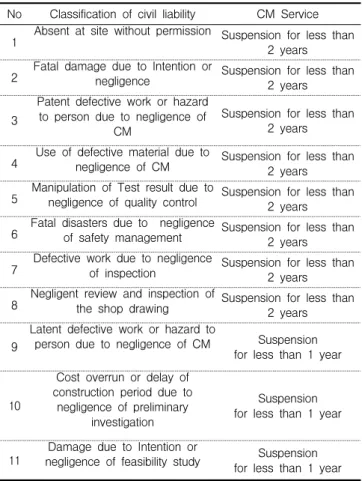
Table 3 is the summary of the liabilities (See Table 2).
The risks of the aforementioned 11 cases set out in law can be borne by the responsible person or covered by insurance. The current Construction Technology Management Act and the completely revised Construction Technology Promotion Act deal with the civil responsibilities and liabilities for CMer. The specific responsibilities and liabilities are described in the following section.
No Classification of civil liability CM Service 1 Absent at site without permission Suspension for less than
2 years 2 Fatal damage due to Intention or
negligence Suspension for less than 2 years
3
Patent defective work or hazard to person due to negligence of
CM
Suspension for less than 2 years
4 Use of defective material due to
negligence of CM Suspension for less than 2 years 5 Manipulation of Test result due to
negligence of quality control Suspension for less than 2 years 6 Fatal disasters due to negligence
of safety management Suspension for less than 2 years 7 Defective work due to negligence
of inspection Suspension for less than 2 years 8 Negligent review and inspection of
the shop drawing Suspension for less than 2 years 9
Latent defective work or hazard to
person due to negligence of CM Suspension for less than 1 year
10
Cost overrun or delay of construction period due to
negligence of preliminary investigation
Suspension for less than 1 year
11 Damage due to Intention or
negligence of feasibility study Suspension for less than 1 year
Table 2. Civil Liability of construction project manager
3. The legal ground for risk transfer of CM
The legal ground for risk transfer of CM can be found both in related laws and regulations and in contracts.
3.1 The related laws and regulations for risk transfer of CM
Article 34 of the Construction Technology Promotion Act deals with the compensation for damages. Under the article, when the person who performs the construction technical service causes any damage or loss to the third party or the object of supervision, whether intentionally or inadvertently, he/she must compensate the damage or loss.
Article 117 of the Enforcement Decree of the
Construction Technology Management Act relates
specialized company. In addition to the insured or guaranteed period, the object to be insured and the insurance value are set out. The term of insurance is from the commencement date to the completion date of construction work, and the object to be insured is construction supervision for construction work. The premium of insurance is based on the contracted value, including the construction supervision fee for construction work.
A CMer must submit the defect liability certificate to guarantee the supervision and inspection for the defect repair during the defect liability period stipulated in the related laws and regulations.
In the service liability insurance, including design and supervision or Directives for deduction work published by the Minister of Land, Transport and Maritime Affairs (No. 2009 -385), the value insured or guaranteed and the shared amount by the beneficiary are set out, and the following are the concrete descriptions.
The amount insured or guaranteed refers to the amount remaining after value added tax and insurance premium or deductible amount are subtracted from the total invoice amount (hereinafter referred to as “net contract amount”).
In the event that there is any change in the total invoice amount, the ordering party should make the service provider increase or decrease the amount insured or guaranteed. However, if a change in amount takes place that is within 10% of the amount originally insured or guaranteed, no change is made in the amount originally insured or guaranteed. The shared amount by beneficiary is 1/100 of the amount insured or guaranteed, not exceeding KRW 10 million. The ordering party lets the service provider (including sub -tiers) be the insured or the guaranteed when the service provider purchases an insurance policy or guarantee
damage, when the ordering party has some responsibility for property damage against the third party by law, the ordering party should be additionally included as the insured or guaranteed.
The term of insurance or guarantee is the period from the commencement date to the completion date of construction work. However, in the event that it is difficult to set a period of time for insurance or guarantee, the term of insurance or guarantee can be set on the condition that it will be adjusted in additional conditions at a later date.
To calculate insurance premium or guarantee bond
fee, the ordering party multiplies the service fee
(excluding value added tax and liability insurance
or guarantee bond fee) by the rate of premium or
guarantee bond fee. At this time, the rate of
insurance premium or guarantee bond fee is set
based on the data given by the insurance rating
organization, the insurance company, or the
guarantee cooperative established under Article 176
of the Insurance Business Act. In this case, the
insurance rating organization and the guarantee
cooperative must take the advice of the Minister of
Land, Transport and Maritime Affairs. The
ordering party shall not refuse the insurance policy
or guarantee bond submitted by CMer for reason
of discrepancy between the insurance premium or
guarantee bond fee on the calculated bills of
quantities and actual payment for it, or not to ask
the re -adjustment for the discrepancy. The
ordering party should allow the service provider to
use the service liability insurance policy for design
and management or equivalent submitted or
reported to the Financial Service Commission when
the service provider buys an insurance policy from
the insurance company or a guarantee bond from
the guarantee cooperative.
A Basic Study on the Introduction of Professional Indemnity Insurance for Construction Project Managers
3.2 CM contract related to risk transfer
In a public construction project, to provide the construction project management service, the general service conditions of the contract become a part of the contract documents. A CMer bears the liabilities for services under the contract. In Article 23 on the general service conditions of a contract (Establishment Rule of Agreement 2200.04 -161-12, 2012.01.01) general damages are described. Under the conditions, the CMer, the service provider, should bear the liabilities for damage to the object of supervision and/or the third party. In Article 41 of the conditions, the obligations the service provider or the construction project manager should take are set out. Here, in the event of any damage to the ordering party, the contractor or the third party arising from a breach of responsibilities or obligations stipulated in the conditions, the breach of any ordinance, negligent deed or fault may be compensated by the CMer.
To do this, it is set out that the service provider must purchase an insurance policy from an insurance company or a guarantee bond from a guarantee company to cover such risks. The premium or guarantee bond fee should be borne by the ordering party, but the amount exceeding a general insurance premium rate should be paid by the service provider.
When the service provider purchases an insurance policy or a guarantee bond, the service provider and the ordering party shall be named as the joint insured. The term of insurance or guarantee and the amount insured or guaranteed shall be pursuant to the related laws and regulations. The term of insurance or guarantee is from the commencement date to the completion date of construction work, and the amount insured or guaranteed is the amount left over after the value added tax and insurance premium or guarantee bond fee are
subtracted from the total invoice amount.
It is stipulated that the maximum liability of the service provider is the amount insured or guaranteed, of which coverage range is limited.
3.3 Limit of risk transfer of CM service
A guarantee is to take responsibility within the invoice amount for the CM service contract, while insurance is to take responsibility not only for CM service, but also for the total invoice amount of the construction project. Though the current guarantee system is referred to as indemnity insurance or guarantee, it is covered within the invoice amount for CM service and is actually a guarantee. In the current system, when the damage arising from the carrying out of construction project management service exceeds the amount for CM, the ordering party must pay for the damage exceeding the guarantee range. To cover the risks, rather than a guarantee system for the project, an insurance system for the project should be prepared for the construction project management service.
4. Direction for introduction of professional liability insurance for CMers
Of the items set out by law or in contract, the factors that should be considered in covering the civil liability in the course of performance of the construction project management service include the items to be covered, the compensation range for damage, defect warranty, and deduction, to name a few. In this section, major risks that might occur and the improvement direction are discussed.
4.1 Items to be covered
Three principles of modern civil law include the
absolute right to private ownership, and the principle of liability with fault. The principle of liability with fault is the broad principle that the responsible party takes responsibility only for the part arising from his/her intention or fault[7].
It is stipulated that the CMer is a professional, and the professional liability insurance purchased by a professional covers the damages to the other party arising from the professional ’s fault in the course of the performance of professional work, including negligent deed, mistake, or error &
omission.
After the construction is complete, the ordering party can transfer the responsibility for defect repair to the contractor. At this time, the contractor should repair the defect in return of no payment. As it takes a lot of time to determine who the responsible party is, and over time, the damage borne by the ordering party will gradually increase, the contractor should repair the defect without determining the responsible party. Defect repair is part of the liability for defects, and if the subsequent damage is expected to be greater, or if there is socioeconomical absurdity, liability without fault is imposed on the contractor [7].
However, in the current laws or pre -announced laws, the principle of liability with fault of the CM who is a professional is reflected, and the damages caused by any intention or fault are stipulated to be covered by insurance or guarantee. This differs from the professional ’s taking of responsibility in the event that his/her fault is found. Therefore, it is reasonable that the range of damages should be restricted, as shown in the study by Lee YH and Choi JH[2], to those arising from the professional ’s fault in the course of his/her carrying out the work, as long as there is a special reason for compensation.
damage has arisen from a deed of the CMer, but it is impossible to determine that the damage was caused by intention or fault or it takes considerable time to determine the cause, it is reasonable to adopt the principle of liability with fault, regardless of intention or fault.
4.2 The range of compensation for damage
The coverage does not exceed the amount contracted by the CMer. It is not a general guarantee, but is a restricted guarantee. In other words, since the range of compensation for damage is limited, even in the event of a major incident in which the whole building were rendered useless due to an important fault by the CMer, the risk cannot be fully covered because the guarantee amount is limited to the amount contracted by CMer. It does not cover the risks for the entire building structure, and it is thus difficult to consider it as realistic insurance or guarantee.
Therefore, the range of compensation for damage should not be limited to the contracted amount in the form of guarantee, but it should be expanded to cover all the possible risks or be specified for the possible risks by mutual agreement between the contracting parties. Only then are the risks covered practically.
4.3 Defects liability certificate of CM
To impose responsibility for the defects arising
from the CM during construction, the defects
liability certificate must be submitted by CM. When
a defect is found on the structure, the contractor
should first repair the defect based on strict
liability under the law. When the contractor
repairs the defect, someone else ’s supervision or
management is needed. To cover such a defect, the
defects liability certificate should be submitted.
A Basic Study on the Introduction of Professional Indemnity Insurance for Construction Project Managers