17
복강경 초 저위 전방절제술에서 중첩 결장-항문 문합술의 초기 결과
경북대학교 의과대학 외과학교실
최규석ㆍ이인택ㆍ조민정ㆍ전수한
The Safety of Plicated Colo-anal Anastomosis after Laparoscopic Ultra-low Anterior Resection: A Pilot Study
Gyu-Seog Choi, M.D., In-Taek Lee, M.D., Min-Jung Jo, M.D., Soo-Han Jun, M.D.
Department of Surgery, Kyungpook National University Hospital, College of Medicine, Kyungpook National University, Daegu, Korea
Purpose: Colo-anal anastomosis after ultra-low anterior re-section is technically demanding and it has a high risk of complication. Therefore, most surgeons prefer to create a pro- tective stoma for this procedure. We developed a new techni- que of colo-anal anastomosis for laparoscopic ultra-low ante- rior resection, and we evaluated the safety of this technique.
Methods: From March to September 2005, we performed hand-sewn colo-anal anastomosis after laparoscopic ultra-low anterior resection for the treatment of ten patients suffering with low lying rectal cancer. There were 7 male and 3 female patients with the mean age of 61.5 years. The mean level of tumor was 3.7 cm above the anal verge. After full mobi- lization of the left colon and rectum, the rectum was divided at the dentate line from the perineal side. The specimen was brought out through an abdominal mini-incision and the distal end of the proximal colon was everted 1 cm in length and
sutured, the mucosa of the proximal colon was peeled off.
The anastomosis was then made by using 3-0 PDS in a Gambee fashion through the anus.
Results: The mean operating time was 285 minutes. Patients could resume their diet at postoperative 7 days and the mean duration of the postoperative hospital stay was 11.8 days.
Open conversion or protective stoma was not necessary.
There was no anastomosis leakage or operative mortality.
Conclusion: Plicated colo-anal anastomosis was a safe tech- nique and it can avoid creating an unnecessary protective sto- ma after laparoscopic ultra-low anterior resection for the treat- ment of low lying rectal cancer.
Key words: Laparoscopic low anterior resection, Plicated
colo-anal anastomosis, Safety중심단어: 복강경 초저위 전방 절제술, 중첩 결장-항문 문합술, 안전성
※ 통신저자:최규석, 대구시 중구 삼덕 2가 50 우편번호:700-721
경북대학교병원 외과
Tel: 053-420-5605, Fax: 053-421-0510 E-mail: [email protected]
본 연구는 2005년 경북대학교 신임교수 정착 연구비로 이루어졌음.
서 론
Parks
1가 결장 항문 수기 문합술을 소개한 이후 많은 저위 직장암 환자에서 항문 괄약근을 보존할 수 있게 되었지만 수술 후 문합부 결손이 잦고 변조절 기능이 약화되는 문제 가 있어 이후 많은 개선된 술식 들이 발표 되고 있다. 변조 절 기능을 향상 시키기 위해 결장낭-항문 문합술
2,3이나 측- 단 문합술
4,5혹은 결장 성형술
6-9등이 알려져 있고 문합부 안정성을 확보하기 위하여는 술자 간 약간의 기술적 차이 가 있겠지만 대부분 근위부 우회 장루를 조성하는 것이 가 장 보편적인 방법이다. 저자들은 안전한 문합을 하기 위해 근위부 결장의 말단부위를 약 1 cm 정도 밖으로 접어
(muscle plication) 이중으로 겹쳐진 결장벽을 항문에 문합함 으로써 봉합부위의 조직을 강화하여 문합의 안전성을 높이 고자 하였다. 또한 이렇게 중첩된 근위부 결장의 평활근이 변조절 기능에도 긍정적인 결과를 줄 수 있을 가능성에 기 대를 가지고 본 연구를 시행하였으며 그 초기 결과를 보고 하는 바이다.
대상 및 방법 1) 환자
2005년부터 3월부터 9월까지 6개월간 경북대학교병원 외
과에서 저위 직장암을 진단 받고 복강경하 초저위 전방 절
제술 및 중첩 결장-항문 수기 문합술을 시행 받은 10명의
환자를 대상으로 수술과 관련된 사항, 수술 후 경과, 수술
후 배변기능의 변화 등에 대하여 연구를 시행하였다. 배변
기능의 평가는 Vaizey 등
10이 제안한 incontinence scoring
system (Table 1)을 이용하여 전화설문조사를 시행하였다.
Table 1. Incontinence scoring system by Vaizey et al.
11Never Rarely Sometimes Weekly Daily
Incontinence for solid stool 0 1 2 3 4
Incontinence for liquid stool 0 1 2 3 4
Incontinence for gas 0 1 2 3 4
Alteration in lifestyle 0 1 2 3 4
No Yes
Need for wear a pad or plug 0 2
Taking constipating medicines 0 2
Lack of ability to defer defecation for 15 minutes 0 4
Never, no episodes in the past four weeks; rarely, 1 episode in the past four weeks; sometimes, >1 episode in the past four weeks but
<1 a week; weekly, 1 or more episodes a week but <1 a day;daily, 1 or more episodes a day. Add one score from each row: minimum score = 0 = perfect continence; maximum score = 24 = totally incontinence.
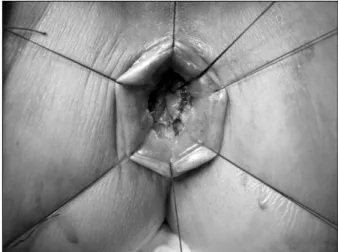
Fig. 1. Purse-string suture was done just above dentate line. Fig. 2. Circumferential incision was done at dentate line.
2) 수술 방법
환자는 쇄석앙와위에서 12 mmHg 압력으로 기복을 만들 고 환자를 머리 쪽과 오른쪽으로 기울이고 10 mm 투관침을 제대하방에, 5 mm 투관침을 우상복부 및 좌 하복부에 꽂고 치골 상부 정중선에 10 mm, 우 하복부에 12 mm 투관 침을 추가하였다. 하장간동맥을 기시부에서 절단하고 비장만곡 부 결장을 완전히 유리하고 전직장간막 절제술을 통하여 골반거근까지 직장을 박리하였다. 이때 회음부쪽에서 항문 을 통하여 암 하방, 치상선 직상방에 purse-string 봉합을 하 여 항문관을 막고(Fig. 1) 치상선에 환형의 절개를 가하여 (Fig. 2) 복부에서 시행한 박리면과 연결하여 직장을 완전히 절제 하였다. 제대부 창상을 약 4∼5 cm 연장하여 검체를 절제하고 근위부 결장의 말단 1 cm를 뒤집어 8곳에 4-0 chromic으로 결장의 장막에 고정하였다(Fig. 3). 밖으로 노 출된 결장 점막만을 제거하고(Fig. 3) 이 결장을 항문관으로 끌어내린 후 긴장이 없는 상태에서 약 12곳을 Gambee 방식 으로 3-0 PDS를 이용해 문합 하였다(Fig. 4).
결 과
남자가 7명, 여자가 3명 이었으며, 평균 나이는 61.5 (42∼
82)세이었다. 수술 시간은 평균 285 (215∼335)분이었으며,
수술 후 재원 기간은 평균 11.8 (9∼14)일이었다. 술 중 합병
증 및 개복 전환은 없었다. 술 후 합병증은 장마비, 배뇨장
애가 각각 1예씩 발생하였다. 종양의 항문연으로부터 거리
는 평균 3.7 (2.5∼5) cm이었으며, 종양의 크기는 장경이 평
균 3.8 (1.5∼6) cm, 단경이 평균 3.1 (1.5∼5) cm이었다. 조직
병리 검사상 TNM 병기는 1기가 5예, 3기가 3예, 4기가 2예
이었다. 4기 환자중 1예는 간전이 및 폐전이가 동반 되어
있어 모두 절제술을 시행하였고, 1예는 다발성 간전이로 원
발 종양만 절제하였다. 평균 18.9개월간의 추적 관찰 결과
TNM IIIC 환자에서 복막재발이, 간 및 폐전이로 동반절제
를 시행 받았던 환자에서 간 및 폐 재발이 발생하여 사망하
였으며, 다발성 간전이로 원발 종양만 절제하였던 환자가
Fig. 3. Proximal colon was everted
1 cm in length and sutured, of which mucosa was peeled off.Fig. 4. Colo-anal anastomosis was made by using 3-0 PDS in
Gambee fashion.사망하였다. 전화설문조사가 가능했던 7명의 환자들(술후 1년 6개월에서 2년 시점)의 배변기능 조사에서 배변횟수는 하루 평균 3.5 (1∼6)회였으며, 고형변에 대해 변실금을 호 소하는 환자는 없었고 액체변에 대한 변실금은 3명의 환자 에서 관찰되었다. Vaizey 등
10이 제안한 incontinence score는 평균 9.4 (6∼14, 0점: perfect continence, 24점: totally incontinence)점으로 나타났다.
고 찰
하부 직장암의 치료에 저위 전방 절제술과 결장 항문 문 합술은 항문 괄약근을 보존할 수 있는 좋은 수술 방법이지 만 잦은 문합부 누출, 지연 치유와 같은 합병증이나 변실금 과 같은 기능적 문제점이 있어 예방적 장루술이나 결장낭 (colonic pouch) 혹은 결장성형(coloplasty)과 같은 추가적 술 기가 필요하기도 하다.
결장 항문 문합술 후 문합부 누출의 빈도는 술자에 따라 다르지만 Heriot 등
11의 meta-analysis에 따르면 예방적 장루 술을 했음에도 불구하고 약 13.8%로 비교적 높게 나타났다.
이처럼 결장항문 문합술에서 문합부 누출이 빈번한 이유는 문합부가 항문 괄약근내에 위치하며 이 부위는 고압력 상 태로 창상부위에 혈행 장애가 생길 수 있으며, 장벽의 층-층 문합이 해부학적으로 어렵기 때문으로 생각된다. 그래서 저자들은 지속적으로 움직이는 고압력대에 위치한 문합 부 위의 조직 접합력을 높이기 위해 근위부 결장을 외번 후 중첩시켜 결장벽을 두껍게 만들었으며 결장벽의 평활근과 항문 괄약근 양측 점막간의 층-층 문합이 되게 Gambee 방 법으로 문합 하여 적은 예에서 초기 경험이지만 예방적 장 루술 없이 한 예의 문합부 누출도 발생하지 않는 좋은 결과 를 나타냈다.
또 다른 결장 항문 문합의 문제점인 술 후 배변기능의 장 애를 줄이기 위해 결장 J 낭-항문 문합술
2,3이나 측-단 문합 술
4,5혹은 결장 성형술
6-9을 사용하기도 한다. 이런 새로운 직장의 변저장 공간을 넓히기 위한 술식은 직선형 결장 항 문 문합술에 비하여 수술 후 배변 횟수 등의 기능유지에 호전을 가져올 수 있으나
12,13장기적으로 비교한 경우 양군 간에 큰 차이가 없다는 보고도 많다.
14-16최근 흥미롭게도 Vorobiev 등
17은 항문 괄약근간 직장절
제술을 시행한 후 근위부 결장의 말단부를 결장벽의 평활
근으로 나선형으로 둘러싸고 바로 직 상부에 C형의 결장낭
을 만들어 항문과 문합하여 항문 내괄약근이 없이도 우수
한 배변기능을 유지할 수 있었다고 보고하였다. 이 방법의
개념은 결장낭이 있는 것을 제외하고 저자들과 거의 흡사
하다. 그러나 저자들의 방법보다 술기가 까다롭고 결장 말
단부를 감싼 긴 평활근판에 어떻게 혈액 공급이 원할 할
수 있었는지 의문이 든다. 반면 저자들은 중첩 결장-항문
문합술 후 수개월까지 항문내 초음파로 중첩된 결장근이
온전하게 유지됨을 알 수 있었다(Fig. 5). 그러나 배변 기능
Fig. 5. Endoanal USG showes plicated colonic muscle ( ▶ ◀
: pli- cated colonic muscle width, postoperative 8 months).의 유지에는 큰 도움이 되지는 못하여 단순히 결장의 평활 근을 두껍게 하는 것이 항문 내괄약근의 기능을 대신 할 수는 없는 것으로 보여 결장낭 또는 결장 성형을 포함하는 새로운 술식을 구상 중이다.
환자들의 항문 괄약근 보존의 요구가 많아지는 시점에 복강경 수술의 도입은 좁은 골반강내에서 더욱 깨끗한 수 술 시야를 확보하여 골반거근 내부까지 박리가 용이하다는 장점으로 이 방법의 확대가 기대된다. 최근 아직까지는 동 물실험 수준이기는 하나 자연개구부를 통한 내시경수술 (NOTES, natural orifice transluminal endoscopic surgery)을 하 여 복부 창상이 없는 수술이 새로운 방법으로 떠오르고 있
는데,
18-20저위직장암 환자에서 복강경 수술과 항문을 통한
pull-through 술식은 복부 창상을 최소화 할 수 있어 이러한 경향에 부합된다. 그러나 무리하게 좁은 항문관을 통하여 당겨내면 암세포의 창상내 착상이 우려되어 저자들은 제대 부 투관침 부위를 4∼5 cm 확장하여 플라스틱 보호대를 통 하여 검체를 제거하고 결장의 길이를 충분히 확보 할 수 있게 결장간막의 디자인과 결장 말단의 중첩을 용이 하게 하였다.
결론적으로 저자들이 처음 기대한 배변기능의 향상에는 미치지 못하는 결과 이지만 예방적 장루가 없이도 문합부 를 봉합 할 수 있는 중첩 결장-항문 문합술은 선택된 환자 에서 안전하게 시행할 수 있는 수술 방법으로 사료되며 장 기간의 더 많은 예에서 연구가 이루어져야 하겠다.
참고문헌
1) Parks AG. Transanal technique in low rectal anastomosis. Proc R Soc Med 1972;65:975-976.
2) Lazorthes F, Fages P, Chiotasso P, Lemozy J, Bloom E. Resec- tion of the rectum with construction of a colonic reservoir and colo-anal anastomosis for carcinoma of the rectum. Br. J Surg
1986;73:136-138.
3) Parc R, Tiret E, Frileux P, Moszkowski E, Loygue J. Resection and colo-anal anastomosis with colonic reservoir for rectal carcinoma. Br J Surg 1986;73:139-141.
4) Adloff M, Arnaud JP, Beeharry S, Turbelin JM. Side-to-end anastomosis in low anterior resection with EEA stapler. Dis Colon Rectum 1980;23:456-458.
5) Machado M, Nygren J, Goldman S, Ljungqvist O. Similar out- come after colonic pouch and side-to-end anastomosis in low anterior resection for rectal cancer: a prospective randomized trial. Ann Surg 2003;238:214-220.
6) Fazio VW, Mantyh CR, Hull TL. Colonic <Coloplasty>
Novel technique to enhance low colorectal or coloanal anasto- mosis. Dis Colon Rectum 2000;43:1448-1450.
7) Mantyh CR, Hull TL, Fazio VW. Coloplasty in low colorectal anastomosis: manometric and functional comparison with straight and colonic J-pouch anastomosis. Dis Colon Rectum 2001;44:37-42.
8) Ho YH, Brown S, Heah SM, et al. Comparison of J-pouch anc colopalsty pouch for low rectal cancers; a randomized controlled trial investigating functional results and anastomotic leak rates. Ann Surg 2002;236:49-55.
9) Furst A, Suttner S, Agha A, Beham A, Jauch KW. Colonic J-pouch vs coloplasty following resection of distal rectal cancer: early results of prospective, randomized, pilot study.
Dis Colon Rectum 2003;46:1161-1166.
10) Vaizey CJ, Carapeti E, Cahill JA, Kamm MA. Prospective comparison of fecal incontinence grading systems. Gut 1999;
44:77-80.
11) Heriot AG, Tekkis PP, Constantinides V, et al. Meta-analysis of colonic reservoirs versus straight coloanal anastomosis after anterior resection. Br J Surg 2006;93:19-32.
12) Lazorthes F, Chiotasso P, Gamagami RA, et al. Late clinical outcome in a randomized prospective comparison of colonic J pouch and straight coloanal anastomosis. Br J Surg 1997;
84:1449-1451.
13) Seow-Choen F, Goh HS. Prospective randomized trial com- paring J colonic pouch-anal anastomosis and straight coloanal reconstruction. Br J Surg 1995;82:608-610.
14) Hallböök O, Pahlman L, Krog M, et al. Randomized com- parison of straight and colonic J pouch anastomosis after lower anterior resection. Ann Surg 1996;224:58-65.
15) Ho YH, Seow-Choen F, Tan M. Colonic J-pouch function at six months versus straight coloanal anastomosis at two years:
randomized controlled trial. World J Surg 2001;25:876-881.
16) Lazorthes F, Chiotasso P, Gamagami RA, et al. Late clinical outcome in a randomized prospective comparison of colonic J pouch and straight coloanal anastomosis. Br J Surg 1997;84:
1449-1451.
17) Vorobiev GI, Odaryuk TS, Tsarkov PV, Talalakin AI, Rybakov EG. Resection of the rectum and total excision of the internal anal sphincter with smooth muscle plasty and colonic pouch
for treatment of ultralow rectal carcinoma. Br J Surg 2004;
91:1503-1512.
18) Kalloo AN, Singh V, Jagannath SB, et al. Flexible transgastric peritoneoscopy: a novel approach to diagnostic and therapeutic interventions in the peritoneal cavity. Gastrointest Endosc 2004;60:114-117.
19) Jagannath SB, Kantsevoy SV, Vaughn CA, et al. Peroral trans-
gastric endoscopic ligation of fallopian tubes with long-term survival in a porcine model. Gastrointest Endosc 2005;61:
449-453.
20) Wagh MS, Merrifield BF, Thompson CC. Endoscopic trans- gastric abdominal exploration and organ resection: initial experience on a porcine model. Clin Gastroenterol Hepatol 2005;3:892-896.