• 검색 결과가 없습니다.

A Study on The Effect of Consulting Service Quality on Consulting Repurchase Intention

N/A
N/A
Protected

Academic year: 2021

Share "A Study on The Effect of Consulting Service Quality on Consulting Repurchase Intention"

Copied!
14
0
0

로드 중.... (전체 텍스트 보기)

전체 글

(1)

This research was financially supported by Hansung university in 2017.

*Corresponding Author : Sang-Bong Kim([email protected]) Received February 28, 2018

Accepted April 20, 2018

Revised April 2, 2018 Published April 28, 2018

A Study on The Effect of Consulting Service Quality on Consulting Repurchase Intention

Yang-Woo Lee

1

, Sang-Bong Kim

2*

, Woo-Hyong Hong

3

1

Dept of Smart Convergence Consulting, Hansung University

2

Dept of Economics, Hansung University

컨설팅 서비스 품질이 컨설팅 재 구매의도에 미치는 영향에 관한 연구

이양우1, 김상봉2*, 홍우형2

1
한성대학교 스마트융합컨설팅학과,

2

한성대학교 경제학과

Abstract The consulting company conducts consulting for the purpose of repurchasing consulting and the intention of repurchase according to the consulting quality appears in the small and medium enterprises which received the consulting service. The purpose of this study is to find out the difference of consulting service quality according to the degree of correspondence. As a result of the questionnaire and statistical analysis for consulting SMEs, it was confirmed that the quality of consulting service affects the intention of repurching consulting, Research shows that even though consulting service quality is high, it does not lead to re-purchase unless it responds appropriately to changes in the environment. In other words, in order to enhance service responsiveness, consulting firm should be able to monitor the market information that changes with service quality and build a response system to respond quickly. However, to generalize it, In order to increase the consulting repurchase intention, further research is needed to supplement the responsiveness of the consulting service in connection with the quality of the consulting service.

Key Words : Consulting, Consulting Service Quality, the level of consulting responsiveness, Consulting satisfaction, intention to repurchase

요 약 컨설팅사는 컨설팅 재구매를 목적으로 컨설팅을 수행하고, 컨설팅 수진 중소기업에서는 컨설팅 품질에 따라 재구 매 의도가 발생하는데, 본 연구는 컨설팅서비스품질에 따른 대응정도에 어떤 차이를 보이는지에 대하여 연구 하였다. 컨설 팅 수진 중소기업 대상으로 설문 및 통계분석을 실시한 결과 컨설팅 서비스품질이 컨설팅 재 구매 의도에 영향을 미치고, 컨설팅 서비스대응성도 높아야 재 구매 의도가 발생을 확인하였다. 연구결과 컨설팅 서비스 품질이 높다 하더라도 환경변 화에 따라 시의 적절하게 대응하지 않는다면 재 구매 발생이 어려움을 확인할 수 있었다. 즉 컨설팅사는 서비스대응성 강화 를 위해 서비스 품질과 함께 변화하는 시장정보를 모니터링과 신속 대응시스템을 구축하여야 함을 확인할 수 있었으나, 이를 일반화 하기 에는 데이터 및 시간의 제약으로 연구의 부족함이 있으며, 컨설팅 재구매의도 증가위한 컨설팅서비스품 질과 연계된 컨설팅 서비스 대응성 요인을 보완하는 연구가 필요하다.

주제어 : 컨설팅, 서비스 품질, 컨설팅 대응성, 컨설팅 만족, 재 구매 의도

(2)

1. Introduction

The most of the small medium businesses are small scaled and often have the sales dependent on the big corporation’s production activity. Especially in tough economic times, the survival of the small medium business is difficult. However, the importance of the small medium businesses is critical in the structural nature of Korean economy system, because the small medium businesses provide the job markets and the foundation for the working people. Besides, the small medium businesses have been facing the difficult situations in response to the inflation and the increased labor costs, by losing full time employees to and increasing the workloads of the employees.

According to the National Statistical Office’s (2014) number of the businesses counted by the size, out of the total 3,812,820 businesses, 3,099,823 businesses have less than 5 employees, 667,116 businesses have 5 to 49 employees, 42,425 businesses have 50 to 299 employees, 2,899 businesses have 300 to 999 employees, and 557 businesses have more than 1,000 employees, that the 99.91% of the total 3,809,364 businesses is comprised of small medium businesses, and 81.3% is a small business size with less than 5 employees, indicating the evolution of the business environment that the growth of the small sized small medium businesses is becoming the measurement standard for the national growth.[1] The large number of small scale business (having 1 to 4 employees) may indicate a large number of consulting market. Because the employees including the representative are limited to focusing on the sales increase, the consulting service is becoming more critical to prepare for the rapidly changing external environment. In such business environment, the service quality of the consulting is very important. The service quality of a consultant is relevant to the consultant’s competency that the quality of the consultant is considered a very important factor of a business environment.

In consulting, the service quality of a consulting firm

or a consultant and the will power of the client’s to utilize the consulting results are the main factors to bring a successful result, and more efforts of the consultants and the consulting firms are continuously required to develop an appropriate custom consulting process to increase the customer’s satisfaction and to enhance the management performance of the client.

J. H. Lee (2012) argued about the decision factors of a consulting quality that there are Gronroos concept, Parasuraman concept, SERVQUAL model, SERVPERF model, and KS-SQI model to specify a service quality into a technical quality and a functional quality, and defines the PZB’s 5 decision factors as tangibility, reliability, responsiveness, assurance, and empathy[2].

From the studies of the effect of a service quality on the consulting satisfaction and the repurchase intention, there was a question about whether the repurchase intentions were genuinely carried out without the other factors. To find a solution to the question, this study investigated whether the effect of a responsiveness of a client has brought a change to the repurchase intention of a client, and if a change has made, which case accomplished the repurchase intention.

Through the literary and empirical methods, domestic and international doctor’s dissertations and scholastic research papers were collected and analyzed to explore the concepts, the components, the measurement variances and the types, the theories, and the study models of the service quality and the repurchase intention of a consulting service, and reconstructed a new study model using the operational definition reflecting the author’s experience and the opinion.

Based on the proven theories of the previous studies, a study model was set and the hypotheses were tested.

To empirically analyze the study model, the effect of a

service quality on the repurchase intention was

verified, and the structural equation program was used

to test the hypothesis on the effect of the

responsiveness of consulting service on the repurchase

intention.

(3)

The specific details of the test are as follows.

In order to verify the effect of a consulting service quality on the consulting repurchase intention, in correlation to the responsiveness of a consulting service in a mediating effect, the survey was reconstructed using the precedent studies to measure the effect.

2. Related Works

2.1 Theory on the Small Medium Enterprise C. G. Kim (2005) said that a small medium business (SME) as a business smaller than the large corporation, that usually is defined by the quality standards of the number of full-time employees, the capital, the total sales, the total reserve, the inseparability of possession and the management, the pre-modernism characteristics, and the difficult financings[3].

The quantitative standards of a small medium business on the Fundamental Act of Small Medium Enterprise (Jan. 27, 2016, No. 13677) is applied for the commercial business and the nonprofit businesses, and must fulfill the criteria on the size and the independence standards to be considered as a small medium business[4]. In case of a business being a subsidiary of a large corporation or if the total affiliated subsidiaries exceeds the small medium enterprise standards, the business is not considered as a small medium business.

The small medium business size standards is an external evaluation standard criteria of a business, and the annual turnover and the total reserve must fulfill the industrial classification standards and the upper limit reference. The average sales of the main industrial classification must meet the standards to be considered as a small medium enterprise.

The types of a SME industry with an average turnover of 150 billion wons or lower include the apparels, apparel accessories and fur product manufacturers (C14), leather, bag, and shoes

manufactures (C15), pulp, paper, and paper goods manufacturers (C17), primary steel manufacturers (C24), electrical equipment manufacturers (C28), furniture manufacturers (C32), and et cetera.

The types of a SME industry with an annual turnover of 100 billion wons or lower include agriculture, forestry, and fishery (A), mining industry (B), grocery manufacturers (C10), tobacco manufacturers (C12), textiles goods manufacturers (except the apparels manufacturers) (C13), lumber and wood products manufacturers (except the furniture manufacturers) (C16), cokes, coals, and petroleum products manufacturers (C19), chemicals and chemical substances manufacturers (except the pharmaceutical manufacturers) (C20), rubber products and plastic products manufacturers (C22), metal products manufacturers (except the equipment or furniture manufacturers)(C25), electronic components, computers, motion pictures, sound recording, and telecommu- nications manufacturers (C26), other machinery and equipment manufactures (C29), automobiles and trailer manufacturers (C30), other transportation equipment manufacturers (C31), electricity, gas, power, and water industry (D), construction industry (F), and wholesales and retails (G).

The types of a SME industry with 80 billion wons

or lower include beverage manufacturers (C11), press

and printing and copy services (C18), medical materials

and medical supplies manufacturers (C21), nonmetal

mineral products manufacturers (C23), medical,

precision, optical instrument and watch manufacturers

(C27), the others manufacturers (C33), sewage and

wastewater treatment, recycling, and ecological

restoration industry (E), transportations (F)

publications, motion pictures, broadcasting, and

information services (J); and the types of a SME

industry with an annual of 60 billion wons or below

include specialty, science and technology services (M),

facility management and business support services (N),

health and social welfare services (Q), arts, sports, and

leisure services (R), and repairs and other personal

(4)

services (S).

The types of a SME industry with 40 billion wons or lower include lodgings and restaurants (I), finances and insurances (K), real estates and leasing services (L), education services (P).

Consulting is a serviced performed by a consultant, and the most of the demand occurs in providing a service that a business can reach a goal in determining the problems and the difficulties by a diagnosis and an investigation. Generally, the case of a small medium business is on the management, and a management consultant performs the consulting.

2.2 Theory on the Management Consulting The International Labor Organization (Stellman, J.

M. (Ed.).1998)[5]. defined a management consulting as an independent professional advice service that helps reaching a goal of an executive or an organization by solving the management and business problems, discovering the new opportunities to expand the learning opportunities, and executing the changes[5].

Also, the International Council of Management Consulting Institutes (ICMCI) defined a consultant as a person who gives an advice and an assistance independent from the management matters of a client with management responsibilities.

Among the domestic researchers, K. Y. Kim et. al., (2007) defined the management consulting as a professional advice service from the people with professional knowledge and experiences to support reaching a goal an organization pursues by investigating and analyzing the problems in an objective and independent perspective and promptly executing the suggested solutions[6]. and, K. C. Kwon (2010) said that a management consulting is a performance with a sufficient qualification to actively diagnose, investigate, and search for a solution to the client’s management problem through an objective and independent evaluation. Also, the consulting, as well as the other service industries, requires a strong customer-based service spirit in the relationship of a

client[7]. In order to maximize the utilization of a consulting result, a consultant requires a professionalism and ethics to secure the confidentiality, by fully understanding the client’s problem and putting the best efforts to satisfy the client; and, the client ethics is critical criteria of a consultant.

According to the Small Medium Business Technology Information Promotion Association (2011), characteristics of a consulting are categorized into the professionalism, the business value, the customer orientedness, the continuity, and the environmental responsiveness[8]. The professionalism is a problem solving ability and the key factor that determines the validity and the confidence, the business value is that it should have a product value as a professional service, the customer orientedness means the customer oriented service spirit and the ethics, continuity means creating a management result in connection to the follow-up management, and environmental responsiveness means the service responding to the evolving business conditions.

According to the Small Medium Business Administration’s Consulting Industry White Paper (2008), the consulting service is divided by the categories of the professional service that diagnoses the cause of a problem and searches for a solution through many years of studies and rich experiences, the advice service that it is an advice itself without a direct responsibility on the result, the independent service that independently delivers the results irrelevant to the relationship with the client, and transient service that the consulting tasks are performed in a temporary manner and receives the pay when the service competes.[9]

J. I. Kim (2015) categorized the types of management

consulting into the 5 categories of Strategy Consulting,

which is a strategy advice or executive consulting area

that associates with the business strategy, the public

sector strategy, M&A, the structure strategy, and

functional strategy, the Management Consulting, the

advice or execution service that improves the value

(5)

chain of an organization, comprised of the entire organization, the functional business process, management system, and the execution of a strategy in the factors of a cultural value chain; the Advice Consulting based on the financial analysis skills; the Personnel Consulting, which includes consulting the organization’s human resources and the advices and the strategies of the management of the human resources department, covering the key areas of the structure change, the talent managements, the personnel function, the benefits and the compensations, learning and education including the human resources strategy, compensations and benefit system construction and arrangement, and the personnel reformation; and IT Consulting, which is also called a technical consulting, that assists a client to reach an ideal business goal by showing how to utilize the information technology, and has subdivisions of advice service and introduction service, which the introduction service dominates, and the consulting service markets of process automation, digital risk management, system introduction, and IT business security are divided into 6 main parts of the IT consulting: IT advice, ERP service, data analysis, software management, system consolidation, and business planning[10].

I. S. Kim (2010) argued that the small medium enterprise is the main subject of the higher economic growth factor due to the high dependency of the SME’s national economy[11]. Because the SMEs are vulnerable in structure, have low funding power, and experience the difficulties in the labor force deficiencies in comparison to the large corporations; a new strategy to maintain the management of the SMEs is required.

Also, because there is a problem in the administration innovations, i.e., productivity increase, an improvement is needed, and the SMEs show the inferiority to the information, network, resource, market, and brand.

SME as a consulting client, the need of consulting is increasing in order to support the SME’s reform inducement and maintenance development.

2.3 Theory on the Consulting Services

In order to deliver a successful consulting result, the consultant’s competency is important. Rynning (1992) defined the consultant’s competency as an ability required to bring a successful consulting, which includes the strategy planning ability to analyze and solve a problem, project ability, and the ability to plan and manage a schedule in a limited resources of time and cost[12]. D. I. Jang (2011) divided the consultant’s competency into the ability and the attitude, and studied the effect on the consulting service quality to verify that the ability of the consultant’s competency shows a significant influence on the service quality[13].

Y. S. Choi (2012) divided the consultant’s competency into the ability, sincerity, and consideration, and showed that there is a significant correlation between consulting service confident, ability, and sincerity[14].

Therefore, the consultant’s competency is a critical factor of the service quality.

In performance of the consulting, the attitude serves a critical role in the service. Y. I. Jo (2011) said that the service is generally used in contrast to a tangible product or goods[15]. The service has many types and the heterogeneous factors even in the same service industry, and new services are still developed as the industry civilization and science and technology develops. Since the 1970s, there had been many studies on the service quality, Gronroos (1978) defined the service quality as “the comparison between the client’s perceived service and the expectancy”, and hypothesized that the service quality is composed of result quality and process quality, and demonstrated that the result quality is a technical quality that is a quality received from the results, and that the process quality is a functional quality that is a quality delivered in the process[16]. In order for a business to manage the service quality, a measurement scale was needed.

Parasuraman, Zeithaml, and Berry (1988) used Churchill’s (1979) paradigm to develop a service quality scale, SERVQUAL, of 22 subdivisions of 5 dimensions.

Besides that, there is also Gronroos’s quality

(6)

enhancement standard model, SERVPERF[17-18].

SERVQUAL model’s modification is represented as, Q (perceived service quality)=P(perception on the service quality)-E(expectancy in the service quality).

Out of 10 measurement resources, SERVQUAL model divides ability, manner, credibility, and assurance as reliability, and organized the measurement dimensions into 5 categories of tangibility, reliability, responsiveness, assurance, and empathy. Gronroos summarized the precedent studies, and organized the 6 service quality factors as professionalism and technique, attitude and behavior, approachability and flexibility, reliability and trust, service restoration, and reputation and credibility[16]. SERVPERF model was developed by Cronin and Taylor (1992), and it is a model that views service quality same as the performance[19]. It pointed out that the expectancy measurement in SERVQUAL model is unnecessary, and SERVQUAL’s perception measurement can sufficiently measure the service quality. Korean Standards Association and Seoul University Management Lab, reflecting Korea’s service industry and customer traits, which is a total index of customer satisfaction on the service industry in general, developed KS-SQI model. KS-SQI model divides service quality as the performance and the process, and evaluated the primary need satisfactory, unexpected benefits, fulfillment of the promise, and creative service on the performance side, and customer response, confidence, ease of approach, and physical environment on the process side, in Likert’s 7 point scale.

2.4 Theory on the Consulting Repurchase Intention

The purchase intention means the customer’s planned future behavior and the probability of taking the belief and attitude to an act. By the dictionary definition, the repurchase intention is “an emotional state of a customer to repeat the consumption after experiencing a product or a performance of a service”.

Y.j.Cho & S.H. Lee (2011) said that professionalism

and utilization except reliability have a positive effect on repurchase intention.[20], S. H. Kim, S. M. Choi, and S. M. Kwon (2009) verified that the customer satisfaction has a positive effect on the repurchase intention and recommendation intention[21]. Thus, the repurchase intention is determined by the client’s evaluation on the service performance the client experiences. Bearden and Teel (1983) verified that the dissatisfaction influences the attitude and the repurchase intention[22], Woodside (1989) verified that the performance factor of each task has an effect on the general customer satisfaction and that the general customer satisfaction has an effect on the action intention[23], and J. Y. Kim (2005) verified that the repurchase intention increases as the evaluation of a product or a service gets better, and the vice versa[24].

Cronin & Taylor (1992), in the empirical studies of the service quality and customer satisfaction on the repurchase intention, verified that the service quality factors positively affect customer satisfaction, and that the customer satisfaction positively affects the repurchase intention[19].

2.5 Theory on the Consulting Responsiveness Stivers (1994) defined the responsiveness as the quality of appropriately or kindly responding or quickly corresponding[25], J. H. Yoo (1982) said that the responsiveness in the administration has the meaning of answering or responding. Generally responsiveness is discussed in the relationship with other party, and the concept of responsiveness may vary by the scholars[26]. Saltztein (1985: 284-259) describes the responsiveness in the elements of “to whom”, “to what”, and “in what form”[27]. Hwan-bum Lee (1996:135-136) defined the responsiveness as a quality enhancing the customer satisfaction by quickly and appropriately responding to the customer’s need[28].

This is defined as the responsiveness, one of the 5

decision factors of a service quality in PZB, which is an

immediate service offer and an attitude and an

voluntary action to help the customer.

(7)

2.6 Differentiation from the Precedent Studies In previous studies on consulting services, the PM consultant, CEO, consultant service quality, or consultant capacity were measured as independent variables for the quality of consulting service. In this study, The purpose of this study is to analyze whether the researchers have a significant influence on the intention of repurchase of consulting services.

The consulting service response to SMEs is largely dependent on the human services of consulting company, and the importance of consulting service consulting service support system for inducing repurchase of consulting is increasing.

 The purpose of this study is to verify the correlation between consulting service quality and consulting repurchase intention by setting consulting firm 's service responsiveness as control variable through manipulative definition. This is a distinctive feature of this study and other prior studies.

3. Research Model and hyoptheses

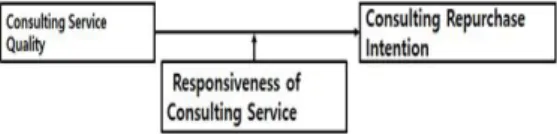
The purpose of this study is to investigate the effect of consulting service intention on consultant repurchase intention according to the quality of consulting service.

The endogenous variables of the consulting service quality proposed in this research model are set as follows: performance schedule in the reliability field, problem solving ability in the field of leadership, assurance, expertise in the field, leadership in the field of typology, I intend to be consulted on purpose. We set the consulting service correspondence as a moderator variable

Fig. 1. Structural Model

3.1 Research Hypotheses

3.1.1 Relationship between Consulting Service Quality and Consulting Repurchase Intention

results of this study are as follows. First, Cronin &

Taylor (1992) found that service quality factors have a positive effect on customer satisfaction in an empirical study that examines the effect of service quality and customer satisfaction on purchase intention[19].

ustomer Satisfaction has a positive effect on purchase intention,

In the study of the effect of quality of management consulting process on management performance, Lee Chang-hwan (2014) showed that process quality factor is the degree of responsibility, level of dignity of employee, level of employee response, suitability of methodology and tools, clarity of goal,Experience, and adherence to the schedule[29].

Ji-Hyun (2015) defined reliability, tangibility, empathy, responsiveness, and assurance as independent variables in the effects of consulting service quality and consulting outcomes on consulting repurchase intention. , Communication tool type, customer leader ability, and rapid service response were defined as sub-variables

In the relationship between consulting service quality and repurchase intention, it was verified that there is a dual part mediation effect of consulting satisfaction and consulting utilization.

The effect of consulting service quality of consulting

service quality on consulting service satisfaction and

repurchase intention of Park, Soon-ok (2015) is based

on reliability, confidentiality, tangibility, empathy,

Professionalism, consulting techniques, consideration,

prompt response and related help set consultation

satisfaction and repurchase intention The analysis of

the flavor responsiveness, empathy gender, type of

castle was verified that the diffusible, in order to

reliable quality consulting services, with the result that

a higher influence on the relative importance of

consulting experience and repurchase[30].

(8)

Kim Jung-yeol (2005) suggests that repurchase intention increases if product and service evaluation are good, and decreases if repurchase intention is bad[24]

Based on the results of the study, which shows that the quality of consulting service quality varies depending on the researchers, the quality of the consulting service influences the repurchase intention.

This study is based on the reliability, The results of this study are as follows. First, the hypothesis 1, 2, 3, 4 was set as follows

H1. The compliance of a time limit will show a significant effect on intention to receive a consulting.

H2. The leadership will show a significant effect on intention to receive a consulting.

H3. The problem solving skills will show a significant effect on intention to receive a consulting.

H4. The relevant professional knowledge skills will show a significant effect on intention to receive a consulting.

3.1.2 Consulting service quality and consulting service influence on the impact on repurchase intention

In a previous study of responsiveness, Stivers (1994) reported that responding or reacting quickly and appropriately or favorably[24]. Lee Ji-yeon (2009) found that, as a dependent variable, We analyzed the acceptance, expeditiousness, and response methods of the Gyeongnam Provincial Office of Education as a sub-variable in order to verify the aggressiveness of responding to complaints and the need for a repetitive system of responding to complaints[31]. In addition, the SERVQUEL model is defined as a willingness to provide customers with responsiveness and immediate service, while the KS-SQI model is classified as customer response.

In this study, the concept of administrative responsiveness of consulting firm to increase

consulting repurchase intention is set as a control variable, and the consulting service quality is set to affect the consulting repurchase intention, and the hypothesis 5 Respectively.

H5. The responsiveness of a consulting service will function as a mediating effect in the correlation of the effect of a consulting service quality on the repurchase intention of a consulting service.

3.2 Operational Definition of the Variables and the Survey Composition

In order to achieve the purpose of this study, the hypotheses were set, and operational definitions were given to the variables: the independent variables were set as consulting service quality, the dependent variable was set as a repurchase intention of a consulting service, the parameter was set as a responsiveness of a consulting service. For the variables of the consulting service quality in the independent variable, a paradigm of Parasuraman, Zeithaml, and Berry (1988) and Churchill (1979) was cited, and an operational definition was given to the 22 properties of the 5 dimensions using a service quality measurement tool, SERVQUAL, set the independent variables of the problem solving skills in the reliability, the compliance to the time limit in the assurance, the leadership in the empathy, and the relevant professional knowledge skills in tangibility [17-18]. Because the responsiveness to the consulting service, the parameter was defined as “an enhancement of a customer satisfaction through promptly and appropriately responding to the customer’s need” by H.

B, Lee (1996:135-136), the operational definition was set as “a will to help a customer immediately and to provide a prompt service”[28]. The dependent variable, the repurchase intention, used a definition of J. Y. Kim (2005), which is a tendency of a fluctuation in the intention of repurchasing by the degree of a product or service evaluation as the operational definition[24].

In the survey composition, each variable, excluding

the demographic statistics property and the consulting

experience, was measured in the Likert’s 5 point scale.

(9)

The survey method included all the independent variables, the dependent variables, the parameter, and the demographic statistical properties in a same survey questionnaire; and to analyze the studies models set based on the precedent studies, a survey was used in composition of 4 questions of consulting service quality, 1 yes or no question of responsiveness of consulting service, and 8 sections of demographic statistical properties (gender, work experience period, education level, number of employees, type of business, listing status, business scale, and experience of using a consulting service).

A measurement tool was constructed to verify the correlation of a participation of the consulted business to the impact on the repurchase intention, and the investigation target was set.

By setting a standard statistical sample group, which is needed in the empirical study, a sample was collected in a direct survey method, and the survey was performed on a random sample of 250 consulting client small medium businesses from July 10th, 2016 to July 30th, 2016. Out of a total, 220 samples collected, 216 samples (N=220, collection rate = 88%), excluding the 30 unusable samples, were used in the analysis.

The survey was performed as a self-report, and each question was asked in the Likert’s 5 point scale to keep a consistent statistical process.

Through the operational definition of the variables and the verification of the precedent studies, the validity test was performed to measure the validity of the sample group’s responses in each category. KMO and Bartlett’s implementation test results with the values of KMO=.864 and p=.000 showed that the variable selections for the validity test were good; the commonality showed a minimum of .617 and a maximum of .894, the explained total variances were 2 factors, 2 extracted initial eigenvalues were each 60.089 and 19,836, and the explanation power had an initial eigenvalues of 41.429 and 38.496 with a cumulative percentage of 79.925%. In the rotated sum of squares loadings, the total cumulative percentage of 79.925%

had an equal value before the rotation.

To verify the confidence, a Cronbach’s α confidence test was performed. The confidence is verified if the confidence coefficient is .600 or higher; the Cronbach’s α on the consulting service quality was 0.893, the Cronbach’s α on the compliance of the time limit was 0.906, the Cronbach’s α on the problem solving skills was 0.845, and the Cronbach’s α on the professional knowledge was 0.836, and showed a high confidence.

In the property of the demographic statistics, the gender showed 91.40% (201 people) of male and 19.0%

(19 people) of female, and the work experience period showed 31.80% (70 people) of 10 or less years, 35.5%

(78 people) of 11 to 20 years, and 32.7% (72 people) of 21 or more years. The education level showed 32.7%

(72 people) of master’s degree, 31.4% (69 people) of bachelor’s degree, and 35.9% (79 people) of others. The number of employees showed 34.1% (75 people) of 50 or less, 33.2% (73 people) of 51 to 100, and 32.7% (72 people) of 101 or more employees. The type of business consisted of 51.8% (114 people) of manufacturing services and 48.2% (106 people) of non-manufacturing services, and the listing status showed 51.8% (114 people) of listed and 48.2% (106 people) of unlisted company, and the business scale size had 30.50% (67 people) of annual turnover less than 5 billion won, 35.9% (79 people) of annual turnover less than 10 billion won, and 33.6% (74 people) of annual turnover greater than 10 billion won.

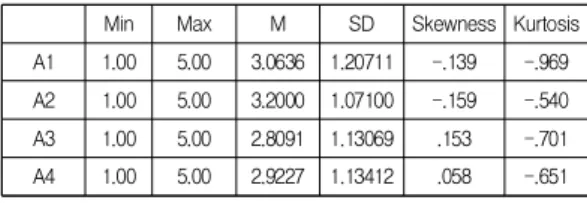
Table 1. Descriptive Statistics of Tools

  Min Max M SD Skewness Kurtosis

A1 1.00 5.00 3.0636 1.20711 -.139 -.969 A2 1.00 5.00 3.2000 1.07100 -.159 -.540 A3 1.00 5.00 2.8091 1.13069 .153 -.701 A4 1.00 5.00 2.9227 1.13412 .058 -.651

4. Results and Discussion 4.1 Structural Equation Model

The structural equation model is a widely used

(10)

program, developed by James L. Arbuckle from Temple University, and it is a model often used in the structural equation model (SEM) analysis in social sciences due to the convenient graphic user environment and the user-based interface.

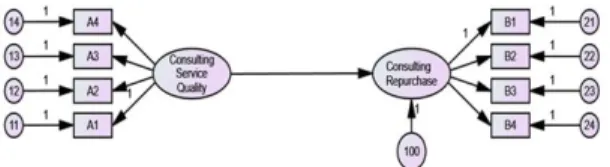
According to the 3 chapters of the study model, to fill in the structural equation model from AMOS, the following model (Figure 2) was made including the latent variables, measuring variables, the error terms of the endogenous latent variables (11-14), and the error terms of the measuring variables (21-24).

Fig. 2. Structural Equation Model

4.2 Validity of the Model

The factor analysis was performed to find the validity of the participation rate, and 4 factors were extracted. In the results of the factor analysis, the CR value of the compliance of the time limit was 6.447, the CR value of the leadership was 10.535, the CR value of the problem solving skills was 11.706, and the CR value of the professional knowledge was 11.889. In the results of the confidence test, the Cronbach' α of the compliance to the time limit was 0.906, the Cronbach' α of the leadership was 0.862, the Cronbach' α of the problem solving skills was 0.845, and the Cronbach' α of the professional knowledge was 0.836, and showed a high confidence.

Table 2. The Correlation Coefficient of the Model, AVE&CR

  A1 A2 A3 A4 C.R Cronbachα

A1 1.000       6.447 .906

A2 .619 1.000     10.535 .862

A3 .584 .699 1.000   11.706 .845

A4 .601 .731 .854 1.000 11.889 .836

The validity test of the study model showed as in the <Table 3>, the p values of each categories of compliance to the time limit, leadership, problem solving skills, and professional knowledge were all 0.05 or below, the χ

2

value was 54.615, the dfvalue was19,and TLI and CFI index values were 0.9 or higher, which retained that the validity test of the study model.

Table 3. Validity of the Study Model

Tool χ

2

df p Q CFI TLI RMSEA

RMSEA 90%Ci Study

Model 54.615 19 0 2.874 0.975 0.963 0.093 0.064~0.122

4.3 Common Method Bias

Common method bias divides the measurement method of a research construction. If the independent variables and the dependent variables were each measured in a different measurement method, the measuring method dispersion converges because the source of the response is independent. In this study, the X

2

and DF decrease in the uncontrolled variance and the controlled variance by the common method bias shows as follow in the[Table 4].

Table 4. Analysis of Common Method Bias

χ

2

DF △χ

2

△DF p

Uncontrolled variance by

Common Method Bias 54.615 19      

Controlled variance by Common

Method Bias 23.13 12 31.49 7 0.000

4.4 Test of Research Hypothesis

The hypothesis H1, “compliance to the time limit will make a significant effect on intention to receive a consulting” is true.

The hypothesis H2, “the leadership will show a significant effect on intention to receive a consulting” is true.

The hypothesis H3, “the problem solving skills will

show a significant effect on intention to receive a

(11)

consulting” is true.

The hypothesis H4, “the relevant professional knowledge skills will show a significant effect on intention to receive a consulting” is true.

The test results is shown in[Figure 3].

This study focused on the verification of the effect of a consulting service quality on the repurchase intention of a consulting service. About the influences of the repurchase intention, the consulting service quality was set as the object of this study, many concepts were verified by setting up the structural correlations between the theoretical and abstract properties of the latent variables, the model was quantitatively observed and measured, and the index test was performed through the structural equation model. The characteristics of the data and the correlations between the factors were figured out to analyze and conclude the influential factors illustrated in the [Table 5].

The hypothesis H1, “compliance to the time limit will make a significant effect on intention to receive a consulting” is true. The hypothesis H2, “the leadership will show a significant effect on intention to receive a consulting” is true. The hypothesis H3, “the problem solving skills will show a significant effect on intention to receive a consulting” is true. The hypothesis H4,

“the relevant professional knowledge skills will show a significant effect on intention to receive a consulting” is also true.

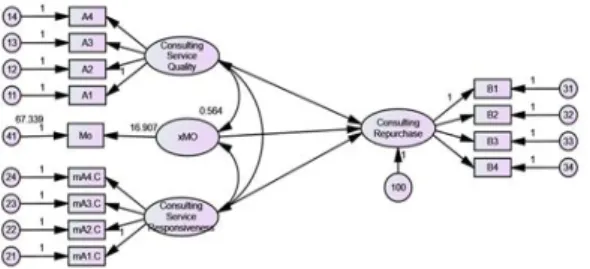
Fig. 3. Model of Common Method Bias

Table 5. Study Model Hypothesis Test

B SE β CR(t) p

H1 Compliance to the time limit

➡ Repurchase Intention 0.289 0.042 0.567 6.902 0.000 H2 Leadership

➡ Repurchase Intention 1.021 0.132 0.7 7.716 0.000 H3 Problem Solving Skills

➡ Repurchase Intention 1.156 0.14 0.786 8.26 0.000 H4 Professional Knowledge

➡ Repurchase Intention 1.184 0.141 0.816 8.42 0.000

4.5 Moderating Effect Test

Using the centralized arrangement, the hypothesis H5, “the correspondence of a consulting service will function as a mediating effect in the correlation of the effect of a consulting service quality on the repurchase intention of a consulting service”, was tested, the result showed that there is a moderating effect. The moderating effect test results are shown in the [Table 6].

Table 6. Moderating Effect Test Results

Tools B SE β CR(t) p

Consulting Service Quality

➡Responsiveness➡Repurch ase Intention

0.51 0.245 0.15 2.082 0.037

5. Conclusion

In this study, we construct a structural equation

model for the impact of consulting service quality on

consulting repurchase intention, summarize the criteria

for evaluating analytical procedures and model fit, and

analyze the effect of consulting service responsiveness

on consulting repurchase intention by empirical

analysis. We tried to find the optimum model by

analyzing the structural equations model for 216

companies. In order to select the optimal model, we

estimated the observed data to fit the set structural

equation model. The optimal parameter was selected

through the statistical test and the fitness index of the

(12)

individual parameter values. The structural equation model of this study has good overall fitness index , The effect of consulting service quality on the intention of repurchase of consulting service was influenced by the response to consulting service repurchase intention.

In order to enhance service responsiveness, the consulting firm should be able to monitor the market information that changes with the quality of service and build a response system to cope with it quickly.

In recent years, the government has been supporting SME consulting budgets every year to strengthen the competitiveness of SMEs.

In spite of the government's support for SME consulting, it is not easy for SMEs to effectively use the consulting support system of the government as a question of the consulting effectiveness of the consulting firm. The ability of the consultant has a positive effect on the quality of the consulting service If there are many consulting firms with high consultant capabilities like Shin Dong-Ju's research[32]

As the number of companies with fewer than five employees grows, small and medium-sized enterprises in the manufacturing industry are more likely to use consulting services.However, there are not many consulting companies that are able to respond to service quality that is effective in consulting services despite the need for consulting. Consulting company's consulting service responsiveness is increasingly needed to respond to corporate customers with a continuous and systematic system, not simple manpower and ad hoc.

With the recent development of IoT system, there is an environment in which the office needs to respond without visiting the company. Consulting firm's ability to cope with such environment is still very insufficient.

To meet the changed environment of the company that reflects the SME convergence capability of Kim Kyungil (2014)[33] and the decision making system using ICT of Park Ji-young (2018)[34]

The consulting industry needs to improve the quality of consulting services from human resource

center to platform service system, and the government should strengthen the government support to support the ecological environment of small and medium enterprises through the support of the consulting industry

The limitations of this study are summarized with the results of the above study.

The purpose of this study is to examine the impact of consulting service quality on the intention of consulting repurchase intention and the responsiveness of consulting service.

First, there are limitations in respondents who do not reflect the characteristics of the industry. If the characteristics of the industry of the survey are reflected, there is a limitation that the more accurate survey results can be derived

Second, it is necessary to set a range of service responsiveness through case study of consulting company 's service response system that supports consulting service quality.

In order to study the effect of consulting service quality on the repurchase intention, it is necessary to study the extent of service responsiveness considering the size of SME industry, size and consulting firm It is likely that more significant implications will be drawn

References

[1] National Statistical Office(2014). Survey of Number of Businesses. http://kosis.kr/index/index.do

[2] J. H. Lee. (2015). A Study on Influence of Consultation Service Quality to the Consulting Satisfaction Level and Intent of Repeated Utilization, Master’s Thesis, Hansung University, Seoul. 13-25.

[3] G. Kim et. al., (2005).Theory of Business, seoul:

Samyoung Press p.23.

[4] The Office of Legislation, SME Fundamental Law, Act 13677 (2016) http://www.law.go.kr/lsSc.do?menuId=0&

subMenu=1&query=%EC%A4%91%EC%86%8C%EA%

B8%B0%EC%97%85%EA%B8%B0%EB%B3%B8%EB%

B2%95#undefined

[5] J. M. Stellman. (Ed.). (1998). Encyclopaedia of

(13)

occupational health and safety. International Labour Organization..

[6] K. Y. Kim (2007). KS-SQI, NCSI, KCSI Evaluation Model’s Comparison Studies: Focused on the Correlation Effect of the Domestic Service Business’s Financial Performance, Kyunghee University, School of Management, Master’s Thesis.

[7] K. C. Kwon. (2010). An Effect of the Management Consulting Service Quality’s Structuring Factors on the Renewal and the Recommendation Intention,Soonshil University, Managements Master’s Thesis

[8] Small Medium Business Administration(2010). Analysis of Current Situation of the Consulting Industry and Vitalization Plan Studies, Small Medium Business Technology Information Promotion Institutes

[9] Small Medium Business Administration (2008). SMB Consulting Industry White Paper. Daejeon, SMBA [10] J. G. Kim(2015). A Study on the Effects of

Post-Management on Business Performance and Repurchasing Intention of Small and Medium Business Consulting Client Firms, Master’s Thesis, Hansung University, Seoul, 12-21

[11] I. S. Kim. (2010). Status and Development of Consulting Support Service for SMEs, Zeitschriftfu¨r Wirtschaftswissenschaften, 27(4), 41-67.

[12] Rynning, m.,(1992). Successful consulting with small and medium-sized vs large clients: meeting the client?, International Business Journal, 11(1), 47-60.

[13] D. I. Jang, K. H. Lee & S. H. Song. (2011). Research on How Consultant`s Capability and Competency Influence on Upgraded Service Quality and Customer Satisfaction:

Study Centered on Moderating Effect from Supportive Middle and Small Cooperations, Academy of customer satisfaction management, Vol.13 No.3 : 39-64 http://www.riss.kr/link?id=A60056749.

[14] Y. S. Choi. (2012). The Effect of the Consultant’s Competency on the Customer Satisfaction and the Repurchase Intention, Kum-o Engineering University, School of Management, Master’s degree thesis [15] Y. I. Jo. (2010),An Analysis of SME consulting Service

Quality and the Satisfaction Rate, Master’s Thesis, Hansung University, Seoul.

[16] C. Gronroos. (1984). A Service Quality Model and Its marketing Immplication, European journal of Marketing, 18(4), 30-54.

[17] A. Parasuraman, V, A. Zeithmal & L L. Berry. (1985). A Conceptual Model of Service Quality and Its Implications for Future Research, Journal of Marketing

49, Fall, 41-50.

[18] G. A. Churchill & C. Surprenant. (1982). An investigation into the determinants of customer satisfaction, Journal of Marketing Research, Vol.19(November), pp. 491-504.

[19] J. J. Cronin & S. A. Taylor. (1991). Measuring Service Quality: A Reexamination and Extension , Journal of Marketing, Vol56, July

[20] Y. J. Cho. (2011). A Study of the influence of Consutling Characterstics ease of use to the word-of-muth intention and repurchase intenion, Journal of Digital Convergence, 9(6), 207-216.

[21] S. H. Kim, S. M. Choi & S. M. Kwon. (2009). The Effect of the Hotel Restaurant’s Physical Perception of the Environment on the Emotion Response, the Customer Satisfaction, the Repurchase Intention, and the Recommendation Intention, Tourism Research」 Korea Academic Society of Tourism Management, 24(4), 81-99.

[22] Bearden, William O., and Jesse E. Teel. (1983). Selected determinants of consumer satisfaction and complaint reports. Journal of marketing Research : 21-28.

[23] A. G. Woodside, L. F. Lisa, & R. T. Daly. (1989).

Linking Sort/ice anlity, Customer Satisfaction, and Behavioral Intention. Journal of health care marketing 9.4: 5-17.

[24] J. Y. Kim. (2005). A Study on the Main Successful Factors of the Online Transactions, Korea Society of Computer Information Dissertation Collection, 10(3), 267-173

[25] C. Stivers. (1994). The Listening Bureaucrat:

Responsiveness in Public Administration. Public Administration Review, 54(4): 364-369.

[26] J. H. Yoo. (1982). Modern Public Administration , Seoul:

Parkyongsa.

[27] G. H. Saltzstein. (1992). Bureaucratic Responsiveness:

Conceptual Issues and Current Research.Journal of Public Administration and Research, 2(1): 63-88.

[28] H. B. Lee. (1996). Strategic Policy for Improving the Quality of Government Services.Public Policy Research, 14(1): 135-136

[29] C. H. Lee. (2014), Research on How Consulting Service Quality Influences on Business Performance, Master’s Thesis, Seokyung University, Seoul. 45-46.

[30] S. O. Park. (2014). Study on Consulting Service Quality influencing the Intent to Repeated Utilization, Master’s Thesis, Hansung University, Seoul, 32-62.

[31] J. Y. Lee. (2009). A Study for Raising Responsiveness in

Civil Affairs Administration, Changwon National.

(14)

University Doctoral Thesis, Seoul, 27-116.

[32] D. J. Shin. (2012). A Study of the impact of Consultant’s Companetenceies on Service Qualities and Performance of Consulting, Journal of Digital Convergence, 10(4), 63-78.

[33] K. I. Kim. (2014). A Study on the plan for Consilidating the IT Convergency Capabilities of SMB, Journal of Convergence for Information Technology, 4(3), 41-46.

[34] J. Y. Park. (2018). ICT Utilization for Optimization of SME Decision Making, Journal of Convergence for Information Technology, 8(1), 275-280.

이 양 우(Lee Yang Woo) [정회원]

▪1983년 2월 : 인천대학교 무역학 과(경영학사)

▪1989년 8월 : 국민대학교 경영대 학원 (경영학석사)

▪2015년 9월 ~ 현재 : 한성대학교 스마트융합컨설팅 박사과정

▪관심분야 : 경영컨설팅, 소상공인비즈모델, 소상공인정책

▪E-Mail : [email protected]

김 상 봉(Sang-Bong Kim) [정회원]

▪2008년 8월 : Texas A&M University(경제학 박사)

▪2009년 9월 ~ 현재 : 한성대학교 사회과학부 교수

▪관심분야 : 거시경제, 화폐금융, 행동경제, 국제금융

▪E-Mail : [email protected]

홍 우 형(Hong, Woo Hyung) [정회원]

▪2007년 2월 : 서강대학교 정치외 교학 & 경제학 (학사)

▪2009년 2월 : 서강대학교 경제학 과 (석사)

▪2015년 6월 : 미국 University of Washington 경제학과 (박사)

▪2015년 8월 ~ 2017년 2월 : 한국조세재정연구원 부연 구위원

▪2017년 3월 ~ 현재 : 한성대학교 경제학과 조교수

▪응용미시경제, 산업조직론, 재정학

▪E-Mail : [email protected]

수치

Fig.  1.  Structural  Model
Table  1.  Descriptive  Statistics  of  Tools
Table  2.  The  Correlation  Coefficient  of  the  Model,  AVE&amp;CR   A1 A2 A3 A4 C.R Cronbachα A1 1.000       6.447 .906 A2 .619 1.000     10.535 .862 A3 .584 .699 1.000   11.706 .845 A4 .601 .731 .854 1.000 11.889 .836
Table  6.  Moderating  Effect  Test  Results

참조

관련 문서

This research intends to examine and analyze the service quality effect on petrol buying intention through satisfaction when the Maranatha Christian University lecturers

First, service quality of mobile shopping mall makes a significant effect on repurchase intention, so it’s necessary to improve CS service system so as to

The effect of medical service quality and perceived risk on customer satisfaction, repurchase intention, and churn intention as to hospital sizes. New York:

The purpose of this study is to examine the effect of menu quality of cold noodle restaurants on customer satisfaction and repurchase intention. Eventually

The purpose of this study is to know the effect of Jeonju bibimbap specialty restaurants’ service quality on customer satisfaction and revisit intention..

Furthermore, we examine the relationships among service quality, customer loyalty, customer satisfaction and repurchase intention since online grocery shopping

These results show that the consulting firm's expertise has a significant effect on the consulting firm's management performance by mediating service quality, and it also

The present studies aimed to analyze on how the service capabilities of the ports affect the customer's trust, the customer's satisfaction and the