• 검색 결과가 없습니다.

Effects of isoflavone supplementation on the bone mineral density of growing female rats

N/A
N/A
Protected

Academic year: 2022

Share "Effects of isoflavone supplementation on the bone mineral density of growing female rats"

Copied!
6
0
0

로드 중.... (전체 텍스트 보기)

전체 글

(1)

Effects of isoflavone supplementation on the bone mineral density of growing female rats

Hyun-Ju Jo §1 and Mi-Ja Choi 2

1

Department of Medicinal Food & Health, World Cyber College, Gyeonggi 464-895, Korea

2

Department of Food and Nutrition, Keimyung University, Daegu 704-701, Korea

Received May 14, 2008; Revised June 9, 2008; Accepted June 13, 2008

Abstract

This study was focused on whether or not isoflavones affect the increase in bone mineral density of growing females. Female Sprague-Dawley rats (60 ± 5 g) were randomly assigned to two groups and provided control diets (control group) or isoflavone-supplemented diet (IF group, 57.8 mg isoflavones/100 g diet) for 9 weeks in growing female rats. Measurements of Bone Mineral Density (BMD) and Bone Mineral Content (BMC) on the experimental animals were executed in the 3

rd

, 6

th

, 9

th

weeks. In result, there was no significant difference in spine BMD between the isoflavones supplemented group and the control group. But, the IF group tended to have higher BMD than the control group in between 3 and 9 experimental weeks, and the striking difference could be shown in the 6

th

week of feeding. In case of femur BMD, the effects of added isoflavones appeared in the 6

th

week of feeding, and it became intensified in the 9

th

week of feeding to the extent that the BMD in the IF group was significantly higher than that of the control group (p<0.05). In conclusion, isoflavone supplementation increased spine BMD per weight in the 6

th

week of feeding, and affected the increase of femur BMD in the 9

th

week. The result of the experiment implies that it affects positively the formation of spine and femur BMD of growing female rats. The study also suggests that the effects of isoflavone on the pattern of BMD formation might differ from the parts of bones.

Key Words: Isoflavones, growing female rat, bone mineral density (BMD), bone mineral content (BMC)

Introduction 3)

Epidemiological studies suggest that the low incidence of osteoporosis and heart diseases caused by estrogen deficiency in Asian women is attributable to their high intake of soy foods, compared with American and Finnish women (Adlercreutz et al., 1992; Anderson et al., 1995; Brandi, 1997). It is reported that dietary soybean proteins prevent bone loss in ovariectomized (OVX) rats (Arjmandi et al., 1996). Possible candidates for the beneficial substances present in soybeans are isoflavones, such as genistein and daidzein (Ishimi et al., 1999). Isoflavones are estrogen-like substances structurally and functionally similar to 17 β-estradiol (Knight & Eden, 1996). On the basis of evidence primarily from animal and in vitro studies, isoflavones are thought to exert both estrogenic and antiestrogenic effects, depending on the tissue in which they act (Makela et al., 1994).

Isoflavones may exert a weak antagonistic effect on the estrogen receptor (Makela et al., 1994), thereby having an antiestrogenic effect on uterine and breast tissue (Santell et al., 1994), where excess estrogen may stimulate synthesis. Alternatively, isofl- avones may combine with the estrogen receptor, albeit with lower affinity than 17 β-estradiol (Miksicek, 1994), and stimulate

estrogen activity, thus having an estrogenic effect on bone (Makela et al., 1994) and blood vessels (Schonherr et al., 1997).

Recent studies (Eriksen et al., 1998; Oursler et al., 1991) have shown that phytoestrogen has a higher binding affinity to estrogen receptor-β than to estrogen receptor-α. It is suggested that the possibility of isoflavones having a tissue-selective effect is high, since isoflavones may function more selectively on such organs as the thyroid gland, bones and blood vessels, where estrogen receptor-β is highly dispersed (Kuiper et al., 1998 ).

Some in vitro studies have suggested that isoflavones may have anti-estrogenic effects and estrogenic effects at the same time (Jayagopal et al., 2002; Lees & Ginn, 1998). The studies report that isoflavones may not be good for growing and young women, for they would reduce the activation of endogenous estrogen (Jayagopal et al., 2002).

On the contrary, according to some recent studies, isoflavone intake in infancy through soy-based infant formulas may have positive effects in the long term, as it may prevent hormone- dependent diseases such as cancer, osteoporosis, cardiovascular diseases, etc. that can be developed in the latter part of adulthood (Setchel et al., 1998). Disputes over the theory still remain unsettled, though. There is no concrete result on whether or not

§

Corresponding Author: Hyun-Ju Jo, Tel. 82-31-529-0000, Fax. 82-31-726-3092, Email. [email protected]

(2)

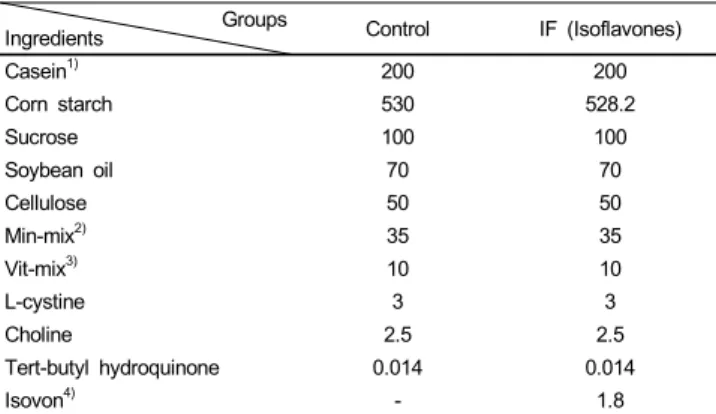
Table 1. Composition of experimental diets (g/kg of diet) Groups

Ingredients Control IF (Isoflavones)

Casein

1)

200 200

Corn starch 530 528.2

Sucrose 100 100

Soybean oil 70 70

Cellulose 50 50

Min-mix

2)

35 35

Vit-mix

3)

10 10

L-cystine 3 3

Choline 2.5 2.5

Tert-butyl hydroquinone 0.014 0.014

Isovon

4)

- 1.8

1)

Casein high protein (total protein 85%), Teklad Test Diets, Madison, Wisconsin, USA

2)

AIN-93G-MX, Teklad Test Diets, Madison, Wisconsin, USA

3)

AIN-93G-VM, Teklad Test Diets, Madison, Wisconsin, USA

4)

Isoflavones compound: Isovon (total isoflavones 32%), Pacific Chemical, Korea

Table 2. Effects of isoflavone supplementation on weight gains, mean food Intake and food intake efficiency ratio (FER) in growing female rats

Group Control IF p value

4)

Weight gains (g)

1)

156.4 ± 22.11

3)

159.4 ± 18.00 NS Mean food intake (g/day) 13.94 ± 0.72 13.62 ± 1.19 NS

FER

2)

0.18 ± 0.02 0.18 ± 0.01 NS

1)

Total body Weight gains for 9 weeks

2)

Food intake efficiency ratio (FER)

3)

Mean ± SD

4)

Value is based on t-test analysis, p<0.05.

the isoflavones found in soy protein cause a decline in bone density, or osteoporosis. There is little evidence of the mechanism, either. Since most previous studies on isoflavones focused on the features and effects of isoflavones that are similar to those of estrogen, the target of the experiments were pre- or post-menopausal women and ovariectomized animals.

It has been rarely studied if isoflavones have positive or negative effects on growing and young women. Whatever studies have been conducted has shown no significant results yet. The most important risk factor of the occurrence of osteoporosis is low peak bone mass and rapid rates of bone loss. As such, mitigation of the risk of fracture is dependent on an increase in the peak bone mass and thereafter, on minimization of bone loss.

This study was focused on whether or not isoflavones- supplementation affects the increase in bone mineral density of growing females. To examine the effects of isoflavones, we provided isoflavone which is extracted from soy for 9 weeks to growing female rats.

Materials and Methods

Experimental animals and diets

Female Sprague-Dawley rats (60 ± 5 g) were bought from KLEC (Korea Life Engineering Co., Seoul, Korea). Rats were fed stock diets (rat chow made by Samyangsa) for a week of adaptation period. Then, they were randomly divided into two experimental dietary groups, which included 12 rats each, and provided experimental diets for 9 weeks.

All experimental rats were individually housed in stainless steel wired cage in an air-conditioned room with controlled temp- erature (25 ± 2℃) and humidity (63 ± 5%) and automatic lighting (alternation 12-h period of light and dark). The experimental diet and deionized water were provided ad libitum.

The experimental groups were divided into control group and

isoflavone supplemented group (IF). The diets were formulated based on AIN-93G (Reeves et al., 1993). The two groups were based on same composition, but the diet of IF group was provided with isoflavones, extracted from soybean. The amount of isoflavone supplemented into experimental diet was 57.8 mg /100 g diet. The composition of experimental diets is shown in Table 1.

The analysis of the experiment

Measurement of the amount of dietary intake and the weight gains

During the experiment period, the amount of dietary intake was measured once every other day and the weight of experimental animals, once a week at a specific time.

Measurement of bone mineral density

Measurements of bone mineral density (BMD) and bone mineral content (BMC) on the experimental animals were executed in the 3

rd

, 6

th

, 9

th

weeks. After the rats received intramuscular injection (75 mg/kg) with ketamine hydrochloride (Yuhan Kimberly, 50 mg/ml), their BMD and BMC in their spine and femur were measured with PIXImus, which is specialized for small animal, and with Dual energy x-ray absorptiometry (DEXA) made by GE, LUNAR (Madison, WI, USA). The unit of BMC is gram (g), and that of BMD is gram per square centimeter (g/cm

2

).

Statistical analysis

Statistical analysis was conducted using the SAS program (Statisical Analysis System 9.13 version, SAS Institute Inc. Cary, NC). The mean and standard deviation were calculated for all the variables, statistical significance between the groups was tested by t-test. Differences were considerd significant at p<0.05.

Results

Effects on weight gains, mean food intake and food intake efficiency

Weight gains, mean food intake, and food intake efficiency

(3)

Table 3. Effects of isoflavone supplementation on spine bone mineral density (BMD) and bone mineral content (BMC) after 3, 6 and 9 weeks of feeding

Group Control IF P value

2)

Group Control IF P value

3 weeks Spine BMD (g/cm

2

) 0.0992 ± 0.0077

1)

0.0959 ± 0.0098 NS Spine BMD/wt (g/cm

2

/kg) 0.57 ± 0.03 0.59 ± 0.06 NS Spine BMC (g) 0.2107 ± 0.0284 0.2183 ± 0.0240 NS Spine BMC/wt (g/kg) 1.20 ± 0.22 1.40 ± 0.17 NS 6 weeks Spine BMD (g/cm

2

) 0.1247 ± 0.0105 0.1292 ± 0.0501 NS Spine BMD/wt (g/cm

2

/kg) 0.57 ± 0.01 0.62 ± 0.03 <0.05

Spine BMC (g) 0.3380 ± 0.0194 0.3510 ± 0.0395 NS Spine BMC/wt (g/kg) 1.56 ± 0.08 1.70 ± 0.17 NS 9 weeks Spin BMD (g/cm

2

) 0.1469 ± 0.0082 0.1481 ± 0.0101 NS Spine BMD/wt (g/cm

2

/kg) 0.61 ± 0.07 0.64 ± 0.05 NS Spin BMC (g) 0.4351 ± 0.0399 0.4516 ± 0.0380 NS Spine BMC/wt (g/kg) 1.84 ± 0.16 1.95 ± 0.16 NS

1)

Mean ± SD

2)

Value is based on t-test analysis, p<0.05.

Table 4. Effects of isoflavone supplementation on femur bone mineral density (BMD) and bone mineral content (BMC) after 3, 6 and 9 weeks of feeding

Group Control IF P value

2)

Group Control IF P value

3 weeks Femur BMD (g/cm

2

) 0.1336 ± 0.0078

1)

0.1307 ± 0.0083 NS Femur BMD/wt (g/cm

2

/kg) 0.76 ± 0.06 0.82 ± 0.06 NS Femur BMC (g) 0.1960 ± 0.0194 0.1906 ± 0.0168 NS Femur BMC/wt (g/kg) 1.21 ± 0.03 1.11 ± 0.11 <0.05 6 weeks Femur BMD (g/cm

2

) 0. 1791 ± 0.0095 0. 1812 ± 0.0062 NS Femur BMD/wt (g/cm

2

/kg) 0.83 ± 0.04 0.83 ± 0.04 NS

Femur BMC (g) 0.3031 ± 0.0126 0.2877 ± 0.0156 NS Femur BMC/wt (g/kg) 1.40 ± 0.10 1.38 ± 0.05 NS 9 weeks Femur BMD (g/cm

2

) 0.2004 ± 0.0085 0.2064 ± 0.0112

a

<0.05 Femur BMD/wt (g/cm

2

/kg) 0.82 ± 0.03 0.89 ± 0.07 <0.05

Femur BMC (g) 0.3607 ± 0.0258 0.3795 ± 0.0273 NS Femur BMC/wt (g/kg) 1.52 ± 0.12 1.64 ± 0.04 <0.05

1)

Mean ± SD

2)
Value is based on t-test analysis, p<0.05.

ratio (FER) observed for 9 weeks are shown in Table 2.

Supplements of isoflavones had no significant effects on weight gains, mean food intake, and FER.

Effects on bone mineral density

Spine BMD & BMC and Spine BMD & BMC per weight after 3, 6 and 9 weeks of feeding

After 3, 6 and 9 weeks of feeding experimental diets, the results of spine BMD, BMC, BMD per weight, and BMC per weight are shown in Table 3. There was no significant difference between control group and IF group in spine BMD and BMD per weight after 3 weeks of feeding. The results of BMC and BMC per weight were not significantly different between control and IF groups in the 3

th

week.

After 6 weeks of feeding, as spine BMD in control group was 0.1247 g/cm

2

, and IF group was 0.1292 g/cm

2

, there was no significant difference between the two groups. The amount of spine BMD increase was 0.0255 g/cm

2

in the control group and 0.0333 g/cm

2

in IF group between the 3

rd

and 6

th

weeks of feeding, showing that IF group showed 30.6% more increase than control group.

Spine BMD per weight in IF group (0.62 g/cm

2

/kg) was significantly higher than that in control group (0.57 g/cm

2

/kg).

The difference between groups was 8.8%, and it has significant meaning. This indicates much higher increase in IF group than in control group. Spine BMC between the two groups had no significant difference in the 6

th

week. The increase in spine BMC between 3

rd

week and 6

th

week was 0.1273 g in the control group and 0.1327 g in the IF group. Spine BMC per weight of IF group was 8.9% higher than control group in the 6

th

week, but it was not significantly different.

After 9 weeks of feeding, there was no significant difference

between control group (0.1469 g/cm

2

) and IF group (0.1481 g/cm

2

) in spine BMD. Spine BMC in the 9

th

week was 0.4351 g in control group and 0.4516 g in IF group respectively and the data showed no significant difference. In the 9

th

week, there was no significant difference between groups in BMD and BMC per weight, but IF group tended to have higher figures than control group.

Femur BMD & BMC and Spine BMD & BMC per weight after 3, 6 and 9 weeks of feeding

After 3, 6 and 9 weeks of feeding experimental diets, the results of femur BMD, BMC, BMD per weight and BMC per weight are shown in Table 4. After 3 weeks of feeding, femur BMD was 0.1336 g/cm

2

in control group and 0.1307 g/cm

2

in IF group respectively. It showed no significant difference. Femur BMC with adding isoflavone in the period indicated no difference as well. Femur BMD per weight after 3 weeks of feeding between groups showed no significant difference, but BMC per weight in IF group was significantly lower than that in control group.

After 6 weeks of feeding, femur BMD was not significantly different between control group (0.1791 g/cm

2

) and IF group (0.1812 g/cm

2

). However, the amount of growth on femur BMD growth was 0.0456 g/cm

2

in the control group and 0.0505 g/cm

2

in IF group between the 3

rd

and 6

th

weeks of feeding, showing that IF group had 10.7% more growth than control group. Femur BMC in the two groups indicated no significant difference in the 6

th

weeks of feeding. After 6 weeks of feeding, femur BMD per weight and femur BMC per weight in this period showed no significant difference.

Different from the results of the 3

rd

and 6

th

weeks, the femur

BMD of IF group was significantly higher than that of control

group after 9 weeks. Femur BMD per weight of IF group was

0.89 g/cm

2

/kg, which was significantly higher than that of control

(4)

group. Femur BMC measured after 9 weeks as well, in IF group had higher figures than control group, but there was no significant difference. Tendency of femur BMC in IF group was lower than that of control group in the 3

rd

and 6

th

weeks, but the former became higher than the latter in the 9

th

week. The amount of growth on femur BMC was 0.1647 g/cm

2

in the control group and 0.1889 g in IF group between the 3

rd

and 9

th

weeks of feeding, showing that IF group had 14.7% more increase than control group. In the 9

th

week of feeding, Femur BMC per weight of IF group was significantly higher than that in control group as well.

Discussion

In this study, isoflavones had no significant effects on weight gains, mean food intake, and FER. In previous studies (Choi &

Cho, 2003), both soy isolate and soy concentrate groups showed significantly lower in FER than casein group. This indicates that there is no difference in FER according to isoflavone intake groups but varies according to protein sources.

In this study, the spine BMD of control group showed 0.0992 g/cm

2

(3

rd

weeks), 0.1247 g/cm

2

(6

th

weeks), and 0.1469 g/cm

2

(9

th

weeks). The spine BMD in male rats of similar weeks of ages was reported 0.15 g/cm

2

in the study of Chae (2002). The result is much similar to that of this study, 0.1469 g/cm

2

. This study observed how and how much soy protein which contains high isoflavones and isoflavones itself affected spine BMD and BMC in the growing female rats. One of our findings are that the increased rate of spine BMD in the week of 3 to 6 was much higher than in the week of 6 to 9 after feeding.

Especially, spine BMD increase of the IF group in the week 3 to 6 (0.0302 g/ cm

2

) was 37.4% more than that in the week 6 to 9 (0.0189 g/cm

2

). In general, SD species white rats ovulate regularly after 8 weeks of age and secrete estrogen stably after 13 weeks of age. In regarding this, since the secretion of estrogen was relatively low in between the 3

rd

week of experiment (8~9 weeks of age) and the 6

th

week of experiment (11~12 weeks of age), the effects of isoflavones can be effective in spine that has more trabecula bone than femur. According to the previous study (Choi & Cho, 2003) that reported the effects of soy protein on the BMD of growing female rats by adding same amounts of isoflavones as in this study, the spine BMD in the isoflavones-supplemented group in the 3

rd

week of experiment was significantly higher than that of casein group. The result of the former group was significantly higher in the 6

th

week as well, but not statistically significant in the 9

th

week.

The pattern of increasing spine BMD is similar to the previous study that supplemented isoflavones-abundant soy protein, but the extent of the effects on spine BMD increase is not identical.

Isoflavones-abundant soy protein affected the increase of spine BMD than extracted isoflavones did, and the difference with the control group was bigger. Considering IF group affects spine BMD relatively weak, the isoflavones effect on spine BMD

seems not only by isoflavones itself.

Compared this study with previous animal studies on the level of BMD, which measured by PIXImus on male rats of similar weeks of ages in this study, the result of femur BMD was 0.23 g/cm

2

and BMC was 0.54 g (Chae, 2002). The level is somewhat higher than those of this study measured on female rats. Femur BMD and BMC measured by DEXA on male rats in 4 weeks of age were reported as 0.25-0.26 g/cm

2

and 0.37-0.49 g, respectively. Griffin et al. (1993) reported that the femur BMD of the SD species white rats in 2~8 weeks of age was 0.30~0.32 g/cm

2

. With regard to those results, BMD of the experimental animals mostly relies on the week of ages of the samples and the kinds of measurements.

The study observed periodically, classified by diet, the effects of isoflavones-abundant soy protein and isoflavones on femur BMD and BMC in growing age. The femur BMD in the 3

rd

and 6

th

week had no significant difference between the two groups.

In the 9

th

weeks of feeding, since the increase rate of femur BMD had become higher, IF group tended to have bigger femur BMD than other groups. However, the increase of BMD in IF group became much higher after 9 weeks of feeding, and the difference from control group becomes significant. between the 3

rd

and 9

th

weeks of feeding.

The growth patterns of spine BMD and femur BMD in the 9

th

weeks of feeding have some differences. While the difference between the two experimental groups in spine BMD was not significant, IF group in the 3

rd

and 9

th

weeks of feeding tended to have higher level, and the gap between the two groups was the biggest in the 6

th

week of feeding. In case of femur BMD, the effects of isoflavones supplementing appeared in the 6

th

weeks of feeding, and the effects was intensified in the 9

th

weeks of feeding to the extent that femur BMD in the IF group became significantly higher than that in the control group. As a result, the effects of isoflavones on BMD were different according to bone parts. The diet effects of the extracted isoflavones from soybean tend to come out earlier in spine that has more plentiful of trabecula bone than femur. Compared with cortical bone, trabecula bone has more active metabolism, so easily affected by metabolism (Pruitrt et al., 1992). Spine has more trabecula bone than cortical bone, while femur contains cortical bone more than 3 times than that of spine. That is why spine that has more trabecula bone is affected earlier than femur by isoflavones diet.

Similar result was reported in the previous study(Choi & Cho, 2003) that provided soy isolate with rich isoflavones for growing female rats as well. It is also similar to the changing patterns in spine and femur between the previous study and this study.

The effects of soy isoflavones diet are also changed according

to the period of diet intake. Previous epidemiological research

showed that current diet amount of soy isoflavones affects spine

BMD, but does not femoral neck and trochanter. On the other

hand, the whole life diet amount of it significantly affects femoral

neck, but not significantly affects spine, even though as diet

amounts increase as the spine BMD high. However, since the

(5)

study has reported that it does not affect trochanter, we can imply that same period of diet even its effects vary with regard to the bone parts (Rice, 1999).

Isoflavones’ effect of protecting bone on pre-menopausal women who have enough estrogen varies to authors. Ho et al who has studied Hong Kong-resident Chinese women reported that diets of soybean for pre-menopausal women in the age of 30~40 brought about significant effect on spine BMD.

Meanwhile, a massive size of epidemiological research on Chinese females in the age of 18~86 showed contrary results (Mei et al., 2001). The study reported that isoflavones diet affected BMD for post-menopausal women, but it had little to do with pre-menopausal women. Greendale et al. (2002) who studied Asian American women presented that genistein diets affected spine and femur BMD for pre-menopausal women, but no relevance to post-menopausal women.

Comparing with other study results might be difficult, since there are not much previous studies on growing female rats. But there are some relevant studies. Providing growing male rats with soy protein that contains isoflavones increased calcium efficiency on spine and femur BMD to a higher level than casein group (Jung, 1995). It is also reported that supplementing casein diet group of the growing male rats with isoflavones increases spine and femur BMD per weight level (Chae, 2002). It implies that soy protein or isoflavones should be beneficial to bone. A previous study (Choi & Cho, 2003) reported that isoflavones-rich soy protein should be beneficial to the formation of spine and femur BMD on growing female rats.

In summary, there was no significant difference in spine BMD between the IF group and the control group. But the IF group tended to have higher BMD than the control group in 6

th

week and 9

th

week of feeding and the striking difference could be shown in the 6

th

week of feeding. Spine BMD increase of the IF group in the week 3 to 6 after feeding was 37.4% more than that in the week 6 to 9 after feeding. In femur BMD, the effects of adding isoflavones appeared in the 6

th

week of feeding, and it became intensified in the 9

th

week of feeding to the extent that the BMD in the IF group was significantly higher than that of the control group (p<0.05).

In conclusion, isoflavone supplementation increased spine BMD per weight in the 6

th

week of feeding, and affected the increase of femur BMD in the 9

th

week. The result of the experiment implies that it affects positively the formation of spine and femur BMD of growing female rats. The study also can suggest that the effects of isoflavone on the pattern of BMD formation might differ from the parts of bones.

Literature cited

Adlercreutz H, Hamalainen E, Gorbach S & Goldin B (1992) Dietary phyto- oestrogens and the menopause in Japan. Lancet 339:1233.

Anderson JW, Johnstone BM & Cook-Newell ME (1995). Meta- analysis of the effects of soy protein intake on serum lipids. N

Engl J Med 333:276-282.

Arjmandi BH, Alekel L, Hollis BW, Amin D, Stacewicz-Sapuntzakis M, Guo P & Kukreja SC (1996). Dietary soybean protein prevents bone loss in an ovariectomized rat model of osteoporosis. J Nutr 126:161-167.

Brandi ML (1997). Natural and synthetic isoflavone in the prevention and treatment of chronic diseases. Calcif Tissue Int 61:S5-S8.

Chae JH (2002). The effect of isoflavones on bone mineral density and bone mineral content in growing male rats. Mater’s Thesis.

Keimyung University of Korea.

Choi MJ & Cho HJ (2003). Effects of soy protein and isoflavones on bone mineral density in growing female rats. The Korean Journal of Nutrition 36:359-367.

Eriksen EF, Colvard DS & Berg NJ (1998). Evidence of estrogen receptors in normal human osteoblast like cells. Science 241:84-86.

Griffin MG, Kimble R, Hopfer W & Pacifici R (1993). Dual energy x-ray absorptiometry of the rat: Accuracy, precision, and measure- ment of bone loss. J Bone Miner Res 8:795-800.

Greendale GA, Fitzgerald G, Huang MH, Sternfeld B, Gold E, Seeman t, Sherman S & Sowers M (2002). Dietary soy isoflavones and bone mineral density : Results from the study of women's health across the nation. Am J Epidemiol 155:746-754.

Ishimi Y, Miyaura C, Ohmura M, Onoe Y, Sato T, Uchiyama Y, Ito M, Wang X, Suda T & Ikegami S (1999). Selective effects of genistein, a soybean isoflavone, on B-lymphopoiesis and bone loss caused by estrogen deficiency. Endocrinology 140:1893-1900.

Jayagopal V, Albertazzi P, Kilpatrick ES, Howarth EM, Jennings PE, Hepburn DA & Atkin SL (2002). Beneficial effects of soy phyto- estrogen intake in postmenopausal women with type 2 diabetes.

Diabetes Care 25:1709-1714.

Jung SH (1995). The effect of dietary protein source and sulfur amino acid content on bone metabolism in male rats. Master’s Thesis.

Keimyung University of Korea.

Kuiper GJM, Lemmen JG & Calsson B (1998). Interaction of estrogenic chemicals and phytoestrogens with estrogen receptor β.

Endocrinology 139:4252-4263.

Knight DC & Eden JA (1996). A review of the clinical effects of phytoestrogens. Obstet Gynecol 87:897-904.

Lees CJ & Ginn TA (1998). Soy protein isolate diet does not prevent increased cortical bone turnover in ovariectomized monkeys.

Calcif Tissue Int 62:557-558.

Makela S, Davis VL & Tally WC (1994). Dietary estrogens act through estrogen receptor-mediated processes and show no anties- trogenicity in cultured breast cancer cells. Environ Health Perspect 102:572-578.

Mei J, Yeung SS & Kung AW (2001). High dietary phytoestrogen intake is associated with higher bone mineral density in post- menopausal but not premenopausal women. J Clin Endocrinol Metab 86:5217-5221.

Miksicek RJ (1994). Interaction of naturally occurring nonsteroidal estrogens with expressed recombinant human estrogen receptor. J Steroid Biochem Mol Biol 49:153-160.

Oursler MJ, Osdoby P & Pyfferoen J (1991). Avian osteoclasts as estrogen target cells. Proc Natl Acad Sci USA 88:6613-6617.

Pruitt LA, Jackson RD, Bartels RL & Lehmard HJ (1992). Weight- training effects on bone mineral density in early postmenopausal women. J Bone Miner Res 7:179-185.

Reeves PG, Nielsen FH & Fahey GC (1993). AIN-93 purified diets for laboratory rodents. J Nutr 123:1939-1951.

Rice MM (1999). Soy consumption and bone mineral density in older

Japanese American women in King county. Ph.D Dissertation.

(6)

University of Washington, Seattle, WA. USA

Santell RC, Chang YC, Nair MG & Helferich WG (1997). Dietary genistein exerts estrogenic effects upon the uterus, mammary gland and the hypothalamic/pituitary axis in rats. J Nutr 127:263-269.

Schonherr E, Kinsella MG & Wight TN (1997). Genistein selectively inhibits platelet-derived growth factor-stimulated versican biosyn-

thesis in monkey arterial smooth muscle cells. Arch Biochem Biophys 339:353-361.

Setchel KDR, Nechemias LZ, Cai J & heubi JE (1998). Isoflavones

content of infant formulas and the metabolic fate of these phyto-

estrogens in early life. Am J Clin Nutr 68:1453s-1461s.

수치

Table 1. Composition of experimental diets (g/kg of diet)  Groups
Table 4. Effects of isoflavone supplementation on femur bone mineral density (BMD) and bone mineral content (BMC) after 3, 6 and 9 weeks of feeding

참조

관련 문서

• 이명의 치료에 대한 매커니즘과 디지털 음향 기술에 대한 상업적으로의 급속한 발전으로 인해 치료 옵션은 증가했 지만, 선택 가이드 라인은 거의 없음.. •

The proposal of the cell theory as the birth of contemporary cell biology Microscopic studies of plant tissues by Schleiden and of animal tissues by Microscopic studies of

2재화 2요소 헥셔-올린 모형에서는 어느 한 경제에서 어느 한 요소의 양이 증가하면, 그 요소를 집약적으로 사용하는 산업의 생산량은 증가하고 다른

웹 표준을 지원하는 플랫폼에서 큰 수정없이 실행 가능함 패키징을 통해 다양한 기기를 위한 앱을 작성할 수 있음 네이티브 앱과

_____ culture appears to be attractive (도시의) to the

It considers the energy use of the different components that are involved in the distribution and viewing of video content: data centres and content delivery networks

Kuwait will celebrate on Sunday the fourth anniversary of the UN honoring and proclamation of His Highness the Amir, Sheikh Sabah Al-Ahmad Al-Jaber Al-Sabah as

Keywords: Indigenous, methodology, Southeast Asian Studies, area studies, Kaupapa Maori, Sikolohiyang Pilipino.. * Programme Leader, History and International Studies,