Physiological Effects of Lactic Acid Bacteria Treated Condiments on Dolsan Leaf Mustard Kimchi
SunKyung Oh, Jing Shen and MyeongRak Choi*
Department of Biotechnology, Chonnam National University, Yeosu 59626, Korea Received August 4, 2020 /Revised April 15, 2021 /Accepted April 21, 2021
This study evaluated the changes in the pH, acidity, lactobacillus and total bacterial counts, and sen- sory evaluation of Dolsan leaf mustard Kimchi (DLMK) after incubation for 50 days at 4℃ in the pres- ence of one of three lactic acid bacteria (LAB); Weissella kimchii (W.k.), Leuconostoc gelidum (L.g.), and
Leuconostoc mesenteroides (L.m.). The pH ranged from 5.12 to 5.62 and the acidity varied from 0.62%to 3.77% upon the addition of a 2% salt solution to the DLMK prepared using the three LAB. Overall, the LAB counts decreased rapidly from day 10 to day 20 of fermentation, whereas the total bacterial count decreased during the 50 days of fermentation. The pH and acidity in the DLMK ranged from 5.22 to 5.61 and from 0.91% to 4.41%, respectively, in the absence of the 2% salt solution. The LAB count decreased until 20 days and then increased thereafter, whereas the total bacterial count de- creased until 20 days and then increased until 50 days. The condiments treated with or without the 2% salt solution showed a gradual decrease in appearance, flavor, salinity, hot taste, and overall ac- ceptability as fermentation time increased. In addition, DPPH radical scavenging activity was high for 2% W. k. and 2% L. m., and ACE inhibitory activity was the highest, at 70.38% in the marinated con- diments fermented at 10°C for 8 days. Thus, this condiment production method may be useful for DLMK and other Kimchi types.
Key words : ACE, condiments, Dolsan leaf mustard Kimchi, DPPH, lactic acid bacteria
*Corresponding author
*Tel : +82-61-659-7303, Fax : +82-61-659-7309
*E-mail : [email protected]
This is an Open-Access article distributed under the terms of the Creative Commons Attribution Non-Commercial License (http://creativecommons.org/licenses/by-nc/3.0) which permits unrestricted non-commercial use, distribution, and reproduction in any medium, provided the original work is properly cited.
Introduction
Leaf mustard Kimchi is a type of Korean traditional Kimchi prepared using red pepper powder, fermented shrimp and fermented anchovy as the primary ingredients.
It has been consumed as, food since ancient times. Spontane- ous fermentation and household methods have been mainly used for the preparation of leaf mustard Kimchi, which con- tains compounds such as glucosinolates, ascorbic acid, β- carotene, chlorophyll, dietary fiber, and flavonoids [6, 8].
Glucosinolates include at least 120 different aglycons [11].
Many secondary metabolites are currently being isolated from naturally cultivated whole plants using the solvent ex- traction method [24]. Among these, indole glucosinolates present in vegetables of the genus Brassica have been shown to inhibit carcinogenesis in experimental animals. Some of the main ingredients of leaf mustard Kimchi include garlic,
ginger, red pepper powder, fermented shrimp, and fermented
anchovy. Garlic is known to reduce blood pressure and exert
antioxidant activities, which are helpful in preventing cancer
and cardiovascular disease [13, 15, 16, 24, 26]. Ginger is rich
in antioxidants that prevent cancers and coronary heart dis-
ease and play important role in the preservation of lip-
id-based foods [17, 18]. Red pepper powder clears the lungs
and sinuses, protects the stomach by increasing the flow of
digestive juices, triggers the release of endorphins in the
brain, induces the secretion of saliva to neutralize cavity-
causing acids, and helps protect the body against cancer
through its antioxidant activity [1]. Further, the lactic acid
bacteria in leaf mustard exhibit antibacterial activities and
prevent early stage acidification, thus improving the shelf
life of the product. In order to obtain a thorough under-
standing of the complete ripening process of Kimchi, an
evaluation of the microbial compositions during Kimchi fer-
mentation is vital. Several laboratories in Korea have at-
tempted to evaluate and understand the microbial composi-
tions of Kimchi. Evidence suggests that Leuconostoc species,
including Leuconostoc mesenteroides, dominate the early fer-
mentation process. Leaf mustard Kimchi has attracted atten-
tion as a functional food with health benefits and disease
preventing properties [30]. The sulfur containing materials
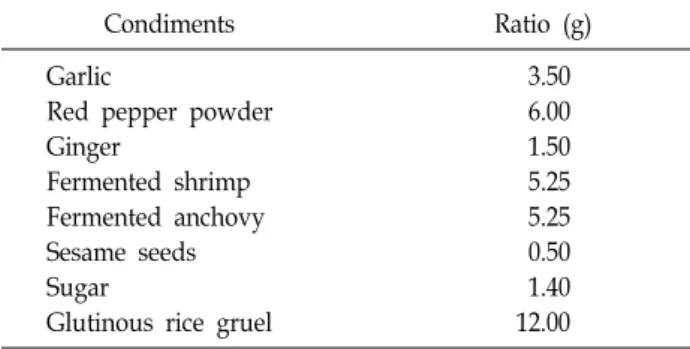
Table 1. Ratio of condiments used to prepare the Dolsan leaf mustard Kimchi
Condiments Ratio (g)
Garlic
Red pepper powder Ginger
Fermented shrimp Fermented anchovy Sesame seeds Sugar
Glutinous rice gruel
3.50 6.00 1.50 5.25 5.25 0.50 1.40 12.00
in cruciferous plants is catalyzed by plant and bacterial myr- osinase [19]. Song et al. [28] reported that the antioxidative activities of crude chlorophylls and carotenoids in leaf mus- tard Kimchi against the autoxidation of linoleic acid are much higher than those of α-tocopherol. Further, the vitamin C and β-carotene levels in this species are notably higher than those in various other Chinese vegetables [31]. Howev- er, the effects of the addition of fermented condiments treat- ed with lactic acid bacteria on leaf mustard Kimchi have not yet been studied. Thus, in this study, we used fermented condiments treated with lactic acid bacteria to prepare leaf mustard Kimchi and investigated the changes in pH, acidity, and other physiological characteristics.
Materials and Methods
Materials
The leaf mustard was obtained from Dolsan, Jeollanamdo, Korea. Other condiments such as garlic, ginger, and red pep- per powder were purchased from a local market in Yeosu, Korea. Methanol, ethanol, and ethyl acetate were procured from Duksan Pure Chemical Co. (Korea). MRS broth and tryptone glucose yeast extract (TGY) broth were supplied by Difco Co. (USA). Weissella kimchii (W.k.), Leuconostoc gel-
idum (L.g.) and Leuconostoc mesenteroides (L.m.) were culturedin our laboratory.
Preparation and fermentation of condiments Garlic, red pepper powder, ginger, fermented shrimp, fer- mented anchovy, sesame seeds, sugar and glutinous rice gruel were mixed in a clean plastic barrel. The ratio of the ingredients of the Dolsan leaf mustard Kimchi is shown in Table 1. Lactic acid bacteria were inoculated to facilitate the fermentation of the condiments for 50 days at 4℃.
Measurement of pH and acidity
The pH of the condiments and Kimchi was measured us- ing a pH meter (Orion 520A, Boston, USA). Each condiment (1 g) was added to 50 ml of distilled water. [2]. After vortex- ing and filtering (Whatman No. 4), 10 ml of the filtrate was added to a flask and treated with drop of phenolphthalein.
A 0.1 N sodium hydroxide (NaOH) solution was used to titrate the filtrate until the pH reached 8.3. Total acidity was expressed in percentage as follows:
Acidity (%)= X ml for 0.1 N-NaOH×0.009×F
×50×100 100 ml
X: volume of 0.1 N-NaOH solution used for the titration of the filtrate
F: solution factor data 50: 50-fold dilutions 10: 10 ml of filtrate volume
Enumeration of lactic acid bacteria and total bac- teria cells
Weissella kimchii (W.k.), Leuconostoc gelidum (L.g.) and Leuconostoc mesenteroides (L.m.) were cultured in our labora-
tory. All three types of lactic acid bacteria were sold and used from the microorganism and gene bank. Each of the three type lactic acid bacteria was added to the condiments, diluted with 0.85% (w/v) sterile saline and inoculated on MRS agar solid medium (Difco, USA). The MRS agar plate was duplicated and incubated at 26℃ for 48 hr. The number of lactic acid bacteria (LAB) was counted as colony forming units (CFU/ml). In addition, a TGY agar plate was in- oculated in duplicate and incubated at 30℃ for 48 hr [17].
The total cell number was counted and recorded as CFU/ml.
Sensory evaluation
Ten trained panelists, all of whom were graduate students from the Chonnam National University, performed the sen- sory evaluations. The appearance, flavor, salinity, hot taste and overall acceptability were evaluated using a 5-point scale (1 = weak, 3 = moderate, 5 = strong).
Preparation of the methanol extracts
These condiments samples were freeze dried (LABCONCO Freeze dry system/ Freezone ®4.5). The freeze dried sam- ples were finely ground, and then were extracted by using methanol. Briefly, each sample, weighing about 25 g, was extracted in 250 ml methanol two times (each for 30 min).
The extracts were filtrated (Whatman No.4) and con-
centrated in vacuum (Eyela rotary evaporator N-1000; Eyela aspirator A-3S; Eyela digital water bath SB-1000) at 45℃.
Finally, the extracts were kept in freezer until tested.
DPPH radical scavenging activity
The free radical scavenging activity of methanol extracts of Dolsan leaf mustard Kimchi's condiments and Kimchi were measured by DPPH (2,2-diphenyl-1-picrylhydrazyl) (Sigma chemical co.) according to the method of Benzie [3].
5 ml of DPPH was added to 1 ml of sample and left to stand for 30 min. The absorbance of the resulting solution was measured at 525 nm with spectrophotometer (Shimadzu, UV-120A, Kyoto, Japan). Each sample was run four times, and the average was calculated as the % antioxidative activity. Inhibition of free radical DPPH in percent was cal- culated in following way [29]:
DPPH (%) = (1 - absorbance of the solution with the added sample / absorbance of the solution without sample) ×100
Angiotensin I-converting enzyme (ACE) inhibitory activity
The ACE inhibitory activity was measured according to the methods of Cushman and Cheung [12] with slight a modification. The ACE (peptidyldipeptide hydrolase, EC 3.4.15.1) 0.38 mg was dissolved in 0.1 M sodium borate buf- fer (pH 8.3) 10 ml Hippuryl-His-Leu (HHL) substrate, which was by mixing the substrate solution to obtain a (25 mM HHL solution). Then, 100 μl of the 25 mM HHL solution was mixed with a 50 μl sample, preincubated at 37℃ for 10 min, and the reaction was initiated by adding 150 μl of ACE dissolved in sodium borate buffer (pH 8.3), followed by further incubation of the mixture at 37℃ for 60 min. The reaction was finally stopped by adding 250 μl of 0.5 N HCl, and the hippuric acid was extracted with 1.5 ml of ethyl acetate. The extracts were centrifuged at 2,500 rpm for 10 min. 0.5 ml of the supernatant was dried in an oven at 140℃
for 10 min, dissolved in 3 ml of 1 M NaCl, and then the absorbance was measured at 228 nm to evaluate the degree of inhibition of the ACE activity.
Inhibitory activity (%) = A-B A-C ×100
(A : Absorbance of the group with distilled water instead of sample, B : Absorbance of Sample, C : absorbance of the control solution with 0.5N HCl added to stop the reaction initiated by the ACE enzyme addition)
Statistical analysis
All tests and analyses were repeated at least three times.
The results are expressed as mean ± standard deviation (SD).
One way analysis of variance (ANOVA) and Duncan’s test were used for multiple comparisons using the SPSS version 21.0 (SPSS Institute, Chicago, IL, USA). In all experiments, differences were considered to be statistically significant if
p<0.05.Results and Discussion
Changes in pH and acidity during fermentation More recent works on microbial compositions using com- mercially available Kimchi or laboratory prepared Kimchi add some more lactic acid bacteria on this bacterial list. Here we will discuss the significance of three lactic acid bacteria adding in leaf mustard Kimchi. In this study, leaf mustard Kimchi's condiments (by adding of three lactic acid bacteria) at various fermentation temperatures were investigated to determine any changes in physiological activity.
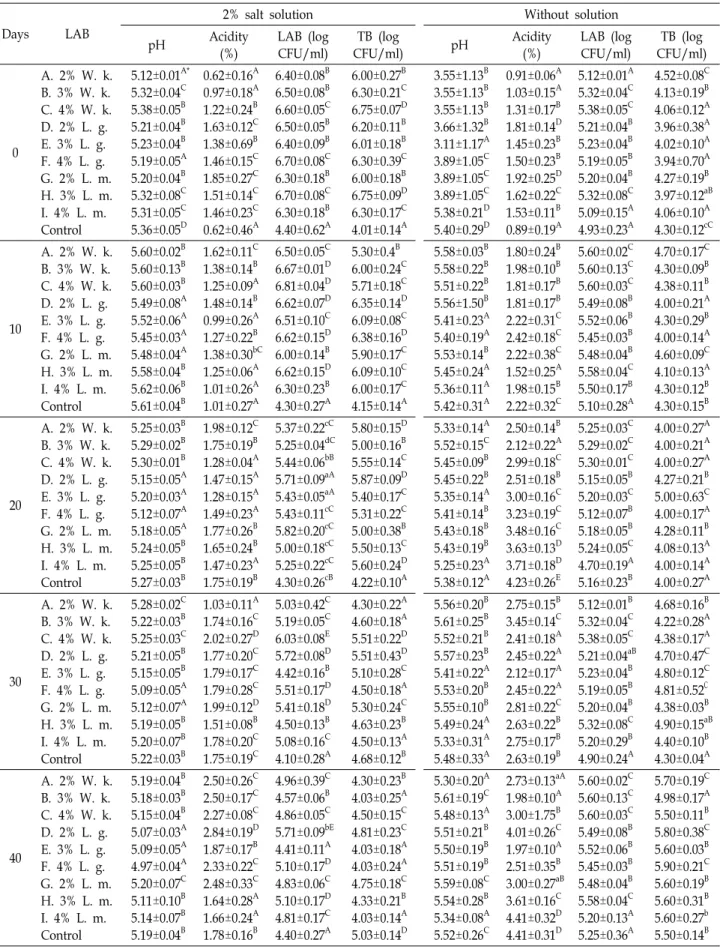
The ratio of the condiments in the DLMK is shown in Table 1. Condiments with and without the 2% salt solution were stored at 4℃ for 50 days, their pH and acidity were measured at intervals of 10 days. The pH and acidity of the condiments treated with 2% salt solution and without the 2% salt solution are shown in Table 2. The pH value ranged from 5.09 to 5.62, whereas the acidity ranged from 0.62%
to 3.7%. The average pH of the Kimchi condiments was 5.44, the average acidity was 0.86% [7]. The pH value ranged from 5.22 to 5.61, which was the lowest pH range on day 20 of storage. The acidity ranged from 0.89% to 5.36% the highest value reported for the condiments treated with the 2% salt solution. The results of this study are different from those of Choi et al. [10] and Yun et al. [33] at the pH decreased as the storage period passed, and t is thought that the sea- soning composition influenced the pH. The salt solution added condiments showed a decrease in pH in the early stage of storage compared to the non-addition condiments, and a decrease in relatively small pH in the second half of the storage period. In the study of Han et al. [14], the initial pH of pickled cabbage was higher than in this study, which is thought to be due to the type and concentration of pickled cabbage used. Also, the initial acidity of condiments re- ported by Park et al. [22], Choi et al. [10], and Yun et al.
[33] was about 0.2%. The higher values observed in our
study may be attributed to the differences in the quality of
Table 2. Changes in the pH, acidity, lactic acid bacteria (LAB) and total bacteria (TB) count of the condiments treated with 2%
salt solution and without salt solution during fermentation at 4℃
Days LAB
2% salt solution Without solution
pH Acidity
(%)
LAB (log CFU/ml)
TB (log
CFU/ml) pH Acidity
(%)
LAB (log CFU/ml)
TB (log CFU/ml)
0
A. 2% W. k.
B. 3% W. k.
C. 4% W. k.
D. 2% L. g.
E. 3% L. g.
F. 4% L. g.
G. 2% L. m.
H. 3% L. m.
I. 4% L. m.
Control
5.12±0.01A*
5.32±0.04C 5.38±0.05B 5.21±0.04B 5.23±0.04B 5.19±0.05A 5.20±0.04B 5.32±0.08C 5.31±0.05C 5.36±0.05D
0.62±0.16A 0.97±0.18A 1.22±0.24B 1.63±0.12C 1.38±0.69B 1.46±0.15C 1.85±0.27C 1.51±0.14C 1.46±0.23C 0.62±0.46A
6.40±0.08B 6.50±0.08B 6.60±0.05C 6.50±0.05B 6.40±0.09B 6.70±0.08C 6.30±0.18B 6.70±0.08C 6.30±0.18B 4.40±0.62A
6.00±0.27B 6.30±0.21C 6.75±0.07D 6.20±0.11B 6.01±0.18B 6.30±0.39C 6.00±0.18B 6.75±0.09D 6.30±0.17C 4.01±0.14A
3.55±1.13B 3.55±1.13B 3.55±1.13B 3.66±1.32B 3.11±1.17A 3.89±1.05C 3.89±1.05C 3.89±1.05C 5.38±0.21D 5.40±0.29D
0.91±0.06A 1.03±0.15A 1.31±0.17B 1.81±0.14D 1.45±0.23B 1.50±0.23B 1.92±0.25D 1.62±0.22C 1.53±0.11B 0.89±0.19A
5.12±0.01A 5.32±0.04C 5.38±0.05C 5.21±0.04B 5.23±0.04B 5.19±0.05B 5.20±0.04B 5.32±0.08C 5.09±0.15A 4.93±0.23A
4.52±0.08C 4.13±0.19B 4.06±0.12A 3.96±0.38A 4.02±0.10A 3.94±0.70A 4.27±0.19B 3.97±0.12aB 4.06±0.10A 4.30±0.12cC
10
A. 2% W. k.
B. 3% W. k.
C. 4% W. k.
D. 2% L. g.
E. 3% L. g.
F. 4% L. g.
G. 2% L. m.
H. 3% L. m.
I. 4% L. m.
Control
5.60±0.02B 5.60±0.13B 5.60±0.03B 5.49±0.08A 5.52±0.06A 5.45±0.03A 5.48±0.04A 5.58±0.04B 5.62±0.06B 5.61±0.04B
1.62±0.11C 1.38±0.14B 1.25±0.09A 1.48±0.14B 0.99±0.26A 1.27±0.22B 1.38±0.30bC 1.25±0.06A 1.01±0.26A 1.01±0.27A
6.50±0.05C 6.67±0.01D 6.81±0.04D 6.62±0.07D 6.51±0.10C 6.62±0.15D 6.00±0.14B 6.62±0.15D 6.30±0.23B 4.30±0.27A
5.30±0.4B 6.00±0.24C 5.71±0.18C 6.35±0.14D 6.09±0.08C 6.38±0.16D 5.90±0.17C 6.09±0.10C 6.00±0.17C 4.15±0.14A
5.58±0.03B 5.58±0.22B 5.51±0.22B 5.56±1.50B 5.41±0.23A 5.40±0.19A 5.53±0.14B 5.45±0.24A 5.36±0.11A 5.42±0.31A
1.80±0.24B 1.98±0.10B 1.81±0.17B 1.81±0.17B 2.22±0.31C 2.42±0.18C 2.22±0.38C 1.52±0.25A 1.98±0.15B 2.22±0.32C
5.60±0.02C 5.60±0.13C 5.60±0.03C 5.49±0.08B 5.52±0.06B 5.45±0.03B 5.48±0.04B 5.58±0.04C 5.50±0.17B 5.10±0.28A
4.70±0.17C 4.30±0.09B 4.38±0.11B 4.00±0.21A 4.30±0.29B 4.00±0.14A 4.60±0.09C 4.10±0.13A 4.30±0.12B 4.30±0.15B
20
A. 2% W. k.
B. 3% W. k.
C. 4% W. k.
D. 2% L. g.
E. 3% L. g.
F. 4% L. g.
G. 2% L. m.
H. 3% L. m.
I. 4% L. m.
Control
5.25±0.03B 5.29±0.02B 5.30±0.01B 5.15±0.05A 5.20±0.03A 5.12±0.07A 5.18±0.05A 5.24±0.05B 5.25±0.05B 5.27±0.03B
1.98±0.12C 1.75±0.19B 1.28±0.04A 1.47±0.15A 1.28±0.15A 1.49±0.23A 1.77±0.26B 1.65±0.24B 1.47±0.23A 1.75±0.19B
5.37±0.22cC 5.25±0.04dC 5.44±0.06bB 5.71±0.09aA 5.43±0.05aA 5.43±0.11cC 5.82±0.20cC 5.00±0.18cC 5.25±0.22cC 4.30±0.26cB
5.80±0.15D 5.00±0.16B 5.55±0.14C 5.87±0.09D 5.40±0.17C 5.31±0.22C 5.00±0.38B 5.50±0.13C 5.60±0.24D 4.22±0.10A
5.33±0.14A 5.52±0.15C 5.45±0.09B 5.45±0.22B 5.35±0.14A 5.41±0.14B 5.43±0.18B 5.43±0.19B 5.25±0.23A 5.38±0.12A
2.50±0.14B 2.12±0.22A 2.99±0.18C 2.51±0.18B 3.00±0.16C 3.23±0.19C 3.48±0.16C 3.63±0.13D 3.71±0.18D 4.23±0.26E
5.25±0.03C 5.29±0.02C 5.30±0.01C 5.15±0.05B 5.20±0.03C 5.12±0.07B 5.18±0.05B 5.24±0.05C 4.70±0.19A 5.16±0.23B
4.00±0.27A 4.00±0.21A 4.00±0.27A 4.27±0.21B 5.00±0.63C 4.00±0.17A 4.28±0.11B 4.08±0.13A 4.00±0.14A 4.00±0.27A
30
A. 2% W. k.
B. 3% W. k.
C. 4% W. k.
D. 2% L. g.
E. 3% L. g.
F. 4% L. g.
G. 2% L. m.
H. 3% L. m.
I. 4% L. m.
Control
5.28±0.02C 5.22±0.03B 5.25±0.03C 5.21±0.05B 5.15±0.05B 5.09±0.05A 5.12±0.07A 5.19±0.05B 5.20±0.07B 5.22±0.03B
1.03±0.11A 1.74±0.16C 2.02±0.27D 1.77±0.20C 1.79±0.17C 1.79±0.28C 1.99±0.12D 1.51±0.08B 1.78±0.20C 1.75±0.19C
5.03±0.42C 5.19±0.05C 6.03±0.08E 5.72±0.08D 4.42±0.16B 5.51±0.17D 5.41±0.18D 4.50±0.13B 5.08±0.16C 4.10±0.28A
4.30±0.22A 4.60±0.18A 5.51±0.22D 5.51±0.43D 5.10±0.28C 4.50±0.18A 5.30±0.24C 4.63±0.23B 4.50±0.13A 4.68±0.12B
5.56±0.20B 5.61±0.25B 5.52±0.21B 5.57±0.23B 5.41±0.22A 5.53±0.20B 5.55±0.10B 5.49±0.24A 5.33±0.31A 5.48±0.33A
2.75±0.15B 3.45±0.14C 2.41±0.18A 2.45±0.22A 2.12±0.17A 2.45±0.22A 2.81±0.22C 2.63±0.22B 2.75±0.17B 2.63±0.19B
5.12±0.01B 5.32±0.04C 5.38±0.05C 5.21±0.04aB 5.23±0.04B 5.19±0.05B 5.20±0.04B 5.32±0.08C 5.20±0.29B 4.90±0.24A
4.68±0.16B 4.22±0.28A 4.38±0.17A 4.70±0.47C 4.80±0.12C 4.81±0.52C 4.38±0.03B 4.90±0.15aB 4.40±0.10B 4.30±0.04A
40
A. 2% W. k.
B. 3% W. k.
C. 4% W. k.
D. 2% L. g.
E. 3% L. g.
F. 4% L. g.
G. 2% L. m.
H. 3% L. m.
I. 4% L. m.
Control
5.19±0.04B 5.18±0.03B 5.15±0.04B 5.07±0.03A 5.09±0.05A 4.97±0.04A 5.20±0.07C 5.11±0.10B 5.14±0.07B 5.19±0.04B
2.50±0.26C 2.50±0.17C 2.27±0.08C 2.84±0.19D 1.87±0.17B 2.33±0.22C 2.48±0.33C 1.64±0.28A 1.66±0.24A 1.78±0.16B
4.96±0.39C 4.57±0.06B 4.86±0.05C 5.71±0.09bE 4.41±0.11A 5.10±0.17D 4.83±0.06C 5.10±0.17D 4.81±0.17C 4.40±0.27A
4.30±0.23B 4.03±0.25A 4.50±0.15C 4.81±0.23C 4.03±0.18A 4.03±0.24A 4.75±0.18C 4.33±0.21B 4.03±0.14A 5.03±0.14D
5.30±0.20A 5.61±0.19C 5.48±0.13A 5.51±0.21B 5.50±0.19B 5.51±0.19B 5.59±0.08C 5.54±0.28B 5.34±0.08A 5.52±0.26C
2.73±0.13aA 1.98±0.10A 3.00±1.75B 4.01±0.26C 1.97±0.10A 2.51±0.35B 3.00±0.27aB 3.61±0.16C 4.41±0.32D 4.41±0.31D
5.60±0.02C 5.60±0.13C 5.60±0.03C 5.49±0.08B 5.52±0.06B 5.45±0.03B 5.48±0.04B 5.58±0.04C 5.20±0.13A 5.25±0.36A
5.70±0.19C 4.98±0.17A 5.50±0.11B 5.80±0.38C 5.60±0.03B 5.90±0.21C 5.60±0.19B 5.60±0.31B 5.60±0.27b 5.50±0.14B
Table 2. Continued
Days LAB
2% salt solution Without solution
pH Acidity
(%)
LAB (log CFU/ml)
TB (log
CFU/ml) pH Acidity
(%)
LAB (log CFU/ml)
TB (log CFU/ml)
50
A. 2% W. k.
B. 3% W. k.
C. 4% W. k.
D. 2% L. g.
E. 3% L. g.
F. 4% L. g.
G. 2% L. m.
H. 3% L. m.
I. 4% L. m.
Control
5.22±0.03C 5.22±0.04C 5.20±0.08C 5.10±0.06A 5.17±0.03B 5.05±0.05A 5.20±0.07C 5.16±0.06B 5.18±0.05B 5.23±0.07C
1.84±0.10B 2.01±0.25C 2.21±0.22C 1.92±0.24B 1.99±0.16B 1.66±0.20A 2.23±0.11C 2.26±0.08C 1.98±0.13B 3.77±0.26D
4.98±0.43C 4.41±0.10A 8.98±0.05D 5.50±0.09C 4.50±0.11A 5.53±0.15cC 4.79±0.07B 4.70±0.13B 4.80±0.18B 4.78±0.11B
4.00±0.22A 4.03±0.12A 4.00±0.24A 4.32±0.22B 4.00±0.37A 4.00±0.18A 4.32±0.29B 4.00±0.21A 4.32±0.21B 4.97±0.19C
5.33±0.19A 5.60±0.13B 5.51±0.18B 5.59±0.14B 5.43±0.18A 5.55±0.17B 5.56±0.12B 5.52±0.26B 5.35±0.31A 5.50±0.44B
2.88±0.10A 2.88±0.13A 3.93±0.17C 3.92±0.24C 3.51±0.27B 2.92±0.26A 3.93±0.13C 3.93±0.25C 4.22±0.31D 5.36±0.14E
5.25±0.03B 5.29±0.02B 5.30±0.01B 5.15±0.05A 5.20±0.03A 5.12±0.07A 5.18±0.05A 5.24±0.05A 5.00±0.21A 5.23±0.31A
6.00±0.29D 5.61±0.21B 5.50±0.20B 5.70±0.41C 5.30±0.16bA 5.80±0.30C 5.80±0.17C 5.79±0.45C 5.30±0.18A 5.50±0.09B
*Data represent the mean ± SD of experiments performed in triplicates. The different lower-case letters (superscript) in the same column (A-E) indicate statistically significant difference by Duncan’s multiple range test (p<0.05)
Table 3. Antioxidant activity and angiotensin I-converting enzyme (ACE) inhibitory activity of methanol extract of Dolsan leaf mustard kimchi condiments sauce
Methanol extracts samples of condiments
DPPH ACE
4℃, 30days 10℃, 8days 20℃, 4days L-ascorbic
acid 4℃, 30days 10℃, 8days 20℃, 4days 0.01%
capotopril
0.2 ml
Control 2% W. k.
2% L. m.
18.11±0.20aA*
22.52±0.08aB 24.31±0.14bB
20.09±0.24bA 24.57±0.14bB 20.47±0.21aA
24.16±0.18cA 26.59±0.08bA 24.81±0.14bA
97.13±0.20
44.33±0.02aA 61.52±0.24aD 49.84±0.18aB
49.86±0.11bA 70.38±0.11cD 65.68±0.15c
43.22±0.05aA 66.24±0.01bD 56.57±0.04bC
72.19±0.01 0.4 ml
Control 2% W. k.
2% L. m.
34.17±0.06aC 38.39±0.11aC 36.73±0.23aC
36.75±0.34bC 39.08±0.22aC 38.57±0.11aC
39.51±0.21bB 42.59±0.17bC 44.62±0.05cCC
52.04±0.32bC 53.47±0.21aC 53.78±0.13aC
47.22±0.17aA 62.57±0.04cB 68.96±0.09cC
49.27±0.11aB 51.49±0.21aB 59.04±0.09bC
*Data represent the mean ± SD of experiments performed in triplicates. The different lower-case letters (superscript) in the same row (a-c) and column (A-D) indicate statistically significant difference by Duncan’s multiple range test (p<0.05)
the ingredients used to prepare Kimchi [30].
Changes in lactic acid bacteria and total bacteria counts during fermentation
The condiments treated with or without the 2% salt sol- ution were stored at 4℃ for 50 days then, LAB and total bacteria counts were determined at intervals of 10 days. The counts of LAB and total bacteria in the condiments treated with the 2% salt solution and without 2% salt solution are shown in Table 2. No change was reported in the count of the LAB until day 10, however, the number of LAB decreaed by day 30. The count in the control group was maintained at 4.15-4.78 log CFU/ml during the fermentation period. In comparison with that in Kimchi and pickled cabbage, the condiments tended to show a lower count of LAB during the fermentation period [33]. The total bacteria count also decreased after 10 days, and the control group appeared on- ly on the 10th day. The count of lactic acid bacteria decreased
from day 10 to day 20 of fermentation and increased, except in the 2% W. k. group, from day 20 to day 30 of fermentation.
Further, except for the 2% L. g., 3% L. g., and 4% L. g.
groups, the other groups showed a decrease in the total bac-
teria count from day 10 to day 20 of fermentation, this num-
ber increased from day 20 to day 30. The count of LAB in
Kimchi condiments was 5.33-8.25 log CFU/ml and that of
total bacteria was 5.87-8.17 log CFU/ml [7]. In the study by
Chang et al. [5], the LAB counts on the day of purchase of
domestic commercial Kimchi from a (side dish shop, me-
dium and small enterprise, large corporation) were found
to be 5.32, 4.78, and 6.30 log CFU/ml, respectively, whereas
the total bacteria counts 6.48, 5.93, and 6.95 log CFU/ml,
respectively. The highest number of bacteria was detected
in commercial Kimchi, respectively. In the present study, we
found that the average counts of LAB and total bacteria were
5.39 and 4.72 log CFU/ml, respectively, which were lower
than those reported for commercial Kimchi. This difference
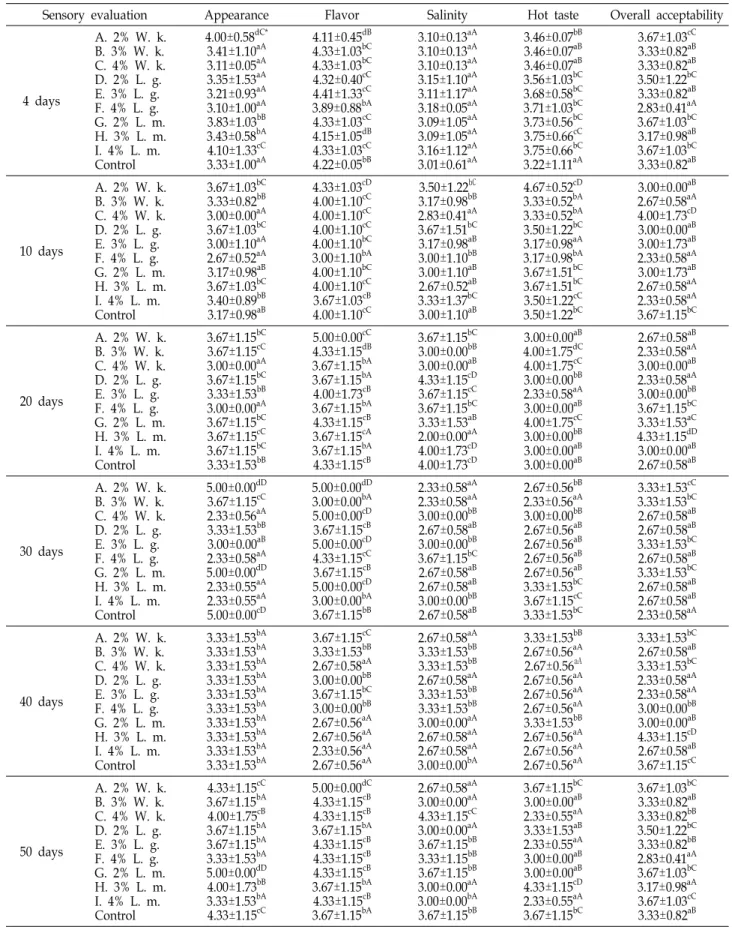
Table 4. Sensory evaluation of the Dolsan leaf mustard Kimchi condiments sauce treated with 2% salt solution during fermentation at 4℃
Sensory evaluation Appearance Flavor Salinity Hot taste Overall acceptability
4 days
A. 2% W. k.
B. 3% W. k.
C. 4% W. k.
D. 2% L. g.
E. 3% L. g.
F. 4% L. g.
G. 2% L. m.
H. 3% L. m.
I. 4% L. m.
Control
4.20±1.40cC*
3.67±1.00aB 4.11±1.05cC 3.22±1.09aB 3.44±0.88bB 3.75±1.20bB 4.56±1.33dD 4.11±1.05bC 4.56±1.33cD 2.67±1.00aA
3.89±1.45bB 3.89±1.45bB 3.89±1.45bB 4.20±1.40cC 3.67±1.41bA 3.44±0.88aA 3.44±0.88aA 3.88±1.05aB 4.33±1.41cC 4.11±1.05cC
3.55±1.13aB 3.55±1.13aB 3.55±1.13aB 3.66±1.32bB 3.11±1.17aA 3.89±1.05bC 3.89±1.05bC 3.89±1.05aC 3.66±1.32aB 3.11±1.62bA
3.86±1.07bA 3.86±1.07bA 3.86±1.07bA 4.56±1.33dC 4.38±1.19cB 4.63±1.51cC 4.77±1.56dC 4.75±0.66cC 4.75±0.66dC 4.22±1.20cB
4.25±1.04cC 4.38±1.19cC 3.89±0.99bB 3.25±1.16aA 3.12±0.83aA 3.88±1.55bB 4.13±1.25cC 4.00±1.10bC 4.00±1.10bC 3.43±1.13bA
10 days
A. 2% W. k.
B. 3% W. k.
C. 4% W. k.
D. 2% L. g.
E. 3% L. g.
F. 4% L. g.
G. 2% L. m.
H. 3% L. m.
I. 4% L. m.
Control
3.25±1.09bB 3.50±1.00cC 3.75±1.50cC 3.75±1.50bC 2.75±0.50aA 2.75±0.50aA 2.75±1.50aA 3.75±1.50bC 3.25±1.26bB 2.75±1.71aA
3.00±0.00bB 3.00±0.00cB 2.75±0.50aA 2.75±0.50aA 2.75±0.50aA 2.75±0.50aA 3.50±1.00bC 3.25±1.25aB 3.00±0.00bB 3.00±1.63aB
2.25±0.50aB 1.75±0.50aA 3.00±1.41bC 3.75±1.50bD 2.50±0.55aB 3.25±1.26bD 3.00±1.22aC 3.75±1.50b 2.75±1.50aC 2.75±1.51aC
2.75±0.50aA 4.25±1.50dD 3.50±1.75cC 3.75±2.22bC 2.75±0.50aA 3.25±1.26bB 3.00±1.41aB 3.25±1.26aB 2.50±0.56aA 3.00±1.65aB
2.50±0.58aA 2.50±0.58bA 2.50±0.58aA 3.50±1.00bB 3.50±1.00bB 3.50±1.00bB 4.50±1.00cC 4.50±1.00cC 4.50±1.00cC 2.75±1.71aA
20 days
A. 2% W. k.
B. 3% W. k.
C. 4% W. k.
D. 2% L. g.
E. 3% L. g.
F. 4% L. g.
G. 2% L. m.
H. 3% L. m.
I. 4% L. m.
Control
4.33±1.15cC 4.33±1.15dC 4.00±1.75bB 3.67±1.15aA 3.67±1.15aA 4.33±1.15cC 4.33±1.15cC 4.33±1.15cC 4.33±1.15cC 4.00±1.75cB
3.00±0.00aA 3.33±1.53cA 3.67±1.15bB 4.33±2.31bC 3.33±1.53bA 3.67±1.53bB 3.00±0.00aA 3.67±1.15bB 3.67±1.15bB 4.33±1.15cC
3.00±1.41aB 2.50±0.58aA 3.50±1.73bC 3.50±1.71aC 3.00±1.41aB 3.50±2.38aC 3.00±1.41aB 3.50±1.75bC 3.00±1.41aB 3.25±1.26bB
4.00±1.15cC 3.50±1.00cB 3.25±1.25aB 4.00±1.15bC 2.75±0.50aA 4.00±1.15cC 4.00±1.15cC 3.25±1.25aB 3.25±1.25aB 2.75±0.50aA
3.50±1.00bC 3.00±0.00bB 3.00±0.00aB 4.00±1.15b 2.75±0.50aA 3.25±1.26aB 3.50±1.00bC 3.50±1.00bC 3.75±1.50bC 3.00±0.00aB
30 days
A. 2% W. k.
B. 3% W. k.
C. 4% W. k.
D. 2% L. g.
E. 3% L. g.
F. 4% L. g.
G. 2% L. m.
H. 3% L. m.
I. 4% L. m.
Control
3.50±1.00aA 3.50±1.00bA 3.50±1.00bA 4.00±1.15bB 3.50±1.00aA 3.25±1.25bA 3.50±1.00bA 4.00±1.15bB 3.50±1.00aA 3.50±1.00cA
4.50±1.00cC 4.00±1.15cB 4.00±1.15cB 4.00±1.15bB 4.00±1.15bB 3.50±1.00bA 3.50±1.00bA 3.50±1.00aA 3.25±1.26aA 4.50±1.00dC
3.50±1.00aC 3.00±0.00aB 3.25±1.26aB 3.75±1.50aC 4.25±1.50bD 2.50±0.58aA 3.75±1.50bC 3.25±1.26aB 3.25±1.26aB 2.75±0.50aA
4.00±1.15bD 3.00±0.00aB 3.00±0.00aB 3.75±1.50aC 3.50±1.00aC 2.50±0.58aA 3.25±1.26aB 3.50±1.00aC 3.00±0.00aB 3.00±0.00bB
4.00±1.15bD 3.00±0.00aB 3.00±0.00aB 3.75±1.50aC 3.50±1.00aC 2.50±0.58aA 3.25±1.26aB 3.50±1.00aC 3.00±0.00aB 3.00±0.00bB
40 days
A. 2% W. k.
B. 3% W. k.
C. 4% W. k.
D. 2% L. g.
E. 3% L. g.
F. 4% L. g.
G. 2% L. m.
H. 3% L. m.
I. 4% L. m.
Control
3.40±0.89cA 3.40±0.89aA 3.40±0.89cA 3.40±0.89bA 3.40±0.89bA 3.40±0.89cA 3.40±0.89cA 3.40±0.89cA 3.40±0.89aA 3.40±0.89aA
4.20±1.10dD 3.40±0.89aB 3.00±0.00bA 3.40±0.89bB 3.00±0.00aA 3.40±0.89cB 3.00±0.00bA 3.00±0.00bA 3.80±1.10bC 4.50±1.00bD
2.60±0.55aA 3.80±1.64bC 2.60±0.55aA 3.20±1.10aB 3.00±1.22aB 2.60±0.55aA 2.60±0.55aA 2.40±0.89aA 3.20±1.10aB 3.20±1.10aB
3.00±1.22bA 3.40±0.89aA 3.00±0.00bA 3.00±0.00aA 3.40±0.89bA 3.00±0.00bA 3.40±0.89cA 3.40±0.89cA 3.00±0.00aA 3.40±0.89aA
3.00±1.22bA 3.40±0.89aA 3.00±0.00bA 3.00±0.00aA 3.40±0.89bA 3.00±0.00bA 3.40±0.89CA 3.40±0.89cA 3.00±0.00aA 3.40±0.89aA
50 days
A. 2% W. k.
B. 3% W. k.
C. 4% W. k.
D. 2% L. g.
E. 3% L. g.
F. 4% L. g.
G. 2% L. m.
H. 3% L. m.
I. 4% L. m.
Control
3.00±0.00bA 3.00±0.00aA 3.00±0.00aA 3.00±0.00aA 2.80±0.45aA 2.80±0.45aA 3.40±0.89bB 3.00±0.00bA 3.40±0.89cB 3.40±0.89bB
3.80±1.10cB 3.00±0.00aA 5.00±0.00b 4.00±1.41cB 3.00±0.00aA 2.60±0.55aA 3.80±1.10cB 4.20±1.10cC 2.60±0.55aA 4.00±1.41cB
2.40±0.55aA 3.80±1.10bC 3.00±0.00aB 2.80±0.45aA 2.80±0.45aA 3.40±1.52bB 3.60±1.54bC 2.40±0.55aA 3.00±0.00bB 3.00±1.22aB
4.00±1.41cC 3.60±1.34bC 2.80±0.45aA 2.60±0.55aA 2.80±0.45aA 3.20±1.10bB 2.60±0.55aA 2.40±0.55aA 3.80±1.10dC 3.60±1.34bC
4.00±1.41cC 3.60±1.34bB 2.80±0.45aA 2.60±0.55aA 2.80±0.45aA 3.20±1.10bB 2.60±0.55aA 2.40±0.55aA 3.80±1.10dC 3.60±1.34bB
*Data represent the mean ± SD of experiments performed in triplicates. The different lower-case letters (superscript) in the same row (a-d) and column (A-D) indicate statistically significant difference by Duncan’s multiple range test (p<0.05).
Table 5. Sensory evaluation of the Dolsan leaf mustard Kimchi condiments sauce without salt solution during fermentation at 4℃
Sensory evaluation Appearance Flavor Salinity Hot taste Overall acceptability
4 days
A. 2% W. k.
B. 3% W. k.
C. 4% W. k.
D. 2% L. g.
E. 3% L. g.
F. 4% L. g.
G. 2% L. m.
H. 3% L. m.
I. 4% L. m.
Control
4.00±0.58dC*
3.41±1.10aA 3.11±0.05aA 3.35±1.53aA 3.21±0.93aA 3.10±1.00aA 3.83±1.03bB 3.43±0.58bA 4.10±1.33cC 3.33±1.00aA
4.11±0.45dB 4.33±1.03bC 4.33±1.03bC 4.32±0.40cC 4.41±1.33cC 3.89±0.88bA 4.33±1.03cC 4.15±1.05dB 4.33±1.03cC 4.22±0.05bB
3.10±0.13aA 3.10±0.13aA 3.10±0.13aA 3.15±1.10aA 3.11±1.17aA 3.18±0.05aA 3.09±1.05aA 3.09±1.05aA 3.16±1.12aA 3.01±0.61aA
3.46±0.07bB 3.46±0.07aB 3.46±0.07aB 3.56±1.03bC 3.68±0.58bC 3.71±1.03bC 3.73±0.56bC 3.75±0.66cC 3.75±0.66bC 3.22±1.11aA
3.67±1.03cC 3.33±0.82aB 3.33±0.82aB 3.50±1.22bC 3.33±0.82aB 2.83±0.41aA 3.67±1.03bC 3.17±0.98aB 3.67±1.03bC 3.33±0.82aB
10 days
A. 2% W. k.
B. 3% W. k.
C. 4% W. k.
D. 2% L. g.
E. 3% L. g.
F. 4% L. g.
G. 2% L. m.
H. 3% L. m.
I. 4% L. m.
Control
3.67±1.03bC 3.33±0.82bB 3.00±0.00aA 3.67±1.03bC 3.00±1.10aA 2.67±0.52aA 3.17±0.98aB 3.67±1.03bC 3.40±0.89bB 3.17±0.98aB
4.33±1.03cD 4.00±1.10cC 4.00±1.10cC 4.00±1.10cC 4.00±1.10bC 3.00±1.10bA 4.00±1.10bC 4.00±1.10cC 3.67±1.03cB 4.00±1.10cC
3.50±1.22bC 3.17±0.98bB 2.83±0.41aA 3.67±1.51bC 3.17±0.98aB 3.00±1.10bB 3.00±1.10aB 2.67±0.52aB 3.33±1.37bC 3.00±1.10aB
4.67±0.52cD 3.33±0.52bA 3.33±0.52bA 3.50±1.22bC 3.17±0.98aA 3.17±0.98bA 3.67±1.51bC 3.67±1.51bC 3.50±1.22cC 3.50±1.22bC
3.00±0.00aB 2.67±0.58aA 4.00±1.73cD 3.00±0.00aB 3.00±1.73aB 2.33±0.58aA 3.00±1.73aB 2.67±0.58aA 2.33±0.58aA 3.67±1.15bC
20 days
A. 2% W. k.
B. 3% W. k.
C. 4% W. k.
D. 2% L. g.
E. 3% L. g.
F. 4% L. g.
G. 2% L. m.
H. 3% L. m.
I. 4% L. m.
Control
3.67±1.15bC 3.67±1.15cC 3.00±0.00aA 3.67±1.15bC 3.33±1.53bB 3.00±0.00aA 3.67±1.15bC 3.67±1.15cC 3.67±1.15bC 3.33±1.53bB
5.00±0.00cC 4.33±1.15dB 3.67±1.15bA 3.67±1.15bA 4.00±1.73cB 3.67±1.15bA 4.33±1.15cB 3.67±1.15cA 3.67±1.15bA 4.33±1.15cB
3.67±1.15bC 3.00±0.00bB 3.00±0.00aB 4.33±1.15cD 3.67±1.15cC 3.67±1.15bC 3.33±1.53aB 2.00±0.00aA 4.00±1.73cD 4.00±1.73cD
3.00±0.00aB 4.00±1.75dC 4.00±1.75cC 3.00±0.00bB 2.33±0.58aA 3.00±0.00aB 4.00±1.75cC 3.00±0.00bB 3.00±0.00aB 3.00±0.00aB
2.67±0.58aB 2.33±0.58aA 3.00±0.00aB 2.33±0.58aA 3.00±0.00bB 3.67±1.15bC 3.33±1.53aC 4.33±1.15dD 3.00±0.00aB 2.67±0.58aB
30 days
A. 2% W. k.
B. 3% W. k.
C. 4% W. k.
D. 2% L. g.
E. 3% L. g.
F. 4% L. g.
G. 2% L. m.
H. 3% L. m.
I. 4% L. m.
Control
5.00±0.00dD 3.67±1.15cC 2.33±0.56aA 3.33±1.53bB 3.00±0.00aB 2.33±0.58aA 5.00±0.00dD 2.33±0.55aA 2.33±0.55aA 5.00±0.00cD
5.00±0.00dD 3.00±0.00bA 5.00±0.00cD 3.67±1.15cB 5.00±0.00cD 4.33±1.15cC 3.67±1.15cB 5.00±0.00cD 3.00±0.00bA 3.67±1.15bB
2.33±0.58aA 2.33±0.58aA 3.00±0.00bB 2.67±0.58aB 3.00±0.00bB 3.67±1.15bC 2.67±0.58aB 2.67±0.58aB 3.00±0.00bB 2.67±0.58aB
2.67±0.56bB 2.33±0.56aA 3.00±0.00bB 2.67±0.56aB 2.67±0.56aB 2.67±0.56aB 2.67±0.56aB 3.33±1.53bC 3.67±1.15cC 3.33±1.53bC
3.33±1.53cC 3.33±1.53bC 2.67±0.58aB 2.67±0.58aB 3.33±1.53bC 2.67±0.58aB 3.33±1.53bC 2.67±0.58aB 2.67±0.58aB 2.33±0.58aA
40 days
A. 2% W. k.
B. 3% W. k.
C. 4% W. k.
D. 2% L. g.
E. 3% L. g.
F. 4% L. g.
G. 2% L. m.
H. 3% L. m.
I. 4% L. m.
Control
3.33±1.53bA 3.33±1.53bA 3.33±1.53bA 3.33±1.53bA 3.33±1.53bA 3.33±1.53bA 3.33±1.53bA 3.33±1.53bA 3.33±1.53bA 3.33±1.53bA
3.67±1.15cC 3.33±1.53bB 2.67±0.58aA 3.00±0.00bB 3.67±1.15bC 3.00±0.00bB 2.67±0.56aA 2.67±0.56aA 2.33±0.56aA 2.67±0.56aA
2.67±0.58aA 3.33±1.53bB 3.33±1.53bB 2.67±0.58aA 3.33±1.53bB 3.33±1.53bB 3.00±0.00aA 2.67±0.58aA 2.67±0.58aA 3.00±0.00bA
3.33±1.53bB 2.67±0.56aA 2.67±0.56aA 2.67±0.56aA 2.67±0.56aA 2.67±0.56aA 3.33±1.53bB 2.67±0.56aA 2.67±0.56aA 2.67±0.56aA
3.33±1.53bC 2.67±0.58aB 3.33±1.53bC 2.33±0.58aA 2.33±0.58aA 3.00±0.00bB 3.00±0.00aB 4.33±1.15cD 2.67±0.58aB 3.67±1.15cC
50 days
A. 2% W. k.
B. 3% W. k.
C. 4% W. k.
D. 2% L. g.
E. 3% L. g.
F. 4% L. g.
G. 2% L. m.
H. 3% L. m.
I. 4% L. m.
Control
4.33±1.15cC 3.67±1.15bA 4.00±1.75cB 3.67±1.15bA 3.67±1.15bA 3.33±1.53bA 5.00±0.00dD 4.00±1.73bB 3.33±1.53bA 4.33±1.15cC
5.00±0.00dC 4.33±1.15cB 4.33±1.15cB 3.67±1.15bA 4.33±1.15cB 4.33±1.15cB 4.33±1.15cB 3.67±1.15bA 4.33±1.15cB 3.67±1.15bA
2.67±0.58aA 3.00±0.00aA 4.33±1.15cC 3.00±0.00aA 3.67±1.15bB 3.33±1.15bB 3.67±1.15bB 3.00±0.00aA 3.00±0.00bA 3.67±1.15bB
3.67±1.15bC 3.00±0.00aB 2.33±0.55aA 3.33±1.53aB 2.33±0.55aA 3.00±0.00aB 3.00±0.00aB 4.33±1.15cD 2.33±0.55aA 3.67±1.15bC
3.67±1.03bC 3.33±0.82aB 3.33±0.82bB 3.50±1.22bC 3.33±0.82bB 2.83±0.41aA 3.67±1.03bC 3.17±0.98aA 3.67±1.03cC 3.33±0.82aB
*Data represent the mean ± SD of experiments performed in triplicates. The different lower-case letters (superscript) in the same row (a-d) and column (A-D) indicate statistically significant difference by Duncan’s multiple range test (p<0.05).
was considered to be relatively low in terms of the amount of microorganisms owing to the relatively high proportion of antimicrobials added to Kimchi condiments.
Sensory evaluation
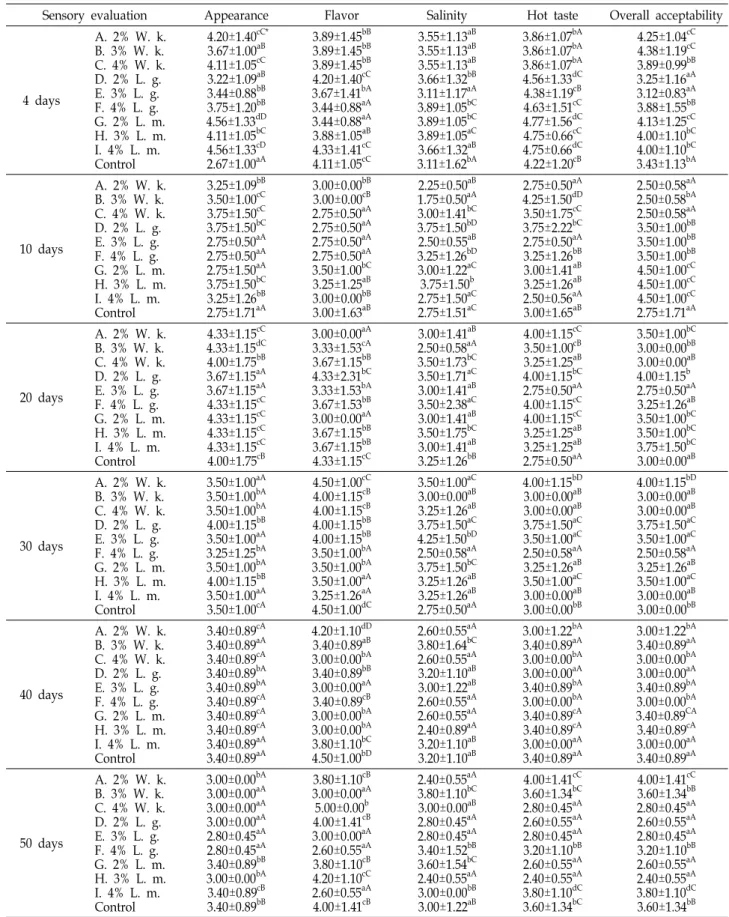
The results of the sensory evaluation test every 10 days for the samples stored at 4℃ for 50 days, with or without 2% salt solution treatment are shown in Table 4 and 5. The sensory evaluation scores for the condiments treated with and without the 2% salt solution were high at the beginning of the fermentation, but decreased as the fermentation time increased. Condiments inoculated with LAB had higher scores for appearance, flavor, hot taste, and overall accept- ability than those from the control group. As the fermenta- tion process progressed, the flavor and hot taste scores decreased. The improvement in the taste of the product with addition of LAB was also consistent with that previously reported. The addition of LAB is considered to beneficial for the manufacture of Kimchi with excellent sensory qual- ities to meets consumer preferences [4].
DPPH radical scavenging activity
Reactive oxygen species (ROS) are mostly removed by in- ternal defense mechanisms, but if not removed, they react quickly with biomolecules, causing protein degeneration, lipid peroxidation, and DNA damage. Lipid peroxides that are diffused into cells or moved through the bloodstream promote new radical reactions and causes various diseases [27]. DPPH radical scavenging activity is used as a measure to inhibit lipid oxidation by donating electrons to active radi- cals, and is also used as a measure of the action of inhibiting aging by active radicals in the human body [9]. The anti- oxidant activity of methanol extract of DLMK condiments was shown in Table 3 by DPPH radical scavenging method.
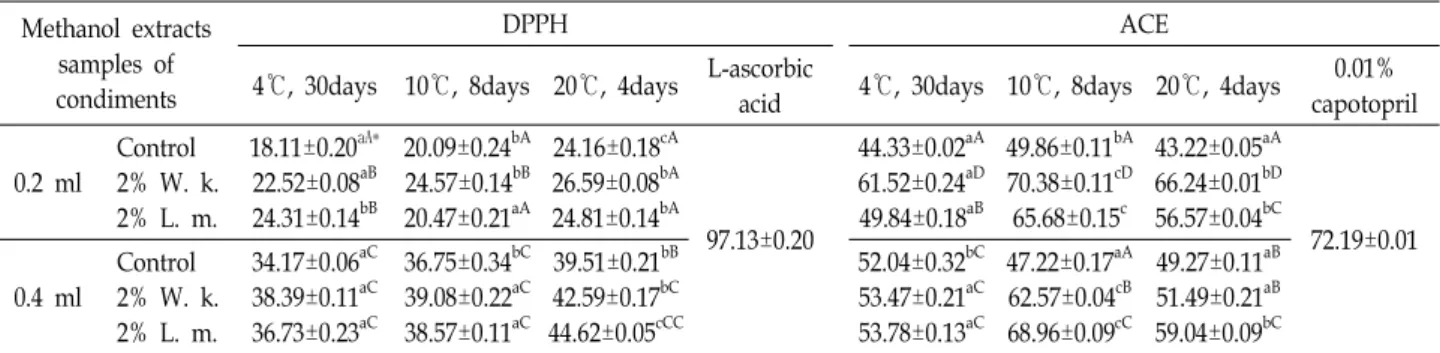
The antioxidant activity was shown in the samples fer- mented at 4℃ for 30 days, fermented at 10℃ for 8 days and fermented at 20℃ for 4 days. The higher the concen- tration of the methanol extract of condiments, the higher the DPPH scavenging activity. Except for L-ascorbic acid, 2% w.
k. and 2% L. m. fermented at 20℃ for 4 days showed higher antioxidant effects among 9 samples and the higher concen- tration showed a higher effect. The antioxidant activity of seasonings fermented at 4℃, 10℃, and 20℃ by adding a starter is thought to be due to the difference in the pro- gression rate of fermentation depending on the temperature, and accordingly, a difference in the rate at which anti-
oxidants are produced.
Angiotensin I-converting enzyme (ACE) inhibitory activity
ACE is an important enzyme in the rennin-angiotensin- aldosterone system, which generates dipeptide (His-Leu) by hydrolyzing the inactive angiotensin-I at the C-terminal, thereby creating angiotensin-II that causes powerful vaso- constriction. Angiotensin II eventually raises the blood pres- sure and, therefore inhibition of ACE activation is a useful strategy for controlling disorders such as those involving the destruction of blood vessels and stroke [20]. Table 3 showed ACE inhibitory activity of methanol extract of DLMK condi- ments at various fermentation temperatures. In the methanol extract of seasoning fermented at 10℃ for 8 days, ACE in- hibitory activity showed the highest activity (70.38%) than the others. In addition, the results of this study show that the DLMK added with the starter showed higher ACE in- hibition activity than the control group [10]. The maximum ACE inhibitory activity was 65.87% when 2% L. m. was add- ed in the methanol extract of Dolsan leaf mustard Kimchi condiments fermented at 4℃, 10℃ and 20℃. Products added with starter indicate that microbial metabolism due to the presence of a large number of cells contributes to the pro- duction of substances that exhibit ACE inhibitory activity.
The Conflict of Interest Statement
The authors declare that they have no conflicts of interest with the contents of this article.
References
1. Andrews, J. 1995. The domesticated capsicums, Austin, Texas, University of Texas Press.
2. AOAC. 1995. Fruits and products acidity (titrable) of fruit products. Official methods of analysis. AOAC International, U.S.A. 37, 10-16.
3. Benzie, M. S. 1958. Antioxidant determination by the use of a stable free radical. Nature 181, 1199-1200.
4. Bong, Y. J., Jeong, J. K. and Park, K. Y. 2013. Fermentation properties and increased health functionality of Kimchi by Kimchi lactic acid bacteria starters. J. Kor. Soc. Food Sci. Nutr.
42, 1717-1726.
5. Chang, J. Y., Choi, Y. R. and Chang, H. C. 2011. Change in the microbial profiles of commercial Kimchi during fermentation. Kor. J. Food Preserv. 18, 786-794.
6. Cheigh, H. S. and Park, K. Y. 1994. Biochemical, micro- biological and nutritional aspects of Kimchi (Korea fer-