Original Article
Received November 7, 2013, Revised November 28, 2013, Accepted January 23, 2014 Correspondence to: In Cheol Hwang
Department of Family Medicine, Gachon University Gil Medical Center, 1198, Guwol-dong, Namdong-gu, Incheon 405-760, Korea
Tel: +82-32-460-3354, Fax: +82-32-460-3354, E-mail: [email protected] Co-Correspondence to: Youn Seon Choi
Department of Family Medicine, Korea University Guro Hospital, 148, Gurodong-ro, Guro-gu, Seoul 152-703, Korea
Tel: +82-2-2626-3275, Fax: +82-2-837-0613, E-mail: [email protected] This study was supported by the Korean Association for Vitamin Research.
This is an Open Access article distributed under the terms of the Creative Commons Attribution Non-Commercial License (http://creativecommons.org/licenses/by-nc/3.0) which permits unrestricted non-commercial use, distribu- tion, and reproduction in any medium, provided the original work is properly cited.
일개 호스피스 병동에서 비타민 D 결핍 현황 및 관련인자
문경환ㆍ안희경*ㆍ안홍엽†ㆍ최선영‡ㆍ황인철ㆍ최윤선‡ㆍ염창환§
가천대학교 길병원 가정의학과, *종양내과,
†동국대학교 통계학과,
‡
고려대학교 구로병원 가정의학과,
§유셀크리닉
Vitamin D Deficiency and Related Factors in Patients at a Hospice
Kyoung Hwan Moon, M.D., Hee Kyung Ahn, M.D., Ph.D.*,
Hong Yup Ahn, Ph.D.
†, Sun Young Choi, M.D.‡, In Cheol Hwang, M.D., Ph.D.,Youn Seon Choi, M.D., Ph.D.
‡ and Chang Hwan Yeom, M.D., Ph.D.§Department of Family Medicine, *Division of Oncology, Department of Internal Medicine, Gachon University Gil Medical Center, Incheon,
†Department of Statistics, Dongguk University,
‡
Department of Family Medicine, Korea University Guro Hospital,
§Ucell Clinic, Seoul, Korea
Purpose: Although vitamin D deficiency is more commonly found in cancer patient than in non-cancer patients,
there have been little data regarding the prevalence of vitamin D deficiency in cancer patients at the very end of life. We examined vitamin D deficiency in terminally ill cancer patients and related factors. Methods: This study was based on a retrospective chart review of 133 patients in a hospice ward. We collected data regarding age, sex, serum 25-hydroxyvitamin D level, cancer type, physical performance, current medications and various laboratory findings. We investigated factors related to serum vitamin D levels after multivariate adjustment for potential confounders. Serum 25-hydroxyvitamin D<20 ng/mL was considered deficient and <10 ng/mL severely deficient. Results: Ninety-five percent of the patients were serum vitamin D deficient. Severe vitamin D deficiency was more common in male patients, non-lung cancer patients, H2 blocker users and non-anticonvulsant users.Elevated levels of serum alanine aminotransferase (ALT) were also associated with low serum vitamin D levels.
Multiple regression analysis showed that severe vitamin D deficiency was associated with male gender (aOR 3.82, 95% CI: 1.50∼9.72, P=0.005), H2 blocker users (aOR 3.94, 95% CI: 1.61∼9.65, P=0.003) and elevated serum ALT levels (aOR 4.52, 95% CI: 1.35∼15.19, P=0.015). Conclusion: Vitamin D deficiency was highly prevalent among terminally ill cancer patients. Severe vitamin D deficiency was more common in male patients, H2 blocker users, and patients with elevated ALT levels.
Key Words: Vitamin D deficiency, Hospices, Neoplasms
서 론
전 세계적으로 비타민 D 결핍은 건강상의 주요 문제 로 부각되었다(1). 서구 및 아시아에서 시행된 여러 연 구에서 인구의 약 30∼50%가 비타민 D 결핍에 해당되 었으며(2,3), 한국도 예외는 아니었다. Choi 등의 연구에 의하면, 10세 이상 남녀 중 남자는 47.3%, 여자는 64.5%
가 비타민 D 결핍에 해당되었다(4). 이러한 비타민 D 결 핍의 주요 원인은 비타민 D를 많이 함유한 우유 및 생 선 섭취의 감소와 햇빛 노출 시간의 감소로 알려져 있 다(5,6). 노인은 비타민 D 결핍에 더욱 취약한데, 이는 피부에 존재하는 비타민 D3의 전구물질인 7-dehydro- cholesterol이 젊은 성인에 비해 부족하여 약 75% 정도 비타민 D 합성 능력이 떨어지기 때문이다(7).
노인에서의 비타민 D 결핍은 근육의 약화를 초래하 여 낙상의 위험을 높이며(8,9), 반대로 비타민 D를 보충 했을 때 근육의 강도나 보행 시 균형감을 안정시켜 낙 상의 위험을 줄이는 것으로 알려져 있다(10,11). 또한, 비타민 D 결핍은 신체활동도와도 연관이 있는데, Houston 등의 연구에 의하면 혈중 비타민 D가 30 ng/mL 이하 시 악력이 떨어지고, 20 ng/mL 이하 시 신체활동도가 의미 있게 떨어진다고 하였다(12).
노인이 큰 비중을 차지하는 암환자에서의 비타민 D 결핍 현상은 더욱 심각하다(13). Churilla 등의 연구에 의 하면 암환자는 일반 환자에 비해 비타민 D 결핍이 약 2.6배 더 흔한 것으로 보고되었으며(14), 암환자 중에서 도 항암치료를 받는 경우 비타민 D 결핍의 위험이 더 높다고 보고하였다. 이에 대한 원인으로는 악성 종양으 로 인한 악액질 및 항암치료로 인해 야기되는 구역과 식욕부진으로 인한 섭취부족과 활동량 저하에 의한 햇 빛 노출의 감소(15), 항암제가 야기한 점막염으로 인한 흡수 저하, 항암치료약물 또는 병용약물이 비타민 D의 대사 과정에 미치는 영향(16,17), 신장 및 간 기능 저하 등(18)을 들 수 있다.
지금까지 암환자에서의 비타민 D 결핍에 대한 연구 는 주로 초기 암환자나 암 치료를 받고 있는 환자를 대 상으로 한 예후 연구가 대부분이다(19-21). 국내 연구에 서도 비타민 D 결핍이 유방암 환자의 나쁜 예후와 관련 이 있다고 발표된 바 있으나(22), 호스피스 말기암환자 를 대상으로는 비타민 D 결핍이 어느 정도인지 살펴본 연구는 매우 드물다. To(23)는 호스피스에 입원한 환자 의 72%가 비타민 D 결핍에 해당된다고 보고한 바 있으
나, 이 연구도 암환자에 국한하지 않았고, 연구 대상자 도 21명으로 적었다.
본 연구에서는 국내 호스피스 병동에 입원한 말기암 환자를 대상으로 비타민 D 결핍의 현황과 관련 인자를 살펴보고자 하였으며, 이는 향후 이러한 대상자에서 비 타민 D 결핍이 갖는 임상적 의의에 대한 추가 연구에 대한 근거가 될 것으로 기대한다.
대상 및 방법 1. 연구 대상
2012년 9월 1일부터 2013년 8월 31일까지 인천 소재 일개 호스피스 병동에서 입원 치료를 받은 18세 이상의 말기암환자 133명을 대상으로 하였다. 여기서 말기암환 자란, 암 진단 후 수술이나 항암요법 등의 의학적 치료 가 더 이상의 치료 효과를 기대하기 어려우며(24), 의사 로부터 3개월 미만 생존 예측을 받은 환자를 말한다 (25). 본 연구는 가천대학교 길병원 임상 연구 윤리위원 회의 승인을 받았다.
2. 연구 방법
환자의 모든 정보는 의무기록을 통해 후향적으로 수 집되었다. 인구학적 요인으로 성별, 연령(26), 암의 종류, 고혈압(27) 및 당뇨(28)의 질병력을 수집하였고, 신체활 동도는 Eastern Cooperative Oncology Group Performance Status (ECOG PS) (29)정보를 이용하였다. 혈액검사에서 는 비타민 D, 크레아틴(30), 알부민, aspartate amino- transferase (AST)와 alanine aminotransferase (ALT) (31,32), 백혈구 수치, 그리고 C 반응성 단백(C-reactive protein, CRP) 수치(33)에 대한 정보를 수집하였다. 암치료 관련 요인으로 소장 절제술(34)과 항암치료의 여부(16,17)를 확인하였고, 사용된 약물(35) 중 비타민 D 수치에 영향 을 줄 수 있는 칼슘 채널 차단제(calcium channel blocker, CCB), 항진균제, H2 차단제, 이뇨제(furosemide와 spirono- lactone), 펜타닐, 선택적 세로토닌 수용체 길항제(selective serotonin reuptake inhibitor, SSRI), 항경련제, 그리고 스테 로이드 사용 여부를 확인하였다. 약물 복용력은 혈중 비타민 D 검사 전 1개월 동안을 조사하였다. 혈중 25-hydroxyvitamin D [25-(OH)D] 농도에 따라 20 ng/mL 미만을 비타민 D 결핍, 10 ng/mL 미만을 중증 비타민 D 결핍으로 정의하였다(36).
Table 1. Demographic Characteristics and Vitamin D Status of the Subjects (N=133).
Variables N (%)
Age* (years) 64.8±12.6
Sex
Female 68 (51.1)
Male 65 (48.9)
Cancer type
Lung 39 (29.3)
Hepatobiliary tract 29 (21.8)
Gastrointestinal tract 26 (19.6)
Others
†39 (29.3)
Comorbidities
Hypertension 38 (28.6)
Diabetes 19 (14.3)
Prior chemotherapy 95 (71.4)
SBR 17 (12.8)
ECOG PS
0∼1 3 (2.26)
2 19 (14.29)
3 53 (39.8)
4 58 (43.6)
Serum Vitamin D level, ng/mL
<10 101 (75.9)
10∼20 25 (18.8)
>20 7 (5.3)
SBR: small bowel resection, ECOG PS: Eastern Cooperative Oncology Group Performance Status. *Presented as mean±SD,
†Included 6 breast cancers, 5 prostate cancers and 28 other cancers.
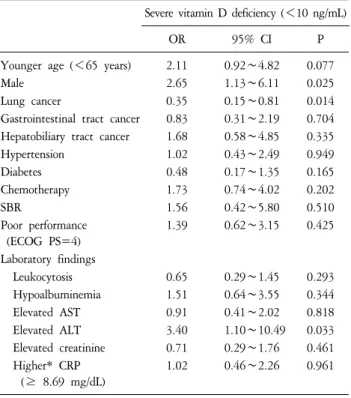
Table 2. Association of Demographic and Clinical Variableswith Low Vitamin D Levels by Univariate Logistic Analysis.
Severe vitamin D deficiency (<10 ng/mL)
OR 95% CI P
Younger age (<65 years) 2.11 0.92∼4.82 0.077
Male 2.65 1.13∼6.11 0.025
Lung cancer 0.35 0.15∼0.81 0.014
Gastrointestinal tract cancer 0.83 0.31∼2.19 0.704 Hepatobiliary tract cancer 1.68 0.58∼4.85 0.335
Hypertension 1.02 0.43∼2.49 0.949
Diabetes 0.48 0.17∼1.35 0.165
Chemotherapy 1.73 0.74∼4.02 0.202
SBR 1.56 0.42∼5.80 0.510
Poor performance (ECOG PS=4)
1.39 0.62∼3.15 0.425
Laboratory findings
Leukocytosis 0.65 0.29∼1.45 0.293
Hypoalbuminemia 1.51 0.64∼3.55 0.344
Elevated AST 0.91 0.41∼2.02 0.818
Elevated ALT 3.40 1.10∼10.49 0.033
Elevated creatinine 0.71 0.29∼1.76 0.461
Higher* CRP (≥ 8.69 mg/dL)
1.02 0.46∼2.26 0.961
SBR: small bowel resection, ECOG PS: Eastern Cooperative Oncology Group Performance Status, AST: aspartate aminotransferase, ALT:
alanine aminotransferase, CRP: C reactive protein. *More than mean value in the current sample.
3. 통계 분석
연속형 변수는 평균±표준편차로, 범주형 변수는 대상 자 수(빈도)로 표시하였다. 단변량 로지스틱 회귀분석을 통해 중증 비타민 D 결핍과 관련 있는 인자들을 일차적 으로 선별하였다. 단계적 로지스틱 회귀분석을 사용하 여, 단변량 분석에서 P<0.1인 인자들 중 최종적으로 중 증 비타민 D 결핍과 관계된(P<0.05) 변수를 선정하였 다. 모든 통계는 통계분석 프로그램 STATA SE 9 (STATA Corporation, Texas, US)를 이용하여 분석하였다.
결 과
대상자의 일반적 특성은 Table 1과 같다. 평균 나이는 64.8세였고, 성비 구성은 비슷하였다. 원발암은 폐암 (29.3%)이 가장 많았으며, 다음으로 간담도암(21.8%), 소 화기암(19.6%)순이었다. 동반 질환은 고혈압을 가진 환 자가 28.6%, 당뇨병이 있는 환자가 14.3%였다. 항암 치
료력이 있는 환자는 95명(71.4%)이었고, 소장 절제술을 받은 환자는 17명(12.8%)이었다. 신체활동도는 ECOG PS 3점 이상인 환자가 111명(83.4%)으로 대부분이 침상에 서 생활하는 환자였다. 혈청 비타민 D 결핍 환자가 전 체의 95%를 차지하였고, 심한 결핍 환자도 76%이었다.
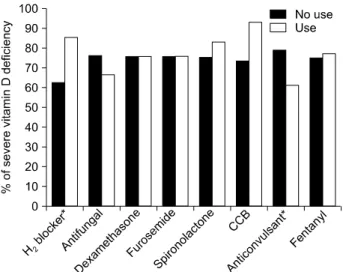
중증 비타민 D 결핍과 연관이 있는 인자는 65세 이 하의 젊은 나이(OR 2.11, 95% CI: 0.92∼4.82, P=0.077), 남성(OR 2.65, 95% CI: 1.13∼6.11, P=0.025), ALT 상승 (OR 3.4, 95% CI: 1.10∼10.49, P=0.033)이었고, 폐암 환 자는 다른 종류의 암환자에 비해 중증 비타민 D 결핍이 더 낮았다(OR 0.35, 95% CI: 0.15∼0.81, P=0.014). 그 외 에 항암치료, 장 절제 여부, 신장 기능, 신체활동도와는 연관성이 없었다(Table 2). 중증 비타민 D 결핍과 관련 있는 약물로는 H2 차단제 사용(OR 3.6, 95% CI: 1.56∼
8.31, P=0.003)과 항경련제의 비사용이었다(OR, 0.41, 95% CI: 0.16∼1.07, P=0.068) (Figure 1).
단변량 분석에서 유의한 인자에 대해 단계적 다중 회 귀 분석을 시행한 결과는 Table 3과 같다. 중증 비타민 D 결핍을 가질 가능성은, 남성이 여성에 비해 3.82배
Figure 1. Current medication and vitamin D status.
CCB: calcium channel blocker. *P<0.1 by univariate logistic regression analysis.
Table 3. Factors Associated with Severe Vitamin D Deficiency.
Stepwise logistic regression*
OR 95% CI P
Male gender 3.82 1.50∼9.72 0.005
H2 blocker users 3.94 1.61∼9.65 0.003
Subjects with elevated ALT levels 4.52 1.35∼15.19 0.015 ALT: alanine aminotransferase. *Includes variables such as age group, lung cancer and anticonvulsant use, besides the described variables.
(95% CI: 1.50∼9.72, P=0.005), H2 차단제를 사용한 환 자가 그렇지 않은 환자에 비해 3.94배(95% CI: 1.61∼
9.65, P=0.003), ALT 상승이 있는 환자는 그렇지 않은 환자에 비해 4.52배(95% CI: 1.35∼15.19, P=0.015) 더 높 았다.
고 찰
본 연구에서는 호스피스 병동에 입원한 말기암환자 를 대상으로 비타민 D 결핍 현황 및 그와 관련된 인자 를 찾고자 하였다. 본 연구 결과, 대상자의 94.7%가 비 타민 D 결핍을 보였고, 75.9%는 중증의 비타민 D 결핍 에 해당되었다. 중증 비타민 D 결핍과 관련된 인자에는 남성, H2 차단제의 사용, 그리고 ALT의 상승이었다.
본 연구에서 비타민 D 결핍 현황은 매우 심각하였다.
호스피스에 입원한 환자 대부분이 식욕 부진으로 못 먹 는 경우가 많고, 병원 안에서만 생활을 하여 일조량이 거의 없기 때문으로 생각이 된다. Stone 등(37)은 완화의 료를 받는 전이암 및 진행 암환자를 대상으로 88%에서 비타민 D가 결핍(20 ng/mL 이하)하다고 하였다. 그러나, 예후가 3개월 미만인 말기암환자는 아니었다. 본 연구 는 호스피스 병동에 입원한 말기암환자를 대상으로 비 타민 D 결핍 현황을 살펴보았다는데 의미가 있다. 이러 한 비타민 D 결핍이 짧은 여명을 갖는 말기암환자에게 어떤 임상적 의의를 갖게 될지에 대해서는 그들의 생존 기간이나 신체활동도와의 관련성에 대한 추가 연구가 있어야 하겠다. 그러나, 노인을 대상으로 한 연구에서
비타민 D가 근력 향상(9)과 낙상 예방(10)에 도움이 된 다고 알려져 있고, 암환자의 대부분이 고령임을 감안하 면 비타민 D 수치에 대한 관심이 필요하다고 생각된다.
본 연구에서는 기존 연구 결과와는 다르게 남자 환자 에서 비타민 D 결핍이 더 심하게 나타났다. Ginter 등 (38)은 224명의 60세 이상 노인에서 여자의 평균 비타민 D 수치는 33.8 ng/mL로 남자의 평균 28.8 ng/mL 보다 높 다고 발표한 바 있다. 비타민 D 수용체가 전립선, 고환, 정자 등 남성 생식기관에 있다는 것이 밝혀졌고(39), 남 성 호르몬의 계절성 변화가 비타민 D 농도의 계절성 변 화와 일치하며 둘 사이의 관련성이 제시된 바 있다(40).
말기암환자를 대상으로 하였고 남자 환자의 평균 나이 가 65세인 점을 감안하면 남성호르몬 수치가 낮을 가능 성이 높으며, 이로 인해 비타민 D 농도가 낮을 수 있다.
본 연구에서는 남성호르몬 수치를 측정하지 않아 비타 민 D와의 상관성을 명확히 알 수는 없지만, 고령의 남 자 환자에서 비타민 D 수치에 대해 더 세심한 관찰이 필요할 것으로 생각된다.
혈중 비타민 D 농도에 여러 가지 약물이 영향을 미 치는 것은 잘 알려진 사실이다(35). 본 연구에서는 H2
차단제의 사용이 중증 비타민 D 결핍과 유의한 연관이 있었다. 비타민 D는 간에서 25-hydroxylase에 의해 활성 화 되는데, H2 차단제는 25-hydroxylase 활성에 필요한 cytochrome P450 효소를 억제하여 25-(OH)D 생성을 방해 하기 때문이다(41). Odes 등(42)은 H2 차단제의 하나인 시메티딘을 복용하고 있는 위궤양 환자에서 약 복용을 중단하였을 때 25-(OH)D 농도가 상승하였다고 발표한 바 있다. 그러나, 다른 종류의 H2 차단제인 라니티딘은 동물실험에서 cytochrome P450 억제하지 않아 혈중 비타 민 D 농도에 영향을 미치지 않는다는 보고도 있다(43).
본 연구에서는 종류에 상관없이 H2 차단제 사용 여부만 조사한 한계는 있으나, 호스피스 말기암환자에서 H2 차 단제 사용은 혈중 비타민 D를 낮출 수 있으므로 꼭 필 요한 경우에만 사용하는 것이 바람직하겠다.
본 연구에서 ALT 상승이 중증 비타민 D 결핍과 연관 성이 있었는데, 이는 비타민 D의 대사과정에서 그 근거 를 찾을 수 있다. 25-(OH)D는 간세포 내 미립체와 미토 콘드리아에 존재하는 25-hydroxylase에 의해 합성되는데 (44), 간세포가 파괴되면 25-hydroxylase의 활성이 줄어들 어 혈중 25-(OH)D 농도가 떨어질 수 있다. 간기능 보호 제인 diphenyl-dimethyl-dicarboxylate 사용이 간세포 파괴 표지자인 AST/ALT 수치를 낮춘다는 연구 결과가 있지 만(45), 비타민 D 농도의 상승과도 연관성이 있는지에 대해서는 추가 연구가 필요하겠다.
다변량 분석에서는 유의하지 않았지만, 중증 비타민 D 결핍과 관련된 몇 가지 잠재적인 인자를 확인하였다.
첫째, 항경련제를 복용한 환자에서는 심한 비타민 D 결 핍이 적은 경향을 보였다. 항경련제 중 carbamazepine, phenobarbital, phenytoin과 primidone은 24-hydroxylase 효소 를 활성화시켜 비타민 D의 이화작용을 활발하게 하여 비타민 D 결핍을 일으키지만, gabapentin은 24-hydroxylase 를 활성화시키지 않는 것으로 알려져 있다(46). 호스피 스에서 사용되는 항경련제는 대부분 통증 완화를 목적 으로 gabapentin을 사용하기 때문에 비타민 D 농도에 영 향을 덜 미쳤다고 생각이 되나, 심한 비타민 D 결핍이 오히려 적은 경향을 보인 이유는 알 수 없었다. 둘째, 폐암 환자의 비타민 D 농도가 다른 암환자의 비타민 D 농도보다 높았는데, 이는 다른 암에 상당수가 포함된 소화기암 자체의 영향(17)과 항암치료약물(16)의 복합적 인 영향으로 생각된다.
본 연구에서 신체활동도는 비타민 D와 관련성이 없 었다. 일반적으로 비타민 D 결핍은 낙상과 관련이 있고 비타민 D 제제의 복용이 근육의 힘과 기능 향상에 도움 이 된다고 알려져 있으나(47,48), 한편에서는 노인 여성 에서 비타민 D 제제 복용이 낙상이나 골절을 예방하지 못했다는 연구도 발표된 바 있다(49). 본 연구에서는 대 상자의 83.4%가 ECOG PS 3∼4점으로 신체활동도가 매 우 저하된 환자들이 대부분이었기 때문에, 신체활동도 와의 연관성이 부각되지 않았던 것으로 생각된다. 이를 확인하기 위해서는, 다양한 정도의 신체활동도를 가진 환자군을 포함한 연구 또는 Karnofsky Performance Scale과 같은 넓은 범위의 기능 지표를 사용한 추가 연구가 필 요할 것이다.
본 연구는 몇 가지 제한점이 있다. 첫째, 후향적 연구 로 혈중 비타민 D 수치와 유의한 관련성을 보인 변수들 과의 인과관계를 알 수 없다. 둘째, 일개 기관의 자료만 을 사용하여 분석하였기 때문에 일반화하기 어렵다. 셋
째, 비타민 D 농도와 밀접한 관련이 있는 칼슘, 인과 부 갑상선호르몬 수치를 측정하지 않았다(50).
요약하면, 본 연구에서는 국내 호스피스 환자에서 심 각한 비타민 D 결핍 상태를 확인하였고, 남성, H2 차단 제의 사용, 그리고 ALT의 상승이 중증 비타민 D 결핍과 관련이 있음을 알 수 있었다. 본 연구결과는 향후 호스 피스 말기암환자에서 비타민 D 결핍의 임상적 의의에 대한 연구, 예를 들어, 신체활동도나 증상 조절과의 관 련성, 나아가 생존 기간과의 관계에 대한 추가 연구에 중요한 근거가 될 것으로 기대한다. 호스피스 말기암환 자의 비타민 D 결핍에 관심을 갖고 위와 같은 위험요인 을 갖는 환자의 경우에는 보다 세심한 관심이 필요하겠다.
요 약
목적:
암환자에서는 비타민 D 결핍이 흔하지만, 생애 말기암환자에서 비타민 D 결핍 현황에 대한 자료는 드 물다. 저자는 말기암환자를 대상으로 비타민 D 결핍 현 황 및 그와 관련된 인자를 파악하고자 하였다.방법:
일개 호스피스 병동에 입원하였던 말기암환자 133명을 대상으로 후향적 의무기록 관찰을 토대로 진행 되었다. 환자의 나이, 성별, 혈중 비타민 D 수치, 암 종 류, 신체기능, 약물, 그리고 혈액검사에 대한 자료를 수 집하였다. 잠재적인 혼란변수를 보정한 후, 다변량 분석 을 통해 혈청 비타민 D 결핍과 연관된 유의한 변수를 확인하였다. 혈청 비타민 D 수치 20 ng/mL 미만을 결핍, 10 ng/mL 미만을 중증 결핍으로 간주하였다.결과:
대상자의 95%는 혈청 비타민 D 결핍증 상태였 다. 남성, 비폐암 환자, H2 차단제 사용자, 항경련제 미 사용자에서 중증 비타민 D 결핍이 더 흔하였다. 혈중 alanine aminotransferase (ALT) 상승 또한 낮은 비타민 D 수치와 관련이 있었다. 다변량 분석에서 중증 비타민 D 결핍이 있을 가능성은, 남성이 여성에 비해 3.82배(95%CI: 1.50∼9.72, P=0.005), H2 차단제를 사용한 환자가 그 렇지 않은 환자에 비해 3.94배(95% CI: 1.61∼9.65, P=0.003), ALT상승이 있는 환자는 그렇지 않은 환자에 비해 4.52배(95% CI: 1.35∼15.19, P=0.015)였다.
결론:
말기암환자에서 비타민 D 결핍 상태는 매우 흔 했다. 남성, H2 차단제의 사용, 그리고 ALT의 상승이 중 증 비타민 D 결핍과 관련이 있었다.중심단어:
비타민 D 결핍, 호스피스, 암참 고 문 헌