• 검색 결과가 없습니다.

Effects of Nickel Supports on Hydrogen Permeability of Vanadium based Membrane

N/A
N/A
Protected

Academic year: 2021

Share "Effects of Nickel Supports on Hydrogen Permeability of Vanadium based Membrane"

Copied!
6
0
0

로드 중.... (전체 텍스트 보기)

전체 글

(1)

DOI: http://dx.doi.org/10.7316/KHNES.2013.24.3.200

니켈 지지체를 이용한 바나듐기 분리막의 수소 투과특성

조경원1ㆍ최재하1ㆍ정 석2ㆍ김경일3ㆍ홍태환3†ㆍ안중우4

1

충북대학교 신소재공학과,

2

명지대학교 신소재공학과,

3

한국교통대학교 신소재공학과,

4

성신여자대학교 청정융합과학과

Effects of Nickel Supports on Hydrogen Permeability of Vanadium based Membrane

KYOUNGWON CHO

1

, JAEHA CHOI

1

, JUNGSEOK

2

, RAYMUNDK.-I. KIM

3

, TAEWHAN HONG

3†

, JOONGWOO AHN

4

1

Dept. of Advanced Materials Engineering, Chungbuk National Univ., Cheongju, Chungbuk, 361-763, Republic of Republic of Korea

2

Dept. of Materials Science and Engineering, Myongji University, 116 Myeongji-ro, Cheoin-gu, Youngin, Gyeonggi-do, 449-728, Republic of Korea

3

Dept. of Materials Science and Engineering, Korea National University of Transportation, 50 Daehak-ro, Chnugju-si, Chungbuk, Republic of Korea

4

Dept. of Inter disciplinary ECO Science, Sungshin Women’s University, 55 Dobong-ro, 76 ga-gil, Gangbuk-gu, Seoul, 142-732, Republic of Korea

Abstract >> The separation of hydrogen depends on porosity, diffusivity and solubility in permeation membrane.

Dense membrane is always showing a solution diffusion mechanism but porous membrane is not showing.

Therefore, porous membrane has a good hydrogen flux due to pore is carried out transferred media. This mechanism is named as the Knudsen diffusion. Hydrogen molecules or hydrogen atoms are diffused along pore that is a mean free path. In this study, complex layer hydrogen permeation membrane was fabricated by hot press process. And then, it was evaluated and calculated to relationship between hydrogen permeability and membrane porosity.

Key words : Hydrogen separation(수소 분리), Hydrogen permeation(수소 투과), Diffusion(확산), Highly porous membrane(다공질 분리막), Nickel support(니켈 지지체), Membrane(분리막)

Corresponding author : [email protected]

[ 접수일 : 2013.4.01 수정일 : 2013.4.30 게재확정일 : 2013.6.30 ] Copyright ⓒ 2013 KHNES

1. Introduction

HRecently, the drastic increase of greenhouse gas by the use of fossil fuels has caused environmental problems such as global warming. Hydrogen energy

can solve environmental contamination problems

created by fossil energy. Moreover, as hydrogen

energy is limitless when compared to the limited

resources of fossil energy, it has been thrust into

the spotlight as a viable alternative to be used in

the future. Currently, in developed countries, active

research is being conducted on the production, storage,

and the use of hydrogen. However, the commerciali-

(2)

research fields of hydrogen, which are the electrolysis method, photoelectric/chemical method, thermo

chemical method and photo biological method, are known to be able to produce hydrogen.

As for the methods to separate only hydrogen from gas, including hydrogen, the methods of adsorption or separation membranes are common. For the adsorption method, development for practical use has advanced somewhat. In particular, a highly efficient method to separate hydrogen is to use a separation membrane.

This method has cost competitive power owing to low energy consumption, low investment cost and easy operation. The separation membrane methods are mainly divided into metal separation, polymer and ceramic membranes. As the separation membrane using metal is of low permeability and high selec- tivity, it has the advantage of obtaining high quality hydrogen

1)

.

However, it has the disadvantages of high produ- ction cost and a limited use cycle because of the use of expensive Pt and Pd. The separation membrane using polymer material is obtained from the method of coating catalysts, such as platinum and rhodium into a polymer support. The advantages are that the control of pores is easy and mass production is possible, but high temperature use is impossible and also damage of the separation membrane by particulate materials becomes a problem. Above all, they accom- pany disadvantages such as high cost, thermal insta- bility

2-5)

and brittleness resulting from the formation of PdH caused by the strong interaction of palladium and hydrogen. In order to mitigate these drawbacks, recent research has focused on other metals to substitute for palladium or membranes with composite metal supports

6)

.

And nickel was become knowing to high melting material, it has been used in increasing thermal stability. Therefore, nickel supported vanadium mem- brane has prevented hydrogen embrittlement using the V-Ni composite or alloy phase

7)

.

The separation of hydrogen depends on porosity, diffusivity and solubility in permeation membrane.

Dense membrane is always showing a solution diffusion mechanism but porous membrane is not showing.

Therefore, porous membrane has a good hydrogen flux due to pore is carried out as transferred media.

This mechanism is the Knudsen diffusion. Hydrogen molecules or hydrogen atoms diffuse along porosity that is a mean free path. In this study, complex layer hydrogen permeation membrane was fabricated by hot press process. Porous metallic membrane was captured some particles, large size molcules and high flux. And then, it is evaluated and calculated to obtain relationship between hydrogen permeability and membrane porosity.

2. Experimental Procedure

2.1 Low porous membrane (LP membrane) – Preparation of nickel support vanadium membrane

Vanadium (300μm, 3N, High Purity Chemicals Corp.) powder was milled using high energy mill.

(TH-1080, Taemyoung scientific corp.) Zirconia ball to powder weight ratio was 10:1 then milled up to 1h.

In order to get specimens for hydrogen permeation, the cold isostatic pressing (CIP) process was applied to the prepared disk shape specimens under 15MPa.

Then, nickel gauze (100mesh, woven from 0.1mm

dia wire, Wire Cloth, Alfa Aesar Corp.) was stacked

(3)

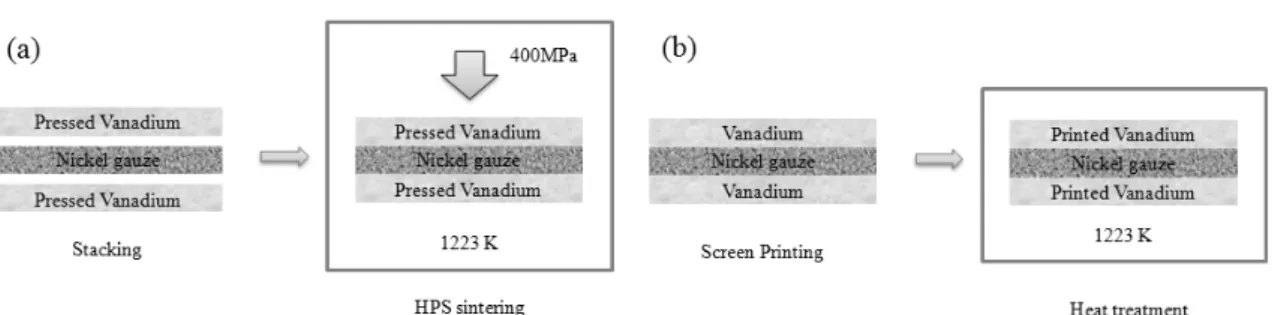
Fig. 1 These images shows fabrication process of (a) LP and (b) HP membranes

between vanadium. On nickel support vanadium was carried out heat treatment by HPS process. The condition of heat treatment was at 1223K and under vacuum. (1.3 × 10

-10

MPa) At the same time, it was carried out pressing under about 400MPa and maintained this condition as 2 hours. Then, sintered Nickel support Vanadium membrane was carried out polishing process on the surface. Fig. 1 shows fabri- cation process of membranes.

2.2 High porous membrane (HP membrane) – Preparation of nickel support vanadium membrane

This membrane was prepared to same method in grinding steps. Milled vanadium powder and organic binder were mixed at 1hour. This mixture was carried out screen printing on nickel gauze (100mesh, woven from 0.1mm dia wire, Wire Cloth, Alfa Aesar Corp.) and then drying. This step was repeated about 20 times over. This sample was sintered at 1223K under 1×10

-7

MPa) for 10hours. Then, sintered Nickel sup- port vanadium membrane was carried out polishing on surface.

2.3 Characterization and evaluations of membranes
Change of in the shape and structure for nickel support vanadium membrane was investigated through

scanning electron microscopy (SEM, Quanta-400, FEI Corp.) and x-ray diffraction analysis (XRD, D8 Advance, Bruker Corp.). Understanding the correlation for changing a specific surface area was attempted through BET (BEL sorp mini-II, BEL Corp.) analysis.

XRD analysis was measured over 10-90° range at a scanning speed of 0.03deg/min using Cu Kα ray of 1.54 Å. For BET, the specific surface area of vanadium membrane was measured using nitrogen adsorption.

Membrane was characterized by our permeability experiments with pure hydrogen gas. The equipments consist of a pressure controller, mass flow controller (MFC), permeation cell and a stainless steel 0.25 inch long tube capable of lasting at high temperature.

Before the test, it was purged under a hydrogen atmosphere for 1hour to remove contaminants on the sample surface. The temperature increased less than 5K/min to prevent cracking of the membrane by rapidly thermal difference, followed by the mem- brane being installed in the furnace. The Acme6000 gas chromatograph (GC) was used for composition analysis of permeated gas during testing. Nitrogen gas ws used as carrier gas and hydrogen concentration was measured by the thermal conductivity detector (TCD).

3. Results and Discussions

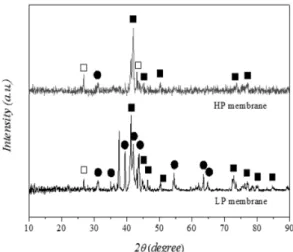
Fig. 2 shows x-ray diffraction patterns of LP and

(4)

Fig. 2 XRD patterns of LP and HP membranes (■; V, □;

Ni

0.97

V

3.03

, ●; CV

2

)

Fig. 3 SEM images of surfaces of LP and HP membranes (x 5,000)

HP membrane. The peak of LP and HP membrane had low x-ray intensity and a broad x-ray pattern.

This is attributed to nano sized particles or amor- phous phases formed by milling. Although nickel gauze was located between vanadium layers, Ni-V peaks were detected in Fig. 2.

Therefore, Ni was diffuse in vanadium and 1223K was appropriate temperature as heat treatment. And these peaks were improved mechanical strength due to most of mixture was had lower mechanical properties than alloy. The LP and HP membrane were detected carbide phase, which would decrease hydrogen permeability. Carbide phase exist in grain boundary thus carbide prevented hydrogen separation due to hydrogen separated in grain boundary

8)

. Carbide phase was formed in heat treatment process. Preparations of LP membrane was done by using HPS process, the chamber was consist of carbon textile. The HP membrane was fabricated in similar conditions.

Therefore, carbide peaks were detected.

Fig. 3 shows SEM morphologies of surface on LP (a) and HP (b) membrane. Fig. 3(a) shows dense morphology of surface, which seemed to like corrugated form. This membrane was no pore in

surface, therefore, hydrogen selectivity did not relate with porosity. It would depend to relate with only solubility and diffusivity of vanadium. This result could show similar consequence in BET analysis.

Otherwise, the HP membrane was observed pores

and globular shape particles. Therefore, if LP and

HP membrane had a same values of solubility and

diffusivity, HP membrane would have been high

hydrogen permeability than LP membrane due to

existence of pores on the surface and the high pore

volumes. Initially, it was easy and rapid hydrogen

absorption to exist pore on surface. And HP had a

one more hydrogen separation method, this was

transferring through porosity. On the other hand,

separation method of LP membrane was relied upon

membrane hydrogen solubility and diffusivity.

(5)

Table 1 Results of BET analysis on LP and HP membranes

LP membrane HP membrane BET surface area

(m

2

/g) 0.0464 17.7220

Total pore volume

(cm

3

/g) 0.0001 0.02695

Average pore diameter

(nm) 6.7475 6.0817

Structure Dense Porous

Gas diffusion mechanism

Solution diffusion

Solution &

Knudsen diffusion

Fig. 4 Results of hydrogen permeability on LP and HP membranes

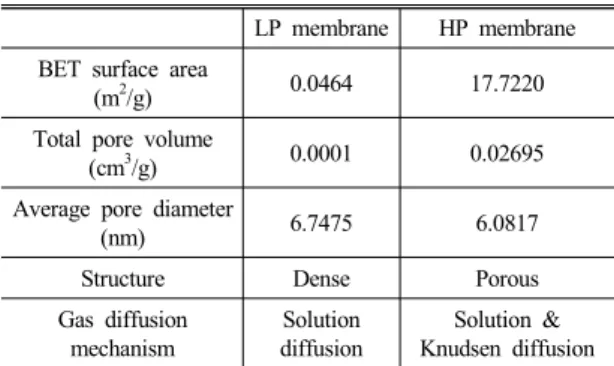
Table 1 shows results of BET analysis on LP and HP membrane. The pore size of LP membrane was measured, which is was similar to HP membrane.

However, the pore volume of LP membrane was lower than that of HP membrane, which specific surface area is 0.0464 m

2

/g. Although, this membrane’s pore size was included in Knudsen diffusion mechanism, pore volume was too low, the LP membrane was estimated having a dense micro structures. Therefore, in hydrogen separation reaction, the LP membrane would be hydrogen permeation by solution diffusion mechanism. And this membrane was dependent its solubility, diffusivity and thickness. In result of BET analysis on HP membrane, this membrane’s pore size was contained in Knudsen diffusion ranges which had a porous micro structure. Though this membrane had low pore volume, which would be having a composite (solution & Knudsen diffusion) diffusion mechanism to hydrogen separation. The LP membrane had high pore volume due to burn out binder. In burning out binder, this area would be empty space after heat treatment. Therefore, the LP membrane increased pore volume and specific surface area.

Fig. 4 shows the hydrogen permeability of HP and LP membrane. The LP membrane was evaluated hydrogen permeability to dependent temperature and hydrogen pressure. This result was revealed similar trend in BET consequence. The LP membrane was

measured about to hydrogen permeation by virtue of solution diffusion mechanism. And the HP membrane was un related to increasing temperature, therefore this membrane was dependent in Knudsen diffusion.

In HP membrane, hydrogen gas was more activated along the increasing temperature. Therefore hydrogen gas was occurred interfering effect with each others in upsteam part. Thus HP membrane was measured decreasing hydrogen permeability with increasin temperature. These membrane was evaluated hydrogen permeability higher than Yoichiro Shimpo’s membrane

9)

. The LP membrane was dependent on vanadium’s solubility and diffusivity, thus hydrogen permeability was directly proportional increasing temperature. In considering only hydrogen permeability values, the HP membrane was proposed instead of Pd-Ag amorphous membrane. However, this membrane had Knudsen diffusion which was supposed to hydrogen selectivity test. The HP membrane was dependent on its porosity.

The diffusivity was determined in the following equation.



  ∙ 



∙    



(1)

(6)

D

KA

is thus dependent on the pore diameter, species A molecular weight and temperature

10)

.

The HP membrane was calculated Knudsen diffu- sion coefficient of which was 0.0359, 0.0401, 0.0452, 0.0497 and 0.0539 at RT, 373, 473, 573 and 673, respectively.

4. Conclusions

In this study, the LP and HP membrane were fabricated and evaluated, and the following conclu- sion can be drawn.

The LP membrane had a dense micro structure because of HPS process. This membrane was evaluated high hydrogen permeation than previous work and it was dependent on temperature, hydrogen pressure and its thickness. The LP membrane was dependent on vanadium’s solubility and diffusivity, that is solution diffusion.

The HP membrane had a porous micro structure due to burn out binder. This membrane was calcul- ated a high hydrogen permeabiltiy than the LP membrane. This membrane was dependent on its porosity and unrelated temperature, solubility, diffu- sivity and thickness. This membrane had a Knudsen diffusion. This membrane was supposed to alternative of Pd-Ag amorphous membrane.

Acknowledgements

This work was supported by the National Research Foundation of Korea Grant Funded by the Korean Government (MEST) (NRF-2009-0093168).

1. M. D. Dolan, N. C. Dave, A. Y. Ilyushechkin, L.

D. Morpeth, K.G. MaLennan, “Composition and operation of hydroge-selective amorphous alloy membranes”, J. Membr. Sci., Vol. 285, 2006, p. 30.

2. S. Hara, K. Sakaki, N. Ithoh, H.-M. Kimura, K.

Asami, A. Inoue, “An amorphous alloy membrane without noble metals for gaseous hydrogen separation”, J. membr. Sci., Vol. 161, 2000, p. 289.

3. B. MaCool, G. Xomeritakis, T. S. Lin, “Compo- sition control and hydrogen permeation charac- teristics of sputter deposited palladium-silver membranes”, J. membr. Sci., Vol. 161, 1999, p. 67.

4. Y. Zhang, T. Ozaki, M. Komaki, C. Nishmura,

“Hydrogen permeation of Pd-Ag alloy coated V-15Ni composite membrane: effcts of overlayer composition”, J. membr. Sci., Vol. 224, 2003, p. 81.

5. Kyeong-Il Kim, Sung-Woong You, Tae-Whan Hong, “Fabrications and evaluations of hydrogen permeation on TiN-M (Co, Ni) composite mem- brane”, Trans. of the Korean Society of Hydrogen Energy, Vol. 21, No. 4, 2010, p. 264.

6. J. Hulme, M. Komaki, C. Nisimura, J. Gwak,

“The effeccts of gas mixtures on hydrogen permeation through Pd-Ag/V-Ni alloy composite membrane”, Curr. App. Phy., Vol. 11, 2011, p. 972.

7. M. D. Dolan, J. membr. Sci., “Non-Pd BCC alloy membranes for industrial hydrogen separation”, Vol. 362, 2010, p. 12.

8. Y. S. Lin, Separation and Purification Tech.,

“Microporous and dense inorganic membranes:

current status and prospective”, Vol. 25, 2001, p. 39.

9. Y. Shimpo, S.-I. Uamaura, M. Nishida, H. Kimura, A. Ionue, J. membr. Sci., “Permselectivity of a nickel/ceramic composite membrane at elevated temperatures: A new prospect in hydrogen”, Vol.

288, 2007, p. 208.

10 M. Gitterman, “Mean first passage time for anomalous diffusion”, Physical Review E, Vol.

62, 2000, p. 6065.

수치

Fig. 1 These images shows fabrication process of (a) LP and (b) HP membranes
Fig. 3 SEM images of surfaces of LP and HP membranes  (x 5,000)
Fig. 4 Results of hydrogen permeability on LP and HP  membranes

참조

관련 문서

The limit is therefore the carbon char as a carrier utilizing only 27% of available hydrogen but sequestering 91kg of carbon dioxide (as measured experimentally) per million

(4)the spiral ganglion (5)the auditory nerve fibres.. The Basilar Membrane is a Mechanical Analyzer of Sound Frequency The Basilar Membrane is a Mechanical Analyzer of

화학시냅스에서 시냅스전뉴런의 활동전압이 시냅스후 뉴런으로 전도되는 과정. Principles of Neuroscience, Kandel

(2011) Anaerobic fluidized bed membrane bioreactor

The result of using PLGA nanofiber membrane with bone graft material showed that the PLGA nanofiber membrane in the experimental group of 2 weeks were ten times more new

Comparison of the acyclovir fluxes across hairless mouse skin and artificial membranes (polyether block amide (PBA) membrane, polyurethane (PU) membrane,

 Ultrafiltration almost always involves a large flow across the membrane surface, perpendicular to the flux through the membrane..  When solid particles are being

Through Simulation, we discovered that the heat and mass transfer efficiency of the porous metal foam membrane humidifier was higher, and the pressure drop was