ISSN 0367-6315 (Print) / ISSN 2288-2162 (Online) Korean J. Soil Sci. Fert. 47(3), 213-216 (2014) http://dx.doi.org/10.7745/KJSSF.2014.47.3.213
ACC Deaminase Producing Arsenic Tolerant Bacterial Effect on Mitigation of Stress Ethylene Emission in Maize Grown in an Arsenic Polluted Soil
Charlotte C. Shagol, Parthiban Subramanian, Ramasamy Krishnamoorthy, Kiyoon Kim, Youngwook Lee, Chaemin Kwak, Suppiah Sundaram, Wansik Shin1, and Tongmin Sa*
Department of Environmental and Biological Chemistry, Chungbuk National University, Cheongju, 361-763, Korea
1Institute of Planning and Evaluation for Technology in Food, Agriculture, Forestry and Fisheries, Anyang, 431-810, Korea
(Received: May 28 2014, Accepted: June 11 2014)
Arsenic is a known hazardous metalloid not only to the animals but also to plants. With high concentrations, it can impede normal plant growth and cause even death of plants at extremely high levels. A known plant response to stress conditions such as toxic levels of metal (loids) is the production of stress ethylene, causing inhibitory effect on root growth in plants. When the effect of various arsenic concentrations was tested to maize plant, the stress ethylene emission proportionately increased with increasing concentration of As(V).
The inoculation of two arsenic tolerant bacteria; Pseudomonas grimonti JS126 and Pseudomonas taiwanensis JS238 having respective high and low 1-aminocyclopropane-1-carboxylate (ACC) deaminase activity reduced stress ethylene emission by 59% and 30% in maize grown in arsenic polluted soils. The result suggested the possible use of Pseudomonas grimonti JS126 for phytoremediation of arsenic polluted soils.
Key words: ACC deaminase, Arsenic tolerant bacteria, Maize, Stress ethylene
(A) (B)
Effect of different levels of arsenic (A) and ACC demainase producing arsenic tolerant bacterial inoculation (B) on ethylene emission in maize plants.
Article
1)
*Corresponding author : Phone: +82432612561, Fax: +82432715921, E-mail: [email protected]
§Acknowledgement: This work was conducted during the research year of the Chungbuk National University in 2012.
ACC Deaminase Producing Arsenic Tolerant Bacterial Effect on Mitigation of Stress Ethylene Emission in Maize Grown in an Arsenic Polluted Soil
214
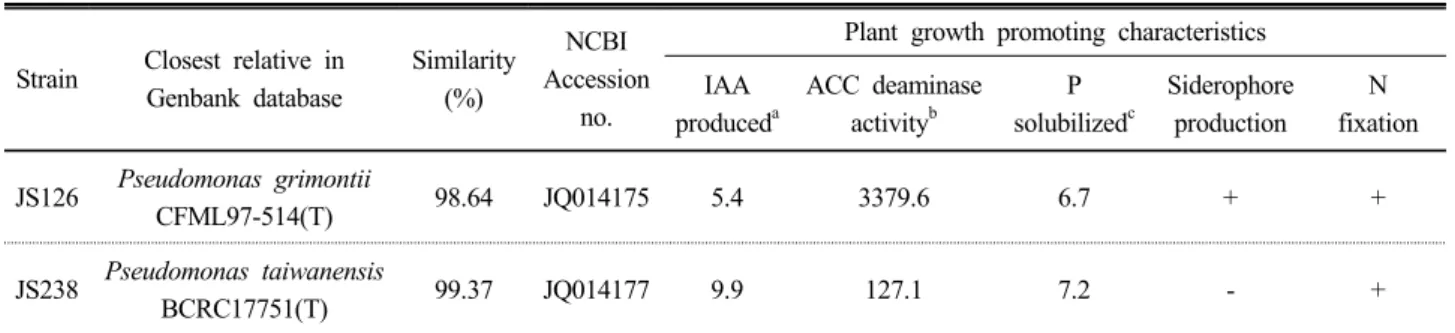
Table 1. ACC deaminase producing As-tolerant bacterial strains used in the study (Shagol et al. 2014).
Strain Closest relative in Genbank database
Similarity (%)
NCBI Accession
no.
Plant growth promoting characteristics IAA
produceda
ACC deaminase activityb
P solubilizedc
Siderophore production
N fixation
JS126 Pseudomonas grimontii
CFML97-514(T) 98.64 JQ014175 5.4 3379.6 6.7 + +
JS238 Pseudomonas taiwanensis
BCRC17751(T) 99.37 JQ014177 9.9 127.1 7.2 - +
aµg ml-1; bnmol α-ketobutyrate mg-1 protein h-1; cgl-1; + activity/production detected; - activity/production not detected.
Introduction
Arsenic, a toxic metalloid to the living being, needs appropriate technologies for its removal from the polluted environment. In Korea, the sources of metals and metalloids causing soil and groundwater contaminations are derived directly or indirectly from mining sites, smelters or domestic wastewater, solid wastes, and sewage sludge (Yang et al., 1999). The smelter industry and the combustion of fossil fuels constitute a considerable amount of metals and metalloids in the soil and groundwater. Among them, Cd, Cr, Cu, Hg, Pb, Zn, and As are the major concern in Korea for their phytotoxic effects in plants (Kim, 1993). Arsenic affects many physiological processes in plants leading to the production of stress ethylene (Finnegan and Chen, 2012). The stress ethylene inhibits root elongation, induces hypertrophies, speeds aging, promotes senescence and causes abscission in plants.
High levels of ethylene lead to abnormal root growth, ultimately affecting normal plant growth and development (Saleem et al., 2007).
A suitable interaction of plants and bacteria could be a potential strategy for enhancing the plant growth under arsenic stress (Glick and Stearns, 2011). Microorganisms can directly remove or influence mobility and availability of arsenic in the soil. Furthermore, a certain group of microorganisms can influence plants with plant growth promoting (PGP) mechanisms. One of the PGP traits of bacteria is 1-amino- cyclopropane-1-carboxylate (ACC) deaminase production which has an important role in alleviating stress ethylene effect in plants. ACC deaminase producing bacteria act as a sink for excessive levels of ACC under stress conditions thereby reducing stress ethylene level in the plants (Glick, 2003). However, arsenic induced stress ethylene emission in plants has not been studied. Hence this study was conducted to find out the effect of different As(V) concentration on stress ethylene production in maize and evaluate ACC deaminase producing arsenic tolerant bacteria inoculation on mitigating stress ethylene emission in maize grown in an abandoned smelter polluted soil containing arsenic.
Materials and methods
Bacterial strains used Two arsenic tolerant bacteria (Pseudomonas grimonti JS126 and Pseudomonas taiwanensis JS238) previously isolated, identified and characterized from the vicinity of the abandoned Janghang smelter located in Chungnam, South Korea were used in the present study.
Their ACC deaminase enzyme activity and other characters are presented in Table 1 (Shagol et al., 2014). The arsenic tolerant bacteria grown in nutrient agar were inoculated in 250 mL nutrient broth. The cultures were incubated with 150 rpm for 24–36 h at 30°C until reaching 1.0 OD600.
Effect of different concentrations of arsenic on ethylene emission in maize plants Three hundred grams of growing mix (containing 65-70% cocoa peat, 15-20% peat moss, 8-10% perlite and macro-nutrient (mg L-1) 80-100 mg NH4-N, 150-200 mg NO3-N, 230-330 mg available P2O5,
80-120 mg K2O, pH 5.5 to 6.5, moisture content 50-60%
and water holding capacity 35-40%) was placed in 2 kg pots. The pots were saturated with different concentration of As(V) at 0, 29 µM, 43 µM, and 58 µM, respectively and placed in the greenhouse, covered with plastic and allowed to stabilize for 25 days. Field maize seeds (Zea mays L.) were surface sterilized (70% ethanol, 1 min; 6%
NaOCl, 5 min) before sowing in the pots. Hoagland solution and water were regularly supplied. The experiment was con- ducted in a completely randomized block design in a greenhouse with 4 treatments and 3 replications. The plants were harvested 35 day after sowing (DAS) to determine ethylene emission from the roots.
Effect of ACC deaminase producing arsenic tolerant bacteria on ethylene emission in maize plants Another greenhouse experiment was conducted with soil collected at 240 m distance from the closed Janghang smelter, Chungnam, South Korea. The total arsenic content of the soil was 110 mg kg-1. Pots were filled with 2 kg of composited soil mixed with 40 g of compost (containing NH4-N, <600 mg L-1; NO3-N <300 mg L-1; Phosphate, <500 mg L-1).
Charlotte C. Shagol, Parthiban Subramanian, Ramasamy Krishnamoorthy, Kiyoon Kim, Youngwook Lee, Chaemin Kwak, Suppiah Sundaram, Wansik Shin, and Tongmin Sa
215
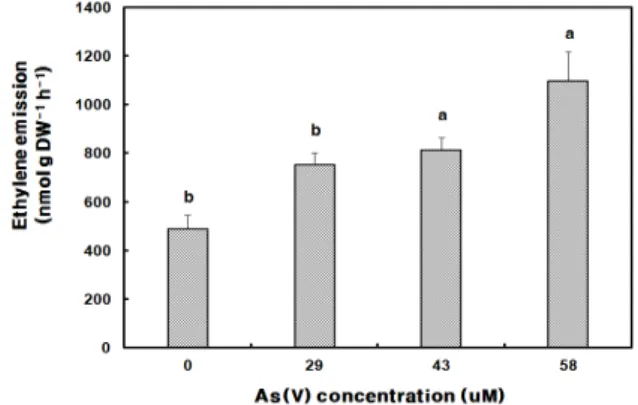
Fig. 1. Effect of different concentrations of As(V) on the ethylene emission in maize plants grown in greenhouse.
Values are means of three replications ± SD.
Field maize (Zea mays L.) seeds were surface sterilized as described previously. The bacterial cultures of Pseudomonas grimonti JS126 and Pseudomonas sp. JS238 grown in nutrient broth were centrifuged and cell pellets were suspended in distilled water to have 1.0 OD at 600nm. Five mL of the bacterial suspension was inoculated to the 10 g maize seeds placed in petridishes. The plates were kept on a rotary shaker for 4 h. Three maize seeds were sown in each pot and irrigated with 200 mL of water. Hoagland solution and bacterial inocula were supplied at 14 DAS and every 7 days thereafter. Pots were arranged in a completely randomized design with six replications. The plants were harvested at 42 DAS and ethylene emission from the roots was determined.
Determination of stress ethylene production Ethylene emission of plant roots was measured by placing washed and pat dried roots in 490 mL glass jars (Madhaiyan et al., 2007). The jars were capped after 30 min. One milliliter headspace gas was sampled from each jar after 4 h incubation at room temperature. The gas samples were injected into a gas chromatograph (dsCHROM 6200, Donam Instruments Inc., Republic of Korea) packed with a Poropak-Q column at 70°C and equipped with a flame ionization detector.
The gas chromatograph was adjusted to 40, 150 and 250°C for oven, injection and detection temperatures, respectively.
The flow rates of N2, H2 and air were 35, 30 and 300 mL min-1. The amount of ethylene produced was expressed as nmol of ethylene mg DW-1 h-1 by comparing to the standard curve generated with pure ethylene (Praxair, Praxair Korea Co., Ltd).
Statistical analysis Data on the growth parameters and ethylene emission of maize were subjected to analysis of variance (ANOVA). Mean separation at P≤0.05 level of significance was tested by Duncan’s Multiple Range Test using the SAS package, Version 9.1.3.
Results and Discussion
Effect of different concentration of arsenic on ethylene emission in maize plants High levels of metals can increase ethylene levels in plants and increased levels of ethylene can be an indication of metal toxicity. In the present study, ethylene emission in maize significantly increased by 54%, 66%, and 125% over the control with increasing As(V) concentrations of 29 µM, 43 µM, and 58 µM (Fig.
1). Ethylene production in plants is influenced by several biotic and abiotic factors. Chilling and freezing, high- temperature, excessive water or flooding, drought, chemical, radiation, mechanical, metals and metalloid stresses are known abiotic factors that regulate ethylene production in
plants (Abeles et al., 1992). Detailed studies on the effect of arsenic on stress ethylene production in plants are scarce but their association with other metals like Co, Cu and Cd on ethylene production has been studied more extensively.
Copper exposed plants showed increased ethylene levels leading to accelerated senescence of plants (Pennazio and Roggero, 1992; Maksymiec and Baszynski, 1996). Heavy metals such as Cd increased ACC oxidase activity, ACC, and ethylene emission (Stearns and Glick, 2003). Stearns and Glick (2003) demonstrated a small ethylene peak occurring shortly upon exposure to stress initiating a protective responses in plants, while another larger peak accelerating senescence, chlorosis and abscission in plants. Since high levels of ethylene have detrimental and inhibitory effect on root growth and ultimately plant growth, strategies to regulate ethylene production in the rhizosphere is vital especially under stress conditions such as high levels of arsenate. An effective strategy to mitigate the effect of stress ethylene in crops is inoculation of plant growth promoting bacteria specifically those containing the enzyme ACC deaminase acting as a sink for the increased concentration of ACC under stress conditions (Glick et al., 2007). This can be a feasible approach in alleviating the inhibitory effects of stress ethylene to plants and could be eventually more efficient in arsenic contaminated soil.
Effect of ACC deaminase producing arsenic tolerant bacteria on ethylene emission in maize plants In the present study, we have selected two arsenic tolerant bacteria possessing varied ACC deaminase activity from our earlier study, isolated from the Janghang smelter polluted soils (Shagol et al. 2014) to find out their relative ability in reducing the stress ethylene emission from maize root grown in the same smelter polluted soil. We found that maize plants inoculated with ACC deaminase producing bacteria had significantly low level of ethylene (Fig. 2). Inoculation with arsenic tolerant Pseudomonas grimonti JS126, with
ACC Deaminase Producing Arsenic Tolerant Bacterial Effect on Mitigation of Stress Ethylene Emission in Maize Grown in an Arsenic Polluted Soil
216
Fig. 2. ACC deaminase producing arsenic tolerant bacterial inoculation effect on ethylene emission in maize plants grown in arsenic contaminated soil. Asterisk indicates significant difference of the treatment compared to control by LSD test (P≤0.05).
higher ACC deaminase activity reduced the ethylene emission by 59% compared to non-inoculated control. Whereas inoculation with Pseudomonas taiwanensis JS238 with comparatively less enzyme activity could reduce ethylene production in maize roots at a low level of 30%. The enzyme ACC deaminase (E.C. 4.1.99.4) cleaves ACC, the immediate precursor of ethylene in plants, to form ammonia and α -ketobutyrate, thus lowering stress ethylene level in plants (Glick et al., 2007; Siddikee et al., 2010). The ACC deaminase producing bacteria in the rhizosphere serves as a sink for excess ACC produced in the plants during stress conditions leading to unhindered root growth (Arshad et al., 2007). While it was expected that inoculation of ACC deaminase containing bacteria would influence ethylene production, their relative ability for the reduction of stress ethylene emission from the roots of maize plants grown in arsenic polluted soils differed corresponding to their relative ACC deaminase activity.
Conclusion
The present study concludes that the higher levels of toxic arsenate can induce stress ethylene emission from the maize roots. ACC deaminase producing arsenic tolerant bacteria can help to mitigate the ethylene level in maize and perhaps the effect will be more pronounced under the higher arsenic conditions. Arsenic tolerance, reduction, oxidation and several PGP characters in the bacterial isolates tested can be further explored to improve the phytoremediation in arsenic contaminated soils.
References
Abeles, F.B., P.W. Morgan, and M.E. Jr Saltveit. 1992. Ethylene in plant biology. Academic Press, London.
Arshad, M., M. Saleem, and S. Hussain. 2007. Perspectives of bacterial ACC-deaminase in phytoremediation. Trends Biotechnol.
25:356-362.
Finnegan, P.M., and W. Chen. 2012. Arsenic toxicity: the effects on plant metabolism. Front. Physiol. 43:1-18.
Glick, B.R. 2003. Phytoremediation: Synergistic use of plants and bacteria to clean up the environment. Biotechnol. Adv.
21:383-393.
Glick, B.R., B. Todorovic, J. Czarny, Z. Cheng, J. Duan, and B.
McConkey. 2007. Promotion of plant growth by bacterial ACC deaminase. Crit. Rev. Plant Sci. 26:227-242.
Glick, B.R., and J.C. Stearns. 2011. Making phytoremediation work better: Maximizing a plant’s growth potential in the midst of adversity. Int. J. Phytoremediat. 13:4-16.
Kim, B.Y. 1993. Soil Pollution and improvement countermeasures.
p. 68-98. In: Soil Management for Sustainable Agric. Kor, Soc, Soil Fert, Suwon, Korea.
Madhaiyan, M., S. Poonguzhali, and T.M. Sa. 2007. Characterization of 1-aminocyclo-propane-1-carboxylate (ACC) deaminase containing Methylobacterium oryzae and interactions with auxins and ACC regulation of ethylene in canola (Brassica campestris). Planta. 226:93-100.
Maksymiec, W., and T. Baszynski. 1996. Chlorophyll fluorescence in primary leaves of excess Cu-treated runner bean plants depends on their growth stages and the duration of Cu action.
J. Plant Physiol. 149:196-200.
Pennazio, S., and P. Roggero. 1992. Effect of cadmium and nickel on ethylene biosynthesis in soybean. Biol. Plant.
34:345-349.
Saleem, M., M. Arshad, S. Hussain, and A. Bhatti. 2007.
Perspective on plant growth promoting rhizobacteria (PGPR) containing ACC deaminase in stress agriculture. J. Ind.
Microbiol. Biotechnol. 34:635-648.
Shagol, C.C., R. Krishnamoorthy, K.Y. Kim, S.P. Sundaram, and T.M. Sa. 2014. Arsenic tolerant plant growth promoting bacteria isolated from arsenic polluted soils in South Korea.
Environ. Sci. Pollut. Res. Int. doi: 10.1007/s11356-014- 2852-5.
Siddikee, M.A., P.S. Chauhan, R. Anandham, G.H. Han, and T.M. Sa. 2010. Isolation and characterization, and use for plant growth promotion under salinity stress, of ACC deaminase- producing halotolerant bacteria derived from coastal soil. J.
Microbiol. Biotechnol. 20:1577-1584.
Stearns, J.C., and B.R. Glick. 2003. Transgenic plants with altered ethylene biosynthesis or perception. Biotechnol. Adv.
21:193-210.
Yang, J.E., Y.K. Kim, J.H. Kim, and Y.H. Park. 1999.
Environmental impacts and management strategies of trace metals in soil and groundwater in The Republic of Korea. p.
270-289. In: P.M. Huang, I.K. Iskandar (eds.) Soils and groundwater pollution and remediation Asia, Africa, and Oceania. CRC Press, New York, USA.