• 검색 결과가 없습니다.

Unravelling Polycystic Ovary Syndrome and Its Comorbidities

N/A
N/A
Protected

Academic year: 2021

Share "Unravelling Polycystic Ovary Syndrome and Its Comorbidities"

Copied!
13
0
0

로드 중.... (전체 텍스트 보기)

전체 글

(1)

Unravelling Polycystic Ovary Syndrome and Its Comorbidities

Kyung-Wook Kim

1,2,

*

1

Division of Endocrinology and Metabolism, Department of Internal Medicine, Dongtan Jeil Women’s Hospital and Sangwoon Medical Institute, Hwaseong;

2

Severance Institute for Vascular and Metabolic Research, Yonsei University College of Medicine, Seoul, Korea

Polycystic ovary syndrome (PCOS) is a chronic multisystem endocrine disorder that affects women of reproduc- tive age. In the ovary, the dynamic balance between dormant and growing follicles that culminates in ovulation becomes dysfunctional in the presence of excessive androgen production (ovarian/adrenal/peripheral). More- over, hyperandrogenicity in pregnancy affects fetal development in utero and is linked to maternal pregnancy complications. Hormonal imbalance, ovarian dysfunction, and central obesity often emerge in these patients during adolescence. Once disordered physiological changes develop in PCOS, a vicious cycle ensues, leading to reproductive, metabolic, and psychological comorbidities. With the alarming increase of the number of young adults with a high degree of obesity in Korea, the prevalence of PCOS has also considerably increased. Timely and accurate screening, multicomponent healthy lifestyle modifications for both patients and family members, and comprehensive medical interventions based on international evidence-based guidelines are essential for curtailing PCOS and its comorbidities.

Key words: Polycystic ovary syndrome, Androgens, Adrenal gland, Insulin resistance, Anti-Müllerian hormone

Received April 3, 2021 Reviewed May 11, 2021 Accepted May 22, 2021

* Corresponding author Kyung-Wook Kim

https://orcid.org/0000-0002-8817-6929 Division of Endocrinology and Metabolism, Department of Internal Medicine, Dongtan Jeil Women’s Hospital and Sangwoon Medical Institute, 144-6 Samsung 1-ro, Hwaseong 18450, Korea Tel: +82-31-8015-9995 Fax: +82-31-8015-5280 E-mail: [email protected]

INTRODUCTION

Polycystic ovary syndrome (PCOS) is the most commonly diag- nosed endocrine disorder, with a prevalence of up to 20%

1

among reproductive-aged women worldwide. PCOS affects women’s health starting before conception and extending throughout the lifespan

2

(Fig. 1). Despite its prevalence, PCOS is a challenging condition to diagnose and manage, and guidelines can vary along with patient age. The initial manifestations of PCOS, such as irregular menstru- ation, acne, and multi-follicular ovarian morphology, may develop during adolescence.

2

Subsequently, reproductive comorbidities (subfertility and pregnancy complications), metabolic comorbidi- ties (dyslipidemia, impaired glucose tolerance, type 2 diabetes mel- litus, hypertension, and cardiovascular disease), and psychological

comorbidities (low self-esteem, anxiety, depression, eating disorders, psychosexual dysfunction, and poor quality of life) that are associ- ated with PCOS also emerge.

3

Obesity and the prevalence of PCOS are highly correlated with each other. The accompanying obesity rate in PCOS patients varies from 50% to 80%, depending on ethnicity and the study popula- tion.

4

The prevalence of overweight or obesity has nearly tripled in the last 40 years;

5

in Korean, there has been an alarming increase in young adults (20–39 years of age) with a high degree of obesity.

6

Furthermore, Asian women tend to accumulate more visceral fat than Caucasian women.

5

From 2005 to 2015, the incidence rates of PCOS increased by 3.5- to 4.0-fold according to the increase in waist circumference and body mass index (BMI) based on the Ko- rean National Health Insurance Service cohort.

7

This paper will re-

Copyright © 2021 Korean Society for the Study of Obesity

This is an Open Access article distributed under the terms of the Creative Commons Attribution Non-Commercial License (https://creativecommons.org/licenses/by-nc/4.0/) which permits unrestricted non-commercial use, distribution, and reproduction in any medium, provided the original work is properly cited.

eISSN 2508-7576

2017-03-16 https://crossmark-cdn.crossref.org/widget/v2.0/logos/CROSSMARK_Color_square.svg
Review

(2)

view the precise pathophysiology of PCOS, its challenging diagno- sis, and evidence-based treatments for the condition and its comor- bidities.

PATHOPHYSIOLOGY

The pathogenesis of PCOS is complex and includes genetic, en- vironmental, and transgenerational components. Dysfunction in multiple aspects of the hypothalamic-pituitary-ovarian/adrenal axis that interacts with genetic influences, epigenetic changes, nutrient excess, insulin resistance/hyperinsulinemia, inflammatory factors, ectopic fat storage, and intrinsic differences in steroidogenesis can lead to the development of PCOS.

8

An evolutionary perspective

An evolutionary origin involving thrifty genotypes and pheno- types with a survival advantage has been suggested to explain prev- alent insulin-resistant metabolic disorders including obesity and di- abetes mellitus.

9

Such a benefit has also been proposed to be pres-

ent in carriers of 21-hydroxylase deficiency

10

(the most common form of congenital adrenal hyperplasia, which is typified by adrenal androgen excess) and PCOS.

10-12

Early maturation of the reproduc- tive axis, increased androgen secretion with forceful behavior, sub- fertility that extends the interval between pregnancies, and oligo- ovulation that leads to pregnancies at older ages are the causes of the survival advantage in women with PCOS and their off- spring.

10-12

Recently, Kim and Choi

13

reviewed the embryonic development

and adult regeneration of the adrenal gland. Interestingly, the fetal

development of both the adrenal cortex and gonads is established

from clusters of bipotential adrenal gonadal precursors, called the

adrenogonadal primordium, 4 to 6 weeks after conception in hu-

mans. The fetal zone of the adrenal gland emerges in the inner cor-

tex, synthesizing dehydroepiandrosterone (DHEA) and its sulfated

derivative (DHEAS). These androgens serve as sources of placen-

ta-derived 17β-estradiol, which is essential for maintaining preg-

nancy. At 8 to 9 weeks after conception, early cortisol synthesis

from the translational zone located in the intermediate region plays

Figure 1. The life cycle of women with polycystic ovary syndrome. The complexities and interactions of some of the relevant modulating factors are listed from the perina-

tal period into adolescence and adulthood.

2

AMH, anti-Müllerian hormone; HPA, hypothalamic-pituitary-adrenal; HPG, hypothalamic-pituitary-gonadal; SGA, small for ges-

tational age; LGA, large for gestational age; 11β-HSD1, 11β-hydroxysteroid dehydrogenase type 1.

(3)

a role in protecting normal female sexual development by inhibit- ing the production of adrenal androgens under the negative regula- tion of the fetal hypothalamic-pituitary-adrenal axis. Three months after birth, adrenal androgen secretion rapidly decreases. Subse- quently, the innermost zona reticularis of the adrenal gland gradu- ally forms and begins to synthesize androgens again from approxi- mately 6 to 8 years of age, a period known as adrenarche in hu- mans.

13

During the first acceleration of growth and maturation, an exag- gerated adrenarche may occur during childhood (4 to 9 years of age), resulting in a relatively tall stature, early pubarche (appearance of pubic hair driven by high levels of circulating DHEAS), and an advanced bone age.

14

The second of growth and maturation may result from early and/or rapidly advancing puberty (i.e., breast de- velopment driven by luteinizing hormone [LH] hypersecretion and ovarian estrogen secretion) and could potentially lead to early menarche.

15

Many associations between an earlier menarche and augmented morbidity in adulthood may be based on even closer associations between greater central adiposity in childhood and greater morbidity later in life.

16

The interplay between insulin resistance and androgen excess

PCOS results from a vicious cycle of abdominal adipose tissue deposition and visceral adiposity by inducing insulin resistance and compensatory hyperinsulinism, which further facilitate excess an- drogen secretion by the ovaries and adrenal glands.

17

Conversely, as PCOS is mainly a hyperandrogenic disorder, increasing evidence suggests that androgen excess is not only a major mechanism in the oligo-ovulation of the syndrome but is also a facilitator in insulin resistance and metabolic dysfunction development by favoring ab- dominal and visceral adiposity (Fig. 2).

17,18

Under normal circumstances, the ovaries and adrenal glands have an almost equal contribution to testosterone production. Ap- proximately half of testosterone production originates from direct testosterone secretion by the ovaries and adrenal glands, whereas the other half is derived from the peripheral conversion of circulat- ing androstenedione, which itself arises from approximately equal ovarian and adrenal secretion. Androgens are secreted by both the ovaries and adrenal glands in response to their respective tropic

hormones: LH and adrenocorticotropic hormone (ACTH). In- traglandular paracrine and autocrine mechanisms seem to play a major role in modulating androgen secretion in response to tropic hormone stimulation.

19

In the ovary, androgens are dependent on LH and insulin within the theca cells, and estrogens from androgen substrates that are un- der the control of follicle-stimulating hormone (FSH) within the granulosa cells promote follicular maturation. Androgen excess hinders ovulation and stimulates the excess proliferation of early phase small antral follicles. Antral follicle growth is accompanied by an increased production of anti-Müllerian hormone (AMH), which normally functions as a gatekeeper that inhibits both the re- cruitment of primordial follicles to the primary follicle stage and FSH stimulation of aromatase activity. Excess insulin is an extra- ovarian modulator that has the potential to override the normal in- traovarian downregulatory mechanisms that control ovarian andro- gen production.

19

In the adrenal gland, the zona reticularis resembles the theca cell compartment of the ovary in its expression of the core enzymatic pattern for androgen production. Adrenarche represents a change in the pattern of adrenocortical secretory responses to ACTH. It is characterized by a disproportionately increasing responsiveness of Δ5-steroid intermediates (17-hydroxypregnenolone and DHEA) compared with Δ4-steroids (e.g., 17-hydroxyprogesterone [17OHP]

and androstenedione) over time in the presence of stable cortisol

responses.

20,21

Adiposity is strongly related to adrenarche; insulin,

Figure 2. The vicious cycle between androgen excess and abdominal adiposity

(blue arrows). Androgen excess of ovarian and/or adrenal origin is observed

through the direct effects (gray arrow) of several autocrine, paracrine, and endo-

crine mediators (downregulation of adiponectin and upregulation of tumor necro-

sis factor [TNF], interleukin [IL]-6, and leptin) or indirectly through the induction of

insulin resistance and hyperinsulinemia of abdominal visceral adiposity.

17,18

(4)

insulin-like growth factor-1, and leptin have been suggested as de- terminants of this relationship.

19

Approximately half of testosterone production is derived from the peripheral metabolism of secreted precursors in the liver, skin, and fat. Although the factors that regulate these conversions are un- clear, insulin has been proven to stimulate testosterone formation in fat cells.

19

Sources of androgen excess in PCOS

In an attempt to understand the pathophysiology of PCOS, Rosenfield and Ehrmann

19

and Rosenfield et al.

22

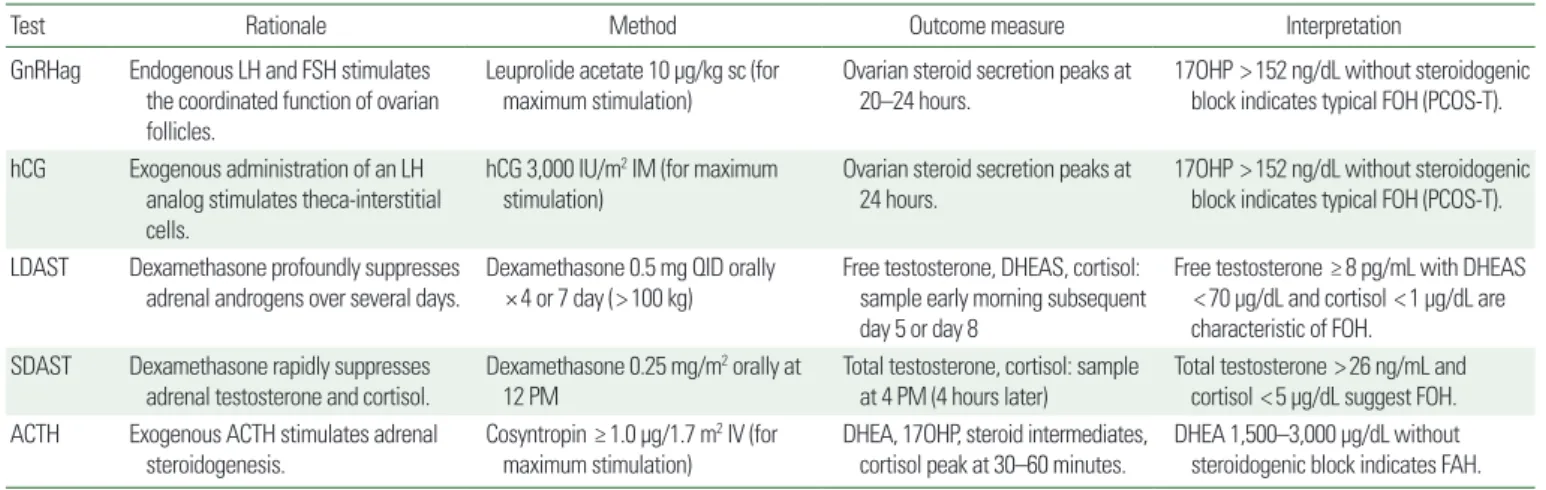
functionally cate- gorized PCOS patients according to whether the source of andro- gen excess is primarily the ovaries, the adrenal glands, both, or nei- ther (Tables 1 and 2, Fig. 3). The ovarian hyperandrogenism that is present in PCOS is directly demonstrated by the gonadotropin-re-

leasing hormone agonist (GnRHag) test or the human chorionic gonadotrophin (hCG) test and indirectly demonstrated by the dexamethasone androgen-suppression test (DAST). In the ab- sence of evidence of a steroidogenic block, an elevated 17OHP re- sponse is typical of PCOS. The DAST indirectly evaluates ovarian androgenic function by suppressing ACTH-dependent adrenal an- drogen production. In the presence of normal adrenocortical sup- pression, an inappropriately elevated post-DAST serum testoster- one level indicates an ACTH-independent source of androgen, which is ordinarily of ovarian origin. Adrenal hyperandrogenism is demonstrated by a rapid ACTH test. DHEAS is a simple correlate of this adrenal androgenic dysfunction (Table 1).

19,22

Rosenfield and Ehrmann

19

and Rosenfield et al.

22

reported that approximately two-thirds of cases had typical PCOS (PCOS-T) due to classic functional ovarian hyperandrogenism (FOH) along with hyper- Table 1. Test procedures to determine the source of female androgen excess

19,22

Test Rationale Method Outcome measure Interpretation

GnRHag Endogenous LH and FSH stimulates the coordinated function of ovarian follicles.

Leuprolide acetate 10 μg/kg sc (for maximum stimulation)

Ovarian steroid secretion peaks at 20–24 hours.

17OHP > 152 ng/dL without steroidogenic block indicates typical FOH (PCOS-T).

hCG Exogenous administration of an LH analog stimulates theca-interstitial cells.

hCG 3,000 IU/m

2

IM (for maximum

stimulation) Ovarian steroid secretion peaks at

24 hours. 17OHP > 152 ng/dL without steroidogenic block indicates typical FOH (PCOS-T).

LDAST Dexamethasone profoundly suppresses

adrenal androgens over several days. Dexamethasone 0.5 mg QID orally

× 4 or 7 day (> 100 kg) Free testosterone, DHEAS, cortisol:

sample early morning subsequent day 5 or day 8

Free testosterone ≥ 8 pg/mL with DHEAS

< 70 μg/dL and cortisol < 1 μg/dL are characteristic of FOH.

SDAST Dexamethasone rapidly suppresses adrenal testosterone and cortisol.

Dexamethasone 0.25 mg/m

2

orally at 12 PM

Total testosterone, cortisol: sample at 4 PM (4 hours later)

Total testosterone > 26 ng/mL and cortisol < 5 μg/dL suggest FOH.

ACTH Exogenous ACTH stimulates adrenal steroidogenesis.

Cosyntropin ≥ 1.0 μg/1.7 m

2

IV (for maximum stimulation)

DHEA, 17OHP, steroid intermediates, cortisol peak at 30–60 minutes.

DHEA 1,500–3,000 μg/dL without steroidogenic block indicates FAH.

Testing is performed during the early follicular phase of the menstrual cycle.

GnRHag, gonadotropin-releasing hormone agonist; LH, luteinizing hormone; FSH, follicle-stimulating hormone; sc, subcutaneous; 17OHP, 17-hydroxyprogesterone; FOH, functional ovarian hyperandrogenism; PCOS-T, typical polycystic ovary syndrome; hCG, human chorionic gonadotrophin; IM, intramuscular; LDAST, long (4–7 days) dexamethasone androgen- suppression tests; QID, four times a day; DHEAS, dehydroepiandrosterone sulfate; SDAST, short (4 hours) dexamethasone androgen-suppression tests; ACTH, adrenocorticotropic hormone; DHEA, dehydroepiandrosterone; FAH, functional adrenal hyperandrogenism.

Table 2. The functional classification of PCOS according to the source of androgen excess

19,22

Functional type

of PCOS Androgen

source GnRHag test 17OHP

response DAST testosterone

response ACTH test DHEA

response Prevalence among

PCOS cases

PCOS-T Primary FOH (typical FOH) High High in 92.5% High in 28% (associated FAH) 67%

PCOS-A Primary FOH (atypical FOH) Normal High High in 30% (associated FAH) 20%

Primary FAH (isolated FAH) Normal Normal High 5%

PCOS without FOH or FAH (PCOS-A of

obesity or idiopathic PCOS-A) Normal Normal Normal 8%

PCOS, polycystic ovary syndrome; GnRHag, gonadotropin-releasing hormone agonist; 17OHP, 17-hydroxyprogesterone; DAST, dexamethasone androgen-suppression test; ACTH, ad-

renocorticotropic hormone; DHEA, dehydroepiandrosterone; PCOS-T, typical PCOS; FOH, functional ovarian hyperandrogenism; FAH, functional adrenal hyperandrogenism; PCOS-A,

atypical PCOS.

(5)

sensitivity to LH that is characterized by hyperresponsiveness of 17OHP to the GnRHag or hCG test. The remaining one-third of PCOS cases are atypical PCOS (PCOS-A), which lack 17OHP hyperresponsiveness to LH and are a heterogeneous group. Ap- proximately one-quarter of FOH cases also demonstrated func- tional adrenal hyperandrogenism (FAH). A small number was due to isolated FAH. In a minority of cases, the androgen source cannot be identified as either ovarian or adrenal; most of these patients are obese (Table 2, Fig. 3).

19,22

PCOS-T patients with 17OHP hyperresponsiveness demon- strated more severe hyperandrogenism than PCOS-A cases, and the majority (92.5%) also had abnormally short DAST results and a polycystic ovarian morphology (PCOM). The serum AMH lev- els increased in 81%, and this increase was significantly greater than that in any other group. Coincidental FAH was also present in 28%

of the cases. Impaired glucose tolerance and frank diabetes were significantly more often present in PCOS-T than in PCOS-A pa- tients.

19,22

At the same time, PCOS-A cases made up a functionally heterogeneous group; 60% had an abnormal DAST. PCOM (65%)

and AMH elevations (39%) were significantly less frequent in PCOS-A than in PCOS-T patients. FAH coexisted with FOH in 30% of this subgroup. The prevalence of glucose intolerance was significantly lower than that documented in PCOS-T patients. The other 40% of PCOS-A cases had a normal DAST; that is, there was no evidence of an ovarian source of androgen. They also had sig- nificantly milder hyperandrogenemia. Rosenfield et al.

22

identified

“isolated FAH” in 15% and excessive peripheral testosterone for- mation by abundant adipose tissue in 85% of the nonovarian PCOS-A subgroup (25% of PCOS-A patients).

Roles of AMH

In women, AMH expression begins at approximately the 25th week of gestation and continues until menopause.

23

To prevent the exhaustion of follicles/oocytes, AMH exerts an inhibitory effect on cyclic follicular recruitment by reducing follicle sensitivity to FSH.

24

PCOS is characterized by the premature arrest of antral follicles, and this phenotype can be treated by increasing the circulating lev- els of FSH.

25

The serum AMH level, an indicator of the number of growing follicles and the intrafollicular androgenic status,

26

is two- to four-fold higher in women with PCOS than in healthy women, likely because androgens stimulate the early phases of follicular growth.

27-29

In addition, the serum AMH level has been strongly correlated with the number of growing follicles and is more sensi- tive than an ultrasonographic evaluation to the antral follicular count, which reflects preantral and small antral follicles (< 2 mm) that are rarely seen upon ultrasound.

30

Further insights into the possible role of both neuroendocrine and local ovarian factors of AMH have provided the genesis of abnormal GnRH activity and resultant increases in LH and androgens.

31

Moreover, increased maternal AMH levels (which typically decrease during pregnancy in women with normal fertility) decrease placental Cyp19a1 ex- pression, preventing aromatization of elevated maternal testoster- one levels, which, in turn, results in a hyperandrogenic intrauterine environment, masculinization of the female fetus,

32

and a PCOS- like reproductive and neuroendocrine phenotype in adulthood.

33

Hyperandrogenicity in pregnancy

Although hyperandrogenicity is abundantly documented in non- pregnant women with PCOS, androgen status in pregnancy is less Figure 3. The sources of androgens in polycystic ovary syndrome (PCOS).

19

Ap-

proximately two-thirds of cases have functionally typical PCOS that is due to typi- cal functional ovarian hyperandrogenism (FOH) and is characterized by hyper-re- sponsiveness of 17-hydroxyprogesterone (17OHP) to the luteinizing hormone (go- nadotropin-releasing hormone agonist or human chorionic gonadotrophin) test.

The remaining one-third of PCOS cases are functionally atypical and therefore lack

17OHP hyper responsiveness. This is a heterogeneous group, most of which have

atypical FOH in which ovarian androgen excess is indicated only by a dexametha-

sone androgen-suppression test. A small number is due to isolated functional ad-

renal hyperandrogenism (FAH). In a minority of cases, the source of androgen can-

not be identified as either ovarian or adrenal. Most of these cases are associated

with obesity. Approximately 28%–30% of FOH cases also demonstrate FAH.

(6)

well documented. Recent data show that pregnant women with PCOS have significantly higher androstenedione, testosterone, and free testosterone index levels than healthy control women in the first, second, and third trimesters of pregnancy.

34,35

Increasing evi- dence suggests that women with PCOS expose their fetuses to a hyperandrogenic environment in utero. A long anogenital distance, a marker for prenatal androgenization, has been observed in infant girls born to mothers with PCOS, and daughters of mothers with PCOS also have higher metabolic and androgenic risks.

36,37

This evidence suggests that hyperexposure to testosterone in utero can have an influence later in life.

In particular, exacerbated androgen production could be a medi- ator of increased vascular resistance and placental insufficiency during pregnancy due to reduced uterine blood flow, spiral artery elongation, and placental oxygenation.

38

Therefore, PCOS is linked to several pregnancy complications, including miscarriages (relative

risk [RR], 2.9), preterm births (RR, 1.52),

39

pregnancy-induced hypertension (RR, 3.43), and preeclampsia (RR, 2.17).

40

In addi- tion, increased maternal testosterone levels seem to alter placental function by affecting amino acid nutrient delivery to the fetus by downregulating specific amino acid transporter activity,

41

diminish- ing circulating fetal free fatty acids,

42

and possibly leading to a somewhat lower birth weight. However, PCOS in pregnancy has been associated with a greater risk of gestational diabetes mellitus

39

(RR, 2.78), probably owing to insulin hypersecretion that is in- duced by excess androgen

43

(Fig. 4).

DIAGNOSIS

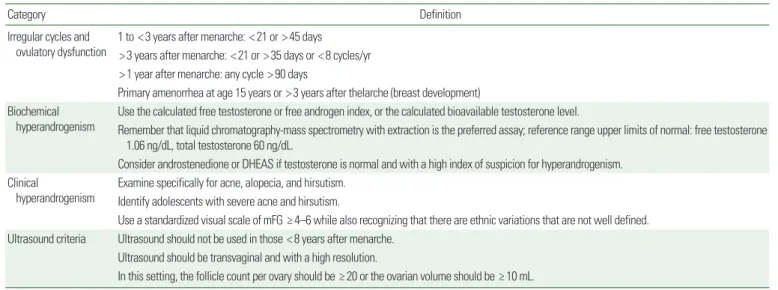
The diagnostic features of PCOS vary across the lifespan and by ethnicity, which complicates the categorization and natural history of this condition. The international evidence-based guidelines

44

Figure 4. The influence of the maternal environment of a woman with polycystic ovary syndrome on the placenta, fetus, and incidence of pregnancy complications.

43

AMH, anti-Müllerian hormone; GDM, gestational diabetes; PIH, pregnancy-induced hypertension.

GDM/preeclampsia/PIH/preterm delivery/low birth weight/perinatal death Maternal environment

Geographic area Ethnicity Metabolic factors Increased andrognes

Placenta

P450 aromatase activity ↓ Altered amino acid Delivery Free fatty acids ↓ Glucose ↑

Fetus

Genetic predisposition Glucose ↑

Insulin hypersecretion Androgens from fetal ovary ↑ AMH ↑

Table 3. Recommendations for diagnosing PCOS

3,44

Category Definition

Irregular cycles and

ovulatory dysfunction 1 to < 3 years after menarche: < 21 or > 45 days

> 3 years after menarche: < 21 or > 35 days or < 8 cycles/yr

> 1 year after menarche: any cycle > 90 days

Primary amenorrhea at age 15 years or > 3 years after thelarche (breast development) Biochemical

hyperandrogenism

Use the calculated free testosterone or free androgen index, or the calculated bioavailable testosterone level.

Remember that liquid chromatography-mass spectrometry with extraction is the preferred assay; reference range upper limits of normal: free testosterone 1.06 ng/dL, total testosterone 60 ng/dL.

Consider androstenedione or DHEAS if testosterone is normal and with a high index of suspicion for hyperandrogenism.

Clinical

hyperandrogenism Examine specifically for acne, alopecia, and hirsutism.

Identify adolescents with severe acne and hirsutism.

Use a standardized visual scale of mFG ≥ 4–6 while also recognizing that there are ethnic variations that are not well defined.

Ultrasound criteria Ultrasound should not be used in those < 8 years after menarche.

Ultrasound should be transvaginal and with a high resolution.

In this setting, the follicle count per ovary should be ≥ 20 or the ovarian volume should be ≥ 10 mL.

PCOS, polycystic ovary syndrome; DHEAS, dehydroepiandrosterone sulfate; mFG, modified Ferriman-Gallwey.

(7)

(Table 3) endorsed the use of the Rotterdam criteria,

45

which re- quire the presence of two of the three diagnostic criteria for a PCOS diagnosis in adult women. Exclusion of thyroid disease (thyroid-stimulating hormone [TSH]), hyperprolactinemia (pro- lactin), and nonclassic congenital adrenal hyperplasia (screening with 17OHP) is recommended. Further evaluation is also recom- mended in those with amenorrhea and more atypical features, in- cluding an assessment for hypogonadotropic hypogonadism or Cushing disease. In the presence of a more severe androgenic pic- ture, evaluation of androgen-producing tumors should be consid- ered. Severe androgenic profiles are present if the serum androgen levels are elevated by more than twice the upper limits of normal for the local clinical assay standard.

44

The AMH level has been con- sidered a surrogate marker or an alternative to ultrasound measure- ment of the follicle number per ovary for the diagnosis of PCOM.

However, currently, the lack of standardized assays, variations across the reproductive lifespan, and overlap between PCOS and hypothalamic hypogonadism

46

limit the use of AMH for the diag- nosis of PCOS in adult women and adolescents.

MANAGEMENT

It is important to consider that the prevalence of gestational dia- betes, impaired glucose tolerance, and type 2 diabetes (five-fold in Asia, four-fold in the Americas, and three-fold in Europe); endo- metrial cancer (two- to six-fold); and psychological distress (five- fold) are significantly increased in PCOS patients, with the onset occurring several years earlier than in other women.

44

In addition, ethnic variations should also be considered, with a lower BMI (> 23 kg/m

2

), milder hirsutism, and significantly increased (five- fold) impaired glucose tolerance being distinct in Asians.

3

The international evidence-based guidelines

3

for the assessment and management of PCOS recommend the following: (1) regular monitoring of weight changes and excess weight through measure- ments of weight, height, and waist circumference at each visit or at a minimum of every 6–12 months; (2) fasting lipid profiling tests at diagnosis; (3) blood pressure measurement at a minimum of an- nually; and (4) glycemic status monitoring (glucose, glycated he- moglobin, or oral glucose tolerance test [OGTT] in high-risk women and in those planning pregnancy or seeking fertility treat-

ment), regardless of age and BMI, at baseline and then again after every 1 to 3 years. During pregnancy, an OGTT should initially be performed in the first trimester and then repeated in the second tri- mester (at 24–28 gestational weeks) if the first-trimester results were normal.

44

Additionally, all adolescent and adult women with PCOS should be routinely screened for anxiety and depressive symptoms at diagnosis.

3

Weight management before and during pregnancy

Excess weight before conception and excessive gestational weight gain (GWG) are highly related but modifiable risk factors for re- productive outcomes in PCOS.

47

The evidence-based guidelines for the general population recommend that women should aim for a healthy BMI or lose a modest amount of weight (5%–10%) be- fore becoming pregnant.

48

Although pregnancy can occur later in life in women with PCOS, waiting to conceive until a healthy life- style and a modest weight loss are achieved is worth considering,

49

as the adverse impact of obesity on maternal and fetal health is not entirely corrected by lifestyle management during pregnancy.

50

The Institute of Medicine has developed recommendations for GWG in the general population based on women’s preconception BMI in singleton pregnancies: GWG 12.5–18 kg for underweight (BMI < 18.5 kg/m

2

), 11.5–16 kg for normal-weight (BMI 18.5–

24.9 kg/m

2

), 7–15 kg for overweight (BMI 25–29 kg/m

2

), and 5–9 kg for obese (BMI > 30 kg/m

2

)

48

patients. As the impacts of a higher GWG in women with PCOS are still unclear, limiting early GWG to 0–2 kg is even more crucial in women with PCOS who

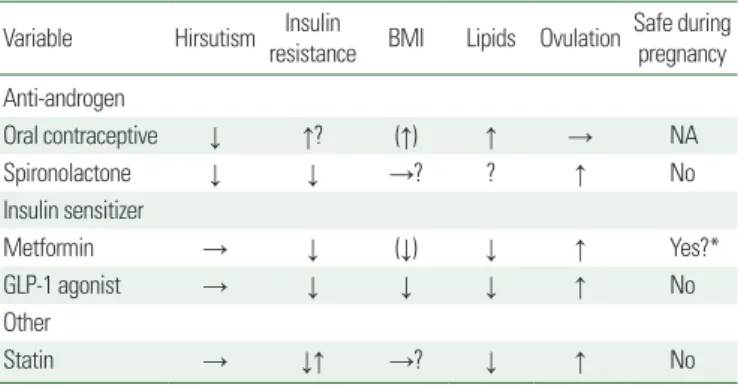
Table 4. An overview of the effects of different medical treatment regimens for PCOS

52

Variable Hirsutism Insulin resistance BMI Lipids Ovulation Safe during pregnancy Anti-androgen

Oral contraceptive ↓ ↑? (↑) ↑ → NA

Spironolactone ↓ ↓ →? ? ↑ No

Insulin sensitizer

Metformin → ↓ (↓) ↓ ↑ Yes?*

GLP-1 agonist → ↓ ↓ ↓ ↑ No

Other

Statin → ↓↑ →? ↓ ↑ No

*The drug should probably be stopped at positive pregnancy test.

↓, decreased; ↑, increased; →, neutral; ?, debated; (), only modest; PCOS, polycystic

ovary syndrome; BMI, body mass index; GLP-1, glucagon-like peptide 1.

(8)

have preexisting insulin resistance.

51

Antiandrogen treatment

Table 4 lists medical interventions for PCOS and also includes related comorbidities based on an updated review by Glintborg and Andersen.

52

Oral contraceptive pills (OCPs) are widely used in PCOS to reg- ulate menstrual cycles and prevent endometrial hyperplasia. How- ever, due to the risk of thromboembolism and metabolic side ef- fects (such as weight gain, development of type 2 diabetes, cardio- vascular disease, and autoimmune disease), the use of OCPs should be balanced against the possible metabolic side effects in each patient.

52

Spironolactone is a nonselective mineralocorticoid receptor an- tagonist that suppresses testosterone levels. The antiandrogen ef- fects of spironolactone are comparable with those of OCPs in the treatment of hirsutism;

53

however, spironolactone could have addi- tional benefits with respect to the risk of cardiovascular disease.

Furthermore, combining spironolactone with metformin has been shown to be superior to monotherapy with either drug in terms of improved menstrual cycles, glucose level during OGTT (assessed using the area under the curve), and testosterone levels.

54

The du- ration of biological effects is 24–58 hours.

55

Insulin-sensitizing medications

Metformin is probably the most commonly prescribed insulin sensitizer in patients with PCOS. Metformin increases insulin sen- sitivity and improves ovulatory function in PCOS, whereas andro- gen levels and hirsutism scores are only mildly improved.

56

In a re- cent meta-analysis, the effect of metformin on weight was only mod- est in studies with a maximum duration of 24 weeks;

57

in contrast, 12 months of metformin treatment induced a median weight loss of 3 kg.

58

The use of metformin rather than insulin during pregnancy was associated with a lower risk of weight gain, late miscarriage, and preterm birth, as well as with reduced rates of maternal hyperan- drogenism in women with PCOS;

59

however, the first follow-up study of metformin-exposed versus placebo-exposed offspring showed increased occurrences of overweight and central adiposity at a mean age of 8 years in the metformin-exposed offspring of

mothers with PCOS.

60

A recent meta-analysis concluded that met- formin exposure results in smaller neonates with accelerated post- natal growth, leading to a higher BMI in childhood.

61

The underly- ing mechanism is that metformin is transported by organic cation transporters into the mitochondrial membranes in both the fetus and placenta (in the second and third trimesters) and inhibits the mechanistic target of the rapamycin (mTOR) pathway, a primary nutrient sensor in the placenta, which, in turn, could attenuate nu- trient flux and fetal growth. These effects could have consequences on fetal growth and differentiation and potentially even on child- hood development, especially if relative nutrient restriction in utero is followed by later exposure of the offspring to an obesogenic envi- ronment.

62

Therefore, when used to treat PCOS and induce ovula- tion, metformin should be discontinued by the end of the first tri- mester according to the 2021 Standards of Medical Care in Diabe- tes from the American Diabetes Association.

63

Glucagon-like peptide 1 (GLP-1) agonists may be a promising group of insulin sensitizers that exert neuroendocrine effects on the reproductive axis and anti-inflammatory and anti-fibrotic effects in PCOS-associated subfertility.

64

GLP-1 agonist treatment has been shown to decrease BMI and testosterone levels and to improve the ovulation rate in obese women with PCOS.

65,66

The average weight loss during 6 months of GLP-1 treatment (1.8 mg/day) was 5 kg.

66

Combined GLP-1 (1.2 mg/day) and metformin treatment was as- sociated with a more moderate weight loss than high-dosage GLP-1 (3 mg/day) but had fewer gastrointestinal side effects.

67

After sub- cutaneous administration, the half-life of liraglutide was found to be 11–15 hours.

68

Management of dyslipidemia: statins

Dyslipidemia is present in more than 70% of newly diagnosed women with PCOS.

69

Recent studies suggest that statin treatment may improve PCOS-related symptoms other than dyslipidemia.

Statins can decrease the androgen levels in PCOS

70

and could have an anti-inflammatory effect.

71

Antihypertensive medication

The treatment of hypertension in PCOS is complicated by the

fact that treatment should be adjusted before pregnancy. Hyperan-

drogenism may be a predisposing factor for hypertension in PCOS.

72

(9)

Therefore, a spironolactone prescription could be the first choice for improving hyperandrogenic symptoms, decreasing blood pres- sure, and improving endothelial function in women with PCOS.

73

However, clinical studies are required to further examine this rela- tionship.

Thyroid dysfunction in PCOS

The rates of positive thyroid autoantibodies were reported to be higher in women with PCOS than in controls,

74

and subclinical hy- pothyroidism was present in 10%–25% of women with PCOS.

75

The presence of overt thyroid disease was 3.6-times higher in PCOS patients than in controls, and prescriptions for thyroid medicine were three times higher.

69

Screening for overt thyroid disease is rel- evant in PCOS, and the measurement of TSH levels is part of the routine evaluation in women clinically suspected to have PCOS.

Furthermore, TSH measurement should be repeated at the time of pregnancy planning and also during the postpartum period.

76

CONCLUSIONS

The prevalence of PCOS has also considerably increased along with the alarming increase in the number of young adults with a high degree of obesity in Korea. Once disordered physiological changes develop in PCOS, a vicious cycle ensues, leading to repro- ductive, metabolic and psychological comorbidities. Timely and accurate screening, multicomponent healthy lifestyle modifications for both patients and family members, and comprehensive medical interventions based on international evidence-based guidelines across the reproductive lifespan are essential for curtailing PCOS and its comorbidities.

CONFLICTS OF INTEREST

The author declares no conflict of interest.

ACKNOWLEDGMENTS

This work was supported by the staff (particularly HJP, CHP, YML, and HYK) at Dongtan Jeil Women’s Hospital.

REFERENCES

1. Walters KA. Polycystic ovary syndrome: is it androgen or es- trogen receptor? Curr Opin Endocr Metab Res 2020;12:1-7.

2. Witchel SF, Teede HJ, Peña AS. Curtailing PCOS. Pediatr Res 2020;87:353-61.

3. Teede HJ, Misso ML, Costello MF, Dokras A, Laven J, Moran L, et al. Recommendations from the international evidence- based guideline for the assessment and management of poly- cystic ovary syndrome. Hum Reprod 2018;33:1602-18.

4. Gibson-Helm M, Teede H, Dunaif A, Dokras A. Delayed di- agnosis and a lack of information associated with dissatisfac- tion in women with polycystic ovary syndrome. J Clin Endo- crinol Metab 2017;102:604-12.

5. Williams R, Periasamy M. Genetic and environmental factors contributing to visceral adiposity in Asian populations. Endo- crinol Metab (Seoul) 2020;35:681-95.

6. 2020 Obesity Fact Sheet Task Force Team. 2020 Obesity fact sheet. Seoul: Korean Society for the Study of Obesity; 2020.

7. Lim J, Han K, Kim SY, Cho YH, Yoon YS, Park HS, et al. Ef- fects of central obesity on maternal complications in Korean women of reproductive age. Obes Res Clin Pract 2019;13:

156-63.

8. Franks S, McCarthy MI, Hardy K. Development of polycystic ovary syndrome: involvement of genetic and environmental factors. Int J Androl 2006;29:278-85.

9. Fernández-Real JM, Ricart W. Insulin resistance and inflam- mation in an evolutionary perspective: the contribution of cytokine genotype/phenotype to thriftiness. Diabetologia 1999;42:1367-74.

10. Witchel SF, Lee PA, Suda-Hartman M, Trucco M, Hoffman EP. Evidence for a heterozygote advantage in congenital adre- nal hyperplasia due to 21-hydroxylase deficiency. J Clin En- docrinol Metab 1997;82:2097-101.

11. Parsons P. Success in mating: a coordinated approach to fit- ness through genotypes incorporating genes for stress resis- tance and heterozygous advantage under stress. Behav Genet 1997;27:75-81.

12. Stearns SC, Ackermann M, Doebeli M, Kaiser M. Experimen-

tal evolution of aging, growth, and reproduction in fruitflies.

(10)

Proc Natl Acad Sci U S A 2000;97:3309-13.

13. Kim JH, Choi MH. Embryonic Development and adult re- generation of the adrenal gland. Endocrinol Metab (Seoul) 2020;35:765-73.

14. de Zegher F, García Beltrán C, López-Bermejo A, Ibáñez L.

Metformin for rapidly maturing girls with central adiposity:

less liver fat and slower bone maturation. Horm Res Paediatr 2018;89:136-40.

15. McCartney CR, Prendergast KA, Blank SK, Helm KD, Chhab- ra S, Marshall JC. Maturation of luteinizing hormone (gonad- otropin-releasing hormone) secretion across puberty: evidence for altered regulation in obese peripubertal girls. J Clin Endo- crinol Metab 2009;94:56-66.

16. de Zegher F, López-Bermejo A, Ibáñez L. Central obesity, fast- er maturation, and ‘PCOS’ in girls. Trends Endocrinol Metab 2018;29:815-8.

17. Escobar-Morreale HF. Polycystic ovary syndrome: definition, aetiology, diagnosis and treatment. Nat Rev Endocrinol 2018;

14:270-84.

18. Escobar-Morreale HF, San Millán JL. Abdominal adiposity and the polycystic ovary syndrome. Trends Endocrinol Metab 2007;18:266-72.

19. Rosenfield RL, Ehrmann DA. The pathogenesis of polycystic ovary syndrome (PCOS): the hypothesis of PCOS as func- tional ovarian hyperandrogenism revisited. Endocr Rev 2016;

37:467-520.

20. Rosenfield RL. Plasma 17-ketosteroids and 17-beta hydroxys- teroids in girls with premature development of sexual hair. J Pediatr 1971;79:260-6.

21. Rich BH, Rosenfield RL, Lucky AW, Helke JC, Otto P. Adre- narche: changing adrenal response to adrenocorticotropin. J Clin Endocrinol Metab 1981;52:1129-36.

22. Rosenfield RL, Mortensen M, Wroblewski K, Littlejohn E, Ehrmann DA. Determination of the source of androgen ex- cess in functionally atypical polycystic ovary syndrome by a short dexamethasone androgen-suppression test and a low- dose ACTH test. Hum Reprod 2011;26:3138-46.

23. Dumont A, Robin G, Catteau-Jonard S, Dewailly D. Role of anti-Müllerian hormone in pathophysiology, diagnosis and treatment of polycystic ovary syndrome: a review. Reprod

Biol Endocrinol 2015;13:137.

24. Durlinger AL, Gruijters MJ, Kramer P, Karels B, Kumar TR, Matzuk MM, et al. Anti-Müllerian hormone attenuates the effects of FSH on follicle development in the mouse ovary.

Endocrinology 2001;142:4891-9.

25. Franks S, Hardy K. What causes anovulation in polycystic ova- ry syndrome? Curr Opin Endocr Metab Res 2020;12:59-65.

26. Andersen CY, Lossl K. Increased intrafollicular androgen lev- els affect human granulosa cell secretion of anti-Müllerian hormone and inhibin-B. Fertil Steril 2008;89:1760-5.

27. Pellatt L, Hanna L, Brincat M, Galea R, Brain H, Whitehead S, et al. Granulosa cell production of anti-Müllerian hormone is increased in polycystic ovaries. J Clin Endocrinol Metab 2007;

92:240-5.

28. Pigny P, Merlen E, Robert Y, Cortet-Rudelli C, Decanter C, Jonard S, et al. Elevated serum level of anti-Mullerian hormone in patients with polycystic ovary syndrome: relationship to the ovarian follicle excess and to the follicular arrest. J Clin Endo- crinol Metab 2003;88:5957-62.

29. Jonard S, Dewailly D. The follicular excess in polycystic ova- ries, due to intra-ovarian hyperandrogenism, may be the main culprit for the follicular arrest. Hum Reprod Update 2004;10:

107-17.

30. Dewailly D, Andersen CY, Balen A, Broekmans F, Dilaver N, Fanchin R, et al. The physiology and clinical utility of anti- Mullerian hormone in women. Hum Reprod Update 2014;

20:370-85.

31. Cimino I, Casoni F, Liu X, Messina A, Parkash J, Jamin SP, et al. Novel role for anti-Müllerian hormone in the regulation of GnRH neuron excitability and hormone secretion. Nat Com- mun 2016;7:10055.

32. Moolhuijsen LM, Visser JA. AMH in PCOS: controlling the ovary, placenta, or brain? Curr Opin Endocr Metab Res 2020;

12:91-7.

33. Tata B, Mimouni NE, Barbotin AL, Malone SA, Loyens A, Pigny P, et al. Elevated prenatal anti-Müllerian hormone re- programs the fetus and induces polycystic ovary syndrome in adulthood. Nat Med 2018;24:834-6.

34. Caanen MR, Kuijper EA, Hompes PG, Kushnir MM, Rock-

wood AL, Meikle WA, et al. Mass spectrometry methods mea-

(11)

sured androgen and estrogen concentrations during pregnancy and in newborns of mothers with polycystic ovary syndrome.

Eur J Endocrinol 2016;174:25-32.

35. Glintborg D, Jensen RC, Bentsen K, Schmedes AV, Brandslund I, Kyhl HB, et al. Testosterone levels in third trimester in polycystic ovary syndrome: Odense child cohort. J Clin En- docrinol Metab 2018;103:3819-27.

36. Barrett ES, Hoeger KM, Sathyanarayana S, Abbott DH, Red- mon JB, Nguyen RH, et al. Anogenital distance in newborn daughters of women with polycystic ovary syndrome indicates fetal testosterone exposure. J Dev Orig Health Dis 2018;9:

307-14.

37. Risal S, Pei Y, Lu H, Manti M, Fornes R, Pui HP, et al. Prena- tal androgen exposure and transgenerational susceptibility to polycystic ovary syndrome. Nat Med 2019;25:1894-904.

38. Gopalakrishnan K, Mishra JS, Chinnathambi V, Vincent KL, Patrikeev I, Motamedi M, et al. Elevated testosterone reduces uterine blood flow, spiral artery elongation, and placental oxy- genation in pregnant rats. Hypertension 2016;67:630-9.

39. Yu HF, Chen HS, Rao DP, Gong J. Association between polycystic ovary syndrome and the risk of pregnancy compli- cations: a PRISMA-compliant systematic review and meta- analysis. Medicine (Baltimore) 2016;95:e4863.

40. Qin JZ, Pang LH, Li MJ, Fan XJ, Huang RD, Chen HY. Ob- stetric complications in women with polycystic ovary syn- drome: a systematic review and meta-analysis. Reprod Biol Endocrinol 2013;11:56.

41. Sathishkumar K, Elkins R, Chinnathambi V, Gao H, Hankins GD, Yallampalli C. Prenatal testosterone-induced fetal growth restriction is associated with down-regulation of rat placental amino acid transport. Reprod Biol Endocrinol 2011;9:110.

42. Abbott DH, Bruns CR, Barnett DK, Dunaif A, Goodfriend TL, Dumesic DA, et al. Experimentally induced gestational androgen excess disrupts glucoregulation in rhesus monkey dams and their female offspring. Am J Physiol Endocrinol Metab 2010;299:E741-51.

43. Filippou P, Homburg R. Is foetal hyperexposure to androgens a cause of PCOS? Hum Reprod Update 2017;23:421-32.

44. Hoeger KM, Dokras A, Piltonen T. Update on PCOS: conse- quences, challenges, and guiding treatment. J Clin Endocrinol

Metab 2021;106:e1071-83.

45. Rotterdam ESHRE/ASRM-Sponsored PCOS Consensus Workshop Group. Revised 2003 consensus on diagnostic cri- teria and long-term health risks related to polycystic ovary syndrome. Fertil Steril 2004;81:19-25.

46. Alemyar A, van der Kooi AL, Laven JS. Anti-Müllerian hor- mone and ovarian morphology in women with hypothalamic hypogonadism. J Clin Endocrinol Metab 2020;105:dgaa116.

47. Khomami MB, Moran LJ. Polycystic ovary syndrome and gestational weight gain. Curr Opin Endocr Metab Res 2020;

12:20-5.

48. National Institute for Health and Care Excellence. Weight man- agement before, during and after pregnancy. London: NICE;

2010.

49. Legro RS, Dodson WC, Kunselman AR, Stetter CM, Kris-Ether- ton PM, Williams NI, et al. Benefit of delayed fertility therapy with preconception weight loss over immediate therapy in obese women with PCOS. J Clin Endocrinol Metab 2016;

101:2658-66.

50. Hanson M, Barker M, Dodd JM, Kumanyika S, Norris S, Steegers E, et al. Interventions to prevent maternal obesity before conception, during pregnancy, and post partum. Lan- cet Diabetes Endocrinol 2017;5:65-76.

51. MacDonald SC, Bodnar LM, Himes KP, Hutcheon JA. Pat- terns of gestational weight gain in early pregnancy and risk of gestational diabetes mellitus. Epidemiology 2017;28:419-27.

52. Glintborg D, Andersen M. Medical treatment and comorbid- ity in polycystic ovary syndrome: an updated review. Curr Opin Endocr Metab Res 2020;12:33-40.

53. Barrionuevo P, Nabhan M, Altayar O, Wang Z, Erwin PJ, Asi N, et al. Treatment options for hirsutism: a systematic review and network meta-analysis. J Clin Endocrinol Metab 2018;

103:1258-64.

54. Ganie MA, Khurana ML, Nisar S, Shah PA, Shah ZA, Kulshres- tha B, et al. Improved efficacy of low-dose spironolactone and metformin combination than either drug alone in the man- agement of women with polycystic ovary syndrome (PCOS):

a six-month, open-label randomized study. J Clin Endocrinol Metab 2013;98:3599-607.

55. Lechner B, Lechner K, Heinrich D, Adolf C, Holler F, Schnei-

(12)

der H, et al. Therapy of endocrine disease: medical treatment of primary aldosteronism. Eur J Endocrinol 2019;181:R147-53.

56. Tay CT, Joham AE, Hiam DS, Gadalla MA, Pundir J, Thang- aratinam S, et al. Pharmacological and surgical treatment of nonreproductive outcomes in polycystic ovary syndrome: an overview of systematic reviews. Clin Endocrinol (Oxf) 2018;

89:535-53.

57. Wang FF, Wu Y, Zhu YH, Ding T, Batterham RL, Qu F, et al.

Pharmacologic therapy to induce weight loss in women who have obesity/overweight with polycystic ovary syndrome: a systematic review and network meta-analysis. Obes Rev 2018;

19:1424-45.

58. Glintborg D, Altinok ML, Mumm H, Hermann AP, Ravn P, Andersen M. Body composition is improved during 12 months’

treatment with metformin alone or combined with oral con- traceptives compared with treatment with oral contraceptives in polycystic ovary syndrome. J Clin Endocrinol Metab 2014;

99:2584-91.

59. Andræ F, Abbott D, Stridsklev S, Schmedes AV, Odsæter IH, Vanky E, et al. Sustained maternal hyperandrogenism during PCOS pregnancy reduced by metformin in non-obese women carrying a male fetus. J Clin Endocrinol Metab 2020;105:

3762-70.

60. Hanem LG, Salvesen Ø, Juliusson PB, Carlsen SM, Nossum MC, Vaage MØ, et al. Intrauterine metformin exposure and offspring cardiometabolic risk factors (PedMet study): a 5-10 year follow-up of the PregMet randomised controlled trial.

Lancet Child Adolesc Health 2019;3:166-74.

61. Tarry-Adkins JL, Aiken CE, Ozanne SE. Neonatal, infant, and childhood growth following metformin versus insulin treat- ment for gestational diabetes: a systematic review and meta- analysis. PLoS Med 2019;16:e1002848.

62. Barbour LA, Feig DS. Metformin for gestational diabetes mel- litus: progeny, perspective, and a personalized approach. Dia- betes Care 2019;42:396-9.

63. American Diabetes Association. 14. Management of diabetes in pregnancy: standards of medical care in diabetes-2021. Di- abetes Care 2021;44(Suppl 1):S200-10.

64. Jensterle M, Janez A, Fliers E, DeVries JH, Vrtacnik-Bokal E, Siegelaar SE. The role of glucagon-like peptide-1 in reproduc-

tion: from physiology to therapeutic perspective. Hum Re- prod Update 2019;25:504-17.

65. Niafar M, Pourafkari L, Porhomayon J, Nader N. A systematic review of GLP-1 agonists on the metabolic syndrome in wom- en with polycystic ovaries. Arch Gynecol Obstet 2016;293:

509-15.

66. Nylander M, Frøssing S, Kistorp C, Faber J, Skouby SO. Lira- glutide in polycystic ovary syndrome: a randomized trial, in- vestigating effects on thrombogenic potential. Endocr Con- nect 2017;6:89-99.

67. Jensterle M, Kravos NA, Goričar K, Janez A. Short-term ef- fectiveness of low dose liraglutide in combination with met- formin versus high dose liraglutide alone in treatment of obese PCOS: randomized trial. BMC Endocr Disord 2017;17:5.

68. Elbrønd B, Jakobsen G, Larsen S, Agersø H, Jensen LB, Rolan P, et al. Pharmacokinetics, pharmacodynamics, safety, and tol- erability of a single-dose of NN2211, a long-acting glucagon- like peptide 1 derivative, in healthy male subjects. Diabetes Care 2002;25:1398-404.

69. Glintborg D, Hass Rubin K, Nybo M, Abrahamsen B, Ander- sen M. Morbidity and medicine prescriptions in a nationwide Danish population of patients diagnosed with polycystic ova- ry syndrome. Eur J Endocrinol 2015;172:627-38.

70. Cassidy-Vu L, Joe E, Kirk JK. Role of statin drugs for polycys- tic ovary syndrome. J Family Reprod Health 2016;10:165-75.

71. Puurunen J, Piltonen T, Puukka K, Ruokonen A, Savolainen MJ, Bloigu R, et al. Statin therapy worsens insulin sensitivity in women with polycystic ovary syndrome (PCOS): a pro- spective, randomized, double-blind, placebo-controlled study.

J Clin Endocrinol Metab 2013;98:4798-807.

72. Glintborg D, Rubin KH, Nybo M, Abrahamsen B, Andersen M. Cardiovascular disease in a nationwide population of Danish women with polycystic ovary syndrome. Cardiovasc Diabetol 2018;17:37.

73. Macut D, Mladenović V, Bjekić-Macut J, Livadas S, Stanojlović O, Hrnčić D, et al. Hypertension in polycystic ovary syndrome:

novel insights. Curr Hypertens Rev 2020;16:55-60.

74. Arora S, Sinha K, Kolte S, Mandal A. Endocrinal and autoim-

mune linkage: evidences from a controlled study of subjects

with polycystic ovarian syndrome. J Hum Reprod Sci 2016;9:

(13)

18-22.

75. Pergialiotis V, Konstantopoulos P, Prodromidou A, Florou V, Papantoniou N, Perrea DN. Management of endocrine disease:

the impact of subclinical hypothyroidism on anthropometric characteristics, lipid, glucose and hormonal profile of PCOS patients: a systematic review and meta-analysis. Eur J Endo-

crinol 2017;176:R159-66.

76. Glintborg D, Rubin KH, Nybo M, Abrahamsen B, Andersen

M. Increased risk of thyroid disease in Danish women with

polycystic ovary syndrome: a cohort study. Endocr Connect

2019;8:1405-15.

수치

Table 2. The functional classification of PCOS according to the source of androgen excess 19,22 Functional type
Table 3. Recommendations for diagnosing PCOS 3,44
Table 4. An overview of the effects of different medical treatment regimens for  PCOS 52

참조

관련 문서

Homocysteine levels and C677T polymorphism of methylenete- trahydrofolate reductase in women with polycystic ovary syndrome.. The luteinizing hormone beta-subunit exon

of Neuropsychiatry, College of Korean Medicine, Dae-Jeon University Objectives: Polycystic Ovarian Syndrome (PCOS) is characterized by ovulatory disorder, polycystic

Key Words : Polycystic Ovary Syndrome, Anovulation, Body Temperature, Herbal Medicine, Sajaehyangbu-hwan... Menstruation

Prevalence and predictors of risk for type 2 diabetes mellitus and impaired glucose tolerance in polycystic ovary syndrome: a prospective, controlled study in

Purpose: To evaluate lipid profiles and liver enzymes as surrogate markers used for recognizing insulin resistance in Korean women with polycystic ovary syn- drome

Background: The objective of this study was to investigate whether androgen deprivation therapy (ADT) with gonadotropin-releasing hormone agonist (GnRHa) in prostate cancer

Usefulness of Insulin Sensitivity Indexes derived from Oral Glucose Tolerance Test in Women with Polycystic Ovary Syndrome.. Hyo-Jeong Kim, Eun Kyung Byun,

Clinical Study of Oriental Medicine Treatment for Polycystic Ovarian Disease.. The Rotterdam ESHRE/ASRM Sponsored PCOS