Paper
글라스버블/에폭시 수지 접착부의 극저온 압축 동적 성능
배진호* · 황병관* · 이제명* †
Compression Dynamic Performance of Glass Bubble/Epoxy Resin Adhesion
Jin-Ho Bae*, Byeong-Kwan Hwang*, Jae-Myung Lee* †
ABSTRACT: Sloshing impact loads on liquefied natural gas (LNG) carr iers are the main issue of damage to the insulation system in LNG cargo containment system (LNG CCS). The damage to the insulation system would be fatal in maintaining a temperature-savings environment in LNG CCS. The typical method is to enhance the insulation materials that can maintain a constant cryogenic temperature. Insulation materials consist of polyurethane foam and plywood, an adhesive for bonding these two materials. This study intends to improve the absorption energy of the material when the impact load is applied by creating a glass bubble/epoxy composite resin as part of the insulation.
The experimental scenarios consider the effect of temperature (20
oC, -163
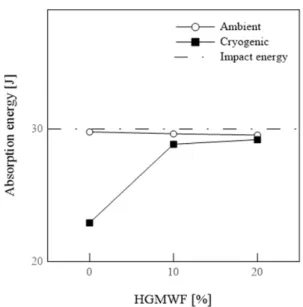
oC), glass bubble weight fraction in epoxy resin through free fall experiments. Experiments have shown that if the glass bubble additive reaches 20 wt.%, the cryogenic absorption energy is a maximum performance and that 0 wt.% has a maximum ambient absorption energy.
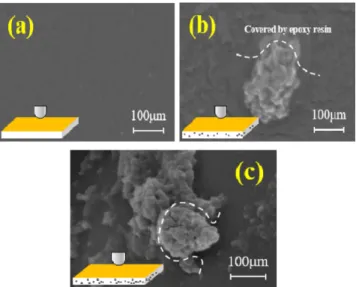
However, the agglomeration has been occurred due to deterioration of the stirring performance if weight fraction was 20 wt.% and the result of 0 wt.% have been revealed that ambient absorption energy is significantly lower.
초 록: