• 검색 결과가 없습니다.

Flocculating Activity and Dehydration Efficiency of Biopolymer Flocculant Biopol32 in Industrial Wastewater Treatment

N/A
N/A
Protected

Academic year: 2021

Share "Flocculating Activity and Dehydration Efficiency of Biopolymer Flocculant Biopol32 in Industrial Wastewater Treatment"

Copied!
7
0
0

로드 중.... (전체 텍스트 보기)

전체 글

(1)

Flocculating Activity and Dehydration Efficiency of Biopolymer Flocculant Biopol32 in Industrial Wastewater Treatment

Myoung Eun Lee

1

, Nara Oh

2

and Hyun-Hyo Suh

1

*

1

Department of Environmental Engineering, Gyeongnam National University of Science and Technology, Jinju 52725, Korea

2

R&D Center, Diagen Inc., Geumcheon-gu, Seoul 08507, Korea

Received January 31, 2019 /Revised February 27, 2019 /Accepted April 19, 2019

For the practical application and development of biopolymer flocculant Biopol32 produced by Pseudo- monas sp. GP32, its flocculation effect on wastewater from food processing, slaughter houses, and the dyeing industry was investigated. In the food processing wastewater, Biopol32 led to a chemical oxy- gen demand (COD) reduction rate of 70% and a suspended solid (SS) removal rate of 49% at pH 6.0.

In the slaughter house wastewater at pH 4.0, a COD reduction rate of 61% and SS removal rate of 91% were observed, and in the dyeing wastewater, the rates were 72% and 92%, respectively, at pH 5.0. The size of floc formed during the flocculation process was 10 mm at a final concentration of 20 ppm, and the dehydration efficiency was 62%. In both the bioflocculant Biopol32 group and a PAA synthetic flocculant group, optimal flocculant concentration that yielded the best overall dehydration efficiency was 20 ppm, and, at this concentration, the shortest filtration time to reach the natural crit- ical moisture content of 78.1% was attained.

Key words : Bioflocculant, dehydration efficiency, floc, wastewater treatment

*Corresponding author

Tel : +82-55-751-3340, Fax : +82-55-751-3484 E-mail : [email protected]

This is an Open-Access article distributed under the terms of the Creative Commons Attribution Non-Commercial License (http://creativecommons.org/licenses/by-nc/3.0) which permits unrestricted non-commercial use, distribution, and reproduction in any medium, provided the original work is properly cited.

Journal of Life Science 2019 Vol. 29. No. 3. 362~368 DOI : https://doi.org/10.5352/JLS.2019.29.3.362

Introduction

Organic polymers have been used for flocculation of col- loids for more than 200 years [21]. Due to rapid development of the industry in recent years, many types of biopolymer flocculants have been widely used in industrial processes, including wastewater treatment [2, 4]. Among these bio- polymer flocculants, chitosan, which is obtained by deacety- lation of chitin from crustaceans, such as shrimp and crab, is a recognized natural biopolymer flocculant [1, 4, 5]. Algin (sodium alginate), which was extracted from seaweed by Stanford in 1880, was reported to effectively precipitate gen- eral suspended solids as a water-soluble gum [18], and fur- cellaran, which was extracted from red algae Furcellaria fasti- giata in 1946, has been used as an adjuvant to promote floc- culation during fermentation in the beer industry [19].

Zooglea ramigera, which was isolated from sewage by Friedman et al. [3] in 1968, produces polysaccharides from various carbon and nitrogen sources, and these poly-

saccharides play a major role in reducing COD and bio- chemical oxygen demand (BOD). Gorenalso reported that microorganisms, such as Cryptococcus laurentii var. flavescens, Hansenula capsulata, Plectania occidentalis and Pseudomonas methanica, produce polysaccharide flocculants, and addi- tional flocculant-producing microorganisms include Coryne- bacterium sp. [21], Aspergillus sojae [12, 14], Dematerium sp.

[21], and Paecilomyces sp. [8]. NOC-1, which is a flocculant produced by Rhodococcus erythropolis, has been shown to ex- hibit an effective flocculating activity against Escherichia coli, brewing yeast, activated sludge, muddy water, and river bottom sediment, and is reportedly particularly effective in sedimentation of livestock excretions in the application of livestock wastewater treatment [8]. These results demon- strate that extracellular polysaccharide (EPS) produced by microorganisms can be used as a flocculant.

Although various natural polymer compounds have been

used to remove precipitates of colloid particles, these natural

polymer flocculants are not economical due to high pro-

duction cost and low flocculating activity. In addition, since

they are extracted and produced from plants and seaweeds,

it is difficult to obtain product uniformity in terms of quan-

tity and quality. In contrast, polyacrylamide derivatives,

which are synthetic biopolymer flocculants, are widely used

as economical and effective flocculants, but these derivatives

do not easily decompose in nature, while PAA monomers

(2)

are toxic to the nervous system and are known high-risk carcinogens, leading to the limitation of practical usage [8, 13, 16].

On the other hand, flocculative polymeric substances pro- duced by microorganisms are harmless to the human body and are biodegradable, which means that secondary envi- ronmental pollution from the use of flocculants can be pre- vented, and additional positive effects can be obtained by recycling livestock feedstuff and crops as fertilizers [14, 22].

As the necessity for biodegradable flocculants that minimize environmental and health risks grows rapidly, research on the discovery and development of new flocculative sub- stances to replace conventional synthetic polymer flocculants are actively being conducted in many advanced countries, including Japan [7, 8, 15, 21].

In this paper, the flocculation effect and dehydration effi- ciency of Biopol32, produced by Pseudomonas GP32, in in- dustrial wastewater treatment was investigated and the ap- plicability of Biopol32 in the actual industrial field was examined.

Materials and Methods

Screening of bioflocculant-producing strains and production of bioflocculant Biopol32

Flocculant-producing strains were isolated from soil from rivers, mountains, fields, and factory areas in Seoul, Gyeong- gi, Chungcheong and Gyeongnam regions, in addition to samples obtained from the aeration tank of a wastewater treatment plant. After serial dilution of collected samples with 0.85% physiological saline solution, aliquot of each preparation was inoculated in screening medium (glucose 30 g/l, NH

4

NO

3

1.0 g/l, K

2

HPO

4

0.5 g/l, KH

2

PO

4

0.5 g/l, MgSO

4

˙7H

2

O 0.1 g/l, Agar 15 g/l). The culture temperature and initial pH were 30℃ and 7.0, respectively. After incubat- ing at 30℃ for 3 days, mucoid colonies were selected. One loop of mucoid colonies was transferred to 250 ml Erlenmey- er flask containing 50 ml of screening medium and culti- vated at 30℃ for 3 days, at 150 rpm in rotary shaking incubator. Finally, strain producing high viscous extracellular biopolymer was selected[10]. Biopolymer flocculants were then isolated from these isolated strains.

Measurement of flocculating activity

To measurement of flocculating activity was based on the flocculation process of wastewater treatment, and adjusted

to laboratory the procedure[10]. Standard substance used was kaolin clay (Junsei chemical Co.) and flocculating activ- ity was investigated by flocculation of kaolin clay suspended solution by multi-point stirrer (PMC in industries Inc.).

Flocculating activity was measured as optical density of su- pernatant at 550 nm by spectrophotometer (UV-160A, Shimadzu, Japan). The sample was treated with the super- natant of culture broth.

Measurement of flocculation activity using the jar test

To investigate the flocculation activity (COD reduction rate and SS removal rate) in various wastewaters of food processing wastewater, slaughterhouse wastewater, and dyeing wastewater using a jar test apparatus (Chang shin Co., Korea), 200-ml samples of each wastewater were sepa- rated into 250-ml beakers, and the flocculation activity was examined. Next, 5 ml of 0.7 M Al

2

(SO

4

)

3

was added as a coflocculant and the mixture was stirred at 200 rpm for 1 minute. The flocculant solution was then added to each con- tainer, rapidly mixed at 200 rpm followed by continuous stirring at 60 rpm for 1 min, and the flocculation effect was examined. In the comparison test with PAA, the optimum pH of the subject wastewater was adjusted to pH 6.0 for the food processing wastewater, pH 4.0 for the slaughter- house wastewater, and pH 5.0 for the dyeing wastewater, and the flocculation effect was compared after adding the flocculant solution adjusted to a final concentration of 10 ppm.

Floc size measurement

After the flocculation test, the size of the generated floc was measured. The floc size was measured by smearing the floc generated from the jar test on a watch glass and observ- ing through an efficiency size.

Chemical oxygen demand measurement

To measure chemical oxygen demand (COD), a sample was taken from a 500-ml round flask in which the remaining volume of 0.025 N KMnO

4

solution after the heating re- action, is less than half of the original volume added, and water was added to make the total volume 100 ml. Then, 10 ml of a dilute sulfuric acid solution (sulfuric acid:water

= 1:2) and approximately 0.5 g of HgSO

4

powder were add-

ed, the mixture was shaken thoroughly, let sit still for several

minutes, and then 10 ml of 0.025 N KMnO

4

was added, be-

(3)

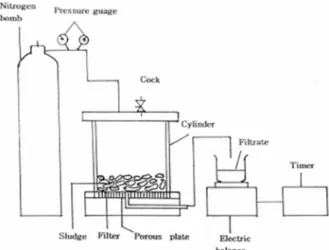
Fig. 1. Schematic diagram of ultrafiltration cell.

fore it was heated in a water bath for 30 minutes. After rins- ing with a small amount of water through the end of a cool- ing tube, the cooling tube was removed, 10 ml of 0.025 N NaOH solution were added, and it was then titrated using 0.025 N KMnO

4

until the color of the solution turned light red, while maintaining the temperature at 60 to 80℃. 100 ml of water was used to conduct the blank test under the same conditions.

COD (mg/l) = (b-a) × f × 1,000/V × 0.2

a: 0.025 N KMnO

4

(ml) consumed in the titration of the blank test

b: 0.025 N KMnO

4

(ml) consumed in the titration of sam- ple

f: Titer of 0.025 N KMnO

4

V: Volume of sample (ml)

Measurement of dehydration efficiency using a centrifugal dehydrator

To investigate the dehydration efficiency based on the floc size produced after the flocculation experiment using the jar test, a centrifugal filter (Sanyo, SYK-3800-15A, Japan) was used. After the jar test, the floc was poured into a mesh pouch with a pore size of 100 μm, and water was evaporated until the floc reached a constant weight at room temperature.

The mesh pocket with the floc was dehydrated at 200 rpm for 2 minutes using a centrifugal filter, and the floc was weighed to determine dehydration efficiency. In addition, the dehydrated floc was dried at 105°C for 3 hr to determine the moisture content of the floc.

Measurement of dehydration efficiency using an ultrafiltration device

During dehydration of the floc produced after floccu- lation, the ultrafiltration device (Amicon 8400, USA) shown in Fig. 1 was used after filtering the water, in order to meas- ure the natural moisture content limit of the floc, and con- centrated nitrogen gas was used to filter at a constant pres- sure (1 kg/cm

2

). The filtrate was measured at 1-minute inter- val using an electronic balance [6]. To calculate the dehy- dration rate at the natural limit, it was hypothesized that the cake is burned at 600°C, so it was possible to calculate the total heating value of the cake from the heating value (C, cal/g) of the cake per unit weight and the weight (K, kg) of the dried cake, which is equal to the amount of heat required to raise the cake to 600°C, as shown in Equation 1-1, and the moisture content (N) is defined by Equation 1-2.

C • K = Q • Ww + 600 Cp • K (1-1) N = Ww / (K + Ww) (1-2) According to Equations 1-1 and 1-2, the natural moisture content limit of the dehydrated cake is

N = (C + 600 Cp)/(Q + C-600 C

P

) (1-3) where, Cp is the specific heat of the dehydrated cake solid (Cp = 1, cal / g °C), Ww is the moisture content, and Q (kcal / kg) is the heat required to raise the temperature of the dehydrated cake from 0°C to 600°C. The heating value of the solid was measured using a calorimeter (Par 1261, U.S.A).

Results and Discussion

Screening of bioflocculant-producing strain and production of bioflocculant Biopol32

As reported in a previous paper [10], samples obtained from nature were used to isolate the flocculant-producing strain Pseudomonas sp. GP32.The biopolymer flocculants pro- duced from these isolated strains were separated and puri- fied, and the flocculant, Biopol32 was used in this study.

Flocculation activity on various types of industrial wastewater

The flocculation activity for wastewater of food process-

ing, slaughterhouse wastewater, and dyeing wastewater was

studied for practical application and development of the bio-

polymer flocculant Biopol32 produced in this study. The use

of flocculants in wastewater treatment is effective in re-

ducing the chemical oxygen demand and removing sus-

(4)

Table 1. Comparision of flocculation activity on the treatment of industrial wastewaters between Biopol32 and PAA

Biopol32 PAA

COD removal rate (%) SSremoval rate (%) COD removal rate (%) SS removal rate (%) Food processing wastewater

Slaughterhouse wastewater Dyeing wastewater

70 62 73

50 91 92

74 55 63

55 86 87 Fig. 2. Effect of pH of Biopol32 on the treatment of wastewaters.

Symbols : (-

-) residual chemical oxygen demand of food processing wastewater, (-

-) residual chemical oxy- gen demand of slaughterhouse wastewater, (-

-) re- sidual chemical oxygen demand of dyeing wastewater, (-○-) residual suspended solid of food processing waste- water, (-△-) residual suspended solid of slaughterhouse wastewater, (-

-) residual suspended solid of dyeing wastewater.

pended solids through flocculation and sedimentation of the suspended solids in the wastewater [4]. Since the floccu- lation effect is affected by the pH and properties of the wastewater, the optimum pH and concentration for each wastewater were investigated in order to establish optimal flocculation conditions.

Effect of pH

In order to determine the optimal pH in the flocculation test for industrial wastewater, the pH of the food processing wastewater was adjusted from pH 4.0 to pH 9.0, the slaugh- terhouse wastewater from pH 2.0 to pH 9.0, and the textile dyeing wastewater from pH 4.0 to pH 9.0. The results are shown in Fig. 2. The final Biopol32 concentration was 10 ppm. Food processing wastewater showed a COD reduction rate of 70% and SS removal rate of 49% at pH 6.0. The slaughterhouse wastewater showed a COD reduction rate of 61% and SS removal rate of 91% at pH 4.0, and in the case of the dyeing wastewater, the COD reduction rate was

72% and SS removal rate was 92% SS removal rate at pH 5.0. These results indicate that the food processing waste- water, slaughterhouse wastewater, and textile dyeing waste- water, show the highest flocculation activity at pH 6.0, 4.0 and 5.0, respectively, due to the minimum solubility of hy- droxide formed from charge neutralization of suspended particles in the wastewater.

Effect of Biopol32 concentration

To confirm the optimal concentration of Biopol32 in the flocculation test for industrial wastewater, the pH of the food processing wastewater, slaughterhouse wastewater and dyeing wastewater was adjusted to the optimal pH 6.0, pH 4.0, and pH 5.0, respectively, and the flocculating activity at different concentration of Biopol32 was measured (data not shown). In the case of the food processing wastewater, addition of 20 ppm of Biopol32 showed the highest flocculat- ing activity with a 75% COD reduction rate and 52% SS re- moval rate. Furthermore, at a concentration of 1 ppm, the COD reduction rate was 63%, indicating that flocculation ac- tivity is also very high at low concentrations. In the case of the slaughterhouse wastewater, Biopol32 exhibited a high flocculation effect at concentrations of 10 to 40 ppm, and at a low concentration of 1 ppm, it showed a COD reduction rate of 50% and SS removal rate of 85%. In the textile dyeing wastewater, at 10 ppm of Biopol32 showed the highest floc- culating activity with a 73% COD reduction rate and 92%

SS removal rate, and at a concentration of 1 ppm, it showed a high flocculation effect with a COD reduction rate of 58%

and SS removal rate of 86%.

Comparison of flocculation activity between Biopol32 and PAA

In order to compare the flocculation activity of Biopol32

with synthetic polymer flocculant PAA, a jar test was per-

formed on the food processing wastewater, slaughterhouse

wastewater, and dyeing wastewater. In the food processing

wastewater, the COD reduction rate and SS removal rate

were 70% and 50%, respectively, when Biopol32 was added,

(5)

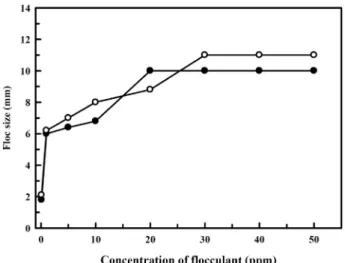
Fig. 3. Changes in floc size as a function of flocculant concen- tration. Symbols : (-

-) Biopol32, (-○-) polyacrylamide (PAA).

and 74% and 55%, respectively, when PAA was added. In the case of the slaughterhouse wastewater, addition of Biopol32 led to a 62% COD reduction rate and 91% SS re- moval rate, while the addition of PAA resulted in a 55%

COD reduction rate and 86% SS removal rate. In the dyeing wastewater, the COD reduction rate and SS removal rate were 73% and 92%, respectively, for Biopol32, and 63% and 87%, respectively, for PAA.

Biopol32 showed a lower flocculation effect than PAA in the food processing wastewater but a higher flocculation ef- fect in the dyeing and slaughterhouse wastewaters (Table 1). These results suggest that Biopol32 is a promising alter- native bioflocculant to PAA, which is currently being used in industrial wastewater treatment.

Size of floc based on flocculant concentration Floc size at different concentration of Biopol32 was inves- tigated by using the slaughterhouse wastewater as a stand- ard sample and Al

2

(SO

4

)

3

(final concentration, 17.5 mM) was used as a coflocculant. The final concentrations of Biopol32 were adjusted to 0.1, 1.0, 5, 10, 20, 30, 40 and 50 ppm, re- spectively, for the jar test, and the resulting floc was applied to a watch plate to measure the floc size. As shown in Fig.

3, the floc maintained maximum, 10 mm size at more than 20 ppm of Biopol32. Addition of 0.1 to 1.0 ppm of Biopol32 resulted in the generation of micro-flocs, but addition of 20 ppm or more generated a floc size of 10 mm. Addition of 20 ppm or higher of Biopol32 resulted in an increase in floc size, but a decrease in the transparency of the supernatant after flocculation. This is possibly due to the fact that when

an excessive amount of flocculant is added, the flocculant, which is a polymer electrolyte with highly hydrophilic char- acteristics, protects the colloids by surrounding the suspen- sion particles for stabilization, placing the suspended par- ticles in a state of dispersion [7]. A similar tendency was confirmed in the case of PAA.

Dehydration efficiency based on floc size

After conducting the flocculation experiment with the jar test, dehydration efficiency was measured using a cen- trifugal dehydration method, in order to investigate the de- gree of dehydration based on the size of the formed floc.

Dehydration efficiency was found to be higher as the floc size increased (data not shown). Biopol32 exhibited a dehy- dration efficiency of approximately 62% when the floc size was 10 mm, exhibiting a similar dehydration efficiency level to PAA, which had a dehydration efficiency of approx- imately 65% when the floc size was 10 mm. Therefore, in order to reach a dehydration efficiency of approximately 62%, the floc size should be 10 mm, and the concentration of Biopol32 added needs to be over 20 ppm.

Dehydration rate based on the natural limit An investigation of the self-combustible natural moisture content limit of the dehydrated cake showed that the heating value (C) per unit weight of dried cake is 4,258 cal/g, and the quantity of heat (Q) required to raise the temperature of the dehydrated cake from 0℃ to 600℃ is 1,028 kcal / kg. Therefore, when this value is substituted into Equation 1-3, the moisture content (N) at the natural limit turns out to be 78.1%. In the moisture content experiment of the cake using the ultrafiltration apparatus (Fig. 1), coflocculant Al

2

(SO

4

)

3

(final concentration, 17.5 mM) was added to the slaughterhouse wastewater and the flocculant was added at concentrations of 1 ppm, 20 ppm and 40 ppm, in order to measure the moisture content based on the pressing time.

The time needed to reach the natural moisture content limit (78.1%) was 13 minutes for 1 ppm, and 11 minutes for 20 ppm and 40 ppm for the Biopol32 group (Fig. 4). For the PAA group, it was 14 minutes for 1 ppm, 12 minutes for 20 ppm, and 13 minutes for 40 ppm. For both the Biopol32 and PAA groups, the optimal flocculant concentration for the highest dehydration efficiency turned out to be 20 ppm.

In addition, the shortest filtration time to reach the natural

critical moisture content was achieved. There was a slight

difference in dehydration efficiency between Biopol32 and

(6)

Fig. 4. Changes in water content at different contentration of Biopol32 in sludge on filtration. Symbols : (-

-) 1 ppm, (-○-) 20 ppm, (-

-) 30 ppm.

PAA as a function of the filtration time after the addition of Biopol32 and PAA. Similar to the dehydration efficiency results measured using the centrifugal dehydration method, the Biopol32 concentration was found to be 20 ppm when using the ultrafiltration apparatus. The addition of 20 ppm of Biopol32 is considered to be a very useful concentration that can be applied in the industrial field.

These results suggest that Biopol32 produced by Pseudo- monas sp. GP32 exhibit similar flocculating activity and de- hydration efficiency to PAA. Compared to the synthetic bio- polymer flocculant PAA, which does not easily decompose in nature and contains carcinogenic substances that are toxic to the nervous system and induce secondary pollution, bio- compatible Biopol32 is biodegradable, has no possibility of inducing secondary environmental pollution, and is harm- less to the human body. Therefore, it is believed that Biopol32 can be very useful in the flocculation process for the wastewater treatment industry in terms of preventing environmental pollution.

Acknowledgement

This work was supported by a Research Grant of Gyeong- nam National University of Science and Technology in 2017 year.

References

1. Baugh, W. A. 1975. Coagulation with chitosan. Poutry Sci.

54, 1904-1912.

2. Bikales, N. M. 1973. Polymer Science and Technology. Vol 2, Water Soluble Polymer. pp.424. New York, Plenum Press.

3. Fridman, B. A. and Dugan, P. R. 1968. Identification of Zoogloea sp. and the relationship to Zoogloeal matrix and floc formation. J. Bacteial. 95, 1903-1909.

4. Gutcho, S. 1977. Waste treatment with polyectrolytes and other flocculants, pp1-37. Noyes Data Corp., Park Ridge, New Jersey.

5. Hirano, S., Kondo, S. and Ohe, Y. 1975. Chitosan gel. Polymer 16, 622-627.

6. Kang, S. M. 1990. Dehydration of activated sludge by filter press. Ph. D. Dissertation. Osaka University, Osaka, Japan.

7. Koizumi, J., Takeda, M., Kurane, R. and Nakamura, I. 1991.

Synergetic flocculation of the bioflocculant extracellularly produced by Norcardia amarae. J. Gen. Appl. Microbiol. 37, 447-454.

8. Kurane, R., Takeda, K. and Suzuki, T. 1986. Screening for and characteristics of microbial flocculants. Agric. Biol. Chem.

50, 2301-2307.

9. Kurane, R., Toeda, K. Takedak, K. and Suzuki, T. 1986.

Culture conditions for production of microbial flocculant by Rhodococcus erythropholis. Agric. Biol. Chem. 50, 2309-2313.

10. Lee, M. E., Lee, H. D. and Suh, H. H. 2015. Production and characterization of extracellular polysaccharide produced by Pseudomonas sp. GP32. J. Life Sci. 25, 1027-1035.

11. Nakamura, J., Miyahiro, S. and Hirose, Y. 1976. Conditions for production of microbial cell flocculant by Aspergillus so- jae AJ7002. Agric. Biol. Chem. 40, 1341-1347.

12. Nakamura, J., Miyahiro, S. and Hirose, Y. 1976. Screening, isolation and some properties of microbial cell flocculants.

Agric. Biol. Chem. 40, 377-383.

13. Takagi, H. and Kadowaki, K. 1985. Flocculant production by Pacilomyces sp. taxonomic studies and culture conditions for production. Agric. Biol. Chem. 49, 3151-3157.

14. Takagi, H. and Kadowaki, K. 1985. Purification and chem- ical properties of a flocculant produced by Pacilomyces sp.

Agric. Biol. Chem. 49, 3159-3164.

15. Toeda, K. and Kurane, R. 1991, Microbial flocculant from Alcaligenes cupidus KT201. Agric. Biol. Chem. 55, 2793-2799.

16. Vanhoric, M. and Moens, W. 1983. Cacinogen of acrylamide.

Carcinogensis 4, 1459.

17. Vincent, B., Bijsterbosch, B. H. and Lyklema, J. 1971. Compe- titive adsorption of ions and neutral molecules in the stern layer on silver iodide and its effect on colloid stability. J.

Colloid Interface Sci. 37, 171-176.

18. Whistler, R. L. 1973. Algin, in Industrial Gums. pp 49-81.

William H. M. and Pettitt, D. J. (eds.), Academic Press, New York, U.S.A.

19. Whistler, R. L. 1973. Furcellaran, in Industrial Gums. pp 123- 136. Petersen, E. B., Christensen, J. and Hemmingsen, P.

(eds.), Academic Press, New York, U.S.A.

20. Whistler, R. L. 1973. Chitin, in Industrial Gums. pp. 465-468 Whistler, R. L.(ed.), Academic Press, New York, U.S.A.

21. Zajic, J. E. and Knettig, E. 1970. Flocculants from paraffinic hydrocarbons developments in industrial microbiology, pp. 87- 98. American Institute of Biological Science, Washington DC.

22. Zaic, J. E. and Leduy, A. 1973. Flocculant and chemical properties of a polysaccharide from Pullularia Pullulans.

Appl. Microbiol. 25, 628-635.

(7)

초록:생물고분자응집제 Biopol32의 산업폐수에 대한 응집활성 및 탈수효과 이명은

1

․오나라

2

․서현효

1

*

(

1

국립경남과학기술대학교 환경공학과,

2

주식회사 디아젠 기술연구소)

Pseudomonas sp. GP32가 생산하는 생물고분자 응집제 Biopol32의 실제 응용, 개발을 위하여 식품폐수, 도축폐 수, 염색폐수에 대하여 응집효과를 검토하였다. 식품폐수의 경우 pH 6.0에서 70%의 화학적산소요구량(COD) 감 소율과 49%의 부유고형물(SS) 제거율을 나타내었다. 도축폐수에서는 pH 4.0에서 61%의 화학적산소요구량 감소 율과 91%의 부유고형물 제거율을 보였으며, 염색페수의 경우 pH 5.0에서 72%의 화학적산소요구량 감소율과 92%

의 부유고형물 제거율을 보였다. 응집과정에서 형성되는 floc의 크기는 Biopol32 용액을 최종농도 20 ppm으로

첨가하였을 때 10 mm였고 이때 탈수효율은 62%였다. 생물응집제 Biopol32 첨가구와 합성응집제 PAA 첨가구에

서 탈수효율이 전반적으로 가장 좋은 응집제 첨가 농도는 20 ppm으로 나타났으며, 또한 이때 자연한계함수율

(78.1%)에 이르는 최단의 여과시간을 얻을 수가 있었다.

수치

Fig.  1.  Schematic  diagram  of  ultrafiltration  cell.
Table  1.  Comparision  of  flocculation  activity  on  the  treatment  of  industrial  wastewaters  between  Biopol32  and  PAA
Fig.  3.  Changes  in  floc  size  as  a  function  of  flocculant  concen- concen-tration
Fig.  4.  Changes  in  water  content  at  different  contentration  of  Biopol32  in  sludge  on  filtration

참조

관련 문서

• Controlled decomposition of organic materials such as plant materials, animal waste, food.. waste, and wastewater sludge

Sources: metal plating, rechargeable batteries, smelting (제련), refining, mine drainage, industrial wastewater, corrosion of galvanized pipe in the water distribution

페놀에 오염된 수돗물 을 마신 수돗물을 마신 시민들은 구토・설사・복통으로 고통을 겪었으며 수 돗물로 만든 두부・김치・콩나물 등은 악취 때문에 폐기

• Stormwater treatment.. 1) Domestic wastewater: Wastewater discharged from residences and from commercial, institutional, and similar facilities.. 2) Industrial

웹 표준을 지원하는 플랫폼에서 큰 수정없이 실행 가능함 패키징을 통해 다양한 기기를 위한 앱을 작성할 수 있음 네이티브 앱과

_____ culture appears to be attractive (도시의) to the

The index is calculated with the latest 5-year auction data of 400 selected Classic, Modern, and Contemporary Chinese painting artists from major auction houses..

1 John Owen, Justification by Faith Alone, in The Works of John Owen, ed. John Bolt, trans. Scott Clark, "Do This and Live: Christ's Active Obedience as the