†To whom corresponding should be addressed.
Tel : +82-43-750-1399 E-mail : [email protected]
https://doi.org/10.5855/ENERGY.2017.26.4.045
Characteristic studies of coal power plants ash sample and monitoring of PM 2.5
Thriveni. T1, Ramakrishna. CH2, Seong Young Nam3, Chunsik kim4 and Ahn Ji Whan5*
1,2Hanil Cement, 302 Maepo-gil, Maepo-eup, Danyang-gun, Chungcheongbuk-do, Korea.
3,4Technical Center, HANIL CEMENT Co.Ltd., 50, Daehwa-ro 52beonan-gil, Daedeok-gu, Daejeon, 34361, Republic of Korea.
5Mineral Processing Division, Korea Institute of Geoscience and Mineral Resources (KIGAM), Gwahagno-124, Yuseongu-gu, Daejeon, Korea.
(Received 8 November 2017, Revised 8 December 2017, Accepted 11 December 2017) Abstract
Coal power plants produce electricity for the nation’s power grid, but they also produce more hazardous air emissions than any other industrial pollution sources. The quantity is staggering, over 386,000 tons of 84 separate hazardous air pollutants spew from over 400 plants in 46 states. In South Korea also, annual coal ash generation from coal- fired power plants were about 6 million tons in 2015. Pollutants containing particulate matter 10, 2.5 (PM10, PM2.5), heavy metals and dioxins from coal-fired power plant. The emissions threaten the health of people who live near these power plants, as well as those who live hundreds of miles away. These pollutants that have long-term impacts on the environment because they accumulate in soil, water and animals. The present study is to investigate the physical and chemical characteristics of coal-fired power plant fly ash and bottom ash contains particulate matter, whose particulate sizes are lower than PM10 and PM2.5 and heavy metals. There are wide commercial technologies were available for monitoring the PM 2.5 and ultra-fine particles, among those carbonation technology is a good tool for stabilizing the alkaline waste materials. We collected the coal ash samples from different coal power plants and the chemical composition of coal fly ash was characterized by XRF. In the present laboratory research approach reveals that potential application of carbonation technology for particulate matter PM10, PM2.5
and stabilization of heavy metals. The significance of this emerging carbonation technology was improving the chemical and physical properties of fly ash and bottom ash samples can facilitate wide re use in construction applications.
Key words : coal ash, particulate matter, heavy metals, carbonation
1. INTRODUCTION
Currently, there are several environmental issues resulting from human impacts on the quality of our environment particularly in 2015 ~2016 such as Climate change issues (global warming, greenhouse gas effect, ozone depletion), Aquatic environmental issues (water pollution, water shortage, ocean dead
zones, water diversion, overfishing), Air quality is- sues (acid rain, air pollution, nuclear pollution [1].
Particulate matter (PM) is a complex pollutant and it contains a mixture of both organic and inorganic particles, such as dust, pollen, soot, smoke and liquid droplets found in the air which are toxic and hazardous. PM air pollution is often discussed in terms of particle size because of the distinct charac- teristics (origin, chemical species and atmospheric behavior) associated with different particle size classes. Particulate matters widely dived into 3 cate-
Country Time period
NOx (µg/m3) SOx (µg/m3) PM (µg/m3)
Existing New Existing New Existing New
Australia -- -- 800 -- 200 -- 80
China Hourly 100 50 200/50 35 30/20 10
Germany Daily 200 150 200 150 20 10
India -- 600/300 100 600/200 100 100/50 30
Indonesia -- 850 750 750 750 150 100
Japan -- 410 200 -- 200 100 50
South Africa Continuously 1100 750 3500 500 100 50
Thailand -- 820 410 2002 515 180 80
USA Daily 135 95.3 185 136 18.5 12.3
EU IED Continuously 200 150 200 150 20 10
Table-1: Selected countries emission standards for NOX, SOX and PM from coal power plants
gories such as coarse particles in the range of about 2.5 to 10 µm in diameter - combustion of fossil fuels such as coal, oil, near roads mineral dust and petrol can produce. Fine particles (excluding ultrafine par- ticles) in the range of about 0.1 to 2.5 µm in diame- ter, sometimes called accumulation mode particles;
and ultrafine particles less then approximately 0.1 µm in diameter, sometimes called nuclei model particles.
In many developing countries, greenhouse gases (GHGs), reactive trace gases, particulate matter and toxic compounds emissions from waste combustors are more challenging to national and global inventories. Air pollution is a major emerging global environmental problem. Particulate matter pollution in air affects peoples living health quality tremen- dously, and it poses a serious health threat to the public health as well as influencing visibility, direct and indirect radiative forcing, climate, and eco sys- tems [2].
Coal power plants are the major sources of pollu- tant emissions. Over 386,000 tons of 84 separate hazardous air pollutants released from over 400 coal power plants in 46 states of USA [3]. Currently the coal industries faces stringent emission regulations to limits the release of SO2, NOx, toxic volatile organic compounds, heavy metals, and particulate matter
(PM) etc. Particle matter contain any or all of the aforementioned chemical species or their compounds, plus water and biogenic organic species. PM2.5 (particles less than 2.5 μm in diameter), cause not only air pollution but also human respiratory and heart disease and cancer. PM2.5 is the major compo- nent of smog in China. Control of PM2.5 emissions and their precursors from coal-fired power plant is necessary to mitigate the environmental and health impacts, especially in countries for power generation coal is the main energy source, such as India, China and South Africa. Most countries regulate emissions based on the plant’s age. But the definitions for new plant and existing plants are different [4]. There are several reports published for the source of particulate matter emissions from industrial plants [5-10].
1.1. Environmental and Public Health Effects of PM Emissions
Presently, it is not known which particles have the most significant impact on human health, although theories related to particle size and composition.
Suspended particles may have diameters varying from several centimeters (e.g. dust particles), to 0.1 mm. The PM2.5 (particle sizes are less than 2.5 μm in diameter) size fraction is considered as one of the possible principal causes of cardiovascular and respi-
Pollutant Health Risks Emission limit values Carbon dioxide (CO2) Indirect health impacts from climate change
Sulphur dioxide (SO2)
Can affect respiratory system and lung functions, aggravation of asthma and chronic bronchitis, makes people more prone to infections of the respiratory tract; irritation of eyes; cardiac disease aggravated ; ischemic stroke risk
20 μg/m3 (day) 500 μg/m3 (10min) Directive 2001/80/EC:
400 mg/m3 (old plants), 200 mg/m3 (new plants)
Nitrous oxides (NOx);
Asthma development (suspected), asthma exacerbation, chronic obstructive pulmonary disease, stunted lung development; cardiac arrhythmias, ischemic stroke.
Reacts with VOCs in sunlight to form ground- level ozone.
NO2: 40 μg/m3 (year), NO2: 200 μg/m3 (1h) Directive 2001/80/EC:
NOx: 500 mg/m3 (old plants) NOx: 200 mg/m3 (new plants)
Particulate matter:
coarse particulates (PM10),
fine particulates (PM2.5)
Exposure to such particles can affect both lungs and heart, especially fine particles - containing microscopic solids or liquid droplets that are so small that they can get deep into the lungs and cause serious health problems. Numerous scientific studies have linked particle pollution exposure to a variety of problems, including premature death in people with heart or lung disease, nonfatal heart attacks, irregular heartbeat, aggravated asthma, decreased lung function, and increased respiratory symptoms, such as irritation of the airways, coughing or
difficulty breathing.
Respiratory: asthma development (suspected), asthma exacerbation, chronic obstructive pulmonary disease, stunted lung development (PM2.5), lung cancer;
Cardiovascular: cardiac arrhythmias, acute myocardial infarction, congestive heart failure (PM2.5).
Nervous system: ischemic stroke.
PM2.5 10 μg/m3 (year), PM10 20 μg/m3 (year) Directive 2001/80/EC:
(monthly, total dust) 50 mg/m3 (old plants), 30 mg/m3 (new plants) Directive 2008/50/EC:
25 μg/m3 target PM2.5 (year), 50 μg/m3 (day) limit PM10, not to exceed on >35 days
Antimony (Sb), Arsenic (As), Beryllium (Be), Cadmium (Cd), Chromium (Cr), Nickel (Ni), Selenium (Se), Manganese (Mn).
Carcinogens (lung, bladder, kidney, skin cancers); may adversely affect nervous, cardiovascular, dermal, respiratory and immune systems. The International Agency for Research on Cancer classifies arsenic and its compounds as group 1 carcinogens.
As: no safe level established;
Cd 5 ng/m3 air;
Directive 2004/107/EC:
As 6ng/m3; Cd 5ng/m3;
Ni 20ng/m3 (ambient air)
Lead (Pb)
Damages nervous system of children; may adversely affect learning, memory and behaviour; may damage kidneys, cause cardiovascular disease, anemia.
0.5 μg/m3 (air) Directive 2008/50/EC:
0,5 μg/m3 (ambient air) Dioxins and furans
(e.g.,2,3,7,8-tetrachlorodi benzo-dioxin , short TCDD)
Probable carcinogen (stomach cancer); affect reproductive, endocrine and immune systems. Dioxins accumulate in the food chain.
WHO AQ Guidelines value:
TCDD 70 pg /kg weight / month tolerable intake (provisional) Table-2: Health risks from various pollutants, emission limit values (Suggested by WHO guide lines) for coal power plants
(adopted from ref 17 and 18) ratory illness [11-14].
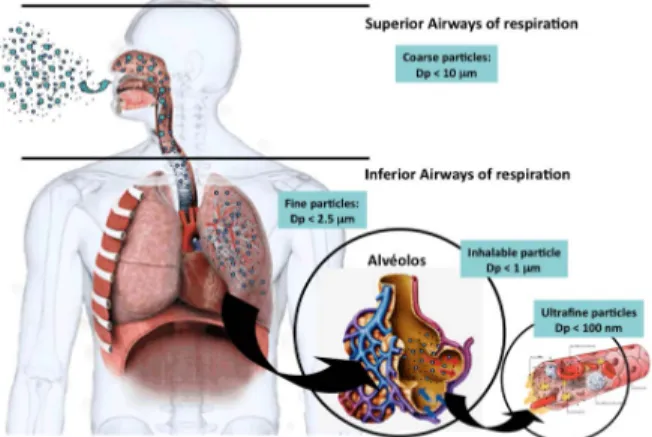
In Fig.1, the represented areas where particulate material from incomplete combustion processes is deposited in the body. These particles are deposited
into the airways in the head region when inhaled.
The small fine particles are deposited into lung air- ways or the tracheobronchial region [15]. If the par- ticulate matters emissioned along with heavy metals
Figure. 2. Spatial range of pollutants impact (Adopted from reference 19).
Figure. 1. Health Impacts of Particulate Emissions [adopted from ref.15].
Technology Name Pollutants name Technology working % of currently using
this technology
Wet or Dry Flue Gas Desulfurization (Scrubbers)
HAPs: HCl, HF, HCN, SO2, PM
Liquid mixed with limestone is sprayed into the emission or emissions are passed through a stream of liquid mixed with lime or a bed of basic material such as limestone; reactions between sulfur and base compounds produce salts which are removed from the exhaust air stream.
46%
Electrostatic Precipitators (ESP)
Antimony, Be, Cd, Co, Pb, Mn, Ni, and primary particulate matter
Particles are charged with electricity and collected on oppositely charged
plates, particles are collected for disposal/further treatment.
74%
Baghouse
Antimony, Be, Cd, Co, Pb, Mn, Ni, and primary particulate matter
Emissions are passed through
fabric filters and collected. 35%
Cyclones
Antimony, Be, Cd, Co, Pb, Mn, Ni, and primary particulate matter
Use centrifugal force to separate
particulate from gas streams. 5%
Table 3: Summary of available technologies (Adopted from reference 19).
it gives high potential risk to human health [16, 17].
The severe health effects from heavy metals asso- ciated with air pollutants presented in the Table. 2
[18]. In this table we reported the various health risks from various pollutants, and heavy metals.
European Union-wide impacts amount to more than 18,200 premature deaths, about 8,500 new cases of chronic bronchitis, and over 4 million lost working days each year [19].
Hazardous emissions threaten health locally and at great distances. Many metals, dioxins and other pol- lutants adhere themselves to the fine particles. They may travel with airborne particles to distant locations [19].
1.2. Standard methods for sampling and mea- surement:
The major methods are focusing on fine PM test- ing and measuring methods concentrate on determin-
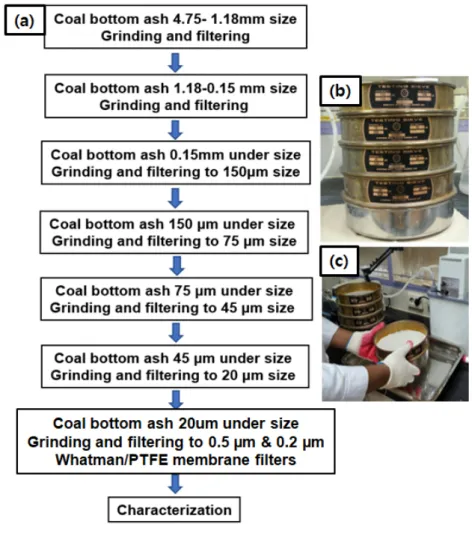
Figure 3. Experimental flow sheet for coal bottom ash sieving (a), sieved machine (b) and process (c).
ing the total mass of PM2.5. High quality and com- prehensive measurement methods for the determi- nation of the chemical components of PM2.5 still need to be developed. Since the chemical composi- tion of PM2.5 is not completely understood yet, the full chemical analysis of PM2.5 remains a challenge.
Currently, there are several technologies are avail- able for the reduction of emissions of particulate matter and heavy metals from coal power plants [19]. The brief summary of available technologies for reductions of emissions from coal power plants presented in Table 3.
In this paper, we presented our investigated re- search results. We used coal power plants bottom ash and coal ash samples for measuring the partic- ulate matter and
2. EXPERIMENTAL PROCEDURE:
2.1. MATERIALS AND SAMPLE PREPARAITON In this study, we chosen samcheok green coal power generation CFBC fly ash and bottom ash samples. After receiving the samples we dried the samples at room temperature for the removal of moisture from that samples. After drying, we sieved the coal bottom ash sample by using various mesh sizes of sieving machines. The flow sheet of proce- dure which we followed as per particle size dis- tribution showed in Fig. 3a, and sieved machine and process as shown in Fig. 3b and 3c.
The coal fly ash and bottom ash samples contain- ing the high content of hazardous heavy metals and stabilized by the carbonation process. In these carbo-
Sieve 1st time 2nd time 3rd time Average
16mm over 199 12.04% 161.4 9.42% 167.8 10.22% 10.56
16 ~9.50 199 12.04% 238.3 13.91% 177.4 10.80% 12.25
9.50~4.75 178.2 10.78% 223.3 13.03% 226.4 13.79% 12.53
4.75 ~2.36 191.9 11.61% 207.2 12.09% 211.0 12.85% 12.18
2.36 ~1.18 189.6 11.47% 211.7 12.35% 219.4 13.36% 12.39
1.18 ~0.6 132.4 8.01% 150.7 8.79% 162.6 9.90% 8.90
0.6 ~ 0.3 99.9 6.04% 110.8 6.47% 122.0 7.43% 6.65
0.3 ~ 0.15 115.5 6.99% 99.6 5.81% 92.2 5.62% 6.14
0.15 under 347.2 21.01% 310.5 18.12% 263.1 16.02% 18.38
Total (%) 1652.7 99.99% 1713.5 99.99% 1641.9 99.99% 99.98
Total sample weight 1667.2 -14.5 1728.6 -15.1 1654.3 -12.4
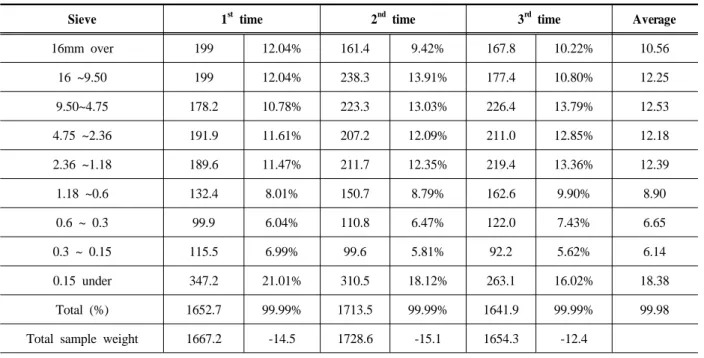
Table 4. Particle size distribution ratio coal ash samples nation reactions experiments were conducted using a various condition with a liquid-solid-ratio (0.3 and 1.0 dm3/kg), CO2 was injected at a rate of 1L/min and 400rpm stirring speed at 20oC temperature. The experiment of carbonation was terminated when the measured pH was below 7 and sample was filtered and dried at 80oC for 12h duration time.
2.2. Carbonation Process:
The aqueous carbonation of calcium hydroxide in contact with compressed CO2 at moderate temper- ature allows the synthesis of fine particles of calcite.
Carbonation is a strong exothermic reaction. The re- action mechanism of calcite precipitation via aqueous carbonation of Ca(OH)2 was then described by the global reaction.
water
Ca(OH)2(s) → Ca2+
+ 2 OH- (1)
The dissociation of aqueous CO2,
H O CO H
CO2(aq) 2 32 2 (2)
These processes produce a fast supersaturating (SI) of solution with respect to calcite,
) 1 )(
( 2 32
sp
I K
CO S Ca
(3)
where (Ca2+) and (CO32-
) are the activities of cal- cium and carbonate ions in the solution, respectively, and Ksp is the thermodynamic solubility product of calcite.
)
3(
2 3
2 CO CaCO nuclei
Ca (4)
Finally, the crystal growth occurs spontaneously until the equilibrium calcite and the solution is reached
) ( )
( 3
3 nuclei CaCO calcite
CaCO (5)
3. RESULTS AND DISCUSSION:
3.1. Monitoring of particle size distribution in CFBC coal bottom ash sample.
We investigated the physical and chemical charac- teristics of Samchuk Green Power Circulating Fluidized Bed Power Plant coal bottom ash samples.
The CFBC bottom ash contains high amount of cal- cium because of the desulfurization process using limestone. The bottom ash sample was used to siev- ing process and the different particle size distribution
Sample name SiO2 Al2O3 Fe2O3 CaO MgO Na2O K2O Etc Ig-loss
CFBC fly ash 26.40 13.40 17.20 33.30 10.00 0.02 0.87 6.57 5.06
CFBC bottom ash 39.46 9.46 6.20 35.31 11.25 0.06 1.25 4.80 4.00
Table 5. The chemical compositions of CFBC coal fly ash and bottom ash samples.
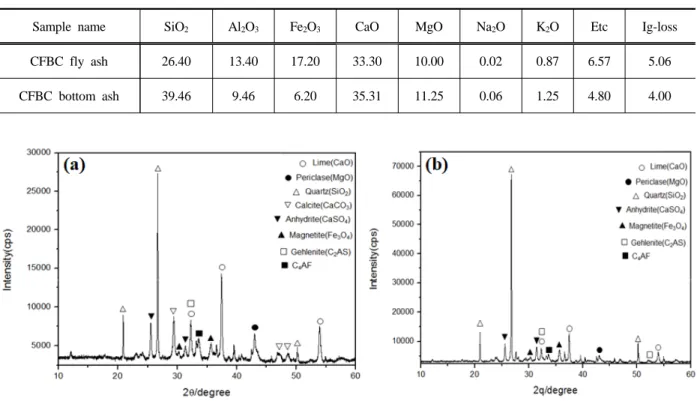
Fig. 5. (a) and (b) represented for CFBC fly ash and CFBC bottom ash.
Figure. 4. Particle size distribution of CFBC bottom ash
was shown in Table. 4. These results indicated that bottom ash samples having different particle sizes, among these less than 0.15mm sized particles have high percentage (18.38%) as shown in fig. 4 particle size distribution of CFBC bottom ash sample, these high amount of particle matter having the most sig- nificant impact on human health.
3.2. Characteristics of CFBC coal fly ash and bottom ash samples.
X-ray fluorescence (XRF) analysis of the chemical compositions of CFBC coal fly ash and bottom ash samples were presented. Table 5, shows the chemical compositions of CFBC coal fly ash and bottom ash samples. The major components of coal fly ash are 33.3% of CaO and 26.40% of SiO2 are present and in the case of bottom ash samples having 35.31% of CaO and 39.46% of SiO2 , remaining elements such as Al2O3, Fe2O3 and MgO having below 20% are present in both fly ash and bottom ash samples.
The circulated fluidized bed combustion fly ash and bottom ash samples were characterized by XRD and showed in Figure 5. The fly ash collected (differential) through boiler internal dust collector, the residual bottom ash collected from the bottom of boiler (various size). The average amount of 33.3%
and 35.31% of CaO is contained in fly ash and bot- tom ash, respectively. The XRD results shows in fly ash, Lime 20.5%, Periclase 12.3%, Anhydrite 6.4%, Calcite 16.6% and in bottom ash having Lime 9.9%,
Figure. 7. (a) Carbonated CFBC fly ash, and (b) Carbonated CFBC bottom ash Figure. 6. Carbonation reactor-Batch type
Periclase 6.0%, Anhydrite 4.6%, Calcite 1.4%. Large amounts of CaO in the Samchuk green power circu- lating fluidized bed power plant.
3.3. Carbonation process of Heavy Metals and particulate matters
We studied the Samchuk green power circulating fluidized bed power plant coal ash samples by CO2
immobilization and reported characteristics of those samples. The batch type reactor which we were used for this studies showed in the Figure 6. carbonation batch type reactor.
We optimize CO2 immobilization technology for circulating fluidized bed coal ash and bottom ash samples, various conditions (water content, CO2 con- centration, temperature, pressure, etc.) to ensure opti- mum conditions and to control minerals or industrial byproducts. It is possible to stabilize harmful sub- stances such as heavy metals by immobilizing CO2.
CaO + H2O → Ca(OH)2 + CO2 → CaCO3 + H2O (6)
In fig. 7 (a) and (b) shows CFBC coal ash before and after CO2 immobilization, in these process, the hydrated lime (CaO) was decomposed and to form stabled calcite along with heavy metals was stabi- lized by carbonation process. The main advantages of CO2 immobilization was, i) fixed harmful sub- stances such as heavy metals by Capsulation effect (prevent secondary pollution) and ii) possible CO2
immobilization in the power plant coal ash samples.
3.4. Effect of Solid/liquid ratio
We studied the effect of solid/liquid ratio of coal ash samples. In these process the fly ash was in- creased by about 3 times (S/L 0.1, S/L 0.2 and S/L 0.3) and measured the reaction time increased as shown in Fig. 8. In results show that the reaction is terminated quickly due to the low content of CaO components that can react with CO2 in the fly ash and bottom ash samples.
The results indicated that the carbonate production efficiency was improved due to decrease of high liq- uid ratio (reduction of reaction time) and verified of relative occurrence of large amount of wastewater.
The solid/liquid ratio was increased from 0.1 to 0.3, the reaction time will increase due to the high amount of CaO availability in both CFBC fly ash and bottom ash samples.
Figure. 9. (a) CFBC fly ash and (b) CFBC bottom ash samples.
Figure. 8. (a) Carbonated CFBC fly ash (b) Carbonated CFBC bottom ash.
3.5. Effect of CO2 Concentration:
We studied two different CO2 concentrations (10%
CO2 and 100% CO2) for coal ash samples carbo- nation process. The results indicate the CO2 immobi- lization reaction time increased for the production ef- ficiency according to the concentration of 10% CO2) gas supplied, but in the case of 100% CO2 gas was supplied the reaction time is decreased for the CO2
immobilization and increase the final stable solid production as shown in Fig.9 carbonation process with different CO2 concentrations for CFBC fly ash and bottom ash samples. The CO2 immobilization re-
action time increase with actual exhaust gas CO2
concentration (10%). Fly ash, 6 times increase re- action time and increase reaction time about 5 times as for bottom ash samples.
3.6. Heavy metals immobilization by carbona- tion process
Carbonation is highly effective immobilization of SOx, NOx and particulate matter etc.emissions from coal power plant. Assessment of heavy metal con- tents in CFBC (unit: mg/kg) as shown in Table. 6 heavy metals are presented in CFBC fly ash and bot-
Sample name Pb Cu As Cd Cr Zn Hg
Fly Ash 9.0 32.3 7.5 5.6 31.1 92.8 0.589
Bottom Ash 2.1 7.9 25.0 4.8 30.7 80.5 0.007
Table 6. Heavy metal contents present in CFBC fly ash and bottom ash sample (unit: mg/kg)
Sample name Pb Cu As Cd Cr Hg
Fly Ash 0.00240 0.00082 0.00093 0.00020 0.01900 N.D
Bottom Ash 0.00200 0.00083 0.00100 0.00011 0.00130 N.D
Table 7: Leaching Characteristics of heavy metal contents in CFBC (unit: mg/kg)
Sample name Pb Cu As Cd Cr Hg
Fly Ash 0.00240 0.00082 0.00093 0.00020 0.01900 N.D
Fly Ash
(After carbonation) ND ND ND ND ND N.D
Bottom Ash 0.00200 0.00083 0.00100 0.00011 0.00130 N.D
Bottom Ash
(After carbonation) ND ND ND ND ND N.D
N.D. means non-detectable..
Table 8: Immobilization of heavy metal by carbonation (unit: mg/kg)
Figure. 10. Heavy Metals Encapsulation by Carbo- nation Process in CFBC coal ash sample.
tom ash sample.
These dried CFBC fly ash and bottom ash was used for leaching experiment, after leaching process, Pb, Cu, As, Cd and Cr heavy metals was eluted in the leaching solution as shown in Table 7. leaching characteristics of heavy metal contents in CFBC (unit: mg/kg).
The CFBC fly ash and bottom ash samples was used to immobilization of heavy metals by carbo- nation process, these carbonated CFBC coal ash samples was used for leaching experiment, after leaching process, Pb, Cu, As, Cd, Cr and Hg heavy metals was not eluted in the leaching solution as shown in Table 8. After carbonation the heavy metal contents in CFBC (unit: mg/kg) samples, these re- sults indicated that after carbonation process the heavy metals are stabilized and not eluted in the
leaching process and Fig.10 also indicated the SEM images for heavy metals encapsulation process by carbonation in CFBC coal ash sample.
Calcium carbonate (CaCO3) is formed on the sur-
face of alkali waste particles by immobilization of CO2. So that it can be stabilized so that heavy metals cannot be rereleased through encapsulation.
4.CONCLUSIONS:
There are several conventional methods for the re- moval of toxic heavy metals and particulate matters from coal power plant ash samples. Still, the com- plete extraction of the toxic species from waste and industrial effluents in order to reach acceptable levels represents a true challenge. We investigated the pos- sibility of carbonation process for heavy metals re- moval and stabilization from coal ash samples and we confirmed carbonation is a good tool and defi- nitely it's an emerging technology for toxic metals removal. CO2 immobilization (accelerated carbo- nation) is a technology that can stabilize harmful substance such as heavy metals and particulate matters. Immobilization can stabilize heavy metals and particulate matter presented in coal ash samples through pH neutralization.
ACKNOWLEDGEMENTS
This study was supported by the Energy Technol- ogy Development Project [20141010101880] of the Korea Institute of Energy Technology Evaluation and Planning, financed by the Ministry of Trade, Industry and Energy.
REFERENCES
1. Karen L. Lancour, Green generations, problems resulting from human impact, 2014, 1-20.
2. Frank J. Kelly. Julia C. Fussell, Air pollution and public health: emerging hazards and improved un- derstanding of risk, Environ Geochem Health, 37, 2015, 631-649.
3. U.S. Environmental Protection Agency (EPA). 2007.
National Emission Inventory (NEI) 2002: Invento- ry Data: Point Sector Data - ALLNEI HAP Annual
01232008. Web Link: inventory data [Accessed 11 January 2011].
4. International Energy Agency clean coal center re- port, Emission standards and control of PM2.5
from coal fired power plants, 37, 2016.
5. C. Ehrlicha, G. Nolla, W.D. Kalkoffa, G. Baum- bachb, A. Dreiseidler, PM10, PM2.5 and PM1.0 Emissions from industrial plants - Results from measurement programmes in Germany, Atmos- pheric Environment 41, 2007, 6236-6254.
6. Baumbach, G., Zuberbuhler, U., Struschka, M., Straub, D., Hein, K.R.G., (1999). Feinstaubunter- suchungen an Holzfeuerungen; Teil 1: Bereich Hausbrand und Kleingewerbe. Institut fur Verfa- hrenstechnik und Dampfkesselwesen, Report No.
44-1999, Universtat Stuttgart. Juli 1999.
7. Bayerisches Landesamtfur Umweltschutz, 2000.
Grundsatzuntersuchungu¨ ber die Korngro¨ Xenver- teilung im Abgas verschiedener Emittenten, Pro- ject I and II. /http://www.bayern.de/lfu/luft/ver- oeffentlich/umweltforsch/umweltforsch.htmS (last accessed 16/02/07).
8. Dreiseidler, A., Straub, D., Baumbach, G., 2001.
Korngro Xenverteilung (PM10 und PM2.5) von Staubemissionen relevanter stationarer Quellen.
UBA-Forschungsbericht 298 44 280, Berlin.
9. Landesamtesfu¨r Umweltschutz Sachsen-Anhalt, 2001.
Feinstaubemissionsuntersu chungen in Sachsen- Anhalt: PM10_PM2.5_ und PM1.0_ Emissionen aus Industrie und Hausbrand, Sonderheft 1. /http://www.
mu. sachsen- anhalt.de/ start/ fach bereich 03/
fachberichte/main.htmS (last accessed 16/02/07).
10. Nisulescu gheorghe catalin, Ioana ionel, Delia calinoiu, Ion vetres, Air pollution monitoring in a town nearly power plant, Advances in Biology, Bioengineering and Environment, 2011, 181-184.
11. Liu F, High-resolution inventory of technologies, activities, and emissions of coal-fired power plants in China from 1990 to 2010. Atmos Chem Phys 15(23), 2015, 13299-13317.
12. J.W. Moore and E.A. Moore, Environmental chemistry, New York, San Francisco, London:
Academic Press; 1976, 500.
13. US EPA, Air quality for particulate matter, Na- tional Center for Environmental Assessment, Offi- ce of Research and Development, Research Triangle Park, NC, Report No: EPA/600/p-95/001CF;
1996.
14. Shamzani Affendy Mohd Din, Nik Nurul-Hida- yah Nik Yahya, Alias Abdullah, Fine Particu- lates Matter (PM2.5) from Coal-Fired Power Plant in Manjung and its Health Impacts, Procedia - Social and Behavioral Sciences, 85, 2013, 92-99.
15. P. Padmavathi, Jyotsna Cherukuri, M. Anji Reddy, Ambient air pollutant levels in the vicinity of NTTPS thermal power plant, IOSR Journal of Environmental Science, Toxicology and Food Technology, 9, 2015, 56-60.
16. Csavina, J., Field, J., Taylor, M. P., Gao, S., Landazuri, A., Betterton, E. A., & Saez, A. E. A review on the importance of metals and metal- loids in atmospheric dust and aerosol from min- ing operations. Science of the Total Environ- ment, 433, 2012, 58-73.
17. Sadovska. V, Health Risk Assessment of Heavy Metals Adsorbed in Particulates, International Journal of Environmental, Chemical, Ecological, Geological and Geophysical Engineering, 6, 2012, 481-484.
18. Génon K. Jensen, The unpaid health bill, How coal power plants make us sick, Health and En- vironment Alliance (HEAL) report, 2013, 1-46.
19. Agency for Toxic Substances and Disease Regis- try (ATSDR). 2011. Toxic Substances Portal:
Toxicological Profiles. Washington, DC, USA:
ATSDR. Web Link:http://www.atsdr.cdc.gov/tox- profiles/index.asp [Accessed: 3 February 2011].