• 검색 결과가 없습니다.

The brief review on Coal origin and distribution of rare earth elements in various Coal Ash Samples

N/A
N/A
Protected

Academic year: 2021

Share "The brief review on Coal origin and distribution of rare earth elements in various Coal Ash Samples"

Copied!
9
0
0

로드 중.... (전체 텍스트 보기)

전체 글

(1)

To whom corresponding should be addressed.

Tel : +82-42-868-3578 E-mail: [email protected]

https://doi.org/10.5855/ENERGY.2018.27.2.061

The brief review on Coal origin and distribution of rare earth elements in various Coal Ash Samples

Chilakala Ramakrishna

1

, Thriveni Thenepalli

2

, Seong Young Nam

3

, Chunsik Kim

4

, Ji Whan Ahn

5†

1,2,3,4

Department of R&D Team, Hanil Cement Corporation, Danyang, 395-903, Korea,

5

*Mineral Processing Division, Korea Institute of Geoscience and Mineral Resources (KIGAM), Daejeon 305-350, Korea.

(Received 21 May 2018, Revised 8 June 2018, Accepted 11 June 2018) Abstract

Rare earth elements together with Y and Sc (REEs) are essential in the development of technology for clean and efficient use of energy. In recent years coal deposits have much attention and attracted as a promising alternative raw sources for rare earth elements, not only because the REEs concentrations in many coals or coal ashes are equal to or higher than those found in conventional types of REEs ores but also because of the world wide demand for REEs in recent years has been greater than supply. In the coal ashes, REEs are mainly associated with carbonates, silicates and aluminosilicates in ashes at 800 and 1100℃. These elements are known to be powerful environmental tracers in natural biogeochemical compartments. In this study, to reviewed the REEs originating and distribution patterns in coal ash samples from the bedrock and/or soil weathering that were entrapped by lichens and mosses was investigated. The REEs patterns of different organisms species allowed minor influence of the species to be highlighted compared to the regional lithology.

Key words : Coal origin, Rare earth elements, Mechanism of REEs formation.

Introduction:

Rare earth elements have been widely used for many years as geochemical indicators [1] of the sedimentary environment and post-depositional history of coal deposits because of their coherent behavior during different geochemical processes and their pre- dictable patterns of fractionation [2,3]. REEs play an important role in the development of alternative power and energy efficient technologies and its main source are coal deposits [3]. Generally, in coals, REEs are associated with clay-like minerals, silica- tes, feldspars, oxyhydroxides, phosphates, sulphates, sulphides and carbonate minerals [4]. Moore and Esmaeili [5] concluded that REES in coals can be

associated with kaolinite, hornblende, biotite and mu- scovite. Associations of REEs with organic matter were also reported [6].

Coal is still one of the most important primary energy resources in the world, The coal combustion produces significant quantities of ashes, which may be also used as a source of REEs, thus achieving further exploitation of these materials. In addition, coal fly ashes can be a REEs source, since these elements are concentrated in ashes. The knowledge of the composition of REEs in ashes is important to evaluate the recovery potential of these elements for their uses in energy-efficient technologies [7]. Thus, there exist several studies that evaluate the REEs content of coal fly ashes [8,9]. Blisset et al. [8]

studied fly ashes of one anthracite and two bitu-

minous coals from the United Kingdom and three

bituminous coals from Poland. The REEs distribu-

(2)

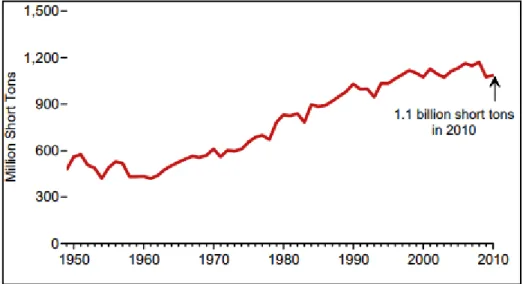
Fig. 1. Annually Coal Ash production worldwide.

tion in fly ashes was similar in the studied coals, although the highest concentrations (commercially viable) were found for the fly ash of a coal from the UK [8]. Dai et al. [6] studied how the concentra- tions of REEs vary from the coarsest to the finest fractions of the fly ashes produced from a high volatile bituminous coal from China in a 200-MW power plant. They found that there is an enrichment of all REEs in the finer fly ash [6]. They also obser- ved that La, Ce, Pr and Nd occur in minerals within some glassy phases in the fly ash [6].

Coal fly ashes (CFAs) have been estimated to contain 445 ppm REEs on an average global basis [21]. There have been many reports of CFAs with REEs contents that far exceed the world average (0.1-1.0 wt%) was elevated REEs levels have been reported in the Russian coal deposits [10,11], Jungar coalfield in Inner Mongolia [12] and the southern China coalfields [13]; the Songzo coalfield, southwe- stern China, eastern Yunnan, China and the Fire Clay coal bed in Eastern Kentucky, United States.

For a review of coal deposits as a potential source of REEs readers are referred to the work of Seredin and Dai [3].

Rare earth elements global demand has grown due to their wide applications as metal catalysts, phos- phors, light emitting diodes, permanent magnets, vari- ous components for renewable green energy equip-

ment, and batteries [14]. The importance of REEs has been universally recognized in the last ten years due to relative changes in supply and demand [15].

The main objective of this study is to provide a brief review on the formation of coal ash and origin of REEs with distribution in coal ash and the current state of knowledge on anomalous REEs concentra- tions within coal basins and also the detailed studies include the mechanisms of REEs incorporation into coal-forming biomass and how REEs become mobilized during and after the coalification process and its mechanisms are discussed.

I. Formation of Coal and Global demand.

Despite growing importance of renewable energy sources (i.e., geothermal, wind and solar) [16], coal’s share of the global energy mix continues to rise and by 2017 will come close to surpassing oil as the world’s biggest energy source. Energy demand was increases globally and coal is the main source and many countries are increasing its consumption [17].

Consequently, the global coal ash production in-

creases as shown in Fig. 1 [18], and there is a

pressing need of its recycling and utilization. Coal

fly ash have number of applications and averagely

25 % was utilized, and remaining consider as a

pollutant and disposed of as waste [19]. In coal

combustion process represent a large-scale naturally

(3)

Coal La Ce Pr Nd Sm Eu Gd Tb Dy Y Ho Er Tm Yb Lu Sum

World hard

coal 11 23 3.4 12 2.2 0.43 2.7 0.31 2.1 8.4 0.57 1 0.3 1 0.2 69

World

low-rank coal 10 22 3.5 11 1.9 0.5 2.6 0.32 2 8.6 0.5 0.85 0.31 1 0.19 65 World coal 11 23 3.5 12 2 0.47 2.7 0.32 2.1 8.4 0.54 0.93 0.31 1 0.2 68

US coal 12 21 2.4 9.5 1.7 0.4 1.8 0.3 1.9 8.5 0.35 1 0.15 0.95 0.14 62

China 26 49 5.5 22 4.3 0.9 3.7 0.7 3.1 18 0.7 1.9 0.27 2.1 0.3 138

World coal ash 69 130 20 67 13 2.5 16 2.1 14 51 4 5.5 2 6.2 1.2 404

Table 1. Average concentration (µg/g) of rare earth elements and yitrium for Chinese coals, US coals and World coals [24]

occurring elements are mobilized in a magnitude that is comparable to the rates of mobilization and transport that occur as part of natural geochemical cycling of elements [20].

In 2016, approximately 85% of world REEs mine production was in China; following closure of the only U.S. mine source in late 2015, there was no domestic U.S. REEs production in 2016 [21]. As market conditions for alternative REEs sources have become more favorable, recent papers showing the distribution of REEs in coal and coal ash, and consi- dering the prospects for recovery of REEs from these sources have attracted considerable attention [22]. Pending shortages of REEs in the U.S. and elsewhere have drawn renewed consideration to coal and coal ash as possible REEs sources, leading to new research opportunities supported in part by a U.S. Department of Energy effort to develop dome- stic production of REEs from coal and coal ash [23].

Kertis and Yudowich [24] estimated that coal fly ash contain 445 ppm of rare earth elements (REEs) on an average global basis and as Seredin and Dai [3] noted in coal ash samples average REEs content, based on these results on numerous samples, the wastes of coal combustion should be considered as possible source for REEs. The average concentra- tions of REEs for world low-rank and hard coals, as

well as those for Chinese and US coals, are presen- ted in Table 1. The average sum of REEs in US coals (62 μg/g) is close to the average for world coals (68 μg/g). However, the estimated average sum of REEs in Chinese coals is around twice that for world and US coals because more coal samples of Late Permian age from southwestern China, which contain higher REEs concentrations, than those from northern China and northwestern China [25,26].

Coal originated from the plants are physically and

chemically accumulate and alteration that settle in

swampy areas to form peat as known as peatifi-

cation and which thickens until heat and pressure

transform it into the coal is known as coalification,

the fallowing steps are followed in Fig. 2. Coal ash

samples as a sedimentary rocks and it has combu-

stible property and it composed from carbon (C),

hydrogen (H), oxygen (O), nitrogen (N), sulphur (S),

and various trace elements (it has a carbonaceous

content of more than 50 % by weight and more than

70 % by volume). In South African has much amount

approximately 70 % of the estimated coal reserve is

located in the Waterberg, Witbank, and Highveld

coalfields, as well as lesser amounts in the Ermelo,

Free State and Springbok Flats coalfields [27]. South

Africa is the third largest coal producer in the

world, and coal accounts for 64 % of South Africa’s

(4)

Fig 2. Coal formation by peatification and coalification process [76].

primary energy supply [28]. Electricity generation accounts for 61 % of the total coal consumption in South Africa and more than 90 % of the country’s electricity requirements are provided for by coal-fired power plants [28]. Generally low levels of phos- phorus, nitrogen and sulphur contents are present in South African coals and in the case of the first two the contents are dependent on maceral composition and rank [29].

II. Classification of REEs

There are several classifications for REEs [3,30].

REEs can be divided into critical (Nd, Eu, Tb, Dy, Y, and Er), uncritical (La, Pr, Sm, and Gd), and ex- cessive (Ce, Ho, Tm, Yb, and Lu) groups according to the demand-and-supply relationship of individual REEs [3]. Also, according to the atomic number difference, the REEs can be divided into the cerium group or light REEs (Sc, La, Ce, Pr, Nd, Pm, Sm, Eu, Gd) and the yttrium group or heavy REEs (Y, Tb, Dy, Ho, Er, Tm, Yb, Lu) [31]. Sui et al. [30]

classified REEs based on the solubility of rare earth salt: the insoluble cerium group or light REEs (Sc, La, Ce, Pr, Nd, and Sm), slightly soluble terbium group or middle REEs (Eu, Gd, Tb, Dy), and solu- ble ytterbium group or heavy REEs (Ho, Er, Tm, Yb, Lu, Y).

III. Rare Earth Elements accumulations in coal deposits:

Rare Earth Elements (REEs) are rich in coals are

formed under various geological conditions at differ-

ent stages in the evolution of coal basins and by

various ore-forming processes [32]. Four genetic

types of REEs accumulation in coal can be identi-

fied. a) Terrigenous type, with REEs input in ionic

and colloidal forms from surface waters, b) Tuffa-

ceous type, connected with the fall of felsic and

alkaline volcanic ash enriched in REEs, c) Infiltra-

tion or meteoric ground water driven type and d)

Exfiltration type, connected with ascending flows of

thermal and cold gas-saturated mineral waters and

(5)

deep fluids of various origins.

The first two types of REEs mineralization in coal basins are formed at the sedimentary stage, the infiltration type is mainly epigenetic, and the ex- filtration type may be formed at any stage of coal basin development. In some cases, both the high REEs coals and REEs mineralization in adjacent geological units may have a polygenetic and multistage origin [33]. For example, some REEs tuffaceous layers in coal basins from southwestern China and the Russian Far East were subjected to hydrothermal alteration, and as a result of the process, these pyroclastic rocks were transformed into kaolinite clays, the initial magmatic REEs bearing minerals were destroyed, and the REEs were re-distributed either as secondary mineral phases or as ionic species adsorbed onto the clay matrix [3]. Therefore, such mineralization may be attributed to a mixed tuffaceous hydrothermal type [3].

Several studies [34] have addressed the origin of rare earth elements in coal. Eskenazy discussed the complications of REEs enrichment in coals. Eskenazy [35] was observed the organic associations as a evi- dent in the bituminous coals was studied. The REEs are loosely attached with clays because with acidic waters releases the heavy REEs from the coal ash samples and these REEs are increases in the solution would lead to enrichment in HREEs bound to orga- nics. As a supplemental or alternative source, the high organic-bound HREEs could have resulted from high HREEs in the waters feeding the swamp. Heavy REEs are generally have stronger affinity with orga- nic compare than light REEs and these HREEs complexes with organics are more stable than LREEs complexes. Aide and Aide [36] confirmed that heavy REEs organic complexes are more stable than light REEs organic complexes. Decreases in pH cause a decrease in the stability of the REEs-organic com- plexes.

It is generally accepted that REEs were mobilized and fractionated during intense weathering of the granite under warm and humid conditions. REEs division and mobilization mechanisms responsible

for the during weathering conditions like solubility of REEs and complexation and the differential sta- bility of the aqueous complexes [37]. Most of the REEs in granitoids tend to be concentrated in LREEs-rich mineral phases such as apatite, mona- zite-(Ce) and fluorcarbonate minerals. Dissolution of these minerals would result in LREEs enrichment.

The formation of aqueous complex ions can also fractionate REEs during weathering. HREEs form stronger complexes with fluoride and carbonate rela- tive to LREEs at ambient temperature, thereby in- creasing the concentration of the HREEs in solution and making them available for adsorption.

In coal burning for power generation, REEs are strongly retained in the solid residue (ash) remaining after coal combustion [38] and to a large extent, do not enter the gas phase, as is the case for more volatile elements. This solid fraction, consisting pre- dominantly of fly ash and bottom ash, is derived from non-combustible mineral matter originally pre- sent in the coal. In commercial coals, the ash frac- tion is relatively small compared to the overall mass of the coal; therefore, during the combustion process, REEs are preferentially retained in a much smaller mass fraction. For example, relative to REEs con- centrations in coal, enrichment by factors of app- roximately 5 to 10 might be expected for coals having mineral matter contents of 20 to 10%, respectively, assuming total REEs retention.

IV. Mechanisms for Introducing REEs into Coal Basins:

When considering possible mechanisms on how

REEs material can be introduced into coal and coal

bearing basins, recent studies by Andersen et al.,

[39] suggest three plausible means. These include, i)

Introduction of REEs via widespread volcanic ash

falls (or tuff), ii) Introduction of REEs from igneous

intrusions (diapirs, dikes, sill, and pipes), and iii)

Introduction of REEs with the fluvial-detrital trans-

port of resistate heavy black sands. In Fig. 3, shows

the expected influence and distribution of REEs in a

(6)

Fig. 3. Mechanisms for introducing REEs into Coal Basins [40].

basin using these three mechanisms.

Based on the known geology history and cha- racter of the Raton basin, the influence of kaolinitic- rich volcanic ash/tuff deposits or ton steins layers plus local igneous activity during the middle Terti- ary resulted in the formation of igneous dikes and sills associated with the development of the Spanish Peaks are likely sources for the observed REEs content in both the coals and coaly shales. Many of these igneous features “coked” coal in place in por- tions of the basin. If they contained REEs then their influence on the observed REEs in sediments may be substantial.

REEs do not readily fit into early-formed minerals because their ionic radii are generally incompatible.

Because of this incompatibility, they are progressi- vely enriched into the “leftover” igneous magma. So as the magma continues to cool and minerals are formed, the remaining melt becomes progressively enriched in these elements until they are forced into very late-stage minerals and/or form their own assem- blages. Hence, late-formed igneous rock commonly contains minerals with greater REEs contents. As a result, REEs end up in very late-stage minerals or in

volcanic glass at the end of the magmatic process. If these materials are introduced into the coal basin by volcanic tephra (fragmental material of various sizes produced by a volcanic eruption), considerable amo- unts of REEs can accumulate in the coal. Further, when chemical or mechanical weathering of the ash occurs, further REEs enrichment will occur. Intro- duction by erosional and detrital processes of heavy resistant minerals (black sands) also introduces REEs into a coal basin.

Although coal swamps are generally low-energy

environments not prone to heavy detrital input,

periodic geologic transgression/regression cycles

(cyclical increases/decreases in sea level relative to

land) can introduce detrital material into the basin

between coal layers. Finally, diapiric emplacement

(upward movement of igneous material through the

rock underlying the basin) can introduce REEs

material into an area of the basin where associated

hydrothermal fluids can mobilize the REEs until

they find a suitable receptor material such as kao-

linite. Coals evaluated in this report from both the

eastern and western United States show episodic

volcanic ash falls, diapiric activity, and metamor-

(7)

phic/igneous complexes either within or adjacent to the basins that contain late-stage REE-rich minerals.

V. Conclusions

Coal is a valuable resource not only for its energy content but also for the metals enriched within it.

Many have realized the potential value of REEs in coal, and the increasing demand for REEs continues to drive the exploration of REE recovery from coal.

Currently several REEs recovery technologies are developed and recovered from various sources of coal. The distribution and abundance of REEs in coal display regional characteristics. For example, REEs in coal sources in China are nearly twice that of the world average level. The occurrence of REEs in coals has a variety of forms, both organic and inorganic. For inorganic forms, REEs can occur as accessory minerals, resistate minerals, clay minerals, and authegenic minerals, and the latter is normally dominant for high-REE coals. So coal formation and distribution of REEs is necessary to investigate for recovery of REEs. In this review to investigate the coal origin and REEs distribution in coal ash samples and possible mechanisms for accumulation of REEs in coal ash samples are discussed. Based on this review, the recovery of REEs from secon- dary sources such as coal and coal by-products is crucial considering their increasing demand and limited economic reserves.

Acknowledgements

This study was supported by the Energy Techno- logy Development Project [2014101010880] of the Korea Institute of Energy Technology Evaluation and Planning, financed by the Ministry of Trade, Industry and Energy.

References:

1. Bau, M., Schmidt, K., Koschinsky, A., Hein, J., Kuhn, T., Usui, A., 2014. Discriminating between

different genetic types of marine ferro-manganese crusts and nodules based on rare earth elements and yttrium. Chem. Geol. 381, 1-9.

2. Hower, J.C., Groppo, J.G., Henke, K.R., Hood, M.M., Eble, C.F., Honaker, R.Q., Zhang, W., Qian, D., 2015a. Notes on the potential for the concentration of rare earth elements and yttrium in coal combustion fly ash.Minerals 5, 356-366.

3. Seredin, V.V., Dai, S., 2012. Coal deposits as potential alternative sources for lanthanides and yttrium. Int. J. Coal Geol. 94, 67-93.

4. Franus W, Wiatros-Motyka MM, Wdowin M.

Coal fly ash as a resource for rare earth ele- ments. Environ Sci Pollut Res 2015;22:9464-74.

5. Moore F, Esmaeili A. Mineralogy and geoche- mistry of the coals from Karmozd and Kiasar coal mines, Mazandaran Province, Iran. Int J Coal Geol 2012;96- 97:9-21.

6. Dai S, Zhao L, Hower JC, Johnston MN, Song W, Wang P, et al. Petrology, mineralogy, and chemistry of size-fractioned fly ash from the Jungar power plant, Inner Mongolia, China, with emphasis on the distribution of rare earth elements. Energy Fuels 2014;28:1502-14.

7. Bao Z, Zhao Z. Geochemistry of mineralization with exchangeable REY in the weathering crusts of granitic rocks in south China. Ore Geol Rev 2008;33:519-35.

8. Blissett RS, Smalley N, Rowson NA. An inve- stigation into six coal fly ashes from United King- dom and Poland to evaluate rare earth element content. Fuel 2014;119:236-9.

9. Vassilev SV, Menendez R. Phase-mineral and chemical composition of coal fly ashes as a basis for their multicomponent utilization. 4. Charac- terization of heavy concentrates and improved fly ash residues. Fuel 2005;84:973-91.

10. Seredin V. Rare earth mineralization in Late Cenozoic explosion structures (Khankai massif, Primorskii Krai, Russia). Geol Ore Deposits 1998;40:357-71.

11. Seredin V, Arbuzov S, Alekseev V. Sc-bearing

coals from Yakhlinsk deposit, Western Siberia.

(8)

Doklady Earth Sci 2006;409(2):967-72.

12. Dai S, Jiang Y, Ward CR, Gu L, Seredin VV, Liu H, et al. Mineralogical and geochemical compositions of the coal in the Guanbanwusu Mine, Inner Mongolia, China: further evidence for the existence of an Al (Ga and REE) ore deposit in the Jungar Coalfield. Int J Coal Geol 2012;98:10-40.

13. Dai S, Zhang W, Seredin VV, Ward CR, Hower JC, Song W, et al. Factors controlling geoche- mical and mineralogical compositions of coals preserved within marine carbonate successions: a case study from the Heshan Coalfield, southern China. Int J Coal Geol 2013;109-110:77-100.

14. Hower, J.C., Granite, E.J., Mayfield, D.B., Lewis, A.S., Finkelman, R.B., 2016. Notes on contributions to the science of rare earth element enrichment in coal and coal combustion by-pro- ducts. Minerals 6, 32. http://dx.doi.org/10.3390/

min6020032.

15. Scott, C., Deonarine, A., Kolker, A., Adams, M., Holland, J., 2015. Size Distribution of Rare Earth Elements in Coal Ash. Paper Presented at the World of Coal Ash Conference, Nashville, TN May 5-7.

16. Tomaszewska B, Szczepański A (2014) Possibi- lities for the efficient utilisation of spent geo- thermal waters. Environ Sci Pollut Res 21:

11409-11417. doi:10.1007/s11356-014-3076-4.

17. IEA (2014) Medium-Term Coal Market Report, 2014.

18. U.S. Department of Energy Report on Rare Earth Elements from Coal and Coal Byproducts, 2017.

19. Sommerville R, Blissett R, Rowson N, Black- burn S (2013) Producing a synthetic zeolite from improved fly ash residue. Int J Miner Process 124:20-25.

20. Hedrick JB (1995) The global rare-earth cycle.

Alloys Compd 225:609-618.

21. U.S. Geological Survey, 2017. Mineral Commo- dity Summaries, Rare Earths. https:// minerals.

usgs.gov/minerals/pubs/commodity/rare_earths/m

cs-2017-raree.pdf (accessed 15 May, 2017).

22. Lin, R., Howard, B.H., Roth, E.A., Bank, T.L., Granite, E.J., Soong, Y., 2017. Enrichment of rare earth elements from coal and coal by-pro- ducts by physical separations. Fuel 200, 506-520.

23. U.S. Department of Energy, National Energy Technology Laboratory, 2017a. Rare Earth Ele- ments 2017 Project Portfolio. https://www.netl.

doe.gov/File%20Library/ Research/Coal/cross- cutting%20research/2017-REE-Portfolio.pdf (accessed 17 May, 2017).

24. Ketris M, Yudovich Y (2009) Estimations of clarkes for carbonaceous biolithes: world avera- ges for trace element contents in black shales and coals. Int J Coal Geol 78(2):135-148.

25. Li, B., Zhuang, X., Li, J., Zhao, S., 2014. Geo- logical controls on coal quality of the Yili Basin, Xinjiang, Northwest China. Int. J. Coal Geol. 131, 186-199.

26. Jiang, Y., Zhao, L., Zhou, G., Wang, X., Zhao, L., Wei, J., Song, H., 2015. Petrological, minera- logical, and geochemical compositions of Early Jurassic coals in the Yining Coalfield, Xinjiang, China. Int. J. Coal Geol. Part A 152, 47-67.

27. Jeffrey, L. S. Characterization of the coal resour- ces of South Africa. The Journal of the South African Institute of Mining and Metallurgy 2005; 95-102.

28. DME (Department of Minerals and Energy), Digest of South African Energy Statistics. De- partment of Minerals and Energy, Pretoria.

2005.

29. Snyman, C. P. and W. J. Botha, W. J. Coal in South Africa. Journal of African Earth Sciences, 1993; 16 171-180.

30. Sui, N., K. Huang, C. Zhang, N. Wang, F.

Wang, and H. Liu. 2013. Light, middle, and heavy rare-earth group separation: A new appro- ach via a liquid-liquid-liquid three-phase system.

Industrial & Engineering Chemistry Research 52: 5997-6008.

31. Moldoveanu, G. A., and V. G. Papangelakis.

2013. Recovery of rare earth elements adsorbed

(9)

on clay minerals: II. Leaching with ammonium sulfate. Hydrometallurgy 131-132: 158-166.

32. Seredin, V.V., 2004. Metalliferous coals: for- mation conditions and outlooks for development.

In: Cherepovskyi, V.F. (Ed.), Coal Resources of Russia, vol. VI. Geoinformmark, Moscow, pp.

452-519.

33. Seredin, V.V., Chekryzhov, I.Yu., Popov, V.K., 2011. Rare metal-bearing tuffs of Cenozoic coal basins of Primorye generated by transform interaction of lithosphere plates. In: Khanchuk A.I. (Ed.), Geological Processes in Subduction, Collision, and Transform Environments of Litho- sphere Plates Interaction. Dal’nauka, Vladivo- stok, pp. 375-377.

34. Schatzel, S.J.; Stewart, B.W. Rare earth element sources and modification in the Lower Kittan- ning coal bed, Pennsylvania: Implications for the origin of coal mineral matter and rare earth element exposure in underground mines. Int. J.

Coal Geol. 2003, 54, 223-251.

35. Eskenazy, G.M. Aspects of the geochemistry of rare earth elements in coal: An experimental approach. Int. J. Coal Geol. 1999, 38, 285-295.

36. Aide, M.T.; Aide, C. Rare earth elements: Their importance in understanding soil genesis. ISRN Soil Sci. 2012, 2012.

37. Taunton, A. E., Welch, S. A. & Banfield, J. F.

Microbial controls on phosphate and lanthanide distributions during granite weathering and soil formation. Chem. Geol. 169, 371-382 (2000).

38. Ratafia-Brown, J.A., 1994. Overview of trace element partitioning in flames and furnaces of utility coal-fired boilers. Fuel Process. Technol.

39, 139-157.

39. Andersen, H.T, Bryan, R, Gray, T, and Richers, D, 2015, Rare Earth Occurrences and their Associations with Tonsteins, Diapirs, and Ig- neous Activity, presented at the 2015 Pittsburgh Coal Conference, October 6, 2015, Pittsburgh, PA., 13 p.

40. Taylor, L. H, 2015m Field guide for the Cretaceous-Paleogene Boundary (Formerly the

Cretaceous - Tertiary Boundary), Ludlow and

Trinidad, Colorado. A guide prepared for the

KT Field Trip, September 26, 2015, Denver

Museum of Nature and Science, 48p.

수치

Fig. 1. Annually Coal Ash production worldwide.
Table 1. Average concentration (µg/g) of rare earth elements and yitrium for Chinese coals, US coals and World coals  [24]
Fig 2. Coal formation by peatification and coalification process [76].
Fig. 3. Mechanisms for introducing REEs into Coal Basins [40].

참조

관련 문서

For this study—our third on global workforce trends, follow- ing studies in 2014 and 2018—Boston Consulting Group and The Network surveyed some 209,000 people in 190 countries

Basic aspects of AUTOSAR architecture and methodology Safety mechanisms supported by AUTOSAR.. Technical safety concepts supported by AUTOSAR Relationship to ISO

GDP impact of COVID-19 spread, public health response, and economic policies. Virus spread and public

The "Yearbook of Energy Statistics" contains the basic statistical data on oil, coal, electricity, other energy sources and energy equipment in the Republic of

Phase profile of conventional DOE Obtained diffraction image. Optical vortices appear in the diffraction image generated by

A combination of parallel translational and non-translational symmetry elements produces an interesting effect on the way in which the pattern

including 2 billion tons coking coal and 10.1 billion including 2 billion tons coking coal and 10.1 billion.. tons

3.. Monthly Energy Statistics contains basic data on the supply and demand statistics of major energy sources such as oil, gas, coal, and electricity as well