• 검색 결과가 없습니다.

The Effect of Dual-task Training on a Serial Reaction Time Task for Motor Learning J K S P T

N/A
N/A
Protected

Academic year: 2021

Share "The Effect of Dual-task Training on a Serial Reaction Time Task for Motor Learning J K S P T"

Copied!
4
0
0

로드 중.... (전체 텍스트 보기)

전체 글

(1)

www.kptjournal.org J Korean Soc Phys Ther 2012:24(6):405-408 405

The Effect of Dual-task Training on a Serial Reaction Time Task for Motor Learning

Jin-Ho Choi

1

, So Hyun Park

2

1

Department of Physical Therapy, Daegu Haany University,

2

Department of Physical Therapy, Kyungsung University

Purpose: We examined the effect of dual-task and single-task training on serial reaction time (SRT) task performance to determine whether SRT is based more on motor or perception in a dual-task.

Methods: Forty healthy adults were divided into two groups: the dual-task group (mean age, 21.8±1.6 years) and the single- task group (mean age, 21.7±1.6 years). SRT task was conducted total 480 trial. The four figures were presented randomly 16 times. A unit was set as 1 block that would repeat 10 times. Thus, there were a total of 160 trials for each of the three color conditions. The dual-task group performed an SRT task while detecting the color of a specific shape. The end of the task, subjects answered the specific shape number; the single-task group only performed the SRT task. The study consisted of three parts: pre-measurement, task performance, and post-measurement.

Results: Differences of pre and post reaction time between two group was higher for the dual-task group as compared to the single task group and there was a significant interaction between time and group (p<0.05).

Conclusion: Our results indicate that. short term period SRT is not quiet effective under dual-task conditions, individuals need additional cognitive processes to successfully navigate a task This suggests that dual-task training might not be appropriate for motor learning enhancement, at least when the training is over a short period.

Keywords: Dual task, Serial reaction time, Motor learning

I. Introduction

Activities of daily living (ADLs) typically consist of two or more simultaneous tasks. And several researchers suggest that dual-task ability is required for completing independent ADLs.

1-3

Therefore, dual-task training is necessary for whom have impaired ability to perform ADL caused by brain injury.

Dual tasks can consist of motor, auditory, visual, and perceptual tasks et al.

1-3

Especially, successful dual-task training during physical therapy would require combining a motor task with some other task modality. Effective dual- task training methods differ depending on these properties.

4

However, different properties and the training methods induced controversial effectiveness of dual task training.

Some research

5,6

suggests that simple reaction time tasks could predominantly engage motor execution processes.

Furthermore, secondary tasks engage similar networks to the primary tasks. However, other studies show that serial reaction time (SRT) tasks result in longer response times.

7-9

Yang et al.

9

observed that perceptual tasks decrease functional abilities requiring attention. In this case, attention can be a distracting factor during motor learning.

8

SRT task performance can be very complicated since this type of task combines motor and perception tasks under attention and non-attention situations.

10,11

During a SRT task, participants are asked to repeatedly respond to a fixed set of stimuli; reaction times (RTs) progressively improve as subjects learn the task.

11

From the perspective of the motor task, SRT is more focused on the successive response sequence. In contrast, from the perspective of the perceptual task, it is Received November 27, 2012 Revised December 14, 2012

Accepted December 17, 2012

Corresponding author So Hyun Park, [email protected]

Copyright © 2012 by The Korean Society of Physical Therapy

This is an Open Access article distributed under the terms of the Creative Commons Attribution Non-Commercial License (http://creativecommons.org/licenses/by-nc/3.0/) which permits unrestricted non-commercial use, distribution, and reproduction in any medium, provided the original work is properly cited.

J Korean Soc Phys Ther Vol. 24, No. 6, December, 2012 pISSN 1229-0475 • eISSN 2287-156X

The J ournal of K orean S ociety of P hysical T herapy Original Article

(2)

Jin-Ho Choi and So Hyun Park: Is SRT Task More Based on Perceptual Leaning?

www.kptjournal.org 406 J Korean Soc Phys Ther 2012:24(6):405-408

focused on learning the structure of the stimulus sequence.

SRT tasks are commonly used for measuring implicit learning.

11-13

As serial reaction response times decrease, explicit memory shifts more toward implicit memory.

14

Despite the clinical relevance of SRT tasks,

10-14

little evidence is available regarding differences in dual-task performance when combining an SRT and perceptual task.

We hypothesized that the SRT task would be more oriented toward motor learning and implicit memory. Therefore, the dual-task training might reduce response times. The goal of the present study was to determine the effect of dual-task and single-task training on an SRT task, as well as determine whether the SRT task is influenced more by motor or perceptual features.

II. Materials and Methods

1. Subjects

Forty healthy subjects without any neurological or musculo- skeletal disorders (mean age, 21.8±1.6 years in the dual- task group and 21.7±1.6 years in the single-task group) participated in this study.

Subjects displayed a normal, painless range of motion in their upper extremities. All participants were right-hand dominant as determined by the Edinburgh Handedness Inventory. All subjects understood the purpose of the study and provided written informed consent prior to participation.

This protocol was in accordance with ethical standards determined by the Declaration of Helsinki.

2. Procedure

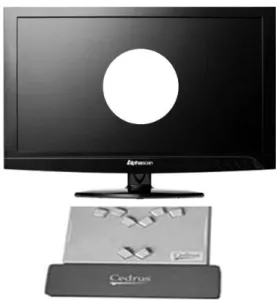
A stimulus program (SuperLab 4.0, Cedrus, San Pedro, CA, USA) was installed on a personal laptop for presentation of the SRT task. A reaction pad with four buttons (RB-830, Cedrus) was connected to the laptop by a USB port. The study was conducted while the subject was comfortably sitting on a chair at a table whose height was adjusted so that the subject’

s elbow joint bent to 90

o

. All stimuli were presented on a 14.1 inch monitor. The stimulus program involved three colors (red, yellow, and white), and the program was designed so that four shapes (○, △, □, ◇) were presented randomly at

the center of the monitor with a black background. The four shapes were presented in the aforementioned three colors (Figure 1).

Each condition was set as a unit where four shapes were presented randomly 16 times. A unit was set as 1 block that would repeat 10 times There were a total of 160 trials for each of the one color conditions. Three color conditions were presented. Thus total 480 trial was conducted for one subjects. The average RT values across the three color conditions were calculated.

Each subject’s thumb, index finger, middle finger, and ring finger were placed on the ○, △, □, ◇ buttons of the reaction pad. Subjects were required to press as quickly as possible the button on the reaction pad that matched the figure presented on the monitor. The next figure was presented to the subject when the correct response was made on the current trial.

Prior to the pretest, a 30-second training was provided so that the subjects could familiarize themselves with the reaction pad. A pretest on the SRT task was performed by both groups in the single-task scenario. After a 10-minute break, the posttest was carried out.

The dual-task group performed the SRT and color naming tasks simultaneously while the single-task group performed only the SRT task. The dual-task group was also instructed to respond to the color of a figure during each trial. After one

Figure 1. The stimulus program which consists the four shapes (○,

△, □, ◇) with three colors (red, yellow, and white).

(3)

www.kptjournal.org

Jin-Ho Choi and So Hyun Park: Is SRT Task More Based on Perceptual Leaning?

J Korean Soc Phys Ther 2012:24(6):405-408 407 color session, subjects were asked to speak the number of

specified color. For example, if it is a yellow color condition, subjects do SRT task with counting the number of yellow color figures. After finishing yellow color condition, they answer the number of yellow shape figure. We did not evaluate error rate because the purpose of this task was not focused on accuracy.

3. Statistical analysis

All statistical analyses were performed using PASW for Windows ver. 18.0 (IBM Co., Armonk, NY, USA). Normality of the data was confirmed using the Kolmogorov-Smirnov test. We ensured that our experimental groups were matched on demographic and clinical characteristics by using independent t-tests for age, height, and weight; a Pearson’s chi-square test was used for nominal variables (e.g., gender).

Groups during the pretest were compared using an independent t-test, and comparisons between pre- and posttest within groups were analyzed using paired t-tests.

Response time were analyzed through separate univariate analyses of variance, using a 2 (group: dual task group, single task group)×2 (time: pre, post) ANOVA with repeated measures on the dependent variables. Statistical significance was set at p<0.05.

III. Results

The analysis revealed no significantly differences between the two groups in terms of sex, age, height, or body weight (p>0.05) (Table 1). The data for SRT in pre-test between the two groups were not significantly different (p>0.05) (Table 2).

Response time decreased in dual task groups. Furthermore, it was significantly greater in the dual task group than in the single task group, and the interaction between time and group was significant (p<0.05) (Table 2).

IV. Discussion

In the present study, we compared dual-task and single- task performance with an SRT and perceptual task over a short-term training period. The primary result of this study was that RTs increased for the dual-task group relative to the single-task group. Wierzchon′ et al.

4

suggested that sequence learning is impaired under dual-task conditions. However, Goh et al.

5

reported that dual-task costs are reduced during delayed timing conditions, and an enhanced learning effect is attenuated. These discrepant results may be influenced by the use of different tasks that have varying attentional loads.

11,12,15

Rugg

15

reported that memory encoding can be engaged by processes responsible for implicit learning (i.e., familiarity and inattention). Other studies

16

have also reported that dual tasks delay implicit learning. Our results suggest that dual-task performance over the short term may not change explicit memory into implicit memory. In our dual task, attentional load was still relatively high, and this likely influenced the poor RTs observed in the dual-task group.

Second, we assumed that the SRT task was more oriented toward perceptual domains during initial training. In the current study, the dual task consisted of two tasks: an SRT

Table 1. General characteristics of subjects

Variable Dual task

group

Single task

group p

Gender (male/female) Age (yr)

Height (㎝) Weight (㎏)

11/9 21.8±1.6 165.2±7.7 59.9±14.6

10/10 21.7±1.6 170.2±8.0 62.3±9.8

0.75 0.50 0.05 0.55 Values are presented as number or mean±standard deviation.

Table 2. Reaction time at pre and post test for both group

Dual task group Single task group Time Group Interaction

Pre-test (ms) Post-test (ms)

687.89±92.73 930.82±162.21

632.93±85.35

617.80±77.19 0.00* 0.00* 0.00*

Values are presented as mean±standard deviation.

The asterisk (*) indicates the use of repeated measures two factor analysis and significance at the p<0.05 level.

(4)

Jin-Ho Choi and So Hyun Park: Is SRT Task More Based on Perceptual Leaning?

www.kptjournal.org 408 J Korean Soc Phys Ther 2012:24(6):405-408

task and a perceptual task. If the SRT task is more focused on a perceptual component, our dual task would consist of two perceptual tasks.

13,14,17,18

Deroost and Soetens

8

reported that sequence learning is better with an incompatible rather than a compatible stimulus-response mapping. Oberauer and Bialkova

12

reported that in parallel processing dual tasks, the cognitive system may engage in “cross talk,” resulting in decreased learning capacity might in spite of practice. Thus, perceptual dual tasks relay motor and perceptual learning.

We believe that the current findings will provide clinicians useful information for establishing treatment strategies related to motor and perceptual enhancement via dual-task training.

However, we acknowledge that it is difficult for us to reach generalized conclusions owing to our short-term training period and small sample size. Future studies should include a long-term training period that could generate implicit motor learning, as well as a large number of subjects performing various motor tasks.

Our results indicate that RTs under a dual-task condition need additional cognitive processing. In other words, dual-task training is not appropriate for motor learning enhancement, at least during short-term training.

Acknowledgements

This research was supported by a grant from Daegu Haany University Ky·lin Foundation in 2011.

References

1. Pichierri G, Wolf P, Murer K et al. Cognitive and cognitive-motor interventions affecting physical functioning: a systematic review.

BMC Geriatr. 2011;11:29.

2. Choi JH, Lee HS, Chang JS. Changes of postural sway and muscle activation while standing upright and performing a dual task. J Korean Soc Phys Ther. 2011;23(5):1-5.

3. Azulay JP, Mesure S, Blin O. Influence of visual cues on gait in Parkinson’s disease: contribution to attention or sensory dependence? J Neurol Sci. 2006;248(1-2):192-5.

4. Wierzchon′ M, Gaillard V, Asanowicz D et al. Manipulating attentional load in sequence learning through random number generation. Adv Cogn Psychol. 2012;8(2):179-95.

5. Goh HT, Sullivan KJ, Gordon J et al. Dual-task practice enhances motor learning: a preliminary investigation. Exp Brain Res.

2012;222(3):201-10.

6. Bloem BR, Valkenburg VV, Slabbekoorn M et al. The Multiple Tasks Test: development and normal strategies. Gait Posture. 2001;14(3):

191-202.

7. Miller JO, Low K. Motor processes in simple, go/no-go, and choice reaction time tasks: a psychophysiological analysis. J Exp Psychol Hum Percept Perform. 2001;27(2):266-89.

8. Deroost N, Soetens E. The role of response selection in sequence learning. Q J Exp Psychol (Hove). 2006;59(3):449-56.

9. Yang YR, Wang RY, Chen YC et al. Dual-task exercise improves walking ability in chronic stroke: a randomized controlled trial.

Arch Phys Med Rehabil. 2007;88(10):1236-40.

10. Deroost N, Soetens E. Perceptual or motor learning in SRT tasks with complex sequence structures. Psychol Res. 2006;70:88-102.

11. Nissen MJ, Bullemer P. Attentional requirements of learning:

Evidence from performance measures. Cogn Psychol. 1987;19(1):

1-32.

12. Oberauer K, Bialkova S. Serial and parallel processes in working memory after practice. J Exp Psychol Hum Percept Perform. 2011;

37(2):606-14.

13. Schacter DL. Implicit knowledge: new perspectives on unconscious processes. Proc Natl Acad Sci U S A. 1992;89(23):11113-7.

14. Dew IT, Cabeza R. The porous boundaries between explicit and implicit memory: behavioral and neural evidence. Ann N Y Acad Sci. 2011;1224:174-90.

15. Rugg MD. Memory and consciousness: a selective review of issues and data. Neuropsychologia. 1995;33(9):1131-41.

16. Frensch PA, Lin J, Buchner A. Learning versus behavioral expression of the learned: the effects of a secondary tone-counting task on implicit learning in the serial reaction task. Psychol Res. 1998;61(2):

83-98.

17. Park JW, Shin HK, Jang SH. Correlation between faster response time and functional activities of brain regions during cognitive time management. J Korean Soc Phy Ther. 2010;22(2):7-14.

18. Kim CS, Nam SH, Cho IS. The effects of transcranial direct current

stimulation in motor performance of serial reaction time task. J

Korean Soc Phy Ther. 2010;22(5):103-8.

수치

Figure 1. The stimulus program which consists the four shapes (○,
Table 2. Reaction time at pre and post test for both group

참조

관련 문서

a group of components such as pumps, actuators, control valves, and conductors arranged so that will perform a useful task.

Bactericidal effect of photocatalytic reactor depending on the UV-A illumination time and flow rate of V.. Bactericidal effect of photocatalytic reactor

The purpose of this study is to investigate the effect of the “problem solving and programming” area of ​​information subject on perception and

For job characteristics sub-factors, while the average of functional diversity was high in graduate school graduates, the average of task importance, job

This study examined the achievement, satisfaction and interest of an English grammar class based on flipped learning in order to find out the effect of

The high value added of the mold manufacturing industry is a core task for all industries, and the need for mold development is expected to increase further,

The main effect according to the results of the repeated measures ANOVA on physical fitness based on test time showed a significant difference in grip

 Because output is spread across R files (each reduce task creates one file in DFS).. Task