Ⅰ. 서 론
우수한 보철물을 제작하기 위해서는 정확한 인상 과정이 선결조건이며 우수한 인상을 채득하기 위해 서는 인상재의 취급성, 미세부 재현성, 탄성, 체적 안 정성 등이 우수해야 하며 혼합 후 기포의 형성이 적 어야 한다. 인상채득시에 기포 형성은 피할 수 없으 며 기포는 혼합방법1-12), syringe-tip 직경1,3,13,14,15),
점도2,13,16)등에 영향을 받으며 인상체의 찢김 강도를
저하시키고 모형상에 작은 결절을 형성하여 보철물 의 정확성에 영향을 준다고 하였다.
인상재의 미세부 재현성은 점주도, 젖음성, 기포, 취급성에 영향을 받으며16,17) 정밀한 주조 수복물의 제작에 사용되는 인상재는 ADA specification No. 19 에 제시된 너비 20
μ
m 선을 재현할 수 있어야 한다고 보고되고 있다.16,18)Stackhouse12)가 고무 인상재의 hand mixing과 mechanical mixing에 따른 기포수를 측정하여 비교 하였고, Keck4)과 Chong 등2,13)은 탄성 인상재의 hand-mixing과 auto-mixing이 기포 형성에 미치는 영향에 대해 비교한 바 있다. Pratten과 Novetsky16) 는 수종의 인상재에 대한 미세부 재현성을 측정하여 비교하였고, Johnson과 Drennon17)은 삭제된 단일 치 아의 인상채득에 대한 임상적 연구에서 인상재의 점 주도가 미세부 재현성과 기포 형성에 영향을 준다고 보고하였으며 또한 임상에서는 타액, 습기, 혈액, 온 도, 지혈제등이 미세부 재현성에 영향을 준다고 보 고되어있다.16)
인상재의 혼합방법은 hand mixing, mechanical mixing, auto mixing이 있으며, hand mixing은 일반적으로 사용되는 방법으로써 혼합과정에서 공 기의 유입이 발생하며 그로 인해 찢김 강도와 같은 물리적 성질에 영향을 줄 수 있다.19)또한 표면에 발 생하는 기포는 부정확한 모형을 야기한다. Mech- anical mixing에 사용되는 다양한 혼합기가 개발되어 왔으며 mechanical mixing은 빠르고 간편하며 기포 가 감소하는 장점을 가지고 있으나 mechanical mix- ing을 시행한 경우 작업시간도 또한 감소한다는 것 을 고려하여야 한다. Auto mixing은 사용이 용이하 며 hand mixing시 발생하는 문제점을 보완해줄 수 있고 인상재 소비가 적어 저렴하고 술자 간의 변이 성이 적다.7)
보철학 영역에서 인상채득은 아주 중요한 과정이 며 기포형성은 인상채득 실패의 주된 이유중의 하나 이다. 또한 지대치 변연부위의 우수한 미세부 재현 성은 정확한 보철물 제작을 위한 필요조건이다. 따 라서 기포형성을 감소시킬 수 있는 방법이나 재료들 에 대해 비교하는 연구들이 많이 시행되어왔다. 그 러나 인상재 혼합방법이 미세부 재현성에 미치는 효 과에 관한 연구는 미흡한 실정이다.
이에 본 연구에서는 임상적으로 주로 사용되는 비 가역성 하이드로콜로이드 인상재와 폴리썰파이드 인상재, 부가중합형 실리콘 인상재를 이용하여 두 가지 혼합방법(hand mixing, mechanical mixing) 으로 시편을 제작한 후 이를 입체현미경을 이용하여 기포수 측정, 표면 재현력 측정을 하여 다소의 지견 대한치과보철학회지:Vol. 40, No. 2, 2002
수종 인상재의 혼합방법에 따른 기포형성과 표면 재현력에 관한 연구
단국대학교 치과대학 보철학교실 류형선∙임헌송∙임주환∙조인호
을 얻었기에 이에 보고하는 바이다.
Ⅱ. 실험 재료 및 방법 1. 실험 재료 및 기구
본 실험에서는 다음과 같은 재료 및 기구를 사용하 였다.
1) 비가역성 하이드로콜로이드 인상재 TOKUSO A-1α�(Tokuyama Co., Japan) CAVEX IMPRESSIONAL�(Cavex Co., Holland) AROMA FINE DF Ⅲ�(GC Co., Japan)
2) 폴리썰파이드 인상재
Permlastic�light bodied(Kerr., U.S.A.)
3) 부가중합형 실리콘 인상재
Panasil�contact(Kettenbach., Germany)
4) Metal tray
10mm×20mm×43mm 규격을 가지며 9개의 transverse slots으로 구성되어 있으며 기포수 측정을 위한 균일한 시편을 제작하기 위해 사용하였다(Fig.
1, 3).
5) ADA apparatus for testing detail repro- duction
길이 25mm, 너비 20
μ
m, 50μ
m, 75μ
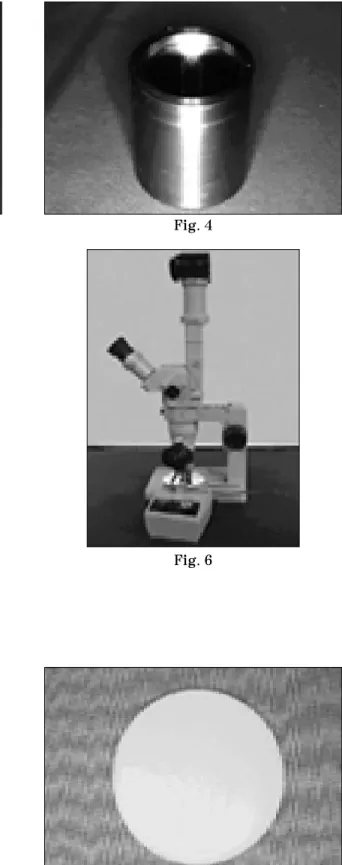
m 선으로 구성된 free cutting steel로써 표면 재현력 측정을 위한 균일한 시편을 제작하기 위해 사용하였다(Fig. 2, 4).
6) MixQueenTM(Oscotec, Korea)
237mm×270mm×300mm 규격을 가지며 진동 및 회전 혼합 방식을 채택하여 각종 인상재 및 모형 재의 혼합이 가능한 mechanical-mixing machine (Fig. 5).
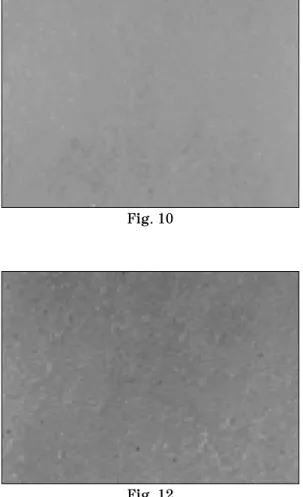
7) Stereomicroscope SZ-PT�(Olympus, Japan) 각 시편에서 기포수, 표면 재현력을 18배의 배율로 측정하였다(Fig. 6).
2. 실험방법
1) 기포 형성 관찰을 위한 비가역성 하이드로콜로 이드 인상재 시편 제작
비가역성 하이드로콜로이드 인상재인 TOKUSO A-1α�, CAVEX IMPRESSIONAL�, AROMA FINE DF Ⅲ�를 제조사의 지시에 의한 혼수비에 따 라 hand mixing과 mechanical mixing 방법으로 혼 합한 후 금속 트레이(10mm×20mm×43mm, 9 transverse slots)를 이용하여 각각 50개씩 총 300개 의 균일한 시편들을 제작하였다(Table Ⅰ, Fig. 1, 3, 7).
2) 기포 형성 관찰을 위한 3종류 인상재 시편 제작 비가역성 하이드로콜로이드 인상재인 TOKUSO A-1α�, 폴리썰파이드 인상재인 Permlastic� light
Fig. 1. Design of metal tray.
bodied, 부가중합형 실리콘 인상재인 Panasil�con- tact을 제조사의 지시에 따라 hand mixing과 mechanical mixing 방법으로 혼합한 후 금속 트레이 (10mm×20mm×43mm, 9 transverse slots)를 이용하여 각각 50개씩 총 300개의 균일한 시편들을 제작하였다(Table Ⅱ, Fig. 1, 3, 7).
3) 미세부 재현성 관찰을 위한 시편 제작
비가역성 하이드로콜로이드 인상재인 TOKUSO A-1α�, 폴리썰파이드 인상재인 Permlastic� light bodied, 부가중합형 실리콘 인상재인 Panasil�con- tact을 제조사의 지시에 따라 hand mixing과 mechanical mixing 방법으로 혼합한 후 ADA spec- ification No. 19에 따른 미세부 재현성 기구를 이용 Fig. 2. Design of detail reproduction apparatus.
Table. Ⅰ. Classification of experimental groups in comparison of void formation according to mixing meth- ods of alginates
TOKUSO A-1α� n=50 n=50
Irreversible hydrocolloid CAVEX IMPRESSIONAL� n=50 n=50
AROMA FINE DF Ⅲ� n=50 n=50
Total : n=300
Table. Ⅱ. Classification of experimental groups in comparison of void formation according to mixing meth- ods of 3 types of impression materials
Irreversible hydrocolloid TOKUSO A-1α� n=50 n=50
Polysulfide Permlastic�light bodied n=50 n=50
Additional reaction type Panasil�contact n=50 n=50
Total : n=300 Mixing methods Hand mixing Mechanical mixing
Hand mixing Mechanical mixing
하여 각각 10개씩 총 60개의 시편을 제작하였다 (Table Ⅲ, Fig. 2, 4, 8).
4) 기포수 측정, 표면 재현성 측정
입체광학현미경 (Stereomicroscope SZ-PT� (Olympus, Japan)을 이용하여 18배의 배율로 6
μ
m크기 이상의 기포수 측정과 20
μ
m 선의 재현성을scoring criteria에 따라 평가하였다(Table Ⅳ).
5) 통계처리
본 실험 결과의 통계처리에는 SPSS V 10.0 for win(SPSS Inc., USA)을 사용하여 one-way ANO- VA test, Scheffe test, Mann-Whitney test를 이용 하여 95% 유의수준으로 검증하였다.
Ⅲ. 실험결과
실험군의 분류에 따른 기포수 측정과 미세 재현성 에 대해 연구한 결과는 다음과 같았다.
1. 비가역성 하이드로콜로이드 인상재의 기포 형성
1) 혼합방법간의 기포수 비교
본 실험에서 측정한 기포수 측정치는 K-S test 결 과 각 군에서 정규분포를 이루었으며 independent t- test 결과 hand mixing군보다 mechanical mixing군 에서 기포 형성의 감소가 있었으며, 통계적으로 유 의한 차이를 보였다(p<0.05, Table Ⅴ).
2) 비가역성 하이드로콜로이드 인상재의 혼합방법 에 따른 기포수 비교
TOKUSO A-1α�, CAVEX IMPRESSIONAL�, AROMA FINE DF Ⅲ�의 hand mixing과 mechan- ical mixing시 기포 형성에 대한 one-way ANOVA test 결과, 각 재료간에 유의한 차이를 보이지 않았다 (Table Ⅵ, Table Ⅶ).
Table. Ⅲ. Classification of experimental groups in comparison of detail reproduction according to mix- ing methods of 3 types of impression materials
Irreversible hydrocolloid TOKUSO A-1α� n=10 n=10
Polysulfide Permlastic�light bodied n=10 n=10
Additional reaction type Panasil�contact n=10 n=10
Total : n=60 Hand mixing Mechanical mixing
Table. Ⅴ. Mean and standard deviation of void formation according to mixing methods of alginate groups (Unit : number)
TOKUSO A-1α� Hand 123.14±8.51
p<0.05 Mechanical 18.38±3.53
Irreversible CAVEX IMPRESSIONAL� Hand 126.14±8.26
p<0.05
hydrocolloid Mechanical 19.56±4.36
AROMA FINE DF Ⅲ� Hand 124.56±5.74
p<0.05 Mechanical 20.28±4.61
Impression material Mixing method Mean±SD t-test
Table. Ⅳ. Scoring criteria
1 20
μ
m선이 명확하고 예리하게 재현됨 2 20μ
m선이 연속적이나 명확성이 떨어짐 3 20μ
m선이 재현은 되었으나 연속이지 않음 4 20μ
m선이 재현이 안됨Score Criteria
Table. Ⅸ. Results of multiple range test for void formation according to hand mixing of 3 types of impres- sion material groups
Panasil�contact
TOKUSO A-1α� *
Permlastic�light bodied * *
*denotes pair of groups significantly different at the 0.05 level
Panasil�contact TOKUSO A-1α� Permlastic�light bodied (119.24±8.07) (123.14±8.51) (165.12±6.37) Table. Ⅷ. Mean and standard deviation of void formation according to mixing methods of 3 types of algi- nate groups (Unit : number)
Irreversible
TOKUSO A-1α� Hand 123.14±8.51 p<0.05
hydrocolloid Mechanical 18.38±3.53
Polysulfide Permlastic� Hand 165.12±6.37 p<0.05
light bodied Mechanical 7.32±3.05
Additional
Panasil� contact Hand 119.24±8.07 p<0.05
reaction type Mechanical 0.94±0.89
Impression material Mixing method Mean±SD t-test
Table. Ⅵ. Results of one way ANOVA test for void formation according to hand mixing of alginate groups
Between Groups 225.21 2
Within Groups 8498.36 147 1.95 0.15
Total 8723.57 149
Sum of Squares df Mean Square F Sig
Table. Ⅶ. Results of one way ANOVA test for void formation according to mechanical mixing of alginate groups
Between Groups 92.01 2
Within Groups 2584.18 147 2.62 0.08
Total 2676.19 149
Sum of Squares df Mean Square F Sig
2. 3종류 인상재의 기포 형성
1) 혼합방법간의 기포수 비교
각 군의 평균과 표준편차는 Table Ⅱ와 같으며 hand mixing시 기포형성은 Permlastic�light bod- ied군에서165.12±6.37개로 가장 많았으며 mechan- ical mixing시 Panasil�contact군에서 0.94±0.89 개로 가장적었다. 본 실험에서 측정한 기포수 측정 치는 K-S test 결과 각 군에서 정규분포를 이루었으 며 independent t-test 결과 hand mixing군보다 mechanical mixing군에서 기포 형성의 감소가 있었 으며, 통계적으로 유의한 차이를 보였다(p<0.05) (Table Ⅷ).
2) 3종류 인상재의 혼합방법에 따른 기포수 비교 3종류 인상재인 TOKUSO A-1α�, Permlastic� light bodied, Panasil�contact의 hand mixing과 mechanical mixing시 기포형성에 대한 multiple range test의 결과로써 각 군간에 유의성이 있음을
보였다(p<0.05)(Table Ⅸ, Table Ⅹ).
3. 3종류 인상재의 혼합방법에 따른 미세 재현성
미세 재현성의 scoring criteria는 Table Ⅳ와 같으 며 3종류 인상재인 TOKUSO A-1α�, Permlastic� light bodied, Panasil� contact의 미세 재현성에 대한 Mann-Whitney test의 결과 hand mixing군과 mechanical mixing군간에 유의한 차이를 보이지 않았으며 혼합방법에 관계없이 TOKUSO A-1α�, Panasil�contact, Permlastic �light bodied 순으로 우수하였으며 통계적으로 유의한 차이를 보였다 (p<0.05) (Table ⅩⅠ).
Ⅳ. 총괄 및 고안
보철 치료의 궁극적 목적은 우수한 보철물을 제작 하여 상실된 구강 조직을 수복해 줌으로써 환자의 기능과 심미성을 회복해 주는 데 있다. 고정성 또는 Table. Ⅹ. Results of multiple range test for void formation according to mechanical mixing of 3 types of impression material groups
Panasil�contact
Permlastic�light bodied *
TOKUSO A-1α� * *
*denotes pair of groups significantly different at the 0.05 level
Panasil�contact Permlastic�light bodied TOKUSO A-1α�
(0.94±0.89) (7.32±3.05) (18.38±3.53)
Table. ⅩⅠ. Results of Mann-Whitney test for detail reproduction according to mixing methods of 3 types of impression material groups
Irreversible hydrocolloid TOKUSO A-1α� Hand 10
p>0.05
Mechanical 10
Polysulfide Permlastic� Hand 10
p>0.05 light bodied Mechanical 10
Additional reaction type Panasil�contact Hand 10
p>0.05
Mechanical 10
Impression material Mixing method Score Mann-Whitney
1 2 3 4 test
가철성 보철 치료 과정에서 환자의 구강내 상태를 정확히 인기하는 것은 우수한 보철물 제작의 필수 조건이다. 따라서 인상재의 종류, 혼합방법 그리고 인상채득방법등에 대한 연구가 보고되어 왔다.1-4,6-7,9-
13,15,16,20-23)
치과용 인상재는 구강조직을 복제할 때 사용하는 재료이며, 전체악궁을 복제하거나 하나의 치아 또는 무치악 악궁을 복제하게 된다. 대개의 경우 석고산 물을 인상음형내로 주입하여 구강조직의 모형이나 다이를 제작하기 때문에 이러한 복제는 정확해야 한 다.
인상재는 여러 가지 방법으로 분류할 수 있으며, 넓은 의미에서 탄성과 비탄성으로 분류할 수 있다.
다양한 종류의 탄성 인상재가 비탄성 인상재 대신에 사용되어 왔다. 이러한 탄성 재료들은 치아에서 제 거할 때 변형없이 복원되어 음형을 정확하게 재현할 수 있다. 탄성 인상재는 하이드로콜로이드 인상재와 고무 인상재로 분류되며 하이드로콜로이드 인상재 는 가역성인 아가와 비가역성인 알지네이트로 나뉘 어 지고, 아가는 치과에서 사용된 최초의 탄성 인상 재로서 정밀도가 우수하고 친수성이며 탄성이 우수 한 반면에 크기 안정성이 낮고, 과열될 경우 치수나 구강 연조직에 화상의 위험이 있고 비교적 값비싼 장비가 필요하다.24) 알지네이트는 혼합과 사용이 용 이하며, 점도 조절이 용이하고 저렴한 가격으로 예 비인상이나 진단 모형제작을 위해 가장 널리 사용되 고 있으나, 체적 안정성과 표면 재현력이 떨어지는 단점이 있다.24,25)
탄성 고무 인상재는 elastomer라 불리우며, ADA specification No. 1918)에 따르면 화학성분에 따라서 폴리썰파이드, 축중합형 실리콘, 부가중합형 실리 콘, 폴리이써로 구분된다. 폴리썰파이드 인상재는 찢김 저항성, 탄성 회복이 우수하며 축중합형 실리 콘 인상재는 찢김 저항성, 영구 변형이 폴리썰파이 드보다 더 우수하고 부가중합형실리콘은 가장 수축 이 적고 우수한 미세부 재현성을 가진다. 그러나 폴 리썰파이드 인상재, 축중합형 인상재, 부가중합형 인상재는 소수성으로 인해 인상채득시와 모형제작 시 기포 발생의 단점을 가진다. 폴리이써 인상재는 중합 수축이 적고 체적 안정성이 우수하며 친수성을 가진다.24)
최근의 인상재는 미세부 재현성이 우수하면서 간
단한 방법으로 정밀인상을 채득할 수 있는 방법으로 개발되고 있다.
임상적으로 기포형성 없는 인상채득은 드물며 인 상채득시 발생하는 기포는 다음과 같은 과정에서 발 생할 수 있다 ; 첫 번째는 인상재의 혼합과정이고, 두 번째는 인상재를 트레이 또는 syringe에 담는 과 정이며, 세 번째는 삭제된 지대치 주위에 인상재를 주입하는 과정이다.15)
인상재내 기포 발생에 영향을 미치는 요소에 대해 서 많은 연구가 끊임없이 진행되어 왔다. 1983년 Stackhouse12)는 고무 인상재의 hand mixing과 mechanical mixing에 따른 기포수를 측정하여 비교 한 결과 hand mixing의 경우 stropping 혼합방법에 서 stirring 혼합방법에서보다 기포가 더 적게 발생되 었고 mechanical mixing에서 hand mixing보다 더 적은 기포 발생이 있었다고 보고하였다. 따라서 hand mixing시에는 stirring 혼합방법보다 stropping 혼합방법이 추천된다. 1986년 Scrabeck 등10)은 진공 하에 기계적 혼합방법을 추천하였다. Chong 등2)과 Keck 등4)은 auto-mixing을 통해 기포감소, 오염방지, 정확한 기저재/촉진재 비율를 맞춰줄 수 있다고 보 고하였다. 1992년 Lim 등7)은 auto mixing이 기포를 감소시킨다고 하였고 인상재내 기포는 찢김강도의 저하를 일으킨다고 보고하였다. 1985년 Stack- house15)는 syringe tip 직경과 기포형성에 대한 연구 에서 직경이 작을수록 적은 기포가 발생하며 syringe 에서 주입된 부가중합형 실리콘 인상재내 기포를 비 교 측정한 결과 첫 절반에서 나머지 절반보다 기포 가 많이 포함되어 있다고 하였다. 따라서 인상채득 시 중요한 변연부위는 나중에 주입할 것을 추천하고 있다.
본 연구에서 사용한 mechanical mixing machine 인 MixQueenTM(Oscotec, Korea)은 국내 최초로 제작된 인상재 및 모형재 혼합기로서 진동 및 회전 혼합방식을 채택하고 있으며, 빠르고 간편하며, 기포 형성 감소, 진료시간 단축, 분진 최소화로 진료환경 의 개선을 가져올 수 있을 것으로 사료된다.
측정 결과를 평가해 보면 첫 번째로 각각의 인상재 에서 hand mixing군보다 mechanical mixing군에서 기포형성의 감소가 있었으며 동일한 혼합방법시 알 지네이트군간의 기포형성에서는 유의성이 없었다.
따라서 모든 인상재에서 기포형성을 감소시키기 위
해서 mechanical mixing 방법을 이용하는 것이 추천 된다. 그러나 mechanical mixing시 모든 인상재에서 작업시간, 경화시간의 감소가 일어났으며 그 이유 는 혼합속도 증가로 인하여 분자반응이 촉진되었기 때문인 것으로 사료된다.
두 번째로 hand mixing시 Permlastic�light bod- ied군에서 기포형성이 가장 많았으며 Panasil�con- tact군에서 기포가 가장 적었다. 이와 같은 결과는 인상재 혼합시, 금속 트레이에 인상재를 담을 때 Permlastic�light bodied의 취급성이 좋지 않아 공기 의 유입이 더 많이 일어난 결과로 사료된다.
세 번째로 mechanical mixing시 Panasil�contact 군에서 기포형성이 가장 적었고 TOKUSO A-1α�군 에서 기포발생이 가장 많았다.
네 번째로 TOKUSO A-1α�, Permlastic�light bod- ied, Panasil�contact 인상재에서 hand mixing군과 mechanical mixing군간에 미세부 재현성은 차이가 없었으며 또한 관찰자 사이의 차이도 보이지 않았 다. 재료에 있어서 Permlastic�light bodied가 가장 우수하였으며 TOKUSO A-1α�에서 가장 낮았다.
이러한 결과는 Ayers26)등이 아가, 알지네이트, 폴리 썰파이드, 실리콘의 미세부 재현성에 대한 비교 연 구에서 폴리썰파이드가 가장 우수하였으며 알지네 이트가 가장 낮은 재현성을 나타냈다고 보고한 바와 일치하였다. 또한 Johnson과 Drennon17)은 인상재의 점주도가 미세부 재현성과 기포 형성에 있어서 가장 중요한 요인이라고 보고하였다. 따라서, 미세부 재현 성은 혼합방법보다 점주도, 흐름성과 같은 인상재의 고유성질에 더 많은 영향을 받는 결과로 생각된다.
본 연구의 결과로 보아 인상채득시에 기포형성 감 소를 위해 mechanical mixing 방법으로 혼합하는 것 이 더 우수한 결과를 가져올 것으로 기대되나 작업 시간, 경화시간이 감소하기 때문에 보다 더 숙련된 기술이 요구되며 미세부 재현성은 혼합방법 보다는 인상재의 고유성질에 의해 더 많은 영향을 받으므로 인상재의 성질에 대해 항상 주지하고 있어야 한다고 생각되며 또한 아직까지 mechanical mixing을 이용 하는 경우에 정확한 혼수비, 기저재/촉진재 비율을 맞추기 위해서는 저울을 이용해야 하며 인상 트레이 와 syringe에 spatula를 이용하여 담아야 하는 번거 로움을 피할 수가 없는데 앞으로 mechanical mixing 의 자동화와 그에 따른 우수한 인상채득을 얻기 위
한 좀더 다양한 임상적 연구가 이루어져야 하리라 사료된다.
Ⅴ. 결 론
본 연구에서는 인상재의 종류와 혼합방법이 기포 형성과 미세부 재현성에 미치는 영향에 대해 알아보 기 위해 임상적으로 많이 사용되는 비가역성 하이드 로콜로이드 인상재와 폴리썰파이드 인상재, 부가중 합형 실리콘 인상재를 이용하였고 두가지 혼합방법 으로 시편을 제작한 후 입체 광학 현미경으로 기포 수 측정, 표면재현력 측정을 하여 다음과 같은 결론 을 얻었다.
1. 혼합방법에 따른 비교시 각각의 인상재에서 hand mixing군보다 mechanical mixing 군에서 기포형성의 감소가 있었으며 통계적으로 유의한 차이가 있었다(p<0.05).
2. Hand mixing시 TOKUSO A-1α�, CAVEX IMPRESSIONAL�, AROMA FINE DF Ⅲ�군간 의 기포형성에는 유의한 차이가 없었으나 Panasil� contact, TOKUSO A-1α�, Permlastic� light bodied군에서는 순서대로 기포형성의 증가가 있 었으며 통계적으로 유의한 차이가 있었다 (p<0.05).
3. Mechanical mixing시 TOKUSO A-1α�, CAVEX IMPRESSIONAL�, AROMA FINE DF Ⅲ�군 간의 기포형성에는 유의한 차이가 없었으나 TOKUSO A-1α�, Permlastic� light bodied, Panasil�contact군에서는 순서대로 기포형성의 감소가 있었으며 통계적으로 유의한 차이가 있었 다(p<0.05).
4. 미세부재현성은 혼합방법에 따른 비교시 TOKU- SO A-1α�, Permlastic�light bodied, Panasil� contact 인상재에서 hand mixing 군과 mechan- ical mixing 군간에 통계적으로 유의한 차이가 없었다.
5. 미세부 재현성은 혼합방법에 관계없이 TOKU- SO A-1α�, Panasil�contact, Permlastic�light bodied 순으로 우수하였으며 통계적으로 유의한 차이가 있었다(p<0.05).
이상의 결과로 볼 때 인상재 혼합방법이 기포형성 에 영향을 미치고 미세부 재현성은 혼합방법보다는 인상재의 고유성질에 의해 영향을 받으므로 인상채 득시에 적합한 인상재 선택과 mechanical mixing 방 법을 선택하는 것이 우수한 보철물을 제작하는데 유 리하리라 사료된다.
참고문헌
1. 유소정, 이근우, 김경남 : 부가중합형 실리콘 인상재에서 발생하는 수소 기체가 경석고 표 면에 미치는 영향. 대한치과보철학회지, 34 (2):349-357,1996.
2. Chong, Y. H., Soh, G., and Wickens, J. L.
: The effect of mixing technique on void for- mation in elastomeric impression materi- als. Int. J. Prosthodont., 2:323-326,1989.
3. Craig, R. G. : Evaluation of an auto- matic mixing systems for an addition sil- icone impression material. J. Am. Dent.
Assoc., 110:213,1985.
4. Keck, S. C. : Automixing : A new concept in elastomeric impression material systems.
J. Prosthet. Dent., 54:479,1985.
5. Koski, R. E. : Comparative study of selected alginate materials and devices. J. Am. Dent.
Assoc., 94:713,1977.
6. Lepe, X., Johnson, G. H., Berg, J. C., and Aw, T. C. : Effect of mixing technique on surface characteristics of impression ma- terials. J. Prosthet. Dent., 79:495,1998.
7. Lim, K. C., Chong, Y. H., and Soh, G. S.
: Effect of operator variability on void formation in impression made with an auto-mixed addition silicone. Austr. Dent.
J., 37:35,1992.
8. Morford, H. T., Tames, R. R., and Zardiackas, L. D. : Effects of vaccum and pressure on accuracy, reproducibility, and surface finish of stone casts made from polyvinyl siloxane. J. Prosthet. Dent., 55(4):466,1986.
9. Reisbick, M. H., Garrett, R., and Smith, D. D. : Some effect of device versus hand mixing hydrocolloids. J. Prosthet. Dent., 47:92,1982.
10. Scrabeck, J. G., Eames, W. B., and Hicks, M. J. : Spatulation methods and porosi- ties in investment and impression mate- rial. J. Prosthet. Dent., 55:332,1986.
11. Stackhouse, J. A., Harris, W. T., Mansour, R. M., and Stanley, V. Hagen. : A study of bubbles in a rubber elastomer manip- ulated under clinical conditions. J. Prosthet.
Dent., 57(5):591,1987.
12. Stackhouse, J. A. : Voids in a mixed elastomeric impression material. J. Prosthet.
Dent., 50(6):762,1983.
13. Chong, Y. H., Soh, G., and Lim, K. C. : Effect of loading and syringing on void for- mation in automixed addition silicone elastomers. J. Oral. Rehabil., 20:631- 636,1993.
14. Kishimoto, M., Shillingburg, H. T., and Duncanson, M. G. : A comparison of six im- pression syringes. J. Prosthet. Dent., 43:546,1980.
15. Stackhouse, J. A. : Relationship of syringe- tip diameter to voids in elastomer im- pressions. J. Prosthet. Dent., 53:812,1985.
16. Pratten, D. H., and Novetsky, M. : Detail reproduction of soft tissue : A comparison of impression materials. J. Prosthet.
Dent., 65:188,1991.
17. Johnson, G. H., and Drenon, D. G. : Clinical evaluation of detail reproduction of elastomeric impression materials [Abstract]. J. Dent. Res., 66:361,1987.
18. Council on Dental Materials and Devices.
Revised American Dental Association Specification No. 19 for Non-Aqueous Elastomeric Dental Impression Materials.
J. Am. Dent. Assoc., 94:741,1977.
19. Keck, S. C., and Douglas, W. H. : Tear
strength of non-aqueous impression ma- terials. J. Dent. Res., 63:155,1984.
20. 김경남, 최용석 : 수종 치과용 색변화 알지네 이트 인상재의 pH와 석고 친화성에 관한 연 구. 연세치대논문집, 9:81-87,1994.
21. Chee, W. W. L., and Donovan, T. E. : Fine detail reproduction of very high viscosity polyvinylsiloxane impression materials.
Int. J. Prosthodont., 2:368-370,1989.
22. Hosada, H., and Fusayama, T. :Surface re- production of elastic impression materi- als. J. Dent. Res., 38:932,1959.
23. Johnson, G. H., Chellis, K. D., Gordon, G.
E., and Lepe, X. : Dimensional stability and detail reproduction of irreversible hydro- colloid and elastomeric impressions dis- infected by immersion. J. Prosthet. Dent., 79:446,1998.
24. Phillips, R. W. : Skinner’s Science of Dental Materials. 9:135,1991.
25. Johnston, W. M., and Rashid, R. G. : Irreversible hydrocolloid and gypsum in- teractions. Int. J. Prosthodont., 10:7,1997.
26. Ayers, H. D., Phillips, R. W., Dell, A., and Henry, R. W. : Detail duplication test used to evaluate elastic impression materials.
J. Prosthet. Dent., 10:374-380,1960.
27. Cullen, D. R., and Sandrik, J. L. : Wet- tability of elastomeric impression and voids in gypsum casts. J. Prosthet. Dent., 66:261,1991.
28. Drennon, D. G., and Johnson, G. H. : The effect of immersion disinfection of elastomeric impressions on the surface detail repro- duction of improved gypsum casts. J.
Prosthet. Dent., 63:233,1990.
29. Gerrow, J. D., and Schneider, R. L. : A comparison of the compatibility of elas- tomeric impression materials, type IV dental stones, and liquid media. J. Prosthet.
Dent., 57(3):292,1987.
30. Gerrow, J. D., and Price, R. B. : Compari- son of the surface detail reproduction of flex- ible die material systems. J. Prosthet.
Dent., 80:485,1998.
31. Inoue, K., Song, Y. X., Fujii, K., Kadokawa, A., and Kanie, T. : Consistency of alginate impression materials and their evaluation.
J. Oral. Rehabil., 26:203,1999.
32. International Standard ISO No. 4823 : Dental elastomeric impression material.
International Organization for Standard- ization. 1:13,1992.
33. McCabe, J. F., and Arikawa, H. : Rheological properties of elastomeric im- pression materials before and during set- ting. J. Dent. Res., 77(11):1874,1998.
34. Millar, B. J., Dunne, S. M., and Brett, R.
P. : The effect of a surface wetting agent on void formation in impressions. J.
Prosthet. Dent., 77:54,1997.
35. Mohammed, A. A. : Effect of frequency and amplitude of vibration on void formation in dies poured from polyvinyl siloxane im- pressions. J. Prosthet. Dent., 80:490,1998.
36. Pratten, D. H., and Craig, R. G. : Wettab- ility of hydrophilic addition silicone im- pression materials. J. Prosthet. Dent., 61:197,1989.
Reprint request to:
Hyeong-Seon Ryu
Department of Prosthodontics, College of Dentistry, Dankook University 7-1, Shinpoo-Dong, Chunan, Chungnam, 330-716, Korea
Tel. 82-41-550-1990, 1994
논문 사진 부도
Fig. 3. Metal tray(10mm×20mm×43mm, 9 transverse slots) to contain the mixed charges of impression material
Fig. 4. Detail reproduction apparatus Fig. 5. MixQueenTM(Oscotec, Korea)
Fig. 6. Stereomicroscope SZ-PT�(Olympus, Japan)
Fig. 7. Completed specimens before void formation measurement Fig. 8. Completed specimens before detail reproduction measurement Fig. 9. Photograph of TOKUSO A-1α�, Hand mixing(×18)
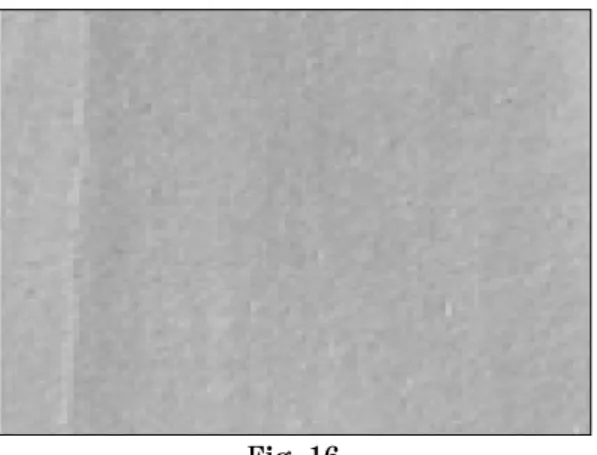
Fig. 10. Photograph of TOKUSO A-1α�, Mechanical mixing(×18) Fig. 11. Photograph of CAVEX IMPRESSIONAL �, Hand mixing(×18) Fig. 12. Photograph of CAVEX IMPRESSIONAL �, Mechanical mixing(×18) Fig. 13. Photograph of AROMA FINE DF Ⅲ�, Hand mixing(×18)
Fig. 14. Photograph of AROMA FINE DF Ⅲ�, Mechanical mixing(×18) Fig. 15. Photograph of Permlastic�light bodied, Hand mixing(×18) Fig. 16. Photograph of Permlastic�light bodied, Mechanical mixing(×18) Fig. 17. Photograph of Panasil�contact, Hand mixing(×18)
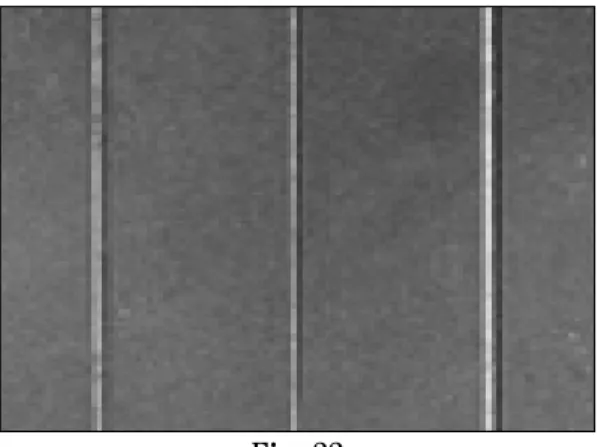
Fig. 18. Photograph of Panasil�contact, Mechanical mixing(×18) Fig. 19. Photograph of TOKUSO A-1α�, Hand mixing(×18) Fig. 20. Photograph of TOKUSO A-1α�, Mechanical mixing(×18) Fig. 21. Photograph of Permlastic�light bodied, Hand mixing(×18) Fig. 22. Photograph of Permlastic�light bodied, Mechanical mixing(×18) Fig. 23. Photograph of Panasil�contact, Hand mixing(×18)
Fig. 24. Photograph of Panasil�contact, Mechanical mixing(×18)
사진부도 ①
Fig. 3
Fig. 5 Fig. 6
Fig. 7 Fig. 8
Fig. 4
사진부도 ②
Fig. 9 Fig. 10
Fig. 11 Fig. 12
Fig. 13 Fig. 14
사진부도 ③
Fig. 15 Fig. 16
Fig. 17 Fig. 18
Fig. 19 Fig. 20
사진부도 ④
Fig. 21 Fig. 22
Fig. 23 Fig. 24
Void-free impression taking is important for the fabrication of accurate dental restorations. One of the essential properties of an impression material used for indirect fabrication of precision cast- ings is the reproduction of the fine detail.
The objective in this study was to determine the influence of mixing methods on the number of voids and surface detail reproduction. The number of voids and surface detail reproduction were evaluated with the stereomicroscope SZ-PT�and photographed.
The results were as follows;
1. In comparison of the void formation according to mixing methods of all impression materi- als, mechanical mixing was better than hand mixing and there was significant difference(p<0.05).
2. In comparison of the void formation according to hand mixing of alginate impression mate- rials(TOKUSO A-1α�, CAVEX IMPRESSIONAL�, AROMA FINE DF Ⅲ�), there was no sig- nificant difference among alginate groups. But the number of void was increased in the order of Panasil�contact, TOKUSO A-1α�, Permlastic�light bodied and there was significant dif- ference(p<0.05).
3. In comparison of the void formation according to mechanical mixing of alginate impression materials(TOKUSO A-1α�, CAVEX IMPRESSIONAL�, AROMA FINE DF Ⅲ�), there was no significant different among alginate groups. But the number of void was decreased in order of TOKUSO A-1α�, Permlastic�light bodied, Panasil�contact and there was significant dif- ference(p<0.05).
4. In comparison of the surface detail reproduction according to mixing methods of 3 types of impression materials(TOKUSO A-1α�, Permlastic�light bodied, Panasil�contact), there was no significant difference between hand mixing and mechanical mixing method
5. The surface detail reproduction was only influenced by impression materials, and produced better in order of TOKUSO A-1α�, Panasil�contact, Permlastic�light bodied. There was sig- nificat difference among 3 type of impression materials(p<0.05).
From the above results, void formation is influenced by mixing methods and surface detail repro- duction is influenced by impression materials than mixing methods. Therefore, to fabricate accu- rate restorations, proper impression material and mechanical mixing method are more effective and available clinically.
A STUDY ON THE VOID FORMATION AND DETAIL REPRODUCTION ACCORDING TO THE VARIOUS IMPRESSION
MATERIALS AND MIXING METHODS
Hyeong-Seon Ryu, Heon-Song Lim, Ju-Hwan Lim, In-Ho Cho
Department of Prosthodontics College of Dentistry, Dankook University ABSTRACT