• 검색 결과가 없습니다.

Clinical Dental Hygienists’ Experience of the Prevention Based Incremental Oral Health Care: Applying Focus Group Interviews

N/A
N/A
Protected

Academic year: 2021

Share "Clinical Dental Hygienists’ Experience of the Prevention Based Incremental Oral Health Care: Applying Focus Group Interviews"

Copied!
11
0
0

로드 중.... (전체 텍스트 보기)

전체 글

(1)

Received: May 21, 2020, Revised: June 1, 2020, Accepted: June 13, 2020 eISSN 2233-7679

Correspondence to: Bo-Mi Shin, https://orcid.org/0000-0003-3763-152X

Department of Dental hygiene, College of Dentistry, Gangneung-Wonju National University, 7 Jukheon-gil, Gangneung 25457, Korea Tel: +82-33-640-2860, Fax: +82-33-642-6410, E-mail: [email protected]

Clinical Dental Hygienists’ Experience of the Prevention Based Incremental Oral Health Care: Applying Focus Group Interviews

Soo-Myoung Bae, Hyo-Jin Lee, and Bo-Mi Shin

Department of Dental Hygiene, College of Dentistry & Research Institute of Oral Science, Gangneung-Wonju National University, Gangneung 25457, Korea

Background: In this study, we tried to comprehensively explore clinical dental hygienist’s experience of a prevention-based

incremental oral health care program, which was pilot-operated by dental clinics, define prevention-based incremental oral health care as experienced in the field, and identify factors to be considered.

Methods: This study conducted a focus group interview with five dental hygienists who participated in an ongoing oral

management pilot project in 2016. The interview was conducted by a researcher, and the co-research team attended as progress assistants and recorded characteristics of the participants, main dictations, and non-verbal characteristics. All interviews were recorded and underwent thematic analysis to examine the questions of the study as the main axis.

Results:

As a result of the study, 65 meaningful statements were extracted by code, integrated into 24 sub-categories, and structured into 11 categories. Finally, four keywords were drawn: characteristics, facilitating factors, conflicting factors, and improvement measures for prevention-based incremental oral health care. Regarding prevention-based incremental oral health care in dental clinics, dental hygienists were highly aware of the physical and mental burdens of personalized treatment and education for each individual. They were responsible for the patient and for facilitating changes in the behavior of the client, leading to professional satisfaction. The dental team’s cooperation and supportive attitude were found essential to continue oral health care in the dental clinic.

Conclusion:

Through dental team-based treatment philosophy sharing and collaboration, it is possible to provide prevention-based incremental oral health care in dental clinics. In future, it is necessary to develop a system for establishing a sustainable preventative management system for public health promotion.

Key Words: Dental care, Dental hygienists, Focus groups, Primary prevention

Introduction

In modern society, there has been a shift from the treatment-oriented medical system of past communicable diseases to a new, prevention-based medical system focused on controlling common risk factors for non-communicable diseases such as cardiovascular disease, cancer, respiratory disease, and diabetes. This shift has strengthened primary healthcare, emphasizing prevention and continued control of diseases

1)

. It also places people at the heart of healthcare

and enables comprehensive and continuous care with the

aim of improving health

2)

. Many representative oral diseases,

such as dental caries and periodontal disease, are also

chronic diseases. Oral health-promoting strategies have

been suggested to prevent these diseases by controlling

shared risk factors such as smoking, drinking, exercise,

and diet

3)

. In this regard, medically advanced nations have

highlighted the need to prioritize primary dental care

regimes that stress prevention and control over specialized

treatment. To implement primary dental care, incremental

(2)

oral healthcare needs to be provided, preventing oral disease from manifesting and continuously managing related risk factors. Incremental oral healthcare is a method of dental care that aims to offer regular preventative care appropriate to the patient’s oral health status, provide early treatment for any detected oral disease, and always maintain and improve the patient’s oral health to the highest degree within the given conditions and circum- stances

4)

. Prevention-based incremental oral healthcare can include care by experts such as regular oral screening, scaling, dental sealants, fluoride application, consultations, and education. There have been studies reporting the effects of prevention-based incremental oral healthcare at different stages of life

5-7)

. In a study by Won et al.

5)

, a 1-year prevention-based incremental oral healthcare program was implemented individually by dental hygienists and dentists for children aged ≤16 years. They observed positive effects upon management of dental caries of permanent teeth, including significant reductions in a caries index for permanent teeth and in the ratio of permanent teeth showing caries. Sung and Kim

6)

reported that when a 4-week oral health program consisting of dental hygiene process of care (dental hygiene assessment, diagnosis, planning, implementation, and evaluation) was implemented for adults, there was a significant decrease in the dental biofilm, which is a major cause of oral disease.

The objectives and composition of prevention-based incremental oral healthcare are closely related to the unique work of dental hygienists, who implement client- focused dental hygiene paradigms. Dental hygienists perform work related to oral disease prevention and hygiene; in other words, they are specialized dental personnel providing dental services focused less on treating oral diseases and more on continuous care to prevent oral disease and promote oral health

8)

. In South Korea, the concept of skill-mix, where the whole treatment team offers different services, has been applied to the establishment of a primary dental care facility. Therefore, it is important to ensure that staff with the proper skills are positioned in the right place and at the right time to provide appropriate services to the people who require them

9,10)

. Thus, dental hygienists have a major role in incremental oral healthcare and are considered very

important personnel in dental clinics. This helps establish a unique role for hygienists and improve their professional future.

In order to provide patient-centered primary dental care involving the whole dental team, efforts need to be made to improve sustainable incremental oral healthcare systems by collecting and analyzing experiences and opinions on prevention-based incremental oral healthcare systems, in which dental hygienists have a high degree of responsibility.

However, previous studies have concentrated mostly on the effects, patient satisfaction and other factors related to incremental oral healthcare

5-7)

. There has been a lack of research focusing on the perspectives of dental hygienists.

The purpose of this study was to comprehensively explore the experiences of clinical dental hygienists with respect to a pilot prevention-based incremental oral healthcare project implemented by primary dental clinic.

Using this information, we aimed to define incremental oral healthcare as experienced in a working environment, and identify factors and strategies that need to be considered for the project to continue.

Materials and Methods

1. Study design

This qualitative content analysis study used focus group interviews to describe and explore the experiences and perspectives of clinical dental hygienists who participated in a pilot prevention-based incremental oral healthcare project implemented by certain primary dental institutions in Seoul, Gyeonggi-do, and Incheon, South Korea.

2. Participants

A pilot prevention-focused incremental oral healthcare project was implemented in accordance with a model for family dentist programs developed for adults

11)

between January and April 2017. The project was implemented at six primary dental clinics in Seoul, Gyeonggi-do and Incheon that expressed voluntary consent to participate.

The incremental oral healthcare project model consisted of

patient consent, completion of a medical interview form

about risk factors, oral examination, oral health evaluation,

personalized health coaching, and regular scheduled

(3)

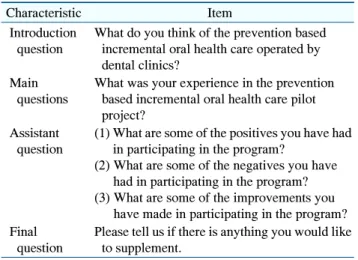
Table 1. Questions Used for Focus Group Interview

Characteristic Item

Introduction question

What do you think of the prevention based incremental oral health care operated by dental clinics?

Main questions

What was your experience in the prevention based incremental oral health care pilot project?

Assistant question

(1) What are some of the positives you have had in participating in the program?

(2) What are some of the negatives you have had in participating in the program?

(3) What are some of the improvements you have made in participating in the program?

Final question

Please tell us if there is anything you would like to supplement.

monitoring. To ensure that the program was standardized, dental hygienist treatment protocols and detailed guidelines were prepared for the entire treatment process, roles, items to prepare, related forms, management plans for different cases, major educational contents, and phrases.

Before the pilot trial, across two sessions, the principal dental hygienist at each clinic was given an introduction to the project and intensive education about treatment protocols.

Dental hygiene treatment protocol manuals, promotional materials for the project, and educational materials were distributed as well. The principal dental hygienist at each clinic prepared for treatment, received patients and obtained consent, completed medical interview charts for oral health-related risk factors, and conducted consultations in accordance with the dental hygiene treatment protocols.

Once oral health evaluation was completed based on an oral examination by the dentist, the dental hygienist led personalized health coaching, including self-care and professional care. Personalized health coaching involved education on oral health care including biofilm deposition and assessment, oral hygiene, nutrition, smoking cessation, relationships between chronic disease and oral health, and regular oral health examinations. It also included oral disease prevention using pit and fissure sealants, professional fluoride application, and professional tooth cleaning (scaling, rubber cup polishing, bristle brush polishing, professional mechanical tooth cleaning using EVA tips, flossing, and Watanabe tooth brushing). A total of 30 patients participated in the incremental oral healthcare program during the pilot trial. Preventive care was conducted on a per-visit basis; care after the pilot trial, depending on the results of the oral health evaluation care, was continued on a cycle of 1∼4 visits per year.

Out of the 27 dental hygienists who took part in the pilot incremental oral healthcare project, five dental hygienists who led the program at their respective dental clinic and consented to participate in the study also participated in the focus group interview. The clinical experience of each of the participants was 3 years, 5 years, 7 years, 11 years, and 15 years.

3. Question development and data collection The focus group interview was conducted in a quiet seminar room on May 11, 2017, and the total time taken for the interview was 2 hours and 30 minutes. The interview was conducted by a researcher after first explaining that the moderator and participants’ self-introductions and recordings of the interview was only be used for research purposes, anonymity would be protected, privacy would be guaranteed in the study results, and the interview would be conducted with the voluntary consent of the partici- pants. Collaborators attended the interview and, as assistant moderators, recorded the participants’ characteristics, important verbal content, and non-verbal traits. At the end of the interview, researchers spoke with participants to confirm their understanding and interpretation of in- formation recorded during the interview. After completing the interview, the research team conducted a debriefing to review the major interview contents.

The interview questionnaire was prepared such that it

met the objectives of the study and used questionnaires

from studies by Kim

11)

and Ryu et al.

12)

, which conducted

qualitative evaluations of incremental oral healthcare

projects, for reference. Draft questions were constructed

by specialists on the research team, and the final questions

were selected after several rounds of modifications and

additions. The interview questions used to collect data

were composed, as shown in Table 1, based on derived

topics, i.e. while conducting the interview starting with the

(4)

questions below, more specific questions were added during the course of the interview to expand and add more depth.

Researchers made the following preparations for this study: gaining of experience in conducting and studying incremental oral healthcare projects and providing lectures on qualitative research to graduate students; continuous participation in education and seminars about qualitative methodology; publication of qualitative studies.

4. Data analysis

All interview contents were recorded and transcribed to a computer for data analysis. The records from the collaborators and the audio recordings were compared to improve the accuracy of the data. For data analysis, the thematic analysis method proposed by Braun and Clarke

13)

was used, taking the research questions as the fundamental axis. First, the research team repeatedly read the whole or part of the recorded transcripts containing all participant statements and comments to understand the data, marked statements that were considered significant, and performed primary coding. The marked statements were reviewed again, and an open coding list was compiled from significant indicative and repeated concepts and statements.

The characteristics of the concepts and statements included in the open coding list were compared to combine codes with similar meanings and abstraction was then performed by deriving sub-categories that could encompass all the codes. Significant themes were derived by combining sub-categories with similar meanings and characteristics. A review process was completed to more precisely define and name the initially derived themes by comparing the analyzed data with each of the themes and categories, and then opinions were gathered. The research team convened for categorization and abstraction and differing opinions were resolved through discussion.

5. Ethical considerations and validation

This study was conducted after receiving approval from the Gangneung-Wonju University institutional review board. Before performing the focus group interview, the participants were given an explanation of the research objectives and methods. They were informed that their

anonymity and privacy would be strictly protected and that they could end the interview or withdraw from the study at any time. The participants were also told that the interview contents would be recorded in writing and as audio, the recordings would only be used for research purposes, and they would be destroyed at the end of the study. Finally, written consent was obtained from the participants before proceeding with the study. When transcribing the recorded interview materials using a computer program, all personal information relating to the participants was removed, and the participants were assigned personal identification numbers.

As suggested by Lincoln and Guba

14)

, this study accounted for credibility, transferability, dependability, and confirmability. To ensure credibility, leading questions were excluded from the interview process to allow participants to respond freely. At the end of the interview, additional questions were asked to check that the researchers’ understanding was consistent with the participants’ statements. To ensure transferability, the participants’ statements were used word-for-word to extract significant concepts and sub-categories based on their actual experiences. To ensure dependability and confirmability, separate from the audio recordings, important details were recorded on a computer during the interview process and, starting immediately after the end of the interview, the interview content was transcribed within 1 week. The content was checked by comparing the transcript with the materials recorded in writing during the interview. Finally, the researchers repeatedly reviewed and amended the analysis results at arbitrary time intervals.

Results

When the thematic analysis method was applied to the

contents of focus group interview for participants along

the axis of the research questions, 65 significant statements

were extracted as codes. They were then unified into 24

sub-categories and structured into 11 categories and a total

of four themes were derived (Table 2).

(5)

Table 2. Major Themes and Sub-Categories of Incremental Oral Health Care Program of Dental Clinic in the Focus Group Interview
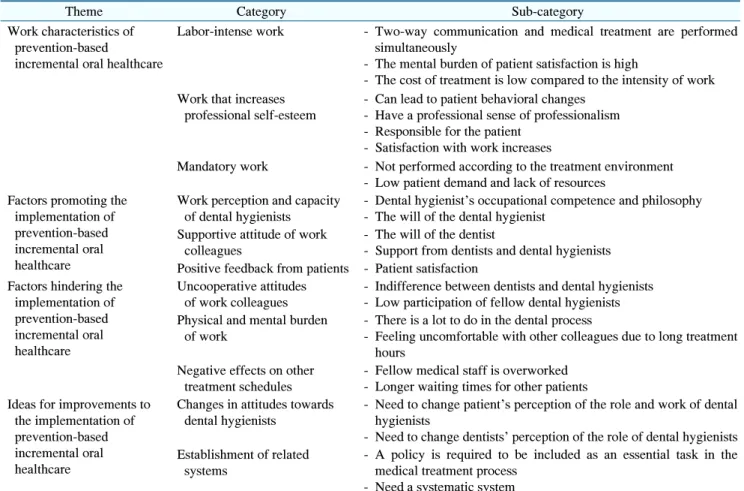
Theme Category Sub-category

Work characteristics of prevention-based

incremental oral healthcare

Labor-intense work - Two-way communication and medical treatment are performed simultaneously

- The mental burden of patient satisfaction is high

- The cost of treatment is low compared to the intensity of work Work that increases

professional self-esteem

- Can lead to patient behavioral changes - Have a professional sense of professionalism - Responsible for the patient

- Satisfaction with work increases

Mandatory work - Not performed according to the treatment environment - Low patient demand and lack of resources

Factors promoting the implementation of prevention-based incremental oral healthcare

Work perception and capacity of dental hygienists

- Dental hygienist's occupational competence and philosophy - The will of the dental hygienist

Supportive attitude of work colleagues

- The will of the dentist

- Support from dentists and dental hygienists Positive feedback from patients - Patient satisfaction

Factors hindering the implementation of prevention-based incremental oral healthcare

Uncooperative attitudes of work colleagues

- Indifference between dentists and dental hygienists - Low participation of fellow dental hygienists Physical and mental burden

of work

- There is a lot to do in the dental process

- Feeling uncomfortable with other colleagues due to long treatment hours

Negative effects on other treatment schedules

- Fellow medical staff is overworked - Longer waiting times for other patients Ideas for improvements to

the implementation of prevention-based incremental oral healthcare

Changes in attitudes towards dental hygienists

- Need to change patient's perception of the role and work of dental hygienists

- Need to change dentists' perception of the role of dental hygienists Establishment of related

systems

- A policy is required to be included as an essential task in the medical treatment process

- Need a systematic system

1. Work characteristics of prevention-based incremental oral healthcare

The participants perceived the work of prevention- based incremental oral healthcare in a dental clinic as

“labor-intense work”, “work that increases professional self-esteem”, and “mandatory work”.

1) Labor-intense work

The participants perceived that, when prevention-based incremental oral healthcare is performed, a large volume of bidirectional communication and treatment actions occur simultaneously. Various types of conversation need to be conducted in the process of evaluating risk, requiring over 30 minutes per patient and thought to impose a heavy physical burden. Alongside these conversations, the required items and materials need to be prepared.

Additionally, because certain treatments such as scaling can only be performed alone, the dental hygienists experienced

high levels of physical fatigue. The treatment of each patient by single dental hygienists also implied that patient satisfaction and assessment of treatment was regarded as a personal evaluation of the hygienist, causing a significant psychological burden. Relative to the effort required while bearing this physical and mental burden, the treatment fees are low and the patient’s response is not readily apparent, and therefore the program was perceived to be unhelpful from a business perspective.

“It takes around 40 minutes, which, when you think about it, is too difficult compared to other tasks. Because you have to speak a lot... and there’s a lot of detailed manual work… You have to talk and move your hands constantly for 40 minutes…”

“To fill in the chart, you have to talk at the patient’s

chairside while clicking on the computer, and so you have

to talk a lot… After you’ve seen three or so patients, it gets

(6)

difficult because you’re talking so much…”

“Yes, it’s very stressful. Not all the patients are normal and gentle, and you have to satisfy them all…”

2) Work that increases professional self-esteem The participants considered prevention-based incremental oral healthcare to be a valuable activity since it contributes to changing people. Because it was a specialized work that only dental hygienists could perform, it instilled a sense of work ethic as a professional. In addition, during treatment, dental hygienists formed relationships of trust with the patients, and had a clear goal of bringing about change in the patient. This inculcated a stronger sense of re- sponsibility towards the patient. The participants reported a direct sense for the patients’ responses, and felt greater work satisfaction when they verified that the changes brought about in the patients’ were sustained.

“I feel proud; in a way, we’re helping enable [the patients] to prevent [disease]. We’re able to take more responsibility for the patients’ health, and not only that, but while performing things like tooth brushing instru- ction (TBI) with the patient, we’re encouraging them to change or think differently, which I think is valuable (laughs)”

“I think one positive aspect is that, because we’re working with an objective, I felt like a professional and it was well organized.”

“Being a dental hygienist is a professional occupation, you know. To provide care as a professional… I felt more like a professional…”

“There were three patients who said that they’d never been informed like this before, that they’d never been to a hospital that gave them this much detailed information. It was so positive and so I felt a strong sense of satisfaction while working. I realized that there was actually some effect to all this talking, and so I felt pleased with myself.”

3) Mandatory work

Before starting the pilot project, the participants were made aware of the meaning of the project through participation in multiple sessions of group and individual education about prevention-based incremental oral

healthcare. Because they were leading participation within their dental clinics, they were put to work after duties had already been divided. Nevertheless, in the actual clinical setting, the participants felt a decrease in motivation when the overall treatment situation was perceived to be a priority. Furthermore, the project required medical personnel to proactively suggest participation to the patients, rather than the patients demanding to participate first. Given the lack of sufficient personnel or equipment in the clinics, the program was felt to be excessive and non-essential.

“[The other staff] tried to adhere to the program at first, but eventually I noticed that they were stopping (laughs). It was an inconvenience, and when we were busy, patients would be sent home without TBI… I was motivated at first, but my motivation gradually faded…”

“What I felt during the project was that, well, I’m busy as well, and so… because my willpower was declining…”

2. Factors promoting the implementation of prevention-based incremental oral healthcare For the participants, factors facilitating the implement- ation of prevention-based incremental oral healthcare in dental clinics were “work perception and capacity of dental hygienists”, “supportive attitude of work colleagues”, and “positive feedback from patients”.

1) Work perception and capacity of dental hygienists The participants perceived that the work ethic and capacity of dental hygienists are important factors in enabling prevention-based incremental oral healthcare in dental clinics.

“The start [of incremental oral healthcare] is predo- minantly influenced by the Chief, but its persistence depends on the capacity of dental hygienists.”

“To take the lead in performing [incremental oral healthcare], I think the occupational mindset of dental hygienists is important.”

2) Supportive attitude of work colleagues

In order for dental hygienists to perform prevention-

based incremental oral healthcare, the participants felt that

(7)

support was required for positive motivations of hygienists towards the work and that encouraging, support attitudes from work colleagues was essential.

“Because this program was first suggested by the Chief, we felt that it was naturally accepted by all the other staff.”

“[The program] was positively introduced according to the Chief’s intentions. I think it’s right that [a program like this] should be started by the Chief.”

“When I think about myself doing work like this, I still feel glad that this is a wonderful job that lets me do work like this, and it suits me. That can only happen because the Chief and I are a good match; the Chief makes allowances for me and supports me, and I think that’s what lets me keep going.”

“The attitude of the dental hygienist is important and, as such, I think that it is even more important for the Chief to give trust and responsibility [to the hygienist]. If the hygienist is to take the lead, it would be difficult without the whole-hearted support of the other staff.”

“When the Chief showed their intention [to participate in this program], I wanted it too, and I hoped that the Chief would create an atmosphere that would allow me to do the work… It’s something that takes time, and you find yourself worrying about what the other staff are thinking…”

3) Positive feedback from patients

As the practitioners of the program, the participants felt great work satisfaction through positive feedback and high satisfaction from patients who participated in incremental oral healthcare. As the patients also became motivated to regular visit the clinic and receive continuous care, this was perceived as a factor that could help sustain incremental oral healthcare in the clinic.

“The patients receiving incremental care showed high satisfaction because they used to come [to the clinic] when they were hurting, but now we schedule an appointment for them before they start to hurt. Some patients said that they would come once a month now, even if they didn’t hurt, and so I think the patients who received incremental

care were very satisfied.”

“I thought that patients showed very strong satisfaction, even just with TBI. When we took photos of the patients’

gums, gave them education, and then they saw the much improved photos 2 or 3 months later, it seemed to give the patients motivation and so they continued to visit [the clinic].”

“There were some patients who expressed their gratitude that we were able to preserve their teeth instead of removing them.”

3. Factors hindering the implementation of prevention-based incremental oral healthcare For the participants, factors making it difficult to implement prevention-based incremental oral healthcare in dental clinics were “uncooperative attitudes of work colleagues”, “physical and mental burden of work”, and

“negative effects on other treatment schedules”.

1) Uncooperative attitudes of work colleagues The participants experienced difficulties leading in- cremental oral healthcare when dentists or dental hygienists showed negative or uninterested attitudes, or when the participation levels of fellow dental hygienists waned.

“[The Chief] just handed [the program] over [to me]

and didn’t show any real interest; she didn’t speak to patients about preventive care even once…”

“The Chief wanted to participate, but because she was busy, I think [the program] wasn’t managed very well. It seemed like she wanted be to just deal with it myself…”

“I think the reception from other dental hygienists is important… Some of the staff would ask, “Why do we have to provide incremental oral healthcare? Do we absolutely have to do this?”

2) Physical and mental burden of work

While providing prevention-based incremental oral

healthcare, the participants had to perform various

treatment actions and conduct patient education at the

same time by themselves. This resulted in high levels of

physical fatigue. Moreover, because they had to take

(8)

complete responsibility for the preventive treatment of every patient, the participants felt a mental burden.

Finally, the participants reported that colleagues were uncomfortable with the long treatment time, since the mean treatment time per patient was over 30 minutes.

“It’s difficult to keep talking and you want to give up…

I think the more experienced staff don’t want to do this.”

“At first, while performing scaling, why tried to operate a system of one hygienist per patient… But when one hygienist has to take complete responsibility for a patient, it’s too difficult for that hygienist.”

“Some of our hygienists were avoiding this work… Just educating patients itself. Explaining this program to the patients, some people felt uncomfortable doing that.”

“Because you have to satisfy the patients, at first they were satisfied, but when they came back to the clinic and they say they want to be treated by ‘that person’, and the expectations of the patients are so high…”

“I felt self-conscious. There are so many patients waiting, is it really okay for me to take up 40∼50 minutes of their time? That’s what I was thinking.”

3) Negative effects on other treatment schedules Because of the long treatment time required for the incremental oral healthcare work, the participants were concerned about excessive work for their colleagues, who had to take care of even more patients in the same amount of time. They also felt a burden because of longer waiting times for patients.

“First of all, aside from the incremental care work, there are a large number of patients receiving scaling or other treatment, if I leave everything up to other staff, it takes longer because of this. As a result, it was sometimes more difficult for the other staff when they had to assist treatment. Because everything gets put on hold…”

“Our hospital takes appointments from 5 or 6 patients every 30 minutes, and so we’re already short on chairs.

There are always patients waiting, and so you can’t readily ask patients to try incremental oral healthcare…”

4. Ideas for improvements to the implementation of prevention-based incremental oral healthcare

To implement prevention-based incremental healthcare at dental clinics in the future, the participants perceived the need for changes in attitudes towards dental hygienists as professional workers responsible for preventive care.

They also suggested the establishment of a system to support this.

1) Changes in attitudes towards dental hygienists The participants suggested that, if dentists and patients were to perceive dental hygienists as professional dental personnel preventing and managing oral disease, dental hygienists would be able to approach patients more easily with regard to the incremental oral healthcare. It would also facilitate the division of duties based on professional roles within the operating system of the dental clinic, and/or to generate a suitable treatment system.

“There are dental hygienists at our hospital who specialize in prevention and control, that’s what they should say. I think that would allow us to take responsibility only for our work as dental hygienists, and to call back and take care of patients, wouldn’t it? Not just an employee…”

“Patients think of dental hygienists as just standing there and assisting, taking impressions, that sort of thing.

They don't really know about our educational work, our work as unique educators. A lot of people still don’t know…

And so [they feel uncomfortable about] completely entrusting my oral health to this person… That’s why attitudes towards the work of dental hygienists need to be changed…”

2) Establishment of related systems

To achieve prevention-based incremental oral healthcare, the participants perceived that it was necessary to prepare institutional devices to enable this to be included as essential work within the dental clinical environment.

They also acknowledged that this would require changes

within the medical system.

(9)

“A system. When the Seoul Family Doctor Project was first introduced it was very stressful as well. ‘Why are we doing this?’, ‘Add that to the pile of work we have to do’…

But it works because it’s been established as part of the system. People do it without complaint because they have come to see it as something that obviously has to be done.”

“If it was made clear that this is something that absolutely has to be done… Like scaling is performed at all dentists… Couldn’t it be established as just one part of dental treatment?”

Discussion

As the global disease burden of non-communicable diseases like cardiovascular disease increases, people have actively explored changes in the healthcare system from treatment-based to prevention-based care to effectively cope with the healthcare requirements of those with multiple chronic diseases in an economically sustainable manner

15)

. FDI World Dental Federation

16)

has claimed that because oral disease is a non-communicable chronic disease that shares many risk factors with other chronic disease, it is related to systemic factors and requires integrative management alongside other chronic diseases.

The disease burden of oral disease is constantly increasing, and due to this sizable burden

17)

, some authors have proposed the need for a paradigm shift to enable integrative prevention and control of oral disease together with other chronic diseases.

Due to the growth of the elderly population, the disease burden of chronic disease has been gradually increasing, and problems of rising medical costs and degraded quality of medical services due to such issues have emerged as major challenges in the field of healthcare. To meet these contemporary demands, advanced nations have tried to improve the quality of medical services and the efficiency and equality of healthcare by reforming primary care.

Primary care not only has positive effects on health improvement and disease prevention, but can also be efficiently applied to a larger population because the costs are lower than specialty care, thus proving that it is effective for achieving health equality

18)

. Accordingly, in a

study using the Delphi method to define the concept of primary care in agreeable terms, Lee et al.

19)

defined primary care as “the first form of healthcare encountered for the benefit of health, and the field in which residents’

common health issues are resolved by collecting and appropriately adjusting healthcare resources while main- taining a patient-physician relationship between the patient and a family doctor who is familiar with the patient’s family and the local community”. The Institute of Medicine suggested that most health problems can be effectively resolved by primary care, and that treatment based on a patient-physician relationship can improve continuity, strengthen the physician’s sense of responsibility towards the patient, and be effective at preventing disease and improving health

20)

. They also explained that this requires medical personnel to adopt a patient-centered approach. Although a conceptual definition for primary dental care has not yet been agreed upon in South Korea, based on the concept of primary care, the primary dental care system in South Korea can be understood in terms of constructing a patient-centered incremental oral healthcare system and implementing this system not in the local community, but in dental clinics.

The paradigm of dental hygiene aims to improve health through dental hygiene process of care with a client- centered approach. Thus, pursuing health improvements by applying prevention-based incremental oral healthcare based on the dental hygiene process of care is seen as a treatment domain that can help accomplish and improve primary dental care in South Korea. Furthermore, dental hygienists are specialized dental personnel responsible for prevention and control of oral disease as a legal task. In order to implement a primary dental healthcare system in South Korea, political and institutional efforts will be needed to use the expertise of dental hygienists, and to expand the scope of their unique work. Currently, strategies to efficiently and effectively utilize dental hygienists need to be explored.

In the present study, when exploring dental hygienists’

experiences of incremental oral healthcare in a dental

clinic setting, client-centered treatment and education was

perceived to cause a heavy physical and mental burden,

but the incremental healthcare program was also felt to

(10)

increase work satisfaction and pride by inculcating in the dental hygeinists a stronger sense of responsibility towards patients and the need to induce changes in their patients. To maintain the incremental oral healthcare programs in dental clinics, a cooperative and a supportive attitude from work colleagues were considered essential.

Even though dental hygienists are the main providers of the incremental oral healthcare, this can only be im- plemented as a sustainable system in a clinical setting when the whole dental team agrees on the philosophy and directions of care. To this end, a shift towards a dental team-based treatment paradigm is required. Starting with curricula for developing dental personnel, the meaning and importance of dental team-based treatment and the roles and expertise of each member of the team need to be recognized to enable team-based treatments in a clinical setting. In addition, continuous efforts are needed to move towards a team-based treatment paradigm, such as continuing education and workshops for dental personnel.

Sustained education and support is needed to allow different positions within the dental team to display clinical leadership according to their respective roles.

Politically, institutions need to be developed to construct a sustainable preventive care system to improve the oral health of the national population. Prevention-based incremental oral healthcare is a comprehensive concept for expert management of the dental biofilm, including scaling, personalized patient education, and consultation.

However, the scope of treatment for which treatment costs can be claimed from health insurance is limited to

‘calculus removal’. Therefore, depending on the treatment environment and the practitioner’s personal work ethic, there may be differences in the scope of treatment provided.

Moreover, the value of incremental oral healthcare as a treatment is its ability to induce change, but since it imposes a heavy physical and mental burden on dental hygienists, a suitable compensatory system needs to be developed. Institutional support is needed to generate a system that can actually be implemented on a daily basis in a clinical setting. This would enable a primary dental care system that can not only maintain, but even improve the oral health of the whole population through prevention-based incremental oral healthcare.

The participants in this study were clinical dental hygienists working at dental clinics that participated in a pilot project for patient-centered incremental oral healthcare.

Moreover, various environmental factors, such as the region, size of the dental hospital/clinic, and composition of personnel and patients were not considered. The study was conducted using an interview survey and therefore, there are some limitations with regard to generalization of the results. Nevertheless, this study is valuable because, by selecting participants who ran a standardized pilot incremental oral healthcare program, we assessed experiences from the same intervention. We analyzed the perspectives of clinical dental hygienists who experienced incremental oral healthcare in a working environment. In order to drive the paradigm shift towards prevention-based care and implement primary dental care by extending insurance coverage for dental work, active political efforts are needed to expand the roles of dental hygienists and increase recognition of the value of their unique work.

Notes

Conflict of interest

No potential conflict of interest relevant to this article was reported.

Ethical approval

This study was exempted from review by the Institutional Review Board at Gangneung-Wonju University (IRB No.

GWNUIRB-2016-25).

Author contributions

Conceptualization: Soo-Myoung Bae. Data acquisition:

Soo-Myoung Bae, Bo-Mi Shin, Hyo-Jin Lee. Formal analysis: Soo-Myoung Bae, Bo-Mi Shin. Writing – original draft: Bo-Mi Shin, Hyo-Jin Lee. Writing – review and editing: Soo-Myoung Bae, Bo-Mi Shin.

ORCID

Soo-Myoung Bae, https://orcid.org/0000-0002-1802-4129

Hyo-Jin Lee, http://orcid.org/0000-0002-3465-1747

Bo-Mi Shin, https://orcid.org/0000-0003-3763-152X

(11)

Acknowledgements

This study was supported by Gangneung-Wonju National University.

References

1. Retrieved May 12, 2020, from http://www.who.int/publications/

almaata_declaration_en.pdf?ua=1(1978).

2. World Health Organization: The world health report 2008- primary health care: now more than ever. WHO, Geneva, pp.41-60, 2008.

3. Sheiham A, Watt RG: The common risk factor approach: a rational basis for promoting oral health. Community Dent Oral Epidemiol 28: 399-406, 2000.

https://doi.org/10.1034/j.1600-0528.2000.028006399.x 4. Shin SC: Clinical preventive dental program by consideration

of the characteristics for individual. J Korean Dent Assoc 47:

260-271, 2009.

5. Won JY, Shin SC, Seo HS, Riew H: A study on the incremental dental cares of giving the first consideration to prevention in dental clinic. J Korean Acad Dent Health 27:

329-346, 2003.

6. Sung JH, Kim HJ: Evaluation of operation of oral health care program in some adults: focusing on changes in oral pollution (ATP) and O'leary Inde. AJMAHS 9: 501-511, 2019.

https://doi.org/10.35873/ajmahs.2019.9.9.043

7. Choi OS, Kim HJ, Jang SJ: Effect of continuing dental care program by elementary school dental clinic in Gimcheon. J Korean Soc Dent Hyg 15: 705-711, 2015.

https://doi.org/10.13065/jksdh.2015.15.04.705

8. Bowen DM, Pieren JA: Darby and Walsh dental hygiene:

theory and practice. 5th ed. Elsevier, Maryland Heights, pp.1-11, 2020.

9. Birch S: Health human resource planning for the new millennium: inputs in the production of health, illness, and recovery in populations. Can J Nurs Res 33: 109-114, 2002.

10. Glick M, Monteiro da Silva O, Seeberger GK, et al.: FDI Vision 2020: shaping the future of oral health. Int Dent J 62:

278-291, 2012.

https://doi.org/10.1111/idj.12009

11. Kim AH: Development of patient-centered oral health care model. Unpublished doctoral dissertation, Gangneung-Wonju National University, Gangneung, 2018.

12. Ryu JI, Jung SH, Bae SM: Current status and development plan for child and adolescent registered dentists. Seoul Metro- politan Government, Shingu University Industry Cooperation Agency, Seoul, pp.27-29, 87-97, 2014.

13. Braun V, Clarke V: Using thematic analysis in psychology.

Qual Res Psychol 3: 77-101, 2006.

https://doi.org/10.1191/1478088706qp063oa

14. Lincoln YS, Guba EG: Naturalistic inquiry. Sage, Newbury Park, pp.187-249, 1985.

15. OECD: Health reform: meeting the challenge of ageing and multiple morbidities. OECD Publishing, Paris, pp.15-80, 2011.

16. FDI World Dental Federation: The challenge of oral disease- a call for global action. The oral health atlas. 2nd ed. FDI World Dental Federation, Geneva, pp.78-89, 99-105, 2015.

17. Marcenes W, Kassebaum NJ, Bernabé E, et al.: Global burden of oral conditions in 1990-2010: a systematic analysis. J Dent Res 92: 592-597, 2013.

https://doi.org/10.1177/0022034513490168

18. Starfield B, Shi L, Macinko J: Contribution of primary care to health systems and health. Milbank Q 83: 457-502, 2005.

https://doi.org/10.1111/j.1468-0009.2005.00409.x

19. Lee JH, Choi YJ, Volk RJ, et al.: Defining the concept of primary care in South Korea using a Delphi method: secondary publication. Health Policy Manag 24: 100-106, 2014.

https://doi.org/10.4332/KJHPA.2014.24.1.100

20. Donaldson MS, Yordy KD, Lohr KN, Vanselow NA:

Primary care: America's health in a new era. National

Academies Press, Washington, pp.27-72, 1996.

수치

Table  1.  Questions  Used  for  Focus  Group  Interview
Table  2.  Major  Themes  and  Sub-Categories  of  Incremental  Oral  Health  Care  Program  of  Dental  Clinic  in  the  Focus  Group  Interview

참조

관련 문서

Oral Health Educational Diagnosis of Dental Hygienist

The Oral health status (such as subjective oral heal th status, toothache) and oral health behaviors (such as tooth brush, or al health examination) were

The experimental group consisted of 458 children from two schools that have oral health centers run by Suncheon Public Health Department, and the control group consisted of

Objective: The purpose of this study is to use it as a basis for the health care guidelines for the muscle mass and cardiovascular disease of Korean population by

Income security, health and medical care, welfare measures through long-term care and assisted living facilities, social participation by working are the key elements and all

Abstract: This study aimed to review the oral hygiene status, oral care guidelines, and outcomes of oral care in intensive care unit (ICU) patients from a dental

Note: Figures are estimated using the National Health Insurance database of the National Health Insurance Service; they are standardized for sex and age with reference

Acceptability and feasibility of survivorship care plans and an accompanying mobile health intervention for adolescent and young adult survivors of childhood