Korean J Gastroenterol Vol. 64 No. 1, 62-65 http://dx.doi.org/10.4166/kjg.2014.64.1.62 pISSN 1598-9992 eISSN 2233-6869
RESEARCH UPDATE
Korean J Gastroenterol, Vol. 64 No. 1, July 2014 www.kjg.or.kr
건강한 무증상 헬리코박터 감염자에서 제균 치료는 위암의 발생을 감소시키는가?
김연지, 정우철
가톨릭대학교 의과대학 내과학교실 소화기분과
Does Helicobacter pylori Eradication Therapy Reduce the Risk of Developing Gastric Cancer in Healthy Asymtomatic Individuals?
Yeon-Ji Kim and Woo Chul Chung
Division of Gastroenterology, Department of Internal Medicine, College of Medicine, The Catholic University of Korea, Seoul, Korea
Article: Helicobacter pylori Eradication Therapy to Prevent Gastric Cancer in Healthy Asymptomatic Infected Individuals: Systematic Review and Meta-analysis of Randomized Controlled Trials. (BMJ 2014;348:g3174)
CC This is an open access article distributed under the terms of the Creative Commons Attribution Non-Commercial License (http://creativecommons.org/licenses/
by-nc/3.0) which permits unrestricted non-commercial use, distribution, and reproduction in any medium, provided the original work is properly cited.
교신저자: 정우철, 442-723, 수원시 팔달구 중부대로 93, 가톨릭대학교 성빈센트병원 내과
Correspondence to: Woo Chul Chung, Department of Internal Medicine, The Catholic University of Korea, St. Vincent’s Hospital, 93 Jungbu-daero, Paldal-gu, Suwon 442-723, Korea. Tel: +82-31-249-7137, Fax: +82-31-253-8898, E-mail: [email protected]
Financial support: None. Conflict of interest: None.
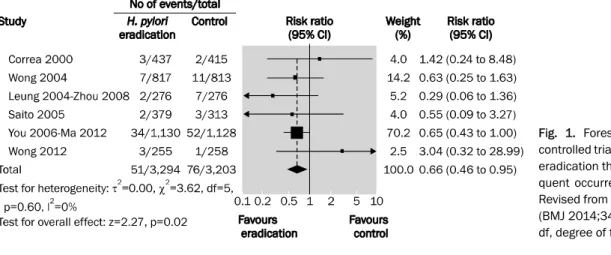
Fig. 1. Forest plot of randomized controlled trials of Helicobacter pylori eradication therapy: effect on subse- quent occurrence of gastric cancer.
Revised from the article of Ford et al.
(BMJ 2014;348:g3174).4 df, degree of freedom.
요약: Helicobacter pylori는 만성 위염을 유발하고 위축성 위염 및 장상피화생을 일으키는데, 위축성 위염이나 장상피화 생은 위암의 전암성 병소로 알려져 있다. 1994년 국제 암연구 소(International Agency for Research on Cancer)는 H.
pylori를 발암인자로 분류했고, 세계보건기구(World Health
Organization)도 1급 발암인자(class I carcinogen)로 규정하 였다.1,2 이에 따라 H. pylori의 제균 치료가 위암 발생을 낮출 수 있을 것이라고 추론은 하지만 아직까지 관련성에 대한 정 확한 논의가 부족하다. 더욱이 감염된 대부분의 사람들에서 위암뿐 아니라 소화기 질환이나 증상조차 일으키지 않는 것을
Kim YJ and Chung WC. H. pylori Erdication Therapy and Prevention of Gastric Cancer
63
Vol. 64 No. 1, July 2014
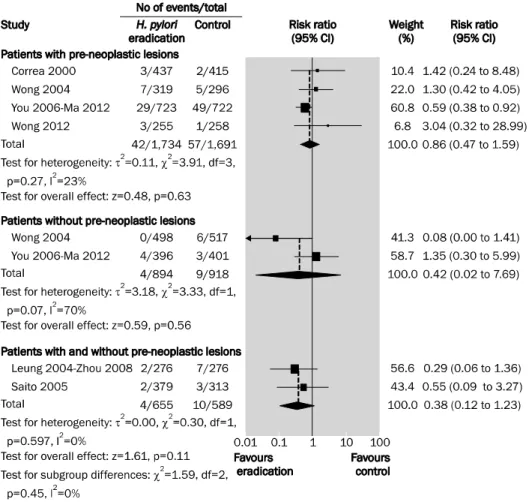
Fig. 2. Forest plot of randomized controlled trials of Helicobacter pylori eradication therapy: effect on subse- quent occurrence of gastric cancer according to presence or absence of pre-neoplastic lesions at baseline.
Revised from the article of Ford et al.
(BMJ 2014;348:g3174).4 df, degree of freedom.
보면 H. pylori와 위암 사이의 연관성은 아직까지 명백하게 드러나지 않고 있다. 현재까지 유일한 무작위 대조군 연구에 서는 H. pylori 제균 치료군에서 위암 발생을 현저하게 낮춘 것으로 보고하였지만, 같은 연구 결과를 다른 두 개의 시점에 서 중복해서 분석하는 오류를 범했고 이것을 한 시점의 결과 로 분석하였을 때에는 통계적으로 유의하지 않았다.3
이번 연구4는 무증상 건강 H. pylori 감염자에서 제균 치료 가 위암의 발생을 감소시키는지 알아보았다. 2001년부터 2013년까지 보고한 무작위 대조군 연구들에서 소화기의 증상 이 없는 16세 이상 환자를 대상으로 하여 7일 이상의 제균 요법을 시행하였고, 이후 최소 2년 동안 위암 발생을 추적 관 찰했던 6개의 논문을 메타 분석하였다.5-13 제균 치료를 시행 한 3,294명의 H. pylori 감염자 가운데 51명(1.6%)에서 위암 이 발생하였고, 제균 치료를 시행하지 않은 대조군에서는 3,203명 가운데 76명(2.4%)에서 위암이 발생하였다. 제균 치 료에 따른 위암 발생의 위험도 감소(RR reducation)는 0.66 (95% CI 0.46-0.95)였다(Fig. 1). 임상 역학적 연구의 지표로 사용하고 있는 치료에 대한 number need to treat (NNT)는 absolute risk reduction의 역수로서 이번 결과에서는 연구가 실시된 지역에 따라 다른 양상을 보였다. 메타 분석에 사용된
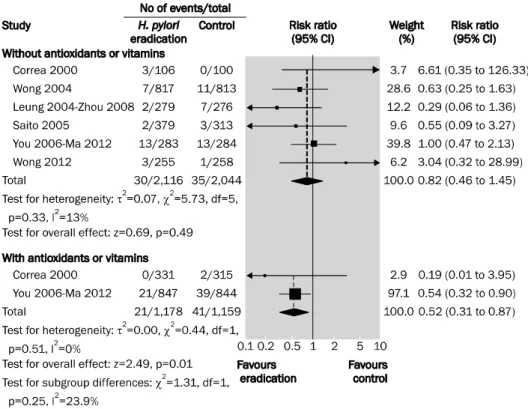
자료로는 위암 발생에 관한 NNT는 평균 124였으나, 하위 집 단 분석에서 중국 남성의 경우에는 15로 가장 낮았고, 미국 여성은 245로 가장 높았다. 또한 연구자들은 기저에 전암 병 변을 동반하거나 그렇지 않은 경우로 나누어 분석하였는데, 제균 치료 이후에 위암 발생의 차이는 없었다(Fig. 2). 그러나 항산화제나 비타민을 같이 복용한 군에서는 유의하게 위암 발 생이 감소하였다(RR 0.52, 95% CI 0.31-0.87) (Fig. 3).
식도암과의 관련에 대해서는 1개의 보고만 있는데 제균 치 료를 시행한 817명 가운데 2명에서 식도암으로 진단하였고, 반면에 813명의 대조군 가운데는 1명에서 식도암이 발생하였 다(p=0.57). 위암으로 인한 후속 사망률에 대해서는 5년에서 14.7년 동안 추적 관찰하였을 때, 2,242명의 치료군에서는 24 명(1.1%)이 사망하였고 2,233명의 대조군에서는 36명(1.6%) 이 사망하여 통계적으로 유의한 차이가 있었다(RR 0.67, 95%
CI 0.40-0.11). 그러나 총 사망률은 치료군에서 2,639명 가운 데 192명(7.3%)이, 대조군에서는 2,614명 가운데 175명 (6.7%)이 사망하여 통계적으로 의미 있는 감소는 없었다(RR 1.09, 95% CI 0.86-1.38). 제균 치료와 연관된 부작용에 대해 서는 1개의 대조군 연구 결과가 있는데, 피부 발적이 치료군 에서 3.1%인 반면에 대조군에서는 0.1%로 유의한 차이를 보
64
김연지, 정우철. 헬리코박터 제균 치료와 위암의 예방The Korean Journal of Gastroenterology
Fig. 3. Forest plot of randomised controlled trials of Helicobacter pylori eradication therapy: effect on subse- quent occurrence of gastric cancer according to anti-oxidant or vitamin use. Revised from the article of Ford et al. (BMJ 2014;348:g3174).4 df, degree of freedom.
인 것 이외에 특이할 만한 것은 없었다. 그 외에 다른 연구에 서는 임상적으로 의미있는 부작용은 보고하지 않았다.
해설: 이번 체계적인 고찰과 메타 분석은 무증상 건강 성인 에서 H. pylori의 제균 치료 이후에 위암의 발생을 줄일 수 있을 것인가에 대한 연구이다. 이 결과에 따르면 위암 발생이 많은 아시아에서는 건강한 무증상의 감염자를 대상으로 위암 의 위험도를 낮추기 위한 제균 치료가 고려될 수 있음을 뒷받 침하지만, 그 외에 위암의 발생이 적은 다른 지역에서는 치료 효과가 제한적일 수 있다.
그러나 이 연구에서는 몇 가지 제한점이 있는데, 첫 번째는 메타분석에 사용된 6개의 연구 중에 단지 3개만이 비뚤림 위 험도(risk of bias)가 낮은 것이다. 더욱이 어떤 연구에서는 요 인들 간의 상호작용 효과를 검증하는 요인 설계(factorial de- sign)가 없어 H. pylori 제균 치료 이후의 위암 발생이 제균 치료 자체에 의한 것인지 판단하기 어려웠다. 두 번째는 메타 분석에 사용된 연구들 가운데 1개의 연구를 제외한 다른 연구 들을 동아시아에서 실시하였기 때문에 서양인을 대상으로 H.
pylori 제균 치료 효과를 단정하기는 어렵다는 것이다. 세 번 째는 각각의 연구에서 실시한 제균 요법도 다양할 뿐만 아니 라 이에 따른 부작용에 관한 어떠한 보고도 찾을 수 없어, 일 반 대중을 대상으로 제균 치료를 실시하였을 때 득과 실을 정확하게 판단하기 어렵다는 것이다. 또한 이전의 다른 연구 결과와 비교하였을 때에도 기존의 연구에서는 전암성 병변을
갖고 있지 않은 환자에서 H. pylori 제균 치료를 하면 위암의 발생이 현저하게 줄어드는 것으로 보고하여9 위암의 발생에서 소위 “point of no return”이 존재하고 그 이상의 병변에서는 H. pylori 제균 치료를 통한 위암 예방 효과는 거의 없을 것으 로 생각하였다. 반면에 이번 연구에서는 전암성 병변의 유무 에 상관없이 제균 후에 발생하는 위암의 빈도에는 차이가 없 었다. 이것은 이후에 연구를 지속하여 정확한 기전의 이해와 대규모의 무작위 대조군 연구를 통해 확인할 수 있을 것으로 기대한다.
현재까지 모든 감염 환자에 있어 제균 치료가 필요한지에 대해서는 논란이 있으나, 이번의 연구 결과를 보았을 때 건강 한 무증상 감염자에서도 H. pylori 제균 치료를 하면 위암의 발생을 줄일 수 있을 것으로 기대하고 있다. 그러나, 결과의 신뢰구간이 넓어 메타 분석을 한 자료 가운데에서 1개의 연구 결과에 많은 영향을 받았을 가능성이 있다. 그러나 이전의 연 구에서 위점막 절제술 후에 H. pylori 제균 치료를 통하여 이 시성 위암의 발생을 줄일 수 있었고,14,15 최근 관찰 연구에서 도 H. pylori 유병률이 감소함에 따라 위암의 평균 발생 건수 도 의미 있게 감소하였다16는 것은 이번 연구의 결과를 확실 하게 뒷받침하고 있다. 더욱이 최근 일본 교토에서 시행한 Global Consensus Meeting에서 증상이 없고 기저 질환이 없더라도 감염 자체를 질환으로 간주하여 모든 H. pylori 양 성 환자에서 제균 치료를 시행하자는 논의가 이루어진 것은 주목할 만하다.
Kim YJ and Chung WC. H. pylori Erdication Therapy and Prevention of Gastric Cancer
65
Vol. 64 No. 1, July 2014
이 연구자료는 비록 제한적이지만 위암 발생이 높은 지역 에서 무증상 감염자에게 H. pylori 제균 치료를 실시함으로써 위암을 줄일 수 있음을 보여 주었다. 그러나 위암을 예방하는 보건 전략으로 H. pylori 제균 치료를 권장하기에 앞서 다른 인구 집단에서도 같은 결과가 나오는지에 대한 근거 자료가 필요하고, 무증상 건강 감염자에게 제균 요법이 가져올 효과 에 대해 추가 연구가 필요할 것이다.
REFERENCES
1. Correa P. The gastric precancerous process. Cancer Surv 1983;2:437-450.
2. Correa P, Haenszel W, Cuello C, Tannenbaum S, Archer M. A mod- el for gastric cancer epidemiology. Lancet 1975;2:58-60.
3. Fuccio L, Zagari RM, Eusebi LH, et al. Meta-analysis: can Helicobacter pylori eradication treatment reduce the risk for gastric cancer? Ann Intern Med 2009;151:121-128.
4. Ford AC, Forman D, Hunt RH, Yuan Y, Moayyedi P. Helicobacter pylori eradication therapy to prevent gastric cancer in healthy asymptomatic infected individuals: systematic review and meta-analysis of randomised controlled trials. BMJ 2014;348:
g3174.
5. Correa P, Fontham ET, Bravo JC, et al. Chemoprevention of gas- tric dysplasia: randomized trial of antioxidant supplements and anti-Helicobacter pylori therapy. J Natl Cancer Inst 2000;92:
1881-1888.
6. Gail MH, Brown LM, You W. Re: chemoprevention of gastric dys- plasia: randomized trial of antioxidant supplements and an- ti-Helicobacter pylori therapy. J Natl Cancer Inst 2001;93:
559-560.
7. Saito D, Boku N, Fujioka T, et al. Impact of H. pylori eradication on gastric cancer prevention: endoscopic results of the japa-
nese intervention trial (JITHP-Study). A randomized multi-center trial. Gastroenterology 2005;128(Suppl 2):A4.
8. Wong BC, Lam SK, Wong WM, et al; China Gastric Cancer Study Group. Helicobacter pylori eradication to prevent gastric cancer in a high-risk region of China: a randomized controlled trial. JAMA 2004;291:187-194.
9. Wong BC, Zhang L, Ma JL, et al. Effects of selective COX-2 in- hibitor and Helicobacter pylori eradication on precancerous gastric lesions. Gut 2012;61:812-818.
10. Ma JL, Zhang L, Brown LM, et al. Fifteen-year effects of Helico- bacter pylori, garlic, and vitamin treatments on gastric cancer in- cidence and mortality. J Natl Cancer Inst 2012;104:488-492.
11. Zhou L. Ten-year follow-up study on the incidence of gastric can- cer and the pathological changes of gastric mucosa after H. pylori eradication in China. Gastroenterology 2008;134(Suppl 1):
A233.
12. Leung WK, Lin SR, Ching JY, et al. Factors predicting progression of gastric intestinal metaplasia: results of a randomised trial on Helicobacter pylori eradication. Gut 2004;53:1244-1249.
13. You WC, Brown LM, Zhang L, et al. Randomized double-blind fac- torial trial of three treatments to reduce the prevalence of pre- cancerous gastric lesions. J Natl Cancer Inst 2006;98:974-983.
14. Fukase K, Kato M, Kikuchi S, et al; Japan Gast Study Group.
Effect of eradication of Helicobacter pylori on incidence of meta- chronous gastric carcinoma after endoscopic resection of early gastric cancer: an open-label, randomised controlled trial.
Lancet 2008;372:392-397.
15. Choi J, Kim SG, Yoon H, et al. Eradication of Helicobacter pylori after endoscopic resection of gastric tumors does not reduce in- cidence of metachronous gastric carcinoma. Clin Gastroenterol Hepatol 2014;12:793-800.
16. Lee YC, Chen TH, Chiu HM, et al. The benefit of mass eradication of Helicobacter pylori infection: a community-based study of gastric cancer prevention. Gut 2013;62:676-682.