REVIEW ARTICLE
새로운 만성C형간염 치료제: 직접작용약제
채희복
충북대학교 의과대학 내과학교실, 의학연구소
New Therapeutic Agent for Chronic Hepatitis C: Direct Acting Agent
Hee Bok Chae
Department of Internal Medicine, Chungbuk National University College of Medicine and Medical Research Institute, Cheongju, Korea
Peg-interferon and ribavirin has been the standard therapy of chronic hepatitis C for the past 15 years in Korea. However, the treatment paradigm is changing. Direct acting agents (DAAs) are oral pills that can be easily taken. In addition, DAAs are more effective and have less adverse reactions compared to the previously used drugs. Chronic hepatitis C is hard to treat because the virus is error-prone virus. Host immunity is helpless against the hepatitis C virus since it evades the host immunity through various complex mechanisms. There are 6 genotypes. Quasispecies can co-exist even in the same patients.
The treatment strategy is based on the combination of the individual drug corresponding to each step of viral replication process. NS5B nucleosides are the most powerful and effective drug available until now. Other drugs with different mechanisms of action can be used to provide synergy. NS5A and NS5B inhibition drugs currently belong to the leading group amongst many DAAs. These drugs will soon be available in Korea. We have to know the merits and adverse drug reactions of the new drug (Korean J Gastroenterol 2015;66:5-9)
Key Words: Hepatitis C, chronic; Therapeutics
CC This is an open access article distributed under the terms of the Creative Commons Attribution Non-Commercial License (http://creativecommons.org/licenses/
by-nc/4.0) which permits unrestricted non-commercial use, distribution, and reproduction in any medium, provided the original work is properly cited.
Copyright © 2015. Korean Society of Gastroenterology.
교신저자: 채희복, 361-763, 청주시 서원구 1순환로 776, 충북대학교병원 내과
Correspondence to: Hee Bok Chae, Department of Internal Medicine, Chungbuk National University Hospital, 776 1sunhwan-ro, Seowon-gu, Cheongju 362-711, Korea.
Tel: +82-43-269-6363, Fax: +82-43-273-3252, E-mail: [email protected]
Financial support: This work was supported by the research grant of the Chungbuk National University in 2014. Conflict of interest: None.
서 론
우리나라에서 만성 C형간염의 치료는 지금까지 15년 이상 표준요법의 자리를 지켜 온 peg-interferon과 ribavirin (PR) 병합요법으로부터 직접작용약제(direct acting agent, DAA) 로 옮아가는 전환기이다. 지금까지 표준치료로 널리 사용되어 온 interferon의 부작용으로는 독감증세, 탈모증, 주사맞은 부 위의 피부소양증, 골수 억제로 인한 백혈구 감소증, 우울증 등이 있다.1-3 한편 진행성 간경변 환자나 고령의 노인들은 이 러한 약제 부작용을 잘 이겨내지 못하여 치료기간을 충분히 채우지 못하는 경우가 많고, 치료기간을 잘 견뎌냈다 하더라 도 치료 반응이 좋지 않다. PR 병용요법은 주사치료를 받아야 만 해서 불편하고 약제 부작용 및 불내성으로(inelligible) 인
한 금기증이 있는 약제이기 때문에, 이러한 단점을 극복할 수 있는 새로운 대안으로서 경구용 신약이 필요하게 되었다.
Interferon이 숙주의 면역능력을 증강시켜 항바이러스 효능을 얻게 하는 간접적인 치료 원리를 가지고 있는 것에 비하여, DAA는 바이러스의 복제기전을 직접 공략한다. 이 글에서는 이러한 DAA에 관해서 알아 보았는데, DAA에도 여러 종류가 있으므로 DAA 약제의 임상시험 과정에서 그 효능이 충분히 검증된 약제, 우리나라에서 곧 사용 가능한 DAA 제제들을 약리기전에 따라서 분류하였고, 각 약제들의 특징 및 장단점 을 살펴 보았다.
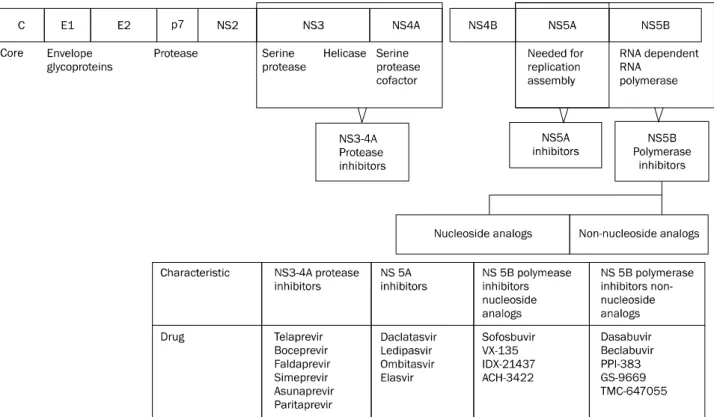
Fig. 1. Direct acting agents and corresponding sites of HCV gene. Modified from the article of Chae et al.12 (ScientificWorldJournal 2013. doi:
10.1155/2013/704912).
본 론
1. C형간염, 왜 치료하기 어려운가?
C형간염 바이러스(HCV)는 면역으로부터 회피하는 기전을 가지고 있는데, 첫째로는 HCV 표면의 T세포 수용체 항원부 분에 돌연변이가 일어나 단백변형을 일으켜 T세포 반응을 회 피한다.4 Weiner 등5은 침팬지 모델에서, 만성 C형간염의 지 속성은 세포독성 T림프구를 회피하는 변종 바이러스 출현에 의한 것임을 밝혔고, Tsai 등6은 만성 C형간염 환자에서 HCV 표면의 펩티드 리간드 변형과 이에 상응하는 T세포 수용체의 불응이 만성화에 기여함을 밝힌 바 있다. 두 번째, T세포에서 발현하는 억제성 수용체들에 의해 T세포의 활성이 억제된다.
이러한 억제성 수용체들 중 가장 대표적인 것이 programmed cell death protein 1 (PD-1)이다. 만성 C형간염 환자에서 발 견되는 T세포들의 HCV 특이 CD8+ T세포 표면에 PD-1 수 용체가 발현되어 있다.7 또한 HCV에 감염된 간세포들은 세포 표면에 programmed death-ligand 1 (PD-L1) 리간드를 가지 고 있어 위 둘의 결합은 T세포 수용체(HCV 결합으로 인해 활성화되는) 매개 활성화신호를 억제한다. 억제된 CD8+ T세 포들은 PD-L1 특이 항체로 전처치를 받게 되면 다시 그 기능 이 회복된다. 셋째, 조절 T세포의 역할이다. CD25+CD4+ 조 절 T세포는 여러 가지 방법으로 다른 T세포들의 반응을 억제
하여, 결국은 T세포의 증식이나 cytokine 분비 등의 기능을 감소시키게 된다.8 이상과 같이 HCV 자체가 숙주의 면역을 회피하는 다양한 전략을 구사하므로 이를 치료하기 위해서는 HCV의 각각의 복제단계에 영향을 미치는 약제들을 병합하여 투여하는 것이 단일약제를 사용하는 것보다 내성 바이러스 억 제와 치료 효능면에서 더 효과적이다.
2. 제1세대 DAA 약제
제1세대 DAA 제제로는 NS3/4 단백분해효소의(protease) 억제제이며, 대표적으로 telaprevir, boceprevir가 있다. 위 두 약제들은 미국 Food and Drug Administration (FDA)에서 2011년 4월과 5월에 각각 승인을 받았으며, 약제 부작용으로 인하여 점차 인기가 줄어들고 있지만 여전히 시판되고 있는 중이다. 이 약제들은 단어의 어미가 -previr로 끝나며, 유전자 제1형에서만 효과가 입증되어 있고 다른 유전자형에서는 효 과가 없는 것으로 알려져 있다. 제1유전자형에서 PR 병합요 법의 sustained virologic response (SVR)가 33-34%인 데 비 하여, PR 병합요법과 제1세대 DAA를 추가한 경우 SVR이 63-75%로 향상되었다.9,10 그러나, telaprevir와 boceprevir는 그 부작용이 심한 것으로 알려져 있다. Telaprevir의 경우 경 도, 중증도의 피부발진은 거의 모든 환자에서 보고되며, 빈혈 은 36%, 직장항문출혈은 29%의 빈도로 보고된다.9 Boceprevir
Fig. 2. Targets for direct acting agent. Adapted from the article of Racanelli and Rehermann13 (Trends Immunol 2003;24:456-464) with the permission of original copyright holder.
LDL, low density lipoprotein; VLDL, very low density lipoprotein; ER, endoplasmic reticulum; NS3/4A, protease; NS5A, replication complex; NS5B, RNA dependent RNA polymerase.
의 경우 약제 관련 부작용으로 빈혈 50%, 백혈구 감소증 25%, 소화불량이 35%로 보고되었다.10 CUPIC 연구에서는 telaprevir와 boceprevir 두 약제가 가진 부작용과 관련하여, 심각한 부작용 45% vs. 33%, 조기중단 23% vs. 26%, 사망 3% vs. 1%로 충격적인 결과를 보여주었는데, 사망의 원인은 패혈증, 폐렴, 심내막염, 그리고 식도정맥류 출혈 등이었다.11
3. 제2세대 DAA 약제
각 유전자의 영역에서 발현하는 단백질과 그에 상응하는 DAA 억제제를 도식으로 표시하였으며 이는 Fig. 1과 같다.12 제2세대 약제로는 NS3/4 protease 계열, NS5A, NS5B (nucleoside, non-nucleoside)로 나누어 볼 수 있다. Fig. 2는 바이러스의 복제과정을 나타내고 있으며, 각 복제단계마다 어 떠한 DAA 약제가 작용하는지를 보여주고 있다.13
1) NS3/4A
단백분해효소 억제제이며 효능과 부작용면에서 1세대 약 제보다 훨씬 진보된 약제이다. 대표적으로 simeprevir, asu- naprevir, paritaprevir가 있으며, 역시 어미가 -previr로 끝난 다. HCV는 RNA 바이러스인데 복제의 시작 단계에서 단백중 합체(protein polymer)가 만들어진다. 복제가 진행되려면 거 대단백(polyprotein)이 각각의 기능단위인 효소로 쪼개어져야
하는데 이 과정에서 단백분해효소가 필요하다. 이 단계를 억 제하는 약제가 바로 단백분해효소 억제제이다. 제1세대 DAA 인 telaprevir, boceprevir보다는 덜하지만, 제2세대 단백분해 효소 억제제인 simeprevir 역시 빈혈, 피부발진, 간부전 등의 부작용이 있다.
2) NS5A
복제복합체(replication complex) 억제제이다. 대표적으로 daclatasvir, ledipasvir, ombitasvir가 있으며 어미가 -asvir 로 끝난다. 이러한 약제들은 복제복합체를 억제하며, dacla- tasvir의 경우 유전자형 1a에서는 치료효과가 매우 제한적이 고, 유전자형 1b에서는 그 치료효과가 매우 탁월하였다.
NS5A 연관내성 돌연변이가(L31, Y93) 있는 경우 약제 내성 을 나타내며, 그 치료반응이 떨어진다. 다른 치료기전의 약제 들과(NS3/4 단백분해효소 억제제, NS5B 억제제) 병합할 경 우 상승 효과를 나타낸다.
3) NS5B
RNA 의존 중합효소 억제제(RNA dependent RNA poly- mearase)이다. 현재의 차세대 치료제 중 가장 치료효능이 좋 은 유망한 약제이다. 대표적인 약제로 sofosbuvir, dasabuvir, beclabuvir가 있으며 어미가 -buvir로 끝난다. RNA 의존 중 합효소를 억제하는 약리기전을 가지고 있다. 이 계열은 nu-
cleoside, non-nucleoside 계열로 나뉘며, 전자에 해당하는 약제는 sofosbuvir이고, 후자에 해당하는 약제가 dasabuvir, beclabuvir이다. Sofosbuvir는 RNA 염기사슬에(polymer) 끼 어들어가 사슬이 더 연장되지 못하도록 한다(chain termi- nator). Non-nucleoside 계열 약제의 작용기전은 중합효소의 활성 부위와 결합하는 기질로 사용되어 중합효소를 억제한다.
Sofosbuvir는 NS5B 유전자 염기서열이 유전형에 관계없이 잘 보존되어 있기 때문에 HCV의 여러 유전자형에서도 그 억 제효과를 나타낼 수 있다.14
4. 임상연구
1) Sofosbuvir+ledipasvir (복합제 상품명 HarvoniⓇ; Gilead Sciences Inc., Foster City, CA, USA)
2013년 12월 미국 FDA 공인과 함께 미국에서 가장 널리 쓰이고 있는 약제이다. 초치료 환자를 대상으로 한 3상 임상연 구에서(ION-1, 2, 3),15-17 간경변, 유전자형(1a 혹은 1b)에 관 계없이 12주 치료로 97-100%의 반응을 보였다. 그러나 PR 치료를 받고 부분반응 혹은 무반응을 보였던 환자에서는 간경 변 여부에 따라서, 82-86% vs. 95-100%로 반응률이 낮았다.
이러한 PR 치료경험군 환자에서 간경변을 합병하고 있는 경 우 치료기간을 24주로 연장할 것이 추천된다.
2) Sofosbuvir+simeprevir (OlysioⓇ; Janssen Pharma- ceuticals Inc., Titusville, NJ, USA)
COSMOS 연구의 결과 F0-F2에서 93-96%, F3-F4인 경우 93-100%였으며, 12주 치료군과 24주 치료군 간에 반응에는 차이가 없었다.18
3) Ombitasvir/paritaprevir/ritonavir tablet; dasabuvir tablet (Viekira PakⓇ; Abbvie Inc., North Chicago, IL, USA)±ribavirin (3D±R)
SAPPHIRE 연구에서19 초치료, 치료경험에 상관없이, 유전자 1a와 유전자 1b에 좋은 반응을 나타내었다.
4) Daclatasvir+asunaprevir (DCV-dual)
우리나라에서 가장 먼저 승인될 것으로(2015년 8월) 기대 되는 약물이다. 2012년 발표된 pilot 연구(유전자 1형)에서 SVR12 36% (3/11)를 보고하였으며. 이 연구에서 유전자 1형 중에서도 특히 유전자형 1b에 보다 더 효과적이라는 사실을 발견하였다. 이후 유전자 1b만을 대상으로 한 DUAL 치료는 초치료 환자에서 90%, 과거 치료실패한 환자에서 82%, 부적 격/불내성 환자에서 82%의 SVR12 반응률을 나타내었다. 유 전자 1b형 환자 중에서도 치료 전 NS5A 연관 내성변이(L31, Y93)가 있는 경우 치료율이 38%로 떨어지는 것으로 나타나 임상에서는 치료 전 내성변이 여부에 대한 사전 검사가 필요 하다. 돌연변이의 위치는 L31M/V, Y93H이며, 이를 가진 환 자 중 38% (28/73)에서 SVR12가 관찰되었다. 본 약제와 관련
된 부작용은 주로 ALT, AST의 5배 이상 상승으로 3%에서 나타났으며, 총빌리루빈이 상한치의 2.5배 이상 상승된 경우 는 0.5%였다.20 간경변증 환자에서 DCV-dual의 치료성적을 HALLMARK-DUAL에 나타난 결과를 통하여 살펴보면, 전체 환자에서 SVR은 간경변증 84%, 비간경변증 85%로 동일하였 다. 위 환자들을 좀 더 세분하여 살펴보면, interferon 무반응 인 환자 중에서 간경변증 87%, 비간경변증 80%였으며, in- terferon 부적합/치료 중단 환자에서도 간경변증 81%, 비간경 변증 84%였다. 이는 DCV-dual이 표준 치료에 실패하였던 환 자, 그리고 interferon 치료를 견디기 어려웠던 환자들에게 간 경변 유무와 상관없이 치료성공률이 높음을 보여준다.20
5. 새로운 2014 치료 가이드라인(American Association for the Study of Liver Diseases, AASLD)21
1) 유전자형 1b형
(1) 매일 sofosbuvir (400 mg), ledipasvir (90 mg) 12주간 요법은 초치료 제1형 유전자형(Ib) 환자에서 추천된다.
(IA)
(2) 3D, 즉 paritaprevir (150 mg)/ritonavir (100 mg)/om- bitasvir (25 mg) 고정용량과 하루 2회 dasabuvir (250 mg) 및 체중에 따른 리바비린 12주 요법(간경변증이 없 는 환자) 또는 24주(간경변증이 있는 환자) 병합치료는 제1형 유전자형(Ib) 환자에서 추천된다. (IA)
(3) 매일 sofosbuvir (400 mg), simeprevir (150 mg) 12주 치료는 간경변인 경우 24주, 간경변이 없는 경우 12주 치료는 초치료 환자에게서 추천된다. (IA)
(4) 제1형 유전자형에서 더 이상 추천되지 않는 치료 ① Sofosbuvir (400 mg)와 체중과 비례한 ribavirin (RBV)
을(75 kg을 기준으로 1,000 mg 혹은 1,200 mg) 투여하 는 것. (IIbA)
② PR과 DAA (sofosbuvir, simeprevir, telaprevir, boce- previr) 약제 병용요법 12주에서부터 48주까지 치료.
(IIbA)
③ PEG (peg-interferon), RBV, DAA 각각의 약제를 단 독으로 투여하는 것. (IIIA)
2) 유전자형 2형
(1) Sofosbuvir (400 mg)와 RBV (75 kg을 기준으로 1,000 mg 혹은 1,200 mg) 병용투여를 제2형 유전자형, 초치 료 환자에게 12주간 투여한다. (IA)
(2) 간경변이 있는 환자는 치료기간을 16주로 연장한다. (IIbC)
결 론
제1세대 boceprevir와 제2세대 DAA 제제 중 DCV-dual,
sofosbuvir (SovaldiⓇ; Gilead Sciences Inc., Foster City, CA, USA)가 우리나라에 향후 출시될 것으로 예상된다. 지금 까지 사용된 interferon은 치료받는 모든 사람들에게서 다양 한 부작용을 나타냈으며, 또한 고도 간섬유화 환자나 고령의 환자들에게서 약제 효능은 매우 떨어진다. 지금 C형간염 치료 의 새로운 전기가 마련된 만큼 새롭게 도래할 신약들의 특징 과 장단점을 정확히 알고, 어떤 환자가 적응이 되는지를 잘 파악하고 있어야 환자들에게 실질적인 도움을 줄 수 있다. 예 를 들면 DCV-dual의 경우는 좋은 치료반응을 나타내는 예측 인자인 약제내성 돌연변이 검사가 있으니 환자를 잘 선별하여 치료하는 전략을 세워야 한다. 한편, HarvoniⓇ, OlysioⓇ 위 두 약제는 유전자형, 과거 PR 치료경험, 간경변 여부와 상관 없이 좋은 치료효과를 보이고 있으나, 과연 우리나라에서 이 약제가 비용-효과면에서 적절한 약인지 신중하게 고려하여야 한다. DCV-dual이나 sofosbuvir (SovaldiⓇ) 약제들이 올해 8월 과 내년 출시를 목표로 매우 빠르게 움직이고 있으므로, 의사들 은 이 약제의 강점과 부작용에 대하여 충분히 숙지해 둘 필요 가 있다.
REFERENCES
1. Manns MP, McHutchison JG, Gordon SC, et al. Peginterferon al- fa-2b plus ribavirin compared with interferon alfa-2b plus rib- avirin for initial treatment of chronic hepatitis C: a randomised trial. Lancet 2001;358:958-965.
2. Hadziyannis SJ, Sette H Jr, Morgan TR, et al; PEGASYS International Study Group. Peginterferon-alpha2a and ribavir- in combination therapy in chronic hepatitis C: a randomized study of treatment duration and ribavirin dose. Ann Intern Med 2004;140:346-355.
3. Manns MP, Wedemeyer H, Cornberg M. Treating viral hepatitis C: efficacy, side effects, and complications. Gut 2006;55:
1350-1359.
4. Chang KM, Rehermann B, McHutchison JG, et al. Immunologi- cal significance of cytotoxic T lymphocyte epitope variants in patients chronically infected by the hepatitis C virus. J Clin Invest 1997;100:2376-2385.
5. Weiner A, Erickson AL, Kansopon J, et al. Persistent hepatitis C virus infection in a chimpanzee is associated with emer- gence of a cytotoxic T lymphocyte escape variant. Proc Natl Acad Sci U S A 1995;92:2755-2759.
6. Tsai SL, Chen YM, Chen MH, et al. Hepatitis C virus variants cir- cumventing cytotoxic T lymphocyte activity as a mechanism of chronicity. Gastroenterology 1998;115:954-965.
7. Shin EC, Rehermann B. Taking the brake off T cells in chronic viral infection. Nat Med 2006;12:276-277.
8. Sakaguchi S. Naturally arising CD4+ regulatory t cells for im-
munologic self-tolerance and negative control of immune responses. Annu Rev Immunol 2004;22:531-562.
9. Jacobson IM, McHutchison JG, Dusheiko G, Di et al; ADVANCE Study Team. Telaprevir for previously untreated chronic hep- atitis C virus infection. N Engl J Med 2011;364:2405-2416.
10. Poordad F, McCone J Jr, Bacon BR, et al; SPRINT-2 In- vestigators. Boceprevir for untreated chronic HCV genotype 1 infection. N Engl J Med 2011;364:1195-1206.
11. Hézode C, Fontaine H, Dorival C, et al; CUPIC Study Group.
Triple therapy in treatment-experienced patients with HCV-cir- rhosis in a multicentre cohort of the French Early Access Programme (ANRS CO20-CUPIC) - NCT01514890. J Hepatol 2013;59:434-441.
12. Chae HB, Park SM, Youn SJ. Direct-acting antivirals for the treatment of chronic hepatitis C: open issues and future perspectives. ScientificWorldJournal 2013. doi: 10.1155/
2013/704912.
13. Racanelli V, Rehermann B. Hepatitis C virus infection: when si- lence is deception. Trends Immunol 2003;24:456-464.
14. Koff RS. Review article: the efficacy and safety of sofosbuvir, a novel, oral nucleotide NS5B polymerase inhibitor, in the treat- ment of chronic hepatitis C virus infection. Aliment Pharmacol Ther 2014;39:478-487.
15. Afdhal N, Zeuzem S, Kwo P, et al; ION-1 Investigators.
Ledipasvir and sofosbuvir for untreated HCV genotype 1 infection. N Engl J Med 2014;370:1889-1898.
16. Afdhal N, Reddy KR, Nelson DR, et al; ION-2 Investigators.
Ledipasvir and sofosbuvir for previously treated HCV genotype 1 infection. N Engl J Med 2014;370:1483-1493.
17. Kowdley KV, Gordon SC, Reddy KR, et al; ION-3 Investigators.
Ledipasvir and sofosbuvir for 8 or 12 weeks for chronic HCV without cirrhosis. N Engl J Med 2014;370:1879-1888.
18. Jacobson IM, Ghalib RH, Rodriguez-Torres M, et al. SVR results of a once-daily regimen of simprevir (TMC435) plus sofosbuvir (GS-7977) with or without ribavirin in cirrhotic and non-cirrhotic HCV genotype 1 treatment-naive and prior null responder pa- tients: The COSMOS study. Hepatology 2013;58:1379A.
19. Kowdley KV, Lawitz E, Poordad F, et al. Safety and efficacy of interferon-free regiments of ABT-450/r, ABT-267, ABT-333 +/- ribavirin in patients with chronic HCV GT1 infection: results from the aviator study. J Hepatol 2013;58:S2.
20. Manns M, Pol S, Jacobson IM, et al; HALLMARK-DUAL Study Team. All-oral daclatasvir plus asunaprevir for hepatitis C virus genotype 1b: a multinational, phase 3, multicohort study.
Lancet 2014;384:1597-1605.
21. American Association for the Study of Liver Diseases and the Infectious Diseases Society of America. Recommendations for testing, managing, and treating hepatitis C [Internet]. Alexandria (VA): American Association for the Study of Liver Diseases and the Infectious Diseases Society of America; c2014 [cited 2014 Mar 12]. Available from: http://www.hcvguidelines.org/full-re- port-view.