• 검색 결과가 없습니다.

JSUJournal of Surgical Ultrasound

N/A
N/A
Protected

Academic year: 2021

Share "JSUJournal of Surgical Ultrasound"

Copied!
6
0
0

로드 중.... (전체 텍스트 보기)

전체 글

(1)

Usefulness of Ultrasound-guided Intralesional Steroid Injection in Management of Idiopathic Granulomatous Mastitis

Byung Seup Kim, Bon Yong Koo

1

, Tae Ik Eom

Department of Surgery, HiU Clinic, Suwon,

1

Department of Surgery, U&U clinic, Seoul, Korea

Received July 4, 2016 Revised August 3, 2016 Accepted August 16, 2016

Purpose: This study was conducted to evaluate the outcomes of patients with idiopathic granulomatous mastitis (IGM) managed by ultrasound-guided intralesional steroid injection.

Methods: Fifteen patients who were diagnosed with IGM from May 2012 to March 2016 were included in this study. Among the patients, a total of 30 IGM lesions, including re- current and multifocal lesions, were managed by intralesional triamcinolone injection with or without oral steroid administration. Triamcinolone was injected once every 1 or 2 weeks, and this was repeated until the resolution of symptoms and ultrasonographic findings. In cases of abscess formation, the abscess was aspirated using a syringe, after which tri- amcinolone was injected into the abscess pocket and surrounding inflammatory tissue. The size of the IGM lesion was measured in each patient using ultrasonography.

Results: All IGM lesions responded to intralesional triamcinolone injection. The mean pre- treatment size was 22.2 ± 11.6 mm (range, 7–50 mm). The mean size of IGMs after the first and second injections decreased significantly to 13.7 ± 8.6 mm (range, 3–38 mm) and 8.4 ± 3.9 mm (range, 0–17 mm), respectively (P < 0.001). The mean size of IGMs after the third, fourth and fifth injection was 7.8 ± 6.1 mm (range, 0–26 mm), 6.4 ± 3.0 mm (range, 4–11 mm) and 6.5 ± 3.5 (range, 4–9 mm), respectively. The mean complete remission time was 115.3 ± 75.9 days (range, 30–250 days). There were no complications related to intrale- sional triamcinolone injection under ultrasound guidance.

Conclusion: Intralesional steroid injection appears to be effective at treating IGM; there- fore, this method could be a useful alternative to conventional IGM therapy.

Keywords: Granulomatous mastitis, Triamcinolone, Injection

Correspondence to:

Tae Ik Eom

Department of Surgery, HiU Clinic, 170, Gwongwang-ro, Paldal-gu, Suwon 16488, Korea

Tel: +82-31-221-1205 Fax: +82-31-225-1207 E-mail: [email protected]

INTRODUCTION

Idiopathic granulomatous mastitis (IGM) is a rare chronic inflammatory disease of the breast. The clinical and radiological features may mimic breast carcinoma.(1,2) Histopathological examination is the most definitive diagnostic method. The etiology of IGM still remains unknown. Many factors, such as microorganisms, hormonal imbalance, smoking, oral

contraceptives, and autoimmunity, are thought to be the causes of this rare disease.(3) Some studies have suggested that IGM is strongly related to auto- immunity based on the efficacy of immune sup- pression and other associated immunologic findings, such as erythema nodosum and bilateral ankle arthritis.(4,5)

Traditionally, IGM is treated by either surgical ex- cision or oral steroid administration.(6)

ORIGINAL ARTICLE

J Surg Ultrasound 2016;3:40-45 JSU Journal of Surgical Ultrasound

(2)

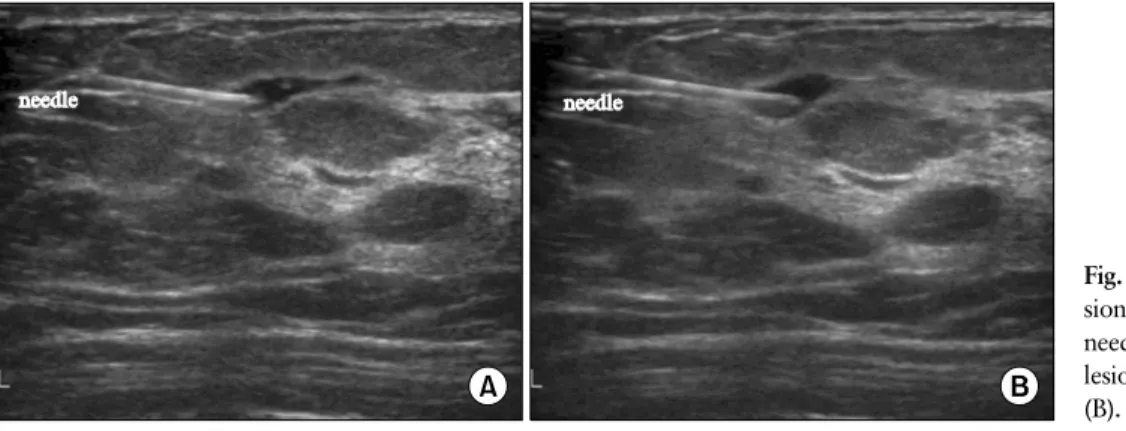
Fig. 1. Ultrasound-guided intrale- sional triamcinolone injection. A needle tip was inserted into the IGM lesion before (A) and during injection (B).

However, there is no standard consensus on the most appropriate treatment for IGM, although it have been reported that surgical excision and cortico- steroid therapy are effective in treating IGM. In ad- dition, observation without any medication was sug- gested as another IGM treatment. A complete re- gression rate of 50% was reported for patients with IGM who underwent close follow-up without any medical or surgical treatment.(7,8) The modality for IGM treatment depends mainly on the choice of the physician. The present study assessed the efficacy of intralesional triamcinolone injection in the treat- ment of IGM.

METHODS

1. Patients

This study was designed as a retrospective sin- gle-arm clinical assessment model to evaluate the outcomes of patients with IGM managed by intrale- sional steroid injection.

From May 2012 to March 2016, 31 consecutive pa- tients were diagnosed with non-puerperal mastitis by ultrasonography. All patients with non-puerperal mastitis underwent ultrasound-guided core needle biopsy, vacuum-assisted breast biopsy (VABB) using a biopsy system (Ethicon Endo-Surgery, Inc., Cin- cinnati, OH, USA), or open biopsy to determine the etiology of mastitis. Fifteen patients who were diag- nosed with acute or chronic inflammation without

granulation and 1 patient who was diagnosed with inflammatory breast cancer were excluded from this study. Finally, 15 patients who were diagnosed with IGM were included in this study.

2. Definition of IGM

A diagnosis of granulomatous mastitis was estab- lished by the histological findings of inflammatory reactions with granulomas which were composed of epitheloid histiocytes, Langhans giant cells accom- panied by lymphocytes, plasma cells, and occasional eosinophils centered in the lobule. All tissue samples were examined with hematoxylin-eosin staining as well as special staining for tuberculosis and fungal infection. Cultures for aerobic bacteria were per- formed on patients with abscess formation.

3. Intralesional steroid injection

Patients diagnosed with IGM were managed with

intralesional triamcinolone injection (Fig. 1). Forty

milligrams of triamcinolone mixed with 2% lidocaine

were injected into the IGM lesion under ultrasound

guidance. The total volume of 2% lidocaine mixed

with triamicinolone was 4 ml (triamcinolone 40

mg/ml). In cases of abscess formation, the abscess

was aspirated using a syringe, and then tri-

amcinolone was injected into the abscess pocket and

surrounding inflammatory tissue. Triamcinolone in-

jection was performed once every 1 or 2 weeks, and

repeated until the resolution of symptoms and ultra-

(3)

sonographic findings. A small dose of oral pre- dnisolone (10 mg daily) was combined in patients with multiple, large, or painful abscesses in the early period.

4. Assessments

The size of the IGM lesion was measured in each patient using ultrasonography. The largest size among multiple lesions was measured in patients with multiple IGM lesions. Individual remission was defined as individual regression of each IGM lesion in patients with multiple or recurrent IGM lesions, in- cluding solitary IGM lesion. Complete remission was defined as disappearance of all IGM lesions.

5. Statistical analysis

All statistical analyses were performed using SPSS for Window (version 16.0; SPSS, Chicago, IL, USA).

We compared the pre- and post-treatment sizes of the IGM lesion. Repeated 1-way analysis of variance (ANOVA) tests were used to compare size changes af- ter steroid injection. The level of significance was set at P < 0.05.

RESULTS

The mean age of IGM onset was 33.6 ± 4.7 years (range, 25-44 years). Among 15 IGM patients, 4 were initially diagnosed by VABB; of whom 2 were man- aged by intralesional triamcinolone injection in 3-6 months after VABB because the palpable masses were persistent and 2 were managed by the injection im- mediately after VABB. Five patients were managed by intralesional triamcinolone injection combined with a small dose of oral prednisolone (10 mg daily), and 6 patients were managed by the injection without sys- temic oral steroid administration after pathologic confirmation.

The IGM lesions were unifocal in 12 patients and multifocal in 3 patients. Multifocal lesions occurred

during local management of the existing IGM lesions and were also managed by intralesional triamcinolone injection. In 6 patients, the IGM lesions recurred at the same IGM sites less than 8 months after intrale- sional triamcinolone injection, which were managed by re-injection. In 15 patients, a total of 30 IGM le- sions, including recurrent and multifocal lesions, were managed by intralesional triamcinolone in- jection with or without oral steroid administration.

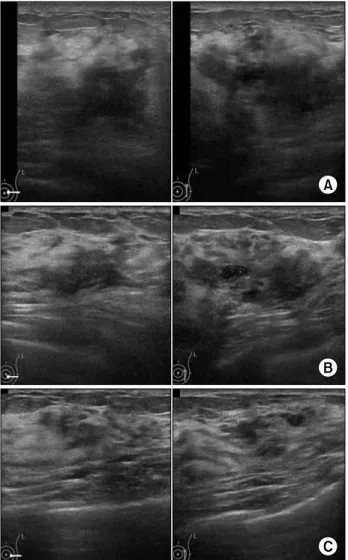
Intralesional triamcinolone injection was repeated twice in 6 lesions, 3 times in 12 lesions, and 4 times in 7 lesions, 5 times in 3 lesions, and 6 times in 2 le- sions until remission. All IGM lesions responded to intralesional triamcinolone injection (Fig. 2).

The mean pretreatment size of IGM was 22.2 ± 11.6 mm (range, 7–50 mm). The mean size of IGMs after the first and second injections was significantly decreased to 13.7 ± 8.6 mm (range, 3-38 mm) and 8.4 ± 3.9 mm (range, 0-17 mm), respectively (P < 0.001). The lesions managed by steroid injection di- rectly after VABB were excluded in size comparison because of the size reduction effect by VABB. There was no difference in size change between lesions treated by intralesional triamcinolone injection with and without oral steroid administration (P = 0.778).

The mean size of IGM after the third, fourth and fifth injections was 7.8 ± 6.1 mm (range, 0-26 mm), 6.4

± 3.0 mm (range, 4-11 mm) and 6.5 ± 3.5 (range, 4-9 mm), respectively (Fig. 3).

Two lesions showed no size reduction because of abscess formation after intralesional triamcinolone injection. At that time, the abscess was aspirated with a syringe, and triamcinolone was injected into the abscess cavity and surrounding tissue. The size of lesions was decreased at the follow-up. Two le- sions initially showed IGM with abscess, and 1 lesion initially showed IGM with abscess and cutaneous fistula.

The mean individual remission time of the IGM le-

sions (n = 30) was 37.5 ± 13.8 days (range, 15-60

(4)

Fig. 2. A 29-year-old female patient. At the time of visit, the patient had pain and a palpable hard mass in the outer quadrant of the left breast. The ultrasound probe could not compress the breast tissue due to severe pain (A). One week after intralesional triamcinolone injection, the IGM lesion was reduced to half of the initial size, and the pain almost completely disappeared (B). Two weeks after the second injection, the lesion became very small (C).

Fig. 3. Changes in the mean IGM size according to injection frequency.

days) and the mean complete remission time was 115.3 ± 75.9 days (range, 30-250 days).

The mean follow-up time was 16.6 ± 7.9 months (range, 6-36 months). Two patients were lost to fol- low-up because they moved to other cities. There were no recurrences of IGM or complications related to intralesional steroid injection under ultrasound guidance.

DISCUSSION

The etiology of IGM is unclear. Considering that IGM has been treated with oral steroids or metho- trexate treatments in real-life practice, IGM has been shown to be an autoimmune disease.(9) Altintoprak et al.(10) and Gunduz et al.(11) reported that topical steroids are effective in treating IGM with skin changes. They suggested that IGM might be a localized abnormal immune response. In our study, we attempted intralesional triamcinolone in- jection with or without oral steroid administration to treat IGM. Intralesional triamcinolone injection has been used to treat keloid, alopecia areata, and nod- ular fasciitis.(12-15) As triamicinolone has been re- ported to be effective in treating hyperactive or au- toimmune reactions, intralesional triamcinolone in- jection is thought to respond to localized breast au- toimmune reactions. The triamcinolone dose in this study was determined on the basis of that reported by previous studies of patients with capsulitis.(16)

Intralesional steroid should be injected accurately

into the IGM lesion to avoid the steroid injection re-

lated complications, such as organ injury or fat

atrophy. There have been some reports on complica-

tions, such as fat atrophy related to steroid

injection.(17,18) The breast is composed of paren-

(5)

chyma, connective tissue, and fat. When steroid is injected into fat tissue instead of the target lesion, fat atrophy and skin dimpling could occur. Ultra- sound-guided steroid injection is necessary to accu- rately target the lesion.

Conventional IGM treatment uses high-dose oral systemic prednisolone. DeHertogh et al.(19) used a dose of prednisolone 60 mg/day. Recently, lower doses of prednisolone 25 mg/day and 0.8 mg/kg/day have been shown to be effective in treating IGM.(20, 21) Steroid-induced toxicities may be related to the total dose of steroid and the cumulative duration of steroid use.(22) The purpose of steroid injection is to attain a high local concentration of steroid at the disease site, without significant systemic absorption.

It has been demonstrated that intralesional steroid injection reduces the systemic oral dose of pre- dnisolone and the risk of adverse effects associated with systemic steroid use.(23)

There is a case report on IGM treatment by VABB combined with small-dose oral steroid (5-10 mg dai- ly) administration.(24) VABB is useful for removing localized IGM tissues and has a positive effect on size reduction. We observed the effectiveness of intrale- sional steroid injection for persistent IGM lesion a few months after VABB. And the injection into VABB site immediately after VABB also showed excellent regression. The results suggest that intralesional steroid injection along with VABB could be effective in treating patients with localized IGM.

Recent studies have shown that conservative man- agement without steroid or surgical treatment re- sults in a high rate of remission, with time to reso- lution being 4 to 28 months.(25,26) Patient symptoms may persist and inflammation can be aggravated to form abscesses without treatment. This clinical con- ditions cause patients’ discomfort and anxiety.

Surgical treatment may leave undesirable skin scars and contour deformities. Compared with surgical treatment, the risk of delayed wound healing and

fistula formation after injection treatment is ne- gligible. Local control by using intralesional steroid injection could rapidly improve patients’ symptom and discomfort. Although IGM may recur after intra- lesional steroid injection, re-injection would im- prove the recurrent lesions.

The limitation of this study is the absence of the control group. Prospective, randomized, multi-cen- ter studies with control subjects and a larger sample size are needed to confirm our results. Additionally, our treatment strategy was not consistent. We first performed intralesional steroid injection to the per- sistent lesions after VABB, and then we attempted intralesional steroid injection along with small-dose oral steroid administration for multiple or relapsed IGM lesions. After gaining the positive data on the effectiveness of intralesional steroid injection, we only performed intralesional injection without sys- temic oral steroids. It is necessary to establish the standardize treatment for IGM.

CONCLUSION

Intralesional steroid injection appears to be effec- tive in treating IGM. It would be an alternative to conventional IGM therapy. Further prospective clin- ical studies are needed to determine the most suitable treatment strategy for IGM.

REFERENCES

1. Diesing D, Axt-Fliedner R, Hornung D, Weiss JM, Diedrich K, Friedrich M. Granulomatous mastitis.

Arch Gynecol Obstet 2004;269:233-6.

2. Bani-Hani KE, Yaghan RJ, Matalka II, Shatnawi NJ.

Idiopathic granulomatous mastitis: time to avoid un- necessary mastectomies. Breast J 2004;10:318-22.

3. Altintoprak F, Kivilcim T, Ozkan OV. Aetiology of idiopathic granulomatous mastitis. World J Clin Cases 2014;2:852-8.

4. Ozel L, Unal A, Unal E, Kara M, Erdoğdu E, Krand O,

et al. Granulomatous mastitis: is it an autoimmune

disease? Diagnostic and therapeutic dilemmas. Surg

(6)

Today 2012;42:729-33.

5. Binesh F, Shiryazdi M, Bagher Owlia M, Azimi S.

Idiopathic granulomatous mastitis, erythema nodosum and bilateral ankle arthritis in an Iranian woman.

BMJ Case Rep 2013. doi: 10.1136/bcr-2012-007636.

6. Yabanoğlu H, Çolakoğlu T, Belli S, Aytac HO, Bolat FA, Pourbagher A, et al. A comparative study of con- servative versus surgical treatment protocols for 77 patients with idiopathic granulomatous mastitis.

Breast J 2015;21:363-9.

7. Al-Khaffaf B, Knox F, Bundred NJ. Idiopathic gran- ulomatous mastitis: a 25-year experience. J Am Coll Surg 2008;206:269-73.

8. Lai EC, Chan WC, Ma TK, Tang AP, Poon CS, Leong HT. The role of conservative treatment in idiopathic granulomatous mastitis. Breast J 2005;11:454-6.

9. Sheybani F, Sarvghad M, Naderi HR, Gharib M.

Treatment for and clinical characteristics of gran- ulomatous mastitis. Obstet Gynecol 2015;125:801-7.

10. Altintoprak F, Kivilcim T, Yalkin O, Uzunoglu Y, Kahyaoglu Z, Dilek ON. Topical steroids are effective in the treatment of idiopathic granulomatous mastitis.

World J Surg 2015;39:2718-23.

11. Gunduz Y, Altintoprak F, Tatli Ayhan L, Kivilcim T, Celebi F. Effect of topical steroid treatment on idio- pathic granulomatous mastitis: clinical and radiologic evaluation. Breast J 2014;20:586-91.

12. Acosta S, Ureta E, Yañez R, Oliva N, Searle S, Guerra C. Effectiveness of intralesional triamcinolone in the treatment of keloids in children. Pediatr Dermatol 2016;33:75-9.

13. Shin JY, Lee JW, Roh SG, Lee NH, Yang KM. A com- parison of the effectiveness of triamcinolone and ra- diation therapy for ear keloids after surgical excision:

a systematic review and meta-analysis. Plast Re- constr Surg 2016;137:1718-25.

14. Devi M, Rashid A, Ghafoor R. Intralesional tri- amcinolone acetonide versus topical betamethasone valearate in the management of localized alopecia areata. J Coll Physicians Surg Pak 2015;25:860-2.

15. Oh BH, Kim J, Zheng Z, Roh MR, Chung KY. Treat- ment of nodular fasciitis occurring on the face. Ann Dermatol 2015;27:694-701.

16. de Jong BA, Dahmen R, Hogeweg JA, Marti RK.

Intra-articular triamcinolone acetonide injection in patients with capsulitis of the shoulder: a com- parative study of two dose regimens. Clin Rehabil 1998;12:211-5.

17. Cantürk F, Cantürk T, Aydin F, Karagöz F, Sentürk N, Turanli AY. Cutaneous linear atrophy following intralesional corticosteroid injection in the treatment of tendonitis. Cutis 2004;73:197-8.

18. Park SK, Choi YS, Kim HJ. Hypopigmentation and subcutaneous fat, muscle atrophy after local cortico- steroid injection. Korean J Anesthesiol 2013;65:S59-61.

19. DeHertogh DA, Rossof AH, Harris AA, Economou SG.

Prednisone management of granulomatous mastitis. N Engl J Med 1980;303:799-800.

20. Maffini F, Baldini F, Bassi F, Luini A, Viale G.

Systemic therapy as a first choice treatment for idio- pathic granulomatous mastitis. J Cutan Pathol 2009;

36:689-91.

21. Su FH, Liu SC, Suen JH, Chen DS, Sister Mary Ann Lou. Idiopathic granulomatous mastitis: a case suc- cessfully treated with a minimum dose of a steroid.

Chang Gung Med J 2005;28:431-5.

22. Liu D, Ahmet A, Ward L, Krishnamoorthy P, Mandel- corn ED, Leigh R, et al. A practical guide to the mon- itoring and management of the complications of sys- temic corticosteroid therapy. Allergy Asthma Clin Immunol 2013;9:30.

23. Firooz A, Tehranchi-Nia Z, Ahmed AR. Benefits and risks of intralesional corticosteroid injection in the treatment of dermatological diseases. Clin Exp Der- matol 1995;20:363-70.

24. Kuba S, Yamaguchi J, Ohtani H, Shimokawa I, Maeda S, Kanematsu T. Vacuum-assisted biopsy and steroid therapy for granulomatous lobular mastitis: report of three cases. Surg Today 2009;39:695-9.

25. Bouton ME, Jayaram L, O'Neill PJ, Hsu CH, Komenaka IK. Management of idiopathic granulomatous mastitis with observation. Am J Surg 2015;210:258-62.

26. Yukawa M, Watatani M, Isono S, Fujiwara Y, Tsujie M, Kitani K, et al. Management of granulomatous mastitis: a series of 13 patients who were evaluated for treatment without corticosteroids. Int Surg 2015;

100:774-82.

수치

Fig. 1. Ultrasound-guided intrale- intrale-sional triamcinolone injection. A  needle tip was inserted into the IGM  lesion before (A) and during injection  (B).
Fig. 3. Changes in the mean IGM size according to injection  frequency.

참조

관련 문서