pISSN: 2234-8646 eISSN: 2234-8840 https://doi.org/10.5223/pghn.2018.21.4.347
Pediatr Gastroenterol Hepatol Nutr 2018 October 21(4):347-350
PGHN
Case Report
PEDIATRIC GASTROENTEROLOGY, HEPATOLOGY & NUTRITION
Minocycline-Induced Autoimmune Hepatitis: A Rare But Important Cause of Drug-Induced Autoimmune Hepatitis
Elizabeth G. Harmon, Randolph McConnie*, and Anil Kesavan*
Department of Medicine-Pediatrics and *Section of Pediatric Gastroenterology, Rush University Medical Center, Chicago, IL, United States
Drug-induced autoimmune hepatitis (DIAIH) is an increasingly recognized form of drug-induced liver injury that leads to a condition similar to idiopathic autoimmune hepatitis. A number of drugs have been associated with DIAIH, minocy- cline is one of the most well characterized. Minocycline is a semisynthetic tetracycline antibiotic used in the treatment of acne vulgaris. Minocycline-induced autoimmune hepatitis presents with serologic and histologic features similar to idiopathic autoimmune hepatitis. However, the natural history and outcomes of these two conditions differ significantly. The majority of patients with minocycline-induced autoimmune hepatitis experience complete reso- lution of symptoms after withdrawal of the medication. Some patients may require a short course of steroids and rarely use of an immunomodulator to achieve resolution of disease. Recurrence of symptoms is rare and typically only occurs with reintroduction of minocycline. It is important for primary care providers to consider minocycline-in- duced autoimmune hepatitis when liver injury develops during minocycline therapy.
Key Words: Chemical and drug induced liver injury, Minocycline, Autoimmune hepatitis
Received:November 9, 2017, Revised:December 8, 2017, Accepted:December 11, 2017
Corresponding author: Anil Kesavan, Section of Pediatric Gastroenterology, Rush University Medical Center, 1725 W Harrison St., Suite 710, Chicago, IL 60612, United States. Tel: +1-312-942-3034, Fax: +1-312-563-2131, E-mail: [email protected]
Copyright ⓒ 2018 by The Korean Society of Pediatric Gastroenterology, Hepatology and Nutrition
This is an openaccess article distributed under the terms of the Creative Commons Attribution NonCommercial License (http://creativecommons.org/licenses/by-nc/4.0/) which permits unrestricted noncommercial use, distribution, and reproduction in any medium, provided the original work is properly cited.
INTRODUCTION
Minocycline is a semisynthetic tetracycline anti- biotic with broad antimicrobial activity that is active against Staphylococcus organisms and anaerobes [1].
It has a number of indications including treatment of urinary tract, ear, nose, and throat infections, pneu- monia, and bronchitis [2]. It is also used for treat- ment of acne vulgaris and is one of the most widely prescribed systemic antibiotics for this indication.
Minocycline has various characteristics that make it a good treatment option for acne vulgaris, including good oral absorption, enhanced tissue penetration (rapidly concentrated in sebaceous follicles), slow elimination, and improved patient compliance through once daily dosage. These benefits favor the use of minocycline over other anti-acne therapies [2].
Within this indication, it is often used for prolonged periods (months to years) in predominately young, otherwise healthy patients [3]. Its adverse effects
348 Vol. 21, No. 4, October 2018 Pediatr Gastroenterol Hepatol Nutr
Fig. 2. Increased plasma cells (H&E, ×400).
Fig. 1. Rosetting and few sinusoidal mature lymphocytes (H&E, ×200).
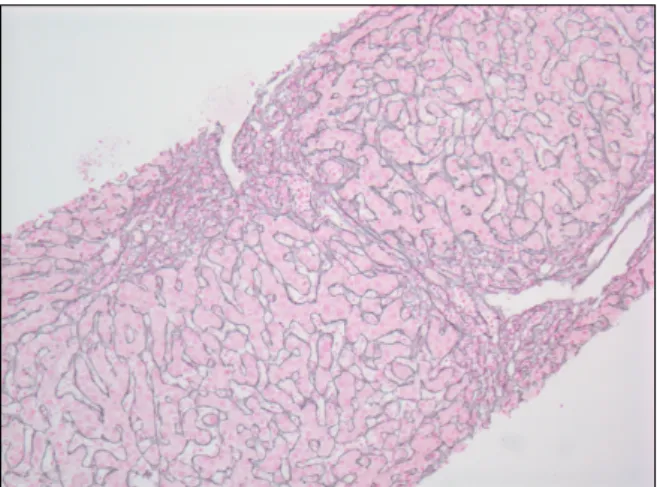
Fig. 3. Reticulin stain showing periportal fibrosis (reticulin stain, ×100).
have been well established and include transient headaches, nausea, light headedness, weakness, vertigo, and rash [1]. More serious adverse effects in- clude autoimmune phenomena such as drug-in- duced lupus, a hypersensitivity-type reaction, vascu- litis, serum sickness with arthritis, and autoimmune- like hepatitis [3,4]. We describe an adolescent male who developed minocycline-induced autoimmune hepatitis following minocycline therapy for acne vulgaris.
CASE REPORT
A previously healthy 17-year-old male presented to an emergency department with a three day history of nausea, poor appetite, pruritus, dark urine, and scleral icterus. He denied any acetaminophen or al- cohol ingestion. There were no sick contacts. He had no prior history of hepatitis. There was no family his- tory of liver disease or prior drug reactions. Vital signs were within normal limits and physical exam was significant for scleral icterus. No hepatos- plenomegaly noted. Laboratory evaluation demon- strated significant transaminitis (aspartate trans- aminase [AST], 2,229 U/L; alanine transferase [ALT], 2,247 U/L) and conjugated hyperbilirubinemia (total bilirubin, 10.2 g/dL; direct bilirubin, 5.9 g/dL).
Remainder of evaluation was normal which in- cluded: complete blood count, basic metabolic pro- file, and hepatitis panel (hepatitis A immunoglob- ulin [Ig] M, hepatitis B surface antigen, hepatitis B core antibody, hepatitis C antibody). He had been started on oral minocycline 100 g once daily and topical clindamycin five months prior for treatment of acne. Both medications were discontinued and he was referred to pediatric gastroenterology clinic for further evaluation.
He was evaluated in pediatric gastroenterology clinic four days later at which time scleral icterus and
www.pghn.org 349
Elizabeth G. Harmon, et al:Minocycline-Induced Autoimmune Hepatitis
pruritus persisted. Prior poor appetite and nausea had resolved but he did report a 3.2 kg weight loss.
He denied abdominal pain, easy bruising/bleeding, lethargy, or acholic stools. Laboratory evaluation demonstrated a positive anti-smooth muscle anti- body (1:160 titer) and elevated IgG level (1,766
g/dL). Transaminitis (ALT, 3,227 U/L; AST, 3,547 U/L) and direct hyperbilirubinemia (total bilirubin, 21.8 g/dL; direct bilirubin, 13.98 g/dL) had wors- ened but he had normal hepatic synthetic function (international normalized ratio, 1.23; prothrombin time, 13.0 seconds). Other testing was normal in- cluding: antinuclear antibody (ANA), anti-liver- kidney-microsomal (anti-LKM) antibody, cer- uloplasmin, infectious titers (Epstein-Barr virus, hepatitis A, hepatitis B, hepatitis C, human im- munodeficiency virus, rapid plasma reagin), alpha- 1-antitrypsin (A1AT) phenotype, total IgA level, tis- sue transglutaminase IgA, acetaminophen level, and urine drug screen.
Outpatient management continued and an ab- dominal ultrasound with Doppler was completed; no hepatic or biliary abnormalities were noted but there was mild splenomegaly. A liver biopsy was sched- uled and revealed prominent rosetting with in- creased plasma cells, slight increase in sinusoidal mature lymphocytes, and Stage 2 periportal fibrosis without bridging or cirrhotic nodularity. No eosino- phils were present. There was no stainable iron, cop- per, or A1AT globules (Fig. 1-3). These histologic findings were consistent with moderate to severe acute-on-chronic hepatitis (overall grade 3 to 4) sug- gestive of autoimmune hepatitis. He was diagnosed with drug-induced autoimmune-like hepatitis sec- ondary to minocycline based on these findings and overall clinical picture.
Transaminitis and direct hyperbilirubinemia per- sisted despite remaining off of minocycline.
Transaminitis peaked with ALT of 3,422 U/L, AST of 3,909 U/L and direct bilirubin peaked at 17.54 g/dL approximately two weeks after minocycline was discontinued. He was subsequently started on Prednisone with a taper over twelve weeks. He had a significant improvement in both transaminitis and
direct hyperbilirubinemia within 24 hours of start- ing Prednisone and complete normalization of labs after 12 weeks. Hepatitis did not recur after dis- continuation of prednisone. He did not undergo a re- peat liver biopsy and was followed clinically with pe- riodic monitoring of liver function tests.
DISCUSSION
The hepatotoxicity of tetracyclines has been recog- nized since 1952 [5]. While all tetracycline anti- biotics are associated with adverse hepatic reactions, the risk associated with minocycline is higher than those within this drug class [2]. The mechanism by which minocycline induces liver injury is not known.
Hepatitis may occur because minocycline is ex- tensively metabolized in the liver while the primary route of elimination of other tetracyclines is by renal clearance [2,5]. Minocycline may also induce the up- regulation or cause the production of specific anti- gens that activate an immune response leading to hepatitis in individuals with unique HLA character- istics [2,4,6]. A higher frequency of HLA-B*35:02 was found in patients with minocycline-induced au- toimmune hepatitis than in the general population [7]. The exact mechanism by which HLA-B*35:02 in- creases risk of developing minocycline-induced au- toimmune hepatitis is not known. Molecular dock- ing data suggests that minocycline is capable of binding within the HLA-B*35:02 antigen binding cleft. This may alter the profile of peptide ligands normally bound to HLA-B*35:01 leading to pre- sentation of novel cell surface antigens [7]. Another hypothesis is that minocycline metabolites bind HLA, forming complexes recognized by CD8+ cyto- toxic T-lymphocytes [7]. Of note, risk alleles asso- ciated with idiopathic autoimmune hepatitis, HLA-DRB1*03:01 and HLA-DRB1*04:01, were not found to be risk factors for minocycline-induced au- toimmune hepatitis [8].
Minocycline-induced autoimmune hepatitis gen- erally occurs after a long period of exposure to the drug. The average onset is within 2 years of exposure, but may occur as soon as a few months [2,9]. Clinical
350 Vol. 21, No. 4, October 2018 Pediatr Gastroenterol Hepatol Nutr
features include fever, polyarthralgia, rash, anorex- ia, fatigue, nausea, abdominal pain, and jaundice [1]. The serological markers of the disease are similar to idiopathic autoimmune hepatitis. It is charac- terized by seropositivity for ANA, ASMA, and an- ti-LKM. Perinuclear anti-neutrophil cytoplasmic an- tibodies may also be present. Elevation in IgG level (>1.5 times the upper limit of normal) is also seen [1,9]. Histologic features of minocycline-induced autoimmune hepatitis are identical to autoimmune hepatitis. Chronic active hepatitis with periportal lymphoplasmacytic inflammation and piecemeal necrosis is typical [6]. Presence of eosinophils, which would be suggestive of a drug reaction, is rare [4,10].
Bridging fibrosis and cirrhosis are uncommon find- ings [9]. Minocycline-induced hepatitis occurs twice as frequently in women as it does in men. Onset of symptoms in women also occurs with a shorter dura- tion of minocycline therapy when compared to men [9].
Symptoms and laboratory abnormalities typically resolve within 3 months after discontinuation of the medication [10]. Depending on severity of disease, use of oral corticosteroids such as prednisone may be required. Steroids should be continued for a multiple month course with an eventual taper. In certain cas- es, hepatic disease may be so severe as to require use of immunomodulators such as azathioprine. This ad- ditional therapy should be considered in cases with no improvement in transaminitis after both dis- continuation of minocycline and at least 1-month use of corticosteroids. After treatment initiation, pa- tients should be clinically followed for 1 year after normalization of lab values. Recurrence of disease does not typically occur unless the patient is re-chal- lenged with minocycline [10].
While the overall risk of liver disease with minocy- cline is low, it is important that pediatricians and pri- mary care providers are aware of the risk given how commonly the medication is prescribed for adoles- cent acne. At this time, no predictive factors have been described to help identify those individuals at greatest risk to develop minocycline-induced auto-
immune hepatitis. Furthermore, no recommendations currently exist for surveillance during minocycline therapy [11]. It is essential to recognize the adverse effects of minocycline early as withdrawal of the medication results in rapid clinical improvement.
Providers should consider the possibility of drug-in- duced autoimmune hepatitis when liver dysfunction develops during minocycline therapy.
REFERENCES
1. Teitelbaum JE, Perez-Atayde AR, Cohen M, Bousvaros A, Jonas MM. Minocycline-related autoimmune hepatitis.
Arch Pediatr Adolesc Med 1998;152:1132-9.
2. Lawrenson RA, Seaman HE, Sundstrom A, Williams TJ, Farmer RDT. Liver damage associated with mino- cycline in use in acne. Drug Saf 2000;23:333-49.
3. Elkayam O, Yaron M, Caspi D. Minocycline-induced autoimmune syndromes: an overview. Semin Arthritis Rheum 1999;28:392-7.
4. Goldstein NS, Bayati N, Silverman AL, Gordon SC.
Minocycline as a cause of drug-induced autoimmune hepatitis. Report of four cases and comparison with au- toimmune hepatitis. Am J Clin Pathol 2000;114:591-8.
5. Ramakrishna J, Johnson AR, Banner BF. Long-term minocycline use for acne in healthy adolescents can cause severe autoimmune hepatitis. J Clin Gastroen- terol 2009;43:787-90.
6. Bjornsson E, Talwalkar J, Treeprasertsuk S, Kamath PS, Takahashi N, Sanderson S, et al. Drug-induced au- toimmune hepatitis: clinical characteristics and prognosis. Hepatology 2010;51:2040-8.
7. Urban T, Nicoletti P, Chalasani N, Serrano J, Stolz A, Daly AK, et al. Minocycline hepatotoxicity: clinical characterization and identification of HLA-B⁄35:02 as a risk factor. J Hepatol 2017;67:137-44.
8. De Boer YS, Kosinski AS, Urban TJ, Zhao Z, Long N, Chalasani N, et al. Features of autoimmune hepatitis in patients with drug-induced liver injury. Clin Gastroenterol Hepatol 2017;15:103-12.e2.
9. Czaja AJ. Drug-induced autoimmune-like hepatitis.
Dig Dis Sci 2011;56:958-76.
10. Ford TJ, Dillon JF. Minocycline hepatitis. Eur J Gastroenterol Hepatol 2008;20:796-9.
11. Chamberlain MC, Schwarzenberg SJ, Akin EU, Kurth MH. Minocycline-induced autoimmune hepatitis with subsequent cirrhosis. J Pediatr Gastroenterol Nutr 2006;42:232-5.