• 검색 결과가 없습니다.

New Era of Management Concept on Pulmonary Fibrosis with Revisiting Framework of Interstitial Lung Diseases

N/A
N/A
Protected

Academic year: 2021

Share "New Era of Management Concept on Pulmonary Fibrosis with Revisiting Framework of Interstitial Lung Diseases"

Copied!
6
0
0

로드 중.... (전체 텍스트 보기)

전체 글

(1)

Dawn of Interstitial Lung Disease Diagnosis

Beginning of the diagnosis of interstitial lung disease was begun with pneumoconiosis of quarryers in Europe

1

. Virchow has been a professor of pathology at the Humboldt-Universität zu berlin since 1956 and laid the foundation for human pa- thology. Furthermore, Liebow

2

has classified interstitial pneu- monia and pulmonary fibrosis based on the lung anatomy.

At that time, many interstitial pneumonia/pulmonary fibrosis was the collective term for pneumoconiosis due to coal lung mining with superior upper lobe

3

.

Later, Katzenstein and Fiorelli

4

, who found a form different from that of usual interstitial pneumonia (UIP), with a uniform temporal phase and a favorable prognosis, proposed to distin- guish it as nonspecific interstitial pneumonia/fibrosis.

At that time, treatment and management recommenda-

New Era of Management Concept on Pulmonary Fibrosis with Revisiting

Framework of Interstitial Lung Diseases

Arata Azuma, M.D., Ph.D.

1

and Luca Richeldi, M.D., Ph.D.

2

1

Department of Pulmonary Medicine and Oncology, Nippon Medical School, Tokyo, Japan,

2

Respiratory Medicine, Fondazione Policlinico A. Gemelli IRCCS, Rome, Italy

The disease concept of interstitial lung disease with idiopathic pulmonary fibrosis at its core has been relied on for many years depending on morphological classification. The separation of non-specific interstitial pneumonia with a relatively good prognosis from usual interstitial pneumonia is also based on the perception that morphology enables predict the prognosis. Beginning with dust-exposed lungs, initially, interstitial pneumonia is classified by anatomical pathology.

Diagnostic imaging has dramatically improved the diagnostic technology for surviving patients through the introduction of high-resolution computed tomography scan. And now, with the introduction of therapeutics, the direction of diagnosis is turning. It can be broadly classified into to make known the importance of early diagnosis, and to understand the importance of predicting the speed of progression/deterioration of pathological conditions. For this reason, the insight of “early lesions” has been discussed. There are reports that the presence or absence of interstitial lung abnormalities affects the prognosis. Searching for a biomarker is another prognostic indicator search. However, as is the case with many chronic diseases, pathological conditions that progress linearly are extremely rare. Rather, it progresses while changing in response to environmental factors. In interstitial lung disease, deterioration of respiratory functions most closely reflect prognosis. Treatment is determined by combining dynamic indicators as faithful indicators of restrictive impairments.

Reconsidering the history being classified under the disease concept, the need to reorganize treatment targets based on common pathological phenotype is under discussed. What is the disease concept? That aspect changes with the discussion of improving prognosis.

Keywords: Idiopathic Pulmonary Fibrosis; Interstitial Pneumonia; Pathological Phenotype; Progressive Fibrosis

Address for correspondence: Arata Azuma, M.D., Ph.D.

Department of Pulmonary Medicine and Oncology, Nippon Medical School, 1-1-5 Sendagi, Bunkyo-ku, Tokyo 133-8602, Japan

Phone: 81-3-3822-2131, Fax: 81-44-711-8333 E-mail: [email protected]

Received: Jan. 26, 2020 Revised: Feb. 28, 2020 Accepted: Mar. 10, 2020 Published online: Apr. 29, 2020

cc

It is identical to the Creative Commons Attribution Non-Commercial License (http://creativecommons.org/licenses/by-nc/4.0/).

Copyright © 2020

The Korean Academy of Tuberculosis and Respiratory Diseases.

(2)

tions were not addressed in these tones, and were solely aimed at classification and discrimination. In addition, patho- logical forms with good responsiveness to corticosteroids (CS) treatment were taken up as bronchiolitis obliterans organizing pneumonia

5

.

The Dawn of Therapeutics

In 1999, the therapeutic effect of interferon gamma (IFNg) on idiopathic pulmonary fibrosis (IPF) was reported

6

. This is the first paper on the possibility of treatment and manage- ment of IPF. Nine patients with IPF treated with interferon gamma 1b or as same number for placebo reveled significant improvement of total lung capacity and oxygen concentra- tion in blood at rest. However, it has been found that IPF is a heterogeneous population in response to treatment with IFNg (Figure 1)

7,8

.

Numerous treatment trials have been attempted, most of which have failed. At that time, the optimal metrics for treat- ment were not authorized. Therefore, the evaluation indices of clinical trials were various and considered to be one of the reasons for failure of clinical trials.

1. Pirfenidone clinical trials

In the meantime, we looked for a time-lapse follow-up test in the United States

9

and sought a way to evaluate drug ef- ficacy in a shorter time. As a result, we considered that the evaluation by comparing the oxygen consumption, which incorporates the ability to support constant velocity exercise

using a treadmill, could be a better index. Therefore, we con- ducted a search for the effectiveness of pirfenidone for IPF

10

. As a result, while there were cases in which the improvement of oxygen availability could be evaluated over time (Figure 2), there were cases in which the improvement was impossible, and it was difficult to establish a method for evaluating clinical trials. Rather, we set a highly reproducible vital capacity (VC) as the primary endpoint and planned a new pirfenidone veri- fication test to prove the effectiveness of IPF in reducing VC

11

.

Large scale studies were also conducted in Europe and

Step up to large scale from small scale trials of interferon- for IPF

Pilot n=18

%FVC >55%

%FVC >55%

Phase-2 study large scale

Phase-3 study huge scale GIPF-007 (INSPIRE)

n=827

GIPF-001 n=330 RCT small study

Figure 1. Diversity of background characteristics affecting failed result of primary endpoint in interferon gamma trials for idiopathic pulmonary fibrosis. IPF: idiopathic pulmonary fibrosis; RCT: ran- domized clinical trial; FVC: forced vital capacity. Adapted from Azuma and Usuki. Respir Med CME 2008;1:75-81, with permission of Elsevier

12

.

0 100

95

90

85

80

75 SpO2

Time (sec) 20 40 60 80 100 120 140 160 180 200 220

240

260 280 300 320

340 360 0

100

95

90

85

80

75 SpO2

Time (sec) 30 60 90 120

150 180 210 240

270 300 330 360 Examples of SpO change during walking in

responders to prifenidone

2

A case with 50 m/min walking A case with 60 m/min walking

Baseline 3 m 6 m 9 m

Baseline 3 m 6 m 9 m

Figure 2. Two examples who responded to pirfenidone and improved oxygen desaturation area during the study. Oxygen desaturation lines

measured every 3 months, came up to the value at rest along time periods. These are thought to be good responder. SpO

2

: saturation of pulse

oximetry.

(3)

the United States with forced vital capacity (FVC) set as the primary endpoint. One of the twin trials met the primary end- point, but the other did not meet.

One of the reasons is that IPF patients enrolled in clinical tri- als include many cases with emphysema complications, and the placebo group did not show a significant decrease in FVC, which resulted in an unprovable pirfenidone efficacy

13

. In the next planned ASCEND (A Study of Cardiovascular Events in Diabetes) trial, IPF patients meeting the restriction of forced expiratory volume in 1 second >70% were registered, and the comparison of the FVC decline rate of IPF patients without emphysema was examined, and the primary endpoint meet was successfully achieved

14

. IPF is a very heterogeneous dis- ease unit in time and space.

2. Corticosteroid benefits (PANTHER trial)

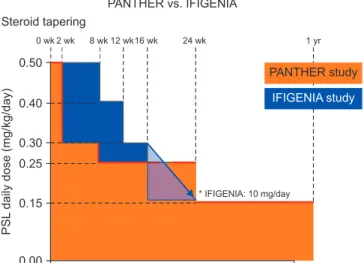
IPF has long used CS as a symptomatic treatment. However, as a result of the PANTHER test designed to evaluate the effi- cacy of CS, N-acetylcysteine, and azathioprine, it was conclud- ed that ‘CS is harmfull.’ Looking at the details of the results, the reason was that the frequency of hospitalization and death in- creased significantly in the CS combination group compared to the placebo control group

15

. Analysis of the entry protocol shows that the course of CS decreasing up to 15 weeks, at which hospitalization and death increases, is extremely fast compared to CS in the IFNg trial. In my understanding, the schedule for the CS decreasing process has a very significant impact (Figure 3).

Therefore, the above did not conclude the pros and cons of low-dose CS. The usefulness of CS for populations that are not easily distinguished in daily clinical practice, such as unclas- sifiable idiopathic interstitial pneumonias (IIPs) and interstitial pneumonia with autoimmune features (IPAF), suggesting the involvement of immunological conditions. Furthermore, the combination of anti-fibrotic drugs with CS should be evaluated.

3. Nintedanib trials for IPF (TMORROW, INPULSIS-1, -2, and INPULSIS-ON)

Nintedanib is the next anti-fibrotic drug treatment trial for IPF that has been enthusiastically started around 2010. The TMORROW study was conducted as a dose-finding study, and the recommended dose was 150 mg twice daily

16

. The INPULSIS-1 and -2 tests, which were conducted as proof of concept tests, were conducted in 13, 17 countries and 98, 107 facilities, respectively, and ended in October 2013 (Table 1). As a result, the annual reduction in FVC was reduced to about 50% in both tests. Based on the results of this clinical trial, Pharmaceuticals and Medical Devices Agency (PMDA) approved production and clinical use following U.S. Food and Drug Administration (FDA) and European Medicines Agency approvals

17

. In the INPULSIS-ON study, which was continued as a post-marketing extension study, some cases were having treatment duration for reached 5 years, and as a mid-term

Table 1. Comparison of randomized control trials of nintedanib

Trial name Start End No. of

countries No. of

facilities No. of

patients* Nintedanib

300 Placebo

TMORROW 2007 Sep 14 2010 Jun 10 25 92 432 (428) 86, 86, 86, 85

85

INPULSIS-1

2011 May 9 2013 Oct 9 13 98 515 (513) 309 204

INPULSIS-2

2011 May 3 2013 Oct 15 17 107 551 (548) 329 219

INPULSIS-ON 2012 Jul 2 2017 Sep 12

23 166 1,031 423, 638

§

SENSCIS 2015 Nov 30 2018 Nov 28 32 194 580 (576) 288 288

INBUILD 2017 Feb 23 2019 Aug 12 15 153 663 (663) 332 331

*Enroll (administration).

50, 100, 200, and 300 mg.

INPULSIS pooled data: number of participating countries, n=24, number of participating facilities, n=205.

Data base lock.

§

P to N, N to N.

0.50

0.40

0.30 0.25

0.15

0.00

PSLdailydose(mg/kg/day)

PANTHER study

IFIGENIA study

0 wk 2 wk 8 wk 12 wk16 wk 24 wk 1 yr

* IFIGENIA: 10 mg/day Steroid tapering

PANTHER vs. IFIGENIA
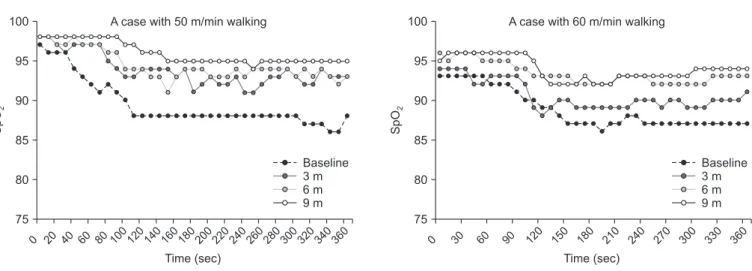
Figure 3. Comparison of tapering protocol of prednisolone (PSL) in between PANTHER and IFIGENIA trials

15,18

. Relatively rapid decline of PSL dosage in PANTHER trial comparing with in IFIGENIA trial.

Withdrawal PSL might affect on patients outcome in these trials.

(4)

report, suppression of FVC reduction was maintained in ac- tive treatment changed from the placebo group and in the continuation group from active treatment and of these treat- ment group expressed the time to first acute exacerbation was significantly prolonged

19

.

Based on the summary assessment of the INPULSIS trials, a reduction in FVC of 24 weeks could not predict a decrease in FVC of the next 24 to 52 weeks, but could predict mortality.

Based on these results, we need to understand that blocking an FVC% >10% decrease is directly linked to improving the prognosis of IPF patients

20

.

Non-IPF Treatment Trials: SENSCIS, INBUILD, INMARK (Biomarker), PFD for Unclassifiable Interstitial Lung Disease

Because of the poorest prognosis of interstitial lung dis- ease (ILD), IPF has become a target for new drug develop- ment, and many therapeutic drug developments have been attempted. But is non-IPF good? The answer is no. The IPF international diagnostic guidelines exclude similar ILDs such as IPAF and Unclassifiable IIPs in order to accurately diagnose IPF, but the prognostic curve is never good

21

. In other words, even if the disease concept is different, the pathology present- ing a UIP pattern has a poor prognosis. In recent years, these treatment trials have been planned and randomized clinical trials have been conducted. The SENSCIS trial is one of them, in which clinical trials have been developed with an unprec- edented number of cases for systemic sclerosis (SSc-ILD). As a result, SSc-ILD within 7 years of diagnosis was recruited to clinical trials, and the annual FVC decline in the nintedanib group was halved compared to the placebo group

22

. FVC was suppressed by the combined use of mycophenolate, but the suppression of nintedanib was an additive effect, and the combined use also ensured the safety. However, no significant difference was found between the two groups for modified Rodnan skin score and Saint George’s Respiratory Question- naire as secondary endpoints. We proved that nintedanib suppressed not only IPF but also Fc reduction of SSc-ILD, and now FDA and PMDA have approved, and clinical treatment prescription was enabled on December 20, 2019.

In addition, the inhibitory effect of nintedanib was exam- ined for re-categorized disease groups using a common dis- ease behavior called progressive fibrosis. The following criteria were applied to the progressive entry criteria.

Patients were required to meet one of the following criteria for ILD progression in the 24 months before screening, de- spite management:

(1) Relative decline in FVC ≥10% predicted, (2) Relative de- cline in FVC ≥5 to <10% predicted and worsened respiratory symptoms, (3) Relative decline in FVC ≥5 to <10% predicted and increased extent of fibrosis on high-resolution computed

tomography (HRCT), and (4) Worsened respiratory symp- toms and increased extent of fibrosis on HRCT. Fifty percent (1), 30% (2 and 3), and 20% (4) were included in the study, respectively.

As a result, treatment with nintedanib significantly sup- pressed the decrease in FVC, and this effect was the result of obtaining a bimorph with IPF and SSc-ILD

23

.

On the other hand, in pirfenidone treatment studies, studies have been conducted on unclassifiable IIPs to study the sup- pression of progression of progressive fibrosis. Similarly, the result of suppressing the decrease in FVC has been obtained

24

. For the time being, it has been suggested that suppression of a decrease in FVC may lead to improved prognosis.

Is IPF a Disease Concept? Thinking Based on Disease Behavior: Reconsideration of Disease Concept, Thinking Change of

Functional Impairment from Definition by the Shape

It is time to rethink “What is a disease concept?” In the past, there is a history of morphological classification. Katzenstein, who separated non-specific interstitial pneumonitis from IPF, noted its good prognosis and differences in treatment, and suggested excluding it from conventional IIPs

5

. However, the need for early diagnosis makes it more difficult to distinguish IPF from other IPs. The prognosis of ILA on diagnostic imag- ing is worse than the group without ILA

25

. Even with varying degrees of poor prognosis, does a lung with ILA need to con- tinue to identify opportunities for intervention?

IPF/UIP is the disease concept with the worst prognosis from a pathological and diagnostic point of view. However, comparing the annual decline rate of FVC, which is a prognos- tic surrogate marker, the decrease in FVC of IPF is various and not uniform. Many researchers acknowledge that the behav- ior of the disease itself is not linear, but rather diverse

26

.

Based on treatment discussions, the search for biomark- ers for prognostic factors has begun. What is the marker that predicts the decline in FVC? CRPM is a strong candidate

27

. However, it was not promising for nintedanib evaluation of treatment

28

.

In addition to predicting FVC decline, predicting diffusing capacity for carbon monoxide (DLco) decline may be even more important. Predicting advanced pulmonary arterial hypertension mergers is important as a prognostic indica- tor. Increased gene expression of Periostin correlates with a decrease in DLco, implying a potential prognostic value

29

. Furthermore, complications such as “acute exacerbation” and

“complications with lung cancer” greatly influence the prog- nosis. Risk reduction of complications can significantly affect prognosis. We believe that ‘Risk reduction of complications’

can be a therapeutic target in the future.

(5)

The prognosis of IPF, a chronic respiratory disease, depends on various factors. In the era of steroid use, even if the symp- toms were alleviated, infections were likely to be induced, which might have worsened the prognosis of life.

In recent years, scientific evidence has gradually accumu- lated, but regarding treatment choices for IPF patients, not only evidence based on scientific medicine, but rather ‘shared decision making (SDM)’ using patient’s own values based on disclosure of evidence-based medicine (EBM) information leading to SDM is recommended. It is necessary to select treatments that respect individual patient values with empa- thy. EBM needs SDM, and SDM needs EBM. Patients need both

30,31

.

Authors’ Contributions

Conceptualization: Azuma A. Methodology: Azuma A. For- mal analysis: Azuma A, Richeldi L. Data curation: Azuma A, Richeldi L. Validation: Azuma A. Investigation: Azuma A. Writ- ing - original draft preparation: Azuma A. Writing - review and editing: Richeldi L. Approval of final manuscript: all authors.

Conflicts of Interest

No potential conflict of interest relevant to this article was reported.

Funding

No funding to declare.

References

1. von Leube WO. Spezielle Diagnose der Inneren Krankheiten.

Ein Handbuch fur Arzte und Studierende, nach Vorlesungen bearbeitet [Special diagnosis of internal diseases: manual for doctors and students, edited after lectures]. Leipzig: F.C.W.

Vogel; 1895.

2. Liebow AA. Definition and classification of interstitial pneu- monias in human pathology. Prog Respir Res 1975;8:1-33.

3. Liebow AA. Pathology of coal workers’ pneumoconiosis. IMS Ind Med Surg 1970;39:118-9.

4. Katzenstein AL, Fiorelli RF. Nonspecific interstitial pneumo- nia/fibrosis: histologic features and clinical significance. Am J Surg Pathol 1994;18:136-47.

5. Epler GR, Colby TV, McLoud TC, Carrington CB, Gaensler EA. Bronchiolitis obliterans organizing pneumonia. N Engl J Med 1985;312:152-8.

6. Ziesche R, Hofbauer E, Wittmann K, Petkov V, Block LH. A

preliminary study of long-term treatment with interferon gamma-1b and low-dose prednisolone in patients with idio- pathic pulmonary fibrosis. N Engl J Med 1999;341:1264-9.

7. King TE Jr, Albera C, Bradford WZ, Costabel U, Hormel P, Lancaster L, et al. Effect of interferon gamma-1b on survival in patients with idiopathic pulmonary fibrosis (INSPIRE): a multicentre, randomised, placebo-controlled trial. Lancet 2009;374:222-8.

8. Azuma A. Pirfenidone: antifibrotic agent for idiopathic pul- monary fibrosis. Expert Rev Respir Med 2010;4:301-10.

9. Raghu G, Johnson WC, Lockhart D, Mageto Y. Treatment of idiopathic pulmonary fibrosis with a new antifibrotic agent, pirfenidone: results of a prospective, open-label Phase II study. Am J Respir Crit Care Med 1999;159:1061-9.

10. Azuma A, Nukiwa T, Tsuboi E, Suga M, Abe S, Nakata K, et al. Double-blind, placebo-controlled trial of pirfenidone in patients with idiopathic pulmonary fibrosis. Am J Respir Crit Care Med 2005;171:1040-7.

11. Taniguchi H, Ebina M, Kondoh Y, Ogura T, Azuma A, Suga M, et al. Pirfenidone in idiopathic pulmonary fibrosis. Eur Respir J 2010;35:821-9.

12. Azuma A, Usuki J. Novel therapy for idiopathic pulmonary fibrosis: how to evaluate the efficacy? Respir Med CME 2008;1:75-81.

13. Noble PW, Albera C, Bradford WZ, Costabel U, Glassberg MK, Kardatzke D, et al. Pirfenidone in patients with idiopathic pul- monary fibrosis (CAPACITY): two randomised trials. Lancet 2011;377:1760-9.

14. King TE Jr, Bradford WZ, Castro-Bernardini S, Fagan EA, Glaspole I, Glassberg MK, et al. A phase 3 trial of pirfenidone in patients with idiopathic pulmonary fibrosis. N Engl J Med 2014;370:2083-92.

15. Idiopathic Pulmonary Fibrosis Clinical Research Network, Raghu G, Anstrom KJ, King TE Jr, Lasky JA, Martinez FJ. Pred- nisone, azathioprine, and N-acetylcysteine for pulmonary fibrosis. N Engl J Med 2012;366:1968-77.

16. Richeldi L, Costabel U, Selman M, Kim DS, Hansell DM, Nich- olson AG, et al. Efficacy of a tyrosine kinase inhibitor in idio- pathic pulmonary fibrosis. N Engl J Med 2011;365:1079-87.

17. Richeldi L, du Bois RM, Raghu G, Azuma A, Brown KK, Cos- tabel U, et al. Efficacy and safety of nintedanib in idiopathic pulmonary fibrosis. N Engl J Med 2014;370:2071-82.

18. Demedts M, Behr J, Buhl R, Costabel U, Dekhuijzen R, Jansen HM, et al. High-dose acetylcysteine in idiopathic pulmonary fibrosis. N Engl J Med 2005;353:2229-42.

19. Crestani B, Huggins JT, Kaye M, Costabel U, Glaspole I, Ogura T, et al. Long-term safety and tolerability of nintedanib in patients with idiopathic pulmonary fibrosis: results from the open-label extension study, INPULSIS-ON. Lancet Respir Med 2019;7:60-8.

20. Richeldi L, Crestani B, Azuma A, Kolb M, Selman M, Stansen

W, et al. Outcomes following decline in forced vital capacity

in patients with idiopathic pulmonary fibrosis: results from

(6)

the INPULSIS and INPULSIS-ON trials of nintedanib. Respir Med 2019;156:20-5.

21. Oldham JM, Adegunsoye A, Valenzi E, Lee C, Witt L, Chen L, et al. Characterisation of patients with interstitial pneumonia with autoimmune features. Eur Respir J 2016;47:1767-75.

22. Distler O, Highland KB, Gahlemann M, Azuma A, Fischer A, Mayes MD, et al. Nintedanib for systemic sclerosis-associated interstitial lung disease. N Engl J Med 2019;380:2518-28.

23. Flaherty KR, Wells AU, Cottin V, Devaraj A, Walsh SL, Inoue Y, et al. Nintedanib in progressive fibrosing interstitial lung dis- eases. N Engl J Med 2019;381:1718-27.

24. Maher TM, Corte TJ, Fischer A, Kreuter M, Lederer DJ, Moli- na-Molina M, et al. Pirfenidone in patients with unclassifiable progressive fibrosing interstitial lung disease: a double-blind, randomised, placebo-controlled, phase 2 trial. Lancet Respir Med 2020;8:147-57.

25. Putman RK, Hatabu H, Araki T, Gudmundsson G, Gao W, Nishino M, et al. Association between interstitial lung abnor- malities and all-cause mortality. JAMA 2016;315:672-81.

26. Raghu G, Collard HR, Egan JJ, Martinez FJ, Behr J, Brown KK, et al. An official ATS/ERS/JRS/ALAT statement: idiopathic pulmonary fibrosis: evidence-based guidelines for diagnosis

and management. Am J Respir Crit Care Med 2011;183:788- 824.

27. Jenkins RG, Simpson JK, Saini G, Bentley JH, Russell AM, Braybrooke R, et al. Longitudinal change in collagen degrada- tion biomarkers in idiopathic pulmonary fibrosis: an analysis from the prospective, multicentre PROFILE study. Lancet Respir Med 2015;3:462-72.

28. Maher TM, Stowasser S, Nishioka Y, White ES, Cottin V, Noth I, et al. Biomarkers of extracellular matrix turnover in patients with idiopathic pulmonary fibrosis given nintedanib (IN- MARK study): a randomised, placebo-controlled study. Lan- cet Respir Med 2019;7:771-9.

29. Nance T, Smith KS, Anaya V, Richardson R, Ho L, Pala M, et al.

Transcriptome analysis reveals differential splicing events in IPF lung tissue. PLoS One 2014;9:e97550.

30. Whitney SN, McGuire AL, McCullough LB. A typology of shared decision making, informed consent, and simple con- sent. Ann Intern Med 2004;140:54-9.

31. Hoffmann TC, Montori VM, Del Mar C. The connection be-

tween evidence-based medicine and shared decision mak-

ing. JAMA 2014;312:1295-6.

수치

Figure 2. Two examples who responded to pirfenidone and improved oxygen desaturation area during the study
Table 1. Comparison of randomized control trials of nintedanib

참조

관련 문서

a prospective analysis of 50 cases. Preoperative staging of non-small-cell lung cancer with positron-emission tomography. Staging of non- small-cell lung cancer

Randomised, double blind, placebo controlled study of fluticasone propionate in patients with moderate to severe chronic obstructive pulmonary disease: the

Randomised comparison of fluorouracil, epidoxorubicin and methotrexate (FEMTX) plus supportive care with supportive care alone in patients with non-resectable

Tenofovir alafenamide versus tenofovir disoproxil fumarate for the treatment of patients with HBeAg-negative chronic hepatitis B virus infection: a randomised, double-blind,

Severe disease activity and cy- tomegalovirus colitis are predictive of a nonresponse to infliximab in patients with ulcerative colitis. Guidelines for the management of

Sedation, analgesia, and cardiorespiratory function in colonoscopy using midazolam combined with fentanyl or propofol.. A randomized, double-blind, phase 3 study

The associations of hepatic steatosis and fibrosis using fatty liver index and BARD score with cardiovascular outcomes and mortality in patients with new‑onset type 2

Anti‑cyclic citrullinated peptide antibody testing is used to diagnose rheumatoid arthritis and associated with interstitial lung disease in RA.. Herein, we