저작자표시-비영리-변경금지 2.0 대한민국 이용자는 아래의 조건을 따르는 경우에 한하여 자유롭게 l 이 저작물을 복제, 배포, 전송, 전시, 공연 및 방송할 수 있습니다. 다음과 같은 조건을 따라야 합니다: l 귀하는, 이 저작물의 재이용이나 배포의 경우, 이 저작물에 적용된 이용허락조건 을 명확하게 나타내어야 합니다. l 저작권자로부터 별도의 허가를 받으면 이러한 조건들은 적용되지 않습니다. 저작권법에 따른 이용자의 권리는 위의 내용에 의하여 영향을 받지 않습니다. 이것은 이용허락규약(Legal Code)을 이해하기 쉽게 요약한 것입니다. Disclaimer 저작자표시. 귀하는 원저작자를 표시하여야 합니다. 비영리. 귀하는 이 저작물을 영리 목적으로 이용할 수 없습니다. 변경금지. 귀하는 이 저작물을 개작, 변형 또는 가공할 수 없습니다.
A Thesis for the Degree of Doctor of Philosophy
Application of Pulsed Ohmic Heating
for Inactivation of Foodborne Pathogens
식중독 균 제어를 위한 펄스 옴 가열의 활용
August, 2018
Sang-Soon Kim
Department of Agricultural Biotechnology
College of Agriculture and Life Sciences
I
Abstract
Kim, Sang-Soon Department of Agricultural Biotechnology The Graduate School Seoul National University
Pulsed ohmic heating has attracted attention as one of the novel thermal technologies enabling rapid and uniform heating. In pulsed ohmic heating, heat is generated inside of food by means of electric current passing through the food component different from conventional heating which heat transfer is implemented with conduction and convection. Even though foodborne pathogens can be inactivated effectively by pulsed ohmic heating compared to conventional heating, food sample still can be damaged by a high temperature of pulsed ohmic heating processing. In this regard, pulse ohmic heating should be optimized before applied in the food industry to the consumer's preference for minimum processing. Applicability of pulsed ohmic heating for inactivation of foodborne pathogens was identified in this thesis, and specific objectives of this study were, (i) to evaluate pulsed ohmic heating technology for inactivation of foodborne pathogens, (ii) to combine pulsed ohmic heating with other sanitizing technologies, (iii) to identify combined inhibitory effect of milk fat and lactose for inactivation of foodborne
II
pathogens by pulsed ohmic heating, (iv) to develop multiphysics model of pulsed ohmic heating for inactivation of foodborne pathogens in tomato juice, and (v) to develop and apply continuous-type pulsed ohmic heating system.
First, it was investigated whether foodborne pathogens can be inactivated effectively by pulsed ohmic heating without causing electrode corrosion and quality degradation of food sample. Buffered peptone water and tomato juice inoculated with pathogens (Escherichia coli O157:H7, Salmonella enterica serovar Typhimurium, Listeria monocytogenes) were treated with pulsed ohmic heating at different frequencies (0.06 – 1 kHz). Foodborne pathogens were inactivated effectively by pulsed ohmic heating. Moreover, electrode corrosion and quality degradation of tomato juice were not observed regardless of frequency. Therefore, pulse waveform was used in subsequent studies.
Because high temperature by individual treatment of pulsed ohmic heating can damage the food quality, developed pulsed ohmic heating was combined with various essential oil components or UV-C irradiation to reduce the heating temperature and time. Carvone, eugenol, thymol, and citral, which are registered for use as flavorings, were chosen to combine with pulsed ohmic heating. Combination treatment of pulsed ohmic heating with citral showed the most synergistic bactericidal effect against foodborne pathogens in buffered peptone water followed by thymol, eugenol, and carvone. Cell membrane destruction by combination treatment and the loss of cell membrane potential by essential oil
III
components were proposed as the bactericidal mechanism. When applied in salsa, inactivation of bacterial pathogens was the greatest for the combination treatment with thymol followed by with citral, eugenol, or carvone. Because color (b* values) of salsa were improved by combination treatment with thymol compared to pulsed ohmic treated samples, the combination treatment can be used effectively to pasteurize salsa. Combination treatment of pulsed ohmic heating with UV-C irradiation also showed a synergistic effect for pathogen inactivation. Cell membrane damage increased in all three pathogens synergistically with the simultaneous treatment, while an additive effect was observed for lipid peroxidation values. Therefore, the proposed synergistic bactericidal mechanism of the simultaneous treatment consists of an acceleration of lipid peroxidation, which results in a synergistic effect on cell membrane pore formation. Sequential treatment of UV-C irradiation after pulsed ohmic heating showed a less bactericidal effect than the reversed sequential treatment or the simultaneous treatment in buffered peptone water. Heat shock proteins expressed after pulsed ohmic heating and recovery process after UV-C irradiation were supposed to contribute this phenomenon. On the other hand, the reductions in the levels of all three pathogens in tomato juice were not significantly different between the simultaneous and sequential treatments regardless of the treatment sequence (p > 0.05), and the color and lycopene content of tomato juice were not significantly deteriorated by the simultaneous treatment (p > 0.05). Therefore, not only
IV
combination treatment of pulsed ohmic heating with thymol but also with UV-C irradiation can be used as an effective hurdle technology ensuring microbiological safety.
An empirical model was developed to predict the inactivation of foodborne pathogens by pulsed ohmic heating depending on the fat and lactose content (%) in milk. The combined effect of fat and lactose content was analyzed by response surface methodology with a central composite design. Both lactose and fat had an inhibitory effect on the inactivation of all three pathogens by pulsed ohmic heating. Inactivation of E. coli O157:H7 has a quadratic relationship with lactose and fat, whereas the cross product of treatment time with fat or lactose has a significant effect on the inactivation of S. Typhimurium and L. monocytogenes (p < 0.05). The developed model predicted the inactivation of all three pathogens well within the range of experimental conditions, and color change and lipid oxidation were not observed following pulsed ohmic heating. Even though pH values decreased slightly after treatment, the changes would not affect the product quality. Therefore, treatment conditions of pulsed ohmic heating should be decided carefully considering the nutrient content and type of pathogens when using this method to pasteurize milk.
Multiphysics modelling was conducted to analyze the pulsed ohmic heating more precisely. When pulsed ohmic heating processing of tomato juice was analyzed using multiphysics software, a cold spot was observed in the lower part
V
of the pulsed ohmic heating chamber, where some pathogens survived even though all pathogens were inactivated elsewhere of the ohmic heating chamber. The developed computational simulation model was verified for heating rate and pathogen inactivation. Furthermore, inactivation of acid-adapted foodborne pathogens, the heat resistance of which increased significantly, was predicted by the developed simulation model and validated with no significant differences between predicted and experimental results (p > 0.05). Therefore, juice processors can utilize a multiphysics model effectively to adjust processing time to achieve 5 log reductions of foodborne pathogens under the environmental conditions in which heat resistance of pathogens could be altered.
Even though the batch-type pulsed ohmic heating apparatus was used effectively to identify the characteristics of pulsed ohmic heating in the previous chapters, it is well known that continuous-type apparatus ohmic heating is more advantageous for bulk handling of juice products in the food industry. Therefore, continuous-type pulsed ohmic heating was developed, and effects of flow rate, voltage, and preheating on the heating rate and pathogen inactivation were identified. Both heating rate of samples and reduction rates of pathogens increased corresponding to decreased flow rate or increased treatment voltage. Preheating was used as an alternative way to prevent accelerated heating rate by increased voltage, and help inactivate pathogens in the early treatment stage without affecting the heating rate. Because preheating with additional equipment is
VI
inconvenient and occupies valuable space, sequential three-cylinder type pulsed ohmic heating was developed. By applying the developed sequential pulsed ohmic heating, 5 log reductions were achieved for all three pathogens without preheating under the same treatment conditions. Therefore, sequential continuous-type pulsed ohmic heating can be effectively utilized to control foodborne pathogens in the juice industry.
In conclusion, the performance of pulsed ohmic heating for inactivation of foodborne pathogens varied significantly depending on the type of treatment to be combined, nutritional conditions of a food sample, and device type. Therefore, it is recommended to optimize pulsed ohmic heating to inactivate foodborne pathogens without quality degradation of food. Moreover, multiphysics modeling can be used effectively in optimizing the pulsed ohmic heating processing.
Keywords: pulsed ohmic heating, foodborne pathogen, food processing, electrode corrosion, food quality, combination treatment, empirical modeling, multiphysics modeling, computer simulation, continuous-type system
VII
Contents
Abstract...I
Contents...VII
List of Figures...XIV
List of Tables...XVII
Chapter I. Evaluation of pulsed ohmic heating technology for
inactivation of foodborne pathogens...1
I-1. Introduction...2
I-2. Materials and Methods...5
Analysis of electrode corrosion...5
Bacterial cultures and cell suspension………...5
Sample preparation and inoculation...6
Propidium iodide uptake test...7
Bactericidal treatment...8
Bacterial enumeration………...8
Color and lycopene measurement…...9
Statistical analysis...10
VIII
Effect of waveform and frequency on the electrode corrosion...11
PI uptake ability………...13
Inactivation of bacterial pathogens………...15
Color and lycopene content of tomato juice………...18
I-4. Discussion...20
Chapter II. Combination treatments of pulsed ohmic heating with
other sanitizing technologies………...24
Chapter II-1. Combination treatments of pulsed ohmic heating with various essential oil components………...25
II-1.1. Introduction...26
II-1.2. Materials and Methods...29
Bacterial cultures and cell suspension………...29
Sample preparation and inoculation…...29
Essential oil components preparation…...30
Bactericidal treatment...30
Bacterial enumeration...34
PI uptake test...34
DiBAC4(3) uptake test………...34
IX
Statistical analysis...36
II-1.3. Results...37
Bactericidal effect of essential oil components, pulsed ohmic heating, and combination treatments in buffered peptone water……..…...37
PI and DiBAC4(3) uptake ability...39
Application of essential oil components, pulsed ohmic heating, and combination treatments in salsa...42
Color and lycopene content of salsa...44
II-1.4. Discussion...46
Chapter II-2. Combination treatment of pulsed ohmic heating with UV-C irradiation………..………...50
II-2.1. Introduction...51
II-2.2. Materials and Methods...53
Bacterial cultures and cell suspension………...53
Sample preparation and inoculation…...53
Bactericidal treatment...54
Bacterial enumeration...58
GInaFit analysis...58
PI uptake test…...59
X
SYBR green I test...60
Color and lycopene measurement………...61
Statistical analysis...61
II-2.3. Results...63
Inactivation of foodborne pathogens subjected to UV-C irradiation, pulsed ohmic heating, and simultaneous treatment………...63
PI uptake, DPPP, and SYBR green I test values of foodborne pathogens subjected to UV-C irradiation, pulsed ohmic heating, and simultaneous treatment………..………..65
Inactivation of foodborne pathogens subjected to pulsed ohmic heating and UV-C irradiation sequentially or simultaneously…...68
Color and lycopene content of tomato juice…...70
II-2.4. Discussion...73
Chapter III. Combined inhibitory effect of milk fat and lactose for
inactivation of foodborne pathogens by pulsed ohmic
heating………....79
III-1. Introduction...80
III-2. Materials and Methods...83
XI
Sample preparation and inoculation…...83
Experimental design…...84
Bactericidal treatment…...86
Bacterial enumeration...86
Modeling and verification...86
Color, pH, and lipid oxidation measurement………….…...88
Statistical analysis...89
III-3. Results and discussion...90
Reductions of pathogens subjected to pulsed ohmic heating in milk of various lactose and fat content...………...90
Predictive modeling based on response surface methodology….…..93
Validation of the predictive model………...97
Color, pH, and lipid oxidation values…..…...102
Chapter IV. Multiphysics modeling of pulsed ohmic heating for
inactivation of foodborne pathogens in tomato juice..………..105
IV-1. Introduction...106
IV-2. Materials and Methods...109
Model parameters………..………….………...109
Cell suspension preparation and inoculation…...113
XII
Bactericidal treatment…..…………...114
Microbial enumeration………...114
Equations for modeling……….…...115
Computer simulation setup……...118
Statistical analysis...120
IV-3. Results and discussion...121
The thermal resistance of non-acid-adapted foodborne pathogens...121
Computational analysis of pulsed ohmic heating………...124
Verification of computer simulation………...127
Prediction and verification of acid-adapted pathogens...131
Chapter V. Development and application of continuous-type
pulsed ohmic heating system………..………..…………..136
V-1. Introduction...137
V-2. Materials and Methods...139
Bacterial cultures and cell suspension………..………...139
Sample preparation and inoculation…………...139
Continuous-type pulsed ohmic heating apparatus...140
Bactericidal treatment...142
Bacterial enumeration...142
XIII
Statistical analysis...144 V-3. Results and discussion...145 Effect of flow rate and treatment voltage on heating rate and pathogen inactivation………..………….………..……….145 Effect of preheating on the pathogen inactivation……..………...150 Application in tomato juice processing…..……….……...153 Development and application of three sequential cylinder type treatment chamber…..………...157
References...161
XIV
List of Figures
Fig. I-1. Concentration of titanium ions migrated into tomato juice subjected to
ohmic heating at different waveforms and frequencies...12
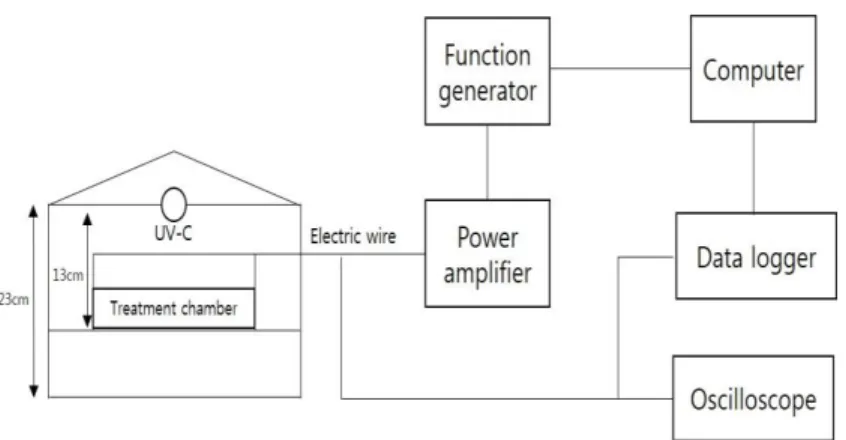
Fig. II-1. Schematic diagram of the pulsed ohmic heating system (A) and
treatment chamber (B) at Seoul National University...32
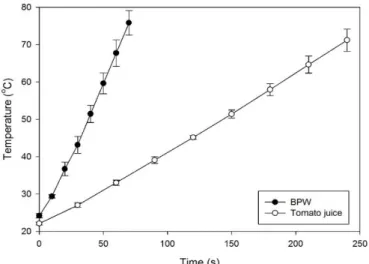
Fig. II-2. Temperature histories of buffered peptone water and salsa subjected to
pulsed ohmic heating without essential oil components...33
Fig. II-3. Reduction of E. coli O157:H7, S. Typhimurium, and L. monocytogenes
subjected to pulsed ohmic heating, individual essential oil treatments, and combination treatments in buffered peptone water...38
Fig. II-4. Reduction of E. coli O157:H7, S. Typhimurium, and L. monocytogenes
subjected to pulsed ohmic heating, individual essential oil, and combination treatments in salsa...43
Fig. II-5. Schematic diagram of a combination treatment system of pulsed ohmic
heating and UV-C irradiation at Seoul National University...56
Fig. II-6. Temperature history of buffered peptone water and tomato juice
subjected to pulsed ohmic heating………...57
Fig. II-7. Cell membrane damage (A) and lipid peroxidation (B) values of E. coli
XV
pulsed ohmic heating, and simultaneous treatment...66
Fig. III-1. Response surface 3D contour plot indicating the effect of lactose and
fat content on inactivation of E. coli O157:H7, S. Typhimurium, and L.
monocytogenes subjected to pulsed ohmic heating for 100 s………..………...96
Fig. IV-1. Dimension and position of point 1,2, and 3 of pulsed ohmic heating
chamber…….…...119
Fig. IV-2. Simulated velocity distribution, temperature distribution, and
concentration of E. coli O157:H7 following 45 s pulsed ohmic heating treatment……….126
Fig. IV-3. Simulated and experimental temperatures of tomato juice at points 1,
2, and 3………...129
Fig. IV-4. Simulated and experimental inactivation curves of E. coli O157:H7, S.
Typhimurium, and L. monocytogenes………..………..……....130
Fig. V-1. Continuous-type pulsed ohmic heating system at Seoul National
University….………..……….141
Fig. V-2. Temperature histories of pulsed ohmic treated buffered peptone water at
fixed voltage (9.43 Vrms/cm) and varying flow rate (A) and fixed flow rate (0.4
XVI
Fig. V-3. Populations of E. coli O157:H7, S. Typhimurium, and L. monocytogenes
in buffered peptone water subjected to pulsed ohmic heating at varying flow rate and treatment volume……….……….……..…...148
Fig. V-4. Populations of E. coli O157:H7, S. Typhimurium, and L. monocytogenes
in buffered peptone water subjected to pulsed ohmic heating with varying voltage and treatment volume……….………...149
Fig. V-5. Populations of E. coli O157:H7, S. Typhimurium, and L. monocytogenes
in buffered peptone water subjected to pulsed ohmic heating with varying initial temperature and treatment volume of 150 ml….………...………...152
Fig. V-6. Populations of E. coli O157:H7, S. Typhimurium, and L. monocytogenes
in tomato juice subjected to pulsed ohmic heating with varying initial temperature and treatment volume of 150 ml……….………….………...155
XVII
List of Tables
Table I-1. PI uptake values of E. coli O157:H7, S. Typhimurium, and L.
monocytogenes subjected to pulsed ohmic heating at different frequencies...14
Table I-2. Reduction of E. coli O157:H7, S. Typhimurium, and L. monocytogenes
in buffered peptone water and tomato juice subjected to pulsed ohmic heating at different frequencies...16
Table I-3. Resuscitated injured cells of E. coli O157:H7, S. Typhimurium, and L.
monocytogenes in buffered peptone water or tomato juice subjected to pulsed
ohmic heating at different frequencies...17
Table I-4. Quality aspects of tomato juice subjected to pulsed ohmic heating at
different frequencies………...19
Table II-1. PI uptake values of E. coli O157:H7, S. Typhimurium, and L.
monocytogenes subjected to pulsed ohmic heating, essential oil and combination
treatments...40
Table II-2. DiBAC4(3) values of E. coli O157:H7, S. Typhimurium, and L.
monocytogenes subjected to individual essential oil treatments...41
Table II-3. Color and lycopene content of salsa subjected to pulsed ohmic heating
or combination treatments...45
XVIII
monocytogenes in buffered peptone water and tomato juice following UV-C
irradiation, pulsed ohmic heating, and simultaneous treatment...….64
Table II-5. DNA damage values of E. coli O157:H7, S. Typhimurium, and L.
monocytogenes following UV-C irradiation………...67
Table II-6. Reduction levels of E. coli O157:H7, S. Typhimurium, and L.
monocytogenes in buffered peptone water and tomato juice following sequential
treatment of UV-C irradiation after pulsed ohmic heating, pulsed ohmic heating after UV-C irradiation and simultaneous treatment...69
Table II-7. Parameters of the log-linear + shoulder model for the inactivation of
E. coli O157:H7, S. Typhimurium, and L. monocytogenes in tomato juice
subjected to pulsed ohmic heating and the combination treatment...71
Table II-8. Color and lycopene content of tomato juice subjected to pulsed ohmic
heating or the combination treatment...72
Table III-1. Variables and levels used for the central composite design…...85 Table III-2. Reduction of E. coli O157:H7, S. Typhimurium, and L.
monocytogenes in milk of varying fat and lactose content subjected to pulsed
ohmic heating of varying time intervals...92
Table III-3. Analysis of variance of inactivation models of pathogens subjected
to pulsed ohmic heating...95
XIX
Typhimurium, and L. monocytogenes with significant values...99
Table III-5. Predicted and observed reduction of E. coli O157:H7, S.
Typhimurium, and L. monocytogenes subjected to pulsed ohmic heating...100
Table III-6. Accuracy factors and bias factors of E. coli O157:H7, S.
Typhimurium, and L. monocytogenes...101
Table III-7. Color, pH, and lipid oxidation values of untreated or treated samples
of different lactose and fat content...103
Table IV-1. Electrical and thermo-physical properties of materials used for
computer simulation…….………..……….112
Table IV-2. D- and z-values of E. coli O157:H7, S. Typhimurium, and L.
monocytogenes in tomato juice……….………...123
Table IV-3. Altered D- and z-values of E. coli O157:H7, S. Typhimurium, and
L. monocytogenes by acid-adaptation in tomato juice……….………..133
Table IV-4. Simulated and experimental inactivation of acid-adapted E. coli
O157:H7, S. Typhimurium, and L. monocytogenes subjected to pulsed ohmic heating………...134
Table V-1. Quality aspects of tomato juice untreated or treated with 12.14 Vrms/cm
1
Chapter I.
Evaluation of pulsed ohmic heating technology
for inactivation of foodborne pathogens
2
I-1. Introduction
Foodborne illness has long been a worldwide public health problem. The US Centers for Disease Control and Prevention (CDC) indicates that 48 million people become ill, 128,000 are hospitalized, and 3,000 die of foodborne illness in the United States each year (CDC, 2010). Harmful substances causing foodborne illness include biological, chemical, and physical hazards (NACMCF, 1992). Escherichia coli O157:H7, Salmonella Typhimurium, Listeria monocytogenes, and norovirus are representative biological hazards related to foodborne outbreaks (CDC, 2011; Scallan et al., 2011). Raw ingredients such as vegetables can become contaminated with pathogenic microorganisms via soil, water, and fertilizer. Moreover, cross-contamination during processing commonly occurs from utensils/surfaces and infected food handlers (Sun, 2016).
Thermal processing is widely employed to eliminate biological hazards in food. In conventional heating, heat transfer is achieved via conduction and convection, which cause cold spots in samples. Because pathogenic microorganisms can survive in the cold spots (Tewari and Juneja, 2008), novel thermal technologies such as radio-frequency heating, microwave heating, and ohmic heating have been proposed as alternatives to conventional heating,
3
which enable rapid and uniform heating. Among these alternative technologies, ohmic heating especially has advantages in heating uniformity, cost, and energy efficiency (Sastry et al., 2014). By virtue of these advantages, ohmic heating has been used in various food processes such as blanching, evaporation, dehydration, fermentation, and extraction (Sastry and Barach, 2000).
Electrode corrosion is a crucial obstacle when ohmic heating is used for food processing. Metal ions, which are contaminants and have toxic potential, can migrate into a food sample due to electrode corrosion. Moreover, oxygen produced during electrolysis can oxidize lipids and vitamin C (Tola et al., 2014). Several interventions have been proposed to prevent electrode corrosion. At first, inert electrodes such as titanium and platinum were introduced instead of stainless steel (Tzedakis et al., 1999). Secondly, high frequency was adopted to minimize undesired chemical reactions (Lee et al., 2013). Finally, pulsed ohmic heating with high frequency and short pulse width was suggested as a solution to reduce electrode corrosion (Samaranayake and Sastry, 2005). In Samaranayake and Sastry’s study, the application of pulsed ohmic heating was focused on the prevention of electrode corrosion. Because pathogenic bacteria and viruses are major biological hazards causing foodborne illness, pulsed ohmic heating was
4
applied to inactivate the foodborne pathogens without causing quality deterioration of food in the present study.
The aim of the present study was to evaluate pulsed ohmic heating technology for inactivation of E. coli O157:H7, S. Typhimurium, and L.
monocytogenes. Tomato juice was selected as a sample because several
outbreaks have been reported in juice products despite its acidity. Color is a fundamental quality aspect influencing consumer's preference and lycopene not only affect the color but also has an antioxidant property (Min and Zhang, 2003; Shi and Maguer, 2000). Therefore, color and lycopene content changes were examined in the present study.
5
I-2. Materials and Methods
Analysis of electrode corrosion. Analysis of electrode corrosion was
conducted according to the method performed by Lee et al. (2013). Tomato juice samples were subjected to ohmic heating with various waveforms (sine, square, triangle, and pulse) and frequencies (0.06, 0.1, and 0.2 kHz). After tomato juice reached 90oC, a 1 ml sample was collected into a polypropylene bottle and then stabilized by adding 10 ml of concentrated nitric acid (60% v/v). Concentrations of Ti (mg/kg) migrating into the tomato juice were taken as measures of electrode corrosion. Quantitative analyses of Ti were conducted by an inductively coupled plasma-mass spectrometer (820-MS; Varian, Australia). An untreated sample was used as a blank.
Bacterial cultures and cell suspension. Three strains each of E. coli
O157:H7 (ATCC 35150, ATCC 43889, ATCC 43890), S. Typhimurium (ATCC 19585, ATCC 43971, DT 104), and L. monocytogenes (ATCC 19111, ATCC 19115, ATCC 15313) were obtained from the bacteria culture collection of Seoul National University (Seoul, Korea). A single colony cultivated from frozen stocks on tryptic soy agar (TSA; Difco, Becton, Dickinson, Sparks, MD) was inoculated into 5 ml of tryptic soy broth (TSB;
6
Difco, Becton, Dickinson, Sparks, MD), incubated at 37°C for 24 h, collected by centrifugation at 4,000 × g for 20 min at 4°C, and washed three times with 0.2% peptone water (PW; Bacto, Becton, Dickinson, Sparks, MD). The final pellets were resuspended in 0.2% PW, corresponding to approximately 108 to
109 CFU/ml. Afterward, suspended pellets of the three pathogens were combined to comprise a mixed culture cocktail containing approximately equal numbers of cells of each strain of E. coli O157:H7 (107 CFU/ml), S. Typhimurium (107 CFU/ml), and L. monocytogenes (106 CFU/ml).
Sample preparation and inoculation. Sterile buffered peptone water
(BPW; Difco, Sparks, MD, pH 7.2) and pasteurized tomato juice (pH 3.6; 11.8°Brix) were used in this experiment. Each sample was stored under refrigeration (4oC) and removed, 1 h prior to inoculation, and allowed to equilibrate to room temperature (22 ± 1oC). Twenty-five ml of each sample were put in the ohmic heating chamber. Each pathogen culture (0.2 ml) was inoculated respectively for the propidium iodide uptake test whereas the three pathogens were combined to comprise a mixed culture cocktail for inactivation experiments.
7
Propidium iodide uptake test. The fluorescent dye propidium iodide (PI;
Sigma-Aldrich, P4170) was used to determine cell membrane damage. The PI uptake test was conducted according to the method described by Park and Kang (2013). BPW was subjected to pulsed ohmic heating at various frequencies until reaching 75oC. Untreated and ohmic treated BPW were centrifuged at 10,000 × g for 10 min at 4oC. Supernatants were discarded, and the cell pellets were resuspended in 5 ml phosphate-buffered saline (PBS; Corning, pH 7.4) to an optical density at 680 nm of approximately 0.2 (SpectraMax M2e; Molecular Devices, Sunnyvale, CA) for E. coli O157:H7,
S. Typhimurium, and L. monocytogenes, corresponding to approximately 107
CFU/ml. PI was added to a final concentration of 2.9 μM and incubated for 10 min. After incubation, samples were centrifuged two times under the same conditions. The final cell pellets were resuspended in 5 ml PBS and fluorescence was measured with a spectrofluorophotometer at an excitation wavelength of 493 nm and an emission wavelength of 630 nm. Fluorescence data obtained for untreated cells were subtracted from all treated values and then normalized for OD680.
PI value = (fluorescence value of treated cells/OD680) –
8
Bactericidal treatment. Ohmic heating system consisted of a function
generator (catalog number 33210A; Agilent Technologies, Palo Alto, CA), a precision power amplifier (catalog number 4510; NF Corp., Yokohama, Japan), a two-channel digital-storage oscilloscope (catalog number TDS2001C; Tektronix, Inc., Beaverton, CO), a data logger (catalog number 34970A; Agilent Technologies), and an ohmic heating chamber. BPW and tomato juice inoculated with pathogens were treated by ohmic heating with pulse waveform (0.1 duty ratio) and different frequencies (0.06, 0.2, 0.5, and 1 kHz). The electric field strength was fixed at 47.7 Vpp/cm. The target
temperatures were 70oC and 80oC for BPW and tomato juice, respectively.
Bacterial enumeration. For microbial enumeration, each treated 25 ml
sample was immediately transferred into a sterile stomacher bag (Labplas, Inc., Sainte-Julie, Quebec, Canada) containing 225 ml of sterile 0.2% PW and homogenized for 2 min using a stomacher (Easy Mix; AES Chemunex, Rennes, France). After homogenization, 1 ml samples were 10-fold serially diluted with 9 ml of sterile 0.2% PW and 0.1 ml of stomached samples or diluents were spread plated onto each selective medium. Sorbitol MacConkey (SMAC) agar (Difco), xylose lysine deoxycholate (XLD) agar (Difco), and Oxford agar base (OAB; Difco) with antimicrobial supplement (Bacto Oxford antimicrobial supplement; Difco) were used as selective media for
9
enumeration of E. coli O157:H7, S. Typhimurium, and L. monocytogenes, respectively. All plates were incubated at 37°C for 24 to 48 h before counting colonies characteristic of the pathogens.
The overlay method was used to enumerate sub-lethally injured cells of S. Typhimurium and L. monocytogenes. After cells resuscitated on TSA at 37oC for 2 h, plates were overlaid with 7 to 8 ml of selective medium (XLD or OAB). The plates were further incubated for 22 to 46 h at 37oC before colonies were counted. Phenol red agar base with 1% sorbitol (SPRAB; Difco) was used to enumerate injured cells of E. coli O157:H7. After incubation at 37°C for 24 h, typical white colonies characteristic of E. coli O157:H7 were enumerated. Randomly selected isolates from SPRAB plates were subjected to serological confirmation as E. coli O157:H7 (RIM, E. coli O157:H7 latex agglutination test; Remel, Lenexa, KS), because SPRAB is not typically used as selective agar for enumerating E. coli O157:H7.
Color and lycopene measurement. Color and lycopene content of treated
and untreated tomato juice were measured. All treated samples were cooled immediately in a crushed ice-water mixture. Color values were measured with a Minolta colorimeter (model CR400; Minolta Co., Osaka, Japan). The values for L*, a*, and b* were measured to evaluate color changes of tomato juice.
10
The parameter L* is a measure of lightness, a* is an indicator of redness, and
b* is a measure of yellowness. Lycopene content in tomato juice was
measured according to the previously described method (Lee et al., 2013). The concentrations of lycopene in tomato juice were determined using absorbance and sample weight with the following equation. Absorbance was measured with a spectrofluorophotometer at 503 nm.
Lycopene (mg/kg tissue) = A503 * 0.0312/kg sample
Statistical analysis. All experiments were replicated three times. All data
were analyzed by the analysis of variance procedure of the Statistical Analysis System (version 9.3, SAS Institute, Cary, NC) and mean values were separated using Duncan’s multiple-range test. Significant differences in the processing treatments were determined at a significance level of p = 0.05.
11
I-3. Results
Effect of waveform and frequency on the electrode corrosion. The
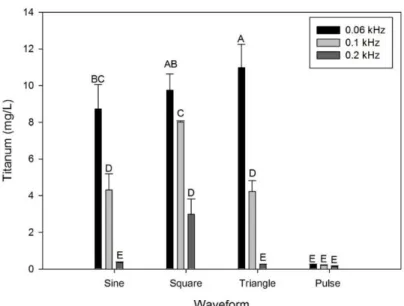
level of electrode corrosion increased significantly (p < 0.05) with decreasing frequency in sine, square, and triangle waveforms (Fig. I-1). On the other hand, frequency did not have a significant effect (p > 0.05) on the level of electrode corrosion when using a pulse waveform. The concentration of titanium ions was less than 0.25 mg/kg when using a pulse waveform regardless of frequency. Therefore, the pulse waveform was utilized in the subsequent experiments.
12
Fig. I-1. Concentration of titanium ions migrated into tomato juice subjected to ohmic heating at different waveforms and frequencies.
The results are means from three replications, and error bars indicate standard deviations. Bars with different letters are significantly different (p < 0.05).
13
PI uptake ability. PI uptake values in BPW varied with frequency and
type of pathogen (Table I-1). The values for L. monocytogenes were larger than those for E. coli O157:H7 and S. Typhimurium regardless of frequency. For each pathogen, PI uptake values at 1 kHz were significantly (p < 0.05) lower than those at 0.06 – 0.5 kHz.
14
Table I-1. PI uptake valuesof E. coli O157:H7, S. Typhimurium, and L.
monocytogenes subjected to pulsed ohmic heating at different frequencies
Frequency (kHz) E. coli O157:H7 a S. Typhimurium L. monocytogenes 0.06 4.40 ± 0.28 A 4.55 ± 0.35 A 9.09 ± 1.30 A 0.2 4.88 ± 0.90 A 4.68 ± 0.31 A 9.35 ± 0.74 A 0.5 4.29 ± 0.13 A 4.84 ± 0.31 A 9.08 ± 0.87 A 1 2.83 ± 0.14 B 3.61 ± 0.11 B 7.38 ± 0.25 B
Mean values ± standard deviation
a Values in the same column followed by the same letter are not significantly different
15
Inactivation of bacterial pathogens. Reductions (log CFU/ml) of
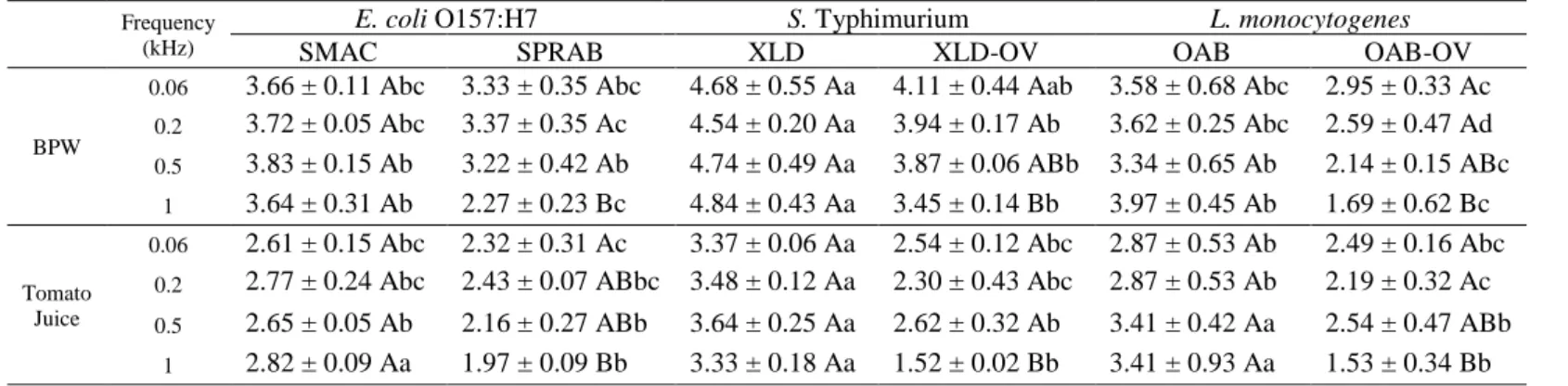
bacterial pathogens differed depending on frequency and type of sample (Table I-2). Reductions in BPW were larger than those in tomato juice for all three bacterial pathogens. For each pathogen, the levels of inactivation were not significantly different among frequencies when enumerated on the selective agar (p > 0.05). On the other hand, reductions decreased significantly at 1 kHz when enumerated on the recovery medium (p < 0.05). Resuscitated injured cell levels were calculated by subtracting the populations enumerated on selective media from those of media used for recovery (Table I-3). The level of resuscitation increased as frequency increased for all three pathogens and the values at 1 kHz were significantly larger those of lower frequencies (p < 0.05).
16
Table I-2. Reduction (log CFU/ml) of E. coli O157:H7, S. Typhimurium, and L. monocytogenes in buffered peptone water (BPW) and tomato juice subjected to pulsed ohmic heating at different frequenciesa,b
Mean values ± standard deviation
a Values in the same column for each sample followed by the same uppercase letter are not significantly different (p > 0.05). b Values in the same row followed by the same lowercase letter are not significantly different (p > 0.05).
Frequency (kHz)
E. coli O157:H7 S. Typhimurium L. monocytogenes
SMAC SPRAB XLD XLD-OV OAB OAB-OV
BPW
0.06 3.66 ± 0.11 Abc 3.33 ± 0.35 Abc 4.68 ± 0.55 Aa 4.11 ± 0.44 Aab 3.58 ± 0.68 Abc 2.95 ± 0.33 Ac 0.2 3.72 ± 0.05 Abc 3.37 ± 0.35 Ac 4.54 ± 0.20 Aa 3.94 ± 0.17 Ab 3.62 ± 0.25 Abc 2.59 ± 0.47 Ad 0.5 3.83 ± 0.15 Ab 3.22 ± 0.42 Ab 4.74 ± 0.49 Aa 3.87 ± 0.06 ABb 3.34 ± 0.65 Ab 2.14 ± 0.15 ABc
1 3.64 ± 0.31 Ab 2.27 ± 0.23 Bc 4.84 ± 0.43 Aa 3.45 ± 0.14 Bb 3.97 ± 0.45 Ab 1.69 ± 0.62 Bc Tomato
Juice
0.06 2.61 ± 0.15 Abc 2.32 ± 0.31 Ac 3.37 ± 0.06 Aa 2.54 ± 0.12 Abc 2.87 ± 0.53 Ab 2.49 ± 0.16 Abc 0.2 2.77 ± 0.24 Abc 2.43 ± 0.07 ABbc 3.48 ± 0.12 Aa 2.30 ± 0.43 Abc 2.87 ± 0.53 Ab 2.19 ± 0.32 Ac 0.5 2.65 ± 0.05 Ab 2.16 ± 0.27 ABb 3.64 ± 0.25 Aa 2.62 ± 0.32 Ab 3.41 ± 0.42 Aa 2.54 ± 0.47 ABb
17
Table I-3. Resuscitated injured cells (log CFU/ml)a of E. coli O157:H7, S. Typhimurium, and L. monocytogenes in buffered peptone water (BPW) or tomato juice subjected to pulsed ohmic heating at different frequenciesb
Frequency
(kHz) E. coli O157:H7 S. Typhimurium L. monocytogenes BPWc 0.06 0.33 ± 0.32 Aa 0.57 ± 0.16 Aa 0.63 ± 0.36 Aa 0.2 0.35 ± 0.34 Aa 0.60 ± 0.34 Aa 1.03 ± 0.37 Aa 0.5 0.61 ± 0.28 Aa 0.86 ± 0.46 ABa 1.20 ± 0.52 Aa 1 1.38 ± 0.27 Ba 1.39 ± 0.44 Ba 2.28 ± 0.32 Bb Tomato juice 0.06 0.30 ± 0.22 Aa 0.90 ± 0.18 Aa 0.38 ± 0.48 Aa 0.2 0.34 ± 0.32 ABa 1.18 ± 0.49 ABa 0.68 ± 0.41 Aa 0.5 0.50 ± 0.22 ABa 1.02 ± 0.57 Aa 0.87 ± 0.26 Aa 1 0.85 ± 0.16 Ba 1.81 ± 0.19 Bb 1.88 ± 0.59 Bb
Mean values ± standard deviation
a Resuscitated injured cell levels were calculated by subtracting the populations enumerated on selective media (SMAC, XLD, OAB) from those
of media used for recovery (SPRAB, XLD-OV, OAB-OV) in Table I-2.
b Values in the same column for each sample followed by the same uppercase letter are not significantly different (p > 0.05). c Values in the same row followed by the same lowercase letter are not significantly different (p > 0.05).
18
Color and lycopene content of tomato juice. Color values of L*, a*, and
b* and lycopene content were chosen to represent tomato juice quality (Table
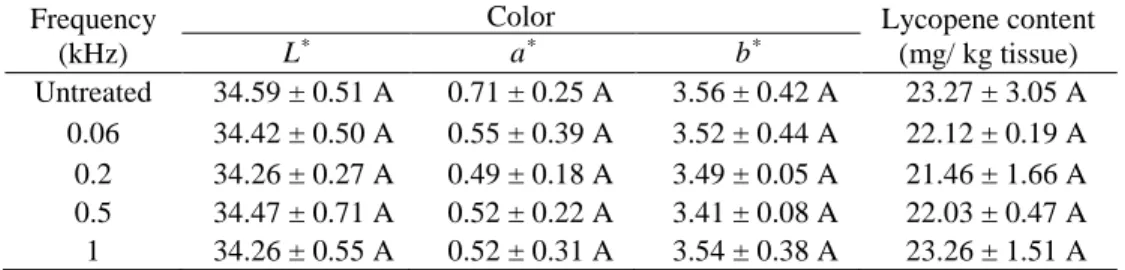
I-4). Color values of treated samples were not significantly different from those of untreated samples (p > 0.05). Lycopene content of treated samples also did not significantly differ from that of untreated samples (p > 0.05).
19
Table I-4. Quality aspects of tomato juice subjected to pulsed ohmic heating at different frequenciesa
Frequency (kHz)
Color Lycopene content
(mg/ kg tissue) L* a* b* Untreated 34.59 ± 0.51 A 0.71 ± 0.25 A 3.56 ± 0.42 A 23.27 ± 3.05 A 0.06 34.42 ± 0.50 A 0.55 ± 0.39 A 3.52 ± 0.44 A 22.12 ± 0.19 A 0.2 34.26 ± 0.27 A 0.49 ± 0.18 A 3.49 ± 0.05 A 21.46 ± 1.66 A 0.5 34.47 ± 0.71 A 0.52 ± 0.22 A 3.41 ± 0.08 A 22.03 ± 0.47 A 1 34.26 ± 0.55 A 0.52 ± 0.31 A 3.54 ± 0.38 A 23.26 ± 1.51 A Mean values ± standard deviation
a Values in the same column followed by the same letter are not significantly different
20
I-4. Discussion
The objectives of the present study were to identify the effect of frequency of pulsed ohmic heating on electrode corrosion, PI uptake, pathogen inactivation, and the food quality. The electrode corrosion rate of all waveforms, except pulse, increased as frequency decreased in the present study. Electrode corrosion occurs when the electrical double-layer capacitor is fully charged and faradic current is generated (Samaranayake and Sastry, 2014). Even though high frequency above 1 kHz is suggested as one solution to inhibit electrode corrosion in salsa processing (Lee et al., 2013), high-frequency equipment is relatively expensive, heavy, and large in size (Samaranayake et al., 2005). Pulsed ohmic heating has been suggested as another solution, but studies about the application of low frequency pulsed ohmic heating for tomato juice processing are limited. In the present study, pulsed ohmic heating prevented electrode corrosion sufficiently at low frequencies (0.06 – 0.2 kHz), different from the other waveforms.
PI uptake, which is intimately related to pore formation in the cell membrane (Park and Kang, 2013), decreased significantly at 1 kHz (p < 0.05) in the present study. When an electric field is applied to bacteria, pores can form in the cell membrane. Pore formation is dependent on electric field
21
strength, and a critical level is needed for pore formation to lead to membrane destruction. It is assumed a voltage drop across the cell membrane exceeding 1V leads to microbe inactivation (Tsong, 1990). The electric field used in the present study (47.7 Vpp/cm) was too low of itself to cause irreversible poration.
However, reversible poration caused by such a low electric field could become irreversible by means of heating (Tsong, 1990). Pore formation was also related to frequency in the present study. Decreased pore formation at high frequency was observed in previous studies, and insufficient time for charging the cell membrane at high frequency was presented as a reason similar to the previous researches (Kulshrestha and Sastry, 2003; Lima and Sastry, 1999; Somavat et al., 2012). Limited charging time at high frequency is assumed as a reason for the weakened electroporation effect.
Bacterial pathogen inactivation, as demonstrated through enumeration on selective media, did not significantly differ with frequency (p > 0.05) whereas numbers of sub-lethally injured cells significantly decreased with decreasing frequency (p < 0.05). Sub-lethally injured pathogens generated during food processing are considered a potential biological hazard because they could recover into normal cells (Wu, 2008). Several efforts to reduce the generation of injured pathogens have been reported including the near-infrared heating and lactic acid spray combination method (Ha and Kang, 2015). Even though the accelerated effect of electroporation at low frequency is not sufficient in
22
itself to inactivate bacterial pathogens, the level of resuscitation of bacterial pathogens significantly decreased at low frequencies. Therefore, low frequency pulsed ohmic heating could be used effectively to inactivate bacterial pathogens without producing sub-lethal injury.
The targeted temperature of BPW (70oC) was lower than that of tomato juice (80oC), but reductions of E. coli O157:H7, S. Typhimurium, and L.
monocytogenes were larger in BPW than in tomato juice in the present study.
There are two possible reasons for this phenomenon. First, E. coli O157:H7,
S. Typhimurium, and L. monocytogenes have strong acid resistance and can
survive under conditions of low pH, typical of many juice products (Lin et al., 1996; Phan-Thanh et al., 2000). Secondly, it is harder to inactivate pathogens in food rather than in buffer due to the protective effect of food as reported by other researchers (Espina et al., 2010; Pilavtepe-Ç elik et al., 2009).
Color values and lycopene content of tomato juice subjected to every treatment were not significantly different from untreated samples in the present study (p > 0.05). Serious quality degradation of tomato juice can occur when holding time at high temperature is too long (Shi and Maguer, 2000). Even though it is indicated that the accelerated electroporation effect at low frequency was not enough to degrade quality in the present study, non-thermal effect of ohmic heating can affect quality aspects of food products. Therefore,
23
an acceptable frequency range should be determined for maintaining the food quality.
In conclusion, pulsed ohmic heating at low frequency effectively inactivated the pathogenic bacteria without producing sub-lethal injury. The increased electroporation effect at low frequencies was suggested as a reason for the reduced resuscitation level. Moreover, quality of tomato juice was not degraded and electrode corrosion was not observed regardless of frequency. Therefore, pulsed ohmic heating could be used effectively for tomato juice processing.
24
Chapter II.
Combination treatments of
pulsed ohmic heating
25
II-1. Combination treatments of
pulsed ohmic heating
26
II-1. Introduction
Salsa is a piquant Mexican sauce, which usually consists of multiple ingredients such as fresh tomatoes, jalapeño peppers, onions, coriander leaves, and seasonings, and has become popular throughout the world (Sung and Kang, 2014). Acidic/acidified food products such as salsa and juice have been historically regarded as safe, but several foodborne illness outbreaks have been reported associated with low pH food products (Franco et al., 2010). Salsa was implicated in 70 foodborne outbreaks which resulted in 2,280 illness cases from 1990 to 2006, and Salmonella, Campylobacter jejuni, Shigella,
Staphylococcus aureus and norovirus were considered to be the major causal
agents (Franco and Simonne, 2009). Moreover, a multi-state outbreak of
Salmonella Saintpaul associated with jalapeño and serrano peppers was
reported in the United States in 2008 (CDC, 2008a). Considering the increasing popularity of Mexican restaurants in the United States, Mexican dishes that incorporate jalapeño and serrano peppers, such as salsa and guacamole, are potential vehicles of foodborne illness.
Consumer preference for natural, healthful and minimally processed foods has steadily increased for several years. Meanwhile, new challenges in food safety such as demographic changes, climate changes, and globalization of
27
trade have arisen (Doyle et al., 2015). The U. S. Centers for Disease Control and Prevention (CDC) reported that 3,000 people die because of foodborne outbreaks in the United States each year (CDC, 2010). Even though it is crucial to inactivate foodborne pathogens to ensure the microbiological safety of food, the quality of food may degrade during processing. Therefore, combining several mild preservation techniques simultaneously, namely hurdle technology, has been used to satisfy both microbiological safety and quality concerns of foods (Karatzas et al., 2000). Several recent research investigations have reported that hurdle technology can be used effectively as an alternative to individual treatments (Sagong et al., 2013; Sung et al., 2014). Essential oil components have potential as a natural agent for food preservation by means of their antimicrobial properties (Solórzano-Santos and Miranda-Novales, 2012). Because the resistance of microorganisms increases in food matrices, a high concentration of essential oil components is required to ensure microbiological safety. However, such a high concentration of essential oil components results in undesirable flavor. Therefore, combination treatments of these components with other technologies have been reported to reduce the concentration of essential oil components needed (Friedman et al., 2009; Kim and Rhee, 2016). There are many essential oil components which are known to have antimicrobial properties such as carvone, carvacrol, cinnamaldehyde, citral, decanal, eugenol, and thymol. Among them, carvone,
28
eugenol, thymol, and citral were chosen to combine with pulsed ohmic heating, since they are registered for use as flavorings in foodstuffs by the European Commission (Di Pasqua et al., 2006).
In the present study, pulsed ohmic heating was combined with various essential oil components to inactivate E. coli O157:H7, S. Typhimurium, and
L. monocytogenes effectively. The bactericidal mechanism was identified by
cell membrane damage with membrane potential. Quality aspects of salsa were determined by color and lycopene content.
29
II-1.2. Materials and Methods
Bacterial cultures and cell suspension. Three strains each of E. coli
O157:H7 (ATCC 35150, ATCC 43889, ATCC 43890), S. Typhimurium (ATCC 19585, ATCC 43971, DT 104), and L. monocytogenes (ATCC 19111, ATCC 19115, ATCC 15313) were obtained from the bacteria culture collection of Seoul National University (Seoul, South Korea). Stock and working cultures were prepared according to the method previously described in chapter I-2. Mixed culture cocktail contain approximately equal numbers of cells of each strain of E. coli O157:H7 (109 CFU/ml), S. Typhimurium (109 CFU/ml), and L. monocytogenes (108 CFU/ml).
Sample preparation and inoculation. Sterile BPW and pasteurized salsa
(pH 3.7) were used in the present experiment. Each sample was stored in a refrigerator (4oC) and removed 1 h prior to inoculation to equilibrate to room temperature (22 ± 1oC). Pasteurized salsa was purchased at a local grocery
store (Seoul, South Korea), and contained no chemical preservatives and included tomatoes, jalapeño peppers, onions, garlic, and distilled vinegar. Fifty ml (BPW) or g (salsa) of each sample were put into the pulsed ohmic chamber. A mixed culture cocktail (0.2 ml) was inoculated into each prepared
30
sample before treatment. The final bacterial populations were 106-107 CFU/g for E. coli O157:H7 and S. Typhimurium and 105-106 CFU/g for L.
monocytogenes.
Essential oil components preparation. Carvone, eugenol, thymol, and
citral were purchased from Sigma-Aldrich (St. Louis, MO). Each essential oil component was mixed with 99.5% ethanol (concentration of stock solution = 100 x of the working concentration) and used within 1 week after preparation (Kim and Rhee, 2016). The ethanol concentration in the final product was 0.99%.
Bactericidal treatment. Inoculated samples were treated with essential
oil components, pulsed ohmic heating, or combination treatment of pulsed ohmic heating and essential oil components. Concentration of essential oil components (1 mM) and treatment time (60 s for BPW and 38 s for salsa) were selected based on preliminary experiments. The pulsed ohmic heating system (Fig. II-1A) consisted of a function generator, a precision power amplifier, a two-channel digital-storage oscilloscope, a data logger, and a chamber (Fig. II-1B). The function generator produced various waveforms at frequencies from 1 mHz to 10 MHz and a maximum output level of 5 V. The signals generated through the power amplifier were amplified up to a maximum
31
output of 141 V alternating current (AC). The signals expanded by the power amplifier were delivered to each of two titanium electrodes. The two-channel digital storage oscilloscope was used to measure signals, including waveform, frequency, voltage, and current. K-type thermocouples were inserted at the center of the ohmic heating chamber and temperatures were recorded at 0.6 s intervals by a data logger. The distance between the two electrodes was 4 cm, and the cross-sectional area was 60 cm2. Samples without or with essential oil components were subjected to pulsed ohmic heating (0.05 duty ratio, 500 Hz). Electric field strengths were 13.3 Vrms/cm and 11.5 Vrms/cm for BPW and salsa,
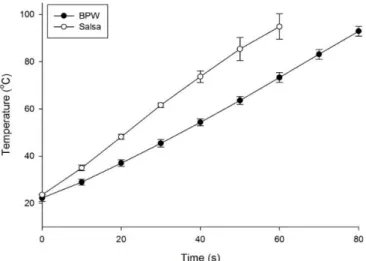
respectively. Addition of essential oil components did not significantly (p > 0.05) influence the temperature history (Fig. II-2). Samples were taken after each treatment, and populations of surviving microorganisms were enumerated.
32 (A)
(B)
Fig. II-1. Schematic diagram of the pulsed ohmic heating system (A) and treatment chamber (B) at Seoul National University (Seoul, Korea).
33
Fig. II-2. Temperature histories of buffered peptone water (BPW) and salsa subjected to pulsed ohmic heating (0.05 duty ratio, 500 Hz) without essential oil components. Electric field strengths were 13.3 Vrms/cm and 11.5
Vrms/cm for BPW and salsa, respectively. The temperature history was not
significantly influenced by the addition of 1.0 mM essential oil components (p > 0.05).
34
Bacterial enumeration. For microbial enumeration, each treated 50 ml (g)
sample was immediately transferred into a sterile stomacher bag containing 100 ml of sterile 0.2% PW (4oC) and homogenized for 2 min using a stomacher. After homogenization, 1 ml samples were 10-fold serially diluted with 9 ml of sterile 0.2% PW and 0.1 ml of stomached or diluted samples were spread plated onto each selective or non-selective medium. SMAC agar, XLD agar, and OAB with antimicrobial supplement were used as selective media for enumeration of E. coli O157:H7, S. Typhimurium, and L. monocytogenes, respectively. All plates were incubated at 37°C for 24 to 48 h before counting colonies characteristic of the pathogens. The overlay method described in chapter I-2 was used to recover sub-lethally injured cells of S. Typhimurium and L. monocytogenes. SPRAB was used to recover injured cells of E. coli O157:H7.
PI uptake test. PI was used to determine cell membrane damage. The PI
uptake test was conducted according to the method described in chapter I-2. BPW was subjected to each treatment under the same conditions as for bactericidal treatments.
DiBAC4(3) uptake test. The fluorescent dye Bis (1,3-dibutylbarbituric
35
potential. BPW was subjected to each essential oil treatment under the same conditions as for antimicrobial treatments. Untreated and treated inoculated BPW was centrifuged at 10,000 × g for 10 min at 4oC. Supernatants were discarded, and the cell pellets were resuspended in 1 ml PBS. DiBAC4(3) was
added to a final concentration of 2.5 μg/ml for E. coli O157:H7 and S. Typhimurium, and incubated for 15 min at 37oC. For L. monocytogenes, DiBAC4(3) was added to a final concentration of 0.5 μg/ml, and incubated for
2 min at 25oC. After incubation, samples were centrifuged two more times under the same conditions. The final cell pellets were resuspended in 1 ml PBS and fluorescence was measured with a spectrofluorophotometer at an excitation wavelength of 488 nm and an emission wavelength of 525 nm.
Color and lycopene measurement. The color and lycopene content of
untreated and treated samples were measured. Treatment times for pulsed ohmic heating and each combination treatment were chosen based on preliminary experiments to ensure 5 log reductions of all three bacterial pathogens. All treated samples were cooled immediately in a crushed ice-water mixture. Color values were measured with a Minolta colorimeter. The values for L*, a*, and b* were measured to evaluate color changes of salsa. Lycopene content in salsa was measured according to the method previously described in chapter I-2.
36
Statistical analysis. All experiments were replicated three times. All data
were analyzed by the analysis of variance procedure of the Statistical Analysis System and mean values were separated using Duncan’s multiple-range test. Significant differences in the processing treatments were determined at a significance level of p = 0.05.
37
II-1.3. Results
Bactericidal effect of essential oil components, pulsed ohmic heating, and combination treatments in BPW. The combination treatment of pulsed
ohmic heating with citral or thymol exhibited a larger bactericidal effect than combination treatment with carvone or eugenol in BPW (Fig. II-3). Combination treatment with citral exhibited a synergistic effect for inactivation of E. coli O157:H7, S. Typhimurium, and L. monocytogenes on both selective and resuscitation media. Combination treatment with thymol exhibited a synergistic effect for inactivation of E. coli O157:H7 or S. Typhimurium, but not for L. monocytogenes. On the other hand, combination treatments with carvone or eugenol did not exhibit a synergistic effect for inactivation of any of the three pathogens. Reductions of all three pathogens by the combination treatments were less than 2.5 log CFU/ml and were not significantly different from the sum of essential oil and pulsed ohmic heating treatments (p > 0.05).
38
Fig. II-3. Reduction (log CFU/ml) of E. coli O157:H7, S. Typhimurium, and L. monocytogenes subjected to pulsed ohmic heating (OH), individual essential oil treatments, and combination treatments in buffered peptone water. Populations were enumerated using resuscitation media (A) and
selective media (B).
39
PI and DiBAC4(3) uptake ability. PI uptake values of all three pathogens
were significantly larger for combination treatments of pulsed ohmic heating with citral or thymol (p < 0.05) than with carvone or eugenol (Table II-1). PI uptake values of E. coli O157:H7 subjected to combination treatment with citral and thymol were 31.02 and 26.20, respectively, which were significantly larger (p < 0.05) than with carvone (8.67), eugenol (8.30), and individual pulsed ohmic heating (1.47). PI uptake values of S. Typhimurium and L.
monocytogenes showed the same trend as that of E. coli O157:H7. DiBAC4(3)
uptake values of all three pathogens were significantly larger (p < 0.05) in thymol than in carvone or eugenol treated samples (Table II-2). DiBAC4(3)
uptake value of E. coli O157:H7 subjected to thymol treatment was 842.73, which was significantly larger (p < 0.05) than that of carvone (7.36) or eugenol (-1.06). The same trend was observed for S. Typhimurium and L.
40
Table II-1. PI uptake valuesof E. coli O157:H7, S. Typhimurium, and L.
monocytogenes subjected to pulsed ohmic heating, essential oil and
combination treatmentsa
Mean values ± standard deviation
a Values in the same column followed by the same letter are not significantly different
(p > 0.05).
b OH: individual pulsed ohmic heating treatment
Carvone, Eugenol, Citral, Thymol: individual essential oil treatment
OH + Carvone, Eugenol, Citral, Thymol: combination treatment of ohmic and essential oil
E. coli O157:H7 S. Typhimurium L. monocytogenes
OHb 1.47 ± 0.62 A -3.99 ± 3.70 A 30.27 ± 16.06 B Carvone 1.52 ± 1.51 A -1.49 ± 2.65 AB -1.19 ± 0.64 A Eugenol 0.78 ± 3.69 A -1.26 ± 2.10 AB 5.35 ± 0.64 AB Citral 1.01 ± 3.37 A -3.69 ± 5.83 AB 4.52 ± 4.39 AB Thymol 2.61 ± 0.68 A 1.92 ± 3.78 B 12.87 ± 4.76 AB OH + Carvone 8.67 ± 2.88 A 2.73 ± 4.59 B 63.12 ± 23.29 C OH + Eugenol 8.30 ± 4.19 A 2.77 ± 1.37 B 70.69 ± 12.19 C OH + Citral 31.02 ± 13.0 B 16.47 ± 3.45 C 132.71 ± 19.73 D OH +Thymol 26.20 ± 9.37 B 15.21 ± 5.86 C 112.63 ± 20.17 D
41
Table II-2. DiBAC4(3) values of E. coli O157:H7, S. Typhimurium, and L.
monocytogenes subjected to individual essential oil treatmentsa
Mean values ± standard deviation
a Values in the same column followed by the same letter are not significantly different
(p > 0.05).
E. coli O157:H7 S. Typhimurium L. monocytogenes
Carvone 7.36 ± 0.82 A -3.30 ± 35.92 A 55.44 ± 19.3 A Eugenol -1.06 ± 12.2 A 173.60 ± 142.1 A 108.45 ± 15.6 B Citral 32.65 ± 5.97 A 1144.83 ± 291.8 B 132.78 ± 16.3 BC Thymol 842.73 ± 84.3 B 1065.83 ± 238.0 B 154.41 ± 8.96 C
42
Application of essential oil components, pulsed ohmic heating, and combination treatments in salsa. The combination treatment of pulsed
ohmic heating with thymol in salsa exhibited the largest bactericidal effect followed by combination treatments with citral, eugenol, and carvone (Fig. II-4). Combination treatment with thymol treatments exhibited a synergistic effect for inactivation of E. coli O157:H7, S. Typhimurium, and L.
monocytogenes on both selective and resuscitation media. Combination
treatment with citral treatments exhibited a synergistic effect for inactivation of S. Typhimurium, but not for E. coli O157:H7 or L. monocytogenes. Combination treatments of pulsed ohmic heating with carvone or eugenol treatment did not exhibit a synergistic effect for inactivation of any of three pathogens. Reductions of all three pathogens by the combination treatments were less than 2.8 log CFU/g and were not significantly different from the sum of the essential oil and pulsed ohmic heating treatments (p > 0.05).
43
Fig. II-4. Reduction (log CFU/ml) of E. coli O157:H7, S. Typhimurium, and L. monocytogenes subjected to pulsed ohmic heating (OH), individual essential oil, and combination treatments in salsa. Populations were
enumerated using resuscitation media (A) and selective media (B). Ca : carvone, Eu : eugenol, Ci : citral, Th : thymol
44
Color and lycopene content of salsa. Color values of salsa were
improved by the combination treatment of pulsed ohmic heating with thymol compared to combination treatment with carvone or individual pulsed ohmic treatment (Table II-3). Quality aspects (color value and lycopene content) of combination treatment with thymol treated samples were not significantly different from those of untreated samples (p > 0.05). On the other hand, the b* value of pulsed ohmic treated samples and L* value of combination treatment with carvone treated samples were significantly different from those of untreated samples (p < 0.05).
45
Table II-3. Color and lycopene content of salsa subjected to pulsed ohmic heating (OH) or combination treatmentsa
Mean values ± standard deviation
a Values in the same column followed by the same letter are not significantly different
(p > 0.05). Ca : carvone, Th : thymol
Color Lycopene content L* a* b* Control 29.93 ± 1.18 A 8.55 ± 1.21 AB 8.49 ± 0.59 A 78.96 ± 7.17 A OH 30.92 ± 1.81 A 10.12 ± 1.53 A 10.41 ± 0.67 B 76.10 ± 1.61 A OH + Ca 26.96 ± 0.21 B 8.22 ± 0.73 AB 9.01 ± 0.49 AB 73.90 ± 6.38 A OH + Th 28.32 ± 1.53 AB 7.60 ± 1.08 B 8.77 ± 1.61 AB 76.46 ± 13.3 A
46
II-1.4. Discussion
In the present study, combined effect of pulsed ohmic heating and various essential oil components such as carvone, eugenol, thymol, and citral was investigated. The combination treatments of pulsed ohmic heating with citral and thymol exhibited a synergistic bactericidal effect against E. coli O157:H7,
S. Typhimurium, and L. monocytogenes whereas synergism was not observed
in the combination treatments with carvone or eugenol. The cell membrane is postulated to be the primary target of the synergistic effect, and PI uptakes values were measured to quantify cell membrane damage. As expected, PI uptake values correlated with the bactericidal efficacy of treatments. Citral and thymol combined with pulsed ohmic heating exhibited a synergistic effect on membrane destruction, while carvone and eugenol combined with pulsed ohmic heating did not exhibit synergism. Ait-Ouazzou et al. (2011) also reported that the level of membrane destruction measured by PI uptake is dependent on the type of pathogen and essential oil. However, it was still wondered why only some essential oil components showed synergistic effects on cell membrane destruction even though the concentration of essential oil components is the same.