• 검색 결과가 없습니다.

A Novel Structure for the Improved Switching Time of 50V Class Vertical Power MOSFET

N/A
N/A
Protected

Academic year: 2021

Share "A Novel Structure for the Improved Switching Time of 50V Class Vertical Power MOSFET"

Copied!
8
0
0

로드 중.... (전체 텍스트 보기)

전체 글

(1)

A Novel Structure for the Improved Switching Time of 50V Class Vertical Power MOSFET

Doohyung Cho *,** , Kunsik Park ** , Kwangsoo Kim *

Abstract

In this paper, a novel trench power MOSFET using a Separate-W-gated technique MOSFET (SWFET) is proposed. Because the SWFET has a very low Q

GD

compared to other forms of technology, it can be applied to high-speed power systems. The results found that the SWFET-applied Q

GD

was decreased by 40% when compared to simply using the more conventional trench gate MOSFET. C

ISS

(input capacitance : C

GS

+C

GD

), C

OSS

(output capacitance : C

GD

+C

DS

) and C

RSS

(reverse recovery capacitance : C

GD

) were improved by 24%, 40%, and 50%, respectively. The switching characteristics of the inverter circuit shows a 24.9% enhancement of reverse recovery time, and the power efficiency of the DC-DC buck converter increased by 14.2%. In addition, the proposed SWFET does not require additional process steps and There was no degradation in the electrical performance of the current-voltage and on-resistance.

Key words: trench MOSFET, Q GD , gate charge, DC-DC buck converter, switching time.

* Dept. of Electronics Engineering, Sogang University,

** Convergence Component & Materials Research Laboratory, Electonics and Telecommunications Research Institute (ETRI) [email protected], 070-8816-0032

★ Corresponding author

[email protected], 070-8816-0032

※ This research was supported by the MSIP(Ministry of Science, ICT and Future Planning), Korea, under the ITRC(Information Technology Research Center) support program (IITP-2015-H8501-15-1002) supervised by the IITP(Institute for Information &

communications Technology Promotion) (National IT Industry Promotion Agency) and was supported by IDEC(IC Design Education Center).

※ This work was supported by Electronics and Telecommunications Research Institute (ETRI).

Manuscript received Jan. 12, 2015; revised Mar. 17, 2015 ; accepted Mar. 24. 2015

This is an Open-Access article distributed under the terms of the Creative Commons Attribution N o n - C o m m e r c i a l License(http://creativecommons.org/licenses/by-nc/3.0) which permits unrestricted non-commercial use, distribution, and reproduction in any medium, provided the original work is properly cited.

I. Introduction

In recent decades, power semiconductor devices have seen drastic improvements. The high-speed power MOSFET in particular is used for a wide variety of applications such as vehicles, mobile

communication devices, and PMIC (Power Management IC) [1]. The recent global economic crisis and drastically fluctuant price of energy have resulted in an increased demand for green IT (Information Technology) technology to reduce overall energy consumption. Research on device structures, which have low-power loss, have seen significant progress in the power semiconductor field [2]-[3]. If the power loss in power MOSFET used in PMIC is reduced, the power loss in the entire IC will be reduced accordingly. Therefore, the demand for power MOSFETs which have low-power loss can be increased. The power loss of a MOSFET occurs primarily due to conduction loss and switching loss. The conduction loss is proportional to the on-resistance. However, it is difficult to reduce conduction loss since the decrease in on-resistance of silicon devices reaches a limit.

The switching loss is determined by the gate charge (Q

G

) [4]-[6]. Therefore, decreasing the charge of a gate region is an effective way to reduce the switching loss in a power MOSFET.

The W-gated MOSFET is an example of a method

which reduces the Q

G

[7]-[8]. The W-gated

(2)

Fig. 1 Schematic cross-section of trench MOSFET (a) Trench gate MOSFET, (b) Separate-W-gated MOSFET (SWFET)

Fig. 2 Process flow of SWFET (a) trench etching and slightly arsenic implantation, (b) oxidation, (c) Si nitride deposition and LOCOS process, (d) Si nitride strip and Poly-Si deposition after Gate bottom Poly-Si etching, (e) formation of P-body and N+

source (f) electrode naming MOSFET can easily make a thick bottom oxide

region by using a LOCOS process. The thick gate bottom oxide decreases the switching loss due to its low Q

GD

[10]-[11]. Fig. 1(a) shows the conventional trench gate MOSFET, and Fig. 1(b) shows the proposed SWFET. The SWFET reduces the region which overlaps the gate-drain region and the Q

GD

by forming a thick gate bottom oxide [10]-[11].

Consequently, the SWFET achieves low power loss in accordance with current green IT technology principles. Furthermore, the SWFET can be fabricated without additional fabrication processes due to its similarity to the W-gated MOSFET processes [7]-[8]. A Silvaco T-CAD tool was used for the simulation to analyze the characteristics of the proposed device [9].

Parameter Trench

MOSFET SWFET

Cell pitch Trench width Trench depth Poly gate thickness

Epitaxial thickness Source doping P-body doping Gate oxide thickness Bottom oxide thickness

Device size

2.4μm 1μm 1.3μm 0.9μm 4μm 1x10

20

cm

-3

1x10

17

cm

-3

50nm 50nm 2.4mm

2

2.4μm 1μm 1.3μm 50nm 4μm 1x10

20

cm

-3

1x10

17

cm

-3

50nm 150nm 2.4mm

2

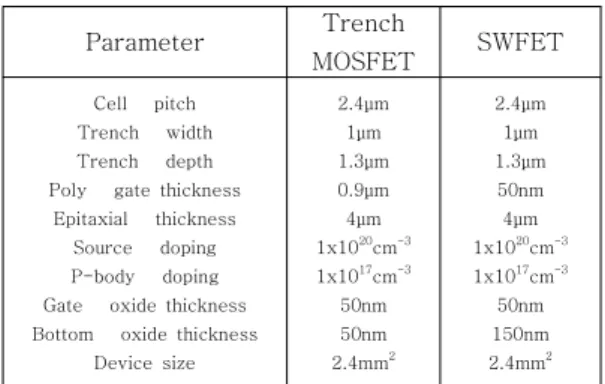
Table 1 List of parameters of the trench gate MOSFET and proposed SWFET

II. SIMULATION RESULTS AND DISCUSSIONS

2.1 The proposed structure of the SWFET

Fig. 1(b) shows the new SWFET structure. Each parameter was optimized in a previous study [12].

This structure forms a thick trench bottom oxide using a sidewall thin gate and a LOCOS process. A low Q

GD

and capacitance are obtained due to the reductive effects of the bottom oxide and the overlapped gate-drain region. As a result, the switching loss is decreased [5]-[6]. Table.1 presents the parameters of the SW and the trench gate MOSFET.

2.2 The fabrication process of the SWFET

Fig. 2 shows the process flow of the proposed SWFET using the conventional processing sequence of a trench MOSFET [13]-[14]. First, the Si-epi layer doped by phosphorus (1e16/cm

3

) is grown by a thickness of 4μm on the highly doped N+

substrate. After the deposition of the Si-nitride, the

(3)

trench gate region is opened. After the trench is etched by a width of 1μm and a depth of 1.3μm using the RIE (Reactive Ion Etching) process, arsenic is lightly implanted. Oxidation is processed by a thickness of 50nm as shown in Fig. 2(b).

In Fig. 2(c), the Si-nitride is deposited 50nm below the surface, and the etching and oxidation is then processed. Oxidation in the vertical direction is faster than that in the lateral direction since the gate bottom region is slightly doped by arsenic.

After the Silicon nitride used as a spacer is removed, as shown in Fig 2(d), Poly silicon is used as a gate and is deposited 50nm below the surface.

The gate bottom region is etched after the deposition. Oxide deposition is used in the rest of the gate region. After planarization of the surface via CMP process, a N+/P-body region is formed.

Finally, the fabrication process is completed after the formation of electrodes on the finished device.

2.3 Voltage-Current Characteristics of the SWFET The SWFET consists of two structures separated by the deposition of two thin poly-gates in the sidewall. The oxide region is filled between each sidewall poly-gates. This does not affect the operation characteristics of the MOSFET. Thus, SWFET does not cause any degradation in the electrical characteristics when compared to the trench gate MOSFET [15]-[16].

Fig. 3 shows the I

D

-V

DS

curve of the SW and of the trench gate MOSFET. As Fig. 3 shows, there is little degradation in the noted characteristics. It is only confirmed that resistance of the SWFET is increased by 5% when compared to that of the trench gate MOSFET at less than V

GS

of 4V. In the case of the SWFET, the electrical field is not uniformly distributed at the trench bottom region even though the gate voltage is biased compared to that of the trench gate MOSFET [11]. Therefore, the relatively small current of SWFET is able to flow because the electrons are only accumulated at the gates edges. Because the electric field does not directly reach the central area of the trench bottom, resistance is increased. This phenomenon occurs when using a voltage of 4V. A reduction of 5% in resistance can be confirmed when the gate voltage is biased over the voltage of 4V. Accumulation

concentration persists in the whole trench bottom region if a relatively high gate voltage is biased to the electrons doped by arsenic in the trench bottom region. Resistance is thus decreased. The effects of the trench bottom accumulation of the two devices are verified by a comparison in their potentials.

Fig. 3 The I

D

-V

DS

characteristics of SW and conventional trench gate MOSFET

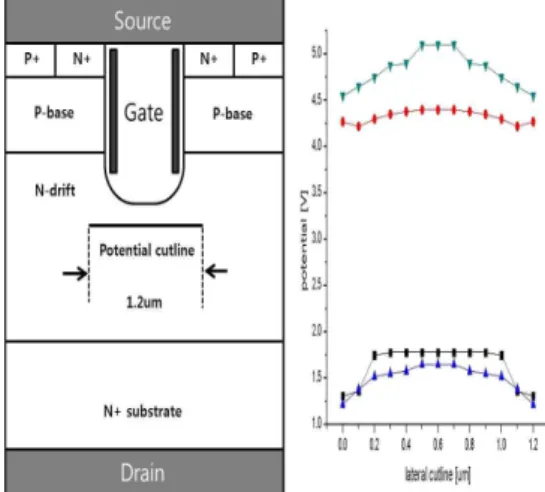
Fig. 4 Gate bottom lateral direction potential distribution of SW and conventional trench gate MOSFET

In Fig. 4, when observing the potentials in the

trench bottom region of the two devices, the

potential of the SWSFET at VGS of 3V is higher

than that of the trench gate MOSFET alone. The

(4)

vertical voltage drop is low. On the other hand, the trench bottom potential of the SWFET is relatively lower than that of the trench gate MOSFET due to high accumulation concentration when V

GS

is observed at a high voltage of 10V. Currents easily flow due to the higher vertical voltage drop. The effect of increasing resistance at a low gate voltage is not problematic for power devices as it is not common to use a low gate voltage. Resistance is decreased when the high gate voltage is biased. As such, high gate voltage is suitable for power devices. Fig. 5 shows the breakdown voltage graph, which is based on the simulations comparing the SWFET and the trench gate MOSFET. Although the shape of the gate region changed, the values of the fundamental parameters and doping concentrations are identical. Therefore, the depletion region width which strongly affects the breakdown voltage of the P-body/N-drift junction is also same [14]. Therefore, it is confirmed that there is no change in the breakdown of the conventional device and the proposed SWFET.

Fig. 5 The characteristics of breakdown voltage of SW and trench gate MOSFET

2.4 Charge and capacitance characteristics of the SWFET

The new proposed SWFET reduces the area overlapped by the gate-drain in order to decrease the Q

GD

. A thick layer of gate oxide is grown in the bottom region. As a result of the thick bottom oxide, the charge which gathers at the gate bottom is decreased [10].

Fig. 6. The gate charge of SWFET, WFET and conventional trench gate MOSFET

Fig. 6 shows the gate voltage vs. transient time charge via a simulation graph of the SWFET, WFET [8] and the conventional trench gate MOSFET. In this figure, the flat section between 0.5V and 1V is the Q

GD

(Miller plateau). The amount of charge charged and discharged in the gate-drain is reduced as the section is shorter.

Subsequently the switching delay is decreased.

Thus, the Q

GD

of the SWFET sees greater improvement over simply using the trench gate MOSFET. In the case of the proposed SWFET, the Q

GD

is 2.7nC. However, the Q

GD

of the trench gate MOSFET is 4.5nC. This means there is an improvement of 40%. It is expected that the switching on/off performance of the SWFET is accordingly better than that of the trench gate MOSFET. A number of capacitance components exist in power MOSFET. Each capacitance contributes to the device during on/off switching according to their different roles. The capacitance components which are parasitic in the device are as follows [17].

Off performance of the SWFET is accordingly better than that of the trench gate MOSFET. A number of capacitance components exist in power MOSFET. Each capacitance contributes to the device during on/off switching according

C

ISS

= C

GS

+ C

GD

(1) C

OSS

= C

DS

+ C

GD

(2)

C

RSS

= C

GD

(3)

In this research, the proposed device utilizes a thick

bottom oxide in order to reduce the Q

GD

and

(5)

Fig. 7 The characteristics of capacitance of (a) SW and (b) conventional trench gate MOSFET (c) W-gate MOSFET

minimize the area overlapped via gate-drain. The decrease in the Q

GD

also affects the reduction of C

RSS

in the equation (3). The Q

GD

determines the reverse recovery time at the point in which the device turns on and off. In this case, the reverse recover time is the switching delay. Thus switching must be turned on and off in a short period of time. The decrease in C

RSS

reduces the switching

loss occurred during the switching delay. The C

ISS

, C

OSS

and C

RSS

of the proposed SWFET are respectively improved by 24%, 40%, and 50%. As Equation (1), Equation (2) and Equation (3) show, all of capacitance parameters are decreased due to the inclusion of Q

GD

in all cases.

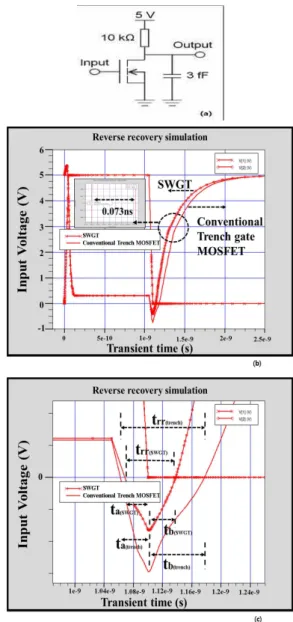
Fig. 8 SW vs. trench gate MOSFET (a) inverter

circuit, (b) simulation result, (c) reverse recovery time

analysis

(6)

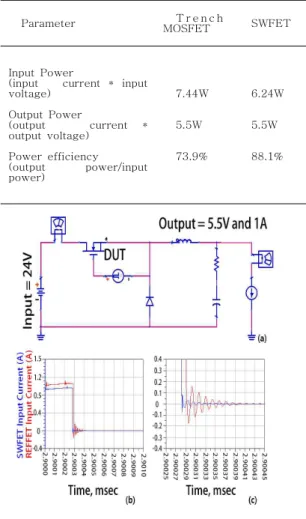
Fig. 9 Schematic circuit of (a) the DC-DC buck converter 24V input and 5.5V output, (b) input current pulse of SW and conventional trench gate MOSFET, (c) reverse recovery time of SW and conventional trench gate MOSFET

2.5 Switching delay characteristic of the SWFET The SWFET achieves reduced Q

GD

and C

GD

(C

RSS

).

When designing a circuit, switching speed is expected to be improved. Therefore, the inverter circuit is designed to confirm the switching characteristics. Fig. 8(a) shows a simple inverter circuit. The SW and trench gate MOSFET are located on the transistor in Fig. 8(a), and each switching delay is verified by the simulation. In.

Fig. 8(b), the transistor is turned on during the input voltage 0~0.1ns (rising time) and is biased at 5V. The transistor is decreased by 0V during 1~1.1ns (falling time) and then turned off. Thus, the voltage which is contrary to the input is generated through the output. As Fig. 8(b) shows, the on state is switched to the off state when the input voltage is 1.1ns, so the switching characteristics seems to be efficient in recovering the 5V.

The SWFET approaches 1.320ns near the 3V point, and as the trench gate MOSFET approaches 1.393ns, the gap is shown to be 0.073.ns. The switching performance is improved by 24.9%. This result is related to the C

RSS

(reverse recovery capacitance), which is proportional to the quantity of the Q

GD

[18]. Fig. 8(c) shows the reverse recovery time of the SW and the trench gate MOSFET. The depletion region stored charge of the body diode is removed during the time of the ta section, and the bulk material stored charge is removed during the tb section. According to Fig. 8(C), the recovery time of the SWFET is faster than that of the trench gate MOSFET. Because the gathered charge at the gate bottom is less than that of the trench gate MOSFET, the Q

GD

is decreased. The SWFET showed an improved switching speed because of the short trr (reverse recovery charge). Low switching loss can be achieved in the DC-DC converter because the fast switching speed of the SWFET also causes a decrease in the switching loss.

2.6 Application: DC-DC buck converter

The DC-DC buck converter shown in Fig. 9 is designed for the application of a medium voltage MOSFET in the 40V class. Fig. 9 also compares the power efficiency of the SW and the trench gate

MOSFET [19]-[20]. The input and output of the DC-DC buck convert for automotives are 24V and 5.5V respectively. Thus, the DC-DC buck converter in Fig. 9(a) is also designed at an input of 24V and an output of 5.5V.

Table 2. List of power efficiency parameter of SW and conventional trench gate MOSFET in DC-DC buck converter

Parameter T r e n c h

MOSFET SWFET

Input Power

(input current * input voltage)

Output Power

(output current * output voltage)

Power efficiency

(output power/input power)

7.44W

5.5W

73.9%

6.24W

5.5W

88.1%

(7)

III. Conclusion

SWFET uses a thin poly-gate to reduce the overlapped gate-drain area and utilizes a thick gate bottom oxide for a reduced Q

GD

. Consequently, the Q

GD

and C

RSS

are improved by 40% and 50%, respectively. Moreover, the switching performance of the inverter circuit was enhanced by 24.9%. When the SWFET was applied to a DC-DC buck converter, the power conversion shows improvements of 14.2%. As a result, the proposed SWFET is able to improve the switching performance of a DC-DC buck converter and switching circuit without any degradation in electrical performance. Furthermore, reduced energy consumption can be expected in various applications of energy conversion because the SWFET, which is a core technology in Green IT, decreases switching loss of the conventional Power MOSFET.

References

[1] B. J. Baliga, “An overview of smart power technology,” IEEE Trans. Electron Devices, vol. 38, no. 7, pp. 1568–1575, Jul. 1991.

[2] A. Gagliardi, “Planning Of Power Systems and Green Power Market,” Power Tech Conference Proceedings, IEEE Bologna vol. 1, June. 2003.

[3]L. Lorenz, “Power Semiconductor‐Driving Technology for High Power Green Electronic Systems,” VLSI Design, Automation, and Test (VLSI-DAT), 2012 International Symposium on, pp.

1–2, April. 2012.

[4] R. P. Zingg, “On the specific on-resistance of high-voltage and power devices,” IEEE Trans.

Electron Devices, vol. 51, no. 3, pp. 492–499, Mar.

2004.

[5] R. J. E. Hueting, E. A. Hijzen, A.W. Ludikhuize, and M. A. A. in’t Zandt, “Switching performance of low-voltage n-channel trench MOSFETs,” in Proc.

ISPSD, 2002, pp. 177–180.

[6] R. J. E. Hueting, E. A. Hijzen, A. Heringa, A.

W. Ludikhuize, and M. A. A. Zandt, “Gate-drain charge analysis for switching in power trench MOSFETs,” IEEE Trans. Electron Devices, vol. 51,

no. 8, pp. 1323–1330, Aug. 2004.

[7] M. Darwish, C. Yue, K. H. Lui, F. Giles, B.

Chan, K.-I. Chen, D. Pattanayak, Q. Chen, K.

Terrill, and K. Owyang, “W-gated trench power MOSFET (WFET),” Proc. Inst. Elect. Eng.—Circuits Devices Syst., vol. 151, no. 3, pp. 238–242, Jun.

2004.

[8] M. Darwish, C. Yue, K. H. Lui, F. Giles, B.

Chan, K. Chen, D. Pattanayak, Q. Chen, K. Terrill, and K. Owyang, “A new power W-gated trench MOSFET (WMOSFET) with high switching performance,” in Proc. ISPSD, Cambridge, U.K., pp.

24–27. Apr. 14–17, 2003.

[9] Atlas User’s Manual: Device Simulation Software, Silvaco Int., Santa Clara, CA, 2008.

[10] H.-R. Chang, Trench gate structure with thick bottom oxide, U.S. Patent 4 992 390, Feb. 12, 1991.

[11] Q. Jiang, M. Wang, Chen, “A High-Speed Deep-Trench MOSFET With a Self-Biased Split Gate“ IEEE Trans. Electron Devices, vol. 57, no. 8, pp. 1972-1977. 7 Aug. 2010.

[12] D.H. Cho and K. S. Kim “Trench Power MOSFET using Separate Gate Technique for Reducing Gate Charge” Journal of IKEEE, Vol. 16 pp. 283-289, December 2012.

[13] K. S. Nam, J. W. Lee, S. G. Kim, T. M. Roh, H. S. Park, J. G. Koo, and K. I. Cho, “A novel simplified process for fabricating a very high density P-channel trench gate power MOSFET,”

IEEE Electron Device Lett., vol. 21, no. 7, pp. 365–

367, Jul. 2000.

[14] M. H. Juang, W. T. Chen, C. I. Ou-Yang, S. L.

Jang, M. J. Lin, and H. C. Cheng, “Fabrication of trench-gate power MOSFETs by using a dual doped body region,” Solid State Electron., vol. 48, no. 7, pp. 1079–1085, Jul. 2004.

[15] B. J. Baliga, Modern Power Devices, 2nd ed.

New York: Wiley, 1992.

[16] B. J. Baliga, Fundamentals of Power Semiconductor Devices, New York, Springer, 2008.

[17] C. K. Ong, “A mathematical model for power MOSFET capacitances” Power Electronics Specialists Conference, 1991. PESC '91 Record, 22nd Annual IEEE pp. 423-429 Jun. 1991.

[18] Y. Xiong, S. Sun, H. Jia, P. Shea, and Z.J.

Shen, “New Physical insight on power MOSFET

switching losses,” Power Electronics, IEEE

(8)

Transactions on, vol. 24, no. 2, pp. 525–531, Feb.

2009.

[19] C. Cavallaro, S. Musumeci, R. Pagano, A.

Raciti, and K. Shenai, “Analysis modeling and simulation of low-voltage MOSFETs in synchronous-rectifier buck-converter applications,”

Industrial Electronics Society, 2003. IECON '03. The 29th Annual Conference of the IEEE, vol. 2, pp.

1697–1702, Nov. 2003.

[20] Schmidt and Wolfgang “DCDC Converter for Hybrid Vehicle Applications,” Integrated Power Systems (CIPS), 2008 5th International Conference on, pp. 1-3, Mar. 2008.

[21] P. Ralston Design and Verification of a High Voltage, Capacitance Voltage Measurement System for Power MOSFETs master dissertation, Blacksburg, VA, 2008

BIOGRAPHY

Cho Doo-hyung (Member)

2011 : BS degree in Electrical and Electronic Engineering, Dankook University

2013 : MS degree in Electronic Engineering, Sogang University 2013 ~ present : PhD course in Electronic Engineering,

Sogang University

Park Kun-sik (Member)

1991 : BS degree in Material science, KAIST

1996 : MS degree in Material science, KAIST

2011 : PhD degree in Material science, KAIST

2000 ~ present : Principle Researcher, ETRI

Kim Kwang-soo (Member)

1981 : BS degree in Electronic Engineering, Sogang University 1983 : MS degree in Electronic Engineering, Sogang University 1998 : PhD degree in Electronic Engineering, Sogang University 1983 ~ 1997 : Electronics and Telecommunications Research Institute (ETRI).

1998 ~ 2005 : Institute for Information Technology Advancement (IITA)

2005 ~ 2008 : Daegu Gyeongbuk Institute of Science and Technology (DGIST)

2008 ~ present : Professor, Electronic Engineering,

Sogang University

수치

Fig.  2  Process  flow  of  SWFET  (a)  trench  etching  and  slightly  arsenic  implantation,  (b)  oxidation,  (c)  Si  nitride  deposition  and  LOCOS  process,  (d)  Si  nitride  strip  and  Poly-Si  deposition  after  Gate  bottom  Poly-Si  etching,
Fig.  3  The  I D -V DS   characteristics  of  SW  and  conventional  trench  gate  MOSFET
Fig.  6.  The  gate  charge  of  SWFET,  WFET  and  conventional  trench  gate  MOSFET
Fig.  8  SW  vs.  trench  gate  MOSFET  (a)  inverter  circuit,  (b)  simulation  result,  (c)  reverse  recovery  time  analysis
+2

참조

관련 문서

12 that절 내의 주어를 문장의 주어로 쓰고 that절 내의 동사를 to부정사로 써 서 수동태 문장을 만들 수 있다... 13 반복되는 the reason을 관계대명사 which로 바꿔주고

Our main contribution consists in the elevation of the DTW power of alignment from the lowest level (Class A, non-periodic time series) to the highest level (Class

Since every classical or virtual knot is equivalent to the unknot via a sequence of the extended Reidmeister moves together with the forbidden moves, illustrated in Section 2,

웹 표준을 지원하는 플랫폼에서 큰 수정없이 실행 가능함 패키징을 통해 다양한 기기를 위한 앱을 작성할 수 있음 네이티브 앱과

_____ culture appears to be attractive (도시의) to the

- In the future, the retail structure of power distribution may resemble the existing structure of the telephone industry.. Center for Power IT CENTER

- quadriceps tendon 이 슬개골 하연에서 tibial tuberocity에 부착.

The KBox A-150-BYT is connected by the Input power connector on the front panel to a DC power source via a DC power supply wiring; consisting of the Phoenix power