The Performance of Anaerobic Co-digester of Swine Slurry and Food Waste
Young-Man Yoon, Hyun-Cheol Kim, Jung-Suk Yoo, Seung-Hwan Kim, Seung-Gil Hong
1, and Chang-Hyun Kim*
Biogas Research Center, Hankyong National University, Anseong, Gyeonggi, 456-749, Republic of Korea
1
National Academy of Agricultural Science, R.D.A., Suwon, Gyeonggi, 441-707, Republic of Korea
In order to assess the performance of co-digester using pig slurry and food waste at the farm scale biogas production facility, the anaerobic facility that adopts the one-stage CSTR of 5 m
3day
-1input scale was designed and installed under the conditions of the OLR of 2.33 kg m
-3day
-1and HRT of 30 days in an pig farmhouse. Several operation parameters were monitored for assessment of the process performance. The anaerobic facility was operated in three stages to compare the performance of the anaerobic co-digester. In the Stage I, that was fed with a mix of pig slurry to food waste ratio of 7:3 in the input volume, where input TS content was 4.7 (± 0.8) %, and OLR was 0.837-1.668 kg-VS m
-3day
-1. An average biogas yield observed was 252 Nm
3day
-1with methane content 67.9%. This facility was capable of producing an electricity of 626 kWh day
-1and a heat recovery of 689 Mcal day
-1. In Stage II, that was fed with a mixture of pig slurry and food waste at the ratio of 6:4 in the input volume, where input TS content was 6.9 (± 1.9) %, and OLR was 1.220-3.524 kg-VS m
-3day
-1. The TS content of digestate was increased to 3.0 (± 0.3) %. In Stage III, that was fed with only pig slurry, input TS content was 3.6 (± 2.0) %, and OLR was 0.182-2.187 kg-VS m
-3day
-1. In stage III, TS and volatile solid contents in the input pig slurry were highly variable, and input VFAs and alkalinity values that affect the performance of anaerobic digester were also more variable and sensitive to the variation of input organic loading during the digester operation. The biogas produced in the stage III, ranged from 11.3 to 170.0 m
3day
-1, which was lower than 222.5-330.2 m
3day
-1produced in the stage II.
Key words: Anaerobic co-digestion, Pig slurry, Food waste, Performance, Organic loading
Received : November 12. 2010 Accepted : November 19. 2010
*Corresponding author : Phone: +82316705095 E-mail: [email protected]
Introduction
In the aspect of climate change, livestock wastes contribute about 18.7% of the agricultural portion to the greenhouse gas emissions in Korea. Recently, anaerobic fermentation technology of livestock wastes is becoming a feasible technology to be adopted for the agricultural recycling of livestock wastes since methane production from livestock wastes may have an important role in reducing the impact of the agriculture on the environment.
Livestock manure from concentrated livestock operations can be a source of energy production that not only provides an alternative energy source for on-farm use, but mitigates the negative consequences of odor from livestock operations.
On the other hand, the natural degradation of livestock wastes during the storage leads to the release of greenhouse
gases to the atmosphere. But, in order to install and operate a biogas production facility at farm scale, feasibility is to be assessed in the technical and economical aspects before installation and the suitable design must be devised in the consideration of the digester loading and the energy generated from the system because the anaerobic facility must be designed to meet the typical characteristics of each farm (Yoon et al., 2009
a).
Anaerobic digester for the biogas production of animal
manure has been commonly adopted with CSTR or PFR
(Wilkie et al., 2004). In order to improve the economical
efficiency of biogas facility, the amount of energy produced
per unit manure treated should be maximized while the
investment and operation costs should be minimized
(Karakashev et al., 2005). In the technical aspect, several
methods for improving biogas production from livestock
wastes in the CSTR and PFR processes have been reported
by co-digestion with other organic materials (Angelidaki
and Ellegaard, 2003; Paavola et al., 2006), adopting of
alternative digester configuration (Speece et al., 1997;
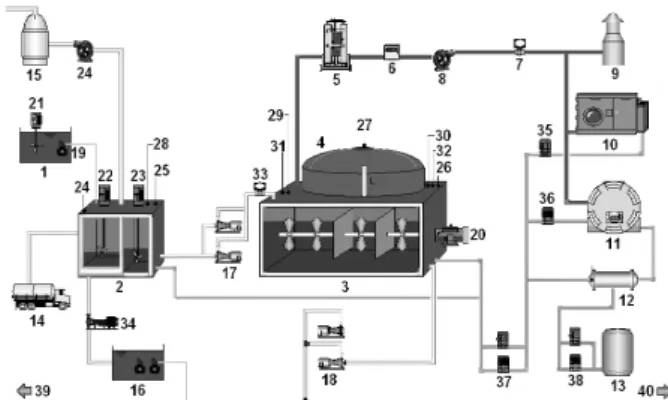
Fig. 1. Process scheme; (1) Pig slurry storage tank; (2) Feedstock mix & storage tank; (3) Anaerobic digester (L10
× H4.25 × W4.25 m, 180 m
3); (4) Biogas bag; (5) Dehumi- dification & desulfurization unit; (6) Gas meter; (7) Gas transfer pump; (8) Gas flow meter; (9) Gas burner; (10) Dual fuel CHP generator; (11) Gas boiler; (12) Header tank for hot-water heating; (13) Water tank; (14) Tank lorry for food waste transfer; (15) Deodorization unit;
(16) Sump pit; (17) Feeding pump[in parallel]; (18) Digestate transfer pumper[in parallel]; (19) Pig slurry transfer pump;
(20-21-22-23) Mixer; (24-25-26) Level sensor; (27) Ultrasonic gas bag level sensor; (28-29-30) Temperature sensor; (31- 32) pH sensor; (33) feed flow meter; (34) Sump screw pump; (35-36-37) Hot water circulation pump; (38) Header water supply pump; (39) Water treatment system; (40) Liquid fertilizer storage tank.
Azbar et al., 2001; Angelidaki et al., 2005), increment of HRT, reducing the ammonia toxicity (Hansen et al., 1998), and improvement of degradability by pre-treatment (Ahring and Angelidaki, 2000; Hartmann et al., 2000).
Swine manure is one of the main substances that is used in Korean farm scale biogas plant. Generally the high amount of pig manure is discharged as slurry phase that have a small fraction around 1-7% of TS from pig farmhouse, since most of Korean pig farmhouses have been adopting the slurry storage tank without a solid/
liquid separation equipment (Yoon et al., 2009
b). The fluctuation of organic contents in pig slurry discharged from the farmhouse may cause “wash-out” that methane producing bacteria are lost in anaerobic digester which disturbs microbial community of the anaerobic digester and consequently methane yield decreases steeply (Yu et al., 2005; Boe and Angelidaki, 2009). Co-digestion is a technology that increasingly being applied for simultaneous treatment of several solid and liquid organic wastes (Poggi-Varaldo et al., 1997; Callaghan et al., 1999;
Bouallagui et al., 2009). Co-digestion combining different organic substances as input feedstock, can increase process performance by the improvement of stability of anaerobic microbial community and the sustenance of high organic loading at anaerobic digester (Zhang and Banks, 2008).
This study was carried out to assess the performance of anaerobic digester when a pig slurry discharged from farmhouse in a high organic fluctuation, and a food waste having a high organic content were co-digested. Using the pilot scale, 5 m
3day
-1, CSTR type anaerobic digester, the performance of anaerobic co-digester was demonstrated in the several operational stages that had been operated in different organic loadings. Digestion of single pig slurry was investigated in the separate operation period to assess the effect of co-digestion.
Material and Methods
Pilot scale CSTR anaerobic digester The pilot scale anaerobic facility that was adopting a one stage CSTR (Continuously Stirred Tank Reactor) of 5 m
3day
-1input scale and a dual fuel type CHP (Combined Heat & Power) generator of 30 kW, was installed at a Korean pig farm in Jan 2008. The system setup of anaerobic facility is shown in Fig. 1. Food waste that is transferred with (14) tank lorry and pig slurry discharged from pig pan was mixed in (2) feedstock mix & storage tank (total volume, 30 m
3),
and prepared mixed feedstock was inputted to (3) pilot scale CSTR anaerobic digester (total volume, 180 m
3).
The biogas evolved from the anaerobic digester was reserved in (4) a biogas bag (max. volume 80 m
3), and the hydrogen sulfide gas present in the biogas was removed first by the biological sulfur oxidation reaction with air input method. The remaining hydrogen sulfide and moisture were removed by (5) dehumidification & desulfurization unit adopted to tamping unit of active carbon and the cooling unit decreasing the temperature to below dew point. The purified biogas was blown to (10) dual fuel CHP generator. After electric generation, the waste heat evolved by the exhausting gas of generator was collected as hot water by heat exchanger installed in CHP generator.
The hot water was used for digester heating.
For the monitoring and maintenance of the anaerobic facility; pH, temperature and water level sensors were installed in the inner side of (3) anaerobic digester, and ultrasonic gas bag level sensor and gas meter (SSM 6000, PRONOVA) were fitted in the upper side of (4) biogas bag and on the pipe line after (5) dehumidification &
desulfurization unit. All sensing data were recorded in a
data logger. For the monitoring of the operation conditions
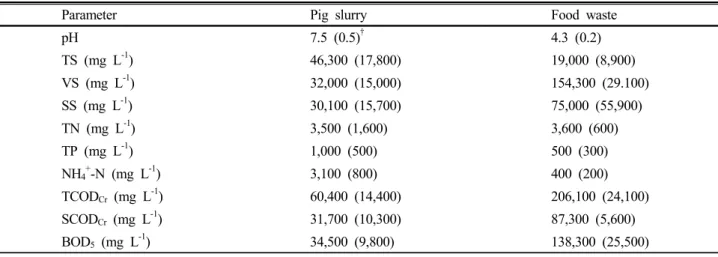
Table 1. Chemical composition of feedstock for the design of the pilot scale CSTR anaerobic digester.
Parameter Pig slurry Food waste
pH 7.5 (0.5)
†4.3 (0.2)
TS (mg L
-1) 46,300 (17,800) 19,000 (8,900)
VS (mg L
-1) 32,000 (15,000) 154,300 (29.100)
SS (mg L
-1) 30,100 (15,700) 75,000 (55,900)
TN (mg L
-1) 3,500 (1,600) 3,600 (600)
TP (mg L
-1) 1,000 (500) 500 (300)
NH
4+-N (mg L
-1) 3,100 (800) 400 (200)
TCOD
Cr(mg L
-1) 60,400 (14,400) 206,100 (24,100)
SCOD
Cr(mg L
-1) 31,700 (10,300) 87,300 (5,600)
BOD
5(mg L
-1) 34,500 (9,800) 138,300 (25,500)
†
Standard deviation.
Table 2. Design factors of the pilot scale CSTR anaerobic digester.
Parameters Pig slurry Food waste Total
Input amount (m
3day
-1) 3.5 1.5 5.0
TS (mg L
-1) 46,000 190,000 89,000
VS (mg L
-1) 32,000 154,000 69,000
VS removal (%) 40 60 53
Methane content (%) 62 60 60
Biogas production (Nm
3day
-1) 42 157 199
Fig. 2. Operation schedule of the pilot scale CSTR anaerobic digester.
of CSTR anaerobic digester, three sampling ports were prepared in the fore, middle and end part of CSTR anaerobic digester.
Design of anaerobic co-digester The CSTR anaerobic digester was designed with the co-digestion system using pig slurry (70%) and food wastes (30%). The chemical characteristics of pig slurry and food waste that were sampled and analyzed for the design of pilot scale CSTR anaerobic reactor was shown in Table 1. The pilot scale CSTR anaerobic digester was constructed with the concrete structure having an effective volume of 150 m
3and OLR (organic loading rate) and HRT (hydraulic retention time) of 2.33 kg-VS m
-3day
-1and 30 days, respectively.
Operation temperature of digester was maintained at 38℃
by the circulation of hot water obtained from the heat exchanger of CHP generator. The design factors of pilot scale CSTR anaerobic digester is shown in Table 2.
Operation The pig slurry was obtained from pig farm in the pilot scale CSTR with anaerobic facility installed, and the pulverized food waste was transported by a tank lorry from the local food waste treatment plant. The
experiment was carried out for a period of 399 days . The anaerobic reactor was operated with a liquid working volume of 150 m
3(total digester volume 180 m
3) and an HRT of 30 days at 38 ± 2.0℃ during winter season.
Including the time for the seeding and warming of anaerobic digester, the start-up of operation has been progressed by stepwise increasing the input volume of food waste to 30% of total input volume for 56 days.
During the initial 76 days (Stage I) of operation, the pig
Table 3. Operational characteristics of feed and digestate in the pilot scale CSTR anaerobic digester.
Items Stage I
†Stage II
‡Stage III
§Feed Digestate Feed Digestate Feed Digestate
pH 6.23
(0.37)
¶8.02 (0.07)
5.51 (0.26)
7.95 (0.07)
7.72 (1.02)
7.92 (0.95)
TS (mg L
-1) 46,923
(7,955)
25,818 (2,720)
69,959 (19,100)
30,052 (2,500)
35,546 (20,964)
25,301 (7,119)
VS (mg L
-1) 35,211
(6,840)
15,485 (4,184)
55,578 (16,437)
17,401 (2,033)
24,894 (17,059)
14,961 (5,195) TVFAs (mg L
-1) 16,102
(4,731)
854 (152)
17,801 (3,040)
1,207 (169)
5,145 (2,891)
356 (163) Alkalinity (mg L
-1) 9,474
(1,640)
16,373 (585)
8,951 (2651)
18,456 (799)
13,602 (4,541)
15,801 (3,217)
†
Stage I feed the mix of pig slurry and food waste as the volume ratio of 7:3.
‡
Stage II feed the mix of pig slurry and food waste as the volume ratio of 6:4.
§
Stage III feed only pig slurry.
¶
Standard deviation.
May 2008Jun Jul Aug Sep Oct Nov DecJan 2009 Feb Mar Apr
Solid content of feedstock (%)
0 5 10 15
20 TS(pig slurry) VS(pig slurry) TS(food waste) VS(food waste)
Fig. 3. Seasonal changes of organic content in pig slurry and food waste incoming to the pilot scale anaerobic facility. Vertical bars mean the standard deviations of each mean values.
slurry mixed with 30% of food waste was fed to digester.
During the second period of 51 days (Stage II), the mixing ratio of food waste was increased to 40%. For the last 121 days (Stage III), simple pig slurry without the mixing of food waste was introduced to digester. After the Stage III, the anaerobic digester was operated in the various mixing condition for 151 days. The operation stages during the experiment are shown in Fig. 2.
Analytical methods The pig slurry and food waste incoming to the pilot scale anaerobic facility was sampled in every delivery. The pH, VFAs, alkalinity, TS, VS and ammonium nitrogen (NH
4+-N) were determined by a periodic analysis. For the monitoring of anaerobic digester, five samples from the feedstock storage tank, the anaerobic digester (the fore, middle and end part of digester) and the outlet of anaerobic digester were taken on daily basis, and were stored at -4℃ till analysis. Process parameters such as pH, VFAs, alkalinity, TS, VS and ammonium nitrogen (NH
4+-N) were determined. Biogas production, composition and the temperature of digester were monitored through the data logger. The pH, alkalinity, TS, VS and ammonium nitrogen (NH
4+-N) were determined according to the standard methods (APHA, 1998). The VFAs (acetic, propionic, butyric, isobutyric, valeric, and isovaleric acid) were measured by GC with FID (Sorensen et al., 1991) The biogas was sampled in the biogas bag of the pilot scale CSTR anaerobic facility periodically (twice a month) to analyze methane content by GC TCD for the verification of the data gathered from the data logger.
Results
Seasonal changes of organic content in pig slurry and food waste are shown in Fig. 3. The TS and VS contents of pig slurry discharged from pig pan were monitored from May, 2008 to April, 2009. Range of organic content in pig slurry showed a high fluctuations (TS 2.30-6.66, VS 1.32- 5.60%) according to the seasonal change, especially solid content increased in winter season; on the other hand, the values decreased in summer season due to the increase of water use in pig pan. Range of organic content in food waste coming to the pilot scale anaerobic facility showed relatively low variations in TS (12.30-13.87%) and VS (10.47-12.11%).
In the each operation stage, operation parameters and
biogas yields ware shown in Table 3 and 4. After the
Table 4. Performance of the pilot scale CSTR anaerobic digester.
Items Stage I
†Stage II
‡Stage III
§CH
4concentration (%) 65.6~69.8 61.4~68.0 62.3~75.8
Biogas production (m
3day
-1) 120.0~345.0 222.5~330.2 11.3~170.0
OLR (kg-VS m
-3day
-1) 0.837~1.668 1.220~3.524 0.182~2.187
†
Stage I feed the mix of pig slurry and food waste as the volume ratio of 7:3.
‡
Stage II feed the mix of pig slurry and food waste as the volume ratio of 6:4.
§
Stage III feed only pig slurry.
Operation time(days)
0 100 200 300 400 500
Input volume of feedstock (m3 day-1 )
0 1 2 3 4 5 6 7 8 9 10 11 12
Methane concentration (%)
40 60 80 100 Pig slurry
Food waste Before desulfurization After desulfurization
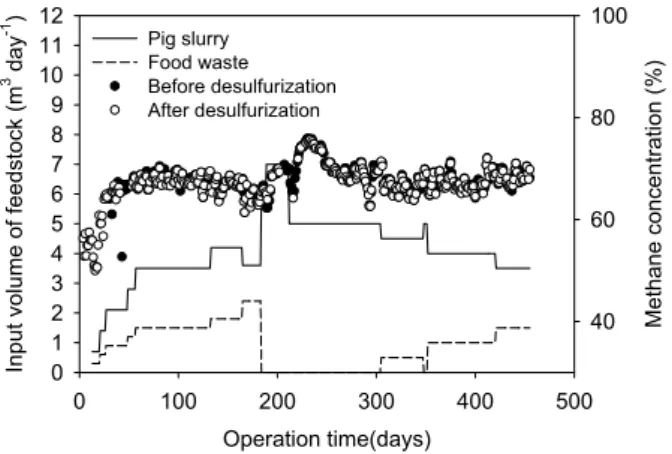
Fig. 4. Variation of methane content in biogas produced from the pilot scale CSTR anaerobic digester.
Operation time(days)
0 100 200 300 400 500
Input of feedstock (m3 day
-1)
0 2 4 6 8 10
Biogas production (m3 day-1 )
0 100 200 300 Pig slurry 400
Food waste Biogas production
Fig. 5. Variation of biogas production in the pilot scale CSTR anaerobic digester.
start-up of 56 days, during the operation time of Stage I (76 days), OLR was in the range of 0.837-1.668 kg-VS m
-3day
-1. Biogas of 120.0-345.0 m
3day
-1was produced with the methane percentage (mol/mol) of 65.6-69.8%. During the operation time of Stage II (51 days), OLR was in the range of 1.220-3.524 kg-VS m
-3day
-1. Biogas of 222.5- 330.2 m
3day
-1was produced with the methane percentage of 61.4-68.0%. In the Stage III (151 days), OLR was in the range of 0.182-2.187 kg-VS m
-3day
-1. Biogas of 11.3- 170.0 m
3day
-1was produced with the methane percentage of 62.3-75.8%. In each of the operation stages, TVFAs of anaerobic digester was maintained at 854 ± 152, 1,207 ± 169, and 356 ± 163 mg L
-1, respectively, and the concen- trations of TVFAs of anaerobic digester were increased with the organic input loading rate (kg-VS m
-3day
-1).
During the third operation stage that was fed only pig slurry, TS and VS contents in the incoming pig slurry were in high variations, and also TVFAs and alkalinity values that affected on the performance of anaerobic digester were highly fluctuated. Fig. 4 and 5 were showing the changes of methane concentration and biogas production during total operation period, respectively. The input of food waste as feedstock resulted in the gradual decrease of methane content during the experimental period, while
total methane production was increased steeply.
During the start-up period (56 days) that has been
stepwise increasing the input volume of food waste to
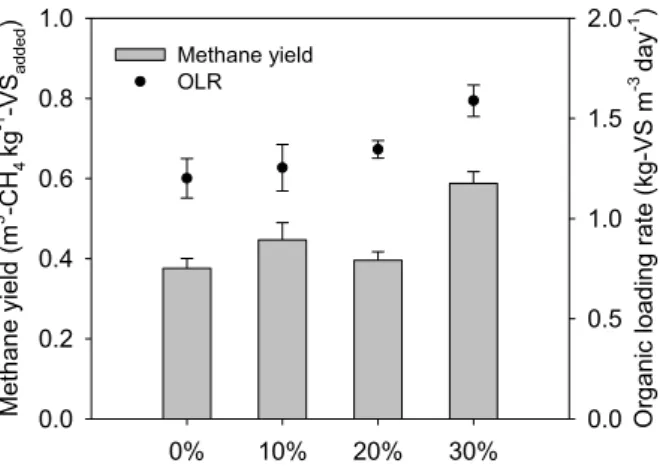
30% of total input volume, OLRs and methane yields in
each step were shown in Fig. 6. OLRs at the 0, 10, 20, and
30% of total feedstock input volume were 1.201, 1.254,
1.345, and 1.589 kg-VS m
-3day
-1, respectively. In the 0,
10, 20, and 30% of total feedstock input volume, the
upward tendency of biogas yields was investigated,
methane yields of each step were 0.376, 0.447, 0.396, and
0.588 m
3-CH
4kg
-1-VS
added. The methane yields were
increased with the upward tendency of the operational
OLR with the exception of the step of 20% food waste
input. The occasional decrease of methane yield was caused
in the high organic fluctuation of pig slurry that discharged
from pig farmhouse. Fig. 7 showed the solid balance of
anaerobic digester during the experimental period. Solid
balance was calculated by the relative difference [(S
0-S
e)
/S
e] (S
0indicates VS content incoming to anaerobic
digester, and S
eindicates VS content of effluent in solid
balance, in here, S
eequals to the VS content of anaerobic
digester) between the VS loading that was incoming to
anaerobic digester and VS drawing off that was discharged
from anaerobic digester by the effluent of digestate.
The input volume percentage of food waste
0% 10% 20% 30%
Met h ane y ield (m
3-C H
4kg
-1-VS
added) 0.0 0.2 0.4 0.6 0.8 1.0
O rg anic lo ading r at e ( kg -VS m
-3day
-1) 0.0 0.5 1.0 1.5 2.0
Methane yieldOLR
Fig. 6. Changes of methane yield in the different input ratio of food waste. Vertical bars mean the standard errors of each mean values.
Operation time(days)
0 100 200 300 400 500
Solid balance [(So-Se)/Se]
-2 0 2 4 6 8 10
Input volume of feedstock (m3 day-1 )
-2 0 2 4 6 8 (So-Se)/Se 10
Pig slurry Food waste
Washing out