• 검색 결과가 없습니다.

Impact of Multiple Prostate Biopsies: Risk of Perioperative Complications and Biochemical Recurrence After Radical Prostatectomy

N/A
N/A
Protected

Academic year: 2021

Share "Impact of Multiple Prostate Biopsies: Risk of Perioperative Complications and Biochemical Recurrence After Radical Prostatectomy"

Copied!
8
0
0

로드 중.... (전체 텍스트 보기)

전체 글

(1)

24

Received November 7, 2019, Revised December 23, 2019, Accepted January 14, 2020

Corresponding Author: Tae Gyun Kwon

Department of Urology, School of Medicine, Kyungpook National University, 807 Hoguk-ro, Buk-gu, Daegu 41404, Korea E-mail: [email protected]

Tel: +82-53-200-2166, Fax: +82-53-321-3207 ORCID: https://orcid.org/0000-0002-4390-0952

This is an Open Access article distributed under the terms of the Creative Commons Attribution Non-Commercial License (http://creativecommons.org/licenses/by-nc/4.0/) which permits unrestricted non-commercial use, distribution, and reproduction in any medium, provided the original work is properly cited.

2020 Ⓒ Copyright The Korean Urological Oncology Society and The Korean Prostate Society. All Rights Reserved.

Impact of Multiple Prostate Biopsies: Risk of Perioperative Complications and Biochemical

Recurrence After Radical Prostatectomy

Kyong Min Park

1

, Jae-Wook Chung

1

, Jun-Koo Kang

1

, Teak Jun Shin

2

, Se Yun Kwon

3

, Hyun Chan Jang

4

, Yun-Sok Ha

1

, Seock Hwan Choi

1

,

Wonho Jung

2

, Jun Nyung Lee

1

, Byung Hoon Kim

2

, Bum Soo Kim

1

, Hyun Tae Kim

1

, Jae Soo Kim

4

, Tae-Hwan Kim

1

, Eun Sang Yoo

1

, Kyung Seop Lee

3

, Chun Il Kim

2

, Sung Kwang Chung

1

, Tae Gyun Kwon

1,5

1

Department of Urology, School of Medicine, Kyungpook National University, Daegu, Korea

2

Department of Urology, Keimyung University School of Medicine, Daegu, Korea

3

Department of Urology, Dongguk University College of Medicine, Gyeongju, Korea

4

Department of Urology, Daegu Fatima Hospital, Daegu, Korea

5

Joint Institute for Regenerative Medicine, Kyungpook National University, Daegu, Korea

Purpose: The aim of this study was to analyze the perioperative complications and oncological outcomes of radical prostatectomy (RP) in patients who underwent multiple prostate biopsies.

Materials and Methods: A total of 1,112 patients who underwent RP between January 2009 and April 2016 at 4 different centers were included in this study. We divided these patients into 2 groups: patients who underwent only 1st biopsy, and those who underwent 2nd or more repeated biopsies. The association between the number of prior biopsies and perioperative complications and biochemical recurrence (BCR) was analyzed.

Results: Of 1,112 patients, 1,046 patients (94.1%) underwent only 1st biopsy, and 66 (5.9%) underwent 2nd or more repeated biopsies. There were no significant differences in preoperative prostate-specific antigen levels, operation times, blood loss volumes, or hospital stay durations (all p>0.05). Patients who underwent multiple prostate biopsies presented with a localized tumor significantly more often (p<0.05). The Gleason score and rate of positive surgical margins were significantly lower in patients with multiple biopsies (all p<0.05). The Cox proportional hazards model analysis indicated that there was no association between the number of prior prostate biopsies and BCR (p>0.05). Kaplan-Meier curve analysis indicated that BCR-free survival rates between the 2 groups were similar (p>0.05).

Conclusions: Multiple prostate biopsies are not associated with an increased risk of perioperative complications, adverse pathological outcomes, or higher rates of BCR in patients who have undergone RP. (Korean J Urol Oncol 2020;18:24-31)

󰠏󰠏󰠏󰠏󰠏󰠏󰠏󰠏󰠏󰠏󰠏󰠏󰠏󰠏󰠏󰠏󰠏

Key Words: Prostate cancerㆍRadical prostatectomyㆍMultiple prostate biopsyㆍPerioperative complicationㆍ Biochemical recurrence

INTRODUCTION

Prostate cancer (PCa) is the most common solid malig-

nancy, ranking third in cancer in 2017 with approximately

161,360 new diagnoses and 26,730 deaths in the United

(2)

States.

1

The incidence of PCa has increased gradually in several Asian countries, and PCa has consistently become one of the main cancers of Asian people.

2

Likewise, in Korea, patients of PCa has steadily increased over the last 10 years.

3

Prostate-specific antigen (PSA) is the most valuable se- rum marker used for the early detection and management of PCa.

4

It is a noted fact that elevation of serum PSA lev- els and/or abnormal digital rectal examination findings are indications for prostate biopsy.

5

Prostate biopsy is the reli- able standard method to diagnose PCa.

6

However, in many cases, an initial prostate biopsy is negative.

7

Approximately more than 20% of patients are diagnosed with PCa upon a first biopsy; however, the remaining patients are followed clinically via regular of sampling serum PSA or performing a second prostate biopsy.

8

Because the volume of prostate obtained during a biopsy is considerably little, these patients may have PCa, in spite of presenting negative results at the initial biopsy.

9

There are no clear guidelines concerning to repeat pros- tate biopsy in men with negative results upon an initial biopsy. Indications for a second prostate biopsy includes consistently rising and/or stationary high PSA serum levels, abnormal digital rectal examination findings,

6

atypical small acinar proliferation or prostatic intraepithelial neoplasia re- vealed upon initial prostate biopsy,

5

or treatment strategies such as active surveillance of PCa.

10

However, there are no fixed guidelines on when or whether to repeat prostate biop- sies in patients with negative findings in the initial biopsy.

11

The preceding studies demonstrated when repeating a prostate biopsy, the diagnosed PCa is less seem to be of high grade.

12,13

Furthermore, other studies have suggested that a patient who undergoes radical prostatectomy after repeat bi- opsy harbors PCa which is associated with better patho- logical outcomes.

14,15

However, to date, there have been few studies concerning the relationship between the number of prostate biopsies and perioperative complications or bio- chemical recurrence (BCR) after radical prostatectomy.

Therefore, we analyzed whether repeated prostate biopsies before radical prostatectomy were related to different peri- operative complications or oncologic and pathological outcomes. In particular, we presumed that 2nd or more re- peated prostate biopsies would be related to better oncologic and pathological outcomes, but perioperative outcomes were

worse.

MATERIALS AND METHODS 1. Patients Selection and Study Design

From January 2009 to April 2016, 4 centers gathered the patients who were diagnosed as PCa and underwent radical prostatectomy. We excluded patients who did not undergo regular follow-up, who received neoadjuvant or adjuvant hormone/radiation therapy, and who presented with malig- nant solid tumors other than in the prostate. Finally, 1,112 patients met these criteria and we divided 2 groups. “1st biopsy” group and “2nd or more repeated biopsies” group.

We retrospectively reviewed the medical records of the pa- tients and analyzed whether there were any associations be- tween the number of prior biopsies and BCR (defined as 2 consecutive measurements of PSA levels≥0.2 ng/mL) or perioperative complications.

2. Statistical Analysis

Patient characteristics were analyzed using the chi-square test (pathologic T stage, Gleason score, surgical technique, lymphovascular invasion, surgical margin status, BCR) and Fisher exact test (D’Amico classification, Clavien-Dindo complications). The Student t-test was used for age, body mass index (BMI) scores, preoperative PSA levels, esti- mated blood loss volumes, operation times, hospital stay du- rations, time to removal of urethral catheter, and follow-up periods. In addition, multivariable Cox regression was used for the analysis of the impact of the number of prostate bi- opsies on BCR, and Kaplan-Meier curves via a log-rank test were used for the analysis of BCR-free survival. In addition, propensity-matching scores were calculated for each per pa- tient by chi-square test using the age, BMI, PSA, D’Amico classification. Statistical analysis was performed using SPSS ver. 16.0 (SPSS Inc., Chicago, IL, USA), and p<0.05 was considered statistically significant.

This study was approved by the Ethics Committee of the Kyungpook National University School of Medicine (IRB number: KNUH 2017-06-011).

RESULTS

Among 1,112 patients, 1,046 patients (94.1%) did 1st bi-

(3)

Table 1. Perioperative characteristics and pathologic outcomes according to number of prior biopsies

Variable Overall No. of biopsy sessions

p-value

1 ≥2

No. of patients 1,112 (100) 1,046 (94.1) 66 (5.9) -

Age (yr) 66.6±6.3 66.5±6.3 67.7±5.8 0.144

Body mass index (kg/m

2

) 24.2±2.8 24.2±2.8 24.2±2.9 0.897

Preoperative PSA (ng/mL) 11.8±10.5 11.8±10.7 12.0±7.5 0.883

D’Amico classification 0.058*

Low 81 (7.3) 71 (6.8) 10 (15.2)

Intermediate 619 (55.7) 585 (55.9) 34 (51.5)

High 412 (37.1) 390 (37.3) 22 (33.3)

Pathologic T stage 0.003

T2 651 (58.5) 599 (57.3) 52 (78.8)

T3a 313 (28.1) 304 (29.1) 9 (13.6)

≥T3b 148 (13.3) 143 (13.7) 5 (7.6)

Gleason score 0.002

6 126 (11.3) 109 (10.4) 17 (25.8)

7 700 (62.9) 664 (63.5) 36 (54.5)

8 146 (13.1) 139 (13.3) 7 (10.6)

≥9 140 (12.6) 134 (12.8) 6 (9.1)

Surgical technique 0.451

Open 223 (20.1) 211 (20.2) 12 (18.2)

Laparoscopic 146 (13.1) 134 (12.8) 12 (18.2)

Robot-assisted 743 (66.8) 701 (67.0) 42 (63.6)

Lymphovascular invasion 0.614

No 990 (89.0) 930 (88.9) 60 (90.9)

Yes 122 (11.0) 116 (11.1) 6 (9.1)

Surgical margin status 0.001

Negative 564 (50.7) 518 (49.5) 46 (69.7)

Positive 548 (49.3) 528 (50.5) 20 (30.3)

Estimated blood loss (mL) 265.8±149.1 267.3±150.4 242.6±125.1 0.129

Operation time (min) 226.4±60.4 226.8±61.2 221.6±47.1 0.399

Hospital stay (day) 9.1±2.8 9.1±2.9 8.7±2.6 0.280

Time to removal of urethral catheter (day) 7.5±2.0 7.5±2.0 7.6±1.0 0.414

Clavien-Dindo complication 0.881*

None 923 (83.0) 869 (83.1) 54 (81.8)

I 33 (3.0) 31 (3.0) 2 (3.0)

II 104 (9.4) 98 (9.4) 6 (9.1)

IIIa 38 (3.4) 35 (3.3) 3 (4.5)

IIIb 14 (1.3) 13 (1.2) 1 (1.5)

≥IV 0 (0) 0 (0) 0 (0)

Biochemical recurrence 0.414

No 901 (81.0) 845 (80.8) 56 (84.8)

Yes 211 (19.0) 201 (19.2) 10 (15.2)

Follow-up period (mo) 43.2±18.6 43.2±19.1 43.5±7.6 0.792

Values are presented as number (%) or mean±standard deviation.

PSA: prostate-specific antigen.

*Fisher exact test.

opsy and only 66 (5.9%) did 2nd or more repeated biopsies.

Perioperative characteristics and pathologic outcomes accord- ing to the number of prior biopsies are shown in Table 1.

The mean age was 66.6±6.3 years, and the mean BMI was

24.2±2.8 kg/m

2

; there were no significant differences be-

tween the 2 groups (p=0.144 and p=0.897, respectively).

(4)

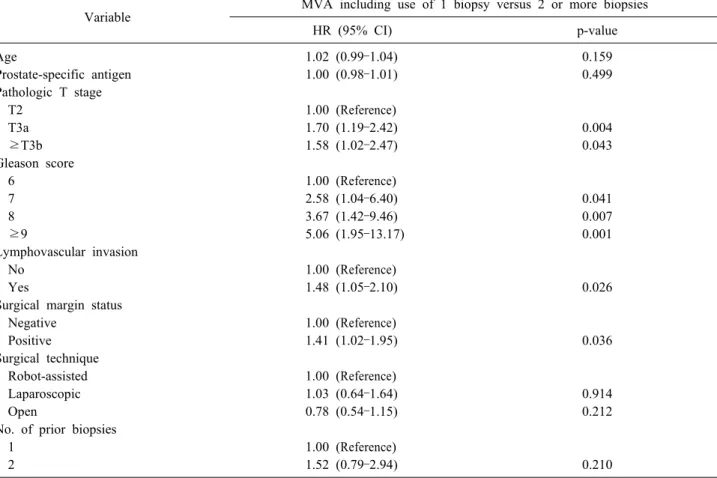
Table 2. Multivariable Cox regression analyses (MVAs) predicting biochemical recurrence in patients according to number of prior biopsies

Variable MVA including use of 1 biopsy versus 2 or more biopsies

HR (95% CI) p-value

Age 1.02 (0.99–1.04) 0.159

Prostate-specific antigen 1.00 (0.98–1.01) 0.499

Pathologic T stage

T2 1.00 (Reference)

T3a 1.70 (1.19–2.42) 0.004

≥T3b 1.58 (1.02–2.47) 0.043

Gleason score

6 1.00 (Reference)

7 2.58 (1.04–6.40) 0.041

8 3.67 (1.42–9.46) 0.007

≥9 5.06 (1.95–13.17) 0.001

Lymphovascular invasion

No 1.00 (Reference)

Yes 1.48 (1.05–2.10) 0.026

Surgical margin status

Negative 1.00 (Reference)

Positive 1.41 (1.02–1.95) 0.036

Surgical technique

Robot-assisted 1.00 (Reference)

Laparoscopic 1.03 (0.64–1.64) 0.914

Open 0.78 (0.54–1.15) 0.212

No. of prior biopsies

1 1.00 (Reference)

2 1.52 (0.79–2.94) 0.210

HR: hazard ratio, CI: confidence interval.

Preoperative PSA levels in the “1st biopsy” group were 11.8±10.7 ng/mL, and in the “2nd or more repeated biop- sies” group was 12.0±7.5 ng/mL, but there was no sig- nificant difference (p=0.883). There were no significant dif- ferences in the D’Amico classification (low versus inter- mediate versus high), surgical technique (open versus lapa- roscopic versus robot-assisted), or presence of lymphovas- cular invasion (LVI) between the 2 groups (p=0.058, p=0.451, and p=0.614, respectively). However, the “2nd or more repeated biopsies” group exhibited more localized pathologic T stage cancers and this was statistically sig- nificant (p=0.003). Furthermore, the “2nd or more repeated biopsies” group exhibited lower Gleason scores and lower rates of positive surgical margins, both being statistically significant (p=0.002 and p=0.001, respectively).

There were no significant differences in estimated blood loss volumes, operation times, hospital stays, and time to removal of urethral catheter between the 2 groups (all p>

0.05). There were no significant differences in the rates of Clavien-Dindo complications between the 2 groups (p>

0.05). The mean follow-up period (at least more than 12 months) was 43.2±18.6 months and overall BCR rate was 19.0%. There were no significant differences in BCR rates between the 2 groups (19.2% vs. 15.2%, p=0.414) accord- ing to univariate analysis.

According to multivariable Cox regression analyses, the significant risk factors for predicting BCR after radical prostatectomy were pathologic T stage, Gleason score, pres- ence of LVI, and positive surgical margins (all p<0.05) (Table 2). However, the Cox proportional hazards model in- dicated that there was no association between the number of prior prostate biopsies and BCR (p=0.210).

To minimize confounding, positive surgical margin

(PSM) analysis was performed to compare the 1st biopsy

and 2nd or more repeated biopsies groups in 66 matched

pairs. Likewise, there were no significant differences in esti-

(5)

Table 3. Perioperative characteristics and pathologic outcomes according to number of prior biopsies after propensity score matching adjustment

Variable No. of biopsy sessions

p-value

1 ≥2

No. of patients 264 (80) 66 (20) -

Age (yr) 67.7±5.8 67.65±5.82 0.199

Body mass index (kg/m

2

) 24.5±2.9 24.17±2.93 0.474

Preoperative PSA (ng/mL) 11.6±9.7 12.01±7.52 0.756

D’Amico classification 0.030

Low 15 (5.7) 10 (15.2)

Intermediate 135 (51.1) 34 (51.5)

High 114 (43.2) 22 (33.3)

Pathologic T stage <0.001

T2 125 (47.3) 52 (78.8)

T3a 92 (34.8) 9 (13.6)

≥T3b 47 (17.8) 5 (7.6)

Gleason score 0.005

6 26 (9.8) 17 (25.8)

7 159 (60.2) 36 (54.5)

8 34 (12.9) 7 (10.6)

≥9 45 (17.0) 6 (9.1)

Surgical technique 0.462

Open 34 (12.9) 12 (18.2)

Laparoscopic 43 (16.3) 12 (18.2)

Robot-assisted 187 (70.8) 42 (63.6)

Lymphovascular invasion 0.412

No 229 (86.7) 60 (90.9)

Yes 35 (13.3) 6 (9.1)

Surgical margin status <0.001

Negative 115 (43.6) 46 (69.7)

Positive 149 (56.4) 20 (30.3)

Estimated blood loss (mL) 273.5±160.2 242.6±125.1 0.145

Operation time (min) 228.2±62.3 221.59±47.06 0.419

Hospital stay (day) 9.1±2.7 8.7±2.6 0.432

Time to removal of urethral catheter (day) 7.5±1.8 7.6±1.0 0.651

Clavien-Dindo complication 0.980

None 219 (83.0) 54 (81.8)

I 9 (3.4) 2 (3.0)

II 24 (9.1) 6 (9.1)

IIIa 8 (3.0) 3 (4.5)

IIIb 4 (1.5) 1 (1.5)

≥IV 0 (0) 0 (0)

Biochemical recurrence 0.183

No 203 (76.9) 56 (84.8)

Yes 61 (23.1) 10 (15.2)

Values are presented as number (%) or mean±standard deviation.

PSA: prostate-specific antigen.

mated blood loss volumes, operation times, hospital stays, and time to removal of urethral catheter between the 2 groups after PSM analysis (all p>0.05) (Table 3).

Kaplan-Meier curve analysis indicated that BCR-free sur-

vival rates between the 2 groups were similar (p=0.711)

(Fig. 1).

(6)

Fig. 1. Probability estimates of biochemical recurrence (BCR)-free survival in all patients stratified by number of prior biopsies using Kaplan-Meier curve.

DISCUSSION

In the United States, more than 160,000 transrectal ultra- sound (TRUS) guided prostate biopsies are performed each year.

16

Prostate biopsy is uncomfortable, invasive for pa- tients, and there are many related complications, including very low percent ratio of sepsis.

17

Standard procedure, TRUS guided biopsy is not lesion-targeted and cause fre- quent false-negative results with samples less than 1% of the prostate gland.

18

Although the application of a random- ized prostate biopsy as a standard method of the biopsy for PCa significantly improves the accuracy of diagnosis, but just 20–30% of PCa lesions are detected during an initial biopsy; the rest is clinically followed and may require re- peated biopsies.

8,19

It is not easily understood why an initial prostate biopsy results may be negative for prostate with cancer, but several factors such as unskillful urologist to tar- get the prostate and the spatial distribution, multifocal and size of carcinoma foci may provide some explanation.

20

To date, there are no definite guidelines about when or whether performing a second prostate biopsy in suspected patients to harbor PCa clinically, but who present negative findings upon an initial biopsy. Therefore, it is important to understand the clinical significance of PCa detected upon repeat biopsy when counseling patients who were not diag- nosed with cancer upon the initial prostate biopsy.

In 2016, Elshafei et al.

21

demonstrated a lower risk of pathological outcome after radical prostatectomy in men di- agnosed with a favorable risk PCa when repeating a prostate

biopsy than men who were diagnosed with initial prostate biopsy. They divided 422 patients who met the National Comprehensive Cancer Network’s “very low-risk” (n=199) and “low-risk” (n=223) PCa definitions and who underwent radical prostatectomy. They found that compared with re- peating prostate biopsies, patient diagnosed with an initial prostate biopsy displayed higher Gleason scores (≥7) (57.7% vs. 42.1%, p=0.005) and extraprostatic extension (14.1% vs. 5.4%, p=0.01). However, they did not analyze whether there were any associations between biopsy session and perioperative complications.

More recently, in 2017, Rosenbaum et al.

6

retrospectively analyzed the medical records about 12,624 patients who had radical prostatectomy from 2007 to 2013. According to this study, 10.8% underwent 2nd or more repeated sessions of prostate biopsy. With a median follow-up of 36.6 months, multiple prostate biopsy groups more often presented with organ-confined tumors and more favorable perioperative complication rates (p<0.05). Gleason scores and status of surgical margin were not different. They concluded that the overall BCR rate was 18.9% and it could be comparable among the groups. There is no association between the number of prostate biopsies and BCR.

In our study, 2nd or more repeated prostate biopsies were not related to adverse pathologic results in Korean patients and the number of biopsy sessions did not reveal any neg- ative effects on BCR or perioperative complications. In 2001, Djavan et al.

12

demonstrated that patients undergoing repeated biopsies more tend to have organ-confined disease during radical prostatectomy. At least 10% of patients with negative prostate biopsy were diagnosed with PCa during repeated biopsies. Although there were differences in loca- tion and multifocality, they concluded that the pathological and biochemical characteristics of cancers detected upon in- itial and repeated biopsies were similar, suggesting similar biological behaviors; thus, advocating repeated prostate bi- opsies in cases of negative findings upon an initial biopsy.

A comparable study was also reported in 2006. Lopez-

Corona et al.

14

retrospectively reviewed 1,357 patients per-

formed with retropubic radical prostatectomy between 1983

and 2001. PCa was diagnosed in 1,042 patients (77%) dur-

ing the first biopsy, in 227 (17%) upon second biopsy, in

59 (4%) upon third biopsy, and in 29 (2%) upon fourth or

later biopsy. Patients who underwent 2nd or more repeated

(7)

biopsies revealed a higher proportion of clinical T1c-stage cancer (p<0.0001). They found that despite these more fa- vorable pathological results, there were no differences in BCR rates. Other 2 similar studies exist that support these results.

15,22

In 2012, Kopp et al.

15

retrospectively analyzed 2,739 men with PCa who underwent radical prostatectomy enrolled in the SEARCH database. Multiple prostate biop- sies are not associated with BCR. Another study performed by Park et al.

22

in 2012, patients diagnosed as PCa after repeat biopsy showed more favorable pathologic outcomes after radical prostatectomy (initial biopsy group [n=637] vs.

repeat biopsy group [n=63]).

The present study has some limitations. First, it is a retro- spective design. Second, the number of patients who under- went 2nd or more repeated biopsies is too small a number (n=66). Heterogeneous groups of patients, no single surgeon and variable surgical techniques are also limitation. Third, this study did not evaluate whether the gap between the bi- opsy and the radical prostatectomy affected the perioper- ative results. In 2014, Park et al.

23

showed that biop- sy-to-surgery interval did not affect positive surgical margin status, operative time, or estimated blood loss in radical prostatectomy. Fourth, we could not gather the exact num- ber of prostate biopsy cores from the other centers. In 2017, Carneiro et al.

24

demonstrated that a greater number of transrectal ultrasound-guided prostate biopsy cores were shown to be related to higher blood loss volumes and peri- operative complications during radical prostatectomy. They included a total of 1,042 patients in group 1 (≤12 cores) and 1,012 patients in group 2 (>12 cores). The incidence of perioperative complications increased with the number of biopsies (group 1, 6.4% vs. group 2, 8.5%; p=0.03).

Multivariable logistic regression analysis indicated that group 2 presented with a 39% higher rate of experiencing perioperative complications during robot-assisted radical prostatectomy. In our study, it was impossible to analyze whether the number of biopsy cores influenced perioper- ative complications. It is the same for mean prostate volume and tumor volume, for which we could not collect the pathologic reports from other centers. Therefore, large-scale, prospective studies are needed in the future.

CONCLUSIONS

Repeated prostate biopsies are not related to a rising risk of perioperative complications, adverse outcomes of pathol- ogy, or higher rates of BCR in men who have undergone radical prostatectomy.

CONFLICT OF INTEREST The authors claim no conflicts of interest.

REFERENCES

1. Siegel RL, Miller KD, Jemal A. Cancer statistics, 2017.

CA Cancer J Clin 2017;67:7-30.

2. Pu YS, Chiang HS, Lin CC, Huang CY, Huang KH, Chen J. Changing trends of prostate cancer in Asia. Aging Male 2004;7:120-32.

3. Jung KW, Won YJ, Oh CM, Kong HJ, Lee DH, Lee KH;

Community of population-based regional cancer registries.

Cancer statistics in Korea: incidence, mortality, survival, and prevalence in 2014. Cancer Res Treat 2017;49:

292-305.

4. Schröder FH. Landmarks in prostate cancer screening.

BJU Int 2012;110 Suppl 1:3-7.

5. Heidenreich A, Bastian PJ, Bellmunt J, Bolla M, Joniau S, van der Kwast T, et al. EAU guidelines on prostate cancer. Part 1: screening, diagnosis, and local treatment with curative intent-update 2013. Eur Urol 2014;65:124- 37.

6. Rosenbaum CM, Mandel P, Tennstedt P, Boehm K, Chun FK, Graefen M, et al. The impact of repeat prostate biop- sies on oncologic, pathological and perioperative outcomes after radical prostatectomy. J Urol 2017;197:103-8.

7. Durkan GC, Sheikh N, Johnson P, Hildreth AJ, Greene DR. Improving prostate cancer detection with an ex- tended-core transrectal ultrasonography-guided prostate bi- opsy protocol. BJU Int 2002;89:33-9.

8. Fink KG, Hutarew G, Lumper W, Jungwirth A, Dietze O, Schmeller NT. Prostate cancer detection with two sets of ten-core compared with two sets of sextant biopsies.

Urology 2001;58:735-9.

9. Hong YM, Lai FC, Chon CH, McNeal JE, Presti JC Jr.

Impact of prior biopsy scheme on pathologic features of cancers detected on repeat biopsies. Urol Oncol 2004;

22:7-10.

10. Ha JY, Shin TJ, Jung W, Kim BH, Park CH, Kim CI.

Updated clinical results of active surveillance of very-

(8)

low-risk prostate cancer in Korean men: 8 years of fol- low-up. Investig Clin Urol 2017;58:164-70.

11. Moussa AS, Jones JS, Yu C, Fareed K, Kattan MW.

Development and validation of a nomogram for predicting a positive repeat prostate biopsy in patients with a pre- vious negative biopsy session in the era of extended pros- tate sampling. BJU Int 2010;106:1309-14.

12. Djavan B, Mazal P, Zlotta A, Wammack R, Ravery V, Remzi M, et al. Pathological features of prostate cancer detected on initial and repeat prostate biopsy: results of the prospective European Prostate Cancer Detection study.

Prostate 2001;47:111-7.

13. Tan N, Lane BR, Li J, Moussa AS, Soriano M, Jones JS.

Prostate cancers diagnosed at repeat biopsy are smaller and less likely to be high grade. J Urol 2008;180:1325-9.

14. Lopez-Corona E, Ohori M, Wheeler TM, Reuter VE, Scardino PT, Kattan MW, et al. Prostate cancer diagnosed after repeat biopsies have a favorable pathological out- come but similar recurrence rate. J Urol 2006;175:923-7.

15. Kopp RP, Stroup SP, Schroeck FR, Freedland SJ, Millard F, Terris MK, et al. Are repeat prostate biopsies safe? A cohort analysis from the SEARCH database. J Urol 2012;

187:2056-60.

16. Loeb S, Carter HB, Berndt SI, Ricker W, Schaeffer EM.

Complications after prostate biopsy: data from SEER- Medicare. J Urol 2011;186:1830-4.

17. Loeb S, Vellekoop A, Ahmed HU, Catto J, Emberton M, Nam R, et al. Systematic review of complications of pros- tate biopsy. Eur Urol 2013;64:876-92.

18. Wolters T, van der Kwast TH, Vissers CJ, Bangma CH, Roobol M, Schröder FH, et al. False-negative prostate nee- dle biopsies: frequency, histopathologic features, and fol-

low-up. Am J Surg Pathol 2010;34:35-43.

19. Djavan B, Zlotta A, Remzi M, Ghawidel K, Basharkhah A, Schulman CC, et al. Optimal predictors of prostate can- cer on repeat prostate biopsy: a prospective study of 1,051 men. J Urol 2000;163:1144-8.

20. Park DJ, Kim KH, Kwon TG, Kim CI, Park CH, Park JS, et al. Clinicopathologic differences between prostate can- cers detected during initial and repeat transrectal ultra- sound-guided biopsy in Korea. Korean J Urol 2014;

55:718-24.

21. ElShafei A, Nyame Y, Kara O, Badawy A, Amujiogu I, Fareed K, et al. More favorable pathological outcomes in men with low risk prostate cancer diagnosed on repeat ver- sus initial transrectal ultrasound guided prostate biopsy. J Uro 2016;195:1767-72.

22. Park M, You D, Yoon JH, Jeong IG, Song C, Hong JH, et al. Does repeat biopsy affect the prognosis of patients with prostate cancer treated with radical prostatectomy?

Analysis by the number of cores taken at initial biopsy.

BJU Int 2012;109:1474-9.

23. Park B, Choo SH, Jeon HG, Jeong BC, Seo SI, Jeon SS, et al. Interval from prostate biopsy to radical prostatec- tomy does not affect immediate operative outcomes for open or minimally invasive approach. J Korean Med Sci 2014;29:1688-93.

24. Carneiro A, Sivaraman A, Sanchez-Salas R, Nunes-Silva

I, Baghdadi M, Srougi V, et al. Higher number of trans-

rectal ultrasound guided prostate biopsy cores is associated

with higher blood loss and perioperative complications in

robot assisted radical prostatectomy. Actas Urol Esp

2017;41:155-61.

수치

Table 1. Perioperative characteristics and pathologic outcomes according to number of prior biopsies
Table 2. Multivariable Cox regression analyses (MVAs) predicting biochemical recurrence in patients according to number of  prior biopsies
Table 3. Perioperative characteristics and pathologic outcomes according to number of prior biopsies after propensity score  matching adjustment
Fig. 1. Probability estimates of biochemical recurrence  (BCR)-free survival in all patients stratified by number of prior biopsies using Kaplan-Meier curve.

참조

관련 문서

The metal biopsy test of both specimens did not show any microscopic cracks in the heat affected zone and the base metal, and both samples were free from

Conclusion : The results reveal that it is not unusual that pedestrians are injured by automobiles in daily life. Awareness of risk factors would be useful in

In the current study, I investigated the association between vascular risk factors as chronic ischemia of the prostate and BPH by conducting experiments to elucidate

In view of the essential relevance of mission in history (and not only in the history of religion), on the one hand, and in theology (and not only in missiology),

It considers the energy use of the different components that are involved in the distribution and viewing of video content: data centres and content delivery networks

1 John Owen, Justification by Faith Alone, in The Works of John Owen, ed. John Bolt, trans. Scott Clark, "Do This and Live: Christ's Active Obedience as the

The histological course of nonalcoholic fatty liver disease: a longitudinal study of 103 patients with sequential liver biopsies.. McPherson S, Hardy T, Henderson

This study verified that after correcting variables, affecting dementia of prostate cancer patients, the ADT treatment group had a higher risk of dementia as