
Systems Biology-Based Platforms to Accelerate Research of Emerging Infectious Diseases
11
0
0
전체 글
(2) Soo-Jin Oh, et al.. ainst pathogens with relatively low antigen variability, such as smallpox, polio, measles, mumps, and rubella, these approaches are not optimal to provide adequate protection against recently appearing EIDs, such as avian influenza virus infection, Ebola hemorrhagic fever, and dengue fever.7,8 Thus, novel systemic approaches are required to predict protective immune responses from high throughput sequencing and bioinformatics analysis and to identify potential antigenic targets to guide and accelerate vaccine development. In recent years, systems biology has rapidly emerged as a new discipline.9 As researchers move from a traditional reductionist approach to a systemic approach, there are rapidly increasing amounts of novel omics data and other relevant data available. Recent advances in next-generation sequencing (NGS) and high-throughput technologies have enabled researchers to comprehensively assess whole genomes, transcriptomes, proteomes, and metabolomes of cells and tissues. These systemic approaches are being applied to the field of immunology and vaccine development, since the integration of genomics, transcriptomics, and metabolomics can give a global picture of nearly 30000 genes, proteins, and cells participating in the immune response to pathogens or vaccination.10-13 In this review, we highlight the major EIDs that have had a significant global impact and for which vaccines do not currently exist, and we summarize recent EIDs in South Korea. Moreover, we discuss various systems biology approaches and examine how these strategies offer significant potential for discovering new biomarkers of pathogenicity or predictors of protective immunity. Overall, we suggest that a systems biology approach would likely enhance our understanding of the pathogenesis of newly emerging pathogens and accelerate the development of next generation vaccines against EIDs.. EMERGING INFECTIOUS DISEASES Recent global outbreaks of EIDs, such as Ebola or Zika virus (ZIKV) diseases, reminded the world of the imminent threat of unexpected pathogens. EIDs can result from infectious agents that have recently appeared or have existed, but are rapidly increasing in incidence.14,15 Major pathogens include highly pathogenic avian influenza (HPAI) virus, severe fever with thrombocytopenia syndrome (SFTS) virus (SFTSV), ZIKV, dengue virus (DENV), and Middle East respiratory syndrome coronavirus (MERS-CoV). Southeast Asia has been the epicenter of many emerging diseases in the past decade.16 Table 1 shows the characteristics of recently occurred or current EIDs occurring in Southeast Asia in the 21st century. Such diseases pose a major threat to public health and have the potential to cause a high incidence of fatality among the global community. Therefore, further investigation into the emergence and pathogenesis of EIDs is required for public health and safety. There are several factors contributing to the emergence of new pathogens: microbial adaptation and genomic change, increased frequency of international travel and commerce, and climate change.17 Given that microbial adaptation is driven by the evolution of microbes to survive in diverse environments, microbes have evolved to change their genomes. RNA viruses carry RNA as their genetic material and can quickly adapt to and exploit different hosts because of the high error rates of the viral enzymes (RNA-dependent RNA polymerases) during their replication.18 The segmented nature and faulty replication mechanisms of Orthomyxoviruses promote genetic variability and frequent re-assortment events, resulting in genetically diverse and novel genomic constellations in infected hosts.19 As an example, hemagglutinin surface proteins of the. Table 1. EIDs from Southeast Asia in the 21st Century EID Avian influenza virus infection (H5Nx). Pathogen Family Genus Orthomyxoviridae Influenza A. Contributing factor(s). Mode of transmissions. Unique aspects. Microbial adaptation, closed farming. Respiratory disease, zoonotic, person-to-person transmission. The fatality rate can be very high if found to be transmitted to humans. MERS infection. Coronaviridae. Betacoronavirus. Increased global traveling. Respiratory disease, person-to-person transmission. Camels serves as a reservoir. Chikungunya infection. Togaviridae. Alphavirus. Climate change. Mosquito bites. Recent outbreaks in the Americas are concerning. Zika-associated Flaviviridae disease. Flavivirus. Climate change, increased global traveling. Mosquito bites, pregnant woman to fetus transmission, sexual transmission, blood transfusion. Zika virus infection can cause microcephaly in infants and Guillain-Barré Syndrome in adults. Dengue fever. Flaviviridae. Flavivirus. Climate change, increased global traveling. Mosquito bites. Antibody-dependent enhancement is challenging. SFTS infection. Bunyaviridae. Phlebovirus. Climate change, microbial adaptation. Tick bites, person to person The elderly are a high-risk group transmission through blood contact. EID, emerging infectious disease; MERS, Middle East respiratory syndrome; MERS-Cov, MERS coronavirus; SFTS, severe fever with thrombocytopenia syndrome. https://doi.org/10.3349/ymj.2018.59.2.176. 177.
(3) Systems Vaccinology and EIDs. influenza A virus undergo antigenic drift and shift, acquiring new infectivity and evading recognition by the immune system.20 Another important consequence of the unstable genomic make-up of RNA viruses is the potential for interspecies transmission between animal hosts and humans. Accordingly, the recent emergence of avian influenza viruses could be devastating in an immunologically naïve population and pose a serious threat to public health.21 Another major factor responsible for EIDs is an increased incidence of international travel and commerce.22,23 The frequent use of air travel has enabled increased globalization, and international tourism has expanded 1.5 times in the last decade. Many travelers can be infected by and become carriers of EID pathogens without their knowledge. A viral incubation period can frequently last more than 2 weeks; thus, it is impossible to successfully monitor travelers with EIDs at an early stage of infection.24 Surveillance of travelers with respiratory illness is especially difficult, because respiratory viruses can propagate easily and cause outbreaks in non-endemic disease areas. For example, in 2015, South Korea experienced a MERS outbreak, which was initiated by a man who had traveled from Bahrain, which is located in the Middle East.25 Despite South Korea being a non-endemic area for MERS, 186 cases were reportedly infected with MERS-CoV during the 2015 outbreak, and this number was the highest among MERS non-endemic areas.26 Lastly, climate change can contribute to ecological changes and, thus, contribute to the emergence of EIDs. Over the last 10 years, the temperature of the earth has increased by approximately 0.4°C, and this global warming has contributed to climate change throughout the world. A warmer climate can provide a more favorable environment for the survival and completion of the vector life cycle.27 In particular, the mosquito population has been widely established across Europe, as well as tropical regions, such as Africa and South Asia.28 As an example, prior to 1970, only nine countries had experienced dengue fever, which is transmitted by mosquitoes and occurs mostly in tropical regions. However, today, cases of DENV-associated disease can be found in more than 125 countries.29 Moreover, climate change is frequently invoked as a primary cause of expansions in incidences of tick-borne diseases, particularly Lyme disease.30 A wide distribution of tick vectors increased the prevalence of tick-borne pathogens, given that rising temperatures accelerate the cycle of development, the production of eggs, and the density and distribution of the tick population.31 Therefore, it is necessary to explore how climate change will alter the distribution, dynamics, and risk of vector-borne diseases.. EIDS IN SOUTH KOREA Highly pathogenic avian influenza infection In South Korea, there are currently several major EIDs, such. 178. as HPAI infection, SFTSV infection, MERS-CoV infection, and DENV/ZIKV-associated diseases, that could pose great risks to public health in the near future. Since 2003, outbreaks of HPAI virus have been alarming, because they have caused significant economic loss and public health concerns.32 The HPAI virus can undergo rapid evolution by gene mutation, reassortment, and homologous recombination in avian species and vertebrate reservoir hosts.33 Although there is no evidence thus far to suggest a direct transmission of HPAI virus to humans in Korea, concerns remain due to the potential for avian influenza viruses circulating in poultry to become transmissible between species and to directly infect humans. In addition, due to the recent increase in zoonotic infections in poultry and persistent human infections in China, influenza A (H7N9) virus has remained a public health threat. Moreover, in February 2013, cases of human infection with a novel, lowly pathogenic H7N9 virus were reported in the Anhui and Shanghai regions of eastern China, and as of April 2017, the total number of H7N9 cases has exceeded 1344, with 511 deaths.34,35. Severe fever with thrombocytopenia syndrome virus infection SFTS infection is an emerging tick-borne hemorrhagic fever that was first described in rural areas of China. The causative agent, SFTSV, is a novel phlebovirus in the Bunyaviridae family. SFTS cases were first reported in China (2009), Japan (2012), and Korea (2013).36-39 The major clinical signs and symptoms of SFTS include high fever, gastrointestinal symptoms, thrombocytopenia, leukocytopenia, and multi-organ dysfunction, with an average case-fatality rate of 10–30%. Moreover, bone marrow suppression and hemophagocytic histiocytes are commonly found in Korean patients with SFTS infection.40 Despite no available treatment for SFTS infection yet, early plasma exchange implementation has proved to be beneficial.41 Moreover, SFTSV is believed to be transmitted through tick bites; however, there are a few suspected cases of human-to-human transmission in China and Korea.42-45 Although human-to-human transmission is considered very rare, it is urgently necessary to develop effective diagnostic and preventative tools to protect against SFTSV and maintain continuous surveillance, because the virus is thought to spread via blood or mucosal secretions.. Middle East respiratory syndrome coronavirus infection MERS-CoV infection is a respiratory disease caused by MERSCoV, a positive single stranded RNA virus.46 Although the detailed mode of transmission and period of virus shedding from infected patients are not fully understood, a nosocomial infection process is anticipated as the main transmission process.47 MERS-CoV was first identified in the Middle East where dromedary camels were found to carry MERS-CoV without any respiratory symptoms.48 The fatality rate of MERS-CoV infection in humans is approximately 20−50%, and its symptoms include fever, cough, and breathing difficulties.48 Since 2012, https://doi.org/10.3349/ymj.2018.59.2.176.
(4) Soo-Jin Oh, et al.. about 30 countries, including Saudi Arabia, China, Malaysia, and Jordan, have reported MERS outbreaks, with Saudi Arabia reporting approximately 80% of all outbreaks.49 Surprisingly, South Korea, which is a non-endemic area for MERS, experienced MERS outbreaks in 2015.26 It is thought that a traveler returning from Bahrain carrying the MERS virus caused an outbreak of 186 cases and 36 deaths, which had a substantial impact on the South Korean economy.26 Given the continuum of emergence and the large magnitude of MERS outbreaks in various regions, further studies are required to bolster capabilities for timely detection and effective control and prevention of MERS-CoV.. ZIKV/DENV-associated infection As a consequence of global warming, ZIKV/DENV-associated diseases are potential EIDs that could arise in South Korea. DENV and ZIKV are mainly transmitted by Aedes albopictus and Aedes aegypti mosquitoes, respectively. Dengue fever is a major public health concern in many parts of the tropics and subtropics, and four different serotypes are currently co-circulating in most dengue-endemic areas.50 The pathogenesis of dengue fever is very unique in regards to antibody-dependent immune enhancement associated with DENV. Whereas primary infection usually confers durable, if not life-long, protection against re-infection by a homologous DENV serotype, secondary infection by viruses of a heterologous DENV serotype can frequently occur and result in severe pathology of the host.51,52 Thus, the unique complexity of DENV pathogenesis and its effect on immune enhancement pose a great challenge to the development of a safe and effective DENV vaccine. Even though South Korea is not a region where dengue is epidemic, there have been many imported DENV infection cases in South Korea, and their number is increasing due to increased traveling to Southeast Asia.53,54 Likewise, ZIKV is an another emerging mosquito-borne pathogen which belongs to the family Flaviviridae and is closely related to other pathogens of public health importance, including Yellow Fever virus, DENV, Japanese Encephalitis virus, and West Nile virus. The first case of human infection by ZIKV was reported in Uganda in 1952.55 Usually, ZIKV infection results in asymptomatic clinical features, but in some cases, ZIKV infection can lead to fatal microcephaly in infants and Guillain-Barre syndrome in adults.56 With increasing cases of ZIKV infection in America, many Asian countries, including India, the Philippines, Taiwan, and Vietnam, have reported ZIKV outbreaks, as of 2016.57 Although South Korea is considered a non-endemic region for Aedes aegypti-transmitted diseases, the first patient infected with ZIKV was reported in South Korea in 2016. The patient had stayed in Brazil for 3 weeks, and upon arrival in South Korea, complained of various symptoms, including fever, eyeball pain, and maculopapular rash.58 Given that Asia is endemic for ZIKV infection and the climate of South Korea is changing each year, it will be only be a mathttps://doi.org/10.3349/ymj.2018.59.2.176. ter of time before mosquito-borne EIDs become endemic in South Korea. Thus, we need to prepare for protection against mosquito-borne EIDs. As summarized above, in addition to virus genetic variation, complex environmental factors, including ecological and behavioral influences, can be important contributing components of the recent emergence of viral diseases. Recent Ebola and Zika outbreaks have shown that the world is unprepared to detect local outbreaks and respond quickly enough to prevent them from becoming global pandemics. Given the great concern for public health owing to the speed and increased volume of global transportation, the ability to rapidly develop and deliver vaccines when new ‘unknown’ diseases emerge offers our best hope to outpace EID outbreaks, save lives, and avert disastrous economic consequences.. LEARNING FROM SYSTEMS BIOLOGY APPROACHES As mentioned above, due to ecological, environmental, and demographic factors that increase exposure to emerging pathogens, EID cases are increasing in prevalence globally. Together with the ongoing evolution of viral and microbial variants and selection for drug resistance, these factors will contribute to the continued emergence of EIDs. Therefore, there is an urgent need for effective surveillance and control strategies, as well as rapid vaccine development. Early warning of EIDs depends on the ability to identify the unusual as early as possible. Information is, therefore, essential and this can be achieved using systems biology tools. Systems biology is an approach to understanding living systems that focuses on modeling diverse types of high-dimensional interactions to develop a more comprehensive understanding of complex phenotypes manifested by the system.10 Systems biology tools enable us to develop and validate predictive models of infectious disease initiation, progression, and outcomes. These models can be derived from the study of the architecture and dynamics of systems-wide host/pathogen molecular interaction networks during infection. Ideally, integrated datasets generated from a combination of high-throughput multi-omics data (transcriptomics, proteomics, metabolomics, lipidomics, etc.) can be used to construct predictive models of the networks and dynamic interactions between the biological components of the complex pathogen-host system.59 In particular, through years of dedicated effort, high-throughput RNA sequencing (RNA-seq) technology, which is a powerful way to profile the transcriptome with great efficiency and high accuracy, has been employed in various viral infections and diseases.60-66 These studies proved that RNA-seq technology has the potential to reveal the dynamics of pathogen genome alteration and systemic changes in host and pathogen gene expression during the process of infection. Thus, if this. 179.
(5) Systems Vaccinology and EIDs. approach is applied to EID research, information can help to accelerate uncovering the pathogenesis of novel infections and the interaction mechanism of emerging pathogens. As a notable example, several groups have taken advantage of RNAseq technology to provide novel insights into how ZIKV infection may cause microcephaly in a short period of time. Nowakowki, et al.67 using single-cell RNA-seq and immunohistochemistry, first reported that AXL, a viral receptor for ZIKV, is highly expressed in human radial glial cells, astrocytes, endothelial cells, and microglia in the developing human cortex and in progenitor cells in the developing retina. Additionally, Onorati, et al.68 analyzed ZIKV-infected neuronal progenitor cells to identify transcriptional changes caused by the virus. Using techniques including single-cell RNA-seq, they described the derivation and characterization of neocortical and spinal cord neuroepithelial stem cells to model early human neurodevelopment and ZIKV-related neuropathogenesis. These data may lead to significant advances in efforts to develop a vaccine against ZIKV. As discussed above, more extensive knowledge of the factors underlying EID pathogenesis can help with the development of more effective prevention strategies. If we are to protect ourselves against EIDs, the essential first step is to establish effective global disease surveillance to give an early warning of emerging infections. This can be achieved by rapid, portable, and inexpensive high-throughput screening of EID pathogens. Furthermore, systems-level informatics will not only reduce the time required for experimental immunology and vaccinology, but also promote identification and rational design of novel vaccine candidates and the determinants of vaccine-induced immunity. This will prompt the escalation of control measures where necessary and facilitate outbreak tracking.. SYSTEMS VACCINOLOGY APPROACHES Vaccines are one of the greatest successes in the history of mankind. However, despite a global effort to develop vaccines against major infectious diseases, the correlates of protection are still poorly defined for many existing vaccines. Moreover, pathogens can evade and suppress immune responses, and human genetic variability can contribute to host susceptibility to infectious diseases or vaccine responsiveness. Although the eradication of smallpox is one of the many successes of global immunization programs, many vaccine challenges remain, especially for the design of effective vaccines for major killers, such as AIDS, dengue fever, and malaria.69 Furthermore, there is an urgent need to develop vaccines for EIDs, including the diseases mentioned above and neglected diseases, such as those caused by Chikungunya, Hendra, and Nipah viruses. Recent studies have used systems biology approaches to identify molecular networks that orchestrate immunity to vaccinations in humans and potentially define correlates of pro-. 180. tection.10,11,70-80 The first attempt at this approach was made with one of the most successful vaccines ever developed, the yellow fever YF-17D vaccine.70,81 As a live attenuated virus vaccine, a single shot of the yellow fever vaccine can confer protection in more than 90% of vaccinees, and it results in long-lasting immunity, a strong neutralizing antibody response, and a robust T cell response. Two independent groups have simultaneously published gene expression profiling data of blood samples from vaccinees within a few days after vaccination.70,82 These molecular signatures helped researchers predict the magnitude of vaccine-induced immunity and provided novel insights into the dynamic nature of the innate and adaptive immune responses to YF-17D vaccine. In particular, Querec, et al.70 reported that EIF2AK4 (also known as GCN2), a known sensor of low amino acid levels inside the cell, was frequently found in the blood of vaccinees and was strongly correlated with the magnitude of the later CD8 T cell response to YF-17D vaccine. Subsequently, systems biology approaches have been extended to influenza and other vaccine studies. Identifying molecular mechanisms of influenza vaccine-induced immunity was more challenging than the yellow fever vaccine study, given that the variation in antigenic match between the vaccine and circulating influenza strains can contribute to vaccine efficacy. Nakaya, et al.71 compared transcriptomic data for those given either the trivalent influenza vaccine (TIV) or the live attenuated influenza vaccine (LAIV). Both vaccines induced the expression of genes involved in innate immune pathways, although LAIV induced higher expression of several interferon-related genes, similar to another live attenuated vaccine, YF17D. Therefore, these data demonstrated that live and dead influenza vaccines clearly result in differential vaccine-induced immunity. Among many factors that determine the efficacy of vaccines, the age of vaccinees is the most important. In fact, older adults and children are most vulnerable to severe and often lethal influenza virus infection, due to decreased vaccine efficacy. Thus, the use of adjuvants can be helpful to improve the efficacy of influenza virus vaccines for children and older adults.83-85 In support of this idea, Nakaya, et al.75 conducted blood transcriptome analysis in children less than 2 years old to compare the immunogenicity of TIV with and without MF59 adjuvant, an oil-in-water adjuvant known to increase the magnitude of the antibody response to inactivated vaccines. Interestingly, the more potent antibody responses generated in subjects receiving MF59-adjuvanted vaccines correlated with strong transcriptional signatures of interferon signaling network in blood samples. In addition to transcriptome analysis, other systems-level approaches, such as proteomics, metabolomics, and lipidomics, can provide greater depth in evaluating correlates of vaccine-induced immunity. The latest research by Dr. Pulendran’s group analyzed vaccine-induced immunity in multi-scale ways in different age groups of healthy adults immunized with shinhttps://doi.org/10.3349/ymj.2018.59.2.176.
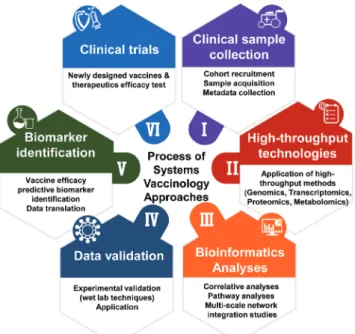
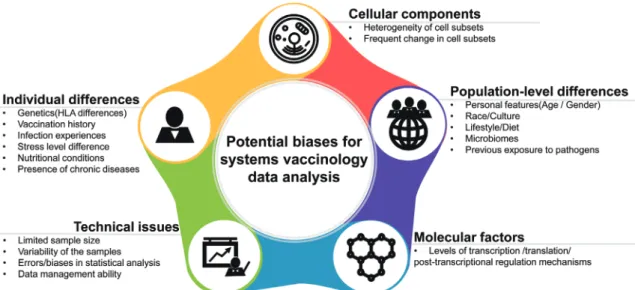
(6) Soo-Jin Oh, et al.. gles vaccine, Zostavax.77 The authors presented an integration data of peripheral blood mononuclear cells (PBMC) transcriptomics, flow cytometry of blood cell populations, plasma cytokine analysis, and metabolomics. The integration of these data revealed transcriptomic association with metabolic correlates of vaccine immunity. Interestingly, this analysis revealed sterol regulatory binding protein-1 and its targets as potentially key integrators of antibody and follicular helper T cell responses. Therefore, these data suggest that blood cells potentially regulate gene transcription in response to metabolic cues, suggesting the value in integration of diverse systems-level data. Given that a vaccine usually initiates a broad, polyfunctional, and persistent immune response integrating all effector cells of the immune system, it is important for scientists to understand the complexity and dynamic and diverse quality of the immune response.86 Therefore, innovative tools, such as using single cell technologies to ‘omics’ approaches, have enabled researchers to quantitatively examine entire classes of molecules at a single cell level, and should further facilitate our understanding of the functional diversity of the immune response. As shown in Fig. 1, using systems biology tools for in-. Fig. 1. The process of systems vaccinology approaches. Systems biology approaches applied to clinical trials can lead to the generation of new hypotheses that can be tested and ultimately lead to better vaccine development. For example, correlates of vaccine-induced immunity in clinical trials can be profiled in detail with high-throughput technologies, such as RNA-sequencing, proteomics, and metabolomics. The high-throughput data thus generated can be integrated using bioinformatics tools and used to create hypotheses about the biological mechanisms underlying vaccine efficacy and immunogenicity. Such hypotheses can then be tested with animal models or in vitro human systems. The insights gained from experimentation can then guide the identification of biomarker and the design and development of new vaccines. Thus, systems vaccinology approaches can provide translational solutions for novel and enhanced vaccine development. https://doi.org/10.3349/ymj.2018.59.2.176. creased understanding of vaccine-mediated immunity can help scientists be better positioned to identify correlates of vaccine immunogenicity and make progress towards developing new and enhanced vaccines and therapeutics.. CURRENT LIMITATIONS AND CHALLENGES Thus far, we have reviewed recent advances in the fields of systems immunology and vaccinology, and presented how systems biology-based platforms can be applied to accelerate a deeper understanding of molecular mechanisms of immunity against EIDs. Despite recent advances, there remain computational and biological challenges regarding systems biology approaches. Because the immune response to a vaccine can be affected by a wide range of confounding factors, including cellular, population, molecular, individual, and technical factors, scientists face many challenges and potential limitations on the analysis of systems-level informatics. These challenges and limitations are described in Fig. 2. Before conducting a large-scale systems biology approach, one should consider the following limitations. Although previous studies involving mathematical modeling of the dynamics of immune responses can provide clues for optimal experimental design, systems-level experiments should be very carefully designed to control for all variables in terms of time points. Furthermore, given that an immune response occurs as a consequence of coordinated events among many immune cells over space and time, it is important to understand how immune cells respond at both the cell population and the single cell level. Single-cell sequencing allows researchers to examine the genomes or transcriptomes of individual cells, thus providing a high-resolution view of cell-to-cell variation. This technique can be used to assess the individual contribution of single cells in complex tissues by profiling the transcriptome in an unbiased manner. In addition, technological problems during systems biology approaches can be resolved by the solutions shown in Table 2. Additionally, despite the high costs of high throughput analysis and limited numbers of human samples, to minimize confounding factors, it is best to maximize sample sizes to achieve appropriate statistical power. Besides sample size, another major confounding variable from a systems vaccinology approach is that the observed transcriptomic changes may result from new induction of gene expression or may simply reflect the changing cellular composition of PBMC compartments. Given that it is impossible to obtain cellular or tissue samples from lymph nodes or spleens of healthy human subjects post vaccination, vaccine efficacy tests must be performed on PBMCs drawn pre- and post-vaccination. This limits the optimal understanding of vaccine-induced protective immune responses. One should keep in mind that PBMCs include mixed and dynamic cell populations, and thus, there may be. 181.
(7) Systems Vaccinology and EIDs. Fig. 2. Potential biases for systems vaccinology data analysis. The application of systems biology approaches to the fields of immunology and vaccinology faces many challenges and potential limitations. The potentially challenging factors for systems vaccinology analysis can be divided into different categories, such as cellular, population, molecular, individual, and technical aspects. Table 2. Potential Challenges and Solutions for Systems Biology Approaches Challenge Difficulties in access to systems-wide profiling technologies High cost of performing systems technologies Difficulties in big data transfer and management. Solution Core facilities can provide easy access to high-throughput technologies Costs will be reduced with time and technological advances High performance computing systems, cloud-based computing and high-speed, low-cost computation can provide easy handling of data transfer. Difficulties in data quality control. Standardization and data sharing via open access can provide good quality control of data. Confounding factors of human samples (heterogeneity, gender, ethnicity, age, vaccination history, prior and current disease condition, microbiome). Sophisticated experimental design, careful selection of samples and increased sample size, and integration of diverse measurements for omics can minimize the confounding factors. dynamic events occurring within lymphoid compartments of PBMCs.87,88 Therefore, it will be more informative and precise to determine the transcriptome in sorted cell subsets, such as B cells, T cells, natural killer cells, macrophages, and dendritic cells.. REVERSE VACCINOLOGY-BASED VACCINE DESIGN Emerging technologies, such as structure-based antigen design and synthetic vaccinology, have heralded in a new era of vaccine discovery and development. As an example, a reverse vaccinology process was recently applied, based on the notion that protective antigens could be identified by determining the antibody repertoire from infected or vaccinated individuals.89,90 Fig. 3 demonstrates the identification of novel and the most effective epitopes using NGS and high-throughput robotic crystallization platforms to enable more precise prediction of epitope targets for efficient antibody generation. Webbased epitope databases, vaccine design resources, and protein. 182. structure comparison resources can help to improve our understanding of immune responses and the escape and evolution of pathogens.91 As an example, there have been massive antibody engineering efforts to improve the breadth and potency of anti-HIV-1 antibodies.92 Given the importance of neutralizing antibodies for vaccine protection, the dissection of antibody variable regions using reverse vaccinology tools is a rational approach to design vaccines and will ultimately lead to more effective vaccines for EIDs.. SUMMARY AND FUTURE DIRECTIONS Recent advances in systems biology-based technologies have enabled scientists to investigate the immune responses induced by pathogens and vaccines at a greater depth than ever before. More importantly, these advances are facilitating the identification of robust molecular and cellular signatures of protective immunity, which can help to generate diagnostic tools that reduce the length and cost of current clinical trials. https://doi.org/10.3349/ymj.2018.59.2.176.
(8) Soo-Jin Oh, et al.. Fig. 3. Use of reverse vaccinology tools in vaccine design. The workflow of vaccine design using reverse vaccinology is shown. First, B cells or plasma cells can be isolated from infected or vaccinated individuals and PCR amplification of antibody gene heavy and light chains can lead to human B cell repertoire analysis, which enables the identification of protective antibodies. Using sequence information of antibody variable regions, the interaction of antibodies with their target antigen can be structurally characterized and used to predict the protective epitope using crystallography. The protective epitope can then be engineered to produce an optimized immunogen with enhanced delivery format, such as nanoparticle technologies or adjuvants. Finally, this new reverse vaccinology-based antigen can be tested in humans.. When these systems approaches are applied to EIDs, they will enable more rapid and rational design of vaccine development. Thus, in this developing field, vaccinologists, immunologists, bioinformaticians, and systems biologists must work hand-in-hand to advance our understanding of the molecular mechanisms by which vaccines induce protective immunity and help drive development of the next generation of vaccines to prevent EIDs.. ACKNOWLEDGEMENTS This research was supported by the Basic Science Research Program through the National Research Foundation of Korea (NRF), funded by the Ministry of Science, ICT & Future Planhttps://doi.org/10.3349/ymj.2018.59.2.176. ning (grant number NRF-2016R1C1B2006493).. ORCID Soo-Jin Oh Young-Ki Choi Ok Sarah Shin. https://orcid.org/0000-0001-5423-0440 https://orcid.org/0000-0002-1894-9869 https://orcid.org/0000-0002-3977-2492. REFERENCES 1. Morse SS, Schluederberg A. From the National Institute of Allergy and Infectious Diseases, the Fogarty International Center of the National Institutes of Health, and the Rockefeller University. Emerging viruses: the evolution of viruses and viral diseases. J Infect Dis 1990;162:1-7.. 183.
(9) Systems Vaccinology and EIDs. 2. Morse SS, Hughes JM. Developing an integrated epidemiologic approach to emerging infectious diseases. Epidemiol Rev 1996; 18:1-3. 3. Woolhouse M, Scott F, Hudson Z, Howey R, Chase-Topping M. Human viruses: discovery and emergence. Philos Trans R Soc Lond B Biol Sci 2012;367:2864-71. 4. Woolhouse ME. Population biology of emerging and re-emerging pathogens. Trends Microbiol 2002;10(10 Suppl):S3-7. 5. Woolhouse ME, Gowtage-Sequeria S. Host range and emerging and reemerging pathogens. Emerg Infect Dis 2005;11:1842-7. 6. Grimm SK, Ackerman ME. Vaccine design: emerging concepts and renewed optimism. Curr Opin Biotechnol 2013;24:1078-88. 7. Nakaya HI, Pulendran B. Vaccinology in the era of high-throughput biology. Philos Trans R Soc Lond B Biol Sci 2015;370:20140146. 8. Koff WC, Burton DR, Johnson PR, Walker BD, King CR, Nabel GJ, et al. Accelerating next-generation vaccine development for global disease prevention. Science 2013;340:1232910. 9. Westerhoff HV, Winder C, Messiha H, Simeonidis E, Adamczyk M, Verma M, et al. Systems biology: the elements and principles of life. FEBS Lett 2009;583:3882-90. 10. Nakaya HI, Li S, Pulendran B. Systems vaccinology: learning to compute the behavior of vaccine induced immunity. Wiley Interdiscip Rev Syst Biol Med 2012;4:193-205. 11. Li S, Nakaya HI, Kazmin DA, Oh JZ, Pulendran B. Systems biological approaches to measure and understand vaccine immunity in humans. Semin Immunol 2013;25:209-18. 12. Pulendran B, Li S, Nakaya HI. Systems vaccinology. Immunity 2010;33:516-29. 13. Pulendran B, Oh JZ, Nakaya HI, Ravindran R, Kazmin DA. Immunity to viruses: learning from successful human vaccines. Immunol Rev 2013;255:243-55. 14. Almeida SL. Trending now: re-emerging infectious disease update. J Emerg Nurs 2015;41:104-8. 15. Howard CR, Fletcher NF. Emerging virus diseases: can we ever expect the unexpected? Emerg Microbes Infect 2012;1:e46. 16. Dash AP, Bhatia R, Sunyoto T, Mourya DT. Emerging and reemerging arboviral diseases in Southeast Asia. J Vector Borne Dis 2013;50:77-84. 17. Morse SS. Factors in the emergence of infectious diseases. Emerg Infect Dis 1995;1:7-15. 18. Lauring AS, Frydman J, Andino R. The role of mutational robustness in RNA virus evolution. Nat Rev Microbiol 2013;11:327-36. 19. Webster RG, Bean WJ, Gorman OT, Chambers TM, Kawaoka Y. Evolution and ecology of influenza A viruses. Microbiol Rev 1992; 56:152-79. 20. Yoon SW, Webby RJ, Webster RG. Evolution and ecology of influenza A viruses. Curr Top Microbiol Immunol 2014;385:359-75. 21. Short KR, Richard M, Verhagen JH, van Riel D, Schrauwen EJ, van den Brand JM, et al. One health, multiple challenges: the inter-species transmission of influenza A virus. One Health 2015;1:1-13. 22. Wilson ME. Travel and the emergence of infectious diseases. Emerg Infect Dis 1995;1:39-46. 23. Wilson ME. The traveller and emerging infections: sentinel, courier, transmitter. J Appl Microbiol 2003;94 Suppl:1S-11S. 24. Hwang GM, Mahoney PJ, James JH, Lin GC, Berro AD, Keybl MA, et al. A model-based tool to predict the propagation of infectious disease via airports. Travel Med Infect Dis 2012;10:32-42. 25. Cho SY, Kang JM, Ha YE, Park GE, Lee JY, Ko JH, et al. MERS-CoV outbreak following a single patient exposure in an emergency room in South Korea: an epidemiological outbreak study. Lancet 2016;388:994-1001. 26. Park WB, Perera RA, Choe PG, Lau EH, Choi SJ, Chun JY, et al. Kinetics of serologic responses to MERS coronavirus infection in. 184. humans, South Korea. Emerg Infect Dis 2015;21:2186-9. 27. Beugnet F, Chalvet-Monfray K. Impact of climate change in the epidemiology of vector-borne diseases in domestic carnivores. Comp Immunol Microbiol Infect Dis 2013;36:559-66. 28. Medlock JM, Hansford KM, Versteirt V, Cull B, Kampen H, Fontenille D, et al. An entomological review of invasive mosquitoes in Europe. Bull Entomol Res 2015;105:637-63. 29. Murray NE, Quam MB, Wilder-Smith A. Epidemiology of dengue: past, present and future prospects. Clin Epidemiol 2013;5:299309. 30. Stone BL, Tourand Y, Brissette CA. Brave new worlds: the expanding universe of Lyme disease. Vector Borne Zoonotic Dis 2017;17: 619-29. 31. Ostfeld RS, Brunner JL. Climate change and Ixodes tick-borne diseases of humans. Philos Trans R Soc Lond B Biol Sci 2015;370: 20140051. 32. Choi YK, Pascua PN, Song MS. Swine influenza viruses: an Asian perspective. Curr Top Microbiol Immunol 2013;370:147-72. 33. Chen R, Holmes EC. Avian influenza virus exhibits rapid evolutionary dynamics. Mol Biol Evol 2006;23:2336-41. 34. Su S, Gu M, Liu D, Cui J, Gao GF, Zhou J, et al. Epidemiology, evolution, and pathogenesis of H7N9 Influenza viruses in five epidemic waves since 2013 in China. Trends Microbiol 2017;25:713-28. 35. Wang X, Jiang H, Wu P, Uyeki TM, Feng L, Lai S, et al. Epidemiology of avian influenza A H7N9 virus in human beings across five epidemics in mainland China, 2013-17: an epidemiological study of laboratory-confirmed case series. Lancet Infect Dis 2017;17: 822-32. 36. Liu Q, He B, Huang SY, Wei F, Zhu XQ. Severe fever with thrombocytopenia syndrome, an emerging tick-borne zoonosis. Lancet Infect Dis 2014;14:763-72. 37. Zhan J, Wang Q, Cheng J, Hu B, Li J, Zhan F, et al. Current status of severe fever with thrombocytopenia syndrome in China. Virol Sin 2017;32:51-62. 38. Yun SM, Lee WG, Ryou J, Yang SC, Park SW, Roh JY, et al. Severe fever with thrombocytopenia syndrome virus in ticks collected from humans, South Korea, 2013. Emerg Infect Dis 2014;20:1358-61. 39. Takahashi T, Maeda K, Suzuki T, Ishido A, Shigeoka T, Tominaga T, et al. The first identification and retrospective study of Severe Fever with Thrombocytopenia Syndrome in Japan. J Infect Dis 2014;209:816-27. 40. Shin SY, Cho OH, Bae IG. Bone marrow suppression and hemophagocytic histiocytes are common findings in Korean severe fever with thrombocytopenia syndrome patients. Yonsei Med J 2016;57:1286-9. 41. Oh WS, Yoo JR, Kwon KT, Kim HI, Lee SJ, Jun JB, et al. Effect of early plasma exchange on survival in patients with severe fever with thrombocytopenia syndrome: a multicenter study. Yonsei Med J 2017;58:867-71. 42. Gai ZT, Zhang Y, Liang MF, Jin C, Zhang S, Zhu CB, et al. Clinical progress and risk factors for death in severe fever with thrombocytopenia syndrome patients. J Infect Dis 2012;206:1095-102. 43. Kim WY, Choi W, Park SW, Wang EB, Lee WJ, Jee Y, et al. Nosocomial transmission of severe fever with thrombocytopenia syndrome in Korea. Clin Infect Dis 2015;60:1681-3. 44. Bao CJ, Guo XL, Qi X, Hu JL, Zhou MH, Varma JK, et al. A family cluster of infections by a newly recognized bunyavirus in eastern China, 2007: further evidence of person-to-person transmission. Clin Infect Dis 2011;53:1208-14. 45. Tang X, Wu W, Wang H, Du Y, Liu L, Kang K, et al. Human-to-human transmission of severe fever with thrombocytopenia syndrome bunyavirus through contact with infectious blood. J Infect Dis 2013;207:736-9. https://doi.org/10.3349/ymj.2018.59.2.176.
(10) Soo-Jin Oh, et al.. 46. Zaki AM, van Boheemen S, Bestebroer TM, Osterhaus AD, Fouchier RA. Isolation of a novel coronavirus from a man with pneumonia in Saudi Arabia. N Engl J Med 2012;367:1814-20. 47. Azhar EI, Lanini S, Ippolito G, Zumla A. The middle east respiratory syndrome coronavirus-a continuing risk to global health security. Adv Exp Med Biol 2017;972:49-60. 48. de Wit E, van Doremalen N, Falzarano D, Munster VJ. SARS and MERS: recent insights into emerging coronaviruses. Nat Rev Microbiol 2016;14:523-34. 49. Memish ZA, Mishra N, Olival KJ, Fagbo SF, Kapoor V, Epstein JH, et al. Middle East respiratory syndrome coronavirus in bats, Saudi Arabia. Emerg Infect Dis 2013;19:1819-23. 50. Gubler DJ. Dengue, urbanization and globalization: the unholy trinity of the 21(st) century. Trop Med Health 2011;39(4 Suppl) :311. 51. Diamond MS, Pierson TC. Molecular insight into dengue virus pathogenesis and its implications for disease control. Cell 2015; 162:488-92. 52. Halstead SB. Dengue. Lancet 2007;370:1644-52. 53. Park JH, Lee DW. Dengue fever in South Korea, 2006-2010. Emerg Infect Dis 2012;18:1525-7. 54. Miki S, Lee WC, Lee MJ. A comparative study of the trends of imported Dengue cases in Korea and Japan 2011-2015. J Clin Med Res 2017;9:650-3. 55. Musso D, Gubler DJ. Zika virus. Clin Microbiol Rev 2016;29:487-524. 56. Mlakar J, Korva M, Tul N, Popovic´ M, Poljsˇak-Prijatelj M, Mraz J, et al. Zika virus associated with microcephaly. N Engl J Med 2016; 374:951-8. 57. Lim SK, Lim JK, Yoon IK. An update on Zika virus in Asia. Infect Chemother 2017;49:91-100. 58. Jang HC, Park WB, Kim UJ, Chun JY, Choi SJ, Choe PG, et al. First imported case of Zika virus infection into Korea. J Korean Med Sci 2016;31:1173-7. 59. Aderem A, Adkins JN, Ansong C, Galagan J, Kaiser S, Korth MJ, et al. A systems biology approach to infectious disease research: innovating the pathogen-host research paradigm. MBio 2011;2: e00325-10. 60. Mei B, Ding X, Xu HZ, Wang MT. Global gene expression changes in human peripheral blood after H7N9 infection. Gene 2014;551: 255-60. 61. Wang Y, Lupiani B, Reddy SM, Lamont SJ, Zhou H. RNA-seq analysis revealed novel genes and signaling pathway associated with disease resistance to avian influenza virus infection in chickens. Poult Sci 2014;93:485-93. 62. Ertl R, Klein D. Transcriptional profiling of the host cell response to feline immunodeficiency virus infection. Virol J 2014;11:52. 63. Jones M, Dry IR, Frampton D, Singh M, Kanda RK, Yee MB, et al. RNA-seq analysis of host and viral gene expression highlights interaction between varicella zoster virus and keratinocyte differentiation. PLoS Pathog 2014;10:e1003896. 64. Rossetto CC, Tarrant-Elorza M, Verma S, Purushothaman P, Pari GS. Regulation of viral and cellular gene expression by Kaposi’s sarcoma-associated herpesvirus polyadenylated nuclear RNA. J Virol 2013;87:5540-53. 65. Juranic Lisnic V, Babic Cac M, Lisnic B, Trsan T, Mefferd A, Das Mukhopadhyay C, et al. Dual analysis of the murine cytomegalovirus and host cell transcriptomes reveal new aspects of the virushost cell interface. PLoS Pathog 2013;9:e1003611. 66. Park SJ, Kumar M, Kwon HI, Seong RK, Han K, Song JM, et al. Dynamic changes in host gene expression associated with H5N8 avian influenza virus infection in mice. Sci Rep 2015;5:16512. 67. Nowakowski TJ, Pollen AA, Di Lullo E, Sandoval-Espinosa C, Bershteyn M, Kriegstein AR. Expression analysis highlights AXL as a https://doi.org/10.3349/ymj.2018.59.2.176. candidate Zika virus entry receptor in neural stem cells. Cell Stem Cell 2016;18:591-6. 68. Onorati M, Li Z, Liu F, Sousa AMM, Nakagawa N, Li M, et al. Zika virus disrupts Phospho-TBK1 localization and mitosis in human neuroepithelial stem cells and radial glia. Cell Rep 2016;16:2576-92. 69. Ahmed N, Gottschalk S. How to design effective vaccines: lessons from an old success story. Expert Rev Vaccines 2009;8:543-6. 70. Querec TD, Akondy RS, Lee EK, Cao W, Nakaya HI, Teuwen D, et al. Systems biology approach predicts immunogenicity of the yellow fever vaccine in humans. Nat Immunol 2009;10:116-25. 71. Nakaya HI, Wrammert J, Lee EK, Racioppi L, Marie-Kunze S, Haining WN, et al. Systems biology of vaccination for seasonal influenza in humans. Nat Immunol 2011;12:786-95. 72. Oh JZ, Ravindran R, Chassaing B, Carvalho FA, Maddur MS, Bower M, et al. TLR5-mediated sensing of gut microbiota is necessary for antibody responses to seasonal influenza vaccination. Immunity 2014;41:478-92. 73. Ravindran R, Khan N, Nakaya HI, Li S, Loebbermann J, Maddur MS, et al. Vaccine activation of the nutrient sensor GCN2 in dendritic cells enhances antigen presentation. Science 2014;343:313-7. 74. Nakaya HI, Hagan T, Duraisingham SS, Lee EK, Kwissa M, Rouphael N, et al. Systems analysis of immunity to influenza vaccination across multiple years and in diverse populations reveals shared molecular signatures. Immunity 2015;43:1186-98. 75. Nakaya HI, Clutterbuck E, Kazmin D, Wang L, Cortese M, Bosinger SE, et al. Systems biology of immunity to MF59-adjuvanted versus nonadjuvanted trivalent seasonal influenza vaccines in early childhood. Proc Natl Acad Sci U S A 2016;113:1853-8. 76. Kazmin D, Nakaya HI, Lee EK, Johnson MJ, van der Most R, van den Berg RA, et al. Systems analysis of protective immune responses to RTS,S malaria vaccination in humans. Proc Natl Acad Sci U S A 2017;114:2425-30. 77. Li S, Sullivan NL, Rouphael N, Yu T, Banton S, Maddur MS, et al. Metabolic phenotypes of response to vaccination in humans. Cell 2017;169:862-77. 78. Hoek KL, Samir P, Howard LM, Niu X, Prasad N, Galassie A, et al. A cell-based systems biology assessment of human blood to monitor immune responses after influenza vaccination. PLoS One 2015;10:e0118528. 79. Mizukami T, Momose H, Kuramitsu M, Takizawa K, Araki K, Furuhata K, et al. System vaccinology for the evaluation of influenza vaccine safety by multiplex gene detection of novel biomarkers in a preclinical study and batch release test. PLoS One 2014;9: e101835. 80. Bucasas KL, Franco LM, Shaw CA, Bray MS, Wells JM, Niño D, et al. Early patterns of gene expression correlate with the humoral immune response to influenza vaccination in humans. J Infect Dis 2011;203:921-9. 81. Pulendran B. Learning immunology from the yellow fever vaccine: innate immunity to systems vaccinology. Nat Rev Immunol 2009;9:741-7. 82. Gaucher D, Therrien R, Kettaf N, Angermann BR, Boucher G, Filali-Mouhim A, et al. Yellow fever vaccine induces integrated multilineage and polyfunctional immune responses. J Exp Med 2008; 205:3119-31. 83. O’Hagan DT, Friedland LR, Hanon E, Didierlaurent AM. Towards an evidence based approach for the development of adjuvanted vaccines. Curr Opin Immunol 2017;47:93-102. 84. Vesikari T, Knuf M, Wutzler P, Karvonen A, Kieninger-Baum D, Schmitt HJ, et al. Oil-in-water emulsion adjuvant with influenza vaccine in young children. N Engl J Med 2011;365:1406-16. 85. Vesikari T, Forstên A, Herbinger KH, Cioppa GD, Beygo J, Borkowski A, et al. Safety and immunogenicity of an MF59(®)-adjuvanted A/. 185.
(11) Systems Vaccinology and EIDs. H5N1 pre-pandemic influenza vaccine in adults and the elderly. Vaccine 2012;30:1388-96. 86. Six A, Bellier B, Thomas-Vaslin V, Klatzmann D. Systems biology in vaccine design. Microb Biotechnol 2012;5:295-304. 87. Henn AD, Wu S, Qiu X, Ruda M, Stover M, Yang H, et al. High-resolution temporal response patterns to influenza vaccine reveal a distinct human plasma cell gene signature. Sci Rep 2013;3:2327. 88. Chaussabel D, Pascual V, Banchereau J. Assessing the human immune system through blood transcriptomics. BMC Biol 2010;8:84.. 186. 89. Rappuoli R. Reverse vaccinology. Curr Opin Microbiol 2000;3: 445-50. 90. Rappuoli R, Black S, Lambert PH. Vaccine discovery and translation of new vaccine technology. Lancet 2011;378:360-8. 91. Korber B, LaBute M, Yusim K. Immunoinformatics comes of age. PLoS Comput Biol 2006;2:e71. 92. Sievers SA, Scharf L, West AP Jr, Bjorkman PJ. Antibody engineering for increased potency, breadth and half-life. Curr Opin HIV AIDS 2015;10:151-9.. https://doi.org/10.3349/ymj.2018.59.2.176.
(12)
수치

관련 문서
There are complex reasons behind this: the emerging importance of the regional human resources development and regional innovation systems; the steadily weakening
This research might enlarge application of ionic liquid in chemical processes by providing color change mechanism of imidazolium based ionic liquids according
통합과학 문학 간호의기초
효율적인 태양광 발전을 위해 필요한 조건들을 생 각해보자..
Based on the result of such assessment, this study attempted to establish a basis for establishment of physical epidemiology research evaluation system
→ To use wastes in cement industry, it is necessary to research on the behavior of heavy metals and alkali chlorine, and influence on the cement properties. Emerging
7.3 Switching systems (Routers in Backbone) 7.4 Signaling systems... Dual-tone multi-frequency
Copeland, "Business Strategy Orientation, Information Systems Strategic Orientation, and Strategic Alignment", Information Systems Research, Vol...
