doi https://doi.org/10.12964/jsst.20007
The Effect of Group Sandplay Therapy on Psychological Health and Resilience of Adolescent Survivors of Nepal Earthquake
이 세 화 장 미 경
Lee, SeHwa Jang, Mikyung
doi https://doi.org/10.12964/jsst.20007
The Effect of Group Sandplay Therapy on Psychological Health and Resilience of Adolescent Survivors of Nepal Earthquake *
이 세 화** 장 미 경***
Lee, SeHwa Jang, Mikyung
<Abstract>
The authors analyzed the effects of group sandplay therapy on the psychological health and resilience of adolescent survivors 16 months after the 2015 Nepal earthquake, and explored the themes these adolescents expressed during counseling. Group sandplay was found to have significantly decreased the adolescents’ internalizing problems such as anxiety/depression and withdrawal/depression, while their resilience had also significantly improved. The narrative analysis in turn yielded seven themes: magical wish fulfillment/hope for recovery; direct expression of danger of disaster; relationship with gods revealing human’s identity; desire for protection and care from danger and damage in reality;
recovering the order of life from chaos; creation of a new world from the chaotic world; and return to their normal daily life.
Keywords : group sandplay therapy, earthquake, adolescents, Nepal, resilience, Hinduism
* 본 논문은 2016학년도 남서울대학교 석사학위 논문의 일부임.
** 주저자, Sunflower Center of Chungnam for Women and Children Victims of Violence 전문요원 ([email protected])
*** 교신저자, 남서울대학교 아동복지학과 교수 ([email protected])
Ⅰ. Introduction
Sandplay is a nonverbal yet expressive approach to counseling for children and adults that was developed by Dora Kalff (1980/2003) from her study of the analytical psychology of Carl Jung (1969). In both individual and group contexts, sandplay has been shown to help participants develop the inner resilience to overcome traumatic events. Unfortunately, due to a dearth of research in this area, there remain gaps in the understanding of how to use this modality to foster resilience in adolescents.
These gaps were brought strongly to our attention during our work in Nepal with adolescent survivors of the devastating earthquake that had struck the country in April 2015. The aftermath left 8,900 people dead and over 22,000 injured. The number of homes damaged or destroyed by the disaster numbered more than 880,000 (Nepal Planning Commission, 2015), with the result that many survivors were left homeless and thus forced to seek shelter in temporary relief camps. All the adolescents we counseled had lived in the camps for 16 months and were traumatized by their experiences of the earthquake and its aftermath.
The psychological and physical health of these individuals was severely affected by factors such as leaving their homes, deprived living conditions within the camps, change or loss of occupation and income, adaptation to a new place, and uncertainty about the future, combined with the stress and anxiety caused by these factors. Psychological states after a disaster can be divided into acute, subacute, and chronic phases; the acute phase being 3-7 days after the disaster, subacute phase 1-3 months, and the chronic phase 3 months (Korean Disaster & Trauma Mental Health Committee, 2015). Accordingly, the survivors of the Nepal earthquake can be said to be in the chronic phase characterized by emotional and behavioral problems such as post-traumatic stress symptoms, mood disorders, behavioral problems, dissociative symptoms, traumatic mood responses, and somatic symptoms - problems which, in the absence of social support, might not abate (Bal, 2008; Risler, Kintzle, & Nackerud, 2015).
McAdams has suggested a phased approach for crisis clients, and explained that the actions
required at the different phases are different (McAdams & Keener, 2008). Furthermore, because
elements such as age, gender, sexual, cultural, socioeconomic, religious and spiritual identities can
affect the mental health outcome of each phase, it is necessary to take a more contextual
approach to the ecosystem to which the client belongs (Ratts et al., 2016). Both of these
approaches inform the current study, the purpose of which is to examine the effect of group sandplay therapy on the psychological health and resilience of adolescent earthquake survivors in Nepal.
1. Resilience
Post-traumatic stress disorder (PTSD) and other psychological health problems experienced by survivors of natural disasters such as earthquakes can be offset by a factor such as resilience (Kukihara et al., 2014; Jang & Yoo, 2014; Stein, 2009). Resilience predicts active coping strategies (Li & Yang, 2016) and is negatively correlated with post-traumatic stress disorder symptoms (Bensimon, 2012). Hence counseling interventions that help strengthen the resilience of crisis clients are needed.
In a study of survivors of the Fukushima earthquake in Japan (Kukihara et al., 2014), it was found that resilience had reduced the impact of the trauma on the survivors. Another study reported a significant positive correlation between resilience and posttraumatic growth in adolescents (Park, 2013). There was also a correlation between the level of resilience and problems such as indirect trauma, depression, and anger among South Korean children and adolescents due to media coverage about the sinking of a large ferry that claimed the lives of 250 Korean high school students (Jung, 2015).
The ability of adolescents to recover from adversities like natural and other disasters comes from proactive factors that enhance their resilience. These factors reduce the impact of vulnerabilities or risk factors in the environment to an individual (Everall, Altrows, & Paulson, 2006; Hauser, 1999; Rak & Patterson, 1996). Proactive factors fall into three categories:
individual, family, and external or community factors.
Individual factors that enhance resiliency include good cognitive functioning (Richman &
Fraser, 2001), good problem-solving skills, and problem-focused coping strategies (Fernando &
Hebert, 2011; Everall, Altrows, & Paulson, 2006; Howard & Johnson, 2000). Family factors are related to a secure attachment with at least one parent who plays a major role in promoting resilience. Parents can be supportive sources of informative support, consisting of guidance and information, and emotional support, which help adolescents develop their self-esteem (Dumont &
Provost, 1999). External or community factors involve the support of caring nonparent adults
such as teachers, counselors, ministers, and neighbors (Walsh, 2002). Adolescents from troubled families, or whose parents do not have the ability to support them due to a natural disaster or lack of community resources, are especially in need support from a counseling group (Wang, Nan, & Zhang, 2017; Lee et al., 2013; Salloum et al., 2009; Everall, Altrows & Paulson, 2006).
2. Psychological Health
Adolescents are in a developmental phase in which they struggle with issues regarding their independence/dependence in relation to their parents. Adaptation to a temporary living environment such as a relief camp after a disaster amplifies the adolescent’s sense of loss and causes considerable stress, often accompanied by anger and grief and the disconnection from familial relationships raises societal tension (Bae, 2016). In addition, the stress of parents’
psychological difficulties, such as unemployment and environmental changes, places a double burden on the adolescents, who may find themselves expected to behave more maturely than their normal developmental stage (Hwang & Kim, 2017).
These factors can lead to family conflict, and cause adolescents to internalize their stress caused by the disaster and this can also be externalised as behavioral problems. The symptoms can also be somatized in the form of headaches, rashes, and gastrointestinal disorders, as well as leading to sleeping and eating disorders, sexual dysfunction, loss of concentration, low energy, depression, anxiety, and helplessness (Gu, 2011). Children and adolescents might also experience PTSD symptoms similar to adults, such as flashbacks, nightmares, avoidance, numbness, and social withdrawal (Furukawa, Takeuchi, Yano, & Muto, 2015; Oyama, Nakamura, Suda, &
Someya, 2012).
Research has found that the prevalence of PTSD symptoms among adolescent survivors of
earthquakes is high; a study identified these symptoms in 10 –80% of those aged 12-15 years
who survived the 1999 Izmit earthquake in Turkey (Yoyorb, Akbiyik, Kirmizigul, & Sohmen,
2004). Another study, of 101 adolescents after the 2011 Tohoku earthquake in Japan, showed
that 15.6%, 51.4%, and 18.7% of participants reported clinical levels of depression, anxiety, and
PTSD (Okuyama et al., 2017). A major study of 2,299 Chinese adolescents 3 and 6 months
after the 2013 Lushan earthquake revealed that the prevalence rates of probable PTSD were
37.4% and 24.2%, respectively, and indeed the prevalence rate of all somatic symptoms was higher than 50% (Zhang, Zhu, Du, & Zhang, 2015).
Children and adolescents from developing countries, such as Nepal, struggle to recover from the psychological stress and trauma of a natural disaster and their recovery time tends to be prolonged (Bal, 2008). Family support is often lacking as the parents also experience psychological problems after a disaster (Morris, Gabert-Quillen, & Delahanty, 2012); a vacuum that is further compounded by the inadequate mental care services of these countries (Deeba &
Rapee, 2015), especially in rural areas.
3. Psychological Intervention after the 2015 Earthquake in Nepal
It is fair to say there is a serious dearth of psychosocial services in Nepal for acute or prolonged PTSD in the wake of natural and other disasters. Following the 2015 earthquake, the government did deliver a number of mental health services, including a 24/7 counseling hotline, training for healthcare workers to provide basic mental health service in clinics and hospitals, and a screening tool to assist health volunteers diagnose and refer to the most acute cases.
However, none of these initiatives were provided at a professional level (Sherchan et al, 2017).
This state of affairs is unsurprising if one considers the 2006 Nepal report released by the World Health Organization on Nepal, which estimated that the number of mental health professionals per 100,000 people was just 0.59, with a disproportionately higher density in urban versus rural areas, with government spending on mental health accounting for a meager 0.17%
of the total health budget (WHO, 2006). Moreover, the state of counselor education in Nepal is meager: Training courses are short, do not involve clinical practice, and are provided on a private level by foreign experts unfamiliar with the cultural setting (Jordans, Keen, Pradhan &
Tol, 2007).
At the time the Nepal report was compiled there had been no reported cases of adolescent
patients actually using the available mental health services and facilities (WHO, 2006). This is
especially concerning as another, later report estimates that 38% of adolescents in Southeast
Asian countries have suicidal ideation, suicidal ideation with a plan, or have attempted suicide
(WHO, 2017); this is with or without natural disasters involved. Among the rare research
conducted in the wake of the 2015 Nepal earthquake, a study on the post-traumatic stress
symptoms (PTSS) of 893 adolescents aged 11-17 revealed that the prevalence of PTSS in the Sindhupalchok district was 39.5%, and depression symptoms was 40.0%, which was 2-3 times higher than those of adolescents in the capital, Kathmandu (Silwal et al., 2018).
So far, the studies related to the 2015 Nepal earthquake have focused on the impact of the disaster on the people’s psychological health, and there has yet to appear any studies reporting the effectiveness of intervention programs. Gathering essential data to provide rapid and effective intervention to populations devastated by the effect of natural disasters involves many obstacles (Morton & Levy, 2011); these include the lack of professionals and infrastructure social systems, cultural barriers, and misunderstanding of the need for psychological intervention. Additionally, there are difficulties in communication, especially with adolescents who have lost parents to disasters or who have psychologically or physically unhealthy parents, or have parents who want their children to work instead of participating in the intervention programs due to family economic hardship.
4. Sandplay
People who practice the Hindu religion in Nepal may be reticent to express negative emotions due to their belief in reincarnation, which they believe is determined by good or bad actions in this lifetime (Tanwar, 2016; Han, 2010). Therefore, it may be more effective to provide nonverbal and creative outlets for crisis intervention such as sandplay therapy rather than more traditional forms of direct verbal expression (Yeh, Aslan, Mendoza, & Tsukamoto, 2015).
As such, sandplay therapy might be a useful way of strengthening resilience against the impact of a natural disaster such as an earthquake and mitigating against mental health problems.
Sandplay combines both art and play therapy and is an ideal approach for young people in particular, whose verbal skills are usually less developed than those of adults (Reece & Ford, 2006) and who tend to find it more natural to express themselves through play than through language (Landreth, 2012). Sandplay therapy engages with the archetypal level of the psyche in order to produce meaningful and lasting change in an individual (Bradway et al, 1980/1990).
Sandplay also can be applied to groups, and there are two reasons why this approach was
developed. One reason was the growing numbers of disturbed children in communities with
limited budgets for individual treatment (Taki-Reece & Ford, 2006) and secondly was the
necessity for family-oriented intervention (Carey, 1999). Group sandplay therapy has proven to be an effective approach for several populations (Ebershohn & Loots, 2017; Hwang, 2017;
Zhang, 2017; Jang & Kim, 2012), although the quantity of research is limited and research designs are not objective.
Organizing groups of people exposed to the same trauma event and encouraging them to share their experiences can be a highly effective form of counseling. (Hong, 2005). It also acts as another form of support group (Salloum et al, 2009). This process of sharing can reduce feelings of isolation and negative emotions caused by the trauma, as well as allow a social comparison of traumatic wounds, through which a reduction in anxiety can occur (Park et al., 2014). Sandplay therapy for children was proven to be effective as a crisis response to the September 11 attacks (Yeh, Aslan, Mendoza, & Tsukamoto, 2015).
Studies on the effectiveness of sandplay therapy for child and adolescent victims of natural and other disasters remain somewhat limited: There are three studies related to sandplay and its effectiveness in this area; firstly a study that conducted sandplay therapy with Nepal earthquake survivors found that it relieved the impact of events and post-traumatic stress symptoms on them (Hwang, 2017). Another study administered group sandplay therapy to survivors of the 2008 Sichuwan earthquake in China, though the latter was not based on objective research designs (Shen & Lan, 2011). There was also a study that provided sandplay therapy for US soldiers and their families who had been diagnosed with PTSD after service in Iraq and Afghanistan (Moon, 2006).
Existing studies that have examined the effectiveness of psychological intervention for child
and adolescent survivors of natural and other disasters usually involved Trauma-Focused Cognitive
Behavioral Therapy (TF-CBT) or play therapy. This is consistent with a study on the treatment
of PTSD for adult survivors of natural disasters that found Eye Movement Desensitization and
Reprocessing (EMDR) and TF-CBT to be effective (Seidler & Wagner, 2006). However, the
TF-CBT approach may not be suitable for those with learning disabilities or with mental health
problems such as anxiety and depression, and is criticized for not addressing the underlying
causes because it focuses only on current or specific problems (Feeny et al, 2004). In addition,
in the EMDR process, traumatic events that cause PTSD are re-experienced, and if they persist
even after the session is over, other aspects of the PTSD of client's life may be disrupted
(DiGiorgio et al, 2004). These problems of TF-CBT and EMDR can be compensated only when
psychotherapy approaches, such as sandplay therapy, should be provided or at least should be combined with them. Sandplay therapy has turned out to be effective in treating severe anxiety such as traumatic brain injury, PTSD with depression, substance abuse, and mental health such as dissociative disorder (Zappacosta, 2013; Garza, Monakes, Watts & Wiesner, 2011; Plotts, Lasser & Prater, 2008; Reyes, 2003; Mathis, 2001).
Sandplay therapy was historically created as a form of play therapy and so referring to existing play therapy studies allows us to confirm the effects of sandplay therapy, albeit indirectly. Relevant examples include a study on survivors of 1992’s Hurricane Andrew which found that children were able to express their traumatic experiences and restore mastery and power through play (Shelby & Tredinnick, 1995). A survey that was conducted amongst counselors who have treated PTSD discovered that the best practice for these counselors was play therapy(Marotta, 2000). Similarly, a meta-analysis of the effectiveness of TF-CBT and play therapy for child victims of abuse discovered that both forms of counseling produced more favorable results than the comparison groups in that study. Play therapy has been found to be more effective on externalizing problems, but if the child has additional problems then TF-CBT would be more effective (Slade & Warne, 2011).
Ⅱ. Method
1. Participants
The subjects of this study were adolescent survivors of the 2015 Nepal earthquake who were residing in a temporary relief camp in the capital, Kathmandu. The Nepalese language version of the Child Behavior Checklist 6-18 (CBCL 6-18) was administered to a total of 200 adolescents aged 14-17 years, 119 (59.5%) of whom belonged to the potential risk group (i.e., who had a total score of 63 or higher on the total internalizing problems of the CBCL 6-18, or borderline clinical range). Their mean age was 15.2 years old. From this category, 12 adolescents (10.1%) consisting of six males and six females were recruited on a first come, first serve basis as participants, divided equally between the experimental and control groups.
Initially, 14 adolescents applied to be part of the sandplay intervention program and 12 were
able to participate. To overcome difficulties in obtaining parent or guardian consent post-natural disaster, the researchers visited each adolescent’s parent or guardian and explained the purpose, procedure, and confidentiality issues in order to obtain their consent. Twelve parents agreed that their children could participate in sandplay. One parent refused permission for participation and another parent was unavailable to discuss the situation at several pre-arranged visits.
Most of the participants identified as Hindu, except for one Christian and one Buddhist in the experimental group, and two Buddhists and one Christian in the control group. The mean ages of the experimental and control groups were 15.6 and 15.5 years, respectively.
2. Ethical Considerations
We provided participants and their parents or legal guardians with written material containing clear and simple explanations regarding the purpose of the study, the methods used to analyze the data, and the confidentiality of their information. Written informed consent was obtained from all participants and their parents or legal guardians. Furthermore, the project was approved by the Kathmandu Metropolitan City Office and Namseoul University’s Institutional Ethics and Life Committee (Code: NSU-161115-09).
3. Measures
1) CBCL-6-18
For this study, the Nepalese language version of the Child Behavior Checklist 6 –18 (CBCL 6-18), was used. This checklist was completed by the primary caregiver and measures the social adjustment and the emotional and behavioral problems of children aged 6 –18 years. It contains 113 items in total for assessing behavioral problems, some of which can also be used to assess post-traumatic stress disorder, dissociation, or both.
In this study, only items assessing internalizing problems (anxiety/depression, withdrawal/
depression, and somatic complaints), which are known to be prominent during the chronic period
after a natural disaster, were included (Jiang et al., 2016; Davidson & McFarlane, 2006). The
total number of items in the internalizing domain was 32, and each was rated on a 3-point
scale ranging from 0 to 2. A total score of 60-63 indicates the borderline clinical range, and a
score of above 64 indicates the clinical range; in this study, the Cronbach’s alpha of the internalizing problems scale was .82.
2) Resilience Scale-25
The Resilience Scale-25 by Wagnild and Young (1993) was used to investigate the resilience of adolescent survivors of the Nepal earthquake; it comprises 5 subdomains: self-reliance, purpose, equanimity, perseverance, and authenticity. Each item is rated on a 7-point scale ranging from 1 (disagree) to 7 (agree). The total score ranges from 25 to 175, with 145 or higher indicating high resilience, 116-144 indicating normal resilience, and 115 indicating low resilience; the Cronbach’s alpha of this scale was .92.
At the time of the study there was no Nepalese version of Resilience Scale-25 therefore, after determining that the sample was suitable for factor analysis (based on the Keiser-Meyer-Olkin measure of sampling adequacy and Bartlett’s test of sphericity; KMO = .74; Barlett’s test: 2 (300) = 818.08, p < .001), a factor analysis was performed on this scale. Five factors were confirmed, as found in the original version and accounted for 71.07% of the total variance.
4. Procedure
Before starting the group sandplay therapy, the parents or guardians of adolescents who agreed to participate in the study were interviewed during an intake session. From them we obtained some information about each participant such as a growth and development history or noting any particular problems during childhood. The observations were conducted during July to August, 2015 in a building erected by UNICEF in the middle of the temporary relief camp, Kathmandu.
The pre-test, which involved administering the CBCL and Resilience Scale, was performed during this intake session. The group sandplay therapy comprised seven 90-minute sessions delivered three times per week. After the experimental group had completed the sandplay therapy, the same program was applied to the control group. The post-test was performed immediately following the last sandplay session.
The participants were divided into a male group of 6 participants and a female group of 6
participants; the groups were further sub-divided into pairs, making three pairs in each group.
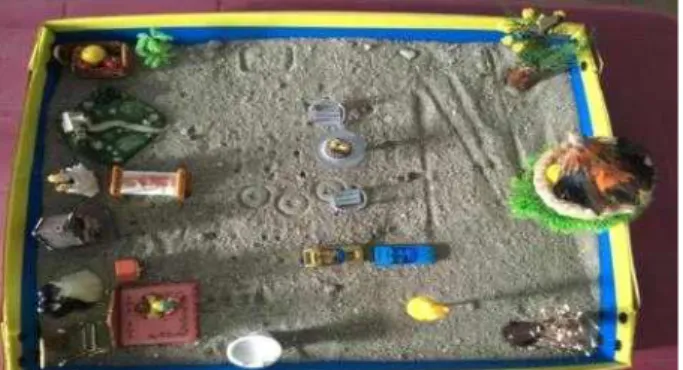
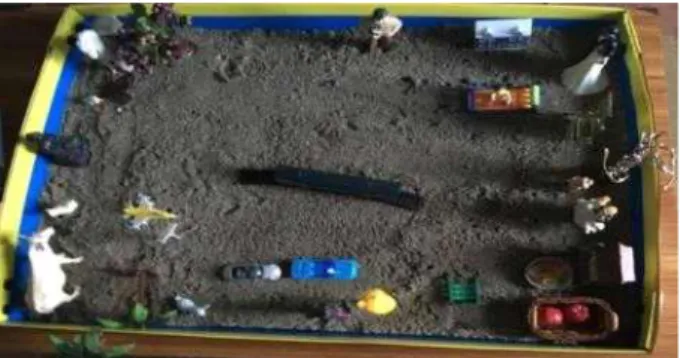
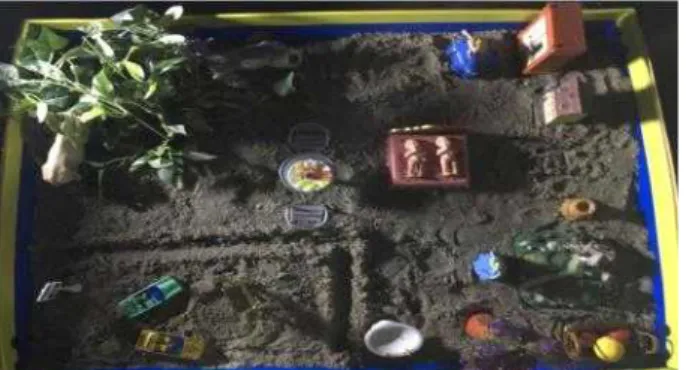
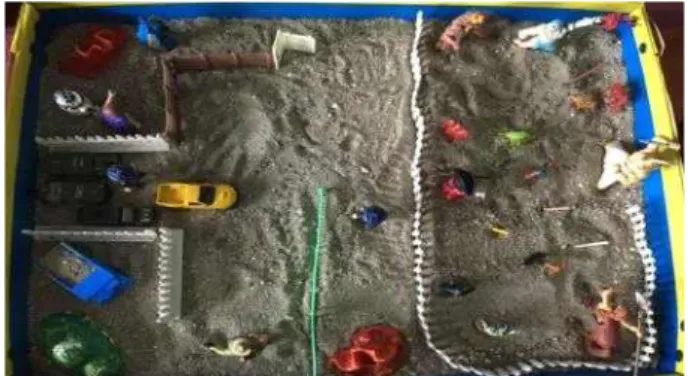
To ensure we adhered to Dora Kalff’s sandplay therapy modality (2003), a sandtray was provided to each pair in each group. One participant created a sand scene and then shared their views, after which the other participant created a scene in a new sandtray and the process was repeated. Once everyone had finished, the whole group talked about their sandplay experiences together.
The entire sandplay therapy process, including making and talking about the sand scenes, was conducted through a non-directed approach. Every session was video recorded, and the final sand scenes at the end of each session were photographed.
5. Research Design
In order to maintain “the meaning and the understanding” of qualitative research, while still retaining a quantitative approach to the phenomenon: this study adopted a mixed method research design. In particular, the triangulation design of Creswell and Plano-Clark (2007) was used; this is a method that collects and analyzes quantitative / qualitative data simultaneously, as opposed to sequentially. This meant that quantitative tests were conducted both before and also after the sandplay process, rather than as a result or prior data before the qualitative research.
To collect qualitative and quantitative data simultaneously, the researchers and a translator discussed the video recordings, sand pictures, and written recordings of each participant and made some comparisons with the pre-test scores of the CBCL and Resilience Scale after each session and reflected on them in order to aid understanding for the next session. Furthermore, the pre-test scores and sandplay phenomena in each session were reviewed along with the post-test scores. This method emphasizes the equal value of quantitative and qualitative methods in achieving the research objectives, and it is similar to the concurrent triangulation by Green and his colleagues (1989).
It is vital to place an equal weight on both qualitative and quantitative data as both the
process and the outcome are important in a group approach to counseling (Shannonhouse,
Barden, & McDonald, 2017). Hence the pre-test and the post-test for the mean score were
obtained by using the CBCL and Resilience Scale prior to and following the group sandplay
therapy. Here, a narrative analysis was added for an in-depth understanding of the causes,
effects, and processes of the sandplay.
6. Quantitative Data Analysis
To analyze the effects of the group sandplay therapy, statistical analysis was performed using SPSS Statistics 23.0. A Mann-Whitney U test was carried out to test the homogeneity of the experimental and control groups. A Wilcoxon signed-rank test was performed to examine the differences between the pre- and post-test scores of each group and to verify the effects of the intervention.
7. Qualitative Data Analysis
In addition to our quantitative analysis on psychological health and resilience, we performed a narrative analysis of the sandplay therapy process and participants’ verbal expressions about each sand picture in order to add further information about the validity of the sandplay therapy intervention. Each sandplay session was recorded by three cameras and photos were taken of all sandtrays after each session. After each session was completed, the researchers repeatedly read the session transcripts, watched the recordings and viewed the sand pictures (with the translator also involved in this process). Then the researchers coded the narratives of the participants. The diffuse or convergent tendencies of the narrative themes were summarized through various verbal and visual means of expression (Johnson, 2004). A list of common preliminary categories was constructed, which were then narrowed down into funnels to identify the story and derive common themes (Bogdan & Biklen, 2006).
8. Rigor of Research
The researchers in this study strove for persistent observation and prolonged engagement
during the sandplay sessions (Lincoln & Guba, 1985). Such efforts were consistent with the basic
principles of sandplay therapy, namely excluding a counselor’s subjective involvement as much as
possible and reaching conclusions through the participant’s statements and involvement (Kalff,
1980/2003). A researcher who did not have the role of a counselor participated in all of the
sessions as an observer, and a translator was also on hand to help those participants who experienced communication difficulties.
The study relied on Lincoln and Guba’s criteria of credibility, transferability, dependability, and confirmability (1985). For credibility the study used information from multiple sources, including video records of counseling sessions, counselors’ subjective statements, and participants’
drawings and sand pictures. In the final session, the researchers discussed the sand pictures and the issues that came up in the counseling sessions with the participants, which enhanced the credibility of the findings. As for transferability, the researchers employed the technique of thick description so that not only they but also the participants and readers could relate to the findings. Lastly, for dependability and confirmability, the study was subject to peer supervision involving mental health professionals, who in turn checked the content and process of counseling, as well as a discussion with two external researchers about the data categorization and main themes. In addition, debriefing sessions (Lincoln & Guba, 1985) were held. From the initial data collection to the deduction of the final themes, the researchers attempted to eliminate any preconceptions by parenthesizing the subjective perceptions, such as their existing perceptions and beliefs, and instead strove to maintain an objective attitude.
For data interpretation, the study relied on categorical aggregation and direct interpretation (Stake, 1995; Creswell, 2007). In other words, the researchers attempted to derive meaning by making direct interpretations for individual cases using categorical aggregation and direct interpretation. The study collected instances and found meaning from repeated phenomena until it could be established that various cases belonged to a single type.
To ensure inter-rater reliability, three raters, including the researchers, collaborated in the
narrative analysis. One of the raters was a Nepalese sandplay therapist living in Korea, which
greatly enhanced the researchers’ understanding of Nepalese culture. All three participants listed
a total of 32 sub-themes, which were in turn refined down to 7 dominant themes, and
subsequently reexamined by three fellow sandplay therapists through a peer debriefing session
(Bogdan & Biklen, 2006; Lincon & Guba, 1985). From data collection to the deduction of the
final 7 themes, the study attempted to eliminate any preconceptions during the entire process by
parenthesizing the subjective perceptions, such as the researchers’ existing perceptions and beliefs,
and trying to maintain an objective attitude instead.
Ⅲ. Results
1. Psychological Health of Adolescent Survivors of the Nepal Earthquake
At post-test, there were significant decreases in the subdomains of anxiety/depression (
Z=-3.08,
p<.01), withdrawal/depression (
Z=-2.41,
p<.05), and somatic symptoms (
Z=-3.07,
p<.01), as well as the total score (
Z=-3.06,
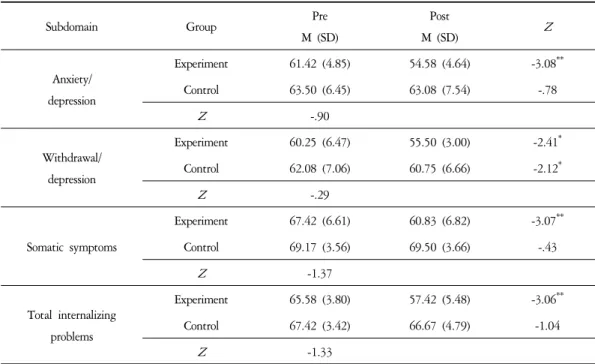
p<.01). There was also a significant decrease in the withdrawal/depression scores of the control group at post-test. The total mean score of the internalizing problems was 57.42 (SD=5.48), which was lower than the cut-off of 63, indicating potential risk. Thus, participation in the group sandplay therapy alleviated the mental health problems of the adolescent survivors of the Nepal earthquake (Table 1).
Subdomain Group Pre
M (SD)
Post
M (SD)
Z
Anxiety/
depression
Experiment 61.42 (4.85) 54.58 (4.64) -3.08**
Control 63.50 (6.45) 63.08 (7.54) -.78
Z
-.90Withdrawal/
depression
Experiment 60.25 (6.47) 55.50 (3.00) -2.41*
Control 62.08 (7.06) 60.75 (6.66) -2.12*
Z
-.29Somatic symptoms
Experiment 67.42 (6.61) 60.83 (6.82) -3.07**
Control 69.17 (3.56) 69.50 (3.66) -.43
Z
-1.37Total internalizing problems
Experiment 65.58 (3.80) 57.42 (5.48) -3.06**
Control 67.42 (3.42) 66.67 (4.79) -1.04
Z
-1.33*
p
<.05, **p
<.01Table 1. Differences in Psychological Health (N=12)
2. Resilience of Adolescent Survivors of the Nepal Earthquake
The resilience subdomains of self-reliance (
Z=-2.92,
p<.01), purpose (
Z=-3.00,
p<.01), equanimity(
Z=-2.95,
p<.01), perseverance(
Z=-3.07,
p<.01), and authenticity(
Z=-3.07,
p<.01), as well as the total score(
Z=-3.06,
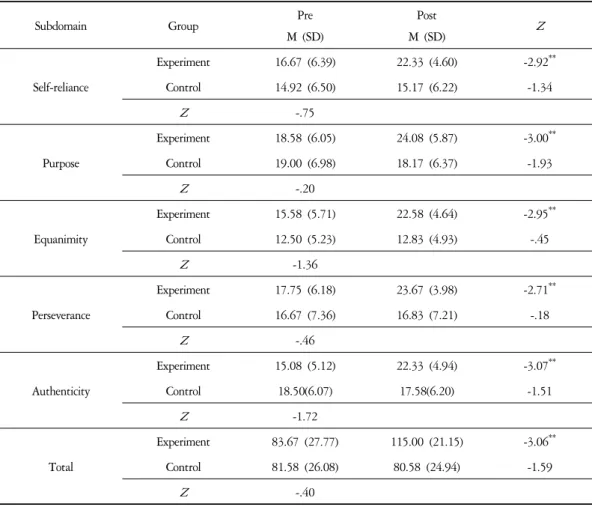
p<.01) significantly increased. In particular, the total score for resilience increased from 83.67 at pre-test to 115.00 at post-test. Although the score of 115 was still within the low resilience range, it was near the threshold of 116 points, which corresponds to a normal resilience level. These results suggest that the group sandplay therapy improved the resilience of those adolescents in the experimental group (Table 2).
Subdomain Group Pre
M (SD)
Post
M (SD)
Z
Self-reliance
Experiment 16.67 (6.39) 22.33 (4.60) -2.92**
Control 14.92 (6.50) 15.17 (6.22) -1.34
Z
-.75Purpose
Experiment 18.58 (6.05) 24.08 (5.87) -3.00**
Control 19.00 (6.98) 18.17 (6.37) -1.93
Z
-.20Equanimity
Experiment 15.58 (5.71) 22.58 (4.64) -2.95**
Control 12.50 (5.23) 12.83 (4.93) -.45
Z
-1.36Perseverance
Experiment 17.75 (6.18) 23.67 (3.98) -2.71**
Control 16.67 (7.36) 16.83 (7.21) -.18
Z
-.46Authenticity
Experiment 15.08 (5.12) 22.33 (4.94) -3.07**
Control 18.50(6.07) 17.58(6.20) -1.51
Z
-1.72Total
Experiment 83.67 (27.77) 115.00 (21.15) -3.06**
Control 81.58 (26.08) 80.58 (24.94) -1.59
Z
-.40*