• 검색 결과가 없습니다.

Comparison Between Tolvaptan and Three Percent Sodium Chloride in Hyponatremia of Syndrome of Inappropriate Secretion of Anti-Diuretic Hormone Patients

N/A
N/A
Protected

Academic year: 2021

Share "Comparison Between Tolvaptan and Three Percent Sodium Chloride in Hyponatremia of Syndrome of Inappropriate Secretion of Anti-Diuretic Hormone Patients"

Copied!
10
0
0

로드 중.... (전체 텍스트 보기)

전체 글

(1)

Original Article

항이뇨호르몬분비이상증후군 환자에서

Tolvaptan과 3% 염화나트륨의 저나트륨혈증 개선 효과 평가

안혜림

a†

, 황보신이

a

, 최선

b

가톨릭대학교 서울성모병원 약제부

a

, 가톨릭중앙의료원 연구윤리사무국 피험자보호팀 b

Comparison Between Tolvaptan and Three Percent Sodium Chloride in Hyponatremia of Syndrome of Inappropriate Secretion

of Anti-Diuretic Hormone Patients

Hye Lim Ahn

a†

, Shin-Yi Hwangbo

a

and Sun Choi

b

Department of Pharmacy, Seoul St. Mary’s Hospital, The Catholic University of Korea

a

Catholic Medical Center Office of Human Research Protection

b

222 Banpo-daero, Seocho-gu, Seoul, 06591, Republic of Korea

a,b

Background : The syndrome of inappropriate secretion of anti-diuretic Hormone (SIADH) is a disease, characterized by water retention and hyponatremia. According to the Amer- ican Journal of Medicine treatment guideline, the administration of hypertonic saline (3%

sodium chloride, 3% NaCl) is recommended for patients, who don’t respond to water re- striction. Vasopressin V2 receptor antagonists such as tolvaptan can be administered to patients whose blood sodium concentration is not normalized by 3% NaCl or who have mod- erate to severe hyponatremia. However, the study that directly compared the effects of the two drugs was insufficient to evaluate the effect of vasopressin receptor antagonist and 3% NaCl. The purpose of this study was to compare and evaluate the effect of the tolvaptan tablet and 3% NaCl injection.

Methods: From June 2015 through August 2016, all patients diagnosed as SIADH, with hyponatremia ([Na

+

] < 135 mEq/L), were administered tolvaptan (T-group) or 3% NaCl 투고일자 2019.5.6; 심사완료일자 2019.6.17; 게재확정일자 2019.12.13

†교신저자 안혜림 Tel:02-2258-2566 E-mail:[email protected]

(2)

(N-group). We analyzed electronic medical records retrospectively.

Results : The mean daily dose of each drug was 14.5 mg of tolvaptan, 428.2 ml of 3% NaCl, and the serum sodium levels significant increased after administration in the T-group (n=26) and the N-group (n=79) (p < 0.0001, respectively). In particular, an average in- crease of 11.6 mEq/L in the T-group and 6.5 mEq/L in the N-group was achieved during the first 24 hours (p < 0.0001), and 12.6 mEq/L in the T-group and 9.5 mEq/L in the N group for 48 hours (p < 0.0001), showing significant increases in the T-group. There was no signifi- cant difference in the proportion of patients with normalized serum sodium level following treatment (96.2% for the T-group, 81.0% for the N-group, p=0.111), and the mean number of days to normalization was significantly shorter for the T-group 1.4 days and 3.7 days for the N-group (p < 0.0001). Side effects were nausea and vomiting in 3.9% (one patient) of the T-group, sensory abnormality and weakness in 2.5% (two patients) of the N-group.

Average price per patient during treatment was 62,368 won in the T-group, and 11,682 won in the N-group (p < 0.0001).

Conclusion : Both drugs showed improvement in hyponatremia in SIADH patients, and tol- vaptan made more rapid increase in sodium level in the blood compared to 3% NaCl. How- ever, since the change in serum sodium due to tolvaptan is close to the recommended upper limit (within 12 mEq/L per 24 hours), there is risk of potential side effects. Thus, careful monitoring of sodium levels and dose adjustments are needed and also, it is necessary to select a medicine in consideration of the cost.

[Key words] Tolvaptan, Hypertonic saline, Hyponatremia, SIADH

저나트륨혈증은 임상적으로 가장 흔하게 발견되는 전해질 불균형으로, 입원 환자의 15~30%에서 급성 또는 만성적으로 나타난다.

1)

혈중나트륨농도 135 mEq/L 미만인 경우를 저나트륨혈증으로 정의하며 중증은 나트륨농도가 125 mEq/L 미만인 경우를 의 미한다.

2)

경증의 환자에서는 뚜렷한 증상이 없어 인 지되지 못하는 경우가 있으나 사망률, 이환율 및 입원 기간의 증가를 초래할 수 있으므로 임상적으로 중요 하게 관리하여야 할 증후의 하나이다.

3)

이러한 저나트륨혈증은 체액의 양에 따라 정상혈량 성(euvolemic), 과혈량성(hypervolemic), 저혈 량성(hypovolemic)으로 세분화되며, 본 연구에서 다루는 항이뇨호르몬분비이상증후군(SIADH)은 정 상혈량성 저나트륨혈증을 유발하는 가장 큰 원인이 다.

4)

SIADH는 종양, 중추신경계질환, 폐질환, 약

물 등 다양한 원인에 의해 발생하며, 주요 원인 중 하 나인 종양의 경우 소세포폐암(small cell lung cancer)에 의한 경우가 가장 흔하다.

5)

특징적인 증 상으로는 부적절한 항이뇨호르몬의 분비 증가 또는 반응성의 증가로 인한 수분저류와 저나트륨혈증 등이 있다.

2013년 ‘The American Journal of Medi-

cine’에 발표된 저나트륨혈증 치료 가이드라인에 따

르면, SIADH에 의한 저나트륨혈증 교정은 중증

([Na

+

] < 120-125 mEq/L) 여부 또는 증상 유무에

따라 달라진다.

1)

우선, 환자가 경증이거나 증상이 없

는 경우 수분 제한을 1차적으로 적용하고, 반응이 없

는 경우 고장성 식염수(3% sodium chloride, 이

하 3% NaCl)를 투여할 수 있다. 그럼에도 반응이 없

는 경우 tolvaptan 등의 vasopressin V2 re-

(3)

ceptor antagonist를 고려해 볼 수 있다. 중증이 거나 증상이 있는 환자는 수분제한과 함께 3% NaCl 을 우선적으로 투여하며, 이에 반응하지 않을 경우 vasopressin V2 receptor antagonist를 선택 할 수 있다.

Tolvaptan은 2009년 유럽 the European Medi- cines Agency (EMA) 및 미국 Food and Drug Administration (FDA)에서 승인한 경구용 vas- opressin V2 receptor antagonist로서, 성인 환 자의 저나트륨혈증에 2차 약제로 투여할 수 있다.

6),7)

Tolvaptan의 작용기전은 항이뇨호르몬(antidiu- retic hormone, ADH)이 electrolyte-free water excretion을 유발하는 V2 receptor와 결 합하는 것을 저해함으로써 체내 전해질 손실 없이 체 액의 감소를 통해 저나트륨혈증을 교정하는 것이 다.

6),8)

그러나, 최근 임상 현장에서는 수분제한에 반응을 하지 않는 환자에게 vasopressin receptor an- tagonist를 3% NaCl에 앞서 1차 약제로 투여하는 경우가 있다. 이는 이 약물이 저나트륨혈증을 유발시 키는 직접적 원인인 vasopressin을 target으로 한 다는 점에서 기전적인 치료에 잘 부합하고, 경구제라 는 특성 상 복용이 편리한 이점이 있기 때문으로 판단 된다. 하지만 tolvaptan이 고장성 식염수에 비해 고 가의 약제라는 점에서 치료 비용의 문제가 발생할 수 있으며, 중증 환자에 대한 연구 결과가 부족한 실정이 다. 대부분의 tolvaptan과 관련된 연구들이 특정 기

저질환을 가진 환자를 대상으로 진행된 후향적 연구 또는 사례 보고라는 한계점을 지니고 있고,

5),6),9)-20)

직접적으로 tolvaptan과 3% NaCl을 비교한 연구 도 있으나 연구 대상 환자의 수가 매우 적어 결론을 내 리기 어려운 문제가 있었다.

21)

이러한 이유로 tol- vaptan을 1차 약제로 투여하는 것은 아직 논란의 여 지가 있다.

따라서 본 연구에서는 tolvaptan 또는 3% NaCl 을 1차 약제로 단독 투여 받은 환자를 대상으로 두 약 제의 저나트륨혈증 개선 효과와 안전성을 비교함으로 써 tolvaptan의 1차 약제로서의 사용 가능성을 평 가하고자 하였다.

연구방법 1. 연구 대상

2015년 6월부터 2016년 8월 사이에 입원하여 SI- ADH로 진단받은 환자로서, 저나트륨혈증([Na

+

]<

135 mEq/L)이 발생하여 tolvaptan 또는 3%

NaCl을 1차 약제로 단독 투여한 환자를 대상으로 하 였다. 단, SIADH 진단명이 기재되지 않은 경우라도 SIADH 진단기준(Table 1)에 부합하는 환자는 연 구에 포함하였으며, NaCl 40 mEq/20 ml 주사제 를 병용 투여받은 환자는 제외하였다. 그 외에도 18 세 미만 소아 및 청소년, 타 약제 불응성으로 판단되 어 2차 이상으로 투여한 경우, 저나트륨혈증을 유발 Hyponatremia Serum [Na

+

] < 135 mEq/L

Hyposmotic plasma Plasma osmolality < 270 mOsm/kg Hyperosmotic urine Urinary osmolality > 100 mOsm/kg

Hypernatremic urine Urinary sodium level > 20 mEq/L (without diuretic therapy) Table 1 Criteria for the diagnosis of SIADH*

Criteria Definition Clinical euvolemia

Hypothyroidism and hypoadrenalism excluded

Elevated plasma sodium ( > 30 mEq/L) with normal salt intake

*SIADH: Syndrome of Inappropriate Secretion of Anti-Diuretic Hormone

(4)

할 수 있는 중증 신기능장애, 중증 간질환 환자 및 대 상 약제 투여 전 또는 후의 혈중 나트륨 농도 결과가 없는 환자는 연구 대상에서 제외하였다.

2. 조사 내용

의무기록 검토를 통하여 대상 환자들의 성별, 연령, 키, 체중, 저나트륨혈증에 영향을 줄 수 있는 기저질 환 (폐암, 폐질환, 종양을 포함한 중추신경계 질환 등) 보유 여부, 상호작용 약물 등의 기본 정보를 조사 하였다. 또한 [Na

+

] 수치 정상화 여부, 정상화까지 소요된 일수, 부작용 발생 빈도 및 종류도 조사하였 다.

기저질환 유무는 환자 의무기록에 기재된 상병명을 기준으로 하였고, 상호작용 약물은 연구대상 약물의

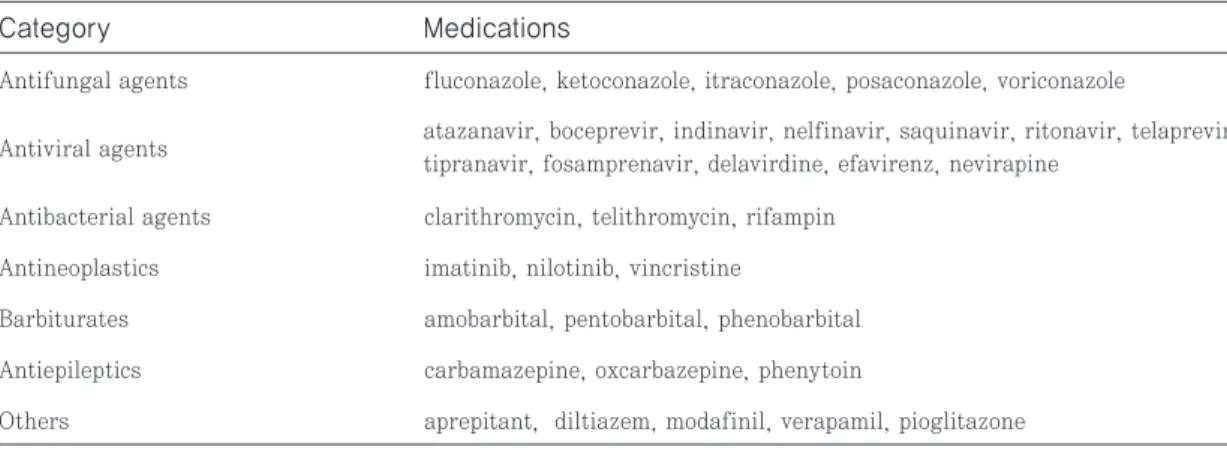
효과에 영향을 미치거나 자체가 SIADH를 유발할 가 능성이 있는 약물로 정의하였으며, 약물의 개수와는 상관없이 복용 유무로 기록하였다. 본 연구에서 상호 작용 약물로 조사에 포함한 목록은 Table 2에 기재 하였다. 1일 평균용량은 의무기록을 기준으로 환자 가 입원기간 동안 투여 받은 약물의 총 용량을 약물 투 여 일수로 나누어 산출하였다. 혈중 나트륨 농도는 기 준치인 135 mEq/L 이상일 때 정상화 된 것으로 간 주하였다.

2)

또한, 투약에 소요된 비용은 1일 평균 용 량에 대한 약가에 투여일수를 곱한 총 소요 약가를 모 두 더한 후 대상 환자 수로 나누어 환자별 평균 소요 약가를 계산하였다. 주사제의 경우는 주사료를 포함 하였고, 두 군 모두 환자부담액이 아닌 전체 약가로 산출하였다.

*There was no medication with moderate to severe interactions with 3% NaCl.

Antifungal agents fluconazole, ketoconazole, itraconazole, posaconazole, voriconazole

Antibacterial agents clarithromycin, telithromycin, rifampin Antineoplastics imatinib, nilotinib, vincristine

Barbiturates amobarbital, pentobarbital, phenobarbital Antiepileptics carbamazepine, oxcarbazepine, phenytoin

Others aprepitant, diltiazem, modafinil, verapamil, pioglitazone

Antipsychotics / Antidepressants amitriptyline, fluoxetine, fluphenazine, haloperidol, sertraline, thioradazine

Antiepileptics carbamazepine, oxcarbazepine

Antineoplastics cyclophosphamide, ifosfamide, vincristine

Analgesics acetaminophen, narcotics, nonsteroidal anti-inflammatory drugs (NSAIDs)

Others clofibrate, desmopressin, oxytocin

Antiviral agents atazanavir, boceprevir, indinavir, nelfinavir, saquinavir, ritonavir, telaprevir, tipranavir, fosamprenavir, delavirdine, efavirenz, nevirapine

Table 2 Medications that interact with the test or control drug

22)

Category

Category

Medications

Medications

1) Medications with moderate to severe interactions with *tolvaptan

2) SIADH-inducible medications

(5)

3. 연구대상자 보호

본 연구는 가톨릭대학교 서울성모병원에서 수행된 단일기관 후향적 연구로서, 본원의 institutional review board (IRB)의 승인을 받아 진행하였다(과 제번호: KC16RISI0730).

4. 평가지표

1차 평가지표는 약물 투여 전 baseline으로부터 투여 24시간 후 및 48시간 후의 혈중 나트륨 농도 변 화량으로 정하였으며, 혈중 나트륨 농도가 정상화 된 환자 비율 및 정상화까지의 소요일수도 평가하였다.

2차 평가지표는 혈중 나트륨 농도 교정 속도 기준 (12 mEq/L/24 hour)을 초과한 환자 비율, 부작용 발생 빈도 및 종류, 투약 소요 비용으로 정하였다.

5. 통계분석

명목형 변수는 chi-square or Fisher's exact test를 수행하여 n(%)로 제시하였으며, 연속형 변수 는 t test 또는 Wilcoxon rank sum test (전, 후 비교의 경우 Wilcoxon signed rank test)를 수행 하여, 평균, 표준편차 등으로 제시하였다. 모든 통계 분석은 SAS Enterprise Guide 4를 사용하였고, p-value가 0.05 미만일 때 유의한 차이가 있는 것 Patient related variables

Age (year) 70.7 ± 14.8 67.8 ± 15.7 0.325

Gender

Male 16 (61.5) 45 (57.0) 0.682

Female 10 (38.5) 34 (43.0)

Height (cm) 161.6 ± 10.0 163.2 ± 8.3 0.501

Weight (kg) 58.1 ± 11.0 57.4 ± 10.9 0.799

Major underlying diseases

Lung cancer 5 (19.2) 10 (12.7) 0.518

Other lung disease 10 (38.5) 28 (35.4) 0.781

Central nervous system cancer 0 (0.0) 5(6.3) 0.329

Other central nervous system disease 11 (42.3) 24 (30.4) 0.263

Other cancer 3 (11.5) 24 (30.4) 0.057

Medication related variables

Mean daily dose 14.5 ± 4.2 mg 428.2 ± 147.4 ml -

Use of medications with interaction

Yes 12 (46.2) 30 (38.0) 0.460

No 14 (53.9) 49 (62.0)

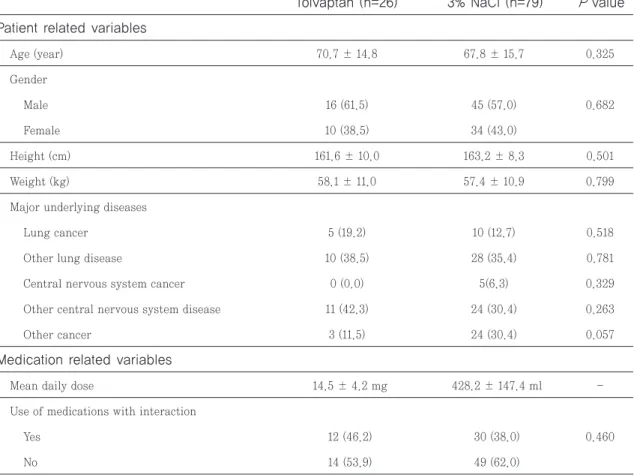
Table 3 Basic characteristics of patients

P value 3% NaCl (n=79)

Tolvaptan (n=26)

Data are presented as n (%) for categorical variables and as mean±standard deviation (SD) for continuous variables.

P value of significant difference between drugs, by chi-square, Fisher's exact, Student t or Wilcoxon rank sum test.

(6)

으로 간주하였다.

결과

1. 환자 특성 및 약물 투여 정보

연구대상 환자는 Tolvaptan군 26명, 3% NaCl 군 79명으로 총 105명이었다. 두 군에 대한 각각의 성별, 연령, 키, 체중 등의 환자 기본정보는 Table 3 에서 보는 바와 같았으며, 모든 항목에 대해 두 군간 유의한 차이가 없었다. 모든 환자가 1가지 이상의 기 저질환을 가지고 있었으며, SIADH를 유발하는 주 요 기저질환에 있어서도 유의한 차이가 없었다.

투여된 약물의 1일 평균용량은 Tolvaptan 14.5 mg, 3% NaCl 428.2 ml으로, Tolvaptan군은 1 일 15 mg, 3% NaCl군은 1일 500 ml 1병을 투여 받는 경우가 가장 많았으며, 3% NaCl의 경우 시간 당 투여속도가 의무기록에 명시되지 않은 경우가 많 아 평균 투여속도는 산출하지 못하였다.

상호작용 약물 복용 환자는 Tolvaptan군 46.2%

(12명, 17건), NaCl군 38.0%(30명, 48건)로 두 군간 유의한 차이가 없었다. 또한, 상호작용 약물 중 Tolvaptan군에서는 중등도 CYP3A 저해제인 dil- tiazem(4건)을, NaCl군은 SIADH 유발 가능성이 있는 morphine(9건)을 가장 빈번하게 병용중인 것 으로 나타났다.

2. 혈중 나트륨 변화량

Table 4는 투여 전, 투여 24시간 후, 투여 48시간 후의 혈중 나트륨 농도와 그 변화를 나타낸 것으로, tolvaptan 및 3% NaCl 모두 유의한 혈중 나트륨 상승 효과를 나타내었다(각각 p<0.0001).

두 군에서의 투여 전 혈중 나트륨 농도의 차이가 혈 중 나트륨 변화량에 영향을 미치는 것을 방지하기 위 하여 투여 전 혈중 나트륨 농도 값으로 데이터를 보정 한 후의 변화량도 산출하였다(Table 5). 그 결과, 투여 시작 24시간 후의 혈중 나트륨 농도의 평균 상승

Baseline 126.8 ± 5.4 120.9 ± 6.3

After 24 h 136.0 ± 4.0 < 0.0001 128.1 ± 5.3 < 0.0001

After 48 h 136.2 ± 4.3 < 0.0001 130.9 ± 4.9 < 0.0001

After 24 h 133.8 ± 0.9 128.8 ± 0.5 < 0.0001

After 48 h 134.5 ± 1.0 131.4 ± 0.5 < 0.0001

Difference (24 h - Baseline) 11.6 ± 0.9 6.5 ± 0.5 < 0.0001

Difference (48 h - Baseline) 12.6 ± 1.0 9.5 ± 0.5 < 0.0001

Table 4 Difference before and after administration of the serum Na

+

concentration in each group.

Table 5 Difference before and after administration of the serum Na

+

concentration in each group (adjusted by baseline [Na

+

]).

Serum Na

+

(mEq/L) Tolvaptan P value

(vs baseline)

Tolvaptan Serum Na

+

concentration (mEq/L)

3% NaCl

3% NaCl

P value (vs baseline)

P value

Data are presented as mean±SD

Data are presented as mean±standard error (SE)

Statistics were carried out using Analysis of covariance

(7)

폭은 tolvaptan군 11.6 mEq/L, 3% NaCl군 6.5 mEq/L (p<0.0001), 투여 48시간 후의 상승 폭은 tolvaptan군 12.6 mEq/L, 3% NaCl군 9.5 mEq/L (p<0.0001)으로, tolvaptan군이 3

% NaCl군에 비해 유의하게 큰 상승폭을 보였다. 혈 중 나트륨 농도 교정 속도 상한선인 24시간 당 12 mEq/L를 초과한 환자는 tolvaptan군 5명(19.2

%), 3% NaCl군 10명(12.7%)으로, tolvaptan을 투여 받은 군에서 더 높았으나 유의한 차이는 아니었 다(p=0.518)(Table 6).

혈중 나트륨 농도가 정상화 된 환자는 tolvaptan 군 96.2%, 3% NaCl군 81%으로 두 군 모두 높은 비율로 정상화 되었으며 두 군간 유의한 차이는 없었 다(p=0.111). 혈중 나트륨 농도가 정상화 되기까지

의 소요일수는 tolvaptan군에서 유의하게 짧았다 (p<0.0001)(Table 7).

3. 안전성

부작용은 3% NaCl군은 2명의 환자에서 허약감, 감각이상이 나타났고 tolvaptan군은 1명의 환자에 서 오심, 구토가 발생하였으나, 부작용 발생 비율에 서 두 군간 유의한 차이가 없었다(Table 8).

또한, 혈중 나트륨 농도 교정 속도 기준인 24시간 당 12 mEq/L를 초과한 tolvaptan군 5명(19.2

%), 3% NaCl군 10명(12.7%) 중 신경독성을 포함 하여 중증의 부작용이 발현된 환자는 없었다.

Exceeded

Yes 5 (19.2) 10 (12.7) 0.518

No 21 (80.8) 69 (87.3)  

Yes 1 (3.9) 2 (2.5) 1.000

No 25 (96.1) 77 (97.5)

Table 6 Patients with an increase of the serum Na

+

concentration more than 12 mEq/L within 24 hours.

Table 8 Adverse drug reactions

P value

P value 3% NaCl

3% NaCl Tolvaptan

Tolvaptan Adverse drug reactions

Data are presented as n (%)

normalization 25 (96.2) 64 (81.0) 0.111

non-normalization 1 (3.9) 15 (19.0)

1.4 ± 1.0 3.7 ± 3.6

1.0 (1.0 , 5.0) 2.0 (1.0 , 21.0)  

days required to normalization (day) < 0.0001

Table 7 Comparison of proportion to normalization serum Na

+

concentration.

Tolvaptan

Serum Na

+

concentration (mEq/L) 3% NaCl P value

Data are presented as n (%) and as mean±SD, median (range)

Statistics were carried out using Fisher's exact test, Wilcoxon rank sum test.

(8)

4. 투약 소요 비용

1일 평균 용량에 대한 약가와 투여 일수의 곱을 산 출하여 계산한 환자별 평균 소요 비용은 tolvaptan 군 62,368원, 3% NaCl군은 11,682원으로, tol- vaptan 군이 유의하게 높았다(p<0.0001).

고찰

최근 중증 또는 증상이 있는 경~중등도의 저나트륨 혈증 환자에게 3% NaCl이 아닌 vaptan 계열의 약 물을 우선적으로 투여하는 경우가 있으나, 두 약물의 효과를 직접 비교한 연구는 부족한 실정으로 사용 필 요성과 적절성에 논란의 여지가 있다. 본 연구에서 SIADH 환자를 대상으로 tolvaptan과 3% NaCl 주사제의 저나트륨혈증 개선 효과를 비교 평가한 결 과, 두 약물 모두 투여 시 혈중 나트륨 농도의 상승이 나타나 저나트륨혈증 개선 효과를 보였고, 혈중 나트 륨 농도가 정상화 된 환자의 비율은 두 약제간 유의한 차이가 없었다(p=0.111). 그러나 24시간 당 혈중 나트륨 농도 상승폭은 tolvaptan이 3% NaCl에 비 해 크게 나타났고(11.6 vs. 6.5 mEq/L, p<0.0001) 개선 효과도 더 신속하였다. 저나트륨혈증에 대해 적 절한 교정이 이뤄지지 않을 경우 인지장애, 보행장 애, 낙상 등을 포함하여 궁극적으로 사망률, 이환율 이 증가되므로 신속한 교정이 치료 효과 면에서 이점 으로 작용할 수 있다.

3)

그러나, 지나치게 빠른 속도 로 혈중 나트륨 농도가 교정될 경우 삼투압성 탈수초 증후군 등의 신경손상이 발생될 수 있기 때문에 저나 트륨혈증 치료 가이드라인에서는 혈중 나트륨 농도 교정 속도가 24시간 당 12 mEq/L를 초과하지 않도 록 권고하고 있다.

1)

이러한 관점에서 보면 본 연구에 서 tolvaptan군이 3% NaCl군에 비해 상승 속도는 빠르지만 투여 첫 24시간 후까지의 상승폭이 11.6 mEq/L으로, 권고 상한치에 근접하여 빠른 교정 속 도로 인한 잠재적인 부작용 발생 위험이 높다고 판단 할 수 있다. 단, 본 연구에서는 이 상한선을 초과한 환자의 비율에서 두 군간 유의한 차이는 없었으며, 상 한선을 초과한 환자들 중 빠른 교정 속도로 인한 부작 용이 실제로 발생한 환자도 없었다. Tolvaptan의 효과와 안전성을 평가한 임상시험에서도, 12 mEq/

L를 초과한 환자 모두에서 신경독성이 나타나는 것이 아니고, 신경독성이 발생한 환자들의 공통점을 조사 했을 때 24시간 당 혈중 나트륨 농도의 상승폭이 12 mEq/L를 초과했다는 결과가 도출된 것이었으므로 본 연구에서의 결과가 기존의 결과와 배치되는 것은 아니었다.

8)

본 연구에서는 tolvaptan과 상호작용이 있거나 SIADH를 유발할 가능성이 있는 약물 병용 환자를 연구 대상에 포함하였는데, 그 이유는 해당하는 약물 이 마약성 진통제, 비스테로이드성 해열진통제 등 범 위가 매우 넓어 해당 약물 복용 환자를 조사 대상에서 제외할 경우 실제 임상 현장의 상황을 반영하지 못할 수 있기 때문이었다. 시험 결과, 상호작용 또는 SI- ADH 유발 약물을 복용하는 환자 수가 두 군에서 유 의한 차이가 없었고 대부분이 SIADH 유발 약물이었 으며, tolvaptan의 효과를 증강시킬 수 있는 약물을 복용한 환자 4명도 평균치 정도의 혈중 나트륨 증가 효과를 보였기 때문에 상호작용 약물이 본 시험의 결 과에 큰 영향을 주었을 가능성은 적다고 판단된다.

치료에 소요되는 비용 면에 있어서는 tolvaptan이 1차 약제로 사용되기에 고비용의 약제라는 한계점이 있다. 본 연구 결과, 입원기간 동안 소요된 투약 비용 이 tolvaptan군은 약 62,000원, 3% NaCl군은 약 12,000원으로 tolvaptan군에서 유의하게 많은 비 용이 소요됨을 알 수 있었다(p<0.0001). 하지만 본 연구에서 비교한 비용은 주사료를 포함한 총 누적 투 약 비용만 산출한 것으로 입원비, 저나트륨혈증으로 인해 추가될 수 있는 기타 부가적 치료 비용 등은 고 려하지 않았다. 또한 본 연구 외에도 고비용의 tol- vaptan을 사용하여 저나트륨혈증을 치료하는 것이 삶의 질의 향상 및 이환율 감소 및 궁극적으로 사망률 의 감소를 보이는지에 대한 결과는 부족한 상태로 이 를 증명하기 위해서는 더 많은 연구가 필요하겠다.

9)

따라서 이러한 부분을 보완한 추가적인 연구가 이뤄 진다면, tolvaptan의 1차 약제로서의 타당성뿐만 아니라 저나트륨혈증에 대하여 보다 적절한 치료지침 을 확립할 수 있을 것이다.

본 연구는 대상 환자의 수가 제한적이고 전자의무기

록을 통해 후향적 조사 방법으로 진행되어 부작용 발

생 기록이 부정확하거나 미비할 가능성이 있어 안전

성 평가에 대한 한계점 또한 가지고 있다. 이를 보완

(9)

하기 위하여 일정한 조건 하에서 전향적인 방법으로 진행되는 추가적인 연구가 필요할 것이다.

현재까지 저나트륨혈증을 보이는 환자를 대상으로 두 약물을 비교한 논문은 있으나,

21)

SIADH 환자를 대상으로 수행된 논문은 거의 없으며, 소세포폐암를 기저질환으로 가진 SIADH 환자에서 tolvaptan의 효과 비교 논문 등 특정 기저질환에 해당하는 환자들 에 대해서만 진행된 연구는 있으나

6),14),16)-19),23),24)

기저질환에 상관없이 SIADH 환자군 전체를 대상으 로 한 연구는 없었다. 이러한 점에서 이번 연구는 SI- ADH 진단을 받은 환자이면서 기저질환에 상관없이 tolvaptan과 3% NaCl의 효과를 비교했다는 점에 의의가 있다.

결론

SIADH 환자에 있어 고장성 식염수와 tolvaptan 모두 저나트륨혈증 개선 효과를 보였으며, tol- vaptan이 고장성 식염수에 비해 혈중 나트륨 상승 효과가 신속하여 1차 약제로서의 사용 가능성을 확인 할 수 있었다. 그러나, tolvaptan에 의한 혈중 나트 륨 증가량이 치료 지침에서 추천하는 상한선인 24시 간 당 12 mEq/L에 근접하여 잠재적인 부작용 발생 위험이 있으므로 나트륨 수치의 면밀한 모니터링과 이에 따른 용량조절이 필요하며, 소요 비용을 고려한 약제 선택 또한 필요하겠다.

참고문헌

1) Verbalis JG, Goldsmith SR, Greenberg A et al. Diagnosis, evaluation, and treat- ment of hyponatremia: expert panel rec- ommendations. Am J Med. 2013;126(10):

S1-42.

2) Spasovski G, Vanholder R, Allolio B et al.

Clinical practice guideline on diagnosis and treatment of hyponatraemia. Eur J Endocrinol. 2014;170(3):G1-47.

3) Renneboog B, Musch W, Vandemergel X et al. Mild chronic hyponatremia is asso- ciated with falls, unsteadiness, and at-

tention deficits. Am J Med. 2006;119(1):

71.e1-8.

4) Castillo JJ, Vincent M, Justice E. Diag- nosis and management of hyponatremia in cancer patients. Oncologist. 2012;

17(6):756-65.

5) De las Penas R, Ponce S, Henao F et al.

SIADH-related hyponatremia in hospital day care units: clinical experience and management with tolvaptan. Support Care Cancer. 2016;24(1):499-507.

6) Josiassen RC, Curtis J, Filmyer DM et al.

Tolvaptan: a new tool for the effective treatment of hyponatremia in psychotic disorders. Expert Opin Pharmacother.

2010;11(4):637-48.

7) Tolvaptan(Samsca

®

) product insert pa- per.

8) Schrier RW, Gross P, Gheorghiade M et al. Tolvaptan, a selective oral vasopres- sin V2-receptor antagonist, for hypona- tremia. N Engl J Med. 2006;355(20):2099- 112.

9) Jamookeeah C, Robinson P, O'Reilly K et al. Cost-effectiveness of tolvaptan for the treatment of hyponatraemia second- ary to syndrome of inappropriate antidiu- retic hormone secretion in Sweden. BMC Endocr Disord. 2016;16(1):22.

10) Verbalis JG, Adler S, Schrier RW et al.

Efficacy and safety of oral tolvaptan therapy in patients with the syndrome of inappropriate antidiuretic hormone secretion. Eur J Endocrinol. 2011;164 (5):725-32.

11) Dasta JF, Chiong JR, Christian R et al.

Evaluation of costs associated with tol-

vaptan-mediated hospital length of stay

reduction among US patients with the

syndrome of inappropriate antidiuretic

hormone secretion, based on SALT-1

(10)

and SALT-2 trials. Hosp Pract (1995).

2012;40(1):7-14.

12) Harbeck B, Lindner U, Haas CS. Low- dose tolvaptan for the treatment of hy- ponatremia in the syndrome of inappro- priate ADH secretion (SIADH). Endocrine.

2016;53(3):872-3.

13) Chen S, Zhao JJ, Tong NW et al. Rand- omized, double blinded, placebo-con- trolled trial to evaluate the efficacy and safety of tolvaptan in Chinese patients with hyponatremia caused by SIADH. J Clin Pharmacol. 2014;54(12):1362-7.

14) Petereit C, Zaba O, Teber I et al. A rapid and efficient way to manage hypona- tremia in patients with SIADH and small cell lung cancer: treatment with tol- vaptan. BMC Pulm Med. 2013;13(1):55.

15) Tzoulis P, Waung JA, Bagkeris E et al.

Real-life experience of tolvaptan use in the treatment of severe hyponatraemia due to syndrome of inappropriate anti- diuretic hormone secretion. Clin Endo- crinol. 2016;84(4):620-6.

16) Graziani G, Cucchiari D, Aroldi A et al.

Syndrome of inappropriate secretion of antidiuretic hormone in traumatic brain injury: when tolvaptan becomes a life saving drug. J Neurol Neurosurg Psy- chiatry. 2012;83(5):510-2.

17) Mali P, Muduganti SR, Mujibur R et al.

Tolvaptan for SIADH in Myelodysplastic Syndrome with Blast Crisis. WMJ. 2015;

114(2):66-8.

18) Cardenas A, Gines P, Marotta P et al.

Tolvaptan, an oral vasopressin antago- nist, in the treatment of hyponatremia in cirrhosis. J Hepatol. 2012;56(3):571- 8.

19) Choe WH. The use of vaptan in hypona- tremic patients with liver cirrhosis. The

Korean Journal of Hepatology. 2011;17 (4):335-7.

20) Gross PA, Wagner A, Decaux G. Vaptans are not the mainstay of treatment in hy- ponatremia: perhaps not yet. Kidney Int. 2011;80(6):594-600.

21) Vilapurathu JK, Rajarajan S. A pro- spective study to compare the clinical efficacy of Tolvaptan with 3% hyperton- ic saline solution in hospitalized patients having hyponatremia. J Res Pharm Pract. 2014; 3(1):34-6.

22) MICROMEDEX database: IBM Watson Health; [updated 2017 Jul ; cited 2017 Aug 16]. Available from: http://www.

micromedexsolutions.com

23) Nemerovski C, Hutchinson DJ. Treat- ment of hypervolemic or euvolemic hy- ponatremia associated with heart failure, cirrhosis, or the syndrome of inappro- priate antidiuretic hormone with tolva- ptan: a clinical review. Clin Ther. 2010;

32(6): 1015-32.

24) Joo YS, Yoon C-Y, Han SG et al. Syn- drome of Inappropriate Secretion of An- tidiuretic Hormone after Lung Trans- plantation. The Ewha Medical Journal.

2014;37:S41.

수치

Table 2 Medications that interact with the test or control drug 22)
Table 3 Basic characteristics of patients
Table 4 Difference before and after administration of the serum Na +  concentration in each group.
Table 6 Patients with an increase of the serum Na +  concentration more than 12 mEq/L within 24 hours.

참조

관련 문서

• 이명의 치료에 대한 매커니즘과 디지털 음향 기술에 대한 상업적으로의 급속한 발전으로 인해 치료 옵션은 증가했 지만, 선택 가이드 라인은 거의 없음.. •

The proposal of the cell theory as the birth of contemporary cell biology Microscopic studies of plant tissues by Schleiden and of animal tissues by Microscopic studies of

_____ culture appears to be attractive (도시의) to the

It considers the energy use of the different components that are involved in the distribution and viewing of video content: data centres and content delivery networks

Randomised, double blind, placebo controlled study of fluticasone propionate in patients with moderate to severe chronic obstructive pulmonary disease: the

“ Sheikh Nasser has a written message from HH the Amir, Sheikh Sabah Al-Ahmad Al-Jaber Al-Sabah to the Chinese President, Chi Gen Beng related to enhancing mutual

On his part, CEO of Express Roads Authority, Saud Al-Naqqi said that the heavy rains of the previous day led to clogging parts of the express

Kuwait will celebrate on Sunday the fourth anniversary of the UN honoring and proclamation of His Highness the Amir, Sheikh Sabah Al-Ahmad Al-Jaber Al-Sabah as