• 검색 결과가 없습니다.

Assessment Parameters after Bariatric Surgery

N/A
N/A
Protected

Academic year: 2021

Share "Assessment Parameters after Bariatric Surgery"

Copied!
5
0
0

로드 중.... (전체 텍스트 보기)

전체 글

(1)

REVIEW ARTICLE

JMBS Journal of Metabolic and Bariatric Surgery J Metab Bariatr Surg 2015;4(1):1-5

투고일: 2015년 5월 10일, 심사일: 2015년 5월 27일, 게재확정일: 2015년 6월 2일 책임저자: 이한홍, 경기도 의정부시 천보로 271

가톨릭대학교 의과대학 가톨릭대학교 의정부성모병원 위장관외과 우: 480-717 Tel: 031-820-5069, Fax: 031-847-2717, E-mail: [email protected]

비만 수술 효과 평가의 척도

가톨릭대학교 의과대학 가톨릭대학교 의정부성모병원 외과학교실 위장관외과

이한홍

Assessment Parameters after Bariatric Surgery

Han Hong Lee

Department of Surgery, The Catholic University of Korea, Uijeongbu St. Mary's Hospital, College of Medicine, The Catholic University of Korea, Uijeongbu, Korea

Body weight and body mass index (BMI) to be simply measured and analyzed are most common methods to assess the effect of bariatric surgery. In addition, measurement of subcutaneous and visceral adipose tissues by imaging technique has been adapted as a kind of anthropometrics. After bariatric surgery, obese patients with metabolic disorder are tested by conventional parameters such as fasting blood glucose, blood lipid panel, insulin level and blood pressure. Recently, the adipokines associated with inflammation, such as high-sensitive C-reactive protein and adiponectin, are accepted as new measure of follow-up examination. In this review, various measurement parameters, from anthropometrics to cytokine, to assess the effect of bariatric surgery are introduced, so that bariatric surgeons could keep in mind its significance in Korea where bariatric surgery is still unpopular.

Key Words: Bariatric surgery, Assessment, Methodology

서론

비만수술의 대상 결정에 대한 대표적인 기준은 체질량지수 (body mass index: BMI)와 같은 신체 계측을 바탕으로 한다[1].

신체 계측에 의한 기준 이외에도 과다체중에 의한 당뇨병이나 고 혈압과 같은 동반 합병증이 또한 그 척도가 된다[2]. 비만 수술은 크게 섭취제한과 흡수제한 방법으로 나뉘는데 이 종류에 대한 결 정은 수술의 기준이 되는 환자의 신체 계측 및 동반 합병증을 고 려하여 결정되게 된다[3]. 실제로, 동반 합병증을 가진 비만 환자 에서는 흡수 제한 술식으로 수술 방법이 결정되는 경우가 많다.

이렇듯 다양한 요소의 조합으로 수술의 결정이 이루어지는 것에 비해, 과거 비만 수술의 효과에 대한 단기 혹은 장기 성적의 대부

분은 환자의 체중 감소를 위주로 보고되었으며, 체중 감소에 따 른 다른 지표들은 그리 크게 부각되고 있지 않았다[4]. 물론 비만 수술의 일차 목적이 체중 감소에 있는 것이 당연한 일이며 당뇨의 호전과 같은 대사지표의 향상을 일차목적으로 주장하는 대사 수 술은 아직까지도 대다수의 동의를 받지 못하고 있다[5]. 하지만 이러한 영향으로 비만 수술 후 환자의 추적검사에서 체중감소와 같은 신체계측 및 대표적 동반 합병증 지표인 혈당이나 혈압은 검사하는 것이 일반적이나 다른 지표에 대한 검사는 간과하고 있 었던 것이 사실이다.

최근 비만 수술의 결과나 추적검사에서 수술의 효과를 평가하

는 여러 가지 지표들을 이용한 보고들이 증가하고 있다[6,7]. 이

러한 보고들은 체중이나 신체 질량 지수 이외에 객관적 수치로

(2)

입증이 되는 다양한 지표들을 이용하여 수술 결과의 우수성을 뒷 받침하고 있다. 이 종설의 목적은 비만 수술 후 환자의 추적검사 에서 필요한 기초적인 검사에서부터 대체 검사 방법, 그리고 최 근 부각되고 있는 여러 지표들을 찾아보고 각각의 중요성을 살펴 보는데 있다.

본론

1. 신체 계측(anthropometrics)

신체 계측 치수의 비교는 비만 수술 평가의 기본 요소이다. 수 술 전 대사 지표가 정상인 합병증을 동반하지 않은 비만환자는 신체 계측 치수가 가장 정확한 비교 대상이다. 측정과 계산이 용 이한 체중(body weight: BW) 및 신체 질량 지수의 비교가 가장 대표적이다[8]. 초과 체중(excess BW)이나 초과 신체 질량 지수 (excess BMI)의 차이 비교도 널리 사용되고 있다[9]. 신체의 특 정 부위의 둘레를 측정하여 비교하는 방법도 있는데 가장 흔한 부위가 허리 둘레이며 이는 대개 우측 엉덩뼈 능선(iliac crest)의 바로 위 높이 위치를 기준으로 한다[10]. 이 외에도 큰 대퇴 돌기 (greater trochanter) 높이 위치의 엉덩이 둘레를 재는 것이 있 으며[11] 많이 사용되지는 않지만 상박의 둘레를 재서 비교하기 도 한다[12]. 허리와 엉덩이 둘레의 비율(waist-hip ratio, WHR)을 계산하여 사용하기도 한다[13].

2. 지방량 측정

체내 지방량의 측정 역시 신체 계측 치수 중 하나이며 신체 외 부에서 측정하는 체중이나 신체 용적 지수 보다 좀 더 객관적인 지표로 제시 가능하다[14]. 하지만 복부 내 내장지방의 측정 등 이 이루어져야 하므로 영상학적인 방법 등이 동원되어야 하여 비 용이나 접근성에서는 그리 용이하지 않다. 첫 번째로 컴퓨터 단 층 촬영을 이용한 체내 지방량의 측정이 있다. 수술 후 일정 시기 의 컴퓨터 단층 촬영에서 환자의 총 복부 지방 조직, 복부 피하 지 방 조직 그리고 내장 지방 조직의 넓이를 구하여 그 변화를 비교 하게 된다. 대개 배꼽 위치 혹은 요추 4-5번 위치의 수평단면상 (transaxial) 면에서 이차원적인 값을 얻으며 각각의 변화뿐만 아니라 피하 지방과 내장 지방의 값의 비율을 계산하여 비교하기 도 한다[15]. 체 성분 구성을 조사하는 전통적인 방법으로는 이중 에너지 X선 흡수 계측법(dual energy X-ray absorptiometry, DEXA)이 있는데 이는 지방량 및 근육량, 골밀도 결과를 모두 얻 을 수 있어 수술 후 환자의 비만도 감소 뿐만 아니라 다른 영양소 의 상태도 볼 수 있어 유용하다[16]. 또 다른 방법으로는 생체 전 기 저항 측정법(bioelectrical impedance analysis)을 이용하여 지방의 부피(fat mass)를 재거나 혹은 지방 유리 부피를(fat free mass) 측정하는 방법이 최근 들어 보고되고 있다[12].

3. 지질 검사(Lipid test)

혈중 지질 성분들의 측정은 체내 지방의 축적이 많은 비만 환 자들의 경우에는 필수적인 요소이다. 비만 수술 후 효과 측정뿐만 아니라 비만 환자의 죽상경화증과 관상동맥질환의 위험도를 계산 하여 이에 대한 치료 반응을 평가하는 데에도 매우 중요하다[17].

총 콜레스테롤(total cholesterol)과 중성지방(triglyceride)을 측정하며 혈중 지질이 단백질과 결합하여 존재하는 지질단백질 중에서는 주로 저밀도 지단백 콜레스테롤(low-density- lipoprotein cholesterol, LDL-C)과 고밀도 지단백 콜레스테롤 (high-density-lipoprotein cholesterol, HDL-C)을 주로 측정 하여 비교한다[18].

4. 혈당과 인슐린 관련 지표

비만환자의 가장 큰 합병증인 당뇨의 지표를 이용하는 방법으 로, 당뇨 합병증이 동반되지 않은 비만 환자들도 대개 수술 전 검 사로 이와 관련된 대표적인 지표들의 검사가 이루어 지므로 이 수치들의 경감은 많은 비만 수술의 결과에 대한 보고에 이용된 다. 주로 공복시의 혈당(fasting blood glucose)및 당화혈색소 (Glucosylated hemoglobin, HbA1c)가 많이 사용된다[19].

비만 환자에게 주로 발생하는 제 2형 당뇨병의 주원인인 인슐 린 저항성의 경과를 측정하기 위해 인슐린 수치의 변화도 측정된 다[20]. 췌장에서 인슐린과 함께 분비되지만 혈중에서 분해되지 않아 췌장의 인슐린 분비 기능의 지표로 사용되는 C 펩타이드 (C-peptide)가 대개 인슐린과 동반 측정된다[21].

인슐린 저항성 및 췌장 베타 세포의 기능을 측정하는 대표적인 방법으로는 항상성 모델 평가(Homeostasis Model Assessment, HOMA)가 있으며 이는 공복 시 인슐린 농도와 혈당의 곱을 22.5 로 나눈 것이다[22]. 값을 구하기가 간단하여 당뇨병 환자의 평 가에 주로 쓰이고 있는 지표로 비만 환자의 수술 후 평가에서도 종종 사용되고 있다.

5. 혈압

고혈압 역시 비만 환자의 가장 흔한 합병증 중의 하나이며 혈 압은 장소에 관계없이 측정이 용이하여 비만 수술의 결과 비교에 쓰이고 있다[23]. 수축기 혈압과 이완기 혈압이 각각 비교된다.

6. 염증 관련 지표

비만은 단순한 체중이나 체내 지방의 증가 상태가 아니라 과

다 지방의 축적으로 인해 낮은 정도의 염증이 만성적으로 지속되

고 있는 병적 상태이다[24]. 이러한 비만 환자의 만성 염증이 이

상 지질 혈증, 고혈당과 같은 대사 기능 이상이나 인슐린 저항성과

같은 면역체계의 이상을 발생시키는 것으로 여겨지고 있다[7,20].

(3)

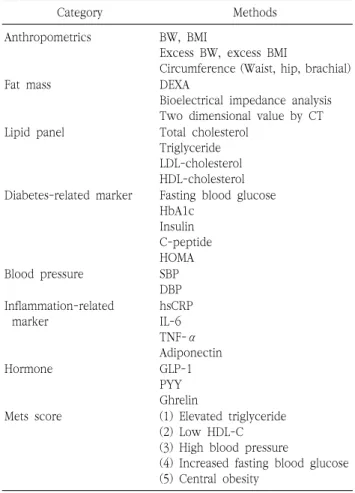
Table 1. Assessment parameters of bariatric surgery

Category Methods

Anthropometrics BW, BMI

Excess BW, excess BMI

Circumference (Waist, hip, brachial)

Fat mass DEXA

Bioelectrical impedance analysis Two dimensional value by CT Lipid panel Total cholesterol

Triglyceride LDL-cholesterol HDL-cholesterol Diabetes-related marker Fasting blood glucose

HbA1c Insulin C-peptide HOMA

Blood pressure SBP

DBP Inflammation-related

marker

hsCRP IL-6 TNF-α Adiponectin

Hormone GLP-1

PYY Ghrelin

Mets score (1) Elevated triglyceride (2) Low HDL-C (3) High blood pressure

(4) Increased fasting blood glucose (5) Central obesity

비만 환자들의 염증 상태의 지표로서 가장 많이 쓰이고 있는 것 이 고민감도 C 반응성 단백(high-sensitive C-reactive protein, hsCRP)으로[24,25] 이는 대표적 급성기 반응 물질(acute phase reactant)인 C 반응성 단백(C-reactive protein, CRP)의 민감 도를 높여 일반 염증성 질환에서 더 낮은 농도를 정확히 측정할 때 주로 쓰이는 측정 도구이다. 고민감도 C 반응성 단백은 체중 및 신체 용적 지수 그리고 인슐린 저항성에 비례하여 증가하는 것으로 알려져 있다[18,26].

고민감도 C 반응성 단백 이외에 쓰이는 염증 지표는 인터루킨 6 (Interleukin 6, IL-6), 종양 괴사 인자 알파(tumor necrosis factor-α, TNF-α) 등이 있는데 이것들은 지방 조직(adipose tissue)에서 분비하는 아디포카인(adipokine)의 일종이다[24].

지방 조직은 최근 단순한 지방산의 저장고가 아니라 지질과 당 대 사에서 중심적인 역할을 하는 것으로 밝혀져 주목 받고 있다[27].

다른 중요한 아디포카인으로는 아디포넥틴(adiponectin)이 있 는데 이는 항염증 지표로 여겨지며 비만환자에게서 그 합성이 감 소하는 것으로 알려져 있다[28]. 또한 이 수치의 상승은 제 2형 당 뇨의 호전을 동반하여 일종의 방어적 작용을 하는 것으로도 알려 져 있다.이 외에 레지스틴(resistin) [29], 비스파틴(visfatin) [30], 아펠린(apelin) [31] 등의 아디포카인들이 있으나 그 중요도나 지표로서 유용성의 근거는 아직 부족한 실정이다.

7. 호르몬

인슐린 이외에 비만 환자의 변화를 나타낼 수 있는 호르몬으로는 글루카곤 양 펩타이드-1 (glucagon like peptide-1, GLP-1) [32], 폴리펩타이드 YY (polypeptide YY, PYY) [33], 그리고 그렐린 (ghrelin) [34] 등이 있다. 문헌상에 비만 수술의 결과 지표로 종종 보고는 되고 있으나 실용적인 지표의 사용으로는 어렵다고 하겠다.

8. 대사 증후군(metabolic syndrome, Mets) 관련 지수 대사 증후군이란 제 2형 당뇨병, 고혈압, 그리고 이상 지질 혈 증이 동반되어 나타나는 대사 이상 상태이며 정확한 원인은 불명이 나 비만이나 인슐린 저항성에 관련되어 있다고 알려져 있다[35]. 대 사 증후군 환자는 대사 이상 상태의 악순환으로 인해 결국 심혈 관 질환의 위험도가 심각한 수준에 이르게 된다[36]. 이러한 대 사 증후군을 지니고 있는 비만 환자의 비만 수술 후 증후군을 이 루고 있는 각 질환의 호전도에 따라 비만수술의 효과를 평가하는 보고가 있다[37].

대사 증후군은 미국의 국립 순환기학회(American Heart Association/National Heart, Lung, and Blood Institute Scientific Statement, AHA/NHLBI)에서 그 범주를 다섯 가지 로 정의하였는데 그 다섯 가지는 (1) 증가된 중성지방(150 mg/dL 이상), (2) 낮은 고밀도 지단백 콜레스테롤(남성은 40

mg/dL 이하, 여성은 50 mg/dL 이하), (3) 고혈압(135/85 mmHg 이상), (4) 증가된 공복 혈당(이전에 당뇨를 진단받지 않 은 사람은 100 mg/dL 이상, 당뇨를 진단받은 사람은 126 mg/dL 이상), 그리고 (5) 복부비만 혹은 증가된 허리둘레(신체 질량 지수 35 kg/m

2

이상 혹은 남성은 허리 둘레 102 cm 이상, 여성은 허리 둘레 88 cm 이상)이다. 이 중 3가지 이상이면 대사 증후군으로 진단된다[38,39].

몇몇 연구들은 수술 후 대사 증후군 범주에서 벗어나지 못한 요 소가 많은 비만 환자의 경우 비만도의 유지 기간이 길고 초과 체중 및 초과 신체 질량 지수의 감소가 낮음을 보고하고 있으며[40], Faria 등[38]은 대사 증후군 범주를 이용한 대사 지수 모델 (metabolic score)를 고안하여 이 모델이 비만 수술 후 환자의 대사 증후군 해소의 예측에 유용하다고 보고한 바 있다.

본론에서 설명된 항목들은 도표 1에 정리되어 있다(Table 1).

결론

측정이 간단하고 객관적인 수치로서 자료의 제시가 용이한 체

(4)

중과 신체 질량 지수가 대표적인 비만 수술 효과 평가 방법이다.

다른 신체 계측 방법으로는 특정 신체 부위의 둘레를 재는 방법 과 영상장비의 도움으로 체내 지방량을 측정하는 방법 등이 있 다. 대사 이상의 동반이 흔한 비만 환자에서 혈중 지질 성분, 혈당 및 인슐린 관련 지표, 그리고 혈압의 측정은 비만 수술 후 추적 검 사에 통상적으로 사용이 되어야 한다. 또한 최근에 비만 수술의 결과 보고에 이용되고 있는 고민감도 C 반응성 단백과 같은 염증 관련 지표 및 대사 증후군 관련 지수에 대해 관심을 갖고 추적 검 사에 포함되도록 노력해야 한다.

비만 수술의 보험 급여가 이루어 지고 있지 않은 국내에서 비 만 수술은 여전히 대중적이지 못하고 그 시행 역시 일부 대학 및 전문병원에서만 이루어지고 있다. 이러한 실정에서 비만 수술 환자의 추적 검사는 신체 계측과 같은 비용의 부담이 없는 방법 으로만 이루어 지고 다른 측정 방법에 대한 관심도가 저하되기 쉽다. 어려운 여건이지만 국내 비만 수술의 정확한 효과 판정과 질 향상을 위해서 비만 수술 외과의사는 다양한 비만 수술 효과 척도의 중요성을 인식하고 진료에 적용하도록 경주해야 할 것이 다.

REFERENCES
1. Liu RC, Sabnis AA, Forsyth C, Chand B. The effects of acute pre- operative weight loss on laparoscopic Roux-en-Y gastric bypass.

Obes Surg 2005;15:1396-402.

2. Yip S, Plank LD, Murphy R. Gastric bypass and sleeve gastrectomy for type 2 diabetes: a systematic review and meta-analysis of outcomes. Obes Surg 2013;23:1994-2003.

3. Cutolo PP, Nosso G, Vitolo G, Brancato V, Capaldo B, Angrisani L.

Clinical efficacy of laparoscopic sleeve gastrectomy vs laparo- scopic gastric bypass in obese type 2 diabetic patients: a retro- spective comparison. Obes Surg 2012;22:1535-9.

4. Papasavas PK, Gagné DJ, Kelly J, Caushaj PF. Laparoscopic Roux-En-Y gastric bypass is a safe and effective operation for the treatment of morbid obesity in patients older than 55 years. Obes Surg 2004;14:1056-61.

5. Boza C, Valderas P, Daroch DA, et al. Metabolic surgery:

Roux-en-Y gastric bypass and variables associated with diabetes remission in patients with BMI <35. Obes Surg 2014;24:1391-7.

6. Netto BD, Bettini SC, Clemente AP, et al. Roux-en-Y gastric by- pass decreases pro-inflammatory and thrombotic biomarkers in individuals with extreme obesity. Obes Surg 2015;25:1010-8.

7. Iannelli A, Anty R, Schneck AS, Tran A, Hébuterne X, Gugenheim J. Evolution of low-grade systemic inflammation, insulin resist- ance, anthropometrics, resting energy expenditure and metabol- ic syndrome after bariatric surgery: a comparative study between gastric bypass and sleeve gastrectomy. J Visc Surg 2013;150:

269-75.

8. Trakhtenbroit MA, Leichman JG, Algahim MF, et al. Body weight, insulin resistance, and serum adipokine levels 2 years after 2 types of bariatric surgery. Am J Med 2009;122:435-42.

9. Boza C, Salinas J, Salgado N, et al. Laparoscopic sleeve gas- trectomy as a stand-alone procedure for morbid obesity: report of 1,000 cases and 3-year follow-up. Obes Surg 2012;22:866-71.

10. Carrasco F, Papapietro K, Csendes A, et al. Changes in resting en- ergy expenditure and body composition after weight loss follow- ing Roux-en-Y gastric bypass. Obes Surg 2007;17:608-16.

11. Lim DM, Taller J, Bertucci W, Riffenburgh RH, O'Leary J, Wisbach G. Comparison of laparoscopic sleeve gastrectomy to laparo- scopic Roux-en-Y gastric bypass for morbid obesity in a military institution. Surg Obes Relat Dis 2014;10:269-76.

12. Iannelli A, Martini F, Rodolphe A, et al. Body composition, anthro- pometrics, energy expenditure, systemic inflammation, in pre- menopausal women 1 year after laparoscopic Roux-en-Y gastric bypass. Surg Endosc 2014;28:500-7.

13. Kang T, Wooldridge J, Periou L, Richardson WS. Bariatric surgery significantly improves body proportion. Ochsner J 2012;12:42-4.

14. Renard Y, Diaz Cives A, Veyrie N, et al. Anatomical and CT ap- proach of the adipose tissue: application in morbid obesity. Surg Radiol Anat 2015. [Epub ahead of print]

15. Galanakis CG, Daskalakis M, Manios A, Xyda A, Karantanas AH, Melissas J. Computed tomography-based assessment of abdomi- nal adiposity changes and their impact on metabolic alterations following bariatric surgery. World J Surg 2015;39:417-23.

16. Gómez JM, Vilarrasa N, Masdevall C, et al. Regulation of bone mineral density in morbidly obese women: a cross-sectional study in two cohorts before and after bypass surgery. Obes Surg 2009;19:345-50.

17. Habib P, Scrocco JD, Terek M, Vanek V, Mikolich JR. Effects of bariatric surgery on inflammatory, functional and structural markers of coronary atherosclerosis. Am J Cardiol 2009;104:

1251-5.

18. Santos J, Salgado P, Santos C, et al. Effect of bariatric surgery on weight loss, inflammation, iron metabolism, and lipid profile.

Scand J Surg 2014;103:21-5.

19. Muñoz R, Dominguez A, Muñoz F, et al. Baseline glycated hemo- globin levels are associated with duodenal-jejunal bypass lin- er-induced weight loss in obese patients. Surg Endosc 2014;28:1056-62.

20. Coppini LZ, Bertevello PL, Gama-Rodrigues J, Waitzberg DL.

Changes in insulin sensitivity in morbidly obese patients with or without metabolic syndrome after gastric bypass. Obes Surg 2006;16:1520-5.

21. Nannipieri M, Baldi S, Mari A, et al. Roux-en-Y gastric bypass and sleeve gastrectomy: mechanisms of diabetes remission and role of gut hormones. J Clin Endocrinol Metab 2013;98:4391-9.

22. Wallace TM, Matthews DR. The assessment of insulin resistance in man. Diabet Med 2002;19:527-34.

23. Hallersund P, Sjöström L, Olbers T, et al. Gastric bypass surgery is followed by lowered blood pressure and increased diuresis - long term results from the Swedish Obese Subjects (SOS) study. PLoS One 2012;7:e49696.

24. Illán-Gómez F, Gonzálvez-Ortega M, Orea-Soler I, et al. Obesity and inflammation: change in adiponectin, C-reactive protein, tu- mour necrosis factor-alpha and interleukin-6 after bariatric surgery. Obes Surg 2012;22:950-5.

25. Agrawal V, Krause KR, Chengelis DL, Zalesin KC, Rocher LL,

McCullough PA. Relation between degree of weight loss after

(5)

bariatric surgery and reduction in albuminuria and C-reactive protein. Surg Obes Relat Dis 2009;5:20-6.

26. Civera M, Urios A, Garcia-Torres ML, et al. Relationship between insulin resistance, inflammation and liver cell apoptosis in pa- tients with severe obesity. Diabetes Metab Res Rev 2010;26:187-92.

27. Trayhurn P, Wood IS. Signalling role of adipose tissue: adipokines and inflammation in obesity. Biochem Soc Trans 2005;33:1078-81.

28. Guerre-Millo M. Adiponectin: an update. Diabetes Metab 2008;34:12-8.

29. Lee WJ, Chen CY, Chong K, Lee YC, Chen SC, Lee SD. Changes in postprandial gut hormones after metabolic surgery: a comparison of gastric bypass and sleeve gastrectomy. Surg Obes Relat Dis 2011;7:683-90.

30. Friebe D, Neef M, Kratzsch J, et al. Leucocytes are a major source of circulating nicotinamide phosphoribosyltransferase (NAMPT)/

pre-B cell colony (PBEF)/visfatin linking obesity and inflammation in humans. Diabetologia 2011;54:1200-11.

31. Dib N, Kiciak A, Pietrzak P, et al. Early-effect of bariatric surgery (Scopinaro method) on intestinal hormones and adipokines in in- sulin resistant Wistar rat. J Physiol Pharmacol 2013;64:571-7.

32. Neff KJ, O'Shea D, le Roux CW. Glucagon like peptide-1 (GLP-1) dynamics following bariatric surgery: a Signpost to a new frontier.

Curr Diabetes Rev 2013;9:93-101.

33. Hanusch-Enserer U, Roden M. News in gut-brain communica- tion: a role of peptide YY (PYY) in human obesity and following bariatric surgery? Eur J Clin Invest 2005;35:425-30.

34. Teixeira FV. Ghrelin and gastric bypass. Obes Surg 2004;14:1283- 4; author reply 1284-5.

35. Grundy SM, Cleeman JI, Daniels SR, et al; American Heart Association; National Heart, Lung, and Blood Institute. Diagnosis and management of the metabolic syndrome: an American Heart Association/National Heart, Lung, and Blood Institute Scientific Statement. Circulation 2005;112:2735-52.

36. Batsis JA, Nieto-Martinez RE, Lopez-Jimenez F. Metabolic syn- drome: from global epidemiology to individualized medicine. Clin Pharmacol Ther 2007;82:509-24.

37. Inabnet WB 3rd, Winegar DA, Sherif B, Sarr MG. Early outcomes of bariatric surgery in patients with metabolic syndrome: an analysis of the bariatric outcomes longitudinal database. J Am Coll Surg 2012;214:550-6; discussion 556-7.

38. Faria G, Pestana D, Aral M, et al. Metabolic score: insights on the development and prediction of remission of metabolic syndrome after gastric bypass. Ann Surg 2014;260:279-86.

39. Alberti KG, Eckel RH, Grundy SM, et al; International Diabetes Federation Task Force on Epidemiology and Prevention; Hational Heart, Lung, and Blood Institute; American Heart Association;

World Heart Federation; International Atherosclerosis Society;

International Association for the Study of Obesity. Harmonizing the metabolic syndrome: a joint interim statement of the International Diabetes Federation Task Force on Epidemiology and Prevention; National Heart, Lung, and Blood Institute;

American Heart Association; World Heart Federation; International Atherosclerosis Society; and International Association for the Study of Obesity. Circulation 2009;120:1640-5.

40. Ferland A, Eckel RH. Does sustained weight loss reverse the meta-

bolic syndrome? Curr Hypertens Rep 2011;13:456-64.

수치

Table  1.  Assessment  parameters  of  bariatric  surgery

참조

관련 문서

This system is intended for voluntary quality management of metabolic and bariatric surgery by the expert group of the society so that morbid and super morbid obesity

Dietary Aloe QDM complex lowered body weight, fasting blood glucose, plasma insulin, and leptin levels, and markedly reduced the impairment of glucose tolerance in obese mice..

Bariatric surgery is an effective treatment modality for patients with severe obesity and type 2 diabetes that are refractory to conventional treatments.. We

Key Words: Postprandial hyperinsulinemic hypoglycemia (PHH), Roux-en-Y gastric bypass (RYGB), Sleeve gastrectomy (SG),

Current Status of Bariatric and Metabolic Surgery in Daejeon and Chungcheong Province: Early Experiences after Public Medical Insurance Coverage in 2019.. 1 Department

This study aimed to quantitatively evaluate the effects of bariatric surgery on CVD risk reduction in Korean obese patients by using three CVD risk prediction

Conclusion: In BMI <35 kg/m 2 with type 2 diabetes, insulin sensitivity and insulin secretion were much improved after gastric bypass and metabolic surgery might be

The change of risk factors of cardiovascular disease such as blood pressure, fasting plasma glucose, insulin, markers of insulin resistance, lipid levels, and