Skin Hydration and Collagen Synthesis of AF-343 in HS68 Cell Line and NC/Nga Mice by Filaggrin Expression and Suppression of Matrix Metallopreteinase
저자 (Authors)
Jae-We Cho, Yeon-su Jeong, Jiwon Han, Young-Jin Chun, Hyun Kyu Kim, Min Young Kim, Beom Joon Kim, Ki Moon Park, Jong Keun Kim, Jae Hyun Kim, Soo-Muk Cho
출처 (Source)
Toxicological Research27(4), 2011.12, 225-229 (5 pages)
발행처 (Publisher)
한국독성학회
The Korean Society Of Toxicology
URL
http://www.dbpia.co.kr/Article/NODE01740885APA Style Jae-We Cho, Yeon-su Jeong, Jiwon Han, Young-Jin Chun, Hyun Kyu Kim, Min Young Kim, Beom Joon Kim, Ki Moon Park, Jong Keun Kim, Jae Hyun Kim, Soo-Muk Cho (2011). Skin Hydration and Collagen Synthesis of AF-343 in HS68 Cell Line and NC/Nga Mice by Filaggrin Expression and Suppression of Matrix Metallopreteinase. Toxicological Research, 27(4), 225- 229.
이용정보 (Accessed)
저작권 안내
DBpia에서 제공되는 모든 저작물의 저작권은 원저작자에게 있으며, 누리미디어는 각 저작물의 내용을 보증하거나 책임을 지지 않습니다.
이 자료를 원저작자와의 협의 없이 무단게재 할 경우, 저작권법 및 관련법령에 따라 민, 형사상의 책임을 질 수 있습니다.
Copyright Information
The copyright of all works provided by DBpia belongs to the original author(s). Nurimedia is not responsible for contents of each work. Nor does it guarantee the contents.
You might take civil and criminal liabilities according to copyright and other relevant laws if you publish the contents 계명대학교
114.71.5.213
2016/07/05 13:38 (KST)
Vol. 27, No. 4, pp. 225-229 (2011)
http://dx.doi.org/10.5487/TR.2011.27.4.225 plSSN: 1976-8257 eISSN: 2234-2753
Open Access
Skin Hydration and Collagen Synthesis of AF-343 in HS68 Cell Line and NC/Nga Mice by Filaggrin Expression and Suppression
of Matrix Metallopreteinase
Jae-We Cho1, Yeon-su Jeong2, Jiwon Han2, Young-Jin Chun3, Hyun Kyu Kim4, Min Young Kim4, Beom Joon Kim4, Ki Moon Park5, Jong Keun Kim6, Jae Hyun Kim7 and Soo-Muk Cho7
1Department of Dermatology, School of Medicine, Keimyung University, Daegu 700-712
2Medical Beauty Research Institute, AmorePacific Corporation R&D Center, Gyeonggi-do 446-729
3College of Pharmacy, Chung-Ang University, Seoul 156-756
4Department of Dermatology, College of Medicine, Chung-Ang University, Seoul 156-755
5Department of Food Science and Biotechnology, Sungkyunkwan University, Gyeonggi-do 440-746
6Sungkyun Biotech. Co., Ltd., Gyeonggi-do 425-839
7Functional Food & Nutrition Division, Department of Agrofood Resources, National Academy of Agricultural Science, Gyeonggi 441-853, Korea
(Received October 1, 2011; Revised October 9, 2011; Accepted October 18, 2011)
Extract of Taraxacum platycarpum (AF-343) has been reported to have several biological properties such as skin hydration and anti-inflammatory effects. Although clinical evidences of skin hydration and anti- inflammatory effect were proven in clinical trial, precise mechanism of skin hydration was not fully under- stood yet. In this study, we have focused skin hydration mechanism related filaggrin, collagen, and matrix metalloproteinase (MMP) in vitro and animal study. Herein, skin hydration mechanism of AF-343 is due to recovery of filaggrin in mice model and increased production of collagen with suppression of matrix MMP in vitro fibroblast cell line.
Key words: Taraxacum platycarpum, Type I collagen, MMP-1, Smad2/3
INTRODUCTION
Several positive effects of dandelion extract were reported in the literature, which were related with skin hydration, anti-inflammatory effect, and anti-oxidative effect (Schtz et al., 2006; Cheong et al., 1998). In our previous clinical trial, we have revealed that dandelion extract of Taraxacum platycarpum (AF-343) have skin hydration and anti-inflam- matory effect (Kim et al., 2010). However, we have not fully understood how AF-343 plays a role for skin hydra- tion. To have a moisturizing effect in human skin, several factors are required such as recovery of natural moisturiz- ing factors (NMF), increased expression of collagen, and
suppression of matrix metalloproteinase (MMP) (Seo et al., 2005; Hu and Kitts, 2005). In addition to skin hydration, these factors are also known to increase skin elasticity, anti- wrinkle effect, and smoothing of skin texture (Homebeck, 2003). Among NMFs, ceramide, filaggrin, and loricrin are representative and filaggrin mutation is one of the impor- tant precipitating factor in human atopic dermatitis (AD) skin (Irvine et al., 2011). AD is characterized by repetitive chronic skin inflammation and significant dry skin which has lower amount of water content when compared with those of normal healthy control.
Filaggrin gene (FLG) loss-of-function mutations underlie ichthyosis vulgaris, a semi-dominant disorder of keratiniza- tion, and are the strongest and most widely replicated genetic risk factor for AD (Sandilands et al., 2009). We have recently shown using Raman spectroscopy that FLG genotype is a major determinant of NMF in the stratum cor- neum (Kezic et al., 2008). FLG codes for profilaggrin, a large protein precursor comprised of 10~12 filaggrin repeats. The most abundant amino acid residues in filag- grin repeats are basic amino acids histidine and arginine and
Correspondence to: Beom Joon Kim, Department of Dermatol-
ogy, Chung-Ang University Hospital, 224-1, Heukseok-dong, Dongjak-ku, Seoul 156-755, Korea
E-mail: [email protected]
Soo-Muk Cho, Functional Food & Nutrition Division, Department
of Agrofood Resources, National Academy of Agricultural Science,
160 Nokjiro, Gwonseon-gu, Suwon, Gyeonggi-do 441-853, Korea
E-mail: [email protected]
226 J.-W. Cho et al.
the polar residue glutamine. The protein is also signifi- cantly rich in glycine and serine, consistent with the struc- tural similarity of filaggrin and related proteins such as loricrin to the variable domains of keratins, which largely consist of glycine/serine loop structures (Korge et al., 1992).
Here, we compared the levels of filaggrin degradation products in NC/Nga mice after oral administration of AF- 343. And we evaluated the increased production of col- lagen with suppression of MMP in vitro fibroblast cell line.
MATERIALS AND METHODS
Animals. Fifteen female 5-week-old NC/Nga mice were purchased from Charles River Japan (Yokohama, Japan), and maintained under conventional conditions: a 12 h light/
12 h dark cycle with freely available food and water. The colony room temperature was kept at 22~23oC with a humidity of 55 ± 15%.
Induction of AD-like skin lesion. Mice were anesthe- tized with ether, after which the animal’s back hair was shaved by clipper 1 day prior to sensitization. Next, 100 mg of mite cream (Biostir Inc., Kobe, Japan) impregnated with Dermatophagoides farina crude extract was applied to the dorsal skin of these animals and secured by a patch every second day for fifteen days. Each gram of mite cream con- tained 234
µg of Der f 1, 7 µg of Der f 2 and 136.4 mg of
proteins.Systemic application of AF-343. After the induction of the AD-like skin lesions, the animals were divided into three groups, each containing five mice. These groups were then treated systemically for 5 days; AF-343 (experimen- tal), hydrocortisone (positive control), or placebo only (nor- mal control). The relative dermatitis severity was assessed macroscopically using the following scoring procedure. The total skin severity score was defined as the sum of the indi- vidual scores for each of the following seven signs: erythema, hemorrhage, edema, excoriation, erosion, scaling and dry- ness (Kunz et al., 1997). In this system, 0 was defined as exhibiting no symptoms, 1 as mild symptoms, 2 as moder- ate symptoms, and 3 as severe symptoms. Additionally, the mice were photographed after 5 days.
Cell culture. HS68 Cells (human skin fibroblasts) were cultured in 48-well plate at 37oC in a humidified atmo- sphere containing an atmosphere of 5% (v/v) CO2 in air.
The medium was changed every third day. Subconfluent cell cultures were enzymatically split by 100 nM TPA, 0.5% DMSO then propagated in culture medium as described above.
AF-343 application of the HS68 cells. Human skin fibroblasts were treated by various concentrations of AF-
343 (0, 0.1, 0.5, 1, 2 mg/ml). The expressions of type I col- lagen, MMP-1, Smad2/3, and TIMP-1 proteins were ana- lyzed by Western blot analysis. We used quantified proteins extracted from mixture of cultured cell with lysis buffer [10 mM Tris-Cl (pH 7.4), 5 mM EDTA (pH 8.0), 130 mM NaCl, 1% TritonX-100], 0.2 M PMSF (phenyl-methyl-sul- fonyl-fluoride) and proteinase inhibitors (0.02 mM aprotinin, 2 mM leupeptin, 5 mM phenanthroline, 28 mM benzami- dine-HCl). In addition, level of type I collagen mRNA was analyzed by CAT assay.
RESULTS
Anti-inflammatory effect of AF-343 on the AD-like skin lesion. To determine the clinical severity of each group, seven major clinical signs and symptoms of AD - erythema, hemorrhage, edema, excoriation, erosion, scal- ing and dryness - were scored using the criteria defined above (Kunz et al., 1997). These major clinical signs and symptoms developed shortly after the Dermatophagoides farina crude extract was applied to the backs and ears of the
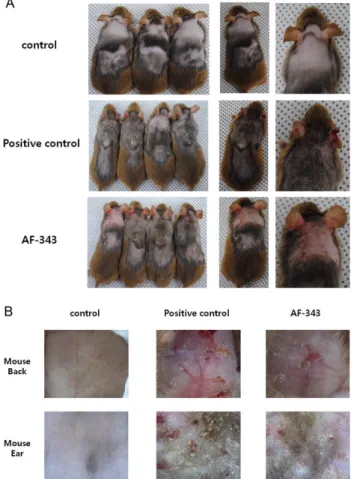
Fig. 1. Effect of AF-343 on clinical observations. AD-like skin
lesions induced by attachment of mite patches on the backs of
mice for 15 days, and AF-343 treated orally for 5 days. (Positive
control, hydrocortisone).
mice, and the AD-like skin lesions progressively worsened until 15 days after the initial induction. However, animals receiving systemic treatment with AF-343 exhibited a sig- nificantly lower degree of clinical skin severity comparable to those treated with hydrocortisone (the positive control).
Conversely, no change was observed in the normal control group during the experimental period (Fig. 1). Such results indicate that AF-343 is able to effectively decrease the skin severity of mite-induced AD-like skin lesions in NC/Nga mice.
Increased expression of filaggrin in NC/Nga mice. We obtained skin tissues from backs and ears of AD induced NC/Nga mice. Histopathologically, epidermis became thicker when compared to that of normal epidermal tissue, while infiltration of inflammatory cells increased in the upper dermis (Fig. 2A). AF-343 is orally administrated, normalization of epidermal thickness and decrease of inflammatory cell infiltration were observed. These showed more prominent on the ear tissues than back samples (Fig. 3A).
For normal skin tissue, immunohistochemistry revealed that filaggrin expression was evenly distributed in many horny layers with the increase of expression mostly in gran- ular layers. Meanwhile, for skin tissue with AD, remark- able decrease of expression was observed in some granular layers and this seems to also affect the distribution of expression for filaggrin in horny layers (Fig. 2B). AF-343 is orally administrated, we could observed normalized distri- bution of filaggrin expression (Fig. 3B). In the case of loric- rin, such results were less obvious than in the case of filaggrin (Fig. 2C, 3C).
According to evaluation of filaggrin and loricrin expres- sion by using Western blotting, filaggrin expression in AD-
like skin lesion was slightly decreased. After administra- tion of oral AF-343, the results showed increase of filag- grin expression (Fig. 4).
Expression of type I collagen and MMP-1. In order to evaluate a possible role of AF-343 on the collagen neogen- esis, we focused on the type I collagen protein and MMP-1 expression after treatment with AF-343 in a concentration range from 0.1 to 2 mg/ml. AF-343 exerted different effects on type I collagen protein and MMP-1 expression depending on the concentration administered (Fig. 5).
Expression of type I collagen protein was increased in AF-343-treated human skin fibroblasts by dose and time-dependent manners. Consistent with this result, the expressions of phosphor-Smad2/3 in skin fibroblasts were increased and MMP-1 expression was decreased by AF- 343 treatment (data not shown). TIMP-1 expression was not significantly changed in AF-343 treated skin fibro- blasts.
Fig. 3. Immunohistochemical staining of filaggrin and loricrin
in control, extract treated, or extract/AF-343 treated mice back tissues.
Fig. 2. Immunohistochemical staining of filaggrin and loricrin
in control, extract treated, or extract/AF-343 treated mice ear tis- sues.
Fig. 4. Expressions of filaggrin and loricrin in control, extract
treated, or extract/AF-343 treated mice ear and back tissues.
228 J.-W. Cho et al.
DISCCUSION
This study showed that when AD is induced on NC/Nga mice, epidermis becomes thicker when compared to that of normal epidermal tissue while infiltration of inflammatory cells increases and distribution of filaggrin expression changes. For normal skin tissue, immunohistochemistry revealed that filaggrin expression was evenly distributed in many horny layers with the increase of expression mostly in granular layers. Meanwhile, for skin tissue with AD, remarkable decrease of expression was observed in some granular layers and this seems to also affect the distribu- tion of expression for filaggrin in horny layers (Sandilands et al., 2009). The study unveiled an important fact that when AF-343 is orally administrated, anti-inflammatory effects improved AD and at the same time, normalized dis- tribution of filaggrin expression. In the case of loricrin, a differentiation marker, such results were less obvious than in the case of filaggrin so it seems that it would be more desirable to use filaggrin, rather than loricrin, as a marker when evaluating the efficacy of treatment for AD on ani- mals.
Therefore, the study demonstrated that oral administra- tion of AF-343 increased the thickness of epidermis and normalized the distribution of filaggrin expression in AD induced animals, which means that AF-343 relates to anti- inflammatory effect and normalization of skin NMF expres- sion. It appears that further study is necessary to look into what mechanism makes AF-343 relate to normalization process of filaggrin expression.
In conclusion, we have focused skin hydration mecha- nism related filaggrin, collagen, and MMP in vitro and ani- mal study. Herein, skin hydration mechanism of AF-343 is due to recovery of filaggrin in mice model which means that AF-343 relates to anti-inflammatory effect and normal- ization of skin NMF expression. This study can also pro-
vide that AF-343 plays a role in increased production of collagen with suppression of MMP in vitro fibroblast cell line.
ACKNOWLEDGEMENTS
This study was carried out with the support of “Research Program for Agricultural Science & Technology Develop- ment (Project No. PJ006753012011)”, National Academy of Agricultural Science, Rural Development Administra- tion, Republic of Korea.
REFERENCES
Schütz, K., Carle, R. and Schieber, A. (2006). Taraxacum--a review on its phytochemical and pharmacological profile. J.
Ethnopharmacol., 107, 313-323.
Cheong, H., Choi, E.J., Yoo, G.S., Kim, K.M. and Ryu, S.Y.
(1998). Desacetylmatricarin, an anti-allergic component from Taraxacum platycarpum. Planta. Med., 64, 577-578.
Kim, J.H., Lee, H.I., Park, J.H., Lim, Y.Y., Kim, B.J., Lim, I.S., Kim, M.N., Kim, H.S., Kim, J.K., Han, S.H., Cho, S.M. Kim, J.H. and Park, K.M. (2010). The Effect of the Extracts of Tarax- acum platycarpum (AF-343) in Atopic Dermatitis. Korean. J.
Asthma. Allergy. Clin. Immunol., 30, 36-42.
Seo, S.W., Koo, H.N., An, H.J., Kwon, K.B., Lim, B.C., Seo, E.A., Ryu, D.G., Moon, G., Kim, H.Y., Kim, H.M. and Hong, S.H.
(2005). Taraxacum officinale protects against cholecystokinin- induced acute pancreatitis in rats. World J. Gastroenterol., 11, 597-599.
Hu, C. and Kitts, D.D. (2005). Dandelion (Taraxacum officinale) flower extract suppresses both reactive oxygen species and nitric oxide and prevents lipid oxidation in vitro. Phytomedi- cine., 12, 588-597.
Homebeck, W. (2003). Down-regulation of tissue inhibitor of matrix metalloprotease-1 (TIMP-1) in aged human skin contrib- utes to matrix degradation and impaired cell growth and sur- vival. Pathol. Biol., 51, 569-573.
Irvine, A.D., McLean, W.H. and Leung, D.Y. (2011). Filaggrin mutations associated with skin and allergic diseases. N. Engl. J.
Med., 365, 1315-1327.
Sandilands, A., Sutherland, C., Irvine, A.D. and McLean, W.H.
(2009). Filaggrin in the frontline: role in skin barrier function and disease. J. Cell Sci., 122, 1285-1294.
Kezic, S., Kemperman, P.M., Koster, E.S., de Jongh, C.M., Thio, H.B., Campbell, L.E., Irvine, A.D., McLean, W.H., Puppels, G.J. and Caspers, P.J. (2008). Loss-of-function mutations in the filaggrin gene lead to reduced level of natural moisturizing fac- tor in the stratum corneum. J. Invest. Dermatol., 128, 2117- 2119.
Korge, B.P., Gan, S.Q., McBride, O.W., Mischke, D. and Steinert, P.M. (1992). Extensive size polymorphism of the human kera- tin 10 chain resides in the C-terminal V2 subdomain due to variable numbers and sizes of glycine loops. Proc. Natl. Acad.
Sci., U.S.A. 89, 910-914.
Kunz, B., Oranje, A.P., Labrze, L., Stalder, J.F., Ring, J. and Taeb, A. (1997). Clinical validation and guidelines for the SCORAD index: consensus report of the European Task Force on Atopic Fig. 5. MMP-1 expression was decreased by AF-343 treatment.
TPA: 12-O-tetradecanoylphorbol-13-acetate, RA: retinoic acid, ROL: retinol.
Dermatitis. Dermatology, 195, 10-19.
Bhogal, R.K., Stoica, C.M., McGaha, T.L. and Bona, C.A. (2005).
Molecular aspects of regulation of collagen gene expression in fibrosis. J. Clin. Immunol., 25, 592-603.
Davis, G.E. and Saunders, W.B. (2006). Molecular balance of cap- illary tube formation versus regression in wound repair: role of matrix metalloproteinases and their inhibitors. J. Investig. Der- matol. Symp. Proc., 11, 44-56.