• 검색 결과가 없습니다.

Changes of Bacterial Resistant Pattern in Adult Acute Epididymitis at a Tertiary Hospital in Recent Ten Years

N/A
N/A
Protected

Academic year: 2021

Share "Changes of Bacterial Resistant Pattern in Adult Acute Epididymitis at a Tertiary Hospital in Recent Ten Years"

Copied!
5
0
0

로드 중.... (전체 텍스트 보기)

전체 글

(1)

Original Article Korean J Urogenit Tract Infect Inflamm 2014;9(1):39-43

3차 의료기관의 최근 10년간 성인 부고환염의 원인균주의 항생제 저항성의 변화

박종진, 김종욱, 배재현, 문두건, 오미미

고려대학교 구로병원 비뇨기과

Changes of Bacterial Resistant Pattern in Adult Acute Epididymitis at a Tertiary Hospital in Recent Ten Years

Jong Jin Park, Jong Wook Kim, Jae Hyun Bae, Du Geon Moon, Mi Mi Oh Department of Urology, Korea University Guro Hospital, Seoul, Korea

Purpose: We conducted a retrospective study to investigate causative bacteria of adult epididymitis and their characteristics and resistance in the recent 10 years at a tertiary hospital.

Materials and Methods: We reviewed the medical records of 121 patients who were diagnosed with acute epididymitis from 2002 to 2012. Diagnosis was based on symptoms, physical examination, and ultrasonography. We analyzed causative organisms and changes of antibiotic resistance pattern according to time course in the recent 10 years.

Results: The most commonly detected bacteria were Pseudomonas aeruginosa and Escherichia coli. Fluouroquinolone resistance has emerged since 2006 and 50%

of the patients have resistance to fluouroquinolones.

Conclusions: Quinolone resistance composes a major proportion of the causative organism. Therefore, while according to the guidelines, fluoroquinolone may be the first response for elderly men, we recommend that antibiotic resistance should be considered if fever persists, and other antibiotics could be included.

Keywords: Epididymitis; Drug resistance, microbial

Copyright 2014, Korean Association of Urogenital Tract Infection and Inflammation. All rights reserved.

This is an open access article distributed under the terms of the Creative Commons Attribution Non-Commercial License (http://creativecommons.org/licenses/by-nc/3.0) which permits unrestricted non-commercial use, distribution, and reproduction in any medium, provided the original work is properly cited.

Received: 13 January, 2014 Revised: 10 February, 2014 Accepted: 10 February, 2014

Correspondence to: Mi Mi Oh

Department of Urology, Korea University Guro Hospital, 148, Gurodong-ro, Guro-gu, Seoul 152-703, Korea

Tel: +82-2-2626-1310, Fax: +82-2-2626-3203 E-mail: [email protected]

INTRODUCTION

Traditionally, acute epididymitis is known as result from the spread of infection from the bladder, urethra, or prostate into the epididymis. Although viral or fungal infection, tuberculosis, and urinary obstruction can cause epididymitis,

the most common cause of acute epididymitis is bacterial

infection.

1

In sexually active younger men, the most

common causative organisms of epididymitis are the

urethritis-causing bacteria such as Neisseria gonorrhoeae

and Chlamydia trachomatis . In elderly men, benign prostate

hypertrophy (BPH) and associated urine stasis, urinary tract

(2)

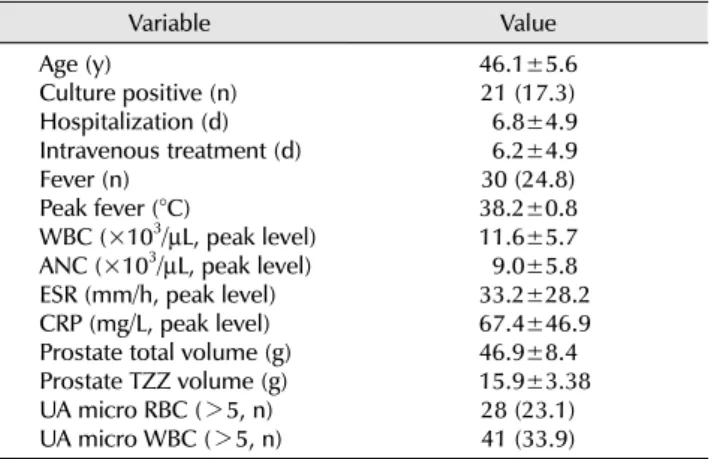
Table 1. General characteristics of the patients

Variable Value

Age (y)

Culture positive (n) Hospitalization (d) Intravenous treatment (d) Fever (n)

Peak fever (°C)

WBC (×10

3

/μL, peak level) ANC (×10

3

/μL, peak level) ESR (mm/h, peak level) CRP (mg/L, peak level) Prostate total volume (g) Prostate TZZ volume (g) UA micro RBC (>5, n) UA micro WBC (>5, n)

46.1±5.6 21 (17.3) 6.8±4.9 6.2±4.9 30 (24.8) 38.2±0.8 11.6±5.7 9.0±5.8 33.2±28.2 67.4±46.9 46.9±8.4 15.9±3.38

28 (23.1) 41 (33.9) Values are presented as mean±standard deviation or number (%).

WBC: white blood cell, RBC: red blood cell, ANC: absolute neutrophil count, ESR: erythrocyte sedimentation rate, CRP: C-reactive protein, TZZ: transitional zone, UA: urine analysis.

Table 2. Frequency of isolates causing acute epididymitis

Bacterial strains n (%)

Pseudomonas aeruginosa Escherichia coli

Klebsiella pneumonia Neisseriae gonorrhoae Enterococcus faecalis Streptococcus agalactiae Total

8 (38.1) 8 (38.1) 2 (9.5) 1 (4.8) 1 (4.8) 1 (4.8) 21

infection (UTI), and catheterization are the most common causes of epididymitis. The most common causative microorganisms in the elderly are the coliform bacteria that cause bacteriuria.

2,3

Additionally, recent data has shown that antibiotic-resistant bacteria such as fluoroquino- lone-resistant bacteria and extended-spectrum β-lacta- mase-producing (ESBL) Escherichia coli also appeared more frequently than previous.

4-6

However, there is insufficient recent research about recent causative bacteria of epididymitis.

In this study, we conducted a retrospective study to investigate pathogen, antibiotic resistances of acute epididymitis in recent 10 years at tertiary hospitals.

MATERIALS AND METHODS

From June 2002 to June 2012, we reviewed 121 adults hospitalized for acute epididymitis in our hospital. They had been examined and diagnosed with acute epididymitis based on abrupt scrotal pain and tenderness on physical examination and epididymal enlargement on scrotal ultrasonography regardless of fever.

7-9

Patients less than 18 years old and with chronic epididymitis, recurrent epididymitis and who had history of antibiotic treatment before hospitalization due to acute epididymitis, viral epididymitis were excluded from analysis.

We analysed causative organisms and changes of antibiotic resistance pattern according to time course in recent 10 years.

All values are expressed as the mean±standard deviation.

IBM SPSS Statistics 19.0 (IBM Co., Armonk, NY, USA) was used to evaluate the data. For all tests, p<0.05 was considered to indicate statistical significance.

RESULTS

The mean age of the 121 patients was 46.1±5.6 years, and the mean hospitalization duration was 5.8±0.4 days.

Twenty-one men (17.35%) were culture positive (Table 1).

When the component bacteria were categorized, the most common was Pseudomonas aeruginosa (8/21) and E. coli (8/21). Klebsiella pneumonia was detected in 2 samples (Table 2).

Quinolone resistant strain increased since 2006 composing near 50% of culture positive strains. The most susceptible antibiotic was meropenem (19/21) followed by piperacillin/tazobactam (18/21), imipenem (18/21), and amikacin (17/21). Near 50% of the patients with fluoro- quinolone resistant epididimitis showed co-resistance to ampicillin, amoxicillin/clavulanic acid, cefotaxime, genta- mycin and trimethoprim/sulfamethoxazole. ESBL positive strain first emerged in 2012 (Table 3).

When we try to compare the antibiotic resistance on a separate group every two years, quinolone resitant strain was increased to 2006-2007 year group, but it tended to decrease again in recent years. And 1 ESBL positive strain incubated at 2010-2012 (Fig. 1).

DISCUSSION

Recent data has shown that antibiotic-resistant bacteria

such as fluoroquinolone-resistant bacteria and ESBL E. coli

also appeared more frequently than previous as the cause

of UTI.

4-6

Therefore, the causative organism of acute

epididymitis and changes of bacterial resistance to

(3)

Table 3. Antibiotics susceptibility of cultured organisms

Total (n=21) Fluoroquinolone resistance (n=10) ESBL positive Susceptible Resistant Indeterminate Susceptible Resistant Indeterminate Susceptibility Ampicillin

Amoxicillin/clavulanic acid Amikacin

Cefotaxime Ceftazidime Cefepime Cefoxitin Imipenem Meropenem Gentamicin

Piperacillin/tazobactam Trimetho/sulfamethoxazole Ciprofloxacin

ESBL positive

6 15 17 12 15 15 16 18 19 12 18 10 10

14 6 3 9 2 5 5 2 2 9 3 11 10 1

1 0 1 0 4 1 0 1 0 0 0 0 1

2 4 6 4 4 4 5 7 8 4 7 5 0

7 6 3 6 2 5 5 2 2 6 3 5 10 1

1 0 1 0 4 1 0 1 0 0 0 0 0

R R R S R R R S S R R S R ESBL: extended-spectrum β-lactamase-producing.

Fig. 1. Comparison of bacteria and laboratory data by 2 years. ESBL:

extended-spectrum β-lactamase–producing.

antibiotics should be identified.

Acute epididymitis has been known to result from the spread of UTI or sexually transmitted disease (STD). The most common cause is bacteria, but viruses, fungi, and BPH can cause acute epididymitis. P. aeruginosa and E.

coli were the most common organism causing acute epididymitis in our study. Holmes et al.

2

reported that E.

coli and C. trachomatis were the most commonly detected bacteria in acute epididymitis. As the patients in our study were older than that of previous studies, the epididymitis from UTI was less likely to stem from an STD.

The traditional treatment approach suggests tetracycline or erythromycin with fluoroquinolone or azalide.

10

Recent empirical antibiotic treatment consists of ceftriaxone plus doxycycline for sexually transmitted pathogens, or fluoro-

quinolone for enteric organisms.

11,12

Our study showed high rate of quinolone resistance (10/17) and also quinolone resistant culture showed co-resistance to to ampicillin, amoxicillin/clavulanic acid, cefotaxime, gentamycin and trimethoprim/sulfamethoxazole. It is well known that quinolone resistance consist major proportion of antibiotic resistance in UTI in South Korea. Owing to these advantages, empirical treatment with fluoroquinolones has been a standard treatment for UTI in Korea.

13

Concurrently and perhaps consequently, UTIs due to fluoroquinolone-resis- tant bacterial strains have continued to increase at an alarming rate in Korea.

14,15

A study of antimicrobial resistance in community acquired UTI using Korean antimicrobial monitoring system reported 24.6% of quinolone resistance which is higher than the resistance rate of the United States of America.

15

Even higher rate of quinolone resistance are noted in acute epididymitis.

Study by Lee

14

demonstrated near 50% resistance rate to levofloxacin, ciprofloxacin and norfloxacin. His report suggests that ciprofloxacin is no longer a recommended therapy for Enterococcus faecalis from complicated UTI.

The author emphasized that quinolone resistance is higher than we expected. Our result showed similar results. 10 of 21 bacteria detected (47.6%) were fluoroquino- lone-resistant, and were resistant to other antibiotics as well.

Additionally 1 ESBL positive strain incubated in the

2010-2012 year group. This result may indicate the era of

newer and more advanced antibiotic resistance causing

acute epididymitis came nearby. ESBL positive strain is

a more challenging problem than quinolone resistance.

(4)

ESBLs are plasmid-encoded β-lactamases that confer significant resistance to a wide range of β-lactam antibiotics, including all extended-spectrum cephalosporins, except carbapenem and cephamycin. Furthermore, ESBL-encoding plasmids frequently carry resistance genes for additional antibiotic classes, such as quinolones, aminoglycosides, and trimethoprim/sulfamethoxazole.

6

Carbapenem is consi- dered the treatment of choice for invasive infections caused by ESBL-producing bacteria.

6

Because of the emergence of carbapenem resistance among the Gram-negative bacteria worldwide, the increasing rate of multidrug resistant infection has caused the dilemma whether to use meropenem as the first line therapy or not. To overcome this dilemma, the empirical treatment of carbapenem can be suggested only for the patients who present with severe sepsis or septic shock due to UTI or intra-abdominal infections.

16

Besides meropenem, amikacin can be an alternative option for empirical therapy when ESBL production is a concern is still low.

17-19

However, the efficacy of amikacin against ESBL producers has not yet been evaluated much and this needs further evaluation.

16

In previous studies of the causative bacteria of acute epididymitis, a quarter of epididymitis patients had positive urine bacterial cultures.

20

But in our study, 21 patients (17.4%) had positive urine bacterial cultures. Our study was a retrospective data review and compared a small sample size. For this reasons, our results appear lower than that of previous studies.

Prospective randomized clinical trials with a larger number of cases are required to classify the bacteria cultured and the characteristics of epididymitis. Despite these limitations, our study is important in that we identified antibiotic resistance pattern in recent 10 years and emphasized the importance of quinolone resistance in acute epididymitis patient as well.

CONCLUSIONS

Therefore, while according to the guidelines, fluoroqui- nolone may be the first response for elderly men, we recommend that antibiotic resistance should be considered if fever persists, and other antibiotics could be included.

CONFLICT OF INTEREST

No potential conflict of interest relevant to this article was reported.

REFERENCES

1. Trojian TH, Lishnak TS, Heiman D. Epididymitis and orchitis: an overview. Am Fam Physician 2009;79:583-7.

2. Holmes KK, Berger RE, Alexander ER. Acute epididymitis:

etiology and therapy. Arch Androl 1979;3:309-16.

3. Kaver I, Matzkin H, Braf ZF. Epididymo-orchitis: a retrospective study of 121 patients. J Fam Pract 1990;30:548-52.

4. Falagas ME, Karageorgopoulos DE. Extended-spectrum beta- lactamase-producing organisms. J Hosp Infect 2009;73:345- 54.

5. Hoban DJ, Lascols C, Nicolle LE, Badal R, Bouchillon S, Hackel M, et al. Antimicrobial susceptibility of Enterobacteriaceae, including molecular characterization of extended-spectrum beta-lactamase-producing species, in urinary tract isolates from hospitalized patients in North America and Europe:

results from the SMART study 2009-2010. Diagn Microbiol Infect Dis 2012;74:62-7.

6. Paterson DL, Bonomo RA. Extended-spectrum beta-lacta- mases: a clinical update. Clin Microbiol Rev 2005;18:657-86.

7. Ludwig M. Diagnosis and therapy of acute prostatitis, epididy- mitis and orchitis. Andrologia 2008;40:76-80.

8. Pepe P, Panella P, Pennisi M, Aragona F. Does color Doppler sonography improve the clinical assessment of patients with acute scrotum? Eur J Radiol 2006;60:120-4.

9. Iannicelli E, Sessa B, Sapori A, Cappucci M, Briani C, Federici GF, et al. Scrotal ultrasound: anatomy and pathological find- ings. Clin Ter 2013;164:e63-75.

10. Joly-Guillou ML, Lasry S. Practical recommendations for the drug treatment of bacterial infections of the male genital tract including urethritis, epididymitis and prostatitis. Drugs 1999;

57:743-50.

11. Ostaszewska I, Zdrodowska-Stefanow B, Darewicz B, Darewicz J, Badyda J, Puciło K, et al. Role of Chlamydia trachomatis in epididymitis. Part II: Clinical diagnosis. Med Sci Monit 2000;6:

1119-21.

12. Street E, Joyce A, Wilson J; Clinical Effectiveness Group, British Association for Sexual Health and HIV. BASHH UK guideline for the management of epididymo-orchitis, 2010. Int J STD AIDS 2011;22:361-5.

13. Lee G, Cho YH, Shim BS, Lee SD. Risk factors for antimicrobial resistance among the Escherichia coli strains isolated from Korean patients with acute uncomplicated cystitis: a prospec- tive and nationwide study. J Korean Med Sci 2010;25:1205-9.

14. Lee G. Ciprofloxacin resistance in Enterococcus faecalis strains

(5)

isolated from male patients with complicated urinary tract infection. Korean J Urol 2013;54:388-93.

15. Lee SJ, Lee DS, Choe HS, Shim BS, Kim CS, Kim ME, et al.

Antimicrobial resistance in community-acquired urinary tract infections: results from the Korean Antimicrobial Resistance Monitoring System. J Infect Chemother 2011;17:440-6.

16. Park SH, Choi SM, Lee DG, Kim J, Choi JH, Kim SH, et al.

Emergence of extended-spectrum β-lactamase-producing escherichia coli as a cause of community-onset bacteremia in South Korea: risk factors and clinical outcomes. Microb Drug Resist 2011;17:537-44.

17. Gudiol C, Calatayud L, Garcia-Vidal C, Lora-Tamayo J, Cisnal M, Duarte R, et al. Bacteraemia due to extended-spectrum

beta-lactamase-producing Escherichia coli (ESBL-EC) in cancer patients: clinical features, risk factors, molecular epidemiology and outcome. J Antimicrob Chemother 2010;65:333-41.

18. Melzer M, Petersen I. Mortality following bacteraemic infection caused by extended spectrum beta-lactamase (ESBL) produ- cing E. coli compared to non-ESBL producing E. coli. J Infect 2007;55:254-9.

19. Oteo J, Pérez-Vázquez M, Campos J. Extended-spectrum [beta]-lactamase producing Escherichia coli: changing epide- miology and clinical impact. Curr Opin Infect Dis 2010;23:

320-6.

20. Luzzi GA, O'Brien TS. Acute epididymitis. BJU Int 2001;87:

747-55.

수치

Table 2. Frequency of isolates causing acute epididymitis
Table 3. Antibiotics susceptibility of cultured organisms

참조

관련 문서

Methods: I conducted a retrospective analysis of clinical records of children aged between 4 and 19 years who were treated with flunarizine for headache at

Keywords □ acute coronary syndrome, discharge medication patterns, Korea, tertiary hospital, follow-up evaluation, troponin-T,

Long-term outcomes of short dental implants supporting single crowns in posterior region: a clinical retrospective study of 5-10 years.. Osteotome sinus

This study is an analysis of distribution of patient who installed Endopore Ⓡ at maxilla in Chosun University Dental hospital and types of implant for about 4

Objective: The purpose of this study was to analyze recent trend in incidence of basal cell carcinoma and squamous cell carcinoma in patients from the Gwangju City

In this thesis, we introduce a Hurwitz polynomial ring and study the irreduciblity of Hurwitz polynomials over  We also investigate the irreduciblilty of

The purpose of this study is to investigate how participation in 8-week swimming and resistance exercise programs affects changes in health fitness and

In this study, 12 weeks of aerobic exercise was conducted in middle-aged women aged 45 to 55 years with a body fat rate of 30% or more to determine the effects of blood