• 검색 결과가 없습니다.

The Characteristics of Risk Factors in Korean CAD Patients Comparing to American Counterpart and Its Implications to Prevention of CAD

N/A
N/A
Protected

Academic year: 2021

Share "The Characteristics of Risk Factors in Korean CAD Patients Comparing to American Counterpart and Its Implications to Prevention of CAD"

Copied!
12
0
0

로드 중.... (전체 텍스트 보기)

전체 글

(1)

Research Article Open Access

The Characteristics of Risk Factors in Korean CAD Patients Comparing to American Counterpart and Its Implications to Prevention of CAD

Wan-Soo Kim

Dept. of Health Promotion, College of Rehabilitation Science, Daegu University

Received: December 20, 2016 / Revised: January 3, 2017 / Accepted: February 13, 2017

ⓒ 2017 J Korean Soc Phys Med

| Abstract |

1)

PURPOSE: The purpose of this study is to understand the difference in the risk factors of coronary artery disease (CAD) between Korean and American CAD patients to determine the discriminant factor for each group, as well as to provide useful information to be reflected in the national concern of health.

METHODS: Data were collected from 248 Korean and 107 American CAD patients who underwent either percutaneous coronary intervention or coronary artery bypass grafting. By using t-test and X²-test, risk factors were compared between the Koreans and Americans. To elucidate which risk factor was the most discriminant for each group, logistic regression analysis was performed.

RESULTS: All risk factors, except diastolic blood pressure, showed a significant difference between the two groups. X²-test showed statistical significance with respect to the smoking rate between the female groups. Moreover, there was a statistically significant difference between the two groups regarding blood total cholesterol (TC) and triglyceride, and between the male groups, here was a statistically

†Corresponding Author : [email protected]

This is an Open Access article distributed under the terms of the Creative Commons Attribution Non-Commercial License (http://creativecommons.org/licenses/by-nc/3.0) which permits unrestricted non-commercial use, distribution, and reproduction in any medium, provided the original work is properly cited.

significant difference with respect to blood high-density lipoprotein cholesterol (HDL). Diabetes mellitus (DM) was the most discriminant factor for Korean patients while TC/HDL is the most discriminant for the Americans.

CONCLUSION: The characteristics of CAD risk factors were determined to be different between Koreans and Americans in this study. TC/HDL was a discriminant factor for Americans while DM was a discriminant factor for Koreans. This result implies that DM should primarily be given attention to prevent CAD in Korean adults.

Key Words: CAD risk, International comparison, Prevention of CAD

Ⅰ. Introduction

Prevalence of CAD in Korea has been increasing rapidly during the past decades resulting in a serious social issue.

CAD prevalence accelerated from the mid-1990s to early 2000s to become a major cause of death in Korea (Statistics Korea, 2016). It is common to see higher prevalence of CAD in most well-industrialized counties and Korea is not an exception.

It is well known that the term risk factor came from

famous Framingham Study. Risk factors are non-modifiable

factors like aging, gender, heredity as well as modifiable

(2)

n Mean±SD T value p

Age Total K (248)

A (107)

58.76±9.78

58.93±11.28 -.15 .88

Male K (179)

A (74)

57.37±10.02

57.64±11.03 -.18 .86

Female K (69)

A (33)

62.35±8.15

61.85±11.45 .23 .82

Weight Total K (248)

A (107)

67.62±11.87

91.36±19.01 -11.95 .00

Male K (179)

A (74)

70.46±11.99

96.12±18.29 -11.12 .00

Female K (69)

A (33)

60.28±7.70

80.68±16.27 -6.84 .00

Height Total K (248)

A (107)

163.34±8.98

171.99±10.55 -7.90 .00

Male K (179)

A (74)

166.58±7.65

177.24±6.97 -10.33 .00

Female K (69)

A (33)

154.92±6.32

160.24±7.22 -3.79 .00

K; Korean, A; American Table 1. Demographics

ones as hypertension, hyperlipidemia, smoking, diabetes, sedentary lifestyle, and psychological disorders. In addition, lipoprotein a, homocysteine, C-reactive protein, hemostatic factor, oxidative stress etc. emerged as new risk factors (Eckel and Krauss, 1998; Gordon, 1998).

However, it is questionable whether those risk factors appear with a similar pattern in most countries. Recent globalization has made it easy to propagate cultures and to exchange it rapidly throughout the world. In this perspective, it might be considered that the increase of CAD in Korea is partially due to acquired cultural habit like occidental diet. From the other viewpoint, proper CAD risks come from Korean ethnographic characteristics should be inferred as well.

The purpose of this study is to examine CAD risk factors between Korean and American to identify how Korean CAD patients differ from their American counterpart and to provide useful information to be reflected in the national concern of health. This result can also provide a good lesson to other developing Asian countries.

Ⅱ. Methods

1. Subject

The data was collected from 248 Korean and 107 American CAD patients who were given either percutaneous coronary intervention or coronary artery bypass grafting.

Data of Korean patients were randomly collected from Heart Institute of a Medical Center in Seoul Korea and American data were gathered from cardiac rehabilitation program in both North Carolina and Indiana with permission of the person in charge of the program. Table 1 shows there was not a statistical difference in age between the two groups.

2. Statistics

The risk factors dealt in this study were TC, low-density

lipoprotein cholesterol (LDL), HDL, triglyceride (TG),

non-HDL, TC/HDL, smoking, blood pressure, diabetes,

and body composition. Unfortunately, data for physical

inactivity and psychological disorder were not feasible to

collect from both sides. The difference between the mean

(3)

Mean±SD

t p-value

Korean American

BMI (kg/m 2 )

Total Male Female

25.22±2.90 25.27±2.98 25.10±2.69

30.82±5.57 30.53±5.25 31.46±6.25

-9.83 -8.09 -5.60

.00 .00 .00

BF (%)

Total Male Female

26.80±7.21 24.26±5.60 33.41±6.76

33.82±10.44 29.96±8.54 42.48±9.09

-6.33 -5.29 -5.65

.00 .00 .00

SBP (mmHg)

Total Male Female

121.27±16.42 121.56±16.04 120.51±17.49

129.35±18.63 128.95±17.17 130.24±21.80

-4.08 -3.26 -2.42

.00 .00 .02

DBP (mmHg)

Total Male Female

75.74±10.93 75.52±10.48 76.32±12.08

77.25±10.43 77.38±10.16 76.97±11.18

-1.21 -1.30 -.26

.23 .20 .80

TC (mg/dL)

Total Male Female

146.74±34.64 144.41±33.75 152.78±36.42

76.97±11.18 171.38±39.83 192.00±45.13

-6.66 -5.48 -4.70

.00 .00 .00

HDL (mg/dL)

Total Male Female

49.65±11.96 48.44±11.47 52.81±12.69

40.48±11.77 36.49±7.65 49.42±14.53

-6.66 9.66 1.21

.00 .00 .23

TC/HDL

Total Male Female

3.09±.94 3.11±.90 3.06±1.03

4.67±1.46 4.87±1.37 4.23±1.56

-10.30 -10.15 -3.90

.00 .00 .00

Non-HDL (mg/dL)

Total Male Female

97.09±34.84 95.98±33.86 99.97±37.35

136.84±41.89 134.28±39.85 142.58±46.27

-9.26 -7.76 -4.98

.00 .00 .00

TG (mg/dL)

Total Male Female

126.94±65.49 126,63±64.51 127.75±68.47

172.54±86.40 167.11±82.71 184.73±94.35

-4.89 -3.70 -3.46

.00 .00 .01

LDL (mg/dL)

Total Male Female

84.73±31.19 83.37±30.74 88.23±35.27

101.83±34.49 100.59±34.82 104.70±34.11

-4.57 -3.90 -2.34

.00 .00 .02 The numbers are same as Table 1

; Total (Korean 248, American 107), Male (Korean 179, American 74), Female (Korean 69, American 33)

BMI; Body mass index; BF; Body fat; SBP; systolic blood pressure, DBP; diastolic blood pressure, TC; total cholesterol, HDL; high-density lipoprotein cholesterol, TG; triglyceride, LDL; low-density lipoprotein cholesterol

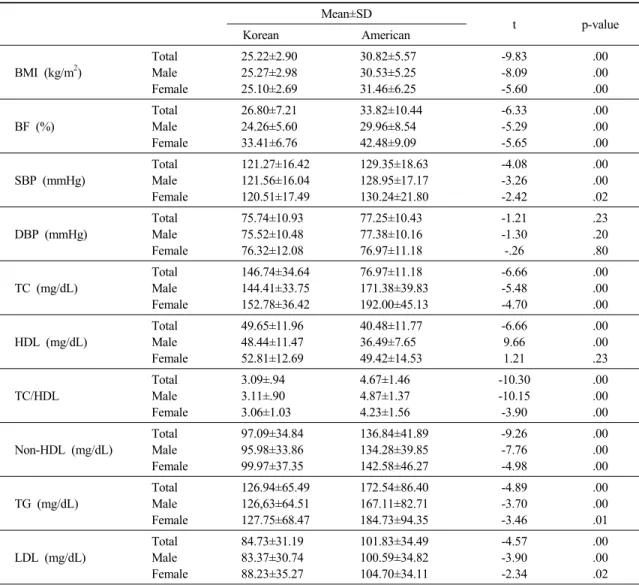
Table 2. Comparison of Mean Values of Risk Factors value of risk factors between the two groups were compared by using independent t-test. Smoking and the existence of DM were compared with X²-test. Logistic regression analysis was performed to compare characteristics of Korean CAD risk pattern from Americans. Backward stepwise elimination was used as variable selection method to fit the regression model. X²-test was done to compare the difference between two groups for risk factors exceeding

borderline. The level of significance below .05 was considered as statistical good through in this study.

Ⅲ. Results

1. Comparison of mean value of risk factors

Table 2 shows the difference of the mean value of each

(4)

variable between two groups. It indicates that all variables except diastolic blood pressure (DBP) showed a significant difference between the two groups. Mean values of variables in American patients were higher than those in Koreans except HDL. The level of HDL was significantly higher in Korean male than their American counterpart, but there was no difference between females.

2. Comparison of DM, smoking, and blood lipids exceed borderline

By using X²-test, this study could examine the difference between the two groups in DM prevalence (Table 3), smoking (Table 4) and blood lipids (Table 5) that exceed borderline. The borderline was based on American College of Sports Medicine's criteria (Roger et al., 2012; Moyer, 2004). The borderline value of lipids were 200mg/dL for TC, 130mg/dL for LDL, 150mg/dL for TG. The borderline of HDL was 40mg/dL and 50mg/dL for male and female, respectively.

The diabetic patients were 22.6% of Korean and 19.6%

of American. Though this difference was not significant, the number of Korean diabetics were a little larger than that of American. As for male patients, 21.8% of Korean and 13.5% of American were diabetic, showing higher DM prevalence in Korean male patients. The existence of DM for female patients were very similar for both sides.

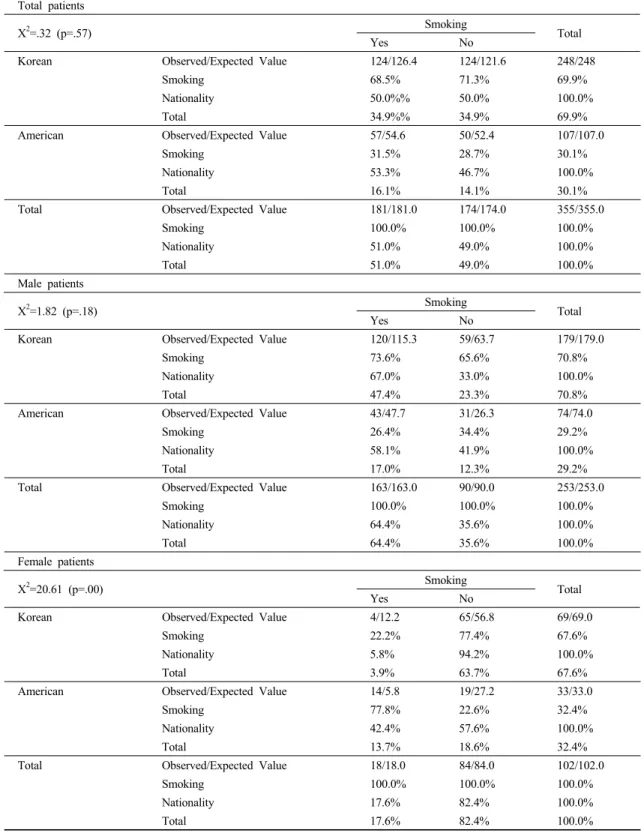
Fifty percent of Korean patients were smoker while smoking rate of American patients was 53.3%. For the male patients, 67% of Korean male patients and 58.1%

of American were smokers. The smoking rate was 10%

higher in Korean patients, though there was not a statistical significance. However, there were distinct differences between female Korean and American smokers. The percentage of smokers in Korean female patients was only 5.8%, while approximately 50% of American female patients were smokers. This difference was statistically significant (X²=20.61, p=.00).

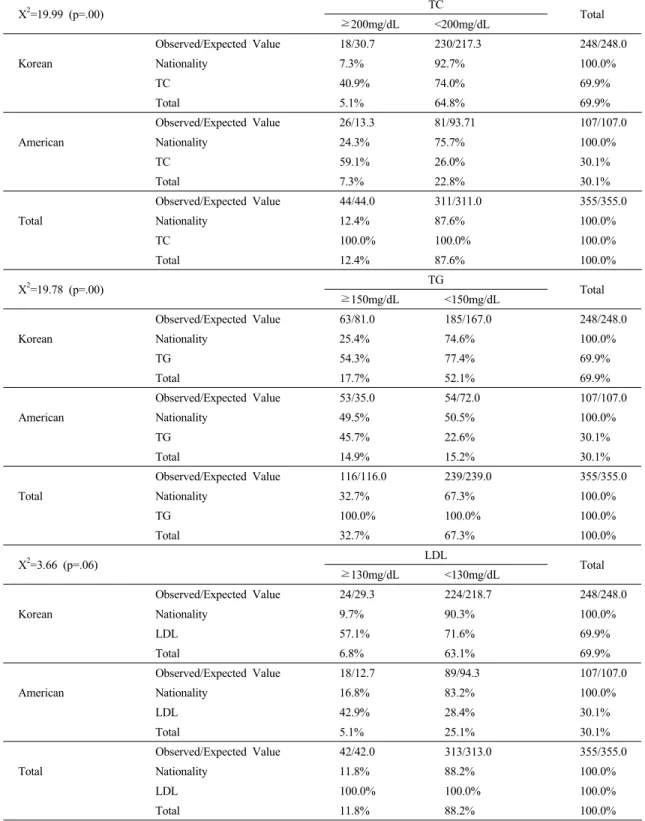
Among patients with TC level was higher than 200mg/Dl, 7.3% were Korean and 24.3% were American.

The number of American patients whose TC level exceeded borderline were about 3 times more than that of their Korean counterparts, resulting in a statistically significance (X²=19.99, p=.00). Among Korean patients, 25.4% had TG that exceeded 150mg/dL, while the percentage of American patients was 49.5%. Americans showed about a 2 times larger percentage than Korean showing a statistically significance (X²=19.78, p=.00). As for LDL, the percentage of patients whose value exceeded borderline were 9.7%

and 16.8% for Korean and American, respectively. Though this difference was not significance with a p-value of a little bit higher than 5% (X²=3.66, p=.06), this study shows the percentage of American patients were still about 2 times higher. The number of American male patients who showed HDL below 40mg/dL was more than 2 times higher. The percentage showed 19% and 47.7% in Korean and American, respectively. This difference showed statistical significance (X²=30.83, p=.00) but female patients did not show a significant difference in the percentage of patients who had HDL below the borderline (X²=1.71, p=.19).

Among Korean female patients, 12.5% had HDL below 50mg/dL, while the percentage of American women was 17.8%.

3. Logistic regression for discriminating the characteristics of patients

To make the most appropriate model for discriminating patients' characteristics, this study assumed logistic regression model as seen below. Every risk factor dealt in this study is shown as the independent variable of this model.

log p(Korean)/p(American) = β0 + β1BF + β2SBP + … β11DM + β12SM

P(Korean) = 1 / 1 + exp[-(β0 + β1BF +

β2SBP + … β11DM + β12SM)]

(5)

Total patients

X 2 =.38 (p=.54) DM

Total

Yes No

Korean Observed/Expected Value 56/53.8 192/194.2 248/248.0

Nationality 22.6% 77.4% 100.0%

DM 72.7% 69.1% 69.9%

Total 15.8% 54.1% 69.9%

American Observed/Expected Value 21/23.2 86/83.8 107/107.0

Nationality 19.6% 80.4% 100.0%

DM 27.3% 30.9% 30.1%

Total 5.9% 24.2% 30.1%

Total Observed/Expected Value 77/77.0 278/278.0 355/355.0

Nationality 21.7% 78.3% 100.0%

DM 100.0% 100.0% 100.0%

Total 21.7% 78.3% 100.0%

Male patients

X 2 =2.30 (p=.13) DM

Total

Yes No

Korean Observed/Expected Value 39/34.7 140/144.3 179/179.0

Nationality 21.8% 78.2% 100.0%

DM 79.6% 68.6% 70.8%

Total 15.4% 55.3% 70.8%

American Observed/Expected Value 10/14.3 64/59.7 74/74.0

Nationality 13.5% 86.5% 100.0%

DM 20.4% 31.4% 29.2%

Total 4.0% 25.3% 29.2%

Total Observed/Expected Value 49/49.0 204/204.0 253/253.0

Nationality 19.4% 80.6% 100.0%

DM 100.0% 100.0% 100.0%

Total 19.4% 80.6% 100.0%

Female patients

X 2 =.85 (p=.36) DM

Total

Yes No

Korean Observed/Expected Value 17/18.9 52/50.9 69/69.0

Nationality 24.6% 75.4% 100.0%

DM 60.7% 70.3% 67.6%

Total 16.7% 51.0% 67.6%

American Observed/Expected Value 11/9.0 22/23.9 33/33.0

Nationality 33.3% 66.7% 100.0%

DM 39.3% 29.7% 32.4%

Total 10.8% 21.6% 32.4%

Total Observed/Expected Value 28/28.0 74/74.0 102/102.0

Nationality 27.5% 72.5% 100.0%

DM 100.0% 100.0% 100.0%

Total 27.5% 72.5% 100.0%

DM; diabetes mellitus

Table 3. X 2 - test for DM

(6)

Total patients

X 2 =.32 (p=.57) Smoking

Total

Yes No

Korean Observed/Expected Value 124/126.4 124/121.6 248/248

Smoking 68.5% 71.3% 69.9%

Nationality 50.0%% 50.0% 100.0%

Total 34.9%% 34.9% 69.9%

American Observed/Expected Value 57/54.6 50/52.4 107/107.0

Smoking 31.5% 28.7% 30.1%

Nationality 53.3% 46.7% 100.0%

Total 16.1% 14.1% 30.1%

Total Observed/Expected Value 181/181.0 174/174.0 355/355.0

Smoking 100.0% 100.0% 100.0%

Nationality 51.0% 49.0% 100.0%

Total 51.0% 49.0% 100.0%

Male patients

X 2 =1.82 (p=.18) Smoking

Total

Yes No

Korean Observed/Expected Value 120/115.3 59/63.7 179/179.0

Smoking 73.6% 65.6% 70.8%

Nationality 67.0% 33.0% 100.0%

Total 47.4% 23.3% 70.8%

American Observed/Expected Value 43/47.7 31/26.3 74/74.0

Smoking 26.4% 34.4% 29.2%

Nationality 58.1% 41.9% 100.0%

Total 17.0% 12.3% 29.2%

Total Observed/Expected Value 163/163.0 90/90.0 253/253.0

Smoking 100.0% 100.0% 100.0%

Nationality 64.4% 35.6% 100.0%

Total 64.4% 35.6% 100.0%

Female patients

X 2 =20.61 (p=.00) Smoking

Total

Yes No

Korean Observed/Expected Value 4/12.2 65/56.8 69/69.0

Smoking 22.2% 77.4% 67.6%

Nationality 5.8% 94.2% 100.0%

Total 3.9% 63.7% 67.6%

American Observed/Expected Value 14/5.8 19/27.2 33/33.0

Smoking 77.8% 22.6% 32.4%

Nationality 42.4% 57.6% 100.0%

Total 13.7% 18.6% 32.4%

Total Observed/Expected Value 18/18.0 84/84.0 102/102.0

Smoking 100.0% 100.0% 100.0%

Nationality 17.6% 82.4% 100.0%

Total 17.6% 82.4% 100.0%

Table 4. X 2 - test for Smoking

(7)

X 2 =19.99 (p=.00) TC

Total

≥200mg/dL <200mg/dL

Observed/Expected Value 18/30.7 230/217.3 248/248.0

Korean Nationality 7.3% 92.7% 100.0%

TC 40.9% 74.0% 69.9%

Total 5.1% 64.8% 69.9%

Observed/Expected Value 26/13.3 81/93.71 107/107.0

American Nationality 24.3% 75.7% 100.0%

TC 59.1% 26.0% 30.1%

Total 7.3% 22.8% 30.1%

Observed/Expected Value 44/44.0 311/311.0 355/355.0

Total Nationality 12.4% 87.6% 100.0%

TC 100.0% 100.0% 100.0%

Total 12.4% 87.6% 100.0%

X 2 =19.78 (p=.00) TG

Total

≥150mg/dL <150mg/dL

Observed/Expected Value 63/81.0 185/167.0 248/248.0

Korean Nationality 25.4% 74.6% 100.0%

TG 54.3% 77.4% 69.9%

Total 17.7% 52.1% 69.9%

Observed/Expected Value 53/35.0 54/72.0 107/107.0

American Nationality 49.5% 50.5% 100.0%

TG 45.7% 22.6% 30.1%

Total 14.9% 15.2% 30.1%

Observed/Expected Value 116/116.0 239/239.0 355/355.0

Total Nationality 32.7% 67.3% 100.0%

TG 100.0% 100.0% 100.0%

Total 32.7% 67.3% 100.0%

X 2 =3.66 (p=.06) LDL

Total

≥130mg/dL <130mg/dL

Observed/Expected Value 24/29.3 224/218.7 248/248.0

Korean Nationality 9.7% 90.3% 100.0%

LDL 57.1% 71.6% 69.9%

Total 6.8% 63.1% 69.9%

Observed/Expected Value 18/12.7 89/94.3 107/107.0

American Nationality 16.8% 83.2% 100.0%

LDL 42.9% 28.4% 30.1%

Total 5.1% 25.1% 30.1%

Observed/Expected Value 42/42.0 313/313.0 355/355.0

Total Nationality 11.8% 88.2% 100.0%

LDL 100.0% 100.0% 100.0%

Total 11.8% 88.2% 100.0%

Table 5. X 2 - test for Blood Lipids in Total Patients

(8)

Male patients (≤40mg/dL)

X 2 =30.83 (p=.00) HDL

Total

≤40mg/dL >40mg/dL

Observed/Expected Value 47/68.5 201/179.5 248/248.0

Korean Nationality 19.0% 81.0% 100.0%

HDL 48.0% 78.2% 69.9%

Total 13.2% 56.6% 69.9%

Observed/Expected Value 51/29.5 56/77.5 107/107.0

American Nationality 47.7% 52.3% 100.0%

HDL 52.0% 21.8% 30.1%

Total 14.4% 15.8% 30.1%

Observed/Expected Value 98/98.0 257/257.0 355/355.0

Total Nationality 27.6% 72.4% 100.0%

HDL 100.0% 100.0% 100.0%

Total 27.6% 72.4% 100.0%

Female patients (≤50mg/dL)

X 2 =1.71 (p=.19) HDL

Total

≤50mg/dL >50mg/dL

Observed/Expected Value 31/34.9 217/213.1 248/248.0

Korean Nationality 12.5% 87.5% 100.0%

HDL 62.0% 71.1% 69.9%

Total 8.7% 61.1% 69.9%

Observed/Expected Value 19/15.1 88/91.9 107/107.0

American Nationality 17.8% 82.2% 100.0%

HDL 38.0% 28.9% 30.1%

Total 5.4% 24.8% 30.1%

Observed/Expected Value 50/50.0 305/305.0 355/355.0

Total Nationality 14.1% 85.9% 100.0%

HDL 100.0% 100.0% 100.0%

Total 14.1% 85.9% 100.0%

TC; total cholesterol, TG; triglyceride, LDL; low-density lipoprotein cholesterol, HDL; high-density lipoprotein cholesterol

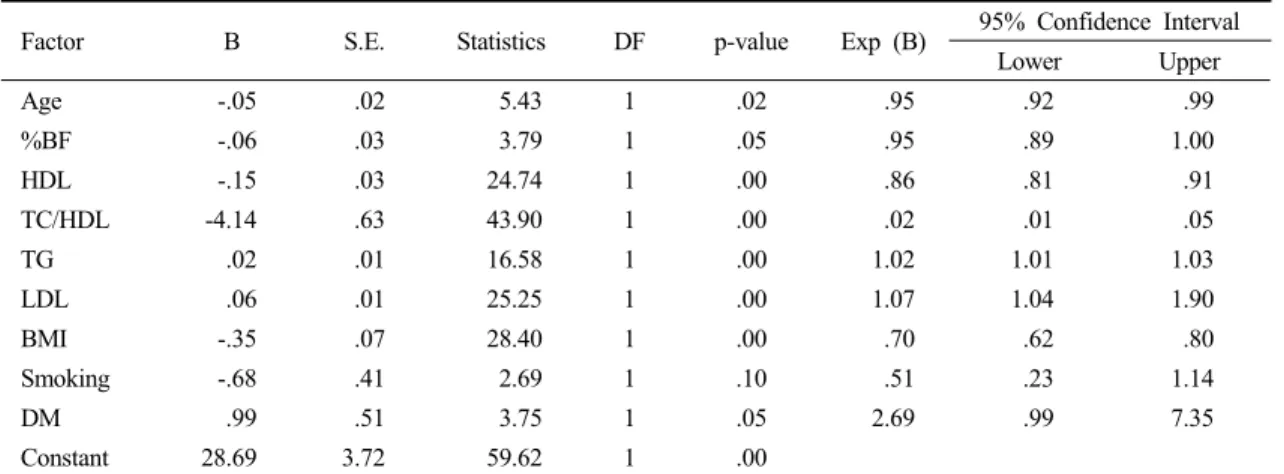
Where, P (Korean) represents the probability that it will be Korean characteristics, P (American) is the probability that it will be American Characteristics, BF is % of body fat, SBP is systolic blood pressure, DM is diabetes mellitus, SM is smoking. For variable selection, the study used backward stepwise elimination method to eliminate variable with the lowest likelihood ratio in order. TC, Non-HDL, heart rate, SBP, and DBP were omitted in this process to finally make the best model presented below.

Z = 28.690 – .048 (age) – .056 (%body fat) – .150 (HDL) – 4.141 (TC/HDL) + .020 (TG) + .064 (LDL) –

.352 (BMI) – .676 (smoking) + .991 (DM)

BMI is body mass index. It can see the coefficient of

each factor (B) and its odds ratio in Table 6. Odds ratio

(OR) is represented as OR=EXP (B). According to the

regression model in this study, the probability to be a

Korean characteristic increased as the odds ratio was more

(9)

Factor B S.E. Statistics DF p-value Exp (B) 95% Confidence Interval

Lower Upper

Age -.05 .02 5.43 1 .02 .95 .92 .99

%BF -.06 .03 3.79 1 .05 .95 .89 1.00

HDL -.15 .03 24.74 1 .00 .86 .81 .91

TC/HDL -4.14 .63 43.90 1 .00 .02 .01 .05

TG .02 .01 16.58 1 .00 1.02 1.01 1.03

LDL .06 .01 25.25 1 .00 1.07 1.04 1.90

BMI -.35 .07 28.40 1 .00 .70 .62 .80

Smoking -.68 .41 2.69 1 .10 .51 .23 1.14

DM .99 .51 3.75 1 .05 2.69 .99 7.35

Constant 28.69 3.72 59.62 1 .00

BF; Body fat, HDL; high-density lipoprotein cholesterol, TC; total cholesterol, TG; triglyceride, LDL; low-density lipoprotein cholesterol, BMI; Body mass index, DM; diabetes mellitus

Table 6. Logistic Regression for Discriminating Characteristics of Two Groups

than 1. On the other hand, as the odds ratio became below 1, it indicated the probability of being an American characteristic increased. The factors with an odds ratio above 1 were TG, LDL, DM and other factors like Age, BF, HDL, TC/HDL, BMI, and smoking had an odds ratio that was below 1. The odd ratio of 2.694 for the existence of DM is the most outstanding to discriminate as a Korean characteristic. This means the probability to be dis- criminated as a Korean is 2.694 times higher than it would be for American patients, while the odds ratio of .016 for TC/HDL refers to probability to be discriminated as a Korean characteristic was very low. TC/HDL is the more contributable factor to discriminate patients as American.

Ⅳ. Discussion

CAD prevalence in Korea rapidly increased by the end of 1990's. It indicates specific factors or conditions might have caused CAD to be accelerated at that time. Both Korean and American patients randomly collected in this study showed a similar mean age range, the late fifties for men and sixties for women. The age both in male and female was not statistically different between Korean and

American. It confirms advancing age is associated with CAD risks and the prevalence spurts in general after 50.

American patients in both genders were taller and heavier than the Korean counterparts. It could be due to the racial difference (Table 1). However, the BMI was much higher in American patients meaning they were heavier comparing to their height than Korean patients were. The mean value of BMI indicated American patients in both genders were classified as obese, while Korean patients in both genders were classified as overweight (Table 2) determined by looking at abdominal or visceral fatness (Cho et al., 2008). Percent body fat in American patients in both genders was also higher than that of Koreans implying diet might cause this difference between the two groups. The lifestyle of Korean patients, especially diet pattern, is not likely to cause obesity as well as hyperlipidemia (Kang et al., 2004).

In terms of blood lipid profile, all the variables except HDL showed significantly higher level in American patients. Among the lipid, variables mean value of TG in both American male and female exceeded the borderline for metabolic syndrome risk, e.g. 150mg/dL (167.11±

82.71mg/dL for men, 184.74±94.35mg/dL for women)

(Table 2). X²-test showed higher percentage of borderline-

(10)

over blood lipid in American patients. It may be due to a popularity of high-fat diet in America and made high blood lipid a major CAD risk factor.

Interestingly Korean patients, especially in males, showed much higher level in HDL than Americans. Also, Korean male patients whose HDL level was below 40mg/dL were less than American male patients, but not different in female patients (Table 2) (Dey et al., 2002;

Lee et al., 2011). It is well known that regular exercise and vigorous physical endeavor increase the level of HDL.

However, due to lack of information about both groups’

exercise and/or physical activity history, a conclusion could not be met for this perspective. Therefore, the possible assumption for this result may be associated with alcohol drinking. Alcohol is considered to be somewhat effective to raise the level of HDL (Paik and Choi, 1995). Both subjective observation and objective data showed drinking was more popular amongst Koreans, especially in Korean males. Organization for Economic Co-operation and Development (OECD) data showed continuous larger alcohol consumption amount in Koreans than Americans from 1991 to 2012 (OECD, 2016a).

The OECD data from 1992 to 2014 showed much higher smoking rates (% of population aged 15+ who are daily smokers) in the Korean population than American (OECD, 2016b). It was expected smoking would be a strong independent risk for discriminating Korean patients from American but logistic regression did not confirm smoking was the discriminative variables only for the Korean patients. In fact, there was no difference in the percentage of smokers between total Korean and American patients (Table 4). In female patients, percentage of smoking was quite different between two groups (Table 4). The much lower smoking rate in Korean female patient may be due to social atmosphere that suppressed women smoking.

However, this study should consider second-hand smoking in Korean female patients, though it does not have any information. Considering higher smoking rate in Korean

male it is reasonable to consider that many of Korean female patients may be exposed to and affected by second hand smoking due to having spouse who smokes. If the study had investigated the effects of a spouse smoking, the result of Korean female may have been changed.

SBP was one of the variables that were statistically higher in Americans than in Koreans even though DBP was not different between them. This result is interesting because high blood pressure at the age of the Korean patients had traditionally been a problematic major risk factor for cardio-and-cerebrovascular disease (Lee et al., 1998). Despite having a plant-based diet, the problem with Korean meals is that it is sodium-rich. This diet habit could lead to chronic hypertension (Song et al., 2013). It is difficult to explain why American patients showed statistically higher blood pressures unless the lifestyles of the two groups were examined in more detail.

While American female patients had a slightly higher percentage of diabetes than Korean females, Korean male patients showed a higher percentage than American male, making the total prevalence in DM higher than American though it is not statistically significant. Studies regarded diabetes mellitus as a prime risk factor of ischemic heart disease in Korea (Cheon, 1995). It is difficult to explain the etiologic difference of DM between the two groups.

Many Koreans the same age as the patients in this study were more likely to have a type II DM, what is referred to as the “thin DM” in Korea.

In logistic regression, odds ratio of most variables found

were either near or not far from number 1, showing these

variables were not likely to be a discriminant risk factor

for both sides. TC/HDL was the only factor that could

be used to discriminate Americans from Korean in this

study, while DM was the only factor for discriminating

Korean patient from their American counterparts. In other

words, TC/HDL and DM were most outstanding

independent risk factors for American and Korean CAD

patients respectively. These results align with the result

(11)

of other statistics that were used in the study (Kim et al., 1992; Lee et al., 2002; American Heart Association, 1999;

Lamarche et al., 1995).

Ⅴ. Conclusion

The characteristic of CAD risk factors was different between Korean and American in this study. TC/HDL was a discriminant factor for the American patients while the discriminant factor for Korean patients was DM. This result also implies that DM should be given attention to prevent CAD in current Korean adults. However, CAD risk factors are susceptible to change due to generational changes. It is true especially during the transition phase from developing countries to economically advanced countries not only because of economic growth, but due to accepting foreign culture and changing of lifestyle. Additional risk factors from this change may surpass their ethnographic risk factors. Therefore, it is important to anticipate main risk factors for the future generations.

References

American Heart Association. Diabetes Mellitus: A Major Risk Factor for Cardiovascular Disease. Circulation.

1999;100:1132-3.

Cheon BR. Diabetes as a risk factor of Ischemic Heart Disease.

Korean J Prev Med. 1995;28(2):282-6.

Cho JY, Park JY, Han CH. Evaluation of Obesity from BMI and Waist Circumference, and Its Relation with Cardiovascular Risk Factors. Korean J Health Educ Promot. 2008;25(2):47-59.

Dey SK, Ghosh C, Debray P, et al. Coronary artery disease risk factors & their association with physical activity in older athletes. J Cardiovasc Risk. 2002;9:383-92.

Eckel RH, Krauss RM. American Heart Association call to

action: Obesity as a major risk factor for coronary heart disease. Circulation. 1998;97:2099-100.

Gordon NF. Conceptual basis for coronary artery disease risk factor assessment in ACSM’s Resource Manual for Guidelines for Exercise Testing and Prescription (3 rd ed). USA. Lippincott Williams & Wilkins. 1998.

Kang JH, Kim KA, Han JS. Korean Diet and Obesity. J Korean Soc Study Obes. 2004;13(1):34-41.

Kim HB, Han KH, Jung JY, et al. Clinical Study on Coronary Risk Factors In NIDDM. Korean J Intern Med.

1992;43(6):770-5.

Lamarche B, Després JP, Mooriani S, et al. Prevalence of dyslipidemic phenotypes in ischemic heart disease (prospective results from the Quebec cardiovascular study). Am J Cardiol. 1995;75(17):1189-95.

Lee BW, Kang BH, Kang HW, et al. Diabetes monitor : Clinical and Angiographic Review of Diabetes Mellitus in Coronary Artery Disease. J Korean Diabetes. 2002;

3(2):253-69.

Lee KS, Kim JA, Park CY. Association of Hypertension with Cluster of Obesity, Abnormal glucose and Dyslipidemia in Korean Urban Population. J Prev Med Public Health.

1998;31(1):59-71.

Lee SK, Cho BS, Yoo YC. Effects of regular exercise on blood tumor marker and lipid factor in elderly women with for 52 weeks. The Korea Journal of Sports Science. 2011;20(4):879-88.

Moyer VA. Screening for coronary heart disease: recom- mendation statement from the U.S Preventive Services Task Force. Ann Intern Med. 2004;140(7):569-72.

Organization for Economic Co-operation and Development.

Non-Medical Determinants of Health : Alcohol consumption. 2016a.

Organization for Economic Co-operation and Development.

Non-Medical Determinants of Health : Tobacco consumption. 2016b.

Paik YH, Choi KD. A study on the effect of smoking, alcohol

intake and obesity on the serum levels of lipid and

(12)

uric acid in male adult. The Ulsan University Medical Journal. 1995;4(1):71-8.

Roger VL, Go AS, Llod-Jones DM, et al. Heart Disease and Stroke Statistics-2012 Update: a report from the American Heart Association. Circulation. 2012;125(1):

e2-e220.

Song DY, Park JE, Shim JE, et al. Trends in the major dish groups and food groups contributing to sodium intake in the Korea National Health and Nutrition Examination Survey 1998-2010. Journal of Nutrition and Health. 2013;46(1):72-85.

Statistics Korea. Cause-specific death rate. 2016.

수치

Table 2. Comparison of Mean Values of Risk Factors value of risk factors between the two groups were compared  by using independent t-test
Table 4. X 2 - test for Smoking
Table 5. X 2 - test for Blood Lipids in Total Patients
Table 6. Logistic Regression for Discriminating Characteristics of Two Groups

참조

관련 문서

3) ACC/AHA/ESC 2006 Guidelines for the Management of Patients with Atrial Fibrillation: a report of the American College of Cardiology/American Heart

1 John Owen, Justification by Faith Alone, in The Works of John Owen, ed. John Bolt, trans. Scott Clark, &#34;Do This and Live: Christ's Active Obedience as the

Method : : : : We evaluate clinical features of 714 Korean vitiligo patients who lived in the Gwangju chonnam province(315 males and 399 females).. Results

Drug-intoxicated patients were predominantly male, with the highest incidence of intoxication among patients above the seventh decade of age(21.5%) and the

The Effects of Culture Learning Through American TV Dramas on English Listening, Vocabulary Skills and Interest of Korean Elementary

Records of the Korean American Foundation Hawaii 호놀룰루 한인기독교회 관련 자료.. Korean Christian Church (Honolulu) Collection 사진

Third, the analysis of the body-centered vertical speed between male.. and female students showed that male students appeared faster than female students at

Prevalence of Undiagnosed Diabetes and Related Factors in Korean Postmenopausal Women:.. The 2011-2012 Korean National Health and