측두하악 장애 치료를 위한 수기치료에 대한 체계적 고찰의 프로토콜
김형석⋅정재영⋅정석희
경희대학교 한방재활의학과
Manual Therapy in the Treatment of Temporomandibular Disorders:
A Protocol for a Systematic Review
Hyungsuk Kim, K.M.D., Jae-Young Jung, K.M.D., Seok-Hee Chung, K.M.D.
Department of Rehabilitation Medicine of Korean Medicine, Kyung Hee University
This protocol was drafted, revised and approved by HK, JJ and SC.
The English in this document has been checked by at least two professional editors, both native speakers of English. For a certificate, please see:
http://www.textcheck.com/certificate /p2c5P1
RECEIVED September 16, 2015 REVISED October 4, 2015 ACCEPTED October 6, 2015
CORRESPONDING TO
Seok-Hee Chung, Department of Rehabilitation Medicine of Korean Medicine, Kyung Hee University, 26, Kyungheedae-ro, Dongdaemun-gu, Seoul 02447, Korea
TEL (02) 958-9299 FAX (02) 963-4983 E-mail [email protected]
Copyright © 2015 The Society of Korean Medicine Rehabilitation
Objectives This systematic review will analyse randomised controlled trials (RCTs) of manual therapy in patients with temporomandibular disorders (TMDs) to evaluate the effi- cacy of this approach.
Methods RCTs will be identified in the following ten databases based on searches start- ing with their inception: MEDLINE, EMBASE, CENTRAL, four Korean databases as KoreaMed, DBPIA, NDSL, and RISS and three Chinese databases as CNKI, VIP and Wanfang. The quality of these studies will be analysed using the Cochrane risk of bias. A meta-analysis will be conducted, and subgroup analysis will be considered if comparatively large heterogeneity is detected.
Conclusions We plan to publish this systematic review in a peer-reviewed journal.
Findings from this review may contribute to the treatment process in clinical situations. Trial registration number: PROSPERO 2015: CRD42015024090 (J Korean Med Rehab 2015;25(4):41-46)
Key words Temporomandibular disorders, Temporomandibular joint, Manual therapy, Manipulation
Introduction»»»
1. Description of the condition
Temporomandibular disorders (TMDs) are clinical
conditions characterised by abnormalities of the jaw muscles, temporomandibular joints, and surrounding structures1). Symptoms are usually represented by pain and/or dysfunction in these structures2). Dysfunction includes a limited range of motion and popping or
clicking sounds during the closing or opening of the joints. In the United States, the lifetime prevalence of TMDs is 6∼12%3), many sufferers are 20∼40 years of age, and the condition is observed more frequently in women than in men1).
Two types of treatment can be used for TMD: con- servative and operative methods. Conservative, rever- sible treatments should be the first choice before con- sidering surgery4). Conservative methods include oc- clusal splint, acupuncture, electrotherapy, manual ther- apy, and exercise.
2. Description of the intervention
Manual therapy (MT), also called musculoskeletal manipulation or manipulative therapy, is the most pop- ular method for treating patients with spinal prob- lems5). Because TMDs are often associated with spinal symptoms and are problems of the jaw joints and sur- rounding muscles, MT can be used to improve these conditions6). When MT is performed, the practitioner’s hands or fingers are placed on the patient’s body to assess, diagnose, and treat multiple symptoms7). MT is also called Chuna in Korean medicine (Tuina in tradi- tional Chinese medicine) and, along with acupuncture, moxibustion, and herbal therapy, has roots in both traditions. Chuna occupies a dominant position com- pared with acupuncture in that it is less invasive.
3. How the intervention might work
MT targets intra-oral, jaw, and spinal muscles and structures, as TMDs are thought to be related to mus- culature in those areas. Structural abnormalities of the oral cavity and the excessive contraction of jaw mus- cles undoubtedly affect the condition of TMDs. Manual intervention can bring improvement by relaxing con- tracted muscles and treating the trigger points of the muscles. TMDs can be also caused by long-term cer- vical dysfunction and vice versa8,9). Thus, manipulation
of the cervical region can ameliorate the symptoms of TMDs. Manipulation of the spinal region brings bene- fits through a neurophysiological mechanism rather than a biomechanical one10). A hypoalgesic effect11) and a reduction in inflammatory cytokines are also possible explanations for its therapeutic action12).
Additionally, placebo mechanisms also contribute to the functional improvement and reduction of pain13). Comparisons between experimental and placebo groups will be assessed in this review.
4. Why it is important to conduct this review
As the number of individuals exhibiting TMD symp- toms grows, the need for a systematic review (SR) to as- sess the efficacy of manipulative therapy, a safe and re- versible procedure, is becoming increasingly urgent. Two SRs published in 2006 investigated the use of manipu- lative therapy for TMDs6,14); however, several RCTs re- lated to this topic have been published since then.
Furthermore, the previous SRs included only English-lan- guage studies, and the authors did not perform a meta- analysis. Two SRs of manipulative therapy published in 201515,16) each analysed eight RCTs; however, only four studies were common to both reviews. Different search strategies and inclusion criteria may explain this disparity.
Nevertheless, there is an increasing need to conduct a SR that includes all RCTs of MT efficacy for TMDs.
5. Objectives
This systematic review will analyse RCTs of MT in TMD patients to evaluate its efficacy.
Methods»»»
1. Data sources
Articles will be extracted from MEDLINE, EMBASE,
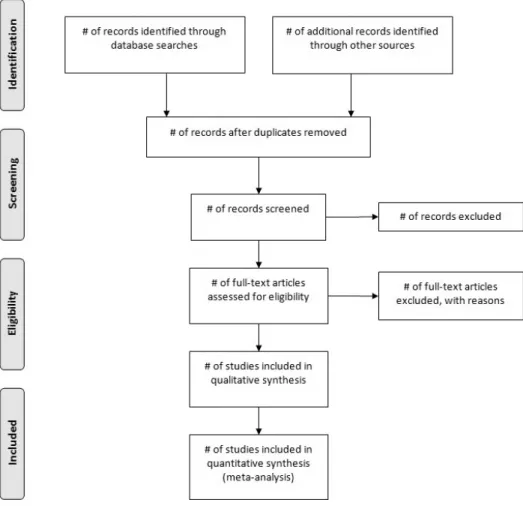
Fig. 1. Flow diagram of selection procedure.
and CENTRAL and from four Korean databases:
KoreaMed, DBPIA, NDSL, and RISS and from three Chinese databases: CNKI, VIP, and Wanfang. There will be no limitation on the starting date, and the end date will be June 2015. Key words will be retrieved us- ing the following MeSH terms in titles and abstracts:
“musculoskeletal manipulation” and “temporomandibular disorder”. Articles written in English, Korean and Chinese will be included. In addition to searching these databases, we will screen the reference lists of ar- ticles that have been identified to locate additional studies. A Preferred Reporting Items of Systematic reviews and Meta-Analysis (PRISMA) flow chart will be used to show the inclusion and exclusion process (Fig. 1).
2. Eligibility criteria
1) Population
Patients who have TMDs will be included. The most common standards for the diagnosis of TMDs are pro- vided by the Research Diagnostic Criteria for Temporo- mandibular Disorders (RDC/TMD)17). The American Association of Orofacial Pain (AAOP) guideline18) is al- so considered when diagnosing TMDs. Articles that use these criteria will be included in this review.
2) Interventions
MT is a treatment in which the practitioner uses his/her hands to relax muscles or correct the alignment of bones and joints. The target lesion could be or- ofacial muscles or spinal structures. Studies that exam- ined complex therapies that involved other treatments
(e.g., acupuncture, exercise, orally administered drugs, etc.) will be included if they only investigated the use of manipulative therapy.
Control groups will consist of individuals who re- ceived orally administered drugs, placebo, no treat- ment, acupuncture, an active exercise intervention, or another intervention.
3) Outcome measures (1) Primary outcomes
1. Range of motion in mouth opening: possible maximum range/pain-free range, evaluated with a ruler or callipers to reveal the degree of functioning
2. Pain: visual analogue scale (VAS)/numeric rating scale (NRS)/pressure pain threshold/facial pain score scale (FPSS).
(2) Secondary outcomes
1. Frequency of clicking or popping sounds during masticatory movements.
2. Quality of life.
3. Adverse events.
4) Study design
Only RCTs will be analysed. Case reports, ob- servational studies, and uncontrolled trials will be excluded.
3. Data collection and analysis
1) Data extraction
Articles will be assessed by two independent re- viewers (OO, OO). If disagreements occur between the two authors, OO will make the decision or e-mail the article to clarify the details and make a decision.
2) Risk of bias assessment
All articles will be evaluated using the ‘risk-of-bias’
tool from the Cochrane Handbook for Systematic Reviews of Interventions19). Factors include random se- quence generation, allocation concealment, masking of
participants, masking of healthcare providers, masking of data collectors, masking of outcome assessment, masking of data analysis, incomplete outcome data, se- lective reporting, and other biases. This assessment yields ratings of low, unclear, or high risk of bias, ac- cording to the quality of the article.
3) Data synthesis
We will use the Review Manager software (RevMan;
ver. 5.3 for Windows, the Nordic Cochrane Centre, Copenhagen, Denmark) to conduct the meta-analysis.
The difference in efficacy between the experimental group and the control group will be evaluated. Count data will be expressed as risk ratios (RRs), and con- tinuous data will be expressed as mean differences (MDs). If a different scale is applied to the same out- come, a standardised MD will be used. In the case of heterogeneity, a random-effect model will be applied;
95% confidence intervals (CIs) will be determined. If we cannot find the needed details in the article, we will contact to the authors to request additional information.
4) Subgroup analysis and investigation of hetero- geneity
If the data reflect comparatively large heterogeneity, we will conduct a subgroup analysis as follows:
1. Target region of MT (intra-oral and masseteric/
neck and spinal muscles).
2. Type of TMD (joint/muscle/disc).
3. Type of control group.
5) Sensitivity analysis
To assess the robustness of the results of the meta-analysis, a sensitivity analysis will be conducted as follows:
Methodological qualities.
Size of sample.
Analysis issues.
Discussion»»»
Our SR was designed to evaluate the effectiveness of MT for patients with TMD. Two SRs conducted in 2006 were broadly focused on conservative measures, such as MT, acupuncture, and electrotherapy, rather than on MT alone6,14). A review article published in 2007 in- cluded three RCTs of MT for patients with TMDs; how- ever, it was not systematic20). Moreover, the previous SRs are out of date because several RCTs of MT have been published since 2007. An SR of RCTs conducted in 2013 was limited because the review was restricted to the treatmentofthemandibularregion21). Of the two most recent SRs of MT, one performed a meta-analysis according to outcome16) and the other did not perform a meta-analysis because of extreme heterogeneity15). Notably, only half of the RCTs analysed were common to both SRs, possibly because of different search strategies.
This SR will screen all English-, Korean- and Chinese-language RCTs assessing the efficacy of MT for TMDs. A data synthesis and meta-analysis will also be performed. This research will inform practitioners and patients about whether manipulative therapy is effec- tive and safe for TMDs.
References»»»
1. Liu F, Steinkeler A. Epidemiology, diagnosis, and treat- ment of temporomandibular disorders. Dent Clin North Am 2013;57:465-79.
2. Noiman M, Garty A, Maimon Y, Miller U, Lev-Ari S.
Acupuncture for Treating Temporomandibular Disorder:
Retrospective Study on Safety and Efficacy. Journal of Acupuncture and Meridian Studies 2010;3:260-6.
3. Lipton JA, Ship JA, Larach-Robinson D. Estimated preva- lence and distribution of reported orofacial pain in the United States. J Am Dent Assoc 1993;124:115-21.
4. Lee H-S, Baek H-S, Song D-S, Kim H-C, Kim H-G, Kim B-J, Kim M-S, Shin S-H, Jung S-H, Kim C-H. Effect of si- multaneous therapy of arthrocentesis and occlusal splints on temporomandibular disorders: anterior disc displace- ment without reduction. J Korean Assoc Oral Maxillofac
Surg 2013;39:14-20.
5. Aure OF, Nilsen JH, Vasseljen O. Manual therapy and exercise therapy in patients with chronic low back pain:
a randomized, controlled trial with 1-year follow-up.
Spine 2003;28:525-32.
6. McNeely ML, Armijo Olivo S, Magee DJ. A systematic re- view of the effectiveness of physical therapy inter- ventions for temporomandibular disorders. Phys Ther 2006;86:710-25.
7. Tsertsvadze A, Clar C, Court R, Clarke A, Mistry H, Sutcliffe P. Cost-effectiveness of manual therapy for the manage- ment of musculoskeletal conditions: a systematic review and narrative synthesis of evidence from randomized controlled trials. J Manipulative Physiol Ther 2014;37:
343-62.
8. Bevilaqua-Grossi D, Chaves TC, de Oliveira AS. Cervical spine signs and symptoms: perpetuating rather than pre- disposing factors for temporomandibular disorders in women. J Appl Oral Sci 2007;15:259-64.
9. Da Costa DRA, de Lima Ferreira AP, Pereira TAB, Porporatti AL, Conti PCR, Costa YM, Bonjardim LR. Neck disability is associated with masticatory myofascial pain and regional muscle sensitivity. Archives of Oral Biology 2015;60:745-52.
10. Bialosky JE, Bishop MD, Price DD, Robinson ME, George SZ. The mechanisms of manual therapy in the treatment of musculoskeletal pain: A comprehensive model.
Manual Therapy 2009;14:531-8.
11. Fernández-de-las-Peñas C, Pérez-de-Heredia M, Brea-Rivero M, Miangolarra-Page JC. Immediate effects on pressure pain threshold following a single cervical spine manipu- lation in healthy subjects. J Orthop Sports Phys Ther 2007;37:325-9.
12. González-Iglesias J, Cleland JA, Neto F, Hall T, Fernández-de-las-Peñas C. Mobilization with movement, thoracic spine manipulation, and dry needling for the management of temporomandibular disorder: a pro- spective case series. Physiother Theory Pract 2013;29:
586-95.
13. Wright A. Hypoalgesia post-manipulative therapy: a re- view of a potential neurophysiological mechanism. Man Ther 1995;1:11-6.
14. Medlicott MS, Harris SR. A systematic review of the ef- fectiveness of exercise, manual therapy, electrotherapy, relaxation training, and biofeedback in the management of temporomandibular disorder. Phys Ther 2006;86:
955-73.
15. Calixtre LB, Moreira RFC, Franchini GH, Alburquerque- Sendin F, Oliveira AB. Manual therapy for the manage- ment of pain and limited range of motion in subjects with signs and symptoms of temporomandibular disorder:
a systematic review of randomised controlled trials. J
Oral Rehabil 2015;1:1-15.
16. Martins WR, Blasczyk JC, Aparecida Furlan de Oliveira M, Lagôa Gonçalves KF, Bonini-Rocha AC, Dugailly PM, de Oliveira RJ. Efficacy of musculoskeletal manual ap- proach in the treatment of temporomandibular joint dis- order: A systematic review with meta-analysis. Man Ther 2015;1:1-8.
17. Dworkin SF, LeResche L. Research diagnostic criteria for temporomandibular disorders: review, criteria, examina- tions and specifications, critique. J Craniomandib Disord 1992;6:301-55.
18. Buescher JJ. Temporomandibular joint disorders. Am Fam Physician 2007;76:1477-82.
19. Higgins J, Green S. Cochrane Handbook for Systematic Reviews of Interventions version 510(updated March 2011) The Cochrane collaboration. http://www.cochrane- handbook.org, 2011.
20. Kalamir A, Pollard H, Vitiello AL, Bonello R. Manual therapy for temporomandibular disorders: A review of the literature. Journal of Bodywork and Movement Therapies 2007;11:84-90.
21. Alves BMF, Macedo CR, Januzzi E, Grossmann E, Atallah ÁN, Peccin S. Mandibular manipulation for the treatment of temporomandibular disorder. J Craniofac Surg 2013;
24:488-93.