Synthesis of SnO 2 -Mn-C 60 Nanocomposites and Their Photocatalytic Activity for Degradation of Organic Dyes
Jiulong Li * , Jeong Won Ko * , and Weon Bae Ko *,**,†
* Department of Convergence Science, Graduate School, Sahmyook University, Seoul 01792, Republic of Korea
** Department of Chemistry, Sahmyook University, Seoul 01792, Republic of Korea (Received November 22, 2017, Revised December 9, 2017, Accepted December 14, 2017)
Abstract: Nanocomposites based on SnO
2-Mn were synthesized by the reaction of tin (II) chloride dihydrate and man- ganese (II) chloride tetrahydrate at a molar ratio of 10:1 in the presence of ammonium hydroxide at 80°C. The SnO
2-Mn nanocomposites were stirred with fullerene [C
60] in a mass ratio of 2:1 in tetrahydrofuran to prepare SnO
2-Mn-C
60nano- composites; these nanocomposites were obtained upon heating the mixture of SnO
2-Mn nanocomposites and fullerene [C
60] in an electric furnace at 700°C for 2 h. The synthesized SnO
2-Mn-C
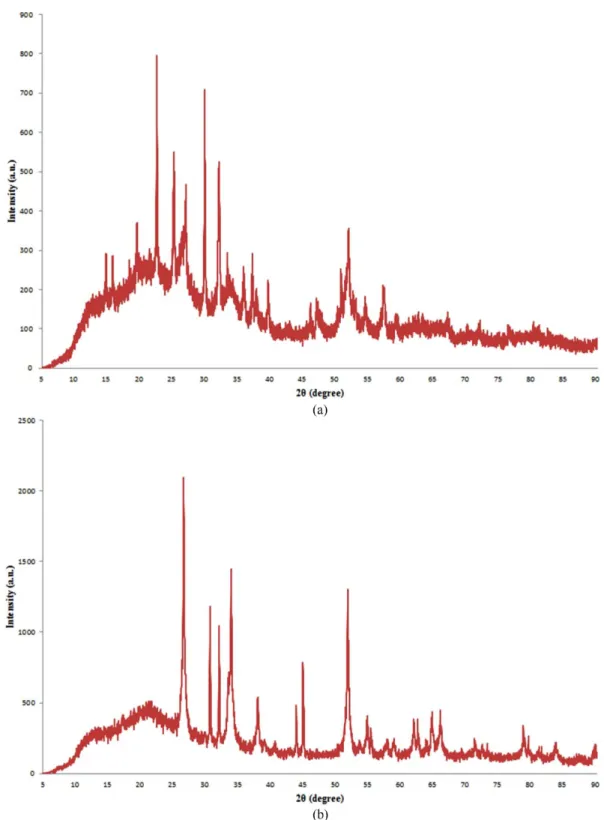
60nanocomposites were confirmed through various char- acterization methods such as X-ray diffraction and scanning electron microscopy. The photocatalytic activities of the SnO
2- Mn-C
60nanocomposites were demonstrated by the degradation of the organic dyes BG, MB, MO, and RhB under 254 nm irradiation and evaluated using UV-Vis spectrophotometry.
Keywords: SnO
2-Mn-C
60nanocomposites, photocatalytic activities, degradation of the organic dyes, UV-Vis spectropho- tometry
Introduction
The synthesis and characterization of semiconductor mate- rials are gaining popularity important functional materials such as dielectrics, polymers, magnetics, and semiconductors due to their good optical properties. 1-3 In recent years, the investigation of nanocrystalline semiconductors focused on enhancing the optical properties of nanocrystalline semicon- ductors have been conducted. 4
Tin oxide (SnO 2 ), an n-type semiconductor, is one of the most interesting and well-known oxide semiconductor mate- rials. Tin oxide has a rutile crystalline structure, and exhibits numerous engaging chemical and physical properties. The band-gap energy of tin oxide is 3.6 eV. 4-7 Nanostructured tin oxide is a technologically versatile and important semicon- ductor. Especially, the optical properties of tin oxide have been studied with great interests for industrial application.
Due to its higher optical transparency, remarkable chemical stability, and electrical conductivity, tin oxide has been uti- lized for various applications such as optoelectronic devices, liquid crystal display transistors, solar cells, oxidation catal- ysis, gas sensors, transparent conducting electrodes, and spin-
tronics. 8-12
Nanoscale tin oxide/has been synthesized by several meth- ods such as sol-gel, gel-combustion, hydrothermal, chemical precipitation, and solvothermal technology, etc. 13-15 Among the various technology, the sol-gel method has been known as one of the most effective methods since it allows the struc- tural and surface properties of nanomaterials to be con- trolled. 16 The chemical precipitation method is a simple and promising because the particle size and morphological prop- erties of the nanoparticles can be controlled by the reaction conditions such as concentration, pH, reaction temperature. 13 Recently, great number of studies have been carried out tin oxide doping with a proper activator for the modification of the optical, magnetic, and electrochemical properties of metal oxide semiconducting materials. 5 It has been proved that transition metal ion doping is an effective method to regulate the transport performance of carriers, surface properties, and energy levels of semiconductors. 17 Due to the fact that dop- ing with Mn results in an electronic band structure variation of SnO 2 and shows a large magnetoresistance, most of the previous studies have been focused on the preparation of Mn- doped SnO 2 . 18,19 So far, most researchers have focused on the magnetic properties of Mn-doped SnO 2 , but the optical and
†