ORIGINAL ARTICLE
J Korean Surg Soc 2011;81:271-275
http://dx.doi.org/10.4174/jkss.2011.81.4.271
JKSS
Journal of the Korean Surgical Society pISSN 2233-7903ㆍeISSN 2093-0488
Received May 25, 2011, Revised July 11, 2011, Accepted July 22, 2011 Correspondence to: Soon-Ok Choi
Department of Pediatric Surgery, Dongsan Medical Center, Keimyung University School of Medicine, 194 Dongsan-dong, Jung-gu, Daegu 700-712, Korea
Tel: +82-53-250-7323, Fax: +82-53-250-7322, E-mail: [email protected]
cc Journal of the Korean Surgical Society is an Open Access Journal. All articles are distributed under the terms of the Creative Commons Attribution Non-Commercial License (http://creativecommons.org/licenses/by-nc/3.0/) which permits unrestricted non-commercial use, distribution, and reproduction in any medium, provided the original work is properly cited.
Late complications and current status of long-term survivals over 10 years after Kasai portoenterostomy
Eunyoung Jung, Woo-Hyun Park, Soon-Ok Choi
Department of Pediatric Surgery, Dongsan Medical Center, Keimyung University School of Medicine, Daegu, Korea
Purpose: Whereas the Kasai portoenterostomy (KPE) is an accepted first line of surgery for bile drainage in infants with bili- ary atresia, its long-term effectiveness is not clear because its etiology and pathogenesis remains unknown. This study was aimed to investigate the late complications occurring in long-term survivors and the current status of living patients who sur- vived over 10 years after KPE. Methods: A retrospective analysis of the medical records of 32 patients who underwent KPE from 1990 to 2000 was done. We analyzed 10-year survival rates with the Kaplan-Meier method and the current status of the long-term survivors. Results: The overall 10-year survival rate by Kaplan-Meier method after KPE was 76.2%. Eight (25%) pa- tients had died, including 4 who were transplanted. Nineteen (59.4%) patients survived over 10 years. Among them, 6 (31.6%) patients had portal hypertension, and 5 (26.3%) had episodes of cholangitis. Two had intrahepatic cyst and 2 had in- testinal obstruction. Six (31.6%) patients have been well without any complications. Conclusion: The long-term survival rate of biliary atresia is slightly improving. However, two thirds of patients suffer from various complications. One-third of survi- vors go on without any complication. As biliary atresia is known as a progressive inflammatory disease, careful life-long fol- low-up is needed in long-term survivals after KPE.
Key Words: Biliary atresia, Hepatic portoenterostomy, Survivors, Portal hypertension, Cholangitis
INTRODUCTION
Since the success of Kasai portoenterostomies (KPE) in patients with biliary atresia, operative results have im- proved remarkably, and long-term survivals following the procedure have gradually increased. Despite evidence of a restoration in bile flow, however, liver cirrhosis and portal hypertension have remained as significant life threatening problems throughout patients’ life times [1,2]. Herein, we analyzed long-term survival rates and current status of the
living patients who underwent KPE over 10 years prior.
METHODS
We analyzed medical records of the 32 patients with KPE performed for biliary atresia at our institution be- tween 1990 and 2000, retrospectively. Telephone inter- views were made when the authors needed further in- formation lacking in the medical records. We analyzed
Table 1. Current status of long-term survivors over 10 years after Kasai portoenterostomy
Complications No. (%) Proceduresa)
Portal hypertension 6 (31.6)
Esophageal variceal bleeding 2 1
Gastric fundal variceal bleeding 1b) 1 Intestinal bleeding due to AVF 1b) 1
Hypersplenism 2 2
Cholangitis 5 (26.3)
Intrahepatic pseudocyst 2 (10.5) 1c)
Intestinal obstruction 2 (10.5) 1
No complication 6 (31.6)
Total 19d)
Values are presented as number (%) or number.
AVF, arteriovenous malformation.
a)Including surgery. b)Also with cholangitis. c)Liver transplan- tation at age of 17. d)Some cases have more than 2 complications.
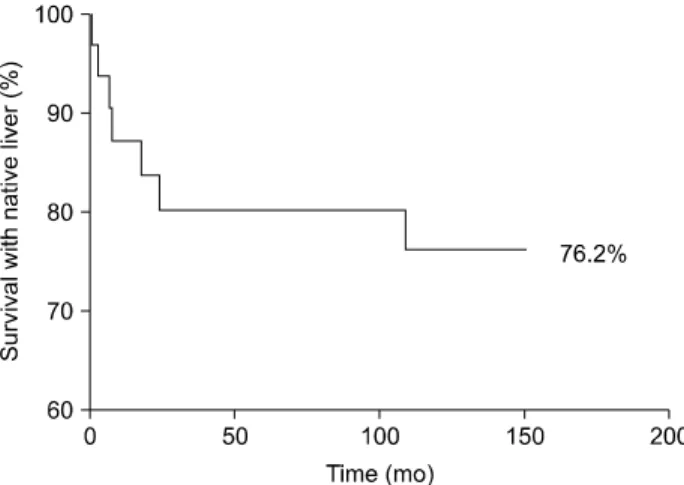
Fig. 1. Cumulative survival rate with native liver after Kasai operation over 10 years.
10-year survival rate by Kaplan-Meier method. Numbers of the death, causes, and the current status of survivals over 10 years were also evaluated. Transplanted cases were considered as death in our study.
RESULTS
Ten-year survival rate
During the period from 1990 to 2000, 32 infants with biliary atresia underwent KPE at our institution. Kaplan- Meier analysis showed the 10-year overall survival rate af- ter KPE was 76.2% (Fig. 1). Of the 32 patients, 4 died due to hepatic failure, unknown origin of sepsis and unknown cause, 4 were transplanted, and 6 were lost during fol- low-up with a median (not average) follow-up period of 38.1 months (range, 2.7 to 88.1 months). Of 6 patients lost to follow up, 1 had severe hepatic dysfunction while 2 had almost normal liver status at the last follow-up check. Two patients suffered from cholangitis, and 1 had hyper- splenism. Nineteen (59.4%) patients, including one case of transplant at the age of 17, survived over 10 years.
Current status of the survivals (Table 1)
Among 19 patients who survived over 10 years after KPE, 6 (31.6%) patients suffered from portal hypertension;
2 with hypersplenism, and 4 with variceal bleeding. The 2 patients with hypersplenism were managed by partial
splenic artery embolization (PSE). Among the 4 patients with variceal bleeding, 2 had esophageal variceal bleeding and were treated with endoscopic ligation of varices, 1 had gastric fundal variceal bleeding that was controlled by- balloon-occluded retrograde transvenous obliteration (BRTO), and 1 had intestinal bleeding due to arterio- venous malformation at jejunal branch from superior mes- enteric artery and was controlled via embolization. There were 5 (26.3%) patients who suffered from cholangitis.
Among those 5 patients, only 1 patient had a single epi- sode and the remaining 4 patients had recurrent events of cholangitis. There were 2 patients with intrahepatic cyst.
One was detected at 4 years after KPE, and maintained the same size with normal bilirubin level in 9 years of fol- low-up. The other patient had intrahepatic cystojejuno- stomy performed after failure of percutaneous trans- hepatic cholangio-drainage. Two patients had intestinal obstruction. Adhesive bandlysis was performed by lapa- rotomy in one case and the other was managed conser- vatively.
Six (31.6%) patients have been well without any com- plications. The mean level of total bilirubin was 0.6 ± 0.3 mg/dL (range, 0.4 to 1.2 mg/dL) and no one had a history of admission or other illness except one who showed mild esophageal varix on esophagography without any event of bleeding or hypersplenism (Two patients had both chol- angitis and variceal bleeding).
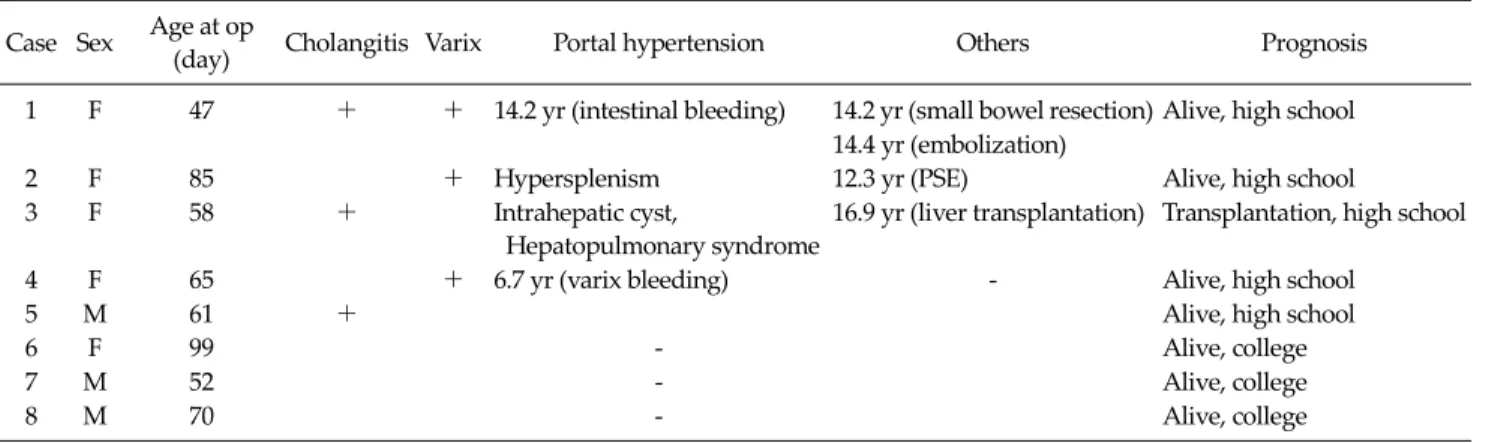
Table 2. Current status of long-term survivors over 15 years after Kasai portoenterostomy
Case Sex Age at op
(day) Cholangitis Varix Portal hypertension Others Prognosis
1 F 47 + + 14.2 yr (intestinal bleeding) 14.2 yr (small bowel resection) Alive, high school 14.4 yr (embolization)
2 F 85 + Hypersplenism 12.3 yr (PSE) Alive, high school
3 F 58 + Intrahepatic cyst,
Hepatopulmonary syndrome
16.9 yr (liver transplantation) Transplantation, high school
4 F 65 + 6.7 yr (varix bleeding) - Alive, high school
5 M 61 + Alive, high school
6 F 99 - Alive, college
7 M 52 - Alive, college
8 M 70 - Alive, college
op, operation; PSE, partial splenic artery embolization.
There were 8 patients who survived over 15 years. One patient was transplanted at the age of 17. Four patients suf- fered from portal hypertension. Three patients had histor- ies of cholangitis. Three patients attended college and have lived without any problem. Their liver profiles were within the normal range (Table 2).
DISCUSSION
Although there has been an increase in the number of long-term survivors of biliary atresia, the disease is still one of the most challenging problems in the field of pedia- tric surgery because of progressive fibrosis, portal hyper- tension, and liver cirrhosis [3]. Several investigators have reported that KPE plays a role in gaining time for liver transplantation but is not a curative treatment [3,4]. How- ever, the results of KPE seem to steadily improve, espe- cially in Japanese studies. Altman et al. [5] reported 45% of 5-year survival rates with native liver and 35% for 10-year survival rate in 266 patients in 1997. Davenport et al. [6]
showed their experience of 338 infants with biliary atresia, as their current survival rate of 5-years with native liver was 60% and 10-years survival was 41%. In 2003, Nio et al.
[7] published 59.7% and 52.8% for 5- and 10-year survival rate, respectively, from the Japanese Biliary Atresia Re- gistry. Furthermore, Shinkai et al. [1] showed improve- ment of post-KPE survival rate with almost 90% for 5years and nearly 80% for 10 years in patients who were operated
on in the 1980s. We also reported increased 5-year survival rate in previous reports [8]. Our results showed 76.2%
10-year survival rates with native liver. As such, these in- creased post-KPE long-term survival rates suggest that KPE is still considered as first choice of surgery in patients with biliary atresia in the era of liver transplantation.
However, despite initially good surgical outcome of KPE, a few long-term survivals had portal hypertension, esophageal or gastric fundal varices due to hypersple- nism, cholangitis, and hepatic failure caused by progres- sive ongoing cirrhosis and finally were in need of liver transplantation. Portal hypertension is considered the main cause of comorbidity among long-term survivals of biliary atresia. It could be presented as various types of variceal bleeding or hypersplenism. According to two ser- ies of long-term follow-up studies in Japan and France, which analyzed native liver after KPE over 20 years, in- cidence of portal hypertension were 49% and 70%, re- spectively [1,9]. In our study, one-third of survivals over 10 years had portal hypertensive events, which shows a sim- ilar incidence to previous reports [1,9]. Because biliary atresia is not restricted to the extrahepatic bile duct, pa- tients who had KPE successfully performed display ab- normalities of the intrahepatic biliary tree, including stenosis, dilatation, and sometimes pseudocyst formation.
Intrahepatic change could lead to hepatic cirrhosis and af- fect portal hypertension [9]. Management of various vari- ceal bleeding has developed according to the site and types of bleeding. In our cases, one esophageal variceal
bleeding was controlled with endoscopic band ligation, which is considered as first line of treatment in variceal bleeding with sclerotherapy [9,10]. Another case of gastric fundal variceal bleeding was controlled with BRTO as pre- viously reported [11]. Percutaneous embolization of a branch of jejunal artery was performed in one case of jeju- na arteriovenous malformation who had suffered a chron- ic episode of melena. Another portal hypertensive compli- cation of hypersplenism could be managed with PSE with- out splenectomy. Nio et al. [12] suggested that PSE should be used rather than splenectomy because it prevents not only the risk of post-splenectomy overwhelming sepsis but also severe intraabdominal adhesion, which could make dissection difficult during liver transplantation.
Furthermore, they concluded the long-term efficacy of PSE was 70%. Both patients in our study who suffered hy- persplenism were treated successfully with PSE.
With respect to cholangitis, Hadzic et al. [2] reported 41% of patients had cholangitis in 28 long-term survivors over 10 years, and Nio et al. [13] reported 48% in 21 long-term survivors over 20 years. Our series showed 26.3% in 19 survivors over 10 years, all of whom were man- aged with intravenous antibiotics.
Some authors reported that intrahepatic biliary cyst oc- curred in 23 to 25% of patients after KPE, and it has been considered that patients with intrahepatic cyst have poor outcomes compared to those who do not [14,15]. In our study, there were 2 patients with intrahepatic cyst. One survived more than 9 years without any procedure or management with constant size. The other case was per- formed intrahepatic cystojejunostomy as percutaneous transhepatic cholangio-drainage had failed. We have pre- viously reported this case [16], and this patient finally re- ceived liver transplantation due to progressive hep- atopulmonary syndrome.
The long-term survival rate after KPE in biliary atresia is slightly improving. However, two thirds of patients who survived over 10 years suffer from various complications including portal hypertension, cholangitis, intrahepatic cyst, and intestinal obstruction in spite of successful KPE.
One-third of long-term survivals remain alive without any problem. Careful follow-up is needed because of some manifestations of ongoing liver cirrhosis and thus need
planning for liver transplantation.
CONFLICT OF INTEREST
No potential conflict of interest relevant to this article was reported.
ACKNOWLEDGEMENTS
Presented at the 62nd Annual Congress of The Korean Surgical Society, Seoul, Korea, November 19, 2010.
REFERENCES
1. Shinkai M, Ohhama Y, Take H, Kitagawa N, Kudo H, Mochizuki K, et al. Long-term outcome of children with biliary atresia who were not transplanted after the Kasai operation: >20-year experience at a children's hospital. J Pediatr Gastroenterol Nutr 2009;48:443-50.
2. Hadzić N, Davenport M, Tizzard S, Singer J, Howard ER, Mieli-Vergani G. Long-term survival following Kasai por- toenterostomy: is chronic liver disease inevitable? J Pediatr Gastroenterol Nutr 2003;37:430-3.
3. Hartley JL, Davenport M, Kelly DA. Biliary atresia. Lancet 2009;374:1704-13.
4. Leonhardt J, Kuebler JF, Leute PJ, Turowski C, Becker T, Pfister ED, et al. Biliary atresia: lessons learned from the voluntary German registry. Eur J Pediatr Surg 2011;21:82-7.
5. Altman RP, Lilly JR, Greenfeld J, Weinberg A, van Leeuwen K, Flanigan L. A multivariable risk factor analy- sis of the portoenterostomy (Kasai) procedure for biliary atresia: twenty-five years of experience from two centers.
Ann Surg 1997;226:348-53.
6. Davenport M, Kerkar N, Mieli-Vergani G, Mowat AP, Howard ER. Biliary atresia: the King's College Hospital ex- perience (1974-1995). J Pediatr Surg 1997;32:479-85.
7. Nio M, Ohi R, Miyano T, Saeki M, Shiraki K, Tanaka K.
Five- and 10-year survival rates after surgery for biliary atresia: a report from the Japanese Biliary Atresia Registry.
J Pediatr Surg 2003;38:997-1000.
8. Hong AR, Jung E, Kang YN, Choi SO, Park WH. Five-year survival and prognostic factors after Kasai portoenter- ostomy for biliary atresia. J Korean Surg Soc 2010;79:
405-10.
9. Lykavieris P, Chardot C, Sokhn M, Gauthier F, Valayer J, Bernard O. Outcome in adulthood of biliary atresia: a study of 63 patients who survived for over 20 years with their native liver. Hepatology 2005;41:366-71.
10. Miga D, Sokol RJ, Mackenzie T, Narkewicz MR, Smith D,
Karrer FM. Survival after first esophageal variceal hemor- rhage in patients with biliary atresia. J Pediatr 2001;139:
291-6.
11. Hwang JB, Jung EY, Park WH, Kim YH, Kim AS. Balloon- occluded retrograde transvenous obliteration treats hep- atic dysfunction and gastric varices. J Pediatr Gastroenterol Nutr 2011;52:219-21.
12. Nio M, Hayashi Y, Sano N, Ishii T, Sasaki H, Ohi R. Long- term efficacy of partial splenic embolization in children. J Pediatr Surg 2003;38:1760-2.
13. Nio M, Ohi R, Hayashi Y, Endo N, Ibrahim M, Iwami D.
Current status of 21 patients who have survived more than 20 years since undergoing surgery for biliary atresia. J
Pediatr Surg 1996;31:381-4.
14. Shimadera S, Iwai N, Deguchi E, Kimura O, Ono S, Furukawa T, et al. Predicting factors on the occurrence of cystic dilatation of intrahepatic biliary system in biliary atresia. Pediatr Surg Int 2010;26:611-4.
15. Takahashi A, Tsuchida Y, Suzuki N, Kuroiwa M, Murai H, Toki F, et al. Intrahepatic biliary cysts in biliary atresia in the era of liver transplantation. J Pediatr Gastroenterol Nutr 2003;36:608-12.
16. Park WH, Choi SO. The intrahepatic biliary cyst in biliary atresia after Kasai operation. J Korean Assoc Pediatr Surg 1999;5:126-9.