Chonnam Journal of Nursing Sciences Vol. 5 No. 1,August, 2000, pp. 105-118
간호사의 직무만족에 관한 고찰
전남대학교 의과대학 간호학과,전남대학교 간호과학연구소
이 은 주
◊ 0 ...
Nurses’ Job Satisfaction: Variables, Tools, and Researches Eun-Joo Lee, Ph.D., RN
Department o f Nursing, Chonnam National University, Chonnam Research Institute o f Nursing Science
O ... O... ...
> 초 록 <r
간호사의 직무만족은 간호사의 이직고ᅡ 간호사가 제공하는 환자간호의 질에 직접적 인 영향을 주는 변수로서 간호행정가나 관리자들이 간호조직의 생산성 향상을 위해 가장 중요하게 고려해야 할 변수 중 하나이다. 그리고 간호사의 직무만족은 환자만족 도와 퇴원 후 환자의 치료행위 이행을 예측할 수 있는 변수로도 알려져 있다. 하지만 간호사의 직무만족은 그 개념의 중요성에도 불구하고 직무만족에 직/간접으로 영향을
주는 관련 변수들에 대한 이해가 불충분한 실정이다. 지금까지의 연구를 종합해 볼
때 직무만족에 영향을 주는 변수로는 보수나 간호사의 개인적인 특성보다 업무나 업 무환경,자율성,의사결정 참여 등이 간호사의 직무만족에 더 중요한 영향을 미치는 것으로 나타났다. 그리고 본 연구는 간호사의 직무만족을 측정하기 위해 사용되는 도 구들에 대한 소개와 분석을 제시하였다. 마지막으로 간호행정가나 관리자들이 간호사 들의 직무만족을 향상시킬 때 요구되는 지도력이나 관리전략 개발에 대한 제언을 제 시하였다.
I • Int「ᄋd 니Ction increasing environmental regulation. Contain
ing health care cost and maintaining high Currently, health care system confronts level of patients care quality are the pri- diminishing environmental resources and orities in an era of increased competition
- 105 -
of the health care industry. As the average acuity of patient raise, the length of hospital stay shorter, the job of nurses becomes more technical and difficult. Nurses have to confront the dual demands of caring for sicker patients with fewer resources and smaller staff. This changing health care environment may threaten the job satisfaction of nurses and force many experienced nurses to leave health care settings.
Job satisfaction of nurses has long been recognized as an important factor of nurses’
performance, quality of care, and cost saving.
Assessing nurses’ job satisfaction provides a means of monitoring quality of nursing care and evaluating effectiveness of nursing interventions. Weisman & Nathanson (1985) demonstrate that nurses’ job satisfaction was the strongest predictor of client satis
faction and increased patient compliance to the treatments. Organizational research shows that employees who are experiencing job satisfaction are more likely to be productive (Cohen, & Josefowitz, 1980; Likert & katz, 1979). As a result, increased productivity enhances efficiency and improves patient outcomes, and reducing financial expenditures.
Lynn & Kelley's (1997) prospective quasi- experimental study shows that positive changes in nurses4 job satisfaction increased perception of the quality patient care provided.
Job satisfaction is defined by Price &
Muller (1986) as the degree to which em
ployee^ positive affective orientation toward employment by the organization and the degree to which one likes his or her work and work environment by AONE. The
phenomenon of job satisfaction is very complex and no single factor is described as the major explanatory variable (Blegen, 1993). Griffin & Bateman (1986) said that job satisfaction is a global construct encom
passing specific facets of satisfaction related to pay, work, supervision, opportunities, con
ditions, and organizational practices.
Job satisfaction is a major focus for nurse administrators because it also was considered as the most important single factor to influencing turnover (Fagin, 1989;
Price & Muller, 1981,1986; Tumulty, 1992;
Weissman, Alexander, & Chase, 1981) and the most extensively researched variable relation with nursing turnover (Blegen, 1993).
Nursing turnover creates instability in the organization and increases labor cost asso
ciated with orientation of new employees. To control the hospital cost, these turnover related costs must be addressed and appro
priate strategies to retain productive employee should be developed. Nurse administrators must be proactive in dealing with the formidable challenge of recruiting and retaining a skilled nursing staff. This challenge requires the examination of all work environment characteristics that influ
ence job satisfaction.
Satisfaction in professional nursing consists of organizational structure, professional prac
tice, management style, quality of leadership, and professional development. An effective practice environment is a critical feature of professional nursing practice designed to provide quality of care in a cost-effective manner. To develop an effective practice environment, it is necessary to understand components that influence job satisfaction
Table 1. Factors Positively Influencing Job Satisfaction
Variables Authors (Year)
Autonomy Blegen, 1993; McCloskey, 1990; Slavitt, Stamps, Piedmont &
Haas, 1978; Specht, 1996; Weisman, Alexander, & Chase, 1980 Social integration McCloskey, 1990
Organizational culture McDaniel & Stumpf, 1993 Organizational climate Gillies, Flankline, & Child, 1990
Work environment Townsend, 1991; Tumulty, Jernigan, & Kohut, 1994 Commitment Fairness Blegen, 1993
Accountability Ethridge, 1987; Specht, 1996 Decentralization
Shared governance Jones, Stasiowski, Simons, Boyd, & Lucas, 1993; Scott, 1991;
Specht, 1996
Management innovations Kovner, Hendrickson, Knickman, & Finkler, 1993;Moss &
Roweles, 1997 Committee participation Skelton-Green, 1996
Recognition/ feedback Blegen, 1993; Goode & Blegen, 1993
Communication Blegen, 1993; Pincus, 1986; Weissman et al, 1980.
Peer cohesion Tumulty et al, 1994 Appropriate task delegation Weisman et al, 1980
Distribute justice Blegen & Mueller, 1987; Blegen, 1985;
Dittrich & Carroll, 1979; Zedick & Smith, 1968
Promotional opportunity Blegen & Mueller, 1987; Larson et al, 1984;
McCloskey, 1974; Munro, 1982.
Age Blegen & Mueller, 1987; Weaver, 1980;
Weissman et al, 1980
Day shift Blegen & Mueller, 1987; McCloskey, 1974;
Gaertner, 1984; Peterson, 1985 Workload(not overworked
or underworked)
Blegen & Mueller, 1987 Weissman et al, 1980
Kinship responsibility Blegen & Mueller, 1987; Blegen, Mueller, & Price, 1986 Unit size Weissman et al, 1984
Pay Larson et al, 1984; Munro, 1982.
Turnover Abel son, 1986
- 107 -
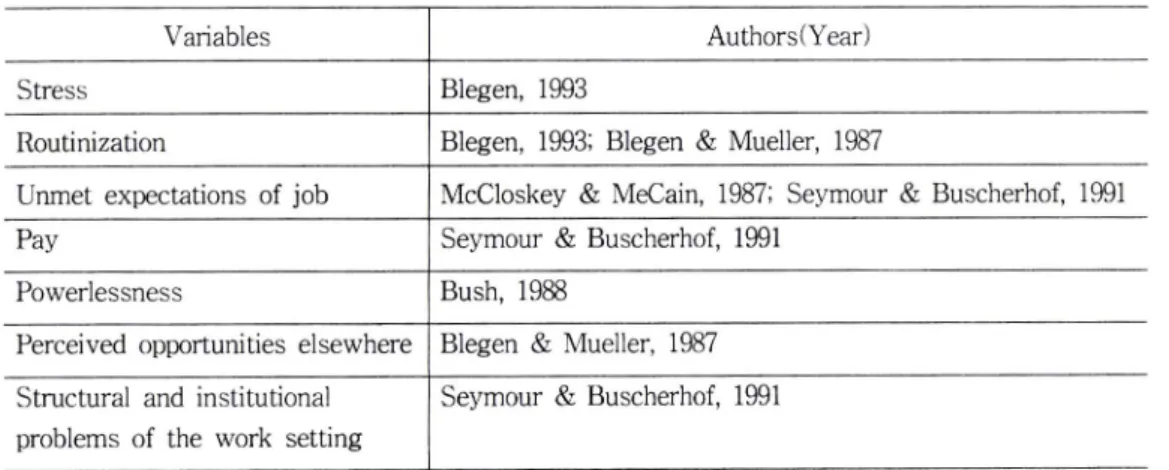
Table 2. Factors Often Associated with Job Dissatisfaction
Variables Authors (Year)
Stress Blegen, 1993
Routinization Blegen, 1993; Blegen & Mueller, 1987
Unmet expectations of job McCloskey & MeCain, 1987; Seymour & Buscherhof, 1991
Pay Seymour & Buscherhof, 1991
Powerlessness Bush, 1988
Perceived opportunities elsewhere Blegen & Mueller, 1987 Structural and institutional
problems of the work setting
Seymour & Buscherhof, 1991
of nurses.
Administrators and nurse managers who have more control over work content vari
ables need to develop appropriate leadership and human resource management practice to increase job satisfaction of staffs. There
fore, administrators must consider how the change in organization affects nursing staffs, and how to increase job satisfaction by changing organizational environment in order to increase quality of patient care. They also must be aware of the many variables that affect job satisfaction. For this purpose this article identified and described influencing factors, measuring tools, and significant research findings on job satisfaction to help nursing administrators who have respon
sibility for delivering high quality of care, for better understanding of job satisfaction.
And finally, recommendations to nurse admi
nistrators and nurse managers how to improve job satisfaction of nurses in their system are presented.
n • Variables Influencing on Job Satisfaction
Although research on job satisfaction is extensive and fruitful, the relative impor
tance of many related factors still remain unclear (Blegen, 1993) and the relative impact of the variables to job satisfaction are simultaneous and conditional (Hinshaw
& Atwood, 1984). The most frequently researched concepts with job satisfaction are turnover (Blegen, 1993). Patient satis
faction, staff performance, management type, organizational climate & commitment, auto
nomy, group cohesion, job stress, leader
ship, are relatively well discussed variables with job satisfaction. More specifically Table 1 and Table 2 shows what variables influence on job satisfaction. These tables give some guideline to nurse managers to understand job satisfaction and help to developing strategies to increase staff job satisfaction.
M. Measurement Tools on Job Satisfaction
In a milieu of rapid change, and financial risk, nursing administrators and managers have to design and implement innovations which can improve patient care outcomes and enhance nurses’ work life. Assessing and evaluating the level of job satisfaction in nurses with valid, reliable and easy to use instruments are important. However,
busy nurse administrators or managers may not have time to locate, evaluate, and select instruments to measure it. Therefore, this part describes and identifies instruments to measure job satisfaction. Following three scales were chosen because of strong psychometrics (especially, MMSS), easy to use, ease of scoring, not too lengthy and comparatively developed recently.
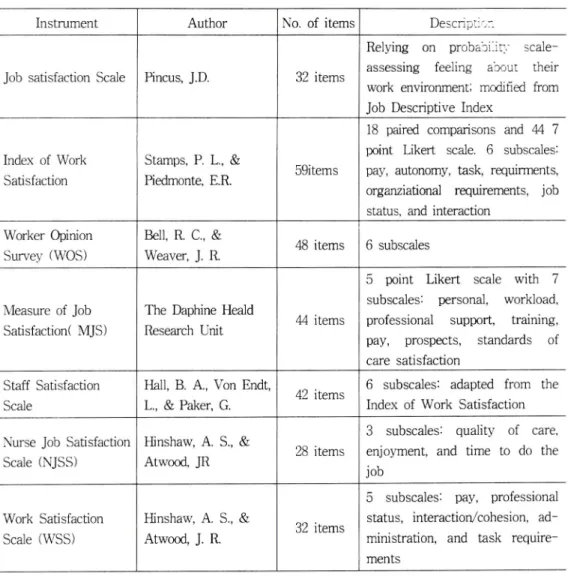
Table 3. Instruments specifically for nurses’ job satisfaction
Instrument Author No. of items Description
Job satisfaction Scale Pincus, J.D. 32 items
Relying on proba'Dhiry scale- assessing feeling about their work environment; modified from Job Descriptive Index
Index of Work Satisfaction
Stamps, P. L, &
Piedmonte,E.R. 59i terns
18 paired comparisons and 44 7 point Likert scale. 6 subscales:
pay, autonomy, task, requirments, organziational requirements, job status, and interaction
Worker Opinion Survey (WOS)
Bell, R. C.,&
Weaver, J. R 48 items 6 subscales
Measure of Job Satisfaction( MJS)
The Daphine Heald
Research Unit 44 items
5 point Likert scale with 7 subscales- personal, workload, professional support, training, pay, prospects, standards of care satisfaction
Staff Satisfaction Scale
Hall, B. A., Von Endt,
L., & Paker, G. 42 items 6 subscales' adapted from the Index of Work Satisfaction
Nurse Job Satisfaction Scale (NJSS)
Hinshaw, A. S., &
Atwood, JR 28 items
3 subscales: quality of care, enjoyment, and time to do the job
Work Satisfaction Scale (WSS)
Hinshaw, A. S., &
Atwood, J. R. 32 items
5 subscales: pay, professional status, interaction/cohesion, ad
ministration, and task require
ments
- 109 -
1. McCloskey/Muller Satisfaction Scale (MMSS)
This scale was designed to measure the satisfaction of hospital staff nurses (Mueller
& McCloskey, 1990). This scale has 31 items with eight types of satisfaction;
satisfaction with extrinsic rewards, sche
duling, family/work balance, co-workers, interaction, professional opportunities, praise/
recognition, and control/responsibility. Each item is measured by five point Likert scale ranging from 5,very satisfied to 1,very dissatisfied.
The original scale was developed in 1974 by asking to resigned nurses what rewards would have kept you on the job. It was updated and revised in 1990 after rigorous
examination of factor analysis (Mueller &
McCloskey, 1990). The Cronbach alpha's reliability of each of the eight subscales ranges from .52 to .84; the global Cronbach alpha is .89. The subscales, extrinsic rewards, family/work balance, and co-workers, which have small number of items, typically have lower reliability. (Test-retest correlation was ranged from .08- .67 when it was compared 6 month with 12 month. This may reflect both unreliability and actual change of job satisfaction of nurses. Especially low cor
relation appeared in satisfaction with co
workers and family/work balance)
Criterion validity was established on the subscales in correlation with the Brayfield- Rothe general job satisfaction scale (Brayfield
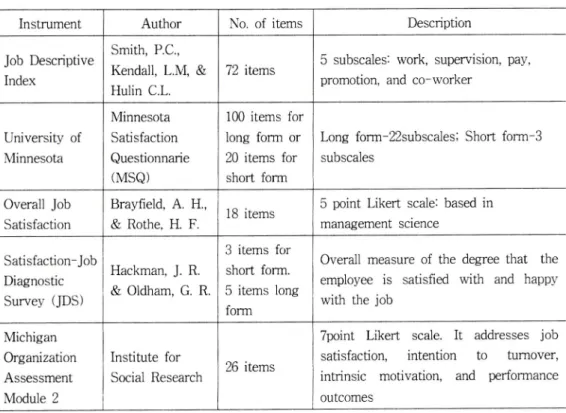
Table 4. Instruments for employee's job satisfaction in any organization
Instrument Author No. of items Description
Job Descriptive Index
Smith, P.C., Kendall, L.M, &
Hulin C.L.
72 items 5 subscales' work, supervision, pay, promotion, and co-worker
University of Minnesota
Minnesota Satisfaction Questionnarie (MSQ)
100 items for long form or 20 items for short form
Long form-22subscales; Short form-3 subscales
Overall Job Satisfaction
Brayfield, A. H.’
& Rothe, H. F. 18 items 5 point Likert scale: based in management science
Satisfaction-Job Diagnostic Survey (JDS)
Hackman, J. R.
& Oldham, G. R.
3 items for short form.
5 items long form
Overall measure of the degree that the employee is satisfied with and happy with the job
Michigan Organization Assessment Module 2
Institute for
Social Research 26 items
7point Likert scale. It addresses job satisfaction, intention to turnover, intrinsic motivation, and performance outcomes
& Rothe, 1951) and with subscales from Hackman and Oldham's Job Diagnostic Survey (JDS) (Hckman & Oldham, 1980).
Correlation of the overall scale with the Brayfield-Rothe and JDS were each .41 and .56. These indicate MMSS may more valid to measure the nurses’ job satis
faction than other scales (Brayfield &
Rothe, 1951; Hckman & Oldham, 1980;
Smith, Kendall, & Hulin, 1969) that were not designed to measure job satisfaction of nurses. Construct validity was demon
strated as moderate positive correlation with theoretically expected other variables in job satisfaction.
2. The Work Quality Index (WQI)
This scale, developed by Whitley and Putzier (1994) was chosen because it is specifically designed to measure nurses’
satisfaction with their work and work environment. It contains six subscales that measure work environment, job properties of autonomy, work worth, professional relationships, role enactment, and benefits.
Inventors of this scale say that it is more useful if the subscales are scored sepa
rately and analyzed with users demo
graphic factors so that administrators or managers can determine the areas of work and work environment adjustments.
W QI has 38 items and each item is measured by a seven point Likert scale from not satisfied to satisfied. Reliability was established by Cronbach alpha ranging from .72 - .87 on the subscales and total alpha was .94. Construct validity was established by factor analysis.
3. The Index of Work Satisfaction (IWS)
This scale was developed by Stamps and Piedmonte (1986). This is a 59 item, 2 part questionnaire with 6 subscales measuring pay, autonomy, task requirements, organi
zational requirements, job status, and interactions. Part A is a 15 item paired comparison and Part B is 44 items measured on a 7 point Likert scale from disagree to agree. Part A measures the relative importance of each of the sub
scales to the respondent and Part B measures the level of satisfaction in each of the 6 subscales. A combined score can be obtained of these two subscales repre
senting the relative importance of each component and the level of satisfaction.
Repeated studies of nurses in hospital and non-hospital settings were completed to establish validity and reliability of the instrument. Reliability was established with a Kendalls Tau of .86-92,Cronbachs alpha of .696-.900,and an overall Cronbach of .82. Validity was established using factor analysis.
This instrument was chosen because of its strong psychometric properties and the common use in the literature when mea
suring job satisfaction. The negatives to the use of this tool are the length (appro
ximately 20 minutes or more to complete) and the difficult, and complex scoring procedure.
Except for the above scales, table 3 and 4 contain 12 scales, which can measure the job satisfaction of nurses or employee in any organization with the label of instru
ments, authors, No. of items, and a brief description of these tools. However, the
- I l l -
detailed information about reliability, validity, how to use, and etc. were not available now.
IV. Implications for Nurse Managers and Administrators
Of the variables related to nurse job satisfaction, the work content and work environment variables appear to have a stronger relationship with satisfaction than either the economic or individual difference variables. Head nurses and other leaders in the institution apparently have a direct effect on the satisfaction of nurses. Insti
tutions may be able to increase the satis
faction of their nurses by developing the leadership skills of first-line managers, especially the skills of giving encourage
ment, feedback and recognition. According to McCloskey and McCain (1987), for all newly employed nurses, the first six months on the job are crucial for their satisfaction, more supportive strategies are recommended at this time of employment.
Promoting participation in decision making, introducing primary nursing and other autonomous forms of work groups will increase the job satisfaction of nurses.
According to Hackman and Oldham's (1980) study, jobs will be experienced as mean
ingful and rewarding if staff nurses feel autonomy, skill variety, task identity and task significance and receive feedback in their job. Manz and Sims (1987, 1989) delineated that cognitive and behavioral strategies are needed by leaders to promote employee's self-leadership. These super
leadership strategies include the promotion of employee's self-goal setting, self-evaluation, self-reward, and self-problem solving.
Tumulty, Jemingan, and Kohuts (1994) result indicates the importance of relation
ships in the work setting. They argue that work redesign efforts should be centered to develop a cohesive work group. A suppor
tive manager may buffer nurses from effects of less desirable environments. The old functions of directing and controlling need to be replaced with coaching and mentoring. Managers may need assistance and management development in order to develop coaching rather than controlling behaviors. In order to affect nurse satis
faction and subsequent turnover, nurse managers should initiate and encourage development of strong group cohesion.
Work and job redesign efforts aimed at team building to enhance positive working relationships and increase involvement in work group activities are recommended.
Sorrentino (1992) said that managers support have positive influence on perfor
mance and satisfaction. Direction can be beneficial in providing the role clarity and in reducing job anxiety. When nurses feel that they fully understand their role and are secure in their job, direction is not necessary helpful. Direction without the support of the leader impacts negatively on job performance and high job anxiety clearly appears to be an obstacle to job satisfaction and performance. Indeed, the manager's behaviors are important and interesting variables to staff satisfaction and can affect positive outcomes for patient care.
Weisman & Nathanson (1985) suggest that managers of health organizations can improve certain client outcomes by pro
viding working conditions conducive to professional staff satisfaction. To control inflation of health cost, health care mana
gers are tightening control mechanisms, centralizing authority, reducing professional staff, or cutting back on client services that are not perceived as core, they risk lowering staff satisfaction levels. Based on these findings of study, it is expected that declining in aggregate staff job satisfaction levels will impact on poor client compliance positively.
The interpersonal quality of the provider- client interaction is known to be an im portant determinant of subsequent client satisfaction with care received and of com
pliance with prescribed regimens. Patient prefers more responsive, individualized care by providers and dislike being treated in an impersonal or highly regimented fashion (Mechanic, 1976; Katz, & Danet, 1973).
Thus organizations that rigidly structure roles and procedures governing provider- client interactions are expected to experi
ence high degree of conflict between pro
fessional and clients
As job responsibilities change, all staffs will need to assume new roles. Nurse manager can assist nurses to develop keen self-awareness. Being sensitive to indivi
duals need while meeting the groups overall needs is a delicate balance. Unified goals, a clear mission and preparing for necessary changes will occur easier in an atmosphere of participative management and assist staff to become partners rather
than victims of change (Moss & Rowles, 1997).
Based on the above research results, I want to recommend to nurse manager use following steps to evaluate staff nurse job satisfaction and increase quality of nursing care and avoid staff turnover.
1. Assess turnover rate. See there is pro
blem or it is increase or not.
2. Review the current literature and see there is any new information on job satisfaction or new interventions devel
oped to increase job satisfaction.
3. Determine standardized job satisfaction measurement tool.
4. Distribute tool to nurses and give infor
mation about deadline, return location, and ensure confidentiality.
5. Gather, analyze, and identify problem areas.
6. Based on the result, planning innovation and do pilot study using control group.
7. Before initiating innovation, involve staff nurses into design and implementation of innovation.
8. Follow up evaluation of job satisfaction and turnover.
9. Do these kinds of surveys on regular basis, if possible every six month.
On the other side, collecting data of Nursing Management Minimum Data Sets (NMMDS) and analyzing it on unit level will give ideas to nurse manager how different staff mix and ratio to patients, training programs, delivery of care model affect job satisfaction, in turn, costs and outcome effectiveness. Nurse manger may conduct or encourage staff nurses do
- 113 —
empirical studies that examine the relation
ship between organizational climate and patient outcomes. Because organizational climate affects staff motivation, it can pro
mote job satisfaction and result in cost reduction and quality improvement.
V . Conclusions
Job satisfaction is the degree to which individuals like their jobs. Nurses re
searched job satisfaction either as an inter
vening variable of employee's turnover, reten
tion, or absenteeism or a dependent variable in assessing the impact of organizational innovations. More recently, job satisfaction has been studied related to outcomes of nursing care, such as patient satisfaction of care, compliance, and length of stay.
Nursing care is characterized by high levels of direct client contact and the transactions between nurses and clients are key to quality of nursing care. Patient satisfaction is the most frequently cited patient outcome of nursing care (Gibson, Martin, Johnson, Blue, Miller, 1994; Huggins
& Lehamn, 1997; Mahn, 1993; Still waggon, 1989). Patient satisfaction is the most im portant predictor of overall satisfaction with hospital care (Abramowitz, Cote, & Berry, 1987; Greeneich, 1993).
Organizational research shows that em
ployees who are experiencing job satisfaction are more likely to be productive (Cohen, &
Josefowitz, 1980; Likert, & katz, 1979). Lynn
& Kelleys (1997) prospective quasi-experi- mental study shows that positive changes in nurses’ job satisfaction increased perce
ption of the quality patient care provided.
Job dissatisfaction is highly related to anticipated turnover (Luca, Atwood, &
Hagaman, 1993).
The costliness of nursing turnover, and its negative impact on patient care due to an increase of the percentage of inexperienced nurses, is great and another area of needed research (Caudill & Patrick, 1991; Jones, 1992). Turnover rate has been estimated to be between 30 and 50% causing instability in hospital employment and increasing the costs of training and orientation of new employees. Job satisfaction also may be linked to absenteeism, another source of extra costs for hospitals (Brooke, 1986).
The health care climate in which hospital- based nurses’ practice is changing rapidly to meet the demands of increasingly sicker and quicker patients. In this climate, the initiative to keep highly skilled nurses in patient care may be more important than ever. Nurse administrators and managers need to know how to increase job sati
sfaction of skilled nurses so that they can be instrumental in making changes that will retain qualified nurses and avoid tur
nover.
VI. Recommendations
Cost and quality of nursing care are most important two issues in the current health care system and as a result, job satisfaction has been received more attention.
Further analyses will be necessary and study areas are recommended as follow:
1. More meta-analysis and longitudinal studies than cross-sectional design.
2. More interventions and outcome related research, to identify clearer relationship between concepts and to enhance job satisfaction and patient outcomes.
3. More community oriented studies than hospital oriented studies.
4. More studies with different groups of nurses in different settings and inter
national comparison studies.
VL Limitation
The author reviewed the articles published only in English. So this article was written mainly based on articles published in the US and not include the articles published by Korean. Consideration of this limitation might be needed to the readers.
References
Blegen, M.A. (1993). Nurses’ job satis
faction^ A meta-analysis of related variables. Nursing Research, 42(1), 36-41.
Blegen, M.A., & Muller, C.W. (1987). Nurses’
job satisfaction: a longitudinal analy
sis. Research in Nursing & Health, 10(4),227-237.
Brayfield, A. H., & Rothe, H. E. (1951). An index of job satisfaction. Journal of Applied Psychology, 35(5),307-311.
Brooke, P. (1986). Causal model of employee absenteeism. Unpublished Doctoral Dissertation, University of Iowa, Iowa City.
Bush, J.P. (1988). Job satisfaction, power
lessness, and locus of control. Western Journal of Nursing Research, 10(6), 718-731.
Davidson, H., Folcarelli, P.H., Crawford, S., Doprat, L.J., & Clifford, J.C. (1997).
The effects of health care reforms on job satisfaction and voluntary turnover among hospital-based nurses.
Medical Care, 35(6), 634-645.
Ethridge, P. (1987). Nurse accountability program irrproves satisfaction, turnover.
Health Progress, 68, 44-49.
Fagin, C. (1989). Why the quick fix wont fix todays nursing shortage. Nursing Economics, 7, 36-40.
Gardner, D.L. (1992). Conflict and retention of new graduate nurses. Western Journal of Nursing Research, 14(1), 76-85.
Gibson, S.J., Matin, S.M., Johnson, M.B., Bleu, R.,Miller, D.S. (1994). CNS- directed case management: Cost and quality in harmony. Journal of Nurs
ing Administration, 24(6). 45-51.
Gillies, D.A., Franklin, M., & Child, D.A.
(1990). Relationship between organi
zational climate and job satisfaction of nursing personnel. Nursing Service Quarterly, 14(4), 15-22.
Goode, C.J., & Blegen, M.A. (1993). De
velopment and evaluation of a research- based management intervention: A recognition protocol. Journal of Nurs
ing Administration,23(4), 61-66.
Griffin, R.W., & Bateman, T.S. (1986). Job satisfaction and organizational com
mitment. In: Cooper, C.L. & Robertson, I. (eds). International Review of In
dustrial and organizational Psycho
logy. New York: John Wiley & Sons Ltd: 157-188.
Hackman, J.R. & Oldham, G.R. (1975). De
velopment of the job diagnostic survey. Journal cf Applied Psychology, 60, 159-170.
Hackman, J.R , & Oldham, G.R. (1980). Work redesign. Reading, MA: Addison-Wesley.
Hinshaw, A.S., & Atwood, J.R. (1984).
Nursing staff turnover, stress, and satisfaction: Models, measurement, and management. In H. H. Werley&
J. J. Fitzpatrick (Eds.), Annual Review of Nursing Research, 1} 133-153.
Holdnak, B.J., Harsh, J., & Bushardt, S.C.
(1993). An examination of leadership style an its relevance to shift work in an organizational setting. Health Care Management Review, 18(3), 21-30.
Huggins, D.,& Lehman, K (1997). Reducing costs through case management.
Nursing Management, 28(12). 34,36- 37.
Iaffaldano, M.T., & Muchinsky, P.M. (1985).
Job satisfaction and job performance:
A meta-analysis. Psydiologioal Bulletin, 97(2), 251-273.
Johnston, C.L. (1997). Changing care patterns and registered nurse job satisfaction.
H olistic Nursing Practice, 11(3), 69-77.
Jones, C.B., Stasiowski, S., Simons, B.J., Boyd, N.J., & Lucas, M.D. (1993).
Shared governance an the nursing practice environment. Nursing Eco
nomics, 11(4), 208-214.
Juhl, N.,Dunkin, J.W., Stratton, T., Geller, J., & Ludtke, R. (1993). Job satis
faction of rural public and home health nurses. Public Health Nursing, 10(1), 42-47.
Katz, E. & Danet, B. (1973). Bureaucracy as a problem for sociology and society.
In- Katz, E.,& Danet, B. (Eds)., Bure
aucracy and the public. New York:
Basic Books.
Kovner, C.T., Hendrickson, G., Knickman, J.R , & Finkler, S.A. (1993). Changing the delivery of nursing care imple
mentation issues and qualitative findings. Journal of Nursing Adm i
nistration, 23(11), 24-34.
La Monica, E.,Oberst, M.T., Madea, A. R.,
& Wolf, R.M. (1986). Development of a patient satisfaction scale. Re
search in Nursing and Health, 9,
43-50.
Laschinger, H.K, Havens, D.S. (1996). Staff work environment and perceived control over nursing practice, Con
ditions for work effectiveness. Journal of N ursing Adm inistration,26(9).
27-35.
Levek, M.L., & Jones, C.B. (1996). The nursing practice environment, staff retention, and quality of care. Re
search in Nursing and Health, 19’
331-343.
Lucas, M.D., Atwood, J.R., & Hagaman, R.
(1993). Replication and validation of anticipated turnover model for urban registered nurses, Nursing Research, 42(1), 29-35.
Mahn, V. (1993). Clinical nurse case mana
gement' A service line approach.
Nursing Management, 24(9). 48-50.
Manz, C. C., & Sims, H. P., Jr. (1987).
Leading workers to lead themselves:
The external leadership of self- managing work teams. Adm inistra
tive Science Quarterly, 32,106-128.
Manz, C.C., & Sims, H. P. Jr. (1989).
Super leadership: Leading others to lead themselves. Englewood Cliffs, NJ: Prentice Hall.
McCloskey, J.C. (1990). Two requirements for job contentment: Autonomy and social integration. IM AGE' Journal cf Nursing Scholarship, 22(3), 140-143.
McCloskey, J.C., & McCain, B.E. (1987).
Satisfaction, commitment and profe
ssionalism of newly employed nurses.
IMAGE: Journal of Nursing Schol
arship, 19(1), 20-24.
McDaniel, C.,& Strumpf, L. (1993). The organizational culture implications for nursing service. Journal of Nursing Administration, 23(4), 54-60.
McNeese-Smith, D. (1995). Job satisfaction, productivity, and organizational com
mitment- the result of leadership.
Journal of Nursing Administration, 25(9), 17-26.
McNeese-Smith, D. (1997). The influence of manager behavior on nurses’ job satisfaction, productivity, and com
mitment. Journal of Nursing Adm i
nistration, 27(9), 47-55.
Mechanic, D. (1976). The growth of Bure
aucratic medicine: an inquiry into the dynamics of patient behavior and the organization of medical care.
New York: Wiley
Morrison, R.S., Jones, L.,& Fuller, B. (1997).
The relationship between leadership style and empowerment on job satis
faction of nurses. Journal of Nursing Administration, 27(5), 27- 34.
Moss, R. & Rowels, C. (1997). Staff nurse job satisfaction and management.
Nurse Manager, 28(1), 32-34.
Mueller, C.W. & McCloskey, J.C. (1990).
Nurses’ job satisfaction- A proposed measure. Nursing Research, 39(11), 113-117.
Munro, B.H., Jacobsen, B.S., & Brooten, D.A. (1994). Re-examination of the psychometric characteristics of the La Monica—Oberst patient satisfaction scale. Research in nursing and health, 17,119-125.
Nakata, J.A., & Saylor, C. (1994). Mana
gement style and staff nurse satis
faction in a changing environment.
N ursing Adm inistration Quarterly, 18(3), 51-57.
Packard, J.S., & Motowidlo, S.J. (1987).
Subjective stress, job satisfaction, and job performance of hospital nurses. Research in N ursing &
Health, 10(4), 235-261.
Phaneuf, M.C. (1976). The nursing audit:
Self-regulation in nursing practice.
New York: Appleton-Century-Crofts.
Pincus, J.D. (1986). Communication: Key contributor to effectiveness-The re
search. Journal of Nursing Adm ini
stration, 16(9), 19-25.
Price, J.L., & Mueller, C.W. (1981). A causal model of turnover for nurses.
Acad Manage J. 24(3), 543-565.
Price, J.L.,& Mueller, C.W. (1986). Hand
book of organizational measurement.
Cambridge. MA: Ballinger.
Przestrzelski, D. (1987). Decentralization:
- 117 -
Are nurse satisfied? Journal qf Nurs
ing Administration, 17(11), 23-28.
Seymour, E., & Buscherhof, J.R. (1991).
Sources and consequences of satis
faction and dissatisfaction in nursing:
Findings from a national sample.
International Journal of Nursing, 28 (2), 109-124.
Skeleton-Green, J.M. (1996). The perceived impact of committee participation on job satisfaction and retention of staff nurses. Canadian Journal of Nursing Administration, 9(2),7-35.
Slavitt, D.B., Stamps, P.L., Piedmont, E.B.,
& Haase, A.M. (1978). Nurses’ satis
faction with their work situation.
Nursing Research, 27, 114-120.
Smith, P.C., Kendall, L. M.,& Hulin, C. L.
(1969). The measurement of satis
faction in work and retirement.
Chicago, IL: Rand McNally.
Song, R.,Daly, B.J., Rudy, E.B., Douglas, S., & Dyer, M.A. (1997). Nurses’ job satisfaction, absenteeism, and turno
ver after implementing a special care unit practice model. Research in Nursing & Health, 20(5), 443-452.
Sorrentino, E. A. (1992). The effect of head nurse behaviors on nurse job satisfaction and performance. Hospital and Health Service Administration, 37(1),103-113.
Specht, J.K.P. (1996). The effects of per
ceived nurse shared governance on nurse job satisfaction and patient satisfaction (Doctoral dissertation, Uni
versity of Iowa).
Stechmiller, J.K., & Yarandi, H.N. (1993).
Predictors of burnout in critical care
nurses. Heart & Lung, 22(6), 534- 541.
Still waggon, C.A. (1989). The impact of nurse managed care on the cost of nurse practice and nurse satisfaction.
Journal of Nursing Administration, 19(11), 21-27.
Townsend, M.B. (1991). Creating a better work environment measuring effecti
veness. Journal of Nursing Admi
nistration, 21(1), 11-14.
Tumulty, G. (1992). Head nurse role redesign:
Improving satisfaction and perfor
mance. Journal of N ursing A dm i
nistration, 22(2), 41-48.
Tumulty, G., Jemingan, I.E., & Kohut, G.F.
(1994). The impact of perceived work environment on job satisfaction of hospital staff nurses. Applied Nursing Research, 7(2),84-90.
Verran, J.A., Gerber, R. M., & Milton, D.A.
(1995). Data aggregation' Criteria for psychometric evaluation. Research in Nursing & Health, 18, 77-80.
Weisman, C.S., & Nathanson, C.A. (1985).
Professional satisfaction and client outcomes' A comparative organi
zational analysis. Medical Care, 23 (10),1179-1191.
Weisman, C.S., Alexander, C., & Chase, G.A. (1980). Job satisfaction among hospital nurses: A longitudinal study.
Health Services Research, 15, 341- 364.
Whitley, M.P., & Putzier, D.J. (1994). Mea
suring nurses’ satisfaction with the quality of their work and work en
vironment. Journal of Nursing Care Quality, 8(3), 43-51.