Korea-India Software Industry Technological Cooperation:
Projects and Strategies for Cooperation
†한・인도 소프트웨어산업기술협력: 협력기술과제 및 협력방안의 탐색
*
서상혁(Sang-hyuk Suh)*
목 차
Ⅰ. Introduction
Ⅱ. SW Industry Market Size and Characteristics
Ⅲ. The Current Status of SW Industry Technologies
Ⅳ. Identification of Projects for Cooperation Between India and Korea
Ⅴ. SW Industry Cooperation Strategy Between India and Korea
Ⅵ. Conclusions, Limitations and Future Research Direction
국 문 요 약
본 연구의 목적은 한국과 인도 양국 간의 SW분야 기술협력 과제의 도출과 협력 전략방안 모색이다.
이를 위하여 먼저 SW산업의 특징과 시장규모, 양국 내에서의 산업현황, 그리고 기술 수준을 분석하였 다. 그런 다음 이른바 4P라고 불리는 연구자평가, 특허평가, 논문평가 및 제품평가 결과 양국 간 SW산 업 우선협력기술과제로서 21개의 연구프로젝트를 선정하였다. 양국 간 협력 접근적 모색을 위해 그간 의 산업기술 협력경험과 상호수요에 입각하여 소프트웨어 산업 기술 분야 인력교류의 활성화, 지식재 산권관리 강화 및 협력기금의 조성 등이 제안되었다.
핵심어 : SW산업, 4P평가, 우선협력과제, 협력전략
※ 논문접수일: 2014.9.4, 1차수정일: 2014.10.28, 2차수정일: 2014.12.2, 게재확정일: 2014.12.3
* 호서대학교 글로벌창업대학원 교수, [email protected], 02-2059-2361
† 이 논문은 2013년도 호서대학교의 재원으로 학술연구비 지원을 받아 수행된 연구임(2013-0050).
ABSTRACT
The purpose of this paper is to examine the current status of the SW industry and technology in Korea and India, and to suggest future strategies for cooperation. To accomplish the goal, this study outlines the characteristics of the SW industry, its market size, and the current statuses of SW technologies in the two countries; and presents strategies for future cooperation by comparing the level of technology in the two countries while considering the need for vitalizing their cooperation. For comparing level of the SW industry’s technology, so-called 4P evaluation (professionals, patents, papers, and products) was used, and a total of 21 projects were selected as future projects for cooperation through the analysis. In addition, the new approaches for future cooperation were presented; the exchange of manpower as a form of priority cooperation, more effort to develop and accumulate intellectual property rights to build conditions suitable for cooperation from India as well as a cooperation fund to bring continuous cooperation between the two countries.
Key Words : SW industry, 4P evaluation, priority cooperation, cooperation strategy
I. Introduction
Technological cooperation across borders is clearly riskier than that between domestic firms. It also faces more difficulty achieving expected outcomes due to differences in culture, language, and other macroscopic aspects of environments, level of technology, and interests between partners, among others. Challenges in promoting technological cooperation at the international level include but are not limited to the following :1) acquisition of contacts and channels for target organizations; 2) evaluation of technological value; 3) lack of knowledge about technology transfer; 4) evaluation of the target organization’s reliability; 5) legal and administrative issues between countries; and 6) communication-related issues due to differences in language and culture (Mohr, 2010).
The fact suggests that risk factors in entering into a partnership include an increase in project complexity, the loss of autonomy and control, the leakage of confidential information on firms and technologies, a decrease in competitive advantage (technological know-how), the emergence of antitrust issues, and a failure to achieve objectives, among others. Not all technological cooperation is successful. Previous studies have shown different outcomes. Positive outcomes include the production of high-quality products, an increase in business performance, and the emergence of a mutually profitable relationship. In particular, technological cooperation in the joint development of a new product has been shown to facilitate the sharing of core knowledge between organizations, a decrease in the duration of product development, and a decrease in costs, among others (Chadwick & Rajagopal, 1995). Theoretical literature derives several important advantages of R&D collaboration that may improve a firms’ R&D productivity:
overcoming the lack of internal resources and enhancing innovation, access to external resources, economies of scale and scope and synergy effects for R&D, reducing the risk of wasteful duplication of R&D efforts, and increased incentive for R&D investment by increased relevant ability to capture profits generated by the innovation (Katz, 1986;
d’Aspremont and Jacquemin, 1988; Suzumura, 1992; Combs, 1993; Hall et al., 2000).
However, negative outcomes include an increase in involvement in each other’s operations because of an increase in mutual dependence (Carter & Narasimhan, 1996), which can lead firms questionning their partners; internal activities and monitor suppliers (Imrie
& Morris, 1992). Suh (1994) presented some loss from the transfer of technological development capability to a partner or the gradual transfer of some technology to a partner; a low rate of return on investment because of transaction costs; and technological dependence as some of the negative outcomes of global technological cooperation and emphasized the importance of cautious examination of the aforementioned factors in global technological cooperation.
Despite the challenges, firms need global technology cooperation to obtain the necessary technologies and human resources and to expand their markets in order to facilitate competitive production and manufacturing. Firms face an era of the so-called
“open innovation.” The integrated innovation is emphasized in building and managing a global technological cooperation network during this new era.
Korea and India have been in a complementary relationship in terms of the IT industry.
The use of superior manpower and cooperation between the two countries may produce desirable outcomes in the SW industry. The Korean government has particularly emphasized of the importance of developing a creative economy and thus has been implementing various policies to promote ICT through aggressive investment along with other efforts.
Geunhye Park, the Korean president, attended the “Korea-India Business Forum for ICT Professionals” in New Delhi, India, in January 2014 and discussed with 25 ICT professionals from both countries about the training and exchange of SW professionals, the use of high-quality human capital in India, and the establishment of a “mutual cooperation center” to support small Korean firms entering the Indian market (MSIP, 2014).
This study examines the characteristics of the SW industry and technologies and explores the development of main areas and policy support strategies for future cooperation between the two countries based on an analysis of the existing status of their cooperation.
II. SW Industry Market Size and Characteristics
1. Market SizeIn 2012, the size of the global SW industry was $1.3158 trillion. In comparison to
other industries, the SW industry is about 4 times larger than the semiconductor industry and 1.5 times larger than the automotive industry. In terms of countries, the U.S.
dominates the SW industry, followed distantly by Japan, Germany, and the U.K., in that order.
Source: IDC (Package SW, IT service, 2012. 8, ETRI (Embedded SW, 2012. 8)
(Fig. 1) Market Size by Industry, Unit: $100 Million
According to 2012 IDC data, the U.S. (40%) ranked first in terms of the share of the global SW market, followed by Japan (9.2%). Korea ranked only the 16th (0.9%).
Source: IDC (2011. 8), The Ministry of Knowledge Economy・nipa (2012) “2011Annual Report on SW industry”
(Fig. 2) Share of the 2010 Global SW Market by Country
Korea’s SW market showed a high growth rate of 18.7% in 2013, and its market size was $48.8 billion. However, its share of the global market was low for package software (0.8%) and IT services (1.0%), despite its high growth rate in the domestic market
(KIPO, 2012). This trend is mainly due to the fact that the domestic ICT1) industry’s emphasis is on the HW industry. 2011 data indicates the total production size of the ICT service industry is as large as KRW 367.5 trillion but that of the SW industry to be only KRW 29.2 trillion won (only 7.9% of the total production size of the ICT service industry) (Jeong, 2012). In addition, the total exports of the ICT industry was $1.15236 billion while those of the SW industry was $2.21 million which accounted for only 0.1%
of those of the ICT industry.
In contrast, India’s development has focused more on SW than HW. The Indian IT industry has registered a 50% growth rate in the last two decades. The Indian IT industry maintained its momentum even with global economic slowdown and decline in IT spending. According to a recent report by the IDC, India’s IT industry has reached the next stage of its evolution (the so-called “growth phase 2.0”), which is expected to enable industry leverage and consolidate its infrastructure built from the earlier phase. The size of the domestic market tripled from 2003 to 2008 from INR 31,000 crore to INR 86,717 crore, with a CAGR of 22%.
(Fig. 3) Sizes of IT and SW Industries in India
1) ICT: Stands for “Information and Communication Technologies.” ICT refers to technologies that provide access to information through telecommunications. It is similar to Information Technology (IT), but focuses primarily on communication technologies. This includes the Internet, wireless networks, cell phones, and other communication mediums (Tech Terms, 2010)
2. SW Industry Characteristics and Importance
The SW industry is being amalgamated targeting all industries, and its potential to grow is impressive. In addition, the industry can create substantial value added. Because the IT industry has evolved from a hardware-driven industry structure to a software-driven one, the value added of SW has already exceeded that of HW. Furthermore, SW is becoming the growth engine of the IT industry with a high ratio of value added and is effective in creating more employment opportunities (KIPO, 2012).
The SW industry’s effect on the creation of value added based on 2010 data is 0.78, which is 1.3 times greater than that of the manufacturing sector (0.59) and 1.1 times greater than the creation of value of all industries (0.686). This means that the direct/
indirect value added created by a one-unit increase in the final demand in the SW industry is 1.3 times greater than the direct/indirect value in the manufacturing sector and 1.1 times greater than the direct/indirect value of all industries(Korea Bank, 2012).
Another characteristic is the fact that the SW industry has a positive effect on finding and providing employment. Based on 2010 data, the coefficient of employment (COE) in the SW industry is 13 (employees), which is 1.4 times higher than COE in the manufacturing sector (9.3). The COE of 13 also indicates that the industry creates 4.7 employees more than the manufacturing sector per KRW 1 billion (Korea Bank, 2012).
The third characteristic is the fact that it is emerging as a core infrastructure-driven industry that strengthens the competitiveness of a country and its overall industry. SW is becoming an omnidirectional industry inducing the growth of high-tech as well as traditional/service industries by maximizing the value added of products and services through intellectualization and multi-functionalization. It functions as a core infrastructure that strengthens the competitiveness of a country’s overall industry. The SW industry has played a major role in all fields because technological characteristics cannot be reflected without SW, even in traditional products such as machines, equipment, electronics, and automobiles.
III. The Current Status of SW Industry Technologies
1. SW Industry Technologies in KoreaThe size of SW production in Korea was KRW 29.2 trillion in 2011, reflecting a 7.1%
increase over 2010. Korea’s ICT industry focuses on hardware and thus places little weight on the SW market. In 2011, SW accounted for only 7.9% of the ICT industry (Jeong, 2012).
<Table 1> The SW Industry’s Production Size in the ICT Industry in Korea
(Unit: KRW trillion)2008 2009 2010 2011 ‘10~‘11
Rate of Increase
SW industry 26.2 26.0 27.2 29.2 7.1
ICT industry 289.1 308.5 363.4 367.5 1.1
Weight on the ICT industry 9.1% 8.4% 7.5% 7.9%
In addition to the small share of SW in the ICT industry in Korea, the SW industry has expanded into the global market. Based on the development of exports by Korea’s SW industry, firms have entered foreign markets to overcome the limitations of the domestic market. SW exports in 2012 were KRW 2.2414 billion, reflecting a 57.2%
increase over 2011. The main reason for that is the fact that IT service firms expanded their exports by focusing on competitively specialized solutions such as financial, transportation, and government systems (e.g., electronic government and procurement systems). According to the Ministry of Public Administration and Security, exports of electronic government (e-government) amounted to KRW 235.66 million in 2011, a 60%
increase over 2010 (Digital Times, 2012).
Another characteristic of the SW industry is a low level of technological competitiveness and a lack of R&D investment. Korea’s robust IT infrastructure provides a good environment for a new industry applying new technologies such as cloud computing, yet the country’s global competitiveness is still assessed to be low for source technologies (Jeong, 2012). According to the Business Software Alliance (BSA), Korea ranks in the
<Table 3> STAN R&D expenditures in IT industry in 2011
Industry Korea US Japan Total
Computer programing, consultancy
and related activities 319,297,740 13,259,000,000 2,142,306,451 15,720,604,171 Information service activities 145,693,986 4,285,000,000 307,144,579 4,737,838,565 Total 464,991,726 17,544,000,000 2,449,451,030 20,458,442,756 Note: Application of PPP in R&D investment, USD, Source: OECD
top globally in terms of the national competitiveness evaluation index for global cloud computing and the level of regulation for the cloud computing industry based on the following three factors: the domestic protection of personal information and copyrights, the international coordination of cloud industry regulations, and the establishment of the wide area network (WAN). However, the source technology competitiveness of the domestic next-generation computing technology was rated as low. According to the Korea Evaluation Institute of Industrial Technology, the number of software patents in Korea, including embedded operating system software, data management SW, artificial intelligence, storage management SW, system management SW, virtualization SW, next-generation web SW and program language, among others, was much lower than that for the U.S. or China (KEIT, 2011). On the other hand, the number of next-generation computing patents in Korea, including the patents for cloud storage system, green network technology, wearable networking and etc, recorded 286, the second largest number among the five countries. However, there is still big gap between the U.S. and Korea as the number of Korean technology was almost a tenth of the number of U.S.
(KEIT, 2011).
<Table 2> Number of Patents: Software and the Next-Generation Computing in 2010
Industry Korea US Japan Europe China Total
Software 278 1,738 172 163 479 2,830
Next-Generation Computing 286 2,456 225 198 238 3,403
Source: KEIT (2011.12)
Korea’s IT sector shows a much lower level of R&D investment than others. The Korean government’s investment in computer programing and information field, indicated
as approximately 465 million dollars, was only around three percent of the investment of U.S. government as shown as 17,544 million USD. And Korea’s investment was a half of the Japanese when it come to information service and even one seventh for computer program industry (OECD, 2011).
In terms of a lack of quality SW manpower, Korea’s SW industry had about 170,000 employees in 2011, a 20.6% increase over 2010. The number of the employees necessary for maximum utilization of manpower in the SW industry increased from about 300,000 in 2009 to 350,000 in 2010. However, the average percentage of unfilled job vacancies remained high (about 25%) (Jeong, 2012). According to a government survey in 2013, firms lacked 9,350 top- and middle-level workers in 2012 (Chosun Ilbo, 2013). The number of graduates with SW-related majors dropped by 12.8% from 2008 to 2012, and the primary employment interest of the graduates were large firms and/or game companies, not small and medium-sized companies or start-ups (KOITA, 2013). Because of this lack of top-level workers, Korea’s SW industry has depended mainly on specialized firms in other countries to build systems utilizing new technologies such as cloud computing and big data (Jeong, 2012).
Korea’s SW industry exports in 2012 amounted to $2.2414 billion, a 57.2% increase over 2011. The main drivers of this growth included the aggressive targeting of foreign markets, specialized solutions such as security and health care, and strong e-government exports. By field, exports of package SW amounted to $815.9 million in 2012, a 147.3%
increase over the amount in 2011. This sharp growth was driven by the fact that specialized solutions such as security and healthcare SW remained strong and that major firms’ foreign development centers strengthened. In the case of IT services, Korea’s exports amounted to $1.4255 billion in 2012, a 30.1% increase over the amount in 2011.
This was mainly due to e-government exports, which was built on the domestic example of constructing e-government. Exports of IT services increased steadily because of the diversification of export items such as financial IT, mobile IT, and ITS as well as the expansion of new export markets such as Japan and North America (KEA, 2012).
The number of SW firms except for embedded ones was 6,785 in 2011, increasing from 5,001 in 2006 and reflecting an average growth rate of 6.3%. The number of firms increased because of the addition of fields such as website building and hosting services
to IT services since 2008 (KEA, 2012). However, this upward trend shifted downward afterward. In terms of exports (export amount), firms with exports below 1 billion accounted for 50.5% of total exports, and those with exports over 3 billion accounted for only 3.3%. Firms with exports below 5 billion represented a large majority (82.6%), suggesting Korea’s SW firms to be small. This trend has generally remained since 2007.
In the SW package field, small and medium-sized firms with exports below 5 billion accounted for 84.2% of total exports, which was 1.6%p higher than the average (82.6%).
This indicates SW package firms in Korea to be mainly small ones. In the case of IT services, the percentage of firms with exports below 5 billion was 82.1%, suggesting the IT service field to have fewer small firms than the SW package field. However, both fields served large firms through subcontracting and thus faced difficulty building self-sufficiency (KEA, 2012).
The SW industry employed 170,000 workers in 2011, a 20.6% increase over 2010. In terms of fields, the SW package field employed 39,000 in 2011, a 21.9% increase over 2010. The IT service field employed 131,000 in 2011, a 20.2% increase over 2010 (KEA, 2012).
2. SW Industry Technologies in India
India’s IT industry emerged as the second largest in the world after the U.S. and is leading the country’s whole economy. This resulted from aggressive development policies for the SW industry, including the tax system, the privatization of state-owned enterprises, reductions in government deficit, infrastructure expansion projects, the promotion of foreign investment, and the development of specialized SW areas, among others, which were carried out by the Vajpayee government since May 1998 (Chun, 2007). Another contributor to this development includes more than 100,000 professionals produced each year from about 2,000 colleges specializing in technology, including the Indian Institute of Technology (IIT). However, India overly emphasized SW, thereby allowing its HW to look weak in comparison. India’s HW industry is relatively weak because of the country’s insufficient infrastructure, informationization, and HW development (Chun, 2007). Despite the aforementioned weakeness in certain fields, India still ranks
second in the world in the SW industry competitiveness. This stands in sharp contrast to the case of Korea, which has an internationally competitive HW industry but a relatively weak SW industry (Chun, 2007). India’s IT industry accounts for about 30%
of the country’s economic growth. Although the five major IT firms showed a 13.3%
growth rate in 2012, indicating a declining growth rate, this is six times higher than the average growth rate for the worldwide IT industry (2%). However, it is still difficult to overlook the slowing growth rate.
NASSCOM (National Association of Software and Services Companies) have played a major role in the growth of India’s SW industry (Chun, 2007). NASSCOM acts as a bridge between the government and firms and serves as the chamber of commerce and industry as well as a provider of relevant information, and therefore has software, IT service, internet, and e-commerce firms as its members. On December 31, 2005, 950 members of NASSCOM accounted for more than 95% of the whole software industry in India. NASSCOM has engaged in various legal and administrative activities to promote the SW industry through aggressive lobbying of the Indian government and to support for the expansion of SW exports in various ways. To support member firms’ exploration of foreign markets, it has held software seminars on major markets and joins relevant organizations, participating actively in them. In addition, it has provided a database for global and Indian software industries and made efforts to protect the software industry by conducting campaigns for the detection and prevention of copyright infringements according to relevant laws. Further, it has promoted NIESA and NINJAS to advance strategic alliances, joint ventures, and joint investment with Japan and Europe. In doing so, it has supported SW firms in the country by introducing local partners of the region and matching distribution networks (Chun, 2007).
Another contributor to the growth of the SW industry is the existence of superior SW professionals produced by over 7,000 colleges and about 150 universities, including world-class institutes such as the Indian Institute of Technology (IIT) and the Indian Institute of Science (IISc) (Chun, 2007). Leading multinational corporations from the U.S., Europe, Japan, Korea, and Taiwan, among others, have invested in India and formed alliances with Indian firms after India’s implementation of policies favoring foreign investment. It is well known that many Indians are well educated and proficient
in foreign languages, in particular the English language. Furthermore, it is a well known fact that India ranks very high globally in both math and science. I All of the aforementioned factors have socially and culturally contributed to the growth of India’s SW industry (Chun, 2007).
The Indian software industry is currently the fastest-growing IT segment in India, generating valuable foreign-currency-based revenues. The sector recently added 240,000 new jobs, increasing the number of directly employed workers to 2.54 million in 2010.
In fact, exports of software services have been instrumental in the overall success of the Indian SW industry. Exports account for more than 65% of the total SW revenue.
NASSCOM reported the U.S. to be India’s largest export market (a 61% share), followed by Europe, including the U.K. (30%). The IT industry that bloomed after the economic liberalization of the Indian economy was built on exports and thus has a strong correlation with innovation to sustain its competitiveness in the market (NASSCOM, 2012).
Source: NASSCOM (Netscribes analysis).
(Fig. 4) India’s export market (2012)
One major reason behind this success has been the quality certification of major firms.
Among the 23 SEI-CMM2) Level 5 firms across the world, 15 were from India, and this
2) SEI-CMM: The Capability Maturity Model (CMM) is a methodology used to develop and refine an organization’s software development process. The model describes a five-level evolutionary path of increasingly organized and systematically more mature processes. CMM was developed and is promoted by the Software Engineering Institute(SEI), a research and development center sponsored by the U.S. Department of Defense.(Rouse, 2007)
number is expected to grow because there are several CMM Level 4 firms in India. In addition, according to NASSCOM’s Perspective 2020 report, the increase in IT spending and globalization of Indian firms have led to the maturation of domestic demands in terms of product complexity, delivery flexibility, and service levels. Going forward, these trends are expected to drive domestic consumption and increase the size of the addressable market.
SW firms in India are engaged in various types of business solutions catering to fields such as medicine, telecommunications, banking, financial services, insurance, retail, warehousing, multimedia, education, travel/tourism, manufacturing, transport, and government.
The types of services can be classified as follows:
⦁ Infrastructure SW (operating systems, middleware, and databases);
⦁ Enterprise SW (the automation of business processes in diverse vertical and key functions such as finance, sales, marketing, production, and logistics);
⦁ Security SW (securing computer systems and/or networks);
⦁ Industry-specific SW (job management SW for various sectors and industries); and
⦁ Contract programming SW (SW tailored to particular clients or focusing on configuring and customizing suites from large vendors).
The government, based on its 11th five-year plan (2007-2012), dramatically increased funding for the ICT industry. In its present state, however, most cutting-edge R&D activities have occurred in subsidiaries established by multinational corporations. There exist a number of such entities in India that were formed primarily to leverage cost advantages. Global giants such as GE, Oracle, Microsoft, and Cisco have established captive development centers in the country. In addition, some firms have partnered with Indian firms to establish product development centers in the country (e.g., BT with Mahindra). In addition, many other international firms have outsourced functions such as design, testing, requirements, and maintenance to Indian firms. The availability of technically skilled manpower at low costs, together with improved innovation ecosystems, has been the primary driver of cost-effective R&D.
In the early days, Indian firms were reluctant to invest in product development because of their poor resource base and expertise and more importantly because of difficulties in designing products for distant and unfamiliar markets. Later, even with
<Table 4> An Evaluation Index
Division Evaluation index
1. Professionals [studies by professionals]
Relative levels [%], differences in periods (year), reasons, the importance of technologies, urgency, and riffle effects 2. Patents
[analysis of patent content]
The level of patent activity, the market power of patents, the competitiveness of patents, the effect of patents
3. Papers
[analysis of paper content] The level of paper activity and the effect of papers 4. Products
[analysis of product markets] Global market share and annual sales
necessary resources, firms found it difficult to justify the high level of risk associated with product development. In addition, the risk was much lower in providing services than in selling and marketing products, in part because of the lower financial risk.
Even today, product development represents a small component of the overall cost.
SW firms may spend as much as 50% of their revenue on advertising and marketing and as little as 10-15% on product development. Only recently have Indian firms reached the size and maturity required to consider investing in core R&D activities.
Noteworthy are the products developed by firms such as Infosys, TCS, i-flex Solutions, and Zenith Infotech for the banking sector.
IV. Identification of Projects for Cooperation Between India and Korea
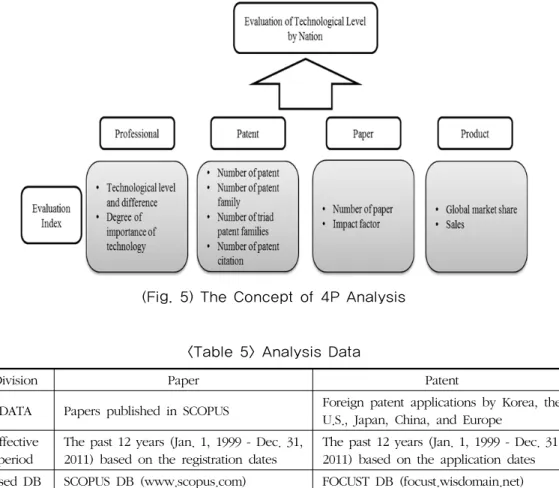
Previous sections focus on the current status of the SW industry and technology in India and Korea. Given the discussion, this section explores some fields of cooperation and future cooperation policies for the two countries. The Korea Evaluation Institute of Industrial Technology examined the level of SW technology in 2013 by considering 4P (professionals [studies by professionals], patents [an analysis of patent content], papers [an analysis of paper content], and products [an analysis of product markets])(Im, 2013).
In the present study, the level of technology was compared between Korea and India based on these factors, and the main fields of cooperation between the two countries were considered based on the results for SW fields emphasized in Korean policies. The
table shows the plan for a technology survey conducted by the Korea Evaluation Institute of Industrial Technology and reflects that the U.S. had the highest level (100%) of SW technology in the world based on the division of the SW industry.
(Fig. 5) The Concept of 4P Analysis
<Table 5> Analysis Data
Division Paper Patent
DATA Papers published in SCOPUS Foreign patent applications by Korea, the U.S., Japan, China, and Europe
Effective period
The past 12 years (Jan. 1, 1999 - Dec. 31, 2011) based on the registration dates
The past 12 years (Jan. 1, 1999 - Dec. 31, 2011) based on the application dates Used DB SCOPUS DB (www.scopus.com) FOCUST DB (focust.wisdomain.net)
1. Papers
In terms of paper publications, the amount of paper publications in Korea was 35%
(#9) of that of the U.S., whereas it was 19.5% (12) in India. There were a total of 17 industries exceeding 50% of the level of the U.S. and were classified as “good”, and 26 industries exceeded 30% but were below 50%, which were classified as “average”.
In the case of India, there were 8 industries that were “good” and 4 that were “average”.
(Fig. 6) A Distribution Chart of the Technology Level by Paper
<Table 6> A Comparison Between Korea and India by Paper (Unit: %)
KoreaGood Average
India
Good
*Design & Manufacturing Automation
(Korea-51.6%, India-61.5%)
*Web Application Service (WAS)
(Korea-50.1%, India-54.4%)
*Media Framework, Gesture Recognition
(Korea-72.5%, India-97.4%)
*Compiler
(Korea-32.7%, India-61.0%)
*Virtualization
(Korea-30.1%, India-58.7%)
*SW-HW Codesign (SoC for system level SW)
(Korea-49.1%, India-57.5%)
Average
*SaaS(Software as a Service) Enabler
(Korea-55.9%, India-31.3%)
*Artificial Intelligence
(Korea-52.0%, India-33.8%)
-
There were 3 ‘good’ industries for both countries. There were 2 industries that belonged to ‘good’ for Korea and ‘average’ for India. Also, there were 3 industries that belonged to ‘average’ for Korea and ‘good’ for India.
2. Patents
When it comes to patent, an industry that was scored above 50% of the U.S. level
was considered “superior” while an industry scored below 50% and above 20% of the U.S. level was considered “average” for the comparison purpose. It should be noted that there have been substantial SW developments in India but that they have rarely tried to accumulate intellectual property rights. In other words, the IT service industry, which requires only SW development for users’ needs, and the SW industry, which directly creates profits, are two different environments. That’s why there are aspects that Indian firms have not sufficiently considered. Therefore, the evaluation results in Table 7 should be considered as implicit data of the actual level of technology in India.
For the technology level in terms of patents, the level of Korea was 31.0% (10) of the U.S., whereas that of India was 10.3% (11). In Korea, there were 16 “good” fields (more than 50% of the U.S. level), whereas there was only 1 “good” field in India.
(Fig. 7) A Distribution Chart of the Technology Level by Patent
<Table 7> A Comparison Between Korea and India by Patent (Unit: %)
KoreaGood Average
India
Good - *Mobile Application
(Korea-25.5%, India-54.7%)
Average
*Personal Assistant
(Korea-78.4%, India-26.7%)
*Embedded Distributed MW
(Korea-94.6%, India-24.0%)
*Embedded File System
(Korea-50.4%, India-25.7%)
-
There was no industry that belonged to “good” in both countries. However, there were 3 industries that were “good” in Korea and “average” in India. In addition, there was 1 industry that was “average” in Korea and “good” in India.
3. Professionals
The results for the technological evaluation of professionals are presented differently from others because the two countries were not compared simultaneously. The evaluation results for professionals indicate that Korea ranked four among five countries (the U.S. Japan, China, and Europe) in terms of competitiveness in SW based on the following technology-based tasks evaluated to be higher than 80 points in comparison to the score for the U.S.: mobile applications, recommencer SW, personal assistants, intelligence service SW, business intelligence SW, decision support SW, special purpose MW, application platforms, embedded UI/UX, HILS, and encorders/decorders.
4. Product(Markets)
The U.S. (40.2%), Europe (29.1%), and Japan (9.2%) occupy about 80% of the global SW market, making it meaningless to create a separate technology project in terms of the market.
In sum, the analysis results suggest that it would be effective to promote 21 research items as priority cooperation projects focusing on each country’s respective strength.
V. SW Industry Cooperation Strategy Between India and Korea
This section discusses previously presented priority cooperation projects between Korea and India, including but not limited to the projects, agents of cooperation, and support strategies of the government. The main cooperation between the two countries is considered first.
1. Previous Cooperation
Korea and India entered into the CEPA3) in January 2010. Through this agreement, India abolished or reduced tariffs on 85% of Korean exports, and Korea did the same on 93% (based on the number of the items; 90% based on the amount of imports) of Indian imports. In terms of services and investment, doors were opened wider than what is required under the WTO. Professionals from both countries, including computer specialists and engineers, were allowed to participate in other country’s job market, and therefore it became easier for Indian IT workers to enter the Korean job market (Yonhap News, 2009). Through the CEPA, the mutual migration of some service professionals allowed foreign professionals such as computer specialists, engineers, management consultants, machine/communications technicians, natural scientists, advertising specialists, and supplementary English teachers to participate in both countries’ workforces.
There was a big potential for large entry of Indian IT workers to Korea. In addition, through this agreement, investment in India was fully liberalized. It was expected that a high degree of investment opening would be accomplished because India was engaged in negative trade liberalization4) for the first time since its FTA. At the same time, eligibility for the Investor-State Dispute (ISD) was expanded to provide Korean investors in India with added protection.
A meeting of the Joint Working Group (JWG) for IT/SW industries between the two countries was held in the same year, and the “2010-2011 Korea-India SW Business Council” was formed. In addition, the “Korea-India IT Business Day” was set. Further, the “Korea-India 2012 SW Cooperation Center” was established in 2012. This center supported SW development contracts and projects between small and medium-sized Korean SW firms and Indian SW development firms.
Recently, there was a meeting between leaders of the two countries in the SW field.
Geunhye Park (Korean president) and Moongi Choi (minister of the Ministry of Science, ICT, and Future Planning) attended the “Korea-India SW Round Table” at the building
3) CEPA refers Comprehensive Economic Partnership Agreement between Korea and India. The main objective of this agreement are to liberalize and facilitate trade in goods and services and expand investment between two Parties.(Ministry of Commerce and Industry, India, 2010)
4) Areas that were not open were listed, and the rest were allowed for foreign investment in principle.
of the Information Technology Department of New Delhi in January 2014. Government departments, state-owned enterprises, and IT firms from both countries attended the event to discuss strategies for complementary development. The groups that represented Korea include the Ministry of Science, ICT and Future Planning, NIPA5), ETRI6), Samsung Electronics, and POSCO ICT. The groups that represented Indian includes and not limit to the Ministry of Information and Communication and the SW Service Association.
The main discussions focused on the expansion of investment from Korean HW firms in India, the promotion of SW cooperation between the two countries, e-government, ICT, and R&D cooperation, among others. Korea shared the difficulties that face Korean firms in India, the current status and plans for Korea-India SW cooperation, the success of the intelligent transport system (ITS), the current status of Korean ICT R&D, and the cooperation strategies. India presented the domestic investment environment, the direction of strategic support, the revitalization of Korea-India networking among SW firms, the current status of Indian e-government, the current status of ICT R&D in India, and the cooperation strategies
Both sides identified the importance of the ICT industry and agreed to expand cooperation for mutual development by combining each other’s strengths. The ROK-India ICT Policy Forum and the SW Mutual Cooperation Center were established, and an MOU for cyber security/information protection was signed. In addition, the Ministry of Science, ICT, and Future Planning and the Ministry of Communication and Information Technology adopted a joint statement declaring the establishment of the Korea-India Ministerial Policy Council by the two countries as a regular cooperation channel for the ICT industry. To respond to cyber threats in an effective manner, an MOU for cooperation on cyber security and information protection was signed between the two countries’ cyber security agencies (the Korea Internet and Security Agency and the National Institute of Electronics and Information Technology of India). The Korea Institute for Advanced Study and the Tata Institute of Fundamental Research signed an MOU for academic exchanges, and Arirang TV and Doordarshan TV (DD TV) signed an MOU for the exchange of broadcast channels.
5) National IT industry Promotion Agency, Korea
6) Electronics and Telecommunications Research Institute, Korea
2. Cooperation Approach
A meeting between the two countries’ leaders was held, and a system of regular cooperation between relevant ministries was established. However, the actual and effective cooperation remains to be realized which necessitate the discussion for specific strategies for cooperation in this section of the paper.
In particular, manpower should be exchanged to better promote cooperation between the two countries. The Korean SW industry currently faces a serious shortage of high-quality manpower (Choi, 2013). The SW industry in the country is dominated by small and medium-sized firms, but they lack such human capital. However, there are over 50,000 SW professionals in India, and more than half are highly skilled workers.
In addition, about 12,000 IT workers are produced each year. In fact, 40% of IT professionals entering Korea from 2002 to 2007 were Indians (KIVBA, 2009), and a survey of IT professional preferences conducted in a related industry showed that Indian IT professionals were preferred the most (KIVBA, 2009). Despite of earlier expectations that high-quality SW workers from India would be employed through the Korea-India CEPA, a large exchange of workers between the two countries has not materialized. To resolve these issues, the problem of standard procedure in visa applications by foreign workers needs to be addressed. In addition, to employ quality workers, the Korean government should take action to support foreign SW professionals’ cost of living currently borne by small and medium-sized firms as a way to make use of the foreign brain pool. If high-quality workers choose to work in the U.S., Japan, and Europe rather than Korea, then the issue of mandpower shortage in Korea will continue. In addition, Korea has a task of promoting the country’s living conditions and workplace atmosphere. There are various regional innovation agencies in Korea. The concepts of liberalization and globalization should be promoted, and foreign researchers should be recruited. However, such efforts have not been fruitful. It should be noted that one of the major problems for foreign recruitment is a lack of a good foundation for long-term stay and settlement guidance programs.
To develop the SW industry, India has promoted various strategies such as abolishing SW tariffs, exempting tariffs on capital goods for major exporters, exempting income
taxes on SW exports, and building SW technology parks (STPs), among others. It would be beneficial for India to make additional efforts to develop and accumulate intellectual property rights in the future. Patents remain one of the main obstacles to global cooperation. It is advisable that Indian researchers and governments pay attention to any and all issues related to patents. In addition, it is advisable that government bureaucracy be minimized.
Finally, there is a need for a cooperation fund to promote sustained cooperation between the two countries. To intensify the effort to create a good atmosphere for cooperation, such as the new ROK-India ICT Policy Forum, the SW Mutual Cooperation Center, and the MOU for cyber security/information protection, it is necessary to create a fund and establish an agency dedicated to managing the fund. The process facilitates the identification of cooperation partners in the SW industry between the two countries, the planning and selection of joint research projects, and the expansion of joint research results. A example model for establishment of cooperation fund by the Korean government may be the Korea-Israel Industrial R&D Fund (KORIL Fund). When examining the process of technological cooperation at the global level, it is important to establish a system of cooperation at the national level. However, it is true that this system remains only at the stage of holding meetings and establishing consultative bodies. In this regard, the creation of a cooperation fund can accelerate the strengthening of the technological capability of domestic firms and research centers for SW development, joint research, the exchange of manpower/information, the introduction of new technologies, and the formation of strategic alliances for technological development with local agencies holding advanced technologies.
VI. Conclusions, Limitations and Future Research Direction
This study examines the current status of the SW industry and technology in Korea and India and suggests future strategies for cooperation between the two countries based on their previous efforts. The study outlines the characteristics and importance of the SW industry, its market size, and the current status of SW technologies in the
two countries; examines the characteristics of each country; and presents some strategies for future cooperation by comparing the level of technology between the two countries and considering the need for vitalizing their cooperation.
First, the level of the SW industry’s technology was compared between India and Korea to draw some priority projects for their cooperation. For this, the concept of the so-called 4P (professionals [studies by professionals], patents [an analysis of patent content], papers [an analysis of paper content], and products [an analysis of product markets]) was used to evaluate the level of technology in the SW industry. A level of technology that was good in both countries or good in one country but average in the other was set as a project. Based on this method, a total of 21 projects were selected as future projects for cooperation.
Second, the exchange of manpower was presented as a form of priority cooperation.
With a shortage of high-quality professionals, the production status of SW professionals in India, and a recent decrease in Indian professionals in the U.S. considered, building the domestic SW industry was determined to be the most reliable strategy. In this regard, the reason behind the lack of a vigorous manpower exchange between Korea and India was assessed, and promotional strategies were considered.
Third, it is recommended that India make more effort to develop and accumulate intellectual property rights to build conditions suitable for cooperation. As indicated in the Introduction section, the development and commercialization of patents are important because they represent main issues in global cooperation and India’s key vulnerability.
Finally, a cooperation fund should be set to promote sustained cooperation between the two countries. Based on previous efforts to build an environment for cooperation, creating such a fund and establishing an organization to manage the fund for actual cooperation should facilitate the identification of suitable partners in the SW industry;
the planning and selection of joint research projects; and the expansion of joint research outcomes. In this regard, the Korea-Israel Industrial R&D Fund (KORIL Fund) can serve as a representative model.
In spite of the fact that this research is one of the pioneering works in identifying the cooperation items and strategies in the SW industry between the two countries, it
has several limitations. First, this study mainly relies on the bibliometric methods in evaluating and filtering of priority cooperation. The level of technology in the industrial field could be different from that derived from research institutes and the universities.
Second, this research focuses on the personnel cooperation as the most important task and it could be a too general approach. For example, specific fields and levels of the personnel cooperation should be identified.
These limitations give us implication for the future researches. First, the comparison of technologies between the two countries should be conducted in a multidirectional way including the demand survey of cooperation based on the actual status of industry field. In addition, a key informant survey such as Delphi study would be fruitful.
Second, to figure out the right cooperation methods of the personnel exchange and exploitation, a comprehensive research about the specified level and domain of technology would be desirable.
References
KIVBA (Korea IT Venture Business Association) (2009), “Study on 105 Member Companies of IT Venture Business Association”, Quoted in Cho, C. J. (2009) “한인도 CEPA협상 평가”, 2009년 우리나라 통상정책 방향 모색 세미나.
강창원 (2012), 「우리 기업의 SW강국 인도 진출 모색」, 미래창조과학부.
디지털 타임즈 (2012), “빅3기업 전자정부 수출 견인 북미・중동・아시아 전역 활약”, http://
t.dt.co.kr/contents.html?article_no=2012061202011160739001 (2012.06.11).
손민정 (2013), “글로벌 IT 서비스산업 리더, 인도”, KOTRA & globalwindow.org, http://
www.globalwindow.org/gw/overmarket/GWOMAL020M.html?BBS_ID=10&MENU_C D=M10103&UPPER_MENU_CD=M10102&MENU_STEP=3&ARTICLE_ID=5002092&AR TICLE_SE=20302 (2013.04.18.).
연합뉴스 (2009), “한인도 CEPA 타결 핵심내용”, http://www.yonhapnews.co.kr/bulletin/
2009/08/05/0200000000AKR20090805181900002.HTML?did=1195r (2009.08.05.).
임진양 (2013), “전문가-논문-특허-시장 관점에서 바라본 S/W, 시스템반도체분야. 기술수준”, 한국산업기술평가관리원, 「KEIT PD Issue Report」, 12-2.
조선일보 (2013), “SW개발? 싫습니다. 한국, SW인재 게임 편중 심각”, http://inside.chosun.com/
site/data/html_dir/2013/08/02/2013080200580.html?related_all (2013.08.02).
최희선 (2013), “SW 인력 부족률 33%로 심각, 보상 높이고 장기근속 유도해야”, 산업연구원 홈페이지.
Carter, J. R. and Marasimhan, R. (1996), “Purchasing and Supply Management: Future.
Directions and Trends”,
International Journal of Purchasing and Supply management
, 32(3): 2-12.Chadwick, T. and Rajagopal S. (1995),
Strategic Supply Management
, Butterworth- Heinemann.Choi, H. S. (2013), “Method to Tackle the Shortage of Software Talents through the Extension of Career Path”, KIET(Korea Institute for Industrial Economics & Trade, Korea),
e-KIET Issue & Analysis,
563.Chun, H. S. (2007), “A Study on Successful Factors of Indian Software Industry and Implications”,
Electronics and Telecommunications Trends,
22:3, ETRI(Electronics and Telecommunications Research Institute, Korea).Combs, K. (1993), “The Role of Information Sharing in Cooperative Research and Development”,
International Journal of Industrial Organization,
11: 535-551.d’Aspremont, C. and Jacquemin, A. (1988), “Cooperative and Noncooperative R&D in Duopoly with Spillovers”,
American Economic Review,
78: 1133-1137.Imrie, R. and Morris, J. (1992), “A review of Recent Changes in Buyer-supplier Relations”,
International Journal of Management Science
, 20(5): 641-652.
Jeong, B. Y. (2012), “Current Status and Implications of Domestic SW Policy: Focused on Strategic Industries and Overseas Expansion Policy”.
Katz, M. L. (1986), “An Analysis of Cooperative Research and Development”,
The Rand Journal of Economics,
17:527-543.KEA (Korea Electronics Association) (2012), Quoted in NIPA(National IT industry Promotion Agency, Korea) (2012),
2012 Annual Report on SW Industry.
KIET (Korea Institute for Industrial Economics & Trade) (2013), “E-kiet SW”, http://
www.kiet.re.kr/kiet_web/?sub_num=650&state=view&idx=1608 (2013.08.07).
KIPO (Korean Intellectual Property Office, Korea) (2012),
Study on Economic Effects
and Legislation of Protection Increase for Program Invention
.KOITA (Korea Industrial Technology Association, Korea) (2013),
Industrial Technology White Paper
.Korea Bank (2012), Quoted in NIPA (National IT industry Promotion Agency, Korea) (2012)
2012 Annual Report on SW Industry.
Ministry of Commerce and Industry, India (2010),
India-Korea Comprehensive Economic Partnership Agreement
.Mohr, J., Sengupta, S. and Slater, S. (2010), “Marketing of High-Technology Products and Innovations”, Prentice Hall, http://www.msip.go.kr/www/brd/m_211/view.do?seq=1266.
NIPA (National IT industry Promotion Agency, Korea) (2012),
2012 Annual Report on SW Industry.
OECD (2014), “STAN R&D: Research and Development Expenditure in Industry-Rev. 4”, Data extracted on 03 Dec 2014. DOI : 10.1787/data-00689-en, http://stats.oecd.org/
viewhtml.aspx?datasetcode=ANBERD_REV4&lang=en.
Rouse, M. (2007), “Capability Maturity Model (CMM)”, Techtarget, http://searchsoftwarequality.
techtarget.com/definition/Capability-Maturity-Model.
Suh, J. H. (1994),
An Econometric Analysis of Technological Change: The Role of Foreign Technologies in Korean Economic Development
, UMI.Suzumura, K. (1992), “Cooperative and Noncooperative R&D in Oligopoly with Spillovers”,
The American Economic Review,
82: 1307-1320.Tech Terms.com (2010), “Definition of ICT”, http://www.techterms.com/definition/ict (2010.01.04.).
Appendix - <Table 1> A Comparison Between Korea and India by Paper (Unit:%)
KoreaGood Average
Enterprise Management SW(61.7) Design&Manufacturing Automation(51.6) Mobile application(55.0)
SaaS(Softwareasa Service) Enabler(55.9) Embedded SW engineering(53.7) SOC for Embedded App(60.5) Embedded Media Player(52.4) Embedded Office(Viewer)(51.4) Media player(75.1)
Intelligent Service SW(69.6)
Web Application Service(WAS)(50.1) Media framework(72.5)
3D Engine(56.3)
Artificial Intellignce (52.0) Gesture Recognition(79.6) Operating System(53.7) Embedded File system(63.4)
Embedded Browser(39.3) Media Authorizing Tool(31.0) Augmented Reality(42.7) Virtual Reality(38.0) Semantic Search(47.3) Recommencer SW(46.0) Personal Assistant(45.9) Business Intelligence SW(38.2) Decision Supporting SW(35.4) Special Purpose MW(47.7) Platform as a Service(PaaS)(49.8) System Management(41.3) Embedded UI/UX(43.1) Light App/Web Engine(39.8) D2D Connection Middleware(30.2) Embedded Distributed MW(48.4) Multimodal(47.2)
Rendering(32.9) HILS(48.9)
Encoder/Decoder(34.0)
Natural Language Processing(38.1) Speech Recognition(46.6)
Compiler(32.7) Virtualization(30.1) Main Memory DB(40.1)
SW-HW Codesign(SoC for System levelSW)(49.1) India
Good Average
Design&Manufacturing Automation(61.5) GIS(Geographical Information System)(65.2) WebApplication Service(WAS)(54.4) Media Framework(97.4)
Gesture Recognition(91.8) Compiler(61.0)
Virtualization(58.7)
SW-HWcodesign(SoC for System LevelSW)(57.5)
SaaS(Software as a Service) Enabler(31.3) Semantic Search(31.7)
Natural Language Processing(33.8) Artificial Intelligence(33.8)