Introduction
Pneumonia is an important cause of morbidity and mortal- ity worldwide. It is the seventh-leading cause of death in the United States, where about 915,900 episodes of pneumonia occur annually in adults aged ≥65 years
1. In Korea, pneumo- nia ranked tenth (7.1 deaths per 100,000 population) among all causes of death in 2004 and sixth (21.4 deaths per 100,000 population) in 2013
2. The incidence and direct medical costs of hospitalized pneumonia are consistently high in Korea.
Persons aged ≥75 years, and those with underlying medi- cal conditions, are at increased risk of hospitalization due to pneumonia
3.
Pneumonia is a frequent cause of rehospitalization after dis- charge; generalized vulnerability to illness also contributes to the development of acute conditions requiring rehospitaliza-
Reasons and Risk Factors for Readmission Following Hospitalization for
Community-acquired Pneumonia in South Korea
Jong Geol Jang, M.D. and June Hong Ahn, M.D., Ph.D.
Department of Internal Medicine, Yeungnam University Medical Center, Yeungnam University College of Medicine, Daegu, Korea
Background: Limited studies have been performed to assess readmission following hospitalization for community- acquired pneumonia (CAP) in an Asian population. We evaluated the rates, reasons, and risk factors for 30-day readmission following hospitalization for CAP in the general adult population of Korea.
Methods: We performed a retrospective observational study of 1,021 patients with CAP hospitalized at Yeungnam University from March 2012 to February 2014. The primary end point was all-cause hospital readmission within 30 days following discharge after the initial hospitalization. Hospital readmission was classified as pneumonia-related or pneumonia-unrelated readmission.
Results: During the study period, 862 patients who survived to hospital discharge were eligible for inclusion and among them 72 (8.4%) were rehospitalized within 30 days. In the multivariable analysis, pneumonia-related readmission was associated with para/hemiplegia, malignancy, pneumonia severity index class ≥4 and clinical instability ≥1 at hospital discharge. Comorbidities such as chronic lung disease and chronic kidney disease, treatment failure, and decompensation of comorbidities were associated with the pneumonia-unrelated 30-day readmission rate.
Conclusion: Rehospitalizations within 30 days following discharge were frequent among patients with CAP. The risk factors for pneumonia-related and -unrelated readmission were different. Aspiration prevention, discharge at the optimal time, and close monitoring of comorbidities may reduce the frequency of readmission among patients with CAP.
Keywords: Causes; Hospital Readmission; Koreans; Pneumonia; Risk Factors
Address for correspondence: June Hong Ahn, M.D., Ph.D.
Division of Pulmonology and Allergy, Department of Internal Medicine, Yeungnam University Medical Center, Yeungnam University College of Medicine, 170 Hyeonchung-ro, Nam-gu, Daegu 42415, Korea Phone: 82-53-640-6577, Fax: 82-53-620-3849
E-mail: [email protected] Received: Oct. 15, 2019 Revised: Nov. 14, 2019 Accepted: Dec. 6, 2019 Published online: Mar. 10, 2020
cc It is identical to the Creative Commons Attribution Non-Commercial License (http://creativecommons.org/licenses/by-nc/4.0/).
Copyright © 2020
The Korean Academy of Tuberculosis and Respiratory Diseases.
tion
4.
The 30-day readmission after hospitalization for pneumo- nia is related to the rate of 30-day mortality after discharge
5. Moreover, pneumonia readmission rates are associated with increased medical costs and are used as an indicator of quality of care
6. Patient-, disease-, physician-, and healthcare system- related factors are associated with pneumonia readmissions and are targets of interventions to reduce the rate of readmis- sion for pneumonia
7. Clinically, identification of the reasons and risk factors for readmission is important for discharge planning.
The rates, reasons, and risk factors for pneumonia readmis- sion vary among populations, regions, and methodologies.
Most prior readmission studies were conducted in North America and Europe. One Korean study assessed only health- care system-related factors in elderly (age ≥65 years) pneu- monia patients using nationwide data
6. Although pneumonia is a frequent cause of readmission, which is related to several modifiable factors, few Asian studies have investigated hospi- tal readmission for pneumonia. Here we evaluated the rates, reasons, and risk factors for 30-day readmission following hos- pitalization for community-acquired pneumonia (CAP) in the general adult population of Korea.
Materials and Methods
1. Study design and subjects
We performed a retrospective observational study of 1,021 patients with CAP hospitalized at Yeungnam University Hos- pital (a 930-bed, university-affiliated, tertiary referral hospital in Daegu, Korea) from March 2012 to February 2014. The total number of patients enrolled in this study does not differ from previous publication and this study is a secondary analysis of previous publication using same database
8. In this study, we added health insurance status as an independent factor. How- ever, we could not find health insurance status in 10 patients based on electronic medical records. Thus, we excluded these patients first.
As described in detail previously
8, during the study period, all consecutive adult patients (age ≥18 years) with CAP ad- mitted to the hospital via the emergency or outpatient de- partment were eligible for inclusion. Patients with hospital- acquired pneumonia that developed more than 48 hours after admission, those aged below 18 years, immunocompromised patients (such as those with neutropenia after chemotherapy, human immunodeficiency virus infection, solid organ trans- plant recipients, or receiving corticosteroids or other immu- nosuppressive agents), patients with active Mycobacteria tuberculosis infection, and patients registered twice were not included in this study. The exclusion criteria were patients who (1) died during the index hospitalization, (2) discharged
themselves against medical advice and refused outpatient follow-up, or (3) were transferred to another acute-care facility (Figure 1).
2. Data collection and definitions
Patient electronic medical records were reviewed by two physicians (J.G.J. and J.H.A.). Clinical data included age, gen- der, comorbidities, vital signs, feeding status, mental status, ambulatory status and laboratory findings. We assessed dis- ease burden using the Charlson comorbidity index (CCI)
9, which assigns a weighted score to each comorbid condition depending on the risk of 1-year mortality.
Medical Aid beneficiaries were considered to have a lower socioeconomic status than National Health Insurance ben- eficiaries. The severity of pneumonia was assessed using the pneumonia severity index (PSI)
10and CURB-65 score
11on day 1 of hospitalization.
Inappropriate initial antibiotic therapy (IIAT) was defined as non-susceptibility to the initially prescribed empirical anti- biotic by in vitro antibiotic susceptibility testing.
Treatment failure was defined as clinical deterioration dur- ing hospitalization with any of the following: (1) progression of pneumonia on radiographs, (2) respiratory failure, (3) need for mechanical ventilation, (4) hemodynamic instability, or (5) development of a new infection focus
12. Patients were de- fined as having decompensation of comorbidity if the medical records suggested exacerbation of one or more comorbidities
121 (11.9%) Patients died 1,021 Index hospitalizations for pneumonia
35 (3.4%) Patients discharged against medical advice and
refuse outpatient follow-up 3 (0.3%) Patients transferred out
27 Pneumonia-related 45 Pneumonia-unrelated 72 Readmissions in <30 days
862 Final pneumonia index hospitalizations
Figure 1. Study design: 1,021 index hospitalizations for community-
acquired pneumonia were identified. After excluding patients who
died during the index hospitalization, those who discharged them-
selves against medical advice and refused outpatient follow-up,
and those transferred to another acute care facility, the final cohort
comprised 862 patients.
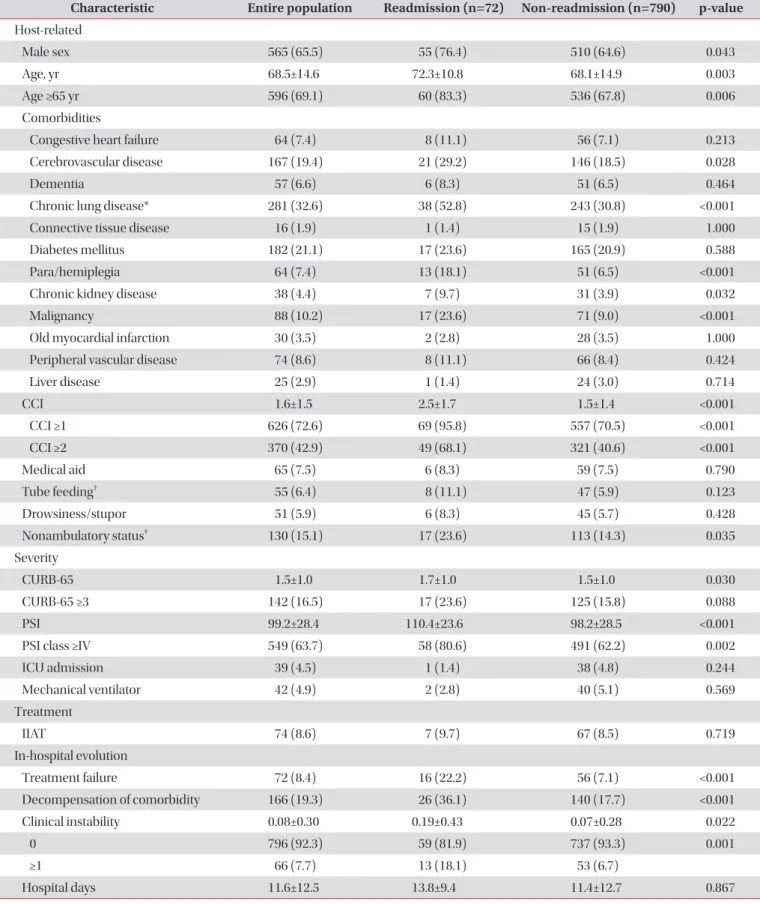
Table 1. Characteristics and outcomes of the patients (n=862)
Characteristic Entire population Readmission (n=72) Non-readmission (n=790) p-value Host-related
Male sex 565 (65.5) 55 (76.4) 510 (64.6) 0.043
Age, yr 68.5±14.6 72.3±10.8 68.1±14.9 0.003
Age ≥65 yr 596 (69.1) 60 (83.3) 536 (67.8) 0.006
Comorbidities
Congestive heart failure 64 (7.4) 8 (11.1) 56 (7.1) 0.213
Cerebrovascular disease 167 (19.4) 21 (29.2) 146 (18.5) 0.028
Dementia 57 (6.6) 6 (8.3) 51 (6.5) 0.464
Chronic lung disease* 281 (32.6) 38 (52.8) 243 (30.8) <0.001
Connective tissue disease 16 (1.9) 1 (1.4) 15 (1.9) 1.000
Diabetes mellitus 182 (21.1) 17 (23.6) 165 (20.9) 0.588
Para/hemiplegia 64 (7.4) 13 (18.1) 51 (6.5) <0.001
Chronic kidney disease 38 (4.4) 7 (9.7) 31 (3.9) 0.032
Malignancy 88 (10.2) 17 (23.6) 71 (9.0) <0.001
Old myocardial infarction 30 (3.5) 2 (2.8) 28 (3.5) 1.000
Peripheral vascular disease 74 (8.6) 8 (11.1) 66 (8.4) 0.424
Liver disease 25 (2.9) 1 (1.4) 24 (3.0) 0.714
CCI 1.6±1.5 2.5±1.7 1.5±1.4 <0.001
CCI ≥1 626 (72.6) 69 (95.8) 557 (70.5) <0.001
CCI ≥2 370 (42.9) 49 (68.1) 321 (40.6) <0.001
Medical aid 65 (7.5) 6 (8.3) 59 (7.5) 0.790
Tube feeding
†55 (6.4) 8 (11.1) 47 (5.9) 0.123
Drowsiness/stupor 51 (5.9) 6 (8.3) 45 (5.7) 0.428
Nonambulatory status
‡130 (15.1) 17 (23.6) 113 (14.3) 0.035
Severity
CURB-65 1.5±1.0 1.7±1.0 1.5±1.0 0.030
CURB-65 ≥3 142 (16.5) 17 (23.6) 125 (15.8) 0.088
PSI 99.2±28.4 110.4±23.6 98.2±28.5 <0.001
PSI class ≥IV 549 (63.7) 58 (80.6) 491 (62.2) 0.002
ICU admission 39 (4.5) 1 (1.4) 38 (4.8) 0.244
Mechanical ventilator 42 (4.9) 2 (2.8) 40 (5.1) 0.569
Treatment
IIAT 74 (8.6) 7 (9.7) 67 (8.5) 0.719
In-hospital evolution
Treatment failure 72 (8.4) 16 (22.2) 56 (7.1) <0.001
Decompensation of comorbidity 166 (19.3) 26 (36.1) 140 (17.7) <0.001
Clinical instability 0.08±0.30 0.19±0.43 0.07±0.28 0.022
0 796 (92.3) 59 (81.9) 737 (93.3) 0.001
≥1 66 (7.7) 13 (18.1) 53 (6.7)
Hospital days 11.6±12.5 13.8±9.4 11.4±12.7 0.867
during hospitalization that required intensification of treat- ment
13, such as exacerbation of chronic lung disease, acute kidney injury in the presence of chronic kidney disease, or a rapid ventricular response in the form of atrial fibrillation.
We defined clinical instability within 24 hours before hos- pital discharge using established criteria. A patient with any of the following was considered to be unstable: (1) body temperature >37.8°C, (2) respiration rate >24 breaths/min, (3) heart rate >100 beats/min, (4) systolic blood pressure ≤90 mm Hg, or (5) oxyhemoglobin saturation measured by pulse oximetry <90% and partial pressure of oxygen in arterial blood
<60 mm Hg
14. Two other criteria used to define clinical insta- bility at hospital discharge (inability to tolerate oral intake and an abnormal mental status) were not available in the medical records.
3. Outcome variables
The primary end point was all-cause hospital readmission within 30 days following discharge after the initial hospitaliza- tion. Hospital readmission was classified as (1) pneumonia- related or (2) pneumonia-unrelated readmission.
Pneumonia-related readmission was defined as the pres- ence of (1) radiographic infiltration and (2) acute-onset symp- toms suggestive of pneumonia using established criteria
13,15. Pneumonia-unrelated readmission was defined as the exis- tence of an alternative reason for readmission. Two investiga- tors (J.H.A. and J.G.J.) reviewed the reasons for readmission independently; any discordance was resolved by consensus.
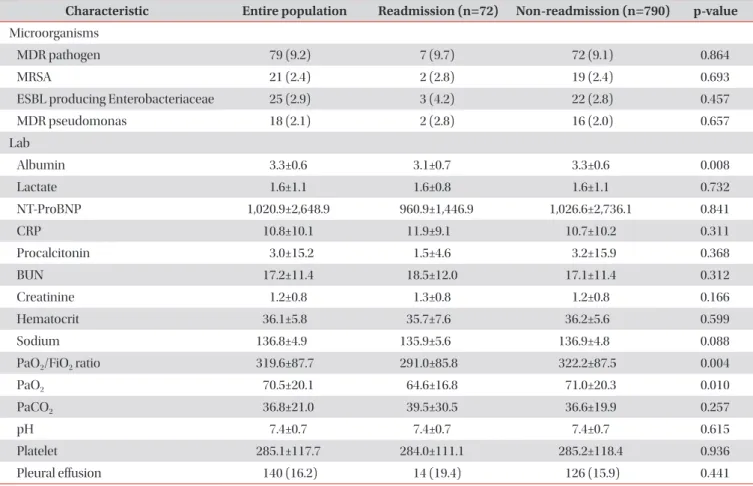
Table 1. Continued
Characteristic Entire population Readmission (n=72) Non-readmission (n=790) p-value Microorganisms
MDR pathogen 79 (9.2) 7 (9.7) 72 (9.1) 0.864
MRSA 21 (2.4) 2 (2.8) 19 (2.4) 0.693
ESBL producing Enterobacteriaceae 25 (2.9) 3 (4.2) 22 (2.8) 0.457
MDR pseudomonas 18 (2.1) 2 (2.8) 16 (2.0) 0.657
Lab
Albumin 3.3±0.6 3.1±0.7 3.3±0.6 0.008
Lactate 1.6±1.1 1.6±0.8 1.6±1.1 0.732
NT-ProBNP 1,020.9±2,648.9 960.9±1,446.9 1,026.6±2,736.1 0.841
CRP 10.8±10.1 11.9±9.1 10.7±10.2 0.311
Procalcitonin 3.0±15.2 1.5±4.6 3.2±15.9 0.368
BUN 17.2±11.4 18.5±12.0 17.1±11.4 0.312
Creatinine 1.2±0.8 1.3±0.8 1.2±0.8 0.166
Hematocrit 36.1±5.8 35.7±7.6 36.2±5.6 0.599
Sodium 136.8±4.9 135.9±5.6 136.9±4.8 0.088
PaO
2/FiO
2ratio 319.6±87.7 291.0±85.8 322.2±87.5 0.004
PaO
270.5±20.1 64.6±16.8 71.0±20.3 0.010
PaCO
236.8±21.0 39.5±30.5 36.6±19.9 0.257
pH 7.4±0.7 7.4±0.7 7.4±0.7 0.615
Platelet 285.1±117.7 284.0±111.1 285.2±118.4 0.936
Pleural effusion 140 (16.2) 14 (19.4) 126 (15.9) 0.441
Values are presented as number (%) or mean±SD (range).
*Chronic lung disease includes chronic obstructive pulmonary disease, asthma, bronchiectasis, and interstitial lung disease.
†Tube feeding includes nasogastric tube and gastrostomy tube feeding.
‡Nonambulatory status is defined as using a wheelchair for ambulation or being bedridden.
CCI: Charlson comorbidity index; PSI: pneumonia severity index; ICU: intensive care unit; IIAT: inappropriate initial antibiotic therapy; MDR:
multidrug-resistant; MRSA: methicillin-resistant Staphylococcus aureus; ESBL: extended-spectrum beta-lactamase; NT-ProBNP: N-terminal
probrain natriuretic peptide; CRP: C-reactive protein; BUN: blood urea nitrogen; PaO
2: partial pressure of oxygen; FiO
2: fraction of inspired
oxygen; PaCO
2: partial pressure of carbon dioxide.
4. Statistical analysis
Continuous variables are expressed as mean±standard deviation and were compared by Student’s t test or the Mann- Whitney U test. Categorical variables were compared by chi-squared test or Fisher exact test. Multivariable logistic re- gression analyses were performed to identify independent risk factors for hospital readmission using variables with a p-value of <0.1 in univariable analyses, as measured by the odds ratios (ORs) with 95% confidence intervals (CIs). A linear-by-linear association test was performed to analyze the 30-day hospital readmission rate according to the number of risk factors. In all analyses, p<0.05 by two-tailed test was considered to indicate statistical significance. All statistical procedures were per- formed using SPSS software version 21.0 (IBM Corp., Armonk, NY, USA).
5. Ethical statement
This study was conducted in accordance with the tenets of the Declaration of Helsinki, and was reviewed and approved by the Institutional Review Board of Yeungnam University Hospital (YUH IRB 2018-06-012). The requirement for in- formed consent was waived because of the retrospective study design.
Results
During the study period, 862 patients who survived to hos- pital discharge were eligible for inclusion and among them 72 (8.4%) were rehospitalized within 30 days. Pneumonia-related readmission accounted for 37.5% of the total number of read- missions within 30 days (Figure 1).
1. Baseline characteristics
The demographic and baseline characteristics of the pa- tients are presented in Table 1. The mean age of the patients was 68.5 years, and 565 (65.5%) were males. Patients who were readmitted were older; predominantly male; and more likely to have cerebrovascular disease, chronic lung disease, para/hemiplegia, chronic kidney disease, and malignancy compared with non-readmitted patients. The mean CCI was higher in patients who were readmitted (2.5±1.7 vs. 1.5±1.4, p<0.001). The frequency of non-ambulatory status (require- ment of a wheelchair for ambulation and being bedridden) was higher in readmitted than non-readmitted patients. The CURB-65 (1.7±1.0 vs. 1.5±1.0, p=0.030) and PSI (110.4±23.6 vs.
98.2±28.5, p<0.001) values were significantly higher in patients who were readmitted. With respect to in-hospital evolution, the rates of treatment failure, decompensation of comorbidity, and clinical instability at hospital discharge were significantly
higher in readmitted than non-readmitted patients.
2. Reasons for rehospitalization
The reasons for rehospitalization were assessed in 72 pa- tients. Pneumonia-related and -unrelated reasons accounted for 37.5% (3.13% of the total index hospitalizations) and 62.5%
of the total hospital readmissions, respectively (Table 2).
3. Factors associated with hospital readmission
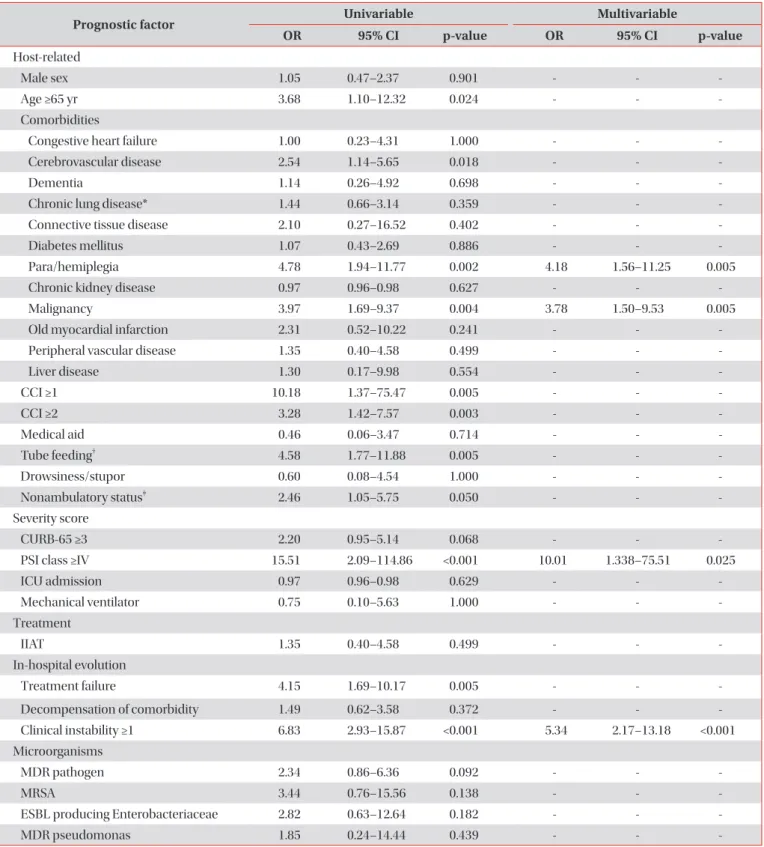
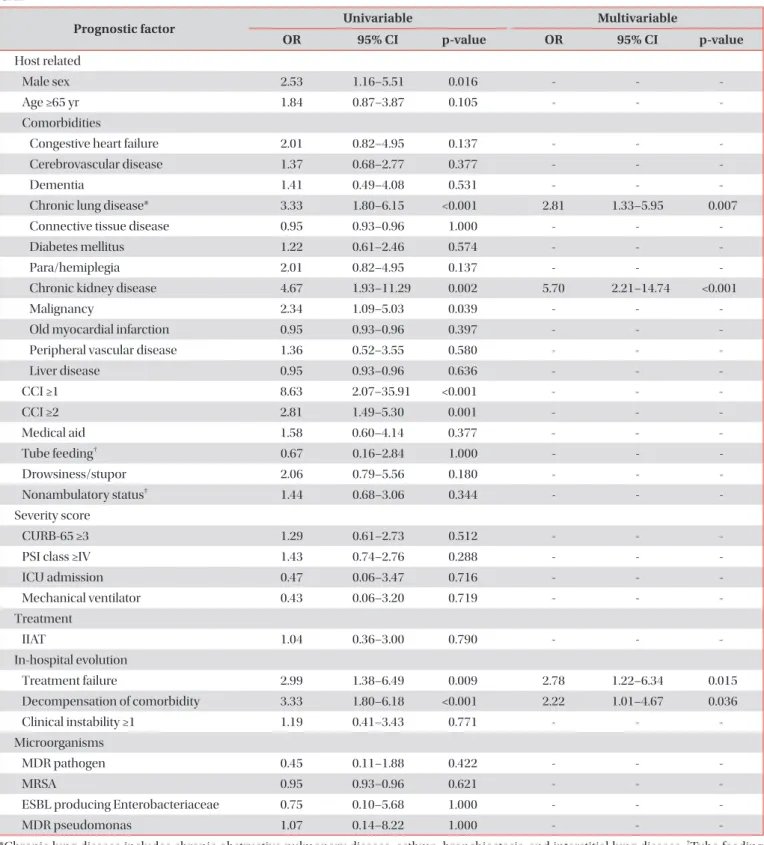
The factors associated with 30-day hospital readmission for pneumonia-related and -unrelated reasons are listed in Tables 3 and 4, respectively. In the multivariable analysis, pneumonia-related readmission was associated with para/
hemiplegia, malignancy, PSI class ≥4 and clinical instability ≥1 at hospital discharge (Table 3). Comorbidities such as chronic
Table 2. Reasons for hospital readmission within 30 days after discharge (n=72)
Reason No. (%)
Pneumonia-related* 27 (37.5)
Pneumonia-unrelated
†45 (62.5)
Cardiovascular 4 (5.6)
Pulmonary 15 (20.8)
Gastrointestinal 13 (18.1)
Orthopedic 1 (1.4)
Neurologic 1 (1.4)
Renal disorder 0 (0)
Neoplastic 2 (2.8)
Endocrine 0 (0)
Other
‡9 (12.5)
*Among patients readmitted for pneumonia-related reasons, 12
(44.4%) were readmitted due to aspiration pneumonia associated
with comorbidities.
†The pneumonia-unrelated reasons for read-
mission were as follows: cardiovascular reasons were atrial fibrilla-
tion with rapid ventricular response (n=2), acute decompensated
heart failure (n=1), and multiple atrial tachycardia due to pulmo-
nary disease (n=1); pulmonary reasons were acute exacerbations
of chronic obstructive pulmonary disease (n=6), and idiopathic
pulmonary fibrosis (n=3), hemoptysis (n=2), hypoventilation (n=1),
pneumothorax (n=1), atelectasis (n=1), and operation for pulmo-
nary causes (n=1); gastrointestinal reasons were gastrointestinal
bleeding (n=5), Clostridium difficile –associated diarrhea (n=3),
colitis (n=2), peritonitis (n=1), acute appendicitis (n=1), and acute
cholangitis (n=1); the orthopedic reason was osteomyelitis of the
coccyx (n=1); the neurologic reason was cerebrovascular accident
(n=1); the neoplastic reason was lung cancer (n=2).
‡Other causes
are urinary tract infection (n=4), tracheostomy malfunction (n=1),
oral candidiasis (n=1), herpes zoster (n=1), paravertebral infection
(n=1), and general weakness with poor oral intake (n=1).
Table 3. Univariable and multivariable analyses of risk factors for pneumonia-related readmissions among patients with CAP
Prognostic factor Univariable Multivariable
OR 95% CI p-value OR 95% CI p-value
Host-related
Male sex 1.05 0.47–2.37 0.901 - - -
Age ≥65 yr 3.68 1.10–12.32 0.024 - - -
Comorbidities
Congestive heart failure 1.00 0.23–4.31 1.000 - - -
Cerebrovascular disease 2.54 1.14–5.65 0.018 - - -
Dementia 1.14 0.26–4.92 0.698 - - -
Chronic lung disease* 1.44 0.66–3.14 0.359 - - -
Connective tissue disease 2.10 0.27–16.52 0.402 - - -
Diabetes mellitus 1.07 0.43–2.69 0.886 - - -
Para/hemiplegia 4.78 1.94–11.77 0.002 4.18 1.56–11.25 0.005
Chronic kidney disease 0.97 0.96–0.98 0.627 - - -
Malignancy 3.97 1.69–9.37 0.004 3.78 1.50–9.53 0.005
Old myocardial infarction 2.31 0.52–10.22 0.241 - - -
Peripheral vascular disease 1.35 0.40–4.58 0.499 - - -
Liver disease 1.30 0.17–9.98 0.554 - - -
CCI ≥1 10.18 1.37–75.47 0.005 - - -
CCI ≥2 3.28 1.42–7.57 0.003 - - -
Medical aid 0.46 0.06–3.47 0.714 - - -
Tube feeding
†4.58 1.77–11.88 0.005 - - -
Drowsiness/stupor 0.60 0.08–4.54 1.000 - - -
Nonambulatory status
‡2.46 1.05–5.75 0.050 - - -
Severity score
CURB-65 ≥3 2.20 0.95–5.14 0.068 - - -
PSI class ≥IV 15.51 2.09–114.86 <0.001 10.01 1.338–75.51 0.025
ICU admission 0.97 0.96–0.98 0.629 - - -
Mechanical ventilator 0.75 0.10–5.63 1.000 - - -
Treatment
IIAT 1.35 0.40–4.58 0.499 - - -
In-hospital evolution
Treatment failure 4.15 1.69–10.17 0.005 - - -
Decompensation of comorbidity 1.49 0.62–3.58 0.372 - - -
Clinical instability ≥1 6.83 2.93–15.87 <0.001 5.34 2.17–13.18 <0.001
Microorganisms
MDR pathogen 2.34 0.86–6.36 0.092 - - -
MRSA 3.44 0.76–15.56 0.138 - - -
ESBL producing Enterobacteriaceae 2.82 0.63–12.64 0.182 - - -
MDR pseudomonas 1.85 0.24–14.44 0.439 - - -
*Chronic lung disease includes chronic obstructive pulmonary disease, asthma, bronchiectasis, and interstitial lung disease.
†Tube feeding includes nasogastric tube and gastrostomy tube feeding.
‡Nonambulatory status is defined as using a wheelchair for ambulation or being bedridden.
CAP: community-acquired pneumonia; OR: odds ratio; CI: confidence interval; CCI: Charlson comorbidity index; PSI: pneumonia severity
index; ICU: intensive care unit; IIAT: inappropriate initial antibiotic therapy; MDR: multidrug-resistant; MRSA: methicillin-resistant Staphylo-
coccus aureus; ESBL: extended-spectrum beta-lactamase.
Table 4. Univariable and multivariable analyses of risk factors for pneumonia-unrelated readmissions among patients with CAP
Prognostic factor Univariable Multivariable
OR 95% CI p-value OR 95% CI p-value
Host related
Male sex 2.53 1.16–5.51 0.016 - - -
Age ≥65 yr 1.84 0.87–3.87 0.105 - - -
Comorbidities
Congestive heart failure 2.01 0.82–4.95 0.137 - - -
Cerebrovascular disease 1.37 0.68–2.77 0.377 - - -
Dementia 1.41 0.49–4.08 0.531 - - -
Chronic lung disease* 3.33 1.80–6.15 <0.001 2.81 1.33–5.95 0.007
Connective tissue disease 0.95 0.93–0.96 1.000 - - -
Diabetes mellitus 1.22 0.61–2.46 0.574 - - -
Para/hemiplegia 2.01 0.82–4.95 0.137 - - -
Chronic kidney disease 4.67 1.93–11.29 0.002 5.70 2.21–14.74 <0.001
Malignancy 2.34 1.09–5.03 0.039 - - -
Old myocardial infarction 0.95 0.93–0.96 0.397 - - -
Peripheral vascular disease 1.36 0.52–3.55 0.580 - - -
Liver disease 0.95 0.93–0.96 0.636 - - -
CCI ≥1 8.63 2.07–35.91 <0.001 - - -
CCI ≥2 2.81 1.49–5.30 0.001 - - -
Medical aid 1.58 0.60–4.14 0.377 - - -
Tube feeding
†0.67 0.16–2.84 1.000 - - -
Drowsiness/stupor 2.06 0.79–5.56 0.180 - - -
Nonambulatory status
‡1.44 0.68–3.06 0.344 - - -
Severity score
CURB-65 ≥3 1.29 0.61–2.73 0.512 - - -
PSI class ≥IV 1.43 0.74–2.76 0.288 - - -
ICU admission 0.47 0.06–3.47 0.716 - - -
Mechanical ventilator 0.43 0.06–3.20 0.719 - - -
Treatment
IIAT 1.04 0.36–3.00 0.790 - - -
In-hospital evolution
Treatment failure 2.99 1.38–6.49 0.009 2.78 1.22–6.34 0.015
Decompensation of comorbidity 3.33 1.80–6.18 <0.001 2.22 1.01–4.67 0.036
Clinical instability ≥1 1.19 0.41–3.43 0.771 - - -
Microorganisms
MDR pathogen 0.45 0.11–1.88 0.422 - - -
MRSA 0.95 0.93–0.96 0.621 - - -
ESBL producing Enterobacteriaceae 0.75 0.10–5.68 1.000 - - -
MDR pseudomonas 1.07 0.14–8.22 1.000 - - -
*Chronic lung disease includes chronic obstructive pulmonary disease, asthma, bronchiectasis, and interstitial lung disease.
†Tube feeding includes nasogastric tube and gastrostomy tube feeding.
‡Nonambulatory status is defined as using a wheelchair for ambulation or being bedridden.
CAP: community-acquired pneumonia; OR: odds ratio; CI: confidence interval; CCI: Charlson comorbidity index; PSI: pneumonia severity
index; ICU: intensive care unit; IIAT: inappropriate initial antibiotic therapy; MDR: multidrug-resistant; MRSA: methicillin-resistant Staphylo-
coccus aureus; ESBL: extended-spectrum beta-lactamase.
lung disease and chronic kidney disease, treatment failure, and decompensation of comorbidities were associated with the pneumonia-unrelated 30-day readmission rate (Table 4).
The likelihood of hospital readmission within 30 days in- creased with increasing number of risk factors (p<0.001, test for trend) (Figure 2). The 30-day hospital readmission rate af- ter hospital discharge was low (≤3.0%) in patients with no risk factors. In patients with three risk factors, the 30-day hospital readmission rate was considerable (pneumonia-related OR, 42.86; 95% CI, 8.53–215.28; pneumonia-unrelated OR, 35.62;
95% CI, 11.57–109.63).
Discussion
In this study, of the 862 patients hospitalized for CAP, 72 (8.4%) were readmitted within 30 days following hospital dis- charge. Pneumonia-related and -unrelated causes accounted for 37.5% and 62.5% of the total readmissions, respectively.
The risk factors for pneumonia-related readmission (para/
hemiplegia, malignancy, PSI class ≥4, and clinical instability
≥1 at hospital discharge) were different from those for pneu- monia-unrelated readmission (chronic lung disease, chronic kidney disease, treatment failure, and decompensation of co- morbidities). Moreover, the likelihood of hospital readmission increased with increasing number of risk factors.
Several studies performed in the United States and Europe have assessed readmission for pneumonia
13,15-17. In South Korea, the number of physicians per bed is reportedly associ- ated with readmission of elderly CAP patients
6. However, this study included only patients >65 years and did not assess demographic or disease-specific factors. To our knowledge, ours is the first Asian study to evaluate risk factors for hospital readmission following discharge of general adult patients (age
≥18 years) hospitalized for CAP.
The all-cause 30-day readmission rate after hospitalization for pneumonia was 8.4%, compared to 7.3%–18.3% in prior works
4,13,18. In a systematic chart review, the pooled all-cause
30-day readmission rate was 11.6%. Generally, US-based stud- ies and those involving elderly patients (age ≥65 years) show higher rates of all-cause 30-day readmission than non-US–
based studies and those involving adults (age ≥18 years)
19. The all-cause 30-day readmission rate in our study was similar to the values reported by non-US–based studies and those not restricted to elderly patients
13,18. A prior work involving elderly patients (age >65 years) in South Korea reported a higher (19.1%) all-cause 30-day readmission rate than our finding
6. Thus, the healthcare environment (including hospital acces- sibility, financial issues, and medical practices) and age are important determinants of readmission rates.
The leading causes of 30-day readmission in our study were pneumonia (37.5%), pulmonary disease (20.8%), gastroin- testinal disease (18.1%), and cardiovascular disease (5.6%).
Pneumonia, heart failure/cardiovascular disease, and chronic obstructive pulmonary disease/pulmonary disease are the leading reasons for hospital readmission within 30 days
19. Interestingly, gastrointestinal causes were the third-most- frequent reasons for hospital readmission. This is higher than in previous reports, possibly because of the effect of the large proportion (63.7%) of high-risk (PSI class ≥4) patients on the incidence of gastrointestinal bleeding and Clostridium diffi- cile-associated diarrhea (CDAD) (8 cases/all 13 gastrointes- tinal causes)
13,15,18. Indeed, seven of the eight patients (87.5%) who developed gastrointestinal bleeding and CDAD were in the high-risk group (PSI class ≥4).
Para/hemiplegia and malignancy were associated with pneumonia-related readmission. This may be because pa- tients with these comorbidities have decreased performance status and/or immunity. Among patients readmitted for pneu- monia-related reasons, 44.4% (12/27) had aspiration pneumo- nia associated with comorbidities. Indeed, the aspiration risk is reportedly associated with higher rates of readmission and recurrent pneumonia in patients with CAP
20. Thus, evidence- based interventions, such as angiotensin-converting enzyme inhibitors
21,22, could prevent readmission for recurrent aspira- tion pneumonia in high-risk patients. Moreover, maintaining good oral hygiene, withholding unnecessary medications, food thickening, sitting upright while eating, head elevation of at least 30°, and swallowing rehabilitation might decrease the risk of aspiration in high-risk patients
23. Education of patients regarding these interventions before hospital discharge would decrease the pneumonia-related readmission rate.
PSI class ≥IV and clinical instability at hospital discharge were risk factors for pneumonia-related readmission. Unlike previous studies
15,16,18, our findings revealed that PSI class ≥IV is an independent risk factor for pneumonia-related readmis- sion. However, those prior works did not separate pneumonia- related and -unrelated readmissions. We found that a clinical instability score of ≥1 was an independent risk factor for read- mission, in accordance with previous reports
13,17. Discharge at the optimal time (taking into consideration clinical stability) Figure 2. Readmission rate according to number of risk factors.
Pneumonia-related readmission 60
50 40 30 20 10 0
Risk factor 0 Risk factor 1 Risk factor 2 Risk factor 3
p<0.001 (test for trend, linear by linear)
Pneumonia-unrelated readmission
Rateofhospitalreadmission(%)