Computational Analysis of the Effects of Spray Parameters and Piston Shape on Syngas-Diesel Dual-Fuel Engine Combustion Process
Abubaker Ahmed M. M. Ali
*, Ali Kabbir
*, Changup Kim
**, Yonggyu Lee
**, Seungmook Oh
**and Kim Ki-seong
*,†Key Words: Low calorific value syngas, Dual-fuel engine, 3D CFD analysis, Chemical kinetics, Injection parameters, Piston shape
Abstract
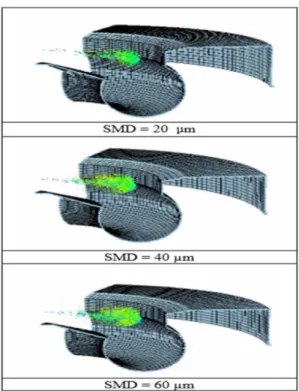
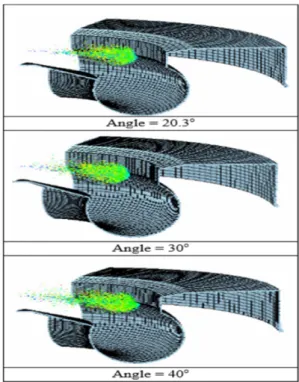
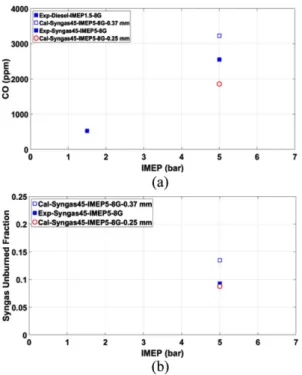
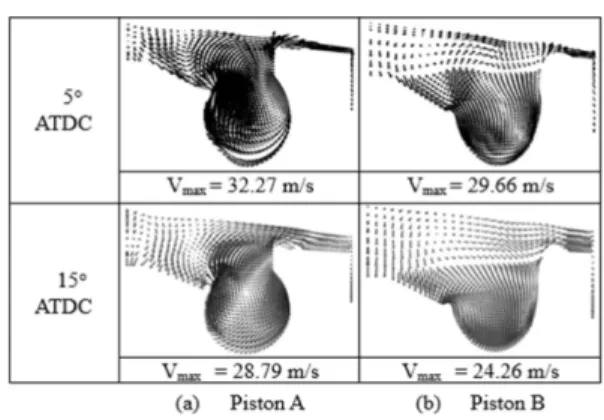
In this study, a 3D CFD analysis method for the combustion process was established for a low calorific value syngas- diesel dual-fuel engine operating under very lean fuel-air mixture condition. Also, the accuracy of computational analysis was evaluated by comparing the experimental results with the computed ones. To simulate the combustion for the dual- fuel engine, a new dual-fuel chemical kinetics set was used that was constituted by merging two verified chemical kinetic sets: n-heptane (173 species) for diesel and Gri-mech 3.0 (53 species) for syngas. For dual-fuel mode operations, the early stage of combustion was dominated by the fuel burning inside or near the spray plume. After which, the flame propagated into the syngas in the piston bowl and then proceeded toward the syngas in the squish zone. With the baseline injection system and piston shape, a significant amount of unburned syngas was discharged. To solve this problem, effects of the injection parameters and piston shape on combustion characteristics were analyzed by calculation. The change in injection variables toward increasing the spray plume volume or the penetration length were effective to cause fast burning in the vicinity of TDC by widening the spatial distribution of diesel acting as a seed of auto-ignition. As a result, the unburned syngas fraction was reduced. Changing the piston shape with the shallow depth of the piston bowl and 20% squish area ratio had a significant effect on the combustion pattern and lessened the unburned syngas fraction by half.
1. Introduction
In the remote areas where coal is produced, com- mercialization of small-sized complex power plants producing electricity and Coal to Liquid fuel (CTL) from coal can be a good way of solving local energy problems.
These complex power plants first produce syngas
by gasifying the coal. The syngas consists mainly of carbon monoxide, hydrogen, small quantities of methane, and other diluents such as nitrogen and car- bon dioxide.
Air or oxygen is used as gasification agents for entrained-flow gasifiers that supply coal in the form of Coal Water Mixture (CWM). When air is used, the syngas produced contains a considerable amount of nitrogen. The syngas, which has undergone a cleaning process, is converted to a hydrocarbon con- densate through the Fisher-Tropsch synthesis process and the off-gas of very low calorific value is dis- charged.
The off-gas mixed with syngas at the proper ratio (in this study, it is called syngas) has a very low cal- orific value and can be used as a fuel to drive recip- rocating engines for power plants.
(Recieved: 28 Oct 2018, Recieved in revised form: 21 Dec 2018, Accepted: 22 Dec 2018)
*
Department of Mechanical Design Engineering, Chonnam National University, Yeosu 550-749, Korea
**
Green Power Laboratory, Korea Institute of Machinery &
Materials, 171 Jang-dong, Yuseong-gu, Daejeon, Korea
†